Home Fragrance Frosted Zipper Bags Material Sample Guide buyers usually learn one thing very quickly: the bag finish can influence perception before the fragrance ever gets a chance. A frosted zipper pouch feels premium or flimsy in seconds, and that first impression can shape how a reed diffuser refill, sachet, or wax melt kit is judged on shelf. The smartest sample process checks appearance, seal performance, and fragrance resistance together, not one at a time.
Home Fragrance Frosted Zipper Bags Material Sample Basics
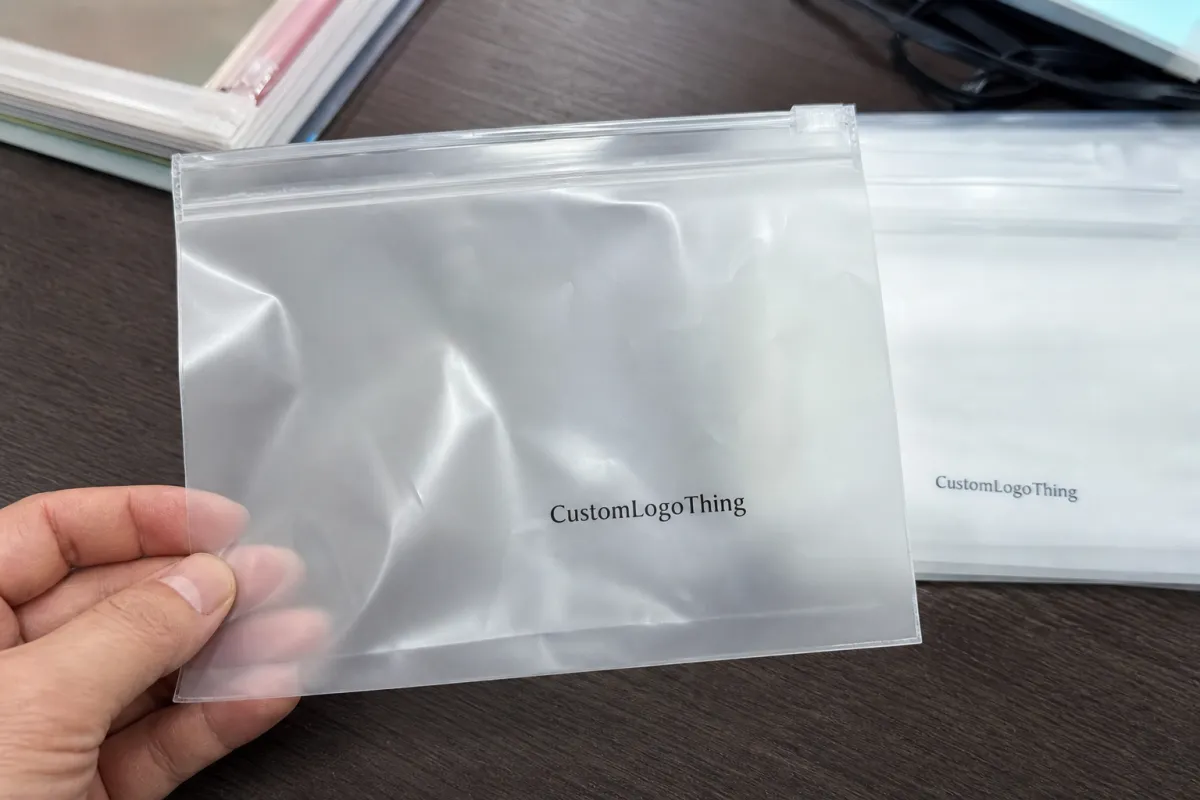
In home fragrance packaging, the sample is not a throwaway. It is a decision tool. A material sample shows how the film looks, bends, seals, and behaves around fragrance oils or scented components before anyone commits to a production run. That is different from a printed mockup, which mainly shows artwork, and different again from a final proof, which is closer to the real order but may still be missing key variables such as zipper style or barrier layer.
This category shows up everywhere: reed diffuser refills, sachets, room spray kits, wax melt pouches, and small scent sample packs for retail or subscription boxes. Each use case stresses the bag differently. A dry sachet might only need a light moisture barrier and a neat frosted finish. A refill pack for oil-based fragrance, by contrast, may need stronger seal integrity, better odor control, and a film structure that does not soften after a few days in warm storage.
The hidden challenge is that fragrance oils are unforgiving. They can reveal pinholes, weak seal edges, stress whitening, scuffs, and odor transfer faster than many consumer products. A pouch that looks perfect on the conference table can still fail when it sits in a warm stockroom or gets opened and closed repeatedly during testing.
A sample that looks impressive for one minute can become expensive very quickly if it cannot hold its seal for one week.
That is why a good home fragrance Frosted Zipper Bags Material Sample guide should help teams compare appearance, barrier performance, price, and lead time with fewer surprises. The right sample process narrows risk before anyone orders cartons, creates retail copy, or prints 10,000 units of artwork on the wrong structure.
How Frosted Film Changes the Sample Experience
Frosted film changes the way people read a package. Instead of full transparency, it softens light and blurs what is inside. That creates a cleaner, more premium visual effect than a standard clear bag, especially for products that benefit from restraint rather than display. In home fragrance, that visual softness matters because the packaging is often meant to suggest calm, scent, and texture before the box is even opened.
The zipper and seal matter just as much. A good frosted zipper bag should invite repeated opening during testing without feeling disposable after one use. The closure should click or press with enough resistance to feel secure, and the seal area should stay consistent across the width of the pouch. If the zipper feels loose or the seal line looks uneven, buyers usually lose confidence fast.
Tactile quality is easy to underestimate. Frosted surfaces can feel controlled and upscale, but they also need to resist fingerprints, abrasion, and scuffing under retail lighting. A matte blur that looks elegant in a sample photo may show handling marks after a dozen touches at a display table. That is one reason sample kits should include more than one type of material piece whenever possible.
Common structures include PE, PET/PE laminations, and barrier-enhanced films with layers designed to reduce moisture or fragrance migration. Mono-material PE often appeals to buyers focused on recyclability claims, while PET/PE structures usually bring better stiffness and a stronger premium feel. Add an EVOH barrier layer and performance can improve again, although the sustainability story becomes more complicated. No structure is perfect. The right choice depends on the fill, shelf life, and how the pouch will be used.
For that reason, a supplier should not send only one format and call it a sample program. In a well-run request, the kit may include loose film swatches, functional bag samples, and printed prototypes. That combination lets the buyer separate aesthetics from usability instead of guessing from a single piece.
Key Material Factors Buyers Should Compare
Thickness comes first because it affects almost everything buyers can feel. Film weight changes stiffness, pinch resistance, crease behavior, and perceived quality. A thin bag may still work for low-risk sachets, but it can feel soft or fragile if the product has any weight, oil content, or repeated handling. Thicker film often improves the hand feel, though it may raise cost and change how the zipper closes.
Barrier performance should be treated as a separate question. Moisture resistance, oxygen resistance, and fragrance retention are not interchangeable. A pouch can block humidity fairly well and still allow scent loss over time. A buyer comparing samples should ask for the actual structure and test method, not just a broad promise that the bag is "protective."
Finish details deserve real attention too. Frost level, gloss balance, and scratch visibility can alter the perceived value of the package. On frosted surfaces, white ink opacity and artwork contrast also matter more than many teams expect. Fine details that look sharp on a proof can soften once printed on a matte, diffused surface. If the design relies on tiny type or thin lines, ask for a test print before approving the final direction.
Zipper quality and seal width are core decision points. The closure has to feel reliable, because buyers usually associate closure feel with leak risk even before any testing is done. Wider seals can help confidence, but they also reduce printable area and may change the finished proportions of the bag.
Here is a practical way to compare the main variables:
- Thickness/gauge: affects stiffness, dent resistance, and premium feel.
- Barrier structure: controls odor retention, moisture control, and shelf stability.
- Frost level: changes visibility, glare, and how fingerprints show under light.
- Zipper style: influences opening feel, repeat use, and buyer trust.
- Print approach: determines whether white ink, metallic ink, or full-color artwork survives the matte effect.
- Sustainability claims: may involve recycled materials, FSC certified cartons, post-consumer waste content, or mono-material design, but the barrier tradeoff still needs testing.
That last point matters more than marketing teams sometimes admit. A package made with recycled materials or paired with kraft paper outer cartons can tell a strong story, and shipping components in corrugated cardboard makes sense from a waste-reduction angle. Still, fragrance protection has to come first. Better sustainability should not become a polite excuse for weaker performance.
Cost, MOQ, and Quote Drivers for Samples
Sample pricing changes quickly because the quote is not driven by one factor. Material type, thickness, zipper style, print coverage, sample quantity, and whether custom tooling is needed all influence the number. A plain frosted swatch costs far less than a fully printed pouch with a special closure. If the sample also needs a filled test build, the price rises again.
One reason sample pricing looks high is that setup costs are spread across a small quantity. A production order of 10,000 pieces can absorb prepress, setup, and testing more efficiently than a sample run of 10 or 20 units. That does not mean the sample is overpriced. It means the economics are different.
| Sample type | Typical use | Indicative unit cost | Lead time | Notes |
|---|---|---|---|---|
| Stock frosted swatch | Surface and hand-feel review | $0.08-$0.20 | 3-5 business days | Good for quick finish comparison, not full performance testing |
| Blank custom bag | Fit, zipper feel, and seal check | $0.25-$0.70 | 7-10 business days | Useful for structure review and closure testing |
| Printed mockup | Artwork, contrast, and shelf appeal | $0.60-$1.50 | 10-15 business days | Best for brand approval and retail presentation |
| Barrier-tested prototype | Oil, odor, and storage validation | $1.20-$3.00 | 12-18 business days | Most realistic, but also the most coordination-heavy |
MOQ effects are easy to misunderstand. Small sample runs are flexible, but they rarely represent the final unit cost of a larger order. A supplier may quote a reasonable test quantity and then offer a much better production price once the order crosses a few thousand pieces. That is normal.
Hidden expenses also show up in places buyers do not always track. Artwork revisions, color matching, freight, packaging protection, and rush handling can move the total more than the bag itself. Even the outer shipping format matters. A sample packed in corrugated cardboard with kraft paper inserts may arrive in better shape than one sent loose in a thin mailer. If the sample gets crushed in transit, the review is already compromised.
For planning purposes, a slightly higher sample cost can still be cheaper than launching with the wrong barrier, the wrong zipper, or a finish that looks dull under store lighting. That is the commercial reality. A poor fit often costs more later.
Sample Process, Timeline, and Lead Time Expectations
A clean sample process usually follows the same sequence: spec review, sample build, internal testing, revision cycle, final sign-off, and production quotation. If any one of those steps is vague, the timeline stretches. Missing dimensions are a classic delay. So are unclear artwork files and performance goals that are described as "premium" without any measurable standard behind them.
Timing also depends on sample type. Stock swatches can be turned around quickly because they are already in inventory. Custom sample bags require more coordination, especially if the zipper color, film finish, or bag size differs from standard stock. Fully printed mockups sit in the slowest lane because they need design prep, color approval, and a more careful build.
The biggest delays often come from indecision, not manufacturing. If three people need to approve the sample, and each person wants a different metric, the project can stall for days. One decision-maker, one test method, and one deadline usually move the work forward faster than a long internal email thread.
For performance testing, use the same logic suppliers use in packaging qualification. Many teams align transit testing with ISTA profiles and check seal strength or barrier behavior with methods that resemble ASTM-based validation. The exact standard depends on the claim and the product, but the principle is simple: judge the sample as it will be used, not as it looks on a desk.
Special finishes, custom zippers, and unusual barrier structures can extend lead time because they require trial runs and extra coordination. That is not a red flag by itself. It is just the cost of asking the packaging to do more.
Common Mistakes That Hurt Sample Quality
The first mistake is choosing frosted film for appearance alone. A bag can look elegant and still fail to protect an oily fragrance formula. That mistake shows up often in home fragrance because the visual brief gets approved before the technical brief. The reverse order works better: barrier first, then look.
The second mistake is approving the zipper before repeated open-close testing. A closure that feels fine once can loosen after five or ten cycles. If the bag is meant for refills or scent samples, that failure matters more than it does for a one-time shipping pouch. Simple cycle testing tells you more than a quick finger press ever will.
Another problem is ignoring fogging, odor transfer, curling, and scratch visibility after the sample sits in warm light or a humid room. Those conditions are not extreme. They are ordinary in retail storage and some e-commerce environments. A good sample should survive ordinary life, not only controlled lab handling.
Vague dimensions and incomplete artwork create their own waste. They force extra revisions, inflate freight costs, and make side-by-side comparison harder because the samples are no longer comparable. If one pouch is 120 x 180 mm and the next is 125 x 190 mm, the decision gets noisy very fast.
Finally, do not compare unit price by itself. Shelf appeal, refill usability, shipping protection, and long-term fragrance retention often matter more over the life of the product. A low-cost bag that loses scent or scuffs badly becomes expensive in a hurry.
There is also a communication mistake that creeps in through sustainability language. Some buyers focus on biodegradable packaging claims or post-consumer waste content and forget to ask how the film performs. Those claims matter, but only if they are backed by a structure that still protects the product and satisfies procurement requirements. If the carton is FSC certified, that is useful. It just does not replace a proper pouch test.
Expert Tips for Better Material Sampling
Side-by-side samples work best when only one variable changes at a time. Compare thickness against thickness, or frost level against frost level. If you change the zipper style, the barrier layer, and the print coverage all at once, the team cannot tell which change caused the result. That is how projects drift into opinion instead of evidence.
Test the sample in the environment where it will actually live. A retail shelf, a warehouse, and an e-commerce packing line each create different pressures. A bag that looks beautiful in a showroom may not survive repeated carton packing, temperature swings, or contact with kraft paper inserts inside a shipping case.
Use a scorecard. Keep it simple: appearance, seal feel, scent retention, print clarity, and handling marks. Score each category from 1 to 5, then add comments only where the result is unusual. That approach gives procurement, brand, and operations teams a shared language, which is rare and useful.
Ask for resin type, barrier specs, and compliance documents early. A supplier should be able to say whether the film is PE-based, PET/PE, or another structure, and whether any recycled materials or post-consumer waste content are in the outer shipper. Those details affect both performance and procurement confidence. They also help legal and sustainability teams avoid awkward surprises later.
Keep a reference library of approved samples. Tape or archive one finished pouch, one blank sample, and one shipped outer pack for each approved program. Over time, that library becomes a practical baseline for new launches. It is much easier to start from a known-good structure than to re-litigate every detail from scratch.
Next Steps Before You Request Samples
Before you contact a supplier, gather the essentials: exact dimensions, fill weight, fragrance type, artwork files, and the intended sales environment. A supplier can only quote accurately if the brief is specific. Broad language creates broad answers, and broad answers are not useful in packaging.
Request two or three material options that differ clearly in finish, barrier, or zipper style. A good comparison needs contrast. If every sample looks almost identical, the exercise wastes time. If one is a light frosted PE pouch, one is a PET/PE laminate, and one adds a stronger barrier layer, the decision becomes much easier to defend internally.
Set a short internal test window, ideally 48 to 72 hours for the first review. Use that window to check seal strength, scent retention, and shelf appearance. If the product has an oily fill, repeat the test after warm storage and again after a few opening cycles. Small observations at this stage can prevent much larger problems later.
Decide in advance which factor matters most: premium feel, cost, sustainability, or barrier. Every project has tradeoffs. Clear priorities stop sample reviews from turning into endless compromise. A team that knows what it values can make a better call, faster.
Document the final recommendation, save the approved sample, and use the home fragrance frosted zipper Bags Material Sample guide as the brief for the next quote and production step. That is how a one-off sample request becomes a repeatable packaging process instead of a one-time guess.
What should a home fragrance frosted zipper bag sample include?
A useful sample should show the actual film finish, zipper feel, seal quality, and any print or white ink coverage that will appear on the finished bag. If the fragrance is oily or strongly scented, ask for barrier details or a filled test sample so you can check odor retention and fogging. A strong request also includes exact dimensions, target fill weight, and whether you need a flat pouch, gusseted bag, or reclosable sample pack.
How does frosted film affect fragrance packaging performance?
Frosted film changes the visual tone by softening light and reducing transparency, which can make a package feel more premium. Performance still depends on the underlying structure, so a frosted look alone does not guarantee better barrier or stronger seal integrity. Buyers should test for scratch visibility, fingerprint marks, and how the film holds up after repeated handling.
What thickness works best for frosted zipper bags in home fragrance?
There is no single best thickness, but thicker films usually feel sturdier and handle repeated opening better. Lighter samples can work for low-risk sachets, while heavier structures are better for products with oils, refill liquids, or longer shelf life expectations. The right choice depends on barrier needs, bag size, and how premium the final package needs to look in the market.
How long do sample requests and quotes usually take?
Stock swatches and standard sample bags are usually faster than fully printed or custom-structured prototypes. Quotes move faster when the buyer provides dimensions, artwork, quantity, and performance goals upfront. Special zippers, custom finishes, or multiple revision rounds can extend both the sample timeline and the final production lead time.
How can I get a more accurate quote for material samples?
Send a complete spec sheet with dimensions, target material structure, closure style, print coverage, and expected order volume. State whether you need samples for internal review, retail testing, or final production approval, because each use case changes the recommendation. The more clearly you define barrier needs and finish expectations, the easier it is for a supplier to quote the right option the first time, and the home fragrance Frosted Zipper Bags material sample guide becomes a practical buying tool rather than just a checklist.

