Electronics Woven Label Beanies Unit Cost Review for Buyers
The unit cost on branded beanies is usually decided before production starts. Once you add a woven label, a packing method, and a delivery window, the quote stops being a simple apparel number and becomes a purchasing decision tied to brand presentation, timing, and inspection risk. That matters for launch kits, field-service uniforms, conference giveaways, and employee gifts where the item has to feel deliberate, not disposable.
For buyers, the useful price is the landed cost of a beanie that fits well, keeps its shape, and carries the label cleanly. A low quote that leaves out sampling, freight, or revision work can look good on paper and still cost more after approval cycles and rework. The tighter the specification, the more reliable the pricing.
Electronics teams also tend to use headwear as part of a larger kit, so the beanie has to work alongside packaging, inserts, and other branded pieces. If the accessory looks inconsistent or arrives with fuzzy labeling, it weakens the whole package. A clean spec helps prevent that.
Why electronics woven label beanies deserve a tighter quote
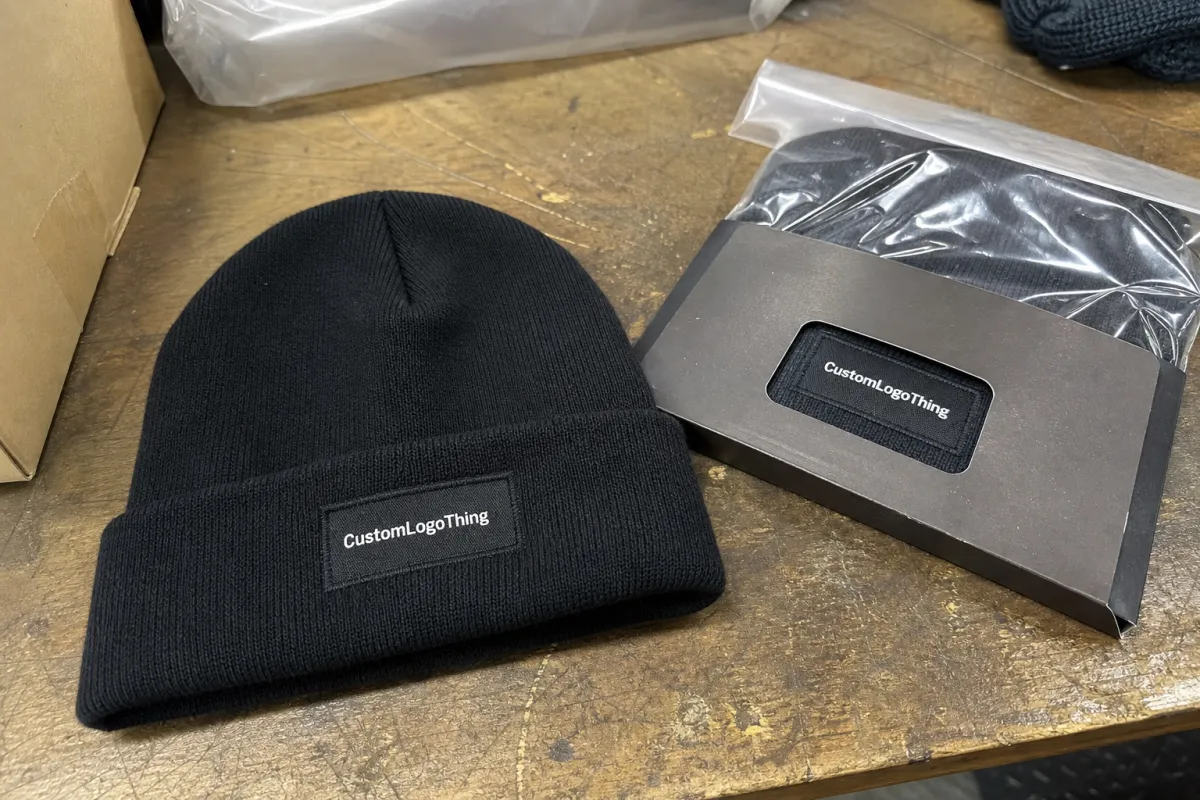
Beanies seem simple until the quote starts changing with every material and decoration choice. A stock knit cap is easy to price, but a woven label adds labor, approval steps, and a higher chance of quality variation. That is why a loose brief can produce a misleading number.
Buyers in electronics usually want these items for practical, repeatable use rather than novelty. A service team needs something durable enough for daily wear. A launch team needs a branded accessory that looks coordinated beside product packaging. Employee gifting programs need something people will actually keep, which means the fit and finish matter as much as the logo.
- Launch kits: useful with onboarding materials, cables, or small accessories.
- Field-service uniforms: need repeat wear, stable sizing, and wash durability.
- Trade show giveaways: need clear branding and easy bulk distribution.
- Employee gifts: need a balance of comfort, appearance, and cost control.
The quote gets sharper once the supplier has quantity, decoration details, packing style, and ship date. Without those pieces, the factory has to guess at assumptions, and that is where price drift begins. Procurement also moves faster when the request includes the exact spec instead of a general description.
A clear spec sheet usually costs less than a late revision.
Product details that separate a basic beanie from a sellable branded item
The beanie style affects both cost and presentation. A cuffed beanie usually gives the woven label the most visible front placement and feels the most retail-ready. Slouch styles read more casual. Rib-knit construction usually holds shape better, while looser knit structures can look softer but lose definition more quickly.
Placement matters almost as much as style. Center-front placement on the cuff is common because it gives the logo the clearest visibility. Side-seam placement is subtler. A small label near the hem can look neat, but it also leaves less room for small type or detailed artwork.
Material choice changes both the price and the performance. Acrylic is common because it is warm, consistent, and usually budget-friendly. Recycled polyester supports sustainability claims, but those claims should be backed by documentation. Wool blends improve warmth and handfeel, though they usually raise unit cost. Mixed yarns often sit in the middle and are useful when procurement needs a practical balance.
Packaging is part of the product decision, not an afterthought. Bulk packing keeps labor down. Individual polybags make counting and kitting easier. Belly bands, inserts, and retail tags improve presentation but add handling time and sometimes setup fees. If the beanies will sit with other branded materials, keeping them under one labeling system helps the whole kit feel consistent. For that, a related set of Custom Labels & Tags can keep the visual language aligned across product, insert, and packaging layers.
For programs with compliance or documentation needs, ask for the exact paperwork tied to the fiber claim or recycled-content claim. That matters more than broad sustainability language, especially when the order is being compared against other procurement items.
Specs that control fit, durability, and label clarity
Knitting gauge and yarn weight affect more than appearance. A denser knit usually gives better shape retention and a smoother base for the label. A looser knit may feel softer, but it can distort the cuff area and make the label sit unevenly after packing or shipping.
Label construction deserves close attention. Size, thread density, border finish, and backing all affect how crisp the logo looks. If the artwork includes small type or fine lines, low-resolution weaving can blur it quickly. That is common in electronics branding, where logos often depend on precision rather than bold shapes.
Fit is another area where buyers get surprised. Cuff depth, crown height, and stretch range all affect comfort and wearability. A sample can feel right while the bulk run arrives tighter than expected. Asking for measurements is better than relying on “standard size,” because standard varies by factory and production line.
Color matching also needs realistic expectations. Pantone references are useful, but yarn and woven threads do not behave like coated paper. There will always be tolerance. In some programs, the body color is approved from a knit strike-off while the woven label is checked separately against a thread chart or approved sample. That takes longer, but it avoids disputes later.
If the beanies are shipping inside a larger electronics kit, the carton and pack-out should be checked for compression and clear labeling. Soft goods can still be damaged in transit if the carton is weak or the packing order is rushed. A simple distribution plan usually works better than a complicated one.
The practical rule is simple: tighter specs mean fewer surprises. That is especially true for woven labels, where small shifts in thread density or stitching tension can change how polished the final piece looks on the cuff.
Electronics woven label beanies unit cost review
In a real Unit Cost Review, the main drivers are quantity, yarn choice, label complexity, packaging method, and whether the order needs custom color development or extra approval rounds. Buyers often focus on the artwork because it is visible, but the bigger cost swing usually comes from materials and handling.
MOQ changes the picture quickly. Some factories set minimums by style, some by decoration method, and some by total program value. A low MOQ can look attractive until setup charges are added back in. If the supplier is spreading art prep, label tooling, and packaging labor across only a small run, the cost per piece rises fast.
Tiered pricing usually gives the most useful view. Once setup is absorbed over more units, the price can drop sharply between bands. Procurement teams should ask for quantity breaks instead of one flat number, because a 300-piece order may be inefficient compared with 500 pieces even when the difference looks small on paper.
| Quantity band | Typical unit cost | What is usually included | Common extras |
|---|---|---|---|
| 100-299 pcs | $3.80-$6.50 | Stock beanie body, one woven label, basic packing | Setup charges, sample fees, carton changes |
| 300-999 pcs | $2.40-$4.60 | Standard knit body, woven label attachment, bulk packing or simple polybags | Color matching, label revision, freight |
| 1,000-2,499 pcs | $1.90-$3.40 | Cleaner pricing on materials, lower per-piece labor burden | Tooling fees for new label art, retail inserts |
| 5,000+ pcs | $1.35-$2.60 | Best bulk pricing, more room to absorb setup costs | Freight, packaging upgrades, QC documentation |
The ranges above fit stock-style branded beanies with one woven label and ordinary packing. Custom knitting, premium fibers, extra decoration, or retail-ready presentation will push them higher. That does not always mean padding; it often reflects real material and labor changes. Buyers should assume a quote is incomplete until freight, sample cost, and any revision fees are shown separately.
Quotes can also look lower simply because they leave out the pieces that create friction later. If setup charges, label tooling, or sample-credit rules are hidden, comparison gets messy. A line-item breakdown makes supplier offers easier to compare across programs and seasons.
Production steps and timeline from artwork to shipment
The production path is straightforward, but each step protects the order from expensive mistakes. Artwork review comes first. Then the supplier sends a digital proof or physical sample. Final signoff locks the colors, label placement, and packing method. Skipping one of those steps often turns a small issue into a bulk problem.
After approval, the factory moves through body sourcing or knitting, woven label production, label attachment, stitching checks, and packing. If the buyer wants polybags, inserts, size stickers, or carton marks, those details should be confirmed before bulk starts. Changing them after packing usually means reopening the order.
Lead time depends on complexity. A stock-body beanie with a straightforward woven label often runs about 12-15 business days after proof approval. If the order needs custom color development, a more complex label, or a pre-production sample before bulk signoff, 15-25 business days is a more realistic planning window. Seasonal demand can extend that further.
Transit time should be quoted separately from production. Buyers still get caught when they assume factory lead time includes shipping. It does not. Air freight, ocean freight, and domestic receiving schedules all behave differently, and electronics programs often have stricter deadlines than general promo orders.
If the beanies ship with fragile electronics or mixed kits, the pack-out should be checked for compression, carton strength, and clear labeling. A soft goods item may survive on its own, but not always inside a larger shipment with heavier components. This detail is easy to miss and expensive to fix.
The safest workflow is simple: approve artwork early, confirm the pack method in writing, and keep freight separate from the production quote. That keeps the timeline visible and reduces schedule drift.
How a packaging-focused partner reduces rework and rush fees
A packaging-focused partner helps because the beanie order is not just a garment order. The knit spec, woven label art, carton instructions, and pack-out notes all have to agree. If they do not, the factory can still produce the items, but the buyer pays for the mistakes in revisions, delays, or rush corrections.
That matters most during proofing. Small text, multiple thread colors, and exact placement rules are the details most likely to get lost if the quote cycle is rushed. A team used to branded packaging will ask for the details early, which can feel slow until it prevents a production error.
Repeat orders benefit from stored specs. Once the body color, label reference, placement, and packing notes are locked, the next run is easier to price and easier to approve. That consistency matters for electronics brands that need seasonal drops, regional versions, or annual employee programs.
Communication also matters. Procurement teams rarely get unlimited time. Launch dates move, approvals arrive late, and marketing may ask for a packaging tweak after the first quote. A supplier who responds with updated quantities, realistic dates, and clear assumptions reduces the amount of coordination work the buyer has to manage.
Coordinating the beanie with related branded components can also reduce errors. If the labels, inserts, and packaging are handled with the same discipline, the order behaves like a program instead of a pile of disconnected line items. That usually means fewer surprises at receiving and fewer questions from finance.
The value of the right partner is not just the item itself. It is fewer ways for the purchase order to go wrong after release.
For related materials, keeping the accessory line under one labeling system can simplify reorders and artwork checks. A matching set of Custom Labels & Tags helps maintain consistency across product, insert, and packaging layers without rebuilding the spec every time.
Next steps for an accurate beanie quote and clean purchase order
Before asking for pricing, collect the essentials: target quantity, due date, ship-to location, logo file, preferred colors, label placement, and any packaging requirements. The more complete the request, the closer the quote will be to the actual purchase order. A vague brief almost always gets a vague price.
Ask for at least two pricing options. A standard spec and a premium spec give procurement something meaningful to compare, especially if the difference is between bulk packing and retail-ready presentation. That comparison is usually more useful than chasing small graphic changes that do not affect wearability or brand visibility very much.
Confirm approval deadlines, sample expectations, and freight terms before the PO goes out. That avoids a surprising number of schedule slips. If the supplier needs signoff by a certain day to hold production space, that should be in writing. Timelines are rarely the problem; unclear timing is.
Request a line-item breakdown so the electronics woven label Beanies Unit Cost Review can be compared on equal terms. If the quote includes setup charges, note it. If freight is separate, note that too. If the sample is creditable against bulk, ask for that in writing as well. Buyers save money when they can see what is driving the total instead of guessing from the final number.
A careful cost review keeps the budget honest, protects the schedule, and gives the final piece a better chance of being worn instead of forgotten in a drawer.
What drives electronics woven label beanies unit cost the most?
Quantity usually has the biggest effect because setup and handling costs spread across more pieces. After that, label complexity, yarn choice, and packaging style tend to move the price more than a minor artwork change. Freight and sampling should also be included so you can see the true landed cost.
What MOQ should I expect for custom woven label beanies?
MOQ depends on whether the factory is sourcing stock bodies or knitting a custom color and size profile. A simple label on a standard beanie style often starts lower than a custom build. Ask for quantity tiers so you can see where the price improves and whether a slightly larger run is worth it.
How long does the process and lead time usually take?
Artwork review and sample approval usually come first, and delays there are the most common reason schedules slip. Bulk production depends on material availability, label approval, and the packaging spec you choose. Transit should be quoted separately so you can plan around launch dates or internal distribution windows.
Can you match brand colors on the beanie and woven label?
Yes, but the body yarn and the woven label are typically matched through separate material systems. Pantone references help, although knit and woven materials have their own tolerance limits. If color accuracy is critical, request a sample or proof before approving bulk production.
What should I send to get a fast quote on branded beanies?
Send quantity, deadline, logo file, preferred colors, and whether the beanie needs a cuff, slouch fit, or another style detail. Include packaging requirements and ship-to location so the quote reflects the real landed cost. If you have target price bands, share them early so the supplier can recommend the best spec options.


