Buyer Fit Snapshot
| Best fit | Sustainable Bakery Cartons with Logo projects where brand print, material claims, artwork control, MOQ, and repeat-order consistency need to be specified before quoting. |
|---|---|
| Quote inputs | Share finished size, material target, print colors, finish, packing count, annual reorder estimate, ship-to region, and any compliance wording. |
| Proofing check | Approve dieline scale, logo placement, barcode or warning zones, color tolerance, closure strength, and carton packing before bulk production. |
| Main risk | Vague material claims, crowded artwork, missing packing details, or unclear freight terms can make a low unit price expensive after revisions. |
Fast answer: Sustainable Bakery Cartons with Logo: Board, Finish, Dieline, and Unit Cost should be specified like a repeatable production item. The safest quote records material, print method, finish, artwork proof, packing count, and reorder notes in one written spec.
Production checks before approval
Compare the actual filled-product size with the drawing, then confirm tolerance on folds, seals, hang holes, label areas, and retail display edges. Reserve space for logos, QR codes, warning copy, and material claims before decorative graphics fill the panel.
Quote comparison points
Review material grade, print process, finish, sampling route, tooling charges, carton quantity, and freight assumptions side by side. A quote is only useful when the supplier can repeat the same color, closure quality, and packing count on the next order.
Sustainable Bakery Cartons With Logo: What to Know
Sustainable bakery cartons with logo are usually the first piece of packaging a customer touches, carries, and notices again later. That sounds small. It is not. The carton shapes the first impression before anyone takes a bite, and in bakery retail that impression gets remembered. A good carton protects delicate pastries, travels well from counter to car, holds up under real handling, and tells customers the bakery cares about both presentation and material choice.
The logo is not just decoration. It helps customers identify the brand at pickup, turns a mixed pastry order into something that feels intentional, and gives the package a cleaner, more finished look without piling on heavy ink coverage or expensive finishing. Teams comparing packaging usually ask whether branded cartons look better. That is the easy question. The harder one is whether the carton survives grease, humidity, stacking, and the daily mess of bakery operations. Fancy graphics do not fix a box that collapses under a cinnamon roll.
This guide breaks down the carton choices that actually change the buying decision: board grade, print method, barrier coating, Pricing, Lead Time, and the tradeoffs between appearance and sustainability. The goal is simple. By the end, you should be able to order with a clearer brief, a better sample process, and fewer surprises once production starts.
Sustainable Bakery Cartons With Logo: Why They Matter
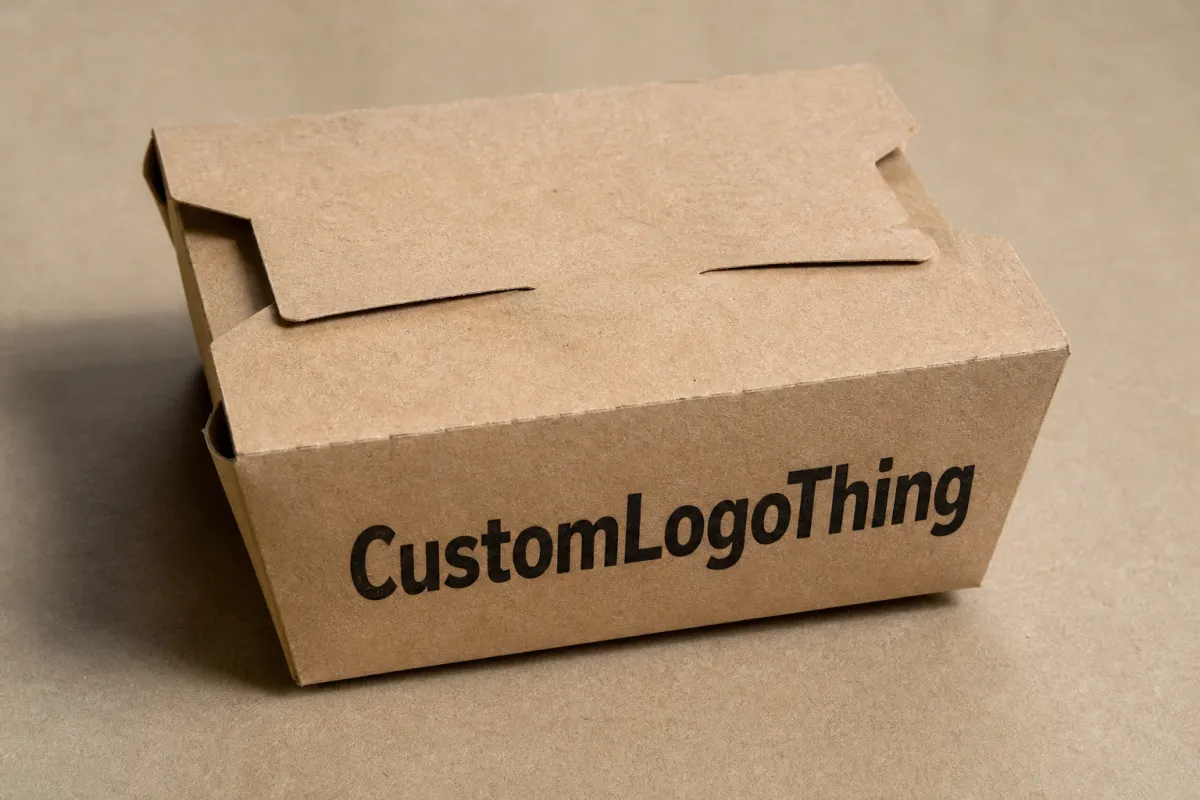
For most bakeries, the carton does two jobs at once. It protects the product, and it markets the product quietly every time someone carries it past another customer. A plain white box can work. A branded carton gives people a visual anchor, especially in retail displays where several pastries look similar once they are wrapped or boxed. A logo placed cleanly on kraft board, a recycled paperboard sleeve, or a folding carton with restrained graphics can make a bakery feel established without making the package feel busy.
“Sustainable” should mean something measurable, not just a nice word on a sales sheet. That usually starts with responsibly sourced paperboard, recycled fiber content where the application allows it, and print choices that do not bury the carton in unnecessary coverage. In plain language, that can mean FSC-certified board, aqueous coatings instead of plastic-heavy finishes where possible, and artwork that uses less ink and less processing than a full-wrap, high-coverage design. For readers who want a direct reference on responsible forestry and certification systems, the FSC site is useful: FSC.
There is also a brand-side benefit that gets missed when buyers focus only on price. Bakery packaging lives in a human setting. People notice texture, color, and tiny cues that suggest freshness and care. A logo printed on a carton can support trust in the product, especially when the bakery wants to communicate house-made quality, seasonal ingredients, or premium positioning. You do not need ornate decoration to pull that off. A one- or two-color logo on natural kraft, paired with a clean structure and a precise fold, can do a lot of heavy lifting.
Good carton design can help in more than one direction at once. A lighter print approach may reduce material impact. A stronger carton structure improves stacking and helps prevent crushed pastry corners. The best result is not the most elaborate package. It is the one that fits the pastry, the production line, the customer handoff, and the waste stream with the least friction.
That is why sustainable bakery cartons with logo deserve a more disciplined comparison than “nice box versus plain box.” Material, finish, and print method all shape whether the carton feels premium, stays useful, and supports a sustainability claim that can survive basic scrutiny.
How It Works: Materials, Structure, and Print
The structure of a bakery carton starts with the board. Most branded bakery cartons use paperboard in the range of about 14pt to 24pt, or roughly 250gsm to 400gsm depending on the style and the load the carton needs to carry. Lighter board works for cookies, small pastries, or dry items. Heavier board is better for stackable boxes, bakery gift packs, or products that need more crush resistance during transit. Recycled kraft board is common when the bakery wants a natural look and a surface that clearly reads as more sustainable. SBS or coated paperboard shows up when color fidelity and sharper graphics matter more.
Structure matters just as much as board choice. A tuck-top carton is easy to open and close, which helps at point of sale. A lock-bottom or auto-bottom style gives extra security for heavier items. Sleeves can wrap clamshells, trays, or inner cartons when the bakery wants a more refined presentation without changing the base package entirely. Folding lines, locking tabs, dust flaps, and side panels all affect how the carton behaves in production, during filling, and in customer hands. A design that folds quickly and locks cleanly usually saves labor and cuts down on mistakes at the packing table.
Printing method is the next decision that actually matters. Offset printing is often chosen for stronger color control and crisp detail on larger runs, especially when the logo has fine type or a subtle pattern. Digital printing helps with short runs, quick turnarounds, or multiple seasonal versions because it avoids some of the setup burden of traditional presses. Flexographic printing fits certain high-volume jobs, especially on simpler cartons or sleeves, though the visual texture and color handling may differ from offset.
Each method comes with tradeoffs. Offset usually delivers strong image quality and tight registration, but setup can be heavier. Digital can be economical at lower quantities and easier for versioning, yet the per-unit price may rise once volume climbs. Flexo can be efficient for straightforward graphics, but it is not the right fit for every logo treatment. A buyer comparing suppliers should ask for printed samples or at least a realistic proof so the logo is judged on actual board, not on a monitor with perfect lighting and zero grease stains.
Coatings matter more than many teams expect. An aqueous coating can help protect the print surface and improve handling without adding a heavy plastic feel. Grease-resistant treatments are important for butter-rich pastries, laminated doughs, frosted items, or anything likely to leave oil on the carton. If the pastry is warm, the carton may need more than visual appeal. It may need a barrier layer, a treated interior, or a tested finish that can stand up to steam and moisture migration. Food-safe inks and coatings should match the intended use, not just the mood board.
The logo application itself should be handled with restraint and intent. A logo does not need to cover every panel to do its job. In many cases, the strongest result comes from smart placement on the top panel, front face, or sleeve, where the mark is seen at the counter and in photos without wasting print area. Lower ink coverage can help with cost control and material efficiency, and it can also give the carton a calmer, more premium feel. On natural board, even a simple black, dark green, or deep brown mark can look highly finished if the carton shape and print quality are consistent.
If the bakery is choosing between multiple graphics directions, clean design usually outlasts trend-chasing design. Seasonal colors, special edition artwork, and QR codes all have a place. The carton still needs to function as a daily production item. The best carton is not just attractive in a mockup. It is easy to assemble, easy to stack, and easy for customers to spot in a crowded bag or retail display.
Key Factors That Shape Performance and Sustainability
Board grade is the first factor I would look at if the carton has to do real work. Recycled fiber content can be a strong fit for many bakery applications, but the buyer still needs to confirm stiffness, printability, and surface quality. Some recycled boards have excellent sustainability credentials but a rougher finish that changes how a logo appears. Others look sharp but need a barrier treatment if the product is greasy. Fiber quality, caliper, and stiffness all affect how the carton stacks, how it resists crushing, and how it feels when a customer picks it up.
Food safety sits right next to structure. Bakery cartons are not meant to be a long-term storage system, but they still have to handle butter, sugar glaze, frosting, and sometimes warm product. A chocolate croissant can leave grease marks where a dry biscuit would not. A cinnamon roll may trap more steam inside the carton. A filled pastry can push moisture into the seams. These differences are small on paper and annoying in real life. If the carton softens, stains badly, or warps in transit, the package loses both function and presentation value.
Sustainability claims need careful wording. “Recyclable,” “compostable,” “biodegradable,” and “recycled-content” are not interchangeable labels. A carton may be recyclable in theory, but local collection systems, coatings, and food residue rules still influence whether it can enter the waste stream cleanly. Compostability may apply only under specific industrial conditions, and not every municipality accepts the same materials. For a useful reference on waste and recycling basics, the EPA offers clear public guidance: EPA recycling resources.
It is better to verify a claim than repeat a slogan. If a supplier says a carton is made from recycled board, ask for the percentage and whether the board is post-consumer, pre-consumer, or a blend. If the carton is said to be FSC-certified, ask whether the certification applies to the board itself, the printer, and the finished supply chain. If a coating is called grease-resistant, ask what testing was done and against which product conditions. That kind of detail protects the bakery from making a sustainability statement that does not hold up under customer questions or retail scrutiny.
Brand design choices also affect environmental impact, even when nobody wants to talk about it. Heavy ink coverage, unnecessary full bleeds, and complex finishing can increase material use and complicate recycling. A restrained logo on a well-chosen board often performs better visually and operationally. Contrast matters too. A dark logo on a pale kraft board may need less ink than a full-color illustration while still reading clearly across the counter. That does not mean the branding should be dull. It means the artwork should work with the board instead of fighting it.
Handling conditions are another quiet variable. A carton used for over-the-counter pickup faces different stress than a carton sitting in a chilled display or riding in a courier bag for thirty minutes. Humidity can soften paperboard, especially near ovens or in damp climates. Compression from stacking can flatten delicate toppings. Temperature swings can change how grease behaves inside the carton. If the bakery ships items, or if the carton moves through secondary packs, those conditions should be part of the specification from the start.
A carton that looks beautiful empty is only half the story. The real test is what happens after it has been filled, closed, stacked, carried, and opened by a customer who expects the pastry to arrive intact.
That is where sustainability and performance meet. A lighter board that fails under pressure is not a good environmental decision, because product damage creates waste. A heavier carton that protects the pastry but uses more material than necessary may be stronger than needed. The better choice sits in the middle: enough structure for the product, enough barrier for the recipe, and enough restraint in design to avoid excess. That balance is what makes sustainable bakery cartons with logo a practical packaging decision rather than a branding-only exercise.
Common board and carton options
| Option | Typical Use | Strength | Print Look | Typical Unit Cost at 5,000 Pieces |
|---|---|---|---|---|
| Recycled kraft paperboard | Cookies, muffins, dry pastries, simple retail cartons | Moderate; best for lighter loads | Natural, earthy, lower-contrast branding | $0.18-$0.32 |
| FSC-certified coated paperboard | Premium bakery boxes, gift assortments, color-forward branding | Moderate to strong, depending on caliper | Sharp graphics, better color consistency | $0.24-$0.42 |
| Grease-resistant treated board | Butter-rich pastries, glazed items, warmer product | Moderate with added surface protection | Clean surface, slightly more technical feel | $0.28-$0.48 |
| Heavier folded carton or sleeve system | Gift sets, stacked items, retail presentation packs | Strong; better crush resistance | High-end presentation, good logo visibility | $0.32-$0.60 |
Production Steps and Timeline: From Dieline to Delivery
Production starts with the product, not the artwork. First, define the pastry dimensions, weight, and shape, plus any special handling conditions such as icing height, delicate toppings, or a need for venting. Once those numbers are clear, the carton supplier can recommend a dieline that fits the product with enough tolerance for easy packing but not so much empty space that the pastry shifts in transit. That small dimensional choice often decides whether the box feels precise or sloppy.
The dieline is the technical template that shows fold lines, glue areas, flaps, panel sizes, and safe zones for artwork. This is where many avoidable errors are stopped. If the logo sits too close to a fold, it can disappear or distort. If an image crosses a glue zone, the finished package may look uneven. If a cut line or tab is placed badly, assembly becomes slower and more annoying on the packing line. A careful artwork setup should always be checked against the structural file, not treated like a simple branding exercise.
Proofing is the next control point. A digital proof helps confirm artwork placement, type size, barcode or QR placement if needed, and broad color direction. For more demanding projects, a physical sample or prototype is worth the time, especially when the carton needs to survive grease, light compression, or repeated opening and closing. In bakery packaging, a sample that looks fine on a screen but fails with butter, steam, or a heavy cookie assortment is not useful. It is just a missed warning.
Color checks matter, but they should stay in proportion to the print method. If the bakery needs exact brand color matching, that may require tighter proofing and a more controlled production process. If the brand is built around a natural kraft look with a dark logo, the process may be simpler. Either way, the team should review the box the way customers will actually see it: folded, filled, and closed. That is when spacing, contrast, and legibility become real.
Turnaround time depends on more than press speed. Design approval, sampling, board availability, finishing steps, and freight scheduling all shape the final delivery date. A simple carton with one-color branding may move quickly, especially if the dieline already exists and the artwork is final. A carton with special coating, custom folds, a window cutout, or multi-color print usually takes longer. If the order also needs FSC-certified board or a specific grease-resistant finish, those material choices can affect both sourcing and schedule.
Here is a practical way to think about the timeline:
- Specification phase: confirm product dimensions, carton style, board, coating, and use case.
- Dieline and artwork setup: place the logo, graphics, and any legal or product text.
- Proof review: check structure, colors, dimensions, and panel alignment.
- Sampling or prototype: test with the actual bakery item if the product is sensitive to grease, heat, or fit.
- Production: print, cut, crease, fold, and finish the cartons.
- Packing and freight: carton bundles are boxed, palletized, and shipped to the bakery or fulfillment site.
For many projects, the real lead time is split between design time and manufacturing time. Buyers sometimes focus only on the press schedule and forget that approvals can take several days if multiple stakeholders are involved. A bakery owner may want to see the print proof, operations may want to check how the box opens, and the brand team may want to review color. That is normal. The useful move is to plan for that review period instead of pretending it will vanish.
One more detail deserves attention: the delivery method changes the experience of the order. A carton that ships flat may be easier to store, but the bakery needs space and labor to assemble it. A pre-glued or more finished pack may save time on-site but could increase shipping volume or cost. The right answer depends on how much space the bakery has, how many units it handles per day, and whether the cartons are being filled at a production kitchen, a retail store, or a co-packing facility.
Cost and Pricing: What Drives the Quote
Pricing for branded bakery cartons comes down to a short list of variables that matter more than most people expect. Size is the obvious one: a larger carton uses more board, more ink, and more shipping volume. Board grade comes next, because heavier or specialty board costs more than a standard stock. Print coverage also changes the math. A simple one-color logo on kraft is usually much less expensive than a full-color design with flood coating, tight registration, and multiple finishing steps.
MOQ, or minimum order quantity, has a direct effect on unit cost. Smaller runs usually carry a higher per-piece price because setup costs get spread across fewer cartons. Larger runs usually lower the unit cost, but they also tie up more cash and storage space. That tradeoff matters to bakeries with seasonal menus, rotating product lines, or limited storage. A bakery that changes packaging every few months may prefer a smaller run with a higher unit cost. A stable menu can usually support a larger order more comfortably.
There are hidden or overlooked costs too. Sampling may be included or billed separately, depending on the supplier. Freight can be significant if the cartons are bulky or need palletized shipping. Palletization itself may add cost if the cartons require special stacking protection. Die tooling, if the carton structure is custom, can also affect the first order. If the design includes a window patch, a special fold, a tear strip, or a glued assembly step, those features may improve the user experience but also add manufacturing complexity.
The best way to compare quotes is to insist on the same assumptions. Two suppliers may give very different prices simply because one is quoting a 16pt board with a basic aqueous coat and the other is quoting a 20pt FSC-certified board with grease resistance and a more complex print run. If the buyer does not normalize those details, the cheaper quote may not be the better value. A lower sticker price can hide a carton that feels flimsy, stains quickly, or arrives late because the supplier underestimated the project scope.
Smart design can save money without making the package look cheap. A restrained logo, a one- or two-color print approach, and a standard box style can lower cost while still looking polished. Natural board can also reduce the need for extra ink coverage because the substrate itself carries part of the visual identity. That is one reason many bakeries favor a kraft look with a strong logo treatment: it can feel artisanal without pushing the job into a more expensive finishing class.
Here is a simple pricing comparison that helps teams frame the discussion:
| Print / Spec Choice | Visual Effect | Operational Impact | Relative Cost |
|---|---|---|---|
| Single-color logo on kraft | Clean, natural, minimal | Easy to approve, lower ink load, fast production | Lowest |
| Two-color brand system | Stronger identity, still controlled | Moderate setup, good shelf presence | Low to moderate |
| Full-color artwork with coatings | Most visual impact | Higher setup and print control requirements | Moderate to high |
| Special fold, window, or patch | Premium presentation | More tooling and assembly complexity | Highest |
For buyers comparing sustainable bakery cartons with logo, the real question is not just “What is the cheapest box?” It is “What box delivers the right mix of structure, shelf appeal, and waste reduction at a total landed cost the bakery can support?” That question includes the unit price, the freight, the storage burden, and the cost of any product loss caused by weak packaging.
Common Mistakes When Ordering Branded Bakery Cartons
The most common mistake is choosing the carton by appearance alone. A box can look elegant on a screen and still fail in the bakery if the board is too soft, the coating is wrong, or the closure does not hold under load. Grease, steam, and stacking pressure expose weak packaging quickly. If the carton is being used for butter-rich pastries or items with icing, a pretty structure that softens in ten minutes is not a good purchase, even if the graphics look excellent.
Another problem is vague sustainability language. Terms like “eco-friendly” are too loose to help a buyer make a responsible decision. You need to know whether the carton is made with recycled content, whether that content is post-consumer or pre-consumer, whether the board is FSC-certified, and whether any coating affects recyclability in the local waste stream. Without that detail, the sustainability claim is hard to trust and even harder to explain to customers or retail partners.
Size errors are also more common than many teams admit. A carton can be technically close to the product dimensions and still fail in use. If there is too much extra room, pastries slide around and arrive damaged. If there is too little room, toppings get crushed or the carton will not close properly. For filled pastries, delicate tarts, and tall items, the difference between a good fit and a bad one can be only a few millimeters, and those millimeters matter.
Artwork mistakes show up all the time. Logos dropped into a template without checking fold lines, safe zones, and print limits can end up too close to edges or hidden by a seam. Fine text may disappear on textured kraft. Light colors may not contrast enough. Photographic graphics can look muddy on certain boards. A packaging file should be checked as a manufacturing document, not treated like a social media asset. That small mindset shift prevents a lot of frustration.
The last mistake is skipping actual product testing. A carton that passes a visual review can still fail once it meets a warm pastry, a glazed topping, or a chilled item that creates condensation. Real-use testing should include fill, close, stack, transport, and hold time. If the box is for delivery, put it in a delivery-style environment. If it is for retail pickup, test the customer handoff. That is where practical weaknesses show up.
A simple test plan can prevent expensive surprises:
- Fill the carton with the real product, not a substitute.
- Leave it closed for the expected hold time.
- Check for grease transfer, softening, or panel warp.
- Stack several cartons if the product will be stacked in transit.
- Open and close the carton a few times to see how the closure behaves.
These checks are not complicated, but they get skipped when a team feels pressure to approve packaging quickly. That is usually where the trouble starts. If the carton is supposed to represent the brand cleanly while protecting the pastry, it deserves the same level of scrutiny the product gets.
Expert Tips and Next Steps for a Better Carton Order
Start with exact product information. Before asking for a quote, gather the carton dimensions you need, the product weight, the filling type, the expected hold time, and the handling conditions. If the bakery sells mixed assortments, include the tallest item and the most delicate item, not just the average pastry. The more specific the input, the less likely the supplier is to recommend a carton that looks right but performs badly in the real bakery environment.
Request samples in more than one form if you can. A board swatch helps you judge texture and print feel. A printed proof helps confirm the logo, color, and panel placement. A physical sample run, even if it is small, is the best way to assess fold quality, closure strength, and grease resistance. The sample should be tested with the actual product, because a box that handles a dry cookie well may behave very differently with a glazed bun or a cream-filled pastry.
Compare vendors by specification, not just by quote total. Look at the board grade, recycled content, FSC status, coating type, print method, and expected lead time. Ask whether the quote includes tooling, proofing, shipping, or palletization. A supplier with a slightly higher unit price may still be the better value if the carton arrives faster, prints cleaner, and holds the pastry more reliably. Packaging decisions should protect margin, not just trim the invoice line.
It also helps to plan the first order around actual demand, not optimism. Many bakeries do better with an initial run that covers a realistic production window and leaves room for revision after feedback. If the design is seasonal or if the menu changes often, a smaller MOQ can be the safer move. If the bakery has a stable assortment and enough storage, a larger order may make more sense. The point is balancing unit cost, inventory space, and the risk of packaging becoming obsolete before it is used.
If you are choosing between a plain carton and branded packaging, remember that branding does not have to mean excess. Sustainable bakery cartons with logo can be simple, durable, and tasteful at the same time when the board, coating, and print method are chosen with the product in mind. A smart carton should support the pastry, the brand, and the waste-stream realities of the market it serves.
The most useful next step is not a redesign fantasy. It is a one-page spec sheet: product dimensions, weight, fill temperature, grease exposure, stack height, print style, and sustainability requirements. Put that in front of suppliers, ask for samples, and test them with the real pastry. That is how you get sustainable bakery cartons with logo that look good on the counter and still hold up after the customer leaves.
FAQ
What are sustainable bakery cartons with logo usually made from?
Most are made from paperboard or kraft board with recycled content, depending on the strength needed and the print effect the bakery wants. Aqueous coatings or grease-resistant treatments may be added when pastries are oily, warm, or filled. Food-safe inks and efficient print coverage help keep the carton functional while limiting unnecessary material impact.
Are sustainable bakery cartons with logo suitable for greasy pastries?
Yes, if the board and coating are chosen for the real product rather than the empty carton. Butter-rich, glazed, or cream-filled items usually need a barrier layer, a liner, or a tested grease-resistant finish. Always test with the actual pastry, because icing, steam, and transit can expose weak spots quickly.
How much do sustainable bakery cartons with logo typically cost?
Price depends on board grade, carton size, print coverage, coating choice, and whether the design needs special tooling or finishing. MOQ affects unit cost, so smaller orders usually cost more per piece than larger production runs. Freight, samples, and palletization can also change the final landed cost, so compare the full quote rather than the unit number alone.
How long does production take for sustainable bakery cartons with logo?
Timing usually depends on artwork approval, proofing, sampling, the print method, and material availability. Simple jobs can move faster than cartons with special coatings, complex folds, or tight color matching. Ask for separate estimates for design time, manufacturing time, and shipping so the timeline is clear.
What should I ask before ordering sustainable bakery cartons with logo?
Ask what board, coating, and inks are being used, and whether the sustainability claim is supported by the actual materials. Confirm carton dimensions, closure style, stacking strength, and grease resistance with the supplier. Request a sample and test it with the real bakery item before approving the full run.


