Buyer Fit Snapshot
| Best fit | Sustainable Corrugated Mailer Boxes Supplier projects where brand print, material claims, artwork control, MOQ, and repeat-order consistency need to be specified before quoting. |
|---|---|
| Quote inputs | Share finished size, material target, print colors, finish, packing count, annual reorder estimate, ship-to region, and any compliance wording. |
| Proofing check | Approve dieline scale, logo placement, barcode or warning zones, color tolerance, closure strength, and carton packing before bulk production. |
| Main risk | Vague material claims, crowded artwork, missing packing details, or unclear freight terms can make a low unit price expensive after revisions. |
Fast answer: Sustainable Corrugated Mailer Boxes Supplier: Film, Print, MOQ, and Carton Packing should be specified like a repeatable production item. The safest quote records material, print method, finish, artwork proof, packing count, and reorder notes in one written spec.
Production checks before approval
Compare the actual filled-product size with the drawing, then confirm tolerance on folds, seals, hang holes, label areas, and retail display edges. Reserve space for logos, QR codes, warning copy, and material claims before decorative graphics fill the panel.
Quote comparison points
Review material grade, print process, finish, sampling route, tooling charges, carton quantity, and freight assumptions side by side. A quote is only useful when the supplier can repeat the same color, closure quality, and packing count on the next order.
Sustainable Corrugated Mailer Boxes Supplier Guide
A sustainable Corrugated Mailer Boxes supplier can make a box look tidy and responsible on the surface, but the real value shows up in the way it fits the product, ships flat, and avoids unnecessary filler. A mismatched mailer burns through board, freight space, and budget before it ever reaches a customer’s hands, which is why the details matter so much here.
The best sustainable corrugated mailer boxes supplier does more than sell printed cartons with recycled paper language tucked into a spec sheet. The right partner helps you choose the board, flute, closure style, print method, and carton dimensions that behave well in transit, on a packing line, and at the customer’s door. That part sounds basic, but it is usually where a packaging program succeeds or gets kinda messy.
These boxes show up all over e-commerce for a reason. Subscription kits, cosmetics, apparel, supplements, and lightweight parts all work well in corrugated mailers because the structure can balance presentation, protection, and parcel efficiency in one package. I have seen teams start with a request for a pretty box, then discover that a practical package often saves more material over time than a “green” box that is oversized, overprinted, or overbuilt.
What a sustainable corrugated mailer boxes supplier actually changes
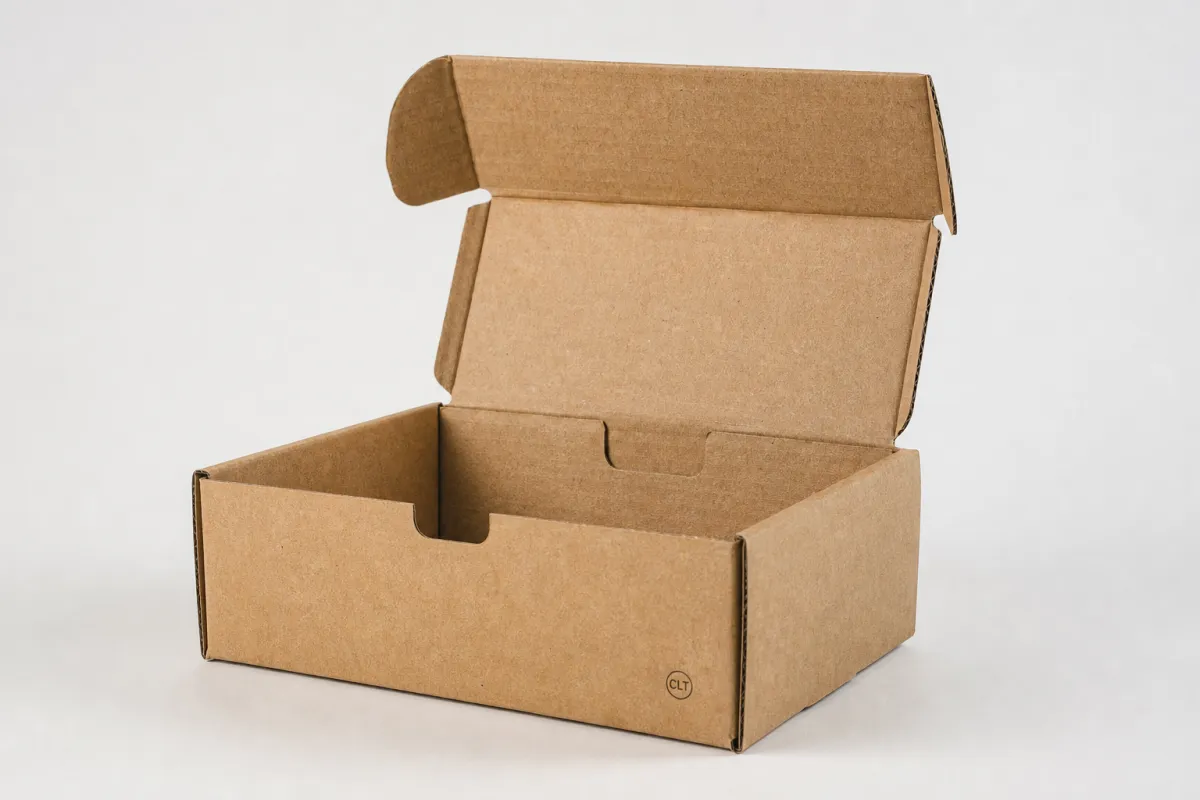
A sustainable corrugated mailer boxes supplier changes the conversation at the design stage, which is where a lot of waste gets locked in before anyone notices. Build the box around the product instead of around a generic catalog size, and headspace drops, void fill shrinks, and the chances of shifting or scuffing during parcel handling fall with it. That kind of fit does more than tidy up the shipment; it changes shipping cost, perceived quality, and damage rates in a measurable way.
The supplier also helps separate real sustainability from packaging theater. A mailer can wear earthy colors and still waste material if it uses too much board, a glossy plastic lamination, or a structure that needs inserts just to keep the product from rattling. A thoughtful sustainable corrugated mailer boxes supplier pays attention to fiber source, board structure, converting efficiency, and the smallest amount of decoration needed to tell the brand story clearly.
In practice, these mailers have to do three jobs at once. They protect the product, support the brand, and move through shipping networks without adding avoidable weight or bulk. That is why a sustainable corrugated mailer boxes supplier is often involved in dieline planning, print layout, and testing. The structure may look simple from the outside, but the decisions inside it can change performance more than most buyers expect.
A good mailer should earn its keep twice: first by protecting the item, then by not wasting material doing it.
Different product categories call for different levels of protection. Apparel and soft goods can often run in lighter E-flute mailers, while cosmetics, boxed accessories, and small electronics may need a stiffer profile or tighter locking tabs. A sustainable corrugated mailer boxes supplier should explain those tradeoffs without steering every project toward the heaviest option by default.
The same logic applies to branding. A clean one-color print on kraft liner can feel more deliberate than a full flood of ink on a heavy coated board. The goal is not to strip away personality. The goal is to print with intention, use less where less is enough, and keep the package recyclable in the normal stream whenever possible.
How a sustainable corrugated mailer boxes supplier works from board to box
Most corrugated mailers begin with liners and fluting, then move through a converting process that turns sheet stock into a flat-shipping carton. A sustainable corrugated mailer boxes supplier typically starts by selecting kraft liners, recycled-content liners, or a mixed-fiber board grade that gives the right balance of stiffness and printability. Flute choice matters too. E-flute is common for compact retail-style mailers, while B-flute or stronger combinations may be better when stacking strength and crush resistance matter more.
From there, the supplier builds the dieline around the actual product dimensions, not a rough estimate. That step is where sustainability starts to become measurable. Tight sizing means less board used per unit, less dunnage, and less dimensional weight exposure during parcel delivery. It also improves the unboxing moment, because the product sits in the package without floating around in a sea of filler.
The manufacturing sequence is straightforward, but each step affects waste and quality. Board is printed, die-cut, scored, slit, folded, and sometimes glued or locked with tabs. A sustainable corrugated mailer boxes supplier watches sheet utilization closely, because a poor layout can waste a surprising amount of board across a production run. Good converting practice is one of those unglamorous details buyers do not always see, yet it has a real environmental and cost impact.
Sustainability also shows up in the finishing choices. Water-based inks, minimal ink coverage, and no unnecessary film lamination make recycling easier than heavily coated or plastic-laminated surfaces. That does not mean every finish is off limits. It means the supplier should explain whether a coating is decorative, protective, or both, and whether it changes the recyclability of the final box. For procurement teams that need formal documentation, the fiber sourcing language at FSC's official site is useful when matching supplier claims to chain-of-custody requirements.
Good board selection should also be verified with performance data. A sustainable corrugated mailer boxes supplier should be able to speak in terms of edge crush, stacking strength, and transit durability, not just recycled content percentages. Recycled fiber is valuable, but it should be paired with enough structure to keep the product intact. A box that crushes in transit creates more waste than a slightly heavier carton that survives the route.
If your packaging mix is broader than mailers, it often helps to compare a mailer program against Custom Shipping Boxes for heavier items, or against Custom Poly Mailers if the product can tolerate a flexible format. For a full view of available formats, browse Custom Packaging Products and compare structure against shipping needs instead of choosing by appearance alone.
Key factors for choosing the right board, print, and structure
The first technical choice is the board grade, because board grade decides how stiff the mailer feels, how well it resists compression, and how much print quality you can realistically expect. A sustainable corrugated mailer boxes supplier will usually ask about product weight, transit method, and whether the carton will be stacked, packed by hand, or shipped through automated fulfillment. Those details shape the spec more than most buyers realize. A light beauty kit and a metal accessory set do not belong in the same board conversation.
Print should come next, not last. Many buyers start with artwork, then try to force the structure around it. That is backwards. A better approach is to choose a structure that supports the product, then place the brand graphics in a way that respects the board and the recycling stream. Water-based inks, limited flood coverage, and selective use of interior decoration can keep the box feeling premium without turning it into a mixed-material problem. That is one reason a sustainable corrugated mailer boxes supplier often recommends one strong visual element instead of several heavy finishes.
Sizing is where the biggest savings often appear. A mailer that is only a few millimeters tighter in the right places can eliminate inserts, reduce void fill, and lower parcel dimensional weight. For brands shipping thousands of units, that small change can add up quickly. A well-fitted package also feels more intentional to the customer, which matters for subscription boxes, cosmetics, and apparel. If the carton opens with the product sitting loosely in the middle, the whole sustainability story gets harder to believe.
Structure details should not be glossed over either. Self-locking tabs, dust flaps, tear strips, and return-ready closures each serve different purposes. A tear strip can help the customer open the box cleanly, but it needs to be placed so it does not compromise the edge during transit. Return features are useful for some apparel and premium retail programs, yet they add complexity and may add cost. A thoughtful sustainable corrugated mailer boxes supplier will walk you through those tradeoffs instead of treating every feature as a must-have.
For buyers comparing options, the following table is often a practical way to sort board choices before requesting samples. Pricing will vary by print coverage, order size, and converting efficiency, but the ranges below give a realistic starting point for custom runs.
| Board / structure | Best fit for | Typical strength profile | Approx. unit cost at 5,000 | Notes |
|---|---|---|---|---|
| E-flute single-wall mailer | Apparel, subscriptions, light cosmetics | Light to moderate crush resistance | $0.28-$0.45 | Good print surface, compact profile, efficient for parcel shipping |
| B-flute single-wall mailer | Slightly heavier consumer goods | Higher stacking and edge support | $0.34-$0.55 | More board bulk, often preferred when protection matters more than sleekness |
| Reinforced or double-wall mailer | Fragile or longer-haul shipments | Higher crush and puncture resistance | $0.60-$1.10 | More protective, but not always necessary for lighter products |
There is another layer to evaluate if your team is serious about procurement discipline: testing. Common transit benchmarks include parcel simulation and compression checks, and standards like ISTA testing protocols are widely used as a common language for shipping performance. A sustainable corrugated mailer boxes supplier does not need to quote every standard by memory, but they should know which test family fits your shipment profile and why. For heavier packaging decisions, ASTM compression language can also keep conversations grounded in data instead of opinion.
Recycled content is not automatically equal across all board grades. A 100% recycled liner can still perform differently depending on fiber length, caliper, and how the sheet was made. That is why a sustainable corrugated mailer boxes supplier should pair environmental goals with actual structural proof. Without that balance, buyers often overbuild the mailer just to feel safe, and the box becomes more material-intensive than it needs to be.
Sustainable corrugated mailer boxes supplier process and timeline
The process usually begins with a brief that includes product dimensions, target shipping method, print expectations, and any recycling or certification requirements. A sustainable corrugated mailer boxes supplier should ask for more than just length, width, and depth. They should want to know how the item is packed, whether it is fragile, whether it needs inserts, and whether the box must double as a presentation piece. Those details change the dieline, the board, and the press setup.
After the brief, the supplier typically recommends a starting structure and sends a proof or prototype. This is the moment to catch the expensive mistakes early. Does the closure hold? Does the lid pop open under pressure? Is the product too loose, or does it wedge in so tightly that the customer has to fight the packaging? A sustainable corrugated mailer boxes supplier that encourages sampling is usually the one worth listening to, because a prototype saves far more time than a full rerun.
Lead time depends on how much of the package is standard versus custom. Simple mailers with one-color print can often move faster than complicated multi-panel artwork or specialty finishes. In many production schedules, a straightforward project may take about 10-15 business days after proof approval, while a more detailed custom run can take longer once sampling, adjustments, and press scheduling are included. A sustainable corrugated mailer boxes supplier should be willing to map that sequence clearly rather than giving you a vague promise that sounds fast but tells you nothing.
There are also capacity variables that matter. Board availability, die-cut tooling, warehouse space, and freight coordination all influence the final timeline. If the supplier is also handling kitting or drop shipping, the schedule can stretch because the carton run is only one part of the job. A clean process should still feel orderly: brief, sample, approve, produce, dispatch. If the steps are fuzzy, the risk of delays rises.
From a buyer’s point of view, the real test is whether the sustainable corrugated mailer boxes supplier can explain the critical milestones without hiding behind jargon. If they can tell you when the prototype arrives, when artwork is finalized, when production starts, and when the cartons leave the facility, you can plan inventory more accurately. That matters for launch dates, seasonal programs, and replenishment planning, especially when the mailer is tied to an ecommerce calendar or subscription cycle.
Sustainable corrugated mailer boxes supplier cost, pricing, and MOQ
Cost becomes easier to read once it is broken into the parts that can actually be controlled. A sustainable corrugated mailer boxes supplier usually prices according to board grade, size, print coverage, number of structural features, and run quantity. The same box can cost very different amounts if one version uses a simple one-color exterior and the other uses full coverage graphics, extra die-cuts, and a return closure. Buyers often assume they are comparing apples to apples when they are really looking at two different production jobs.
Run size matters because setup costs get spread across more units. A 1,000-piece run typically carries a higher unit price than a 5,000-piece run, and the gap can be meaningful. For a mid-size custom mailer, a buyer might see pricing around $0.55-$0.95 per unit at 1,000 pieces, then $0.28-$0.55 at 5,000 pieces depending on size, print, and board. A sustainable corrugated mailer boxes supplier should be transparent about where that spread comes from so you can decide whether volume savings are worth the inventory commitment.
MOQ is usually tied to how efficiently the dieline nests on the sheet and how the production schedule is set up. That means the minimum is not always arbitrary. A complex structure may require more board waste per sheet, which pushes the order minimum upward. A simpler mailer can often be produced in lower counts. If your team is unsure where the threshold sits, ask the sustainable corrugated mailer boxes supplier for two quotes: one close to the lowest practical minimum and one at a better volume break. That gives you a clearer picture of how quantity affects cost.
The hidden costs are often structural, not decorative. Oversized dimensions add freight cost. Extra inserts add labor and material. Heavy print coverage may require more setup and slower press work. Laminations, special coatings, or unusual closures can also raise the price without improving shipping performance. A smart sustainable corrugated mailer boxes supplier will explain which line items are protecting the product and which ones are mostly aesthetic. That distinction is where real savings usually live.
Here is a simple comparison that buyers can use before requesting formal quotes:
- Tighter dimensions usually lower void fill and shipping waste, even if the box price itself stays similar.
- One- or two-color print often keeps conversion simpler than full-surface coverage.
- E-flute can be enough for lighter goods, while heavier products may justify B-flute or reinforcement.
- Clear specs reduce quote noise and make supplier comparisons more reliable.
There is also a procurement reality that buyers sometimes miss. The cheapest quote can be misleading if it comes from a lighter board, a smaller size, or a different unit count. Compare the exact dieline, exact print method, and exact recycled-content language before deciding. A sustainable corrugated mailer boxes supplier should welcome that level of comparison, because it proves the quote is based on real manufacturing assumptions rather than a rough guess.
If you are still refining the format, it can help to compare the mailer against other packaging choices in the same line. Some brands discover that a different carton style in Custom Shipping Boxes reduces damage for heavier items, while lighter apparel can move to Custom Poly Mailers for a separate set of economics. The point is not to force every product into a mailer. The point is to use the structure that makes the most sense for the actual shipment.
Common mistakes when sourcing corrugated mailers
The most common mistake is starting with appearance instead of transport. Buyers see a beautiful sample, approve it quickly, and only later discover that the product slides inside the carton, the edges crush during parcel handling, or the order needs extra filler to survive the trip. A sustainable corrugated mailer boxes supplier should help prevent that by anchoring the decision in product protection first and brand presentation second.
Another mistake is treating all recycled board as the same. It is not. Recycled content, liner quality, flute profile, and sheet make-up can all change the final result. A board that sounds sustainable on paper may not be the best choice if it tears easily, prints poorly, or compresses too much under stacking. The better approach is to ask for performance information, then match the grade to the shipment instead of assuming the highest recycled number automatically wins.
Under-specifying the dimensions is another expensive problem. If the box is too generous, the product shifts, freight charges rise, and the unboxing feels loose. If it is too tight, loading slows down and the carton can scuff the item or buckle at the corners. A sustainable corrugated mailer boxes supplier should treat dimensional accuracy as a cost-control issue, not just a design detail.
Sampling gets skipped far too often. Some teams move straight to the full order because they are trying to keep the schedule moving, then discover closure issues, print alignment problems, or weak glue lines after the cartons arrive. That is not a small inconvenience. It can create rework, freight delays, and packaging waste. A good sustainable corrugated mailer boxes supplier will push for a prototype because a sample catches those issues when they are cheap to fix.
Vague sustainability claims are the final trap. If a supplier says the box is “eco” but cannot explain the fiber source, the board grade, the finish, or the recycling path, the claim is doing more marketing than work. Ask whether the mailer is curbside recyclable in the common paper stream, whether the printing method changes that, and whether any coating or insert introduces a recovery issue. Those are ordinary questions, and a credible sustainable corrugated mailer boxes supplier should answer them directly.
In many programs, the biggest gains come from a few simple corrections rather than a full redesign. Tighten the dimensions, remove one unnecessary insert, trim the print coverage, and choose a board that matches the load instead of overbuilding for comfort. Those are practical moves. They are also the sort of choices that make a packaging program feel quieter, cleaner, and easier to run.
Expert tips and next steps from a sustainable corrugated mailer boxes supplier
Build a short spec sheet before asking for quotes. Include product dimensions, weight, shipping method, target recycled content, print areas, quantity, and launch timing. A sustainable corrugated mailer boxes supplier can work much faster when the brief is clear, and the comparison between vendors becomes much easier. Loose requests invite loose quotes.
Ask for a prototype early. That one step reveals whether the closure feels secure, whether the graphics are placed correctly, and whether the product behaves the way you expected inside the mailer. A sustainable corrugated mailer boxes supplier that hesitates to sample may be selling on optimism instead of performance. In packaging, optimism is not a testing method.
Compare suppliers on more than price. Look at design support, response speed, documentation, and willingness to revise the dieline if the first fit is not quite right. A sustainable corrugated mailer boxes supplier with real process discipline will explain why a change matters and how it affects board usage, freight cost, or packing speed. That kind of clarity is worth something because it reduces guesswork later.
Think through shipping economics as a whole. A slightly tighter mailer can lower dimensional weight charges. A cleaner structure can cut filler use. A better board choice can reduce damage claims. Those gains often matter more than a few cents on the box price. In practice, the most efficient sustainable corrugated mailer boxes supplier is usually the one that helps you improve the total shipped cost, not just the carton line item.
Here is a simple action path that works well for most teams: shortlist two or three suppliers, request matched quotes, ask for one sample each, confirm Lead Time and MOQ, then choose the sustainable corrugated mailer boxes supplier that proves its claims with the cleanest sample and the most disciplined process. If a quote is cheaper but the fit is off, the savings are not real.
For brands that want the package to do more than hold product, the right paper-based format can become part of the brand promise. That is why so many buyers eventually move away from generic stock sizes and into a program that reflects their actual shipping profile. A strong sustainable corrugated mailer boxes supplier does not just sell a carton. It helps you make a packaging decision that holds up in the warehouse, in transit, and in the customer’s hands.
What should I ask a sustainable corrugated mailer boxes supplier before ordering?
Ask what recycled content is available, which board grades they recommend, and whether the box stays curbside recyclable after printing or finishing. Also request exact lead time, MOQ, sample options, and a quote built from your real dimensions so you can compare one sustainable corrugated mailer boxes supplier against another on equal terms.
How do I know if a corrugated mailer box is actually sustainable?
Look for right-sized construction, responsible fiber sourcing, and printing or finishing choices that do not block normal recycling streams. If the design uses less filler, ships flat efficiently, and protects the product without overbuilding, it is usually a stronger sustainability choice from a sustainable corrugated mailer boxes supplier.
What MOQ should I expect from a sustainable corrugated mailer boxes supplier?
MOQ depends on the box size, board type, printing complexity, and how efficiently the design nests on the sheet. Standard formats often have lower minimums than fully custom mailers, so it helps to ask for both a stock-like option and a custom option from the sustainable corrugated mailer boxes supplier you are comparing.
How long does production usually take for custom mailer boxes?
Simple projects can move quickly after artwork approval, while custom dielines, sampling, and specialized print or finishing add time. A good sustainable corrugated mailer boxes supplier should give you a clear sequence for proofing, sampling, production, and shipping rather than a single vague estimate.
Can a supplier help lower cost without weakening the box?
Yes. Often the best savings come from tightening dimensions, simplifying print coverage, reducing unnecessary inserts, or adjusting board specs to match the real shipping load. The strongest value from a sustainable corrugated mailer boxes supplier usually comes from smarter design, not from cutting strength below what the product needs in transit.
If you want the shortest path to a better packaging decision, start with the product, not the artwork, and let the structure do the heavy lifting. A reliable sustainable corrugated mailer boxes supplier will help you choose board, size, print, and closures that keep the box recyclable, keep freight under control, and keep the unboxing experience clean.