Buyer Fit Snapshot
| Best fit | Custom Corrugated Mailer Boxes with Inserts projects where brand print, material claims, artwork control, MOQ, and repeat-order consistency need to be specified before quoting. |
|---|---|
| Quote inputs | Share finished size, material target, print colors, finish, packing count, annual reorder estimate, ship-to region, and any compliance wording. |
| Proofing check | Approve dieline scale, logo placement, barcode or warning zones, color tolerance, closure strength, and carton packing before bulk production. |
| Main risk | Vague material claims, crowded artwork, missing packing details, or unclear freight terms can make a low unit price expensive after revisions. |
Fast answer: Custom Corrugated Mailer Boxes with Inserts: Film, Print, MOQ, and Carton Packing should be specified like a repeatable production item. The safest quote records material, print method, finish, artwork proof, packing count, and reorder notes in one written spec.
Production checks before approval
Compare the actual filled-product size with the drawing, then confirm tolerance on folds, seals, hang holes, label areas, and retail display edges. Reserve space for logos, QR codes, warning copy, and material claims before decorative graphics fill the panel.
Quote comparison points
Review material grade, print process, finish, sampling route, tooling charges, carton quantity, and freight assumptions side by side. A quote is only useful when the supplier can repeat the same color, closure quality, and packing count on the next order.
A product can arrive intact and still feel cheap. The box does not rattle? Good. The customer still hears it sliding around inside? That is a different problem entirely. Custom Corrugated Mailer Boxes with inserts solve both sides of the equation: they protect the item in transit and make the unboxing feel planned rather than patched together. In my experience reviewing packaging samples, that difference shows up fast. One loose cavity can turn an otherwise solid shipper into a noisy little liability.
That is why this format shows up so often in ecommerce, subscription kits, cosmetics, candles, electronics, and mixed-product sets. You are not just buying a carton. You are building a small shipping system. With custom Corrugated Mailer Boxes with inserts, the insert is not decoration. It is part of the structure that keeps the product fixed through drops, vibration, compression, and the rough handling that happens between the warehouse and the front door. I have seen a simple two-part insert save a launch that would have otherwise been buried under replacement shipments.
If you are comparing packaging options, practical terms matter more than pretty ones. A box that merely contains a product is not the same as a box that supports it. The first may look fine on a desk. The second has to survive a conveyor, a truck, a porch drop, and a customer who opens the flap with no patience at all. That is the difference between ordinary product packaging and packaging design that earns its cost. Customers are not gonna forgive a box that only behaves well in a mock-up.
Custom Corrugated Mailer Boxes with Inserts: What They Are and Why They Work
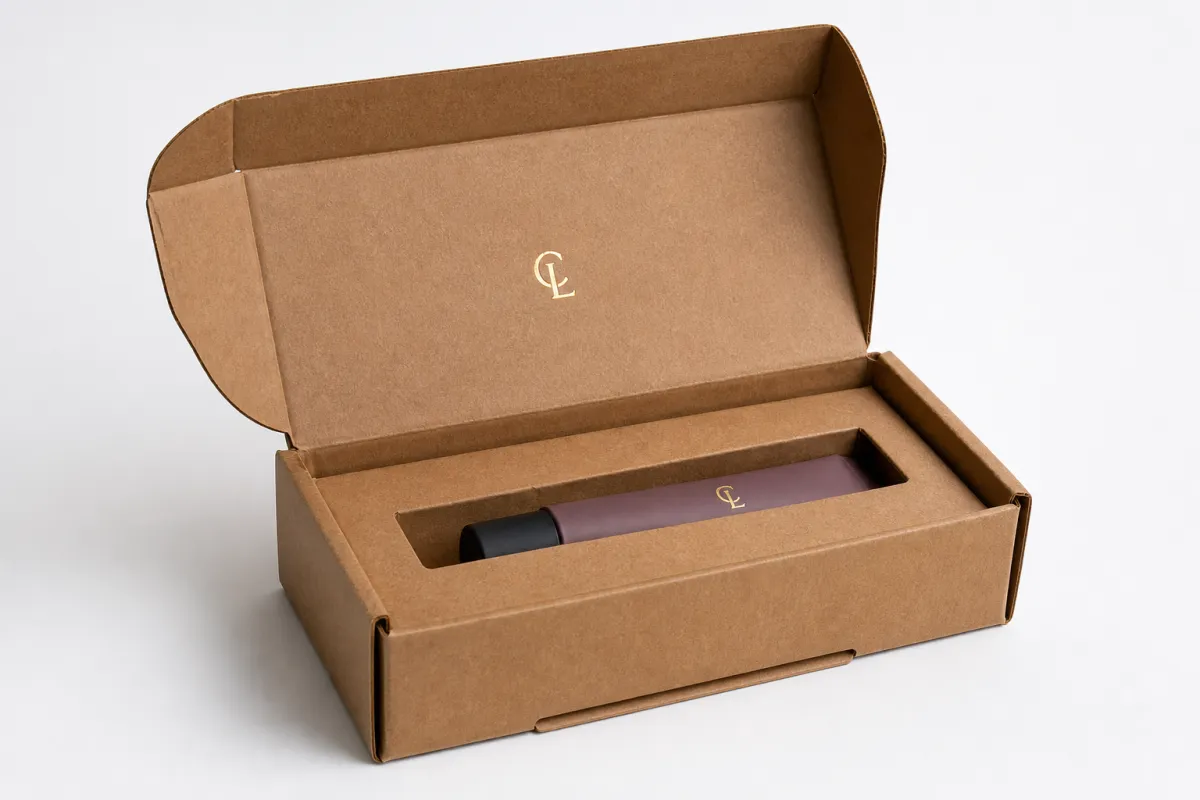
In plain English, a corrugated mailer box is a folding box made from corrugated board, usually with a front tuck or self-locking style that makes it easy to assemble and ship. The insert is the internal fit component that holds the product in a fixed position. In Custom Corrugated Mailer Boxes with inserts, those two pieces are designed together. That step gets skipped when a project is rushed, and that is usually how returns start.
The outer mailer takes the hit on impact and edge protection. The insert handles retention and alignment. That pairing matters because most shipping damage does not come from one dramatic blow. It comes from small movements repeated over and over: a bottle bumps one wall, a glass jar shifts, a corner rubs, a label scuffs, a lid loosens. Custom corrugated mailer boxes with inserts reduce that movement so the product stays centered and cushioned.
From a packaging buyer’s point of view, this format is especially useful when the shipment needs to look organized without a lot of loose fill. Shredded paper, tissue, and air pillows can help in some cases, but they are not a substitute for a fit that actually matches the product. Cosmetics, skincare sets, candles, small electronics, and multi-item retail packs all benefit from an insert that gives each item a defined place. That looks cleaner, packs faster, and usually travels better.
The branding effect is real too. Customers notice structure. A well-made insert turns a box into a presentation. It tells them the brand thought about the package, not only the product. That matters for branded packaging and package branding because the unboxing experience often becomes the first real impression after the purchase is already decided. A tidy cavity and a straight product can do more for perception than a louder print job.
Custom corrugated mailer boxes with inserts are not only for premium products. They make sense any time a product can move around, scratch itself, leak, tilt, or arrive with a crushed corner. I have seen simple inserts save more money than fancy print ever could, because the box stopped damage before the damage turned into a refund. That is not glamorous, but it is the kind of result operators remember.
A good insert should do three jobs: hold the product, keep packing fast, and survive the trip without turning into expensive confetti.
If you want the engineering angle, parcel testing matters. A well-designed pack should be evaluated against real handling conditions, not hopeful assumptions. Industry references such as ISTA methods and ASTM drop or distribution tests are useful because they push the package beyond a shelf-level fit check. That is the point of custom corrugated mailer boxes with inserts: the box has to work in transit, not only in a clean sample photo.
How Custom Corrugated Mailer Boxes with Inserts Protect Products
The protection logic is simple, which is why people sometimes overlook it. The outer corrugated mailer absorbs impact and provides crush resistance. The insert stops lateral movement, keeps the product upright, and spreads force away from fragile points. Custom corrugated mailer boxes with inserts work because the product is not left floating inside the shipper like a loose screw in a drawer.
There are several common insert styles, and each one solves a slightly different problem. Corrugated inserts are the standard choice for most mailer programs. Chipboard dividers help separate multiple items. Paperboard trays are useful for lighter products and tighter presentation. Die-cut locks can hold shapes in place with very little extra material. Molded-fit structures are less common in short-run corrugated work, but they can be smart for products that need a more exact cradle.
- Corrugated inserts are good for moderate weight and general protection.
- Chipboard dividers help when you need compartments for sets or samples.
- Paperboard trays suit lighter items where presentation matters as much as retention.
- Die-cut locks create precise hold points for bottles, jars, or accessories.
The biggest win is reduced movement. Less movement means less scuffing, fewer cracked corners, fewer leaks from caps backing off, and less label damage from abrasion. That is not theory. A loose item inside a box can hit the same wall dozens of times before it reaches the customer. Custom corrugated mailer boxes with inserts interrupt that cycle.
They also improve the opening experience. Instead of digging through filler to find the product, the buyer sees a fixed layout. That matters for cosmetics, subscription kits, and retail packaging because the presentation feels intentional. A product sitting centered in a clean die-cut nest tells the customer the brand cares about detail. Random stuffing tells them the opposite.
One insert can hold multiple items if the shapes are friendly and the weights are balanced. A skincare set with two bottles and a card can often work in a single tray. A candle, a sample pack, and a small accessory may do fine in one structure too. But if you are shipping glass, mixed weights, or products with caps that can pop loose, separate compartments are often safer. Custom corrugated mailer boxes with inserts are flexible, but the layout still has to respect physics. Annoying? Yes. True? Also yes.
There is a tradeoff. Tighter retention usually means better protection, but it can slow packing if the fit is too aggressive. That is where good packaging design pays off. The insert should hold firmly without making the operator force the product in or fight the box on every unit. If the crew needs extra muscle to close pack-outs, the design is too tight. If the product rattles, it is too loose. The middle ground is the target, and that is why custom corrugated mailer boxes with inserts deserve sampling, not guessing.
Cost, Pricing, MOQ, and Unit Cost for Custom Corrugated Mailer Boxes with Inserts
Pricing for custom corrugated mailer boxes with inserts is driven by the usual suspects: box size, board grade, print coverage, insert complexity, finishing, and order quantity. Bigger boxes use more material. Heavier board costs more. More print coverage means more press time and more setup. A plain kraft mailer with a simple insert will almost always cost less than a full-color Custom Printed Box with a multi-piece fit structure.
MOQ is where a lot of buyers get surprised. Some suppliers will quote small runs, and yes, you can often order a few hundred units if you need to. The economics usually improve somewhere around 1,000 to 3,000 pieces because tooling, setup, and prepress costs spread out better. At 5,000 units and above, the unit price tends to soften further, especially on repeat jobs. That is why custom corrugated mailer boxes with inserts are often cheaper in meaningful volume than people expect after the first prototype is behind them.
Simple inserts usually cost less than multi-piece or deeply die-cut structures. That sounds obvious, but it matters in real quotes. If the insert is one flat corrugated part with a few folds, it is easier to produce. If it needs several cavities, layered reinforcement, or very tight tolerances around an odd product shape, the price rises. Add premium coating, foil, or a complex print build and you are in a different cost bracket. That does not make the structure bad. It just means the quote is honest.
| Option | Typical Use | Approx. Unit Cost at 1,000 | Approx. Unit Cost at 5,000 | Main Tradeoff |
|---|---|---|---|---|
| Simple mailer + one-piece corrugated insert | Cosmetics, small candles, light kits | $1.10-$2.10 | $0.75-$1.40 | Lower cost, less visual drama |
| Die-cut mailer + fitted corrugated insert | Glass jars, electronics, premium product packaging | $1.60-$3.00 | $1.05-$2.00 | Tighter fit, slower sampling if shape is tricky |
| Multi-compartment insert with printed mailer | Subscription kits, sets, mixed SKUs | $2.20-$4.50 | $1.50-$3.20 | Better organization, more tooling and pack-out steps |
Those ranges are working estimates, not a promise. Exact pricing depends on board caliper, print coverage, insert geometry, and freight. Still, they are useful because they show where custom corrugated mailer boxes with inserts sit relative to other formats. A cheap box that fails in transit is not cheap. It just moves the expense into replacements, support tickets, and refund processing. That is a mess nobody wants.
If you are comparing packaging lines, it can help to look at related formats too. For some products, Custom Packaging Products includes a better mix of structures than a single mailer setup. For lighter shipments, Custom Poly Mailers may be the better answer. For heavier or more crush-sensitive products, Custom Shipping Boxes can make more sense. The point is not to force every SKU into one box style. The point is to match the packaging to the ship lane and the product.
Quote accuracy improves quickly when the buyer sends the right details. Exact product dimensions. Product weight. Quantity per box. Whether the insert is glued, nested, or loose-fit. Whether the outer box needs full-color print or just a logo and a couple of brand elements. That is the difference between a useful quote and a number that gets revised three times before production even starts. Custom corrugated mailer boxes with inserts are much easier to price correctly when the inputs are specific.
Process and Timeline: From Dieline to Delivery
The production path for custom corrugated mailer boxes with inserts is usually straightforward, but there are a few points where sloppy input creates delays. It starts with discovery. The supplier needs product dimensions, target quantity, weight, shipping method, and the kind of unboxing you want. Then comes dieline creation, structural sampling, print approval, prepress, manufacturing, and shipment. If the job is international, freight transit can easily become the longest part of the schedule.
Sampling matters more here than it does for a simple mailer. A millimeter off on a basic sleeve is annoying. A millimeter off on an insert can ruin the whole fit. The product might be too tight to pack, too loose to protect, or too deep in the cavity to look right. For that reason, structural samples are worth the time on custom corrugated mailer boxes with inserts, especially when the item is fragile, valuable, or shaped like something a designer invented at 2 a.m.
Typical timeline ranges look something like this:
- Concept and quote: 1-3 business days if the specs are complete.
- Dieline and structural sample: 3-7 business days, longer if the insert is complex.
- Artwork proofing: 1-3 business days once the layout is final.
- Production: often 10-15 business days after approval for standard runs.
- Freight: varies by lane, but domestic shipping can still add several days.
That is the honest version. Fast jobs happen, but speed is easier when the structure is clean. If the insert is clever but not weird, production usually stays manageable. If the shape needs three extra folds, a special lock, and a printer to hold their breath during setup, the timeline stretches. Custom corrugated mailer boxes with inserts are one of those projects where clarity saves time. Missing artwork files, vague dimensions, and late-stage design changes are the usual culprits when schedules slip.
Custom printed boxes are not hard to manufacture when the art is ready and the fit is settled. What slows the process is uncertainty. If you know the product size, the desired finish, and the insert function, the rest becomes a production problem instead of a guessing game. That is the kind of package branding workflow that actually stays on schedule.
Key Design Factors That Change Performance
The first design question is product size. Not just the longest side. You Need to Know how much clearance the item can tolerate and how much room the team needs to pack it without fighting the insert. In custom corrugated mailer boxes with inserts, the insert should lock the item in place without crushing it. That sounds obvious until a product with a soft finish arrives scratched because the cavity was too snug.
Board thickness and flute type matter next. Thicker board adds rigidity and crush resistance, but it also adds weight and can make the box bulkier. Thin board is cheaper and lighter, but not every product can live with it. Heavier items often need stronger board and a more supportive cavity design. If the product is a glass jar or a metal component, the insert has to do more than look tidy. It has to hold the load consistently through transit. That is one of the main reasons custom corrugated mailer boxes with inserts are so common in higher-risk shipments.
Product shape changes everything. Round bottles need different cavity logic than square cartons. A candle tin behaves differently from a pump bottle. A two-piece accessory set needs a different insert plan than a single object. If your product has a closure, spout, cap, or pump top, account for that geometry. A package can fail because the body fits but the closure sits high and takes the impact. That kind of failure is boring, repeated, and expensive.
Print and branding choices also matter. Outside print gives you the strongest shelf and mail box presence. Inside print can turn the unboxing into a more premium moment, though it adds cost. Aqueous coating, matte lamination, or soft-touch all change the feel. None of these decisions should happen in isolation. If the box looks great but slows your fulfillment line, the packaging design is out of balance. Custom corrugated mailer boxes with inserts should support both brand presentation and warehouse speed.
Sustainability belongs in the decision too, but it works better when the claims are specific. Use the minimum material that still protects the product. Choose recyclable fiber-based options where possible. Avoid plastic fillers if a paper-based insert can do the same job. If recycled content or forestry claims matter, verify them through sources such as FSC. For broader material and waste context, the EPA has useful guidance on packaging and recycling systems. That is more useful than a vague “eco-friendly” label slapped on a box because the marketing deck needed another claim.
If you are building a full lineup, compare the mailer with the rest of your product packaging system. A strong corrugated shipper can pair nicely with retail packaging for shelf sales, or with a simpler shipper for direct-to-consumer orders. The right choice depends on how the product is sold, not just how it is stored. That is where a little packaging strategy saves a lot of wasted material later.
Common Mistakes When Ordering Custom Corrugated Mailer Boxes with Inserts
The most common mistake is designing around the box instead of around the product. That sounds backwards because it is backwards. The product is what needs to survive the route. The box exists to help it do that. In custom corrugated mailer boxes with inserts, the fit should start with the product dimensions, the weight, and the handling risk. If you begin with the outer carton and hope the insert will somehow fix everything later, you are buying a problem with a logo on it.
Another mistake is overcomplication. Some insert concepts look excellent on screen and miserable in a packing room. Too many folds. Too many steps. Too much waste. The result is slower fulfillment, more labor, and more chances for a worker to place the product wrong. A good structure should feel simple to the operator. The product should go in, the mailer should close, and the pack-out should repeat the same way every time. That is the kind of discipline custom corrugated mailer boxes with inserts need if the line is going to stay efficient.
Tolerances are also underestimated all the time. Products vary slightly from unit to unit. Closures sit a little higher. Labels add thickness. Some coatings scuff if they are pressed too hard. If the fit is designed with zero tolerance, you will feel that error during assembly. One batch may pack fine, and the next batch will feel like the product grew overnight. Leave enough room for real production variation.
People also send weak quote requests. A photo is not a spec sheet. A guessed dimension is not a measurement. If you want accurate pricing for custom corrugated mailer boxes with inserts, send the actual product dimensions, product weight, desired quantity, print coverage, and any protection requirements. If you have a sample or existing dieline, include it. Every missing detail turns a clean quote into a slow back-and-forth thread that nobody enjoys reading.
The expensive mistake is not paying for the better box. The expensive mistake is paying twice because the first box could not survive the job.
There is one more mistake worth calling out: choosing a box that looks beautiful but cannot be packed consistently by a real team on a real shift. Pretty matters, but repeatability matters more. If the crew has to twist, force, or second-guess the insert every time, the packaging will fail in the warehouse before it ever fails in transit. Custom corrugated mailer boxes with inserts should improve the operation, not add friction to it. If the process feels kinda fussy in testing, it will feel worse at volume.
Expert Tips and Next Steps for Custom Corrugated Mailer Boxes with Inserts
If you want the design to hold up, start with a drop-test mindset. Ask how the pack behaves in the worst likely route, not the gentlest one. That means vibration, corner drops, compression, and repeated handling should all be part of the conversation. A box that survives a desk test is nice. A box that survives a shipping lane is the one you actually need. For custom corrugated mailer boxes with inserts, that testing mindset is usually the difference between a polished launch and a pile of replacement orders.
Use a packaging brief that includes product dimensions, weight, desired order quantity, branding goals, and the protection level you expect. If the product is fragile, say so. If the product needs to look premium for a subscription audience, say that too. If packing speed matters more than theatrical presentation, be direct about that. The more honest the brief, the more useful the structural recommendation. That is especially true for custom corrugated mailer boxes with inserts, where small design choices can change both cost and performance.
Ask for a structural sample before committing to a full run if the item is unusually shaped, high value, or easy to damage. Sampling lets you check actual fit, not theoretical fit. You can see whether the cavity is too deep, whether the product sits flush, whether the lid closes with pressure, and whether the insert slows packing. In a packaging project, those are not minor details. They are the whole job.
A good next-step workflow looks like this:
- Define the product specs and ship lane.
- Choose the insert style that matches the product shape and fragility.
- Request a quote with exact dimensions and quantity.
- Review the sample and test pack speed.
- Approve print and lock production.
If you are comparing options side by side, build one version around lower unit cost and another around stronger protection. Then compare them with real sample units. The cheaper version may be perfectly fine for light products or short local routes. The stronger version may save money if the product is fragile or the return rate is already creeping up. That is the kind of decision that should be made with evidence, not optimism. Custom corrugated mailer boxes with inserts are worth the extra planning when the product, the brand, and the ship lane all need to work together.
For brands that care about presentation, this format can do a lot of heavy lifting. It can support branded packaging, make a premium launch feel controlled, and give the customer a cleaner opening moment. It also keeps the product where it belongs, which is still the main reason most buyers end up ordering it. The real test is simple: if the box looks good but the product still arrives damaged, the packaging failed. If custom corrugated mailer boxes with inserts solve both the look and the transit problem, you are buying the right thing. If they do not, adjust the insert first, not the artwork.
Frequently Asked Questions
What products work best in custom corrugated mailer boxes with inserts?
They work best for fragile, premium, or multi-item products that need fixed placement, such as cosmetics, candles, electronics, glass jars, and subscription kits. They are also a smart choice when you want fewer returns, less internal movement, and a cleaner unboxing experience.
How much do custom corrugated mailer boxes with inserts usually cost?
Price depends on size, board type, print coverage, insert style, and quantity. Simple structures cost less, while complex die-cuts and premium finishes raise unit cost. Higher quantities usually lower the per-box price because setup costs spread out across the run.
What is the typical timeline for custom corrugated mailer boxes with inserts?
Timeline usually includes sample development, approval, production, and shipping. The box structure may take longer if the insert needs testing. Delays often come from artwork changes, dimension revisions, or waiting on sample approval, so clear specs save time.
Do the inserts need to be glued into the mailer box?
Not always. Some inserts are friction-fit, some are nested into the box, and some are glued depending on the product and packing process. The right choice depends on how fast your team packs, how fragile the product is, and whether you want the insert to stay fixed during transit.
What should I send to get an accurate quote for mailer boxes with inserts?
Send exact product dimensions, product weight, quantity per box, desired print coverage, target order quantity, and any special protection needs. If you have a reference sample or dieline, include that too; vague guesses are how quotes get messy and budgets get surprised.
If you want packaging that looks sharp and survives the kind of handling carriers actually deliver, custom corrugated mailer boxes with inserts are the place to start. Begin with the product dimensions, test the insert fit on a real sample, and check pack speed before you approve production. That simple sequence catches most problems early and keeps the final box doing what it was supposed to do in the first place.

