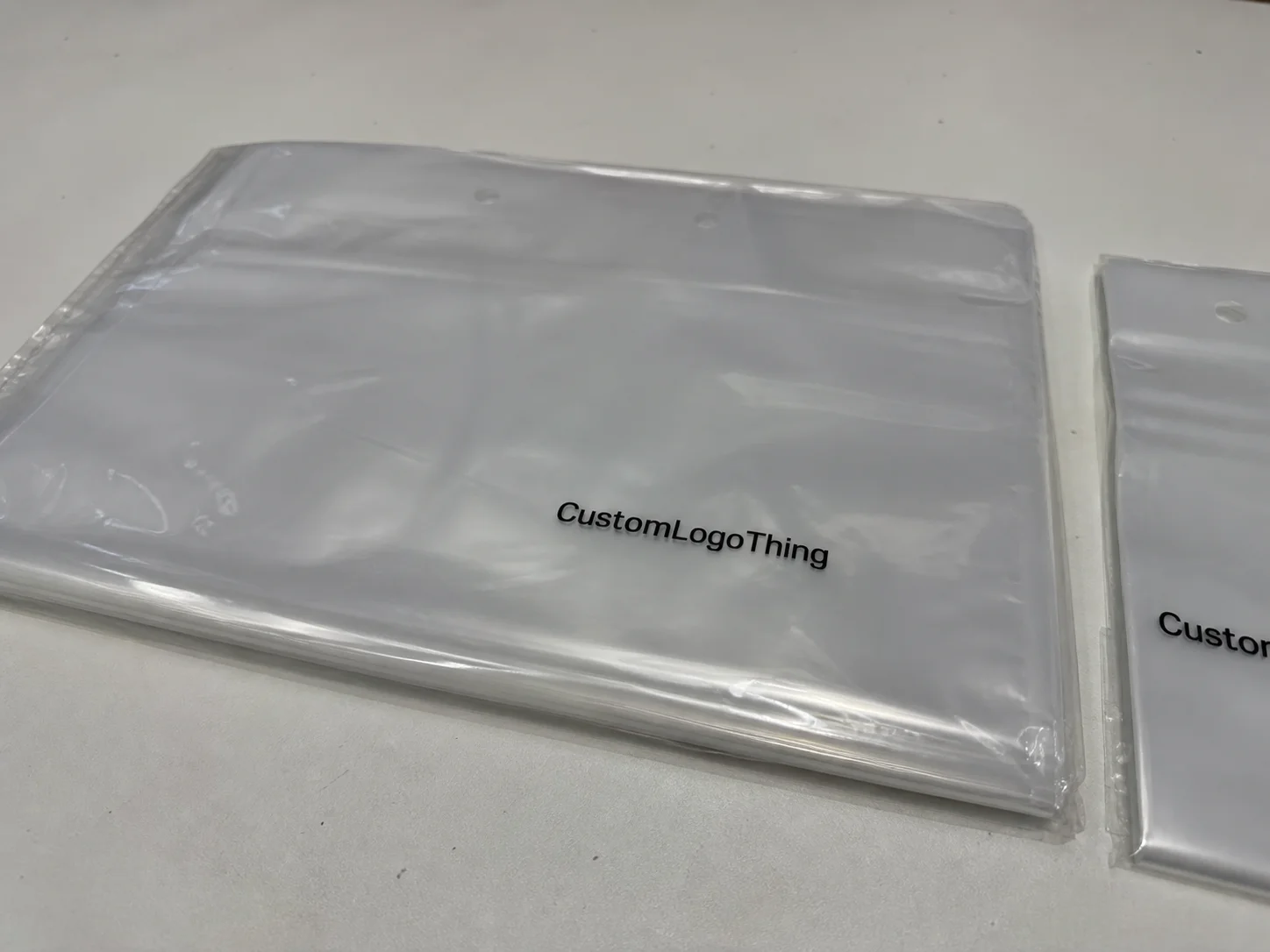
Buyer Fit Snapshot
| Best fit | Sustainable Ecommerce Mailers Supplier projects where brand print, material claims, artwork control, MOQ, and repeat-order consistency need to be specified before quoting. |
|---|---|
| Quote inputs | Share finished size, material target, print colors, finish, packing count, annual reorder estimate, ship-to region, and any compliance wording. |
| Proofing check | Approve dieline scale, logo placement, barcode or warning zones, color tolerance, closure strength, and carton packing before bulk production. |
| Main risk | Vague material claims, crowded artwork, missing packing details, or unclear freight terms can make a low unit price expensive after revisions. |
Fast answer: Sustainable Ecommerce Mailers Supplier: Film, Print, MOQ, and Carton Packing should be specified like a repeatable production item. The safest quote records material, print method, finish, artwork proof, packing count, and reorder notes in one written spec.
Production checks before approval
Compare the actual filled-product size with the drawing, then confirm tolerance on folds, seals, hang holes, label areas, and retail display edges. Reserve space for logos, QR codes, warning copy, and material claims before decorative graphics fill the panel.
Quote comparison points
Review material grade, print process, finish, sampling route, tooling charges, carton quantity, and freight assumptions side by side. A quote is only useful when the supplier can repeat the same color, closure quality, and packing count on the next order.
Custom Logo Things
Sustainable Ecommerce Mailers Supplier: How to Choose
A sustainable ecommerce mailers supplier should do more than quote a bag price and wait for an order. The right sustainable ecommerce mailers supplier helps you balance shipping protection, recycled content, print quality, and the actual freight cost, which is where a lot of brands find out that the cheapest-looking mailer is not the cheapest choice once damage, returns, and dimensional weight show up.
For brands shipping apparel, accessories, beauty items, books, or lightweight hard goods, the mailer is often the first packaging touchpoint a customer notices. That is why the best sustainable ecommerce mailers supplier acts partly as a materials advisor, partly as a production planner, and partly as a logistics partner. If you are also building out broader packaging programs, it helps to look at options like Custom Packaging Products and category-specific solutions such as Custom Poly Mailers, because the ideal mailer depends on what you ship, how far it travels, and how much abuse it takes on the way.
Eco-friendly language is easy to print on a spec sheet. Measurable details are what matter: recycled percentage, curbside recyclability, compostability claims that can be verified, fiber traceability, adhesive type, print coverage, and whether the material holds up in transit. That is the practical side of choosing a sustainable ecommerce mailers supplier, and it is where a buyer can separate good packaging from good marketing.
What a sustainable ecommerce mailers supplier really does
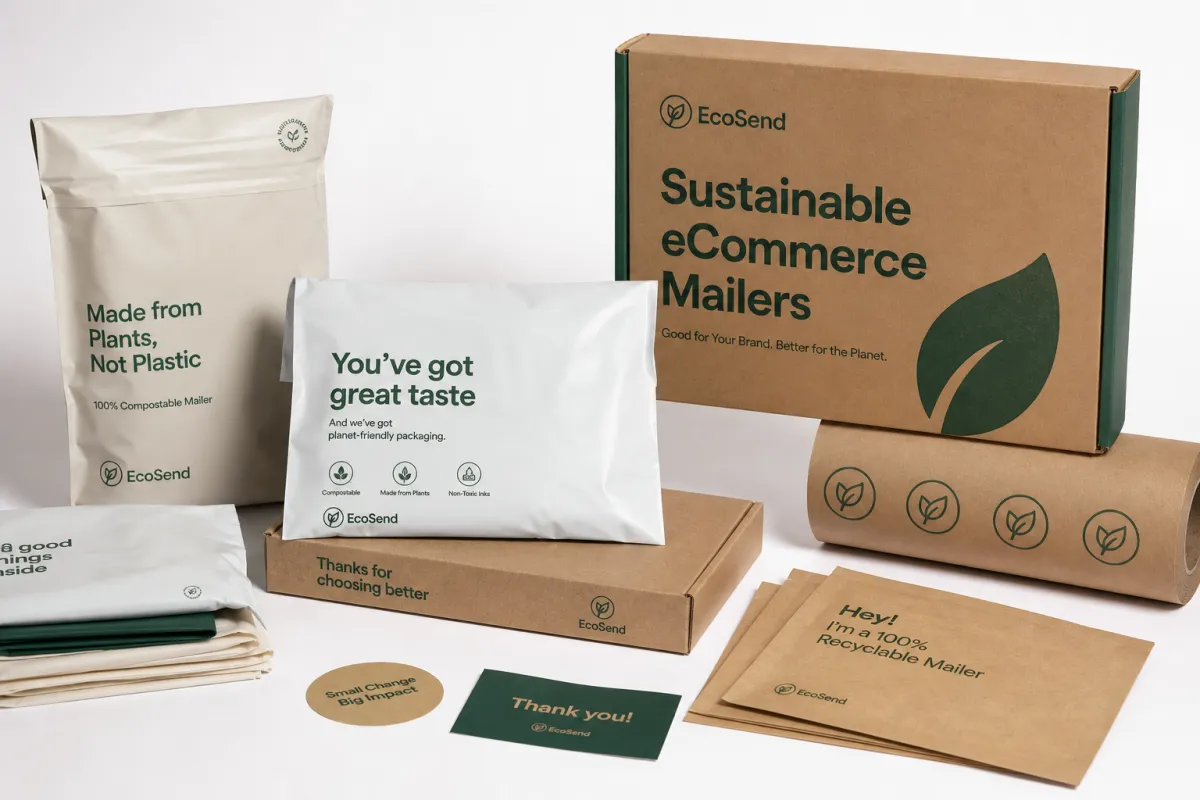
A sustainable ecommerce mailers supplier is not just a source for envelopes and bags. In practice, the supplier is helping you answer a few hard questions at once: how much protection the product needs, what happens to the mailer after delivery, how much space it occupies in the fulfillment lane, and what the total landed cost looks like after freight and spoilage are counted. A mailer that looks cheaper on paper can become the most expensive choice if it leads to crushed corners, dented boxes inside the bag, or higher return rates.
That is why the role goes beyond buying. A strong sustainable ecommerce mailers supplier understands fiber sourcing, post-consumer recycled content, seal reliability, print behavior, and how a packaging format fits into your shipping profile. Good suppliers ask about the product first, not just the artwork. They want dimensions, weight, shipping method, destination mix, and whether the item is soft goods, rigid goods, or something with sharp edges that can punch through a weak wall.
There is also a real difference between broad eco-friendly language and measurable performance. A mailer described as “green” tells you almost nothing. A mailer with 60% post-consumer recycled fiber, curbside recyclable paper construction, water-based inks, and documented chain-of-custody claims tells you a lot more. A sustainable ecommerce mailers supplier should be able to explain which claims are verifiable, which are conditional, and which depend on local disposal systems.
Mailers sit in a wider sustainable packaging mix. Some shipments do fine in a paper mailer with a strong self-seal strip. Others need a recycled poly mailer because moisture resistance matters more than paper fiber content. Some products need a padded mailer, while others benefit from a hybrid format that uses paper outside and cushioning inside. A smart sustainable ecommerce mailers supplier does not force every product into the same structure; they match the structure to the shipping reality.
A mailer is only sustainable in a useful sense if it protects the product, fits the fulfillment process, and ends up in a disposal stream your customer can actually use.
That is the real job. A sustainable ecommerce mailers supplier helps you lower waste without creating hidden costs elsewhere. Better right-sizing can reduce dimensional weight charges. Better material selection can reduce damages. Better print decisions can improve brand presentation without making the mailer harder to recycle. Those are the tradeoffs worth discussing before anyone signs off on a production run.
I have seen brands focus so hard on a recycled-content number that they missed a basic issue: the mailer was too thin for the product, and the damage rate quietly ate up the savings. That kind of mistake is frustrating because it feels responsible at first glance, then turns into rework and replacement orders. A good supplier keeps that from happening by asking a few blunt questions early.
How a sustainable ecommerce mailers supplier turns specs into mailers
The best sustainable ecommerce mailers supplier starts with intake, not assumptions. A useful intake conversation usually covers product size, product weight, pack-out style, shipping channel, climate exposure, branding needs, and the level of abuse the parcel is likely to see. A lightweight T-shirt sent to a nearby customer has very different requirements than a ceramic accessory or a boxed cosmetic kit shipping across zones.
From there, the supplier maps those details to a structure. Kraft Paper Mailers often suit dry goods and apparel. Recycled Poly Mailers can be a better fit when moisture, stretching, or snag resistance matters. Expanded paper cushioning works for products that need extra surface protection but still benefit from a paper-forward format. Reinforced seams, gussets, and strong closure strips are small details, but they decide whether the mailer holds together after the trip through a sorting center.
A sustainable ecommerce mailers supplier should also talk about testing. Real performance is usually checked with seal strength, tear resistance, puncture resistance, drop performance, compression behavior, and moisture response. For shipping validation, many buyers look for an ISTA-style test plan, and for more formal package testing there are ASTM methods that help define consistent conditions. The exact test sequence depends on the product and route, but the principle stays the same: if the mailer fails in transit, the sustainability claim becomes a paper-thin argument.
Good suppliers do not simply overspecify the structure because “more material” sounds safer. They try to remove unnecessary thickness and avoid oversized dimensions while keeping the package strong enough for the journey. That is one of the marks of a capable sustainable ecommerce mailers supplier: the ability to protect the contents without turning every shipment into a heavier, bulkier, more expensive parcel than it needs to be.
Just as important, sustainability goals get translated into material choices that fit the application. Reducing virgin plastic makes sense in some programs. Increasing post-consumer recycled content makes sense in many paper and poly formats. Improving recyclability at end of life may matter more than chasing a compostable label that few recipients can dispose of correctly. A thoughtful sustainable ecommerce mailers supplier keeps those tradeoffs visible, which makes the final decision easier to defend internally.
When the process is done well, you should feel a little less guesswork and a lot more confidence. That is usually a good sign. It means the supplier is talking in terms of product behavior, not just packing-room buzzwords.
Key factors that determine performance and sustainability
Material selection is the first place to slow down. A sustainable ecommerce mailers supplier may offer recycled paper, FSC-certified fiber, recycled polyethylene, compostable blends, or hybrid formats that combine paper and protective layers. The right choice depends on the product, the shipping environment, and the customer’s disposal options. FSC certification can support responsible fiber sourcing, while recycled content can reduce virgin material demand, but neither one fixes a design that tears too easily.
Construction details matter just as much as base material. Glue strips, seam geometry, gusset design, tear strips, and seal consistency all affect how a mailer behaves once it is filled and handled. A weak adhesive strip can peel during transit. A poorly designed gusset can split when the item shifts inside. A sustainable ecommerce mailers supplier should be able to explain why one structure performs better than another, not just show a glossy sample and hope you do not ask about the seam.
Print choices also affect both appearance and recyclability. Heavy ink coverage, metallic effects, specialty coatings, and certain laminations can complicate end-of-life handling. That does not mean every printed mailer is a bad idea. It means the sustainable ecommerce mailers supplier should tell you what the print system adds, what it subtracts, and whether it changes how the customer can dispose of the package. Water-based inks and restrained coverage often make more sense than flooding the entire surface with dense graphics.
Operational fit is another piece that gets overlooked. A mailer that saves five percent in material but slows packing by several seconds may not be the best answer in a busy fulfillment center. Storage space matters too. So does machine compatibility if you are using automated bagging or labeling equipment. The best sustainable ecommerce mailers supplier understands that a package is part of a workflow, not a standalone object.
Sustainability and performance should be judged together. Fewer damages mean fewer replacement units, fewer reshipments, and less waste overall. Better right-sizing means less void fill and lower transport burden. If a mailer improves transit survival and reduces extra packing material, the total environmental result can be better than a supposedly greener structure that fails more often. A serious sustainable ecommerce mailers supplier keeps the discussion rooted in real shipping outcomes, not slogans.
There is one more factor that often gets missed: consistency from run to run. A mailer that performs well on a sample order but arrives with looser seals, a different fiber feel, or a slight size drift on the next production run can create real headaches. That kind of variation is not dramatic, but it is enough to interrupt fulfillment and drive everyone a little crazy.
What to ask about end-of-life claims
If a supplier says the mailer is recyclable or compostable, ask where and under what conditions. Local recycling rules vary, and compostable packaging is only meaningful if the disposal pathway exists for your customer. The EPA provides helpful recycling guidance at EPA recycling resources, and it is worth checking how that guidance lines up with your customers’ actual curbside programs. A sustainable ecommerce mailers supplier should be comfortable answering those questions without hiding behind vague language.
What to ask about transit testing
Ask for test results in writing. That can include drop height, conditioning environment, seal retention, and any puncture or vibration data that was used to approve the structure. A supplier that has thought through testing usually has a more believable recommendation. A sustainable ecommerce mailers supplier that avoids testing language altogether is asking you to trust appearance over evidence, which is a risky way to manage a packaging program.
Cost, pricing, and MOQ: what a sustainable ecommerce mailers supplier includes
Pricing for mailers is rarely just a unit number. A proper quote from a sustainable ecommerce mailers supplier usually includes material grade, size, print coverage, seal type, order quantity, tooling or plate costs if custom printing is involved, and freight to your facility. If one quote is lower than the others, the difference often lives in one of those details. It may also hide in the assumptions: a lighter basis weight, a shorter print run, a different shade standard, or a looser testing requirement.
MOQ matters because it changes both cost and risk. Higher minimums usually lower unit pricing, but they increase inventory exposure and storage needs. That can be fine for a brand with stable volume and a narrow SKU set. It is harder for a seasonal business, a launch-stage brand, or a company shipping many product sizes. A sustainable ecommerce mailers supplier should be able to explain the break point where ordering more becomes cheaper per piece but less efficient overall.
Short-run and high-volume pricing behave differently. A small custom run may carry higher setup costs and a higher piece price, while a larger program can spread those costs across more units. Still, the lowest unit price is not always the best total-cost option. If the cheaper mailer tears, creates more damage claims, or forces you to add extra cushioning, the total cost may rise fast. That is exactly where a sustainable ecommerce mailers supplier adds value by comparing the quote against the real shipping outcome.
| Mailer Type | Typical Use | Common Unit Cost Range | Notes |
|---|---|---|---|
| Recycled paper mailer | Apparel, books, flat non-fragile goods | $0.18-$0.32 at 5,000 units | Good fiber story; watch moisture and puncture resistance |
| Padded paper mailer | Small accessories, cosmetics, light gift items | $0.24-$0.42 at 5,000 units | More protection, more material, still printable |
| Recycled poly mailer | Soft goods, moisture-sensitive shipments | $0.12-$0.24 at 5,000 units | Lightweight and durable; disposal guidance matters |
| Hybrid paper/poly mailer | Mixed-product programs needing extra tear resistance | $0.22-$0.40 at 5,000 units | Can balance strength and recyclability claims, depending on structure |
Freight and warehousing should stay in the conversation. A larger mailer may cost less per unit but take up more pallet space, which can matter if you hold several months of stock. A sustainable ecommerce mailers supplier that quotes only ex-factory pricing without discussing freight leaves out part of the real budget picture. Packaging buyers know that the purchase order is only one line in the total cost stack.
Hidden costs deserve equal attention. Damaged product replacement can dwarf the difference between two mailers. Return handling adds labor. Customer service time rises when packages arrive torn, dirty, or open. A bad unboxing experience can also weaken brand perception, even if the mailer itself was cheaper to buy. A good sustainable ecommerce mailers supplier will talk about total impact, not just the invoice.
Process and timeline: from quote to production steps
A reliable sustainable ecommerce mailers supplier follows a fairly predictable path from inquiry to shipment. It usually begins with a specification review, then sample development or sample pull, then artwork proofing, then production scheduling, then manufacturing, quality checks, and final freight. If any of those steps get rushed, the risk of mismatch goes up. Packaging programs often fail because someone treated sampling as a formality instead of a real decision point.
Lead time depends on several variables. Custom printing adds proofing and setup time. Recycled material availability can change the schedule if the supplier needs a particular grade or film blend. Tooling requirements matter if the format needs a new size or a new sealing pattern. Order volume matters too, because a large run may need a longer machine window. A sustainable ecommerce mailers supplier should separate sample timing, production timing, and transit time so nobody confuses them later.
Most delays show up in a handful of places: artwork revisions, color matching, material substitutions, and rush requests that bypass normal queue time. Each of those can be managed, but only if they are identified early. A packaging team that waits until the last week before launch is usually forcing the supplier into a corner. The better approach is to build a cushion into the calendar and give the sustainable ecommerce mailers supplier time to resolve issues before they become expensive.
For many custom programs, a typical timeline after proof approval may fall somewhere in the 12-20 business day range for production, with freight time added separately. That range is not fixed, because structure, quantity, print complexity, and material availability all affect it. A careful sustainable ecommerce mailers supplier will explain the variables instead of promising a date that sounds nice but has no production logic behind it.
That timing discipline matters most during launches and replenishment cycles. If the new packaging is tied to a product release, a promotion, or a retail event, missing the packaging window can stall the whole shipment plan. From a buyer’s point of view, the best sustainable ecommerce mailers supplier is the one that makes timing visible early enough for you to act on it.
If you want a technical reference point for package testing and transit evaluation, ISTA test standards are a useful starting place. Not every mailer program needs formal certification, but the testing mindset helps keep the conversation grounded in transport reality rather than packaging assumptions.
Step-by-step guide to choosing the right supplier
Start with your product and shipping data. A sustainable ecommerce mailers supplier can only recommend the right structure if you know the package weight, the product shape, the fulfillment method, and the shipping risks. Are you shipping flat items or irregular forms? Is the product fragile? Does it absorb moisture? Does it have sharp corners that could puncture a thin wall? Those details change the answer quickly.
Then build a shortlist of suppliers that can prove material sourcing, packaging performance, and sustainability claims. A supplier that gives you vague language is not helping you make a defensible choice. Ask for recycled content ranges, fiber certification if relevant, and any documentation behind the environmental claim. The best sustainable ecommerce mailers supplier will be ready to show the basis for the claim instead of relying on adjectives.
Request samples and run them through the real pack-out flow. That means sealing them, labeling them, stacking them, and shipping them through normal channels, not just flexing them in your hand. A mailer can look excellent on a sample table and still fail when it is handled by a fast-moving fulfillment team. A dependable sustainable ecommerce mailers supplier knows that field testing is the part that matters.
After that, compare suppliers with a scorecard. Price matters, but so does MOQ, lead time, recyclability, strength, print quality, and service responsiveness. A buyer who ranks only unit cost may end up with a mailer that saves a few cents but creates recurring problems. The more balanced method is to compare total fit for your operation. That is where a sustainable ecommerce mailers supplier earns the order instead of just winning the quote.
- Gather product dimensions, weight, and fragility data.
- Ask for material specs and proof for sustainability claims.
- Review samples in the actual fulfillment process.
- Compare quotes with a consistent scorecard.
- Place a test order before scaling up.
Final selection should come down to operational fit. The right sustainable ecommerce mailers supplier makes fulfillment easier, not harder. The mailer should protect the product, align with your waste-reduction goals, and hold up to your shipping pattern without constant exceptions or manual workarounds.
A good rule of thumb: if the packaging team cannot explain why the chosen mailer is better than the runner-up in both performance and end-of-life handling, the decision is probably not finished yet. That extra hour of comparison is usually cheaper than the first month of avoidable damage claims.
Common mistakes and expert tips before you order
The most common mistake is choosing a mailer based on one sustainability claim alone. Recycled content is good, but it is not the whole story. A mailer still has to survive handling, protect the product, and fit the disposal reality of the customer. A sustainable ecommerce mailers supplier should help you look at the whole picture, because a single claim can hide weakness somewhere else.
Over-specifying is another trap. Thicker walls, heavier coatings, and elaborate print effects can make a mailer more expensive and harder to recycle without adding much value. Plenty of brands assume more material automatically means better packaging. That is not always true. A more efficient design, recommended by an experienced sustainable ecommerce mailers supplier, often gives you the same protection with less waste.
Skipping sample testing is a costly shortcut. If your product is sharp, fragile, or oddly shaped, you need evidence before you place a full order. Small changes in product geometry can change puncture risk dramatically. A sustainable ecommerce mailers supplier should be willing to help you test the mailer in the actual environment, not just approve it visually.
Here are a few practical habits that usually pay off:
- Standardize a small number of mailer sizes instead of carrying too many variations.
- Match mailer dimensions closely to the most common product dimensions.
- Ask for written performance data, not just verbal reassurance.
- Check local recycling guidance before making disposal claims on the package.
- Review your damage rate after launch and compare it to the baseline.
Another useful habit is to think in terms of the whole shipment lane. A sustainable ecommerce mailers supplier that understands fulfillment can help you decide whether a stronger paper format, a recycled poly option, or a hybrid design gives you the best balance. That is often more valuable than chasing the most eco-looking material on the shelf.
The cleanest next step is usually a small pilot order. Ask the sustainable ecommerce mailers supplier for proof, compare a few structures side by side, and test them against your real packaging workflow. That moves the discussion from guesswork to evidence, which is where a packaging decision should live.
For brand owners building out a broader lineup, it can also help to review Custom Packaging Products alongside your mailer plan so the outer packaging, inserts, and branded finish all tell the same story. A package program is easier to manage when the components are chosen together instead of one item at a time.
One last practical tip: do not let a nice-looking sample fool you if the seal feels weak or the opening is awkward. Those small annoyances turn into warehouse friction fast, and the warehouse is where packaging either proves itself or gets blamed for everything.
Frequently asked questions
How do I choose a sustainable ecommerce mailers supplier for a small brand?
Look for flexible MOQ options, clear sample support, and a sustainable ecommerce mailers supplier that can explain the tradeoff between cost, protection, and recyclability in plain language. Ask for a quote based on your actual shipping size and monthly volume, then test the mailer in your fulfillment flow before you commit to a larger order.
What should I ask a sustainable ecommerce mailers supplier about materials?
Ask what the base material is, how much recycled content it contains, and whether any coatings, inks, or laminations affect recyclability. A strong sustainable ecommerce mailers supplier should be able to provide documentation for environmental claims and confirm whether the mailer fits the disposal system used by your customers.
How long does production usually take with a sustainable ecommerce mailers supplier?
Timing depends on sample approval, artwork revisions, material availability, and whether the order needs custom print or tooling. A dependable sustainable ecommerce mailers supplier will separate proofing time, factory lead time, and freight transit time so you can plan inventory and launch dates with fewer surprises. Rush orders may be possible, but they often reduce flexibility.
What drives pricing for sustainable ecommerce mailers?
The main drivers are material type, size, print coverage, quantity, and any special construction such as padding or reinforced seals. Freight, storage, and the cost of returns from damaged shipments also affect the real total cost. A good sustainable ecommerce mailers supplier should help you compare price against protection and waste reduction, not just hand you the lowest number.
Can sustainable ecommerce mailers still protect fragile products?
Yes, if the structure matches the product weight, shape, and shipping risk. The best option may be a reinforced paper mailer, a padded design, or a recycled poly format depending on the item. A sustainable ecommerce mailers supplier should treat testing as essential, because protection performance matters more than a label alone.
Choosing a sustainable ecommerce mailers supplier is really about finding the right fit between material science, shipping economics, and brand standards. If the supplier can prove the structure, explain the claims, and keep the program efficient in production and transit, you end up with packaging that feels lighter, looks better, and wastes less over time. The most practical next move is simple: pick one real SKU, request two or three mailer structures, run them through an actual ship test, and choose the version that protects the product, fits your disposal story, and keeps fulfillment moving without extra handholding. That is the kind of decision that holds up after the first thousand orders, not just in the sample room.