Buyer Fit Snapshot
| Best fit | Sustainable Retail Bags Supplier projects where brand print, material claims, artwork control, MOQ, and repeat-order consistency need to be specified before quoting. |
|---|---|
| Quote inputs | Share finished size, material target, print colors, finish, packing count, annual reorder estimate, ship-to region, and any compliance wording. |
| Proofing check | Approve dieline scale, logo placement, barcode or warning zones, color tolerance, closure strength, and carton packing before bulk production. |
| Main risk | Vague material claims, crowded artwork, missing packing details, or unclear freight terms can make a low unit price expensive after revisions. |
Fast answer: Sustainable Retail Bags Supplier: Film, Print, MOQ, and Carton Packing should be specified like a repeatable production item. The safest quote records material, print method, finish, artwork proof, packing count, and reorder notes in one written spec.
Production checks before approval
Compare the actual filled-product size with the drawing, then confirm tolerance on folds, seals, hang holes, label areas, and retail display edges. Reserve space for logos, QR codes, warning copy, and material claims before decorative graphics fill the panel.
Quote comparison points
Review material grade, print process, finish, sampling route, tooling charges, carton quantity, and freight assumptions side by side. A quote is only useful when the supplier can repeat the same color, closure quality, and packing count on the next order.
A bag is never just a bag. It is the last piece of packaging a customer handles, carries into the street, and quietly judges against the brand they just paid for, which is exactly why a Sustainable Retail Bags supplier can either strengthen your presentation or make it feel a little off in one handoff. If the handle bites into the hand, the bottom sags, or the print starts scuffing before the customer reaches the car, the sustainability message gets flimsy pretty fast.
That is the real test. A sustainable retail bags supplier is not simply a vendor using green language on a quote sheet. It is a supplier that can produce retail bags with recycled, renewable, reusable, or lower-impact materials, then back those claims with specifications, samples, and documentation that hold up when someone asks hard questions. A good one understands print quality, load performance, freight realities, and the fact that attractive packaging still has to survive checkout, transit, and a bit of rough handling.
For brands, the payoff is practical: better brand fit, cleaner shelf presence, fewer complaints, and fewer bags ending up in the bin because they split on the walk home. For buyers, the bigger value is control. You get a clearer view of material choices, price drivers, lead times, and what the supplier can actually deliver without drama. That matters more than a polished sustainability sentence in a sales deck, no matter how nice it sounds.
This is a straight look at bag construction, sourcing, pricing, timelines, and proof. If you are trying to choose a sustainable retail bags supplier for custom Printed Retail Bags, eco-friendly shopping bags, recycled paper bags, or reusable tote bags, the details below should help you avoid expensive guesswork and a few avoidable headaches.
Why a Sustainable Retail Bags Supplier Matters More Than Most Buyers Expect
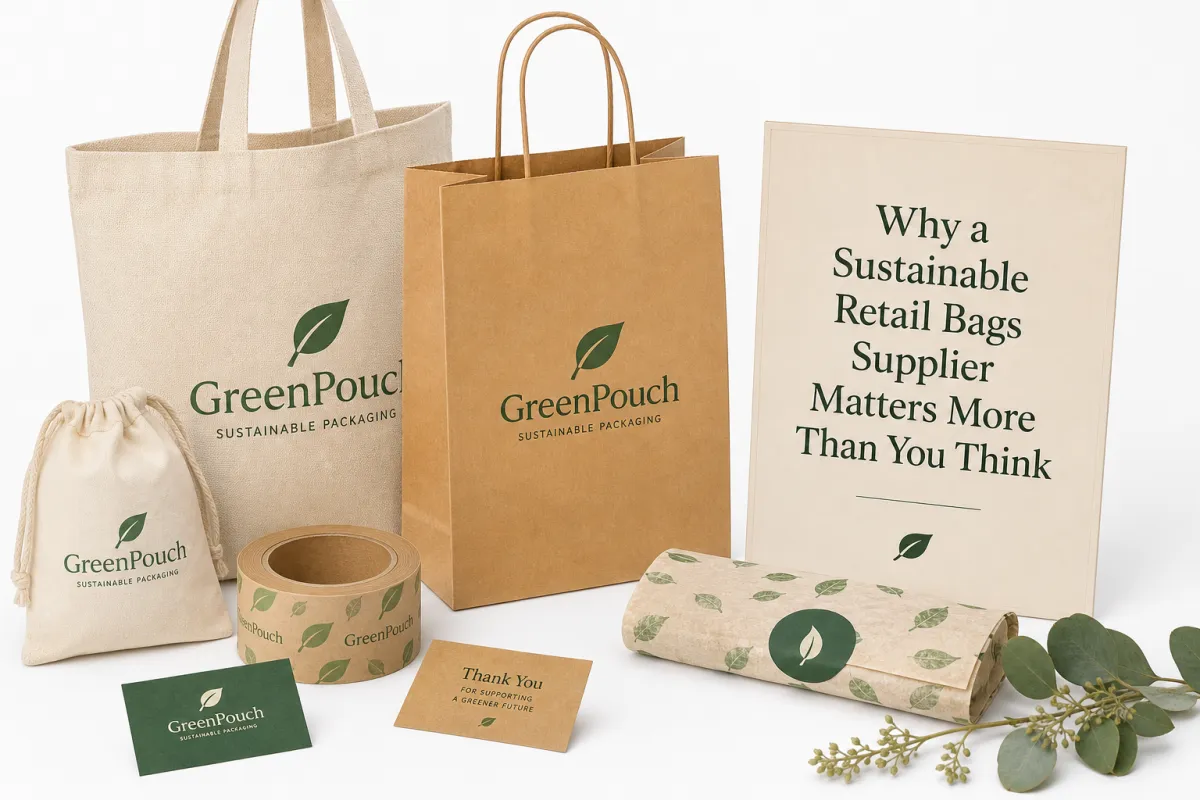
The bag sits in a strange little spot in the customer journey. It is not the main product, yet it is the thing people actually touch after purchase. That makes it a brand signal, a transport tool, and a small structural test all at once. A sustainable retail bags supplier matters because the bag either supports your positioning or quietly contradicts it.
Here is the blunt version: a flimsy bag is waste with branding on it. If a customer buys a candle, a bottle of skincare, or a folded garment and the bag tears before they get home, they do not think about your sustainability page. They think about the mess. A reliable sustainable retail bags supplier helps you avoid that mismatch by pairing lower-impact materials with construction That Actually Works in real retail use.
That also affects shelf presence. In retail, presentation is not vanity. It is proof that the brand pays attention. A well-made kraft bag with a clean logo can look more intentional than a glossy bag that reads as cheap plastic from across the room. The right sustainable retail bags supplier knows how to balance recycled content, print finish, handle style, and structure so the bag still feels premium without trying too hard.
What does the term actually mean? In packaging terms, a sustainable retail bags supplier offers bags designed around one or more of these approaches:
- Recycled content, such as recycled paper or recycled poly.
- Renewable fibers, such as kraft paper, cotton, or jute.
- Reusable designs that encourage multiple trips instead of one-time use.
- Lower-impact production, including smarter material use, fewer coatings, and cleaner sourcing.
That does not mean every bag is compostable, and it does not mean every recycled bag is automatically the best answer. Context matters. A paper bag that fails under load is a bad bag, even if the brochure says it is planet-friendly. A sustainable retail bags supplier should be able to explain the tradeoffs without hiding behind vague words like “eco-conscious” or “green alternative.”
For brands, the business case is simple enough. Better materials can reduce complaints, improve customer experience, and support a cleaner brand story at checkout. A strong sustainable retail bags supplier also helps you avoid the common trap where the bag looks sustainable in a mockup but falls apart in actual store use. That gap costs money, and usually someone else notices it before the buyer does.
One more thing: if a supplier cannot show how the bag was made, what it is made from, and how it should be used, that supplier is selling a feeling, not a packaging solution. A credible sustainable retail bags supplier gives you enough data to compare options fairly, and enough honesty to tell you when a material is better for reuse than recycling, or the other way around. That kind of plain talk is rare, but it is what good sourcing looks like.
How a Sustainable Retail Bags Supplier Works Behind the Scenes
Most buyers only see the finished sample. The work before that sample is where a sustainable retail bags supplier earns trust or loses it. The process usually starts with material selection, then moves into print method, bag conversion, finishing, packing, and freight. Each step affects cost and performance, and each step can make a “sustainable” bag better or worse.
Material choice is the first big fork in the road. A good sustainable retail bags supplier will usually walk you through several families:
- Kraft paper: Common for retail bags, often 120gsm to 250gsm depending on size and load.
- Recycled paper: Useful when recycled content is part of the message, though print brightness and tear strength vary.
- Recycled poly: Better for water resistance and repeated use, but recycling rules vary by market.
- Cotton and canvas: Strong, reusable, and premium-looking, though heavier and usually pricier.
- Jute: Durable and tactile, with a natural look that fits certain retail categories.
- Compostable options: Best handled carefully, because local disposal rules and real-world compostability are not the same thing.
Construction matters just as much as the material. A 150gsm kraft bag with weak handles can perform worse than a slightly lighter bag with better reinforcement. A smart sustainable retail bags supplier will look at gussets, handle type, fold lines, bottom board inserts, glued seams, and coatings. That is where the bag either survives a 3 kg load or gives up halfway to the parking lot.
Here is the short version of what changes performance:
- Gussets create room for wider items and reduce bulging stress.
- Handle style changes comfort and load capacity; twisted paper handles and die-cut handles do very different jobs.
- Basis weight or thickness affects stiffness, tear resistance, and whether the bag feels premium or fragile.
- Reinforcement at the top edge and handle attachment points can prevent failure where customers actually pull the bag.
- Coatings and laminations can improve appearance and moisture resistance, but they may affect recyclability.
The supplier’s credibility shows up in the paperwork. A genuine sustainable retail bags supplier should be able to share material specifications, recycled content documentation, relevant certifications, and test data where appropriate. For paper products, that may include FSC chain-of-custody support; for performance testing, ask whether the bag has been checked against common transportation or drop requirements. If you want broader packaging reference points, groups like the FSC and the ISTA are useful starting places for sourcing and transit expectations.
That proof matters because sustainability claims are easy to write and harder to defend. A supplier that uses real specs, clear chain-of-custody documents, and practical explanations is doing the work. A sustainable retail bags supplier that says “eco-friendly” five times and nothing else is not helping you buy well, even if the sample looks decent on the table.
Production itself is usually straightforward, but not simple. Printing may be flexo, offset, screen, or digital depending on the bag and run size. Conversion can involve cutting, folding, gluing, sewing, or heat sealing. Packing then affects how many bags go in a carton, how they are protected, and how much freight you pay. A good sustainable retail bags supplier will explain which steps are standard and which steps add cost.
One detail buyers sometimes miss: a greener material choice can still create waste if the production method is mismatched. Heavy coatings, oversized cartons, or poor nesting can add shipping volume and undercut the benefit you were aiming for. That is why the best suppliers think about the entire build, not just the material name on the spec sheet.
Cost, Pricing, MOQ, and Quote Basics
This is where buyers get trapped. The first quote looks cheap, then the real numbers show up like unpaid bills. A competent sustainable retail bags supplier should break pricing into material, printing, finishing, packing, and freight. If the quote is just one neat number with no detail, ask for more before you compare anything.
What drives unit cost? Usually five things: material grade, bag size, print coverage, handle style, and quantity. A larger bag using thicker kraft with full-color print and reinforced paper handles will cost more than a plain small bag with one-color print and a simple die-cut. That sounds obvious, yet plenty of buyers still compare quotes as if all bags are the same. They are not. A transparent sustainable retail bags supplier will say that plainly.
MOQ, or minimum order quantity, changes the math. Lower minimums often mean higher unit costs because setup expenses have to be recovered across fewer bags. Some suppliers also limit customization at lower quantities, which is not a scam; it is basic production economics. If you need 500 pieces, your sustainable retail bags supplier may offer a stock-based or semi-custom route. If you need 5,000 or 10,000 pieces, the price per unit usually becomes far more manageable.
To make quote comparison easier, use the same spec sheet for every supplier. That means exact dimensions, material thickness or gsm, print colors, handle style, coating or lamination, packaging method, and delivery terms. The best sustainable retail bags supplier can quote cleanly when the brief is clean. The worst ones hide behind vague wording and hope you will not notice the differences.
| Bag Type | Typical MOQ | Typical Unit Range | Best Use | Main Tradeoff |
|---|---|---|---|---|
| Kraft paper retail bag | 500 to 2,000 pieces | $0.18 to $0.45 | Gift shops, apparel, cosmetics, general retail | Good value, but moisture resistance is limited unless treated |
| Recycled paper bag | 1,000 to 3,000 pieces | $0.22 to $0.55 | Brands prioritizing recycled content messaging | Color and surface consistency can vary more than virgin paper |
| Recycled poly tote | 1,000 to 5,000 pieces | $0.40 to $1.20 | Repeat-use retail, events, heavier items | Longer useful life, but end-of-life disposal depends on local systems |
| Cotton or canvas tote | 500 to 2,000 pieces | $1.20 to $3.50 | Premium retail, memberships, long-term reuse | Higher cost and heavier shipping weight |
| Jute bag | 500 to 1,500 pieces | $1.50 to $4.00 | Home, specialty food, premium gifts | Natural texture looks strong, but print detail can be less crisp |
Those ranges are not laws. They are practical bands that help you spot offers that are too low to be believable or too high to be justified. A sustainable retail bags supplier quoting a kraft bag at half the normal range may be using lighter paper, thinner handles, or a very different build. Maybe that is fine. Maybe it is not. You need the exact spec before you decide.
Hidden costs can bite harder than the unit price. Plates, dies, sample charges, special inks, rush fees, and freight can push the landed cost up more than a small change in material ever will. A sustainable retail bags supplier should be able to tell you whether the artwork requires a new plate, whether the handle style adds tooling, and whether repeat orders avoid some of those costs. That is how you get a real budget instead of a headline number that looks better than it is.
Here is the smarter comparison method: ask each sustainable retail bags supplier for a landed quote using identical assumptions. That means product cost, inland freight if relevant, packaging, and final shipping all in one view. If one quote excludes freight and another includes it, you are not comparing suppliers. You are comparing accounting tricks, and that gets messy quickly.
Also watch how the supplier treats revisions. A quote that looks cheap but collapses after the artwork changes by one color is not a bargain. The better sustainable retail bags supplier tells you exactly what changes the price, how repeat runs are handled, and whether a reorder can reuse the same tooling or spec file. That kind of clarity saves time later, which is worth real money.
Process and Timeline: From Brief to Delivery
The workflow is usually simple on paper and messy in real life. A solid sustainable retail bags supplier moves through briefing, quoting, sampling, revisions, approval, production, inspection, packing, and shipment. Each step can move quickly if decisions are clean, or crawl if the artwork is unclear and the spec changes every three days.
Start with the brief. The supplier needs dimensions, intended load, target material, print colors, finish, handle style, quantity, and delivery date. If you skip that detail, the quote may still arrive, but it will be built on guesswork. A trustworthy sustainable retail bags supplier prefers a real brief because it reduces rework later.
Sampling is where the truth starts talking. A sample may look good on screen and still fail in hand. Check the bag with the actual products it will carry, not with a random stack of office supplies. Test the handle comfort, the bottom strength, crease recovery, and whether the print scuffs when rubbed. If your sustainable retail bags supplier cannot provide a usable sample or at least a pre-production proof, that is a warning sign.
Typical timeline variables are easy to list and easy to underestimate:
- Paper bags often move faster than sewn or specialty bags.
- Custom totes usually need more time for fabric sourcing, stitching, and finishing.
- Overseas production adds buffer for shipping, customs, and port delays.
- Artwork changes can add several days, especially if new dies or plates are needed.
- Color matching slows approvals because screen, paper stock, and ink all change the result.
For a simple retail paper bag, a common lead time after proof approval might be 12 to 18 business days, depending on quantity and print complexity. Custom sewn bags can run longer, often 20 to 35 business days or more if materials are sourced separately. A good sustainable retail bags supplier will not promise the moon just to win the order. They will give you a timeline with some cushion, because packaging still has to arrive before your launch, not during your apology email.
Approval bottlenecks usually fall into the same four buckets: artwork fixes, missing dielines, color matching, and late spec changes. If you want bags by a store opening, build the timeline backward and then add a buffer. A practical sustainable retail bags supplier knows that reprints, sample tweaks, and freight delays happen. Pretending otherwise is how brands end up handing out plain backup bags on opening day.
A small bit of process discipline helps a lot here. If you approve a sample with a weak handle or a coating that changes the print color, that issue becomes your issue later. The supplier can only build what gets signed off. It sounds simple, but it is one of the easiest places for a project to go sideways.
“The best packaging order is the one that arrives boringly on time. Fancy is nice. On time is what pays the bills.”
That quote sounds blunt because it is true. A sustainable retail bags supplier is only as useful as the real-world timing they can hit. If the supplier can do great work but misses every launch window, the packaging still fails the business.
How to Compare a Sustainable Retail Bags Supplier
Now the useful part: how do you separate a decent quote from a good partner? Start with five criteria: material integrity, print quality, sustainability proof, communication speed, and total landed cost. A sustainable retail bags supplier should score well on all five, but not every project weights them equally. A premium apparel brand may care more about finish. A grocery or specialty food brand may care more about strength and compliance.
Use samples the way customers will. Load test the bag. Walk with it. Hold it by the handle for a few minutes. Rub the print lightly. Fold it a few times if the bag will be stored flat in a back room. A sample from a sustainable retail bags supplier tells you more after ten minutes of abuse than after a tidy glance on a white table.
Ask for documents, not promises. If the bag claims recycled content, ask what percentage, what the certification looks like, and whether the claim applies to the whole bag or only part of it. If the bag is compostable, ask for the relevant test basis and whether that claim matches your market’s disposal system. A reliable sustainable retail bags supplier should be able to explain those details without getting slippery.
Here are the questions I would ask, in order:
- What exact material and thickness are you quoting?
- What changes the price the most?
- How much of the quote is tooling, sampling, or freight?
- What happens if the artwork shifts after approval?
- Can you hold the spec for repeat orders?
- What proof do you have for recycled content, FSC paper, or compostability claims?
- How do you test the bag for real retail use?
Those questions tell you whether the supplier is structured or just enthusiastic. A serious sustainable retail bags supplier gives direct answers. A weak one circles back to “high quality” and “custom options” until the conversation runs out of oxygen.
Communication speed matters more than people admit. If a supplier takes three days to answer basic questions before the order is placed, they will not become faster after production starts. A dependable sustainable retail bags supplier responds clearly, sends updated specs when something changes, and does not disappear when you need a revised proof. That kind of steady communication is boring in the best way.
Here is the practical scoring method I recommend:
- Material integrity: Does the bag hold the intended load without tearing or sagging?
- Print quality: Are logos, small text, and solid fills clean and consistent?
- Proof: Can the supplier document recycled content, fiber sourcing, or test standards?
- Responsiveness: Do they answer with specifics, not canned lines?
- Total cost: Does the landed price still work after freight, setup, and extras?
And yes, the cheapest quote can lose for perfectly sensible reasons. A cheaper sustainable retail bags supplier might offer thinner material, weaker handles, or fewer decoration options. That is not automatically bad, but it must fit the job. The best supplier is the one that gives you the right bag without turning every reorder into a mild crisis.
One more filter: ask how they handle repeats. A good sustainable retail bags supplier keeps spec history, artwork files, and tooling notes organized enough that reorders are easier and cheaper. That matters a lot if your bag is tied to seasonal selling, retail openings, or a brand that reorders every few months. If the second order feels like starting from zero, the system is not doing you any favors.
Common Mistakes When Choosing Sustainable Bags
The biggest mistake is falling for vague green language. “Eco-friendly” is not a specification. It is a mood. A real sustainable retail bags supplier can tell you the material, the source, the percentage of recycled content, the print process, and the disposal path. If they cannot, the sustainability claim is basically packaging cosplay.
Another common error is over-specifying the bag. Buyers sometimes ask for thick material, premium handles, full coverage print, special coating, and luxury finishing on a project that does not need half of that. The result is a pricey bag that looks nice but blows the budget. A smart sustainable retail bags supplier can help trim excess without making the bag feel cheap.
The opposite mistake is under-specifying it. This is how customers get bags that fold oddly, tear under normal load, or crush the product inside. A beautiful retail bag that cannot carry the purchase is just expensive confetti. A credible sustainable retail bags supplier will ask about item weight, bag dimensions, and store conditions before quoting, because those details decide whether the bag works.
There is also a retail reality problem. Many brands choose a material because it sounds responsible, then ignore the way customers actually use the bag. If the bag is likely to be reused, a more durable reusable tote may be smarter than a compostable bag that gets tossed with regular trash. A good sustainable retail bags supplier will match the material to the use case instead of trying to make every bag sound noble.
Timeline mistakes are just as painful. Late artwork approvals, skipped samples, and unrealistic turnaround expectations can wreck the schedule. I have seen buyers assume every sustainable retail bags supplier can work at the same speed, which is a nice idea until it is not. Paper and sewn bags do not behave the same way. Overseas and local production do not behave the same way. Budget those differences from the start, and you will avoid a lot of scrambling.
Here are the most common avoidable mistakes, plain and simple:
- Trusting buzzwords instead of asking for documents.
- Comparing different specs as if they were the same bag.
- Ignoring load requirements until the first customer complaint.
- Forgetting freight and setup fees in the budget.
- Choosing the rarest material instead of the one that fits the actual retail job.
On the standards side, use the references that matter. If you are checking transportation durability, ask whether sample testing aligns with common ISTA methods. If you are checking fiber sourcing, look for FSC or equivalent chain-of-custody support on paper-based items. If your supplier claims something unusual, ask them to show the method behind the claim. A strong sustainable retail bags supplier will not dodge that request.
Finally, do not treat sustainability and functionality as competing goals. They are supposed to work together. A sustainable retail bags supplier that offers a bag your customers can actually reuse, recycle, or dispose of properly is solving the job. A supplier that only sells a story is creating paperwork, not packaging. That distinction saves time, money, and a fair amount of frustration later on.
Expert Tips and Next Steps for Shortlisting Suppliers
If you want to move fast without making a bad decision, keep the process disciplined. Ask for two or three samples from each sustainable retail bags supplier on your shortlist. Compare them under load, not just on a desk. Then ask each supplier to quote the exact same spec with the same quantities, artwork assumptions, and shipping terms. That is the cleanest way to expose where the differences really are.
Build a shortlist around one primary supplier and one backup. That sounds boring. It is also how adults manage packaging. A missed shipment from your main sustainable retail bags supplier should not stop a launch, a store opening, or a seasonal promotion. If you have a backup who already understands your spec, you are in a much safer position.
Document your bag spec sheet now, even if you are not placing an order today. Include dimensions, material, basis weight or thickness, print colors, finish, handle style, quantity, packaging method, and delivery window. A detailed spec sheet helps any sustainable retail bags supplier quote accurately and helps you compare the next round without starting from zero.
Use this simple decision filter:
- Reusable goal: Pick a bag designed to survive multiple uses and reasonable weight.
- Recyclable goal: Keep coatings and mixed materials in check, and confirm local recycling rules.
- Recycled-content goal: Ask for proof and accept that appearance may vary a bit.
- Premium retail goal: Focus on print quality, handle feel, and structure.
- Budget control: Keep the spec tight and avoid decorative extras that do not help the customer.
That is the real shortcut: choose the bag for the job, not for the slogan. A sustainable retail bags supplier should help you balance performance, proof, timeline, and cost for the next reorder, not just the first sample. If they can do that, keep them close. If they cannot, keep looking.
My practical recommendation is simple. Decide what success looks like in plain language, then ask every sustainable retail bags supplier to prove they can hit it. If the bag needs to look premium, hold 4 kg, ship in under three weeks, and meet a recycled-content target, say all of that upfront. The right supplier will tell you what is realistic and what is not. That honesty is worth more than a glossy pitch, and it is the closest thing to a clean buying decision in this category.
For buyers managing branded retail packaging, the best result usually comes from starting with a tight spec, requesting samples, and choosing the sustainable retail bags supplier that gives the strongest mix of performance, proof, timeline, and cost. That is how you get bags that support the brand instead of quietly undermining it, and it is the one step that keeps the whole project grounded in reality.
How do I verify a sustainable retail bags supplier is legitimate?
Ask for material specs, recycled-content proof, and certification documents that match the exact bag type you want. Then request a sample and test it under real retail load instead of trusting a sustainability label alone. A real sustainable retail bags supplier can explain the production method clearly; vague answers usually mean vague sourcing.
What MOQ should I expect from a sustainable retail bags supplier?
Paper bags often allow lower MOQs than sewn or specialty bags because setup is simpler. Very low MOQs usually cost more per unit, so compare the total landed price instead of fixating on the minimum alone. If you plan repeat orders, ask whether the sustainable retail bags supplier can hold your specs so reorders are faster and cheaper.
How long does production usually take for sustainable retail bags?
Simple stock-based custom bags can move faster than fully custom builds, but artwork approval still controls the clock. Sampling, revisions, and freight can add days or weeks, so ask for a realistic timeline upfront. Seasonal demand and overseas shipping can stretch lead time, so build a buffer before launch with your sustainable retail bags supplier.
Which material is best for sustainable retail bags?
There is no single winner; kraft, recycled paper, recycled poly, cotton, and jute each solve different retail needs. Choose based on bag weight, reuse intent, print quality, and local recycling or composting rules. The best material is the one that actually gets used again or disposed of correctly in your market, and a good sustainable retail bags supplier will say that plainly.
How much should I budget for sustainable retail bags?
Budget changes with quantity, material, print coverage, handle style, and shipping, so quote comparisons must use the same spec. Cheap bags can become expensive if they tear, trigger reprints, or look off-brand at checkout. Ask for unit cost plus freight and setup fees so you can compare real spend, not just headline pricing from a sustainable retail bags supplier.

