Buyer Fit Snapshot
| Best fit | Sustainable Packaging Boxes with Logo projects where brand print, material claims, artwork control, MOQ, and repeat-order consistency need to be specified before quoting. |
|---|---|
| Quote inputs | Share finished size, material target, print colors, finish, packing count, annual reorder estimate, ship-to region, and any compliance wording. |
| Proofing check | Approve dieline scale, logo placement, barcode or warning zones, color tolerance, closure strength, and carton packing before bulk production. |
| Main risk | Vague material claims, crowded artwork, missing packing details, or unclear freight terms can make a low unit price expensive after revisions. |
Fast answer: Sustainable Packaging Boxes with Logo: Board, Finish, Dieline, and Unit Cost should be specified like a repeatable production item. The safest quote records material, print method, finish, artwork proof, packing count, and reorder notes in one written spec.
Production checks before approval
Compare the actual filled-product size with the drawing, then confirm tolerance on folds, seals, hang holes, label areas, and retail display edges. Reserve space for logos, QR codes, warning copy, and material claims before decorative graphics fill the panel.
Quote comparison points
Review material grade, print process, finish, sampling route, tooling charges, carton quantity, and freight assumptions side by side. A quote is only useful when the supplier can repeat the same color, closure quality, and packing count on the next order.
Sustainable packaging Boxes with Logo can feel sharp, practical, and cost-aware, or they can turn into a recycled-looking mess of oversized panels, unnecessary board, and branding that never quite earns its keep. The difference usually comes down to structure, material choice, print restraint, and whether the box actually protects the product without trying to pretend it is something it is not.
That difference matters more than a lot of brands expect. A box does not become sustainable because someone added a leaf icon or swapped the color palette to brown. Sustainable packaging Boxes With Logo work only when the material, size, printing, and end-of-life path support one another. If one of those pieces drifts, the whole claim starts to feel shaky.
What Sustainable Packaging Boxes with Logo Actually Mean
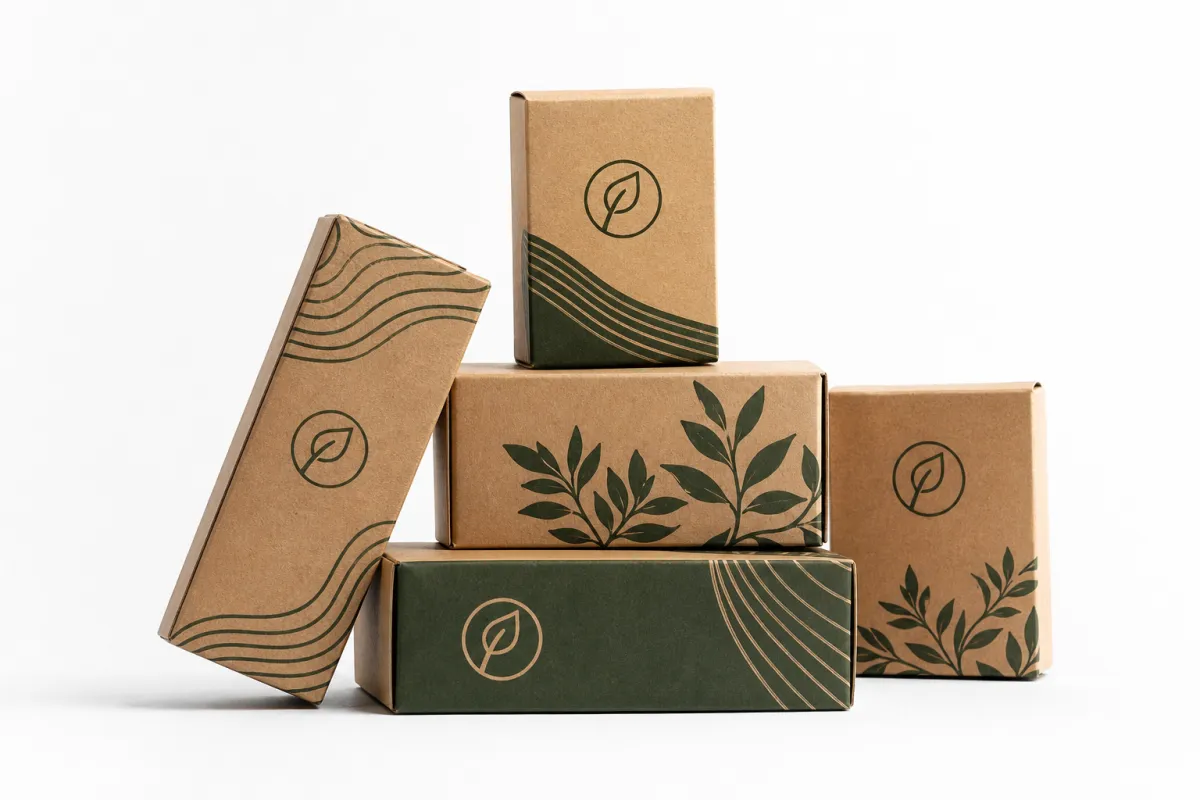
Sustainable Packaging Boxes with logo are boxes built to reduce waste while still doing the branding work a business needs. In practice, that usually means recycled or FSC-certified stock, a structure sized to the product instead of the other way around, and a print plan that gives the box identity without loading it up with extra ink, coatings, or plastic add-ons.
Here is the version that shows up in buying meetings and sample rooms. A brand orders an "eco" mailer that is far larger than the item inside, fills the extra space with more paper, adds a laminated insert, and then wonders why the packaging bill jumps. That is not sustainability. That is a branding choice wearing a sustainability label.
The logo matters because it does several jobs at once. It supports package branding, helps shelf presence for retail packaging, and signals that the brand cared about presentation. A clean logo on kraft or recycled board often feels more grounded than heavy artwork spread across every surface. Buyers notice that. Customers opening the box notice it too.
Sustainable packaging boxes with logo should be treated like a system rather than a single material decision. The board, glue, ink, insert, and shipping method all affect the outcome. A recyclable outer carton means less if the insert is a mixed-material tangle. A beautiful logo loses force if the box is too large for transit, because freight, storage, and carbon footprint all take the hit. Packaging has a habit of exposing shortcuts.
For brands that treat product packaging as part of the product experience, the goal is straightforward: use enough structure to protect the item, enough printing to make the brand recognizable, and enough restraint to keep the box honest. Sustainable packaging boxes with logo should feel like a smart operational choice, not a speech.
If the box is trying to do everything, it is probably doing none of it well.
Two useful reference points are the Sustainable Packaging Coalition at packaging.org and FSC certification standards at fsc.org. Those resources help frame the conversation, although plain common sense still does a lot of the heavy lifting in packaging decisions.
How Sustainable Packaging Boxes with Logo Work
Sustainable packaging boxes with logo begin with a dieline. That file sets the size, folds, glue flaps, and print areas, and it becomes the map for the rest of production. After the dieline is approved, the work usually moves through artwork prep, proofing, printing, die cutting, creasing, folding, and final packing for shipment. Nothing glamorous there. The quality shows up in how those steps are handled.
Logo placement changes both the look and the cost. A logo on the top panel only is usually the most efficient option. Add side-panel branding and you expand the print area, though not dramatically if the artwork stays controlled. Inside-print moments can make the unboxing feel more considered, yet they should be used with restraint because every printed panel adds setup attention, ink usage, and room for error. Sustainable packaging boxes with logo do not need to announce themselves from every angle.
Box format changes the result
Mailers, tuck-end boxes, sleeves, rigid boxes, and shipping cartons all behave differently. A corrugated mailer can carry a subscription item or ecommerce order with good strength and a modest material count. A paperboard tuck-end box works better for lighter retail packaging and shelf presentation. A sleeve can add branding to an existing tray or carton. A rigid box brings a premium feel, but it usually costs more and uses more material, so it is rarely the first choice for lean sustainability goals.
Sustainable packaging boxes with logo work best when the format matches the route the product actually takes. If the box travels through a carrier network, durability matters more than decorative polish. If it sits on a retail shelf, print finish and stackability matter more. That is packaging design doing its job, not guesswork dressed up as strategy.
Where sustainability gets diluted
Heavy coatings are a common problem. Foil stamps, plastic windows, overly complex inserts, and mixed-material construction can make recycling harder than it should be. A box can be made from recycled board and still be weakened by the finish on top. Sustainable packaging boxes with logo should keep the material story simple enough that customers and recycling systems do not need a decoding session just to sort the package correctly.
Structural overbuilding is another weak point. Some boxes look elegant on a render and behave badly in a fulfillment room. If assembly takes too long or the structure sags under product weight, the operational waste eats away at the sustainability claim. A good box is easy to pack, easy to stack, and hard to crush in transit. That is not a luxury. It is competence.
For brands building out custom printed boxes, the smartest path is usually the simplest structure that still protects the product. Sustainable packaging boxes with logo are not trophies. They are supposed to ship well, look credible, and reduce waste in the places where waste actually costs money. That part is kinda unglamorous, but it saves headaches later.
What Drives Cost and Timeline for Sustainable Packaging Boxes with Logo
Sustainable packaging boxes with logo can be inexpensive or surprisingly expensive, and the gap usually comes from a few familiar variables: board grade, box style, dimensions, print coverage, coating choice, and quantity. A clean recycled mailer is not priced the same way as a laminated rigid box with a custom insert. Anyone saying otherwise is smoothing over the details.
Setup cost and unit cost need to be separated. A small run often looks expensive because tooling, plates, or setup labor are spread across very few units. Once quantity rises, the per-box price drops. That is why a 100-piece run can feel painful while 1,000 pieces starts to look reasonable. Sustainable packaging boxes with logo tend to look best on paper when the order is large enough to absorb the setup overhead.
| Option | Typical unit cost | Best for | Main tradeoff |
|---|---|---|---|
| Recycled corrugated mailer | $0.55-$1.25 at 1,000 units | Ecommerce, shipping, subscription packs | Simple presentation, limited premium feel |
| Kraft folding carton | $0.25-$0.85 at 1,000 units | Retail packaging, light product protection | Lower crush resistance than corrugated |
| Custom corrugated box | $0.70-$1.80 at 1,000 units | Shipping protection with branded exterior | More board usage than a simple carton |
| Rigid presentation box | $2.00-$6.00+ at 1,000 units | Premium unboxing, gifting, high perceived value | Higher material use and higher freight cost |
Those numbers are intentionally broad. Actual pricing depends on coverage, finishing, and whether the supplier needs special tooling. Sustainable packaging boxes with logo also respond quickly to print complexity. One-color logo work on kraft stock is usually easier and cheaper than full-coverage art across every face of the box.
Timeline is another place where buyers get caught off guard. A standard sequence usually includes artwork approval, sample or proof review, production, and freight. Simple orders can often land in 2-4 weeks after proof approval if stock is available and the design stays straightforward. More complex builds can take longer, especially if custom inserts, multiple proof rounds, or structural changes enter the picture after sampling. Sustainable packaging boxes with logo need realistic buffers, not optimistic guesses.
The biggest delays are usually preventable. The product dimensions were wrong. The insert did not fit. The logo file was too low resolution. The coating changed after proofing. The supplier got crowded by seasonal demand and the production slot moved. Every packaging buyer learns the same lesson sooner or later: speed, price, and premium feel rarely arrive together. Choose the priority first, then shape the box around it.
If you need a practical comparison point, ask for quotes at three quantities, such as 100, 500, and 1,000 units. Compare not just the unit price, but the setup fees, freight, and total landed cost. Sustainable packaging boxes with logo can look cheap in isolation and expensive once shipping enters the picture. That is why branded packaging should be measured as a full system, not a single quote line.
For teams ordering through a packaging vendor, a tight spec sheet saves time and reduces mistakes. If you need more product formats, check the options on our Custom Packaging Products page and match the box type to the product before you start chasing artwork perfection.
How to Choose the Right Materials and Specs for Sustainable Packaging Boxes with Logo
Sustainable packaging boxes with logo work best when the material is chosen for the job, not for the mood it creates in a mockup. Recycled corrugated board is usually the right call for shipping because it balances strength, familiar recyclability, and wide availability. Kraft paperboard works well for lighter retail packaging. Heavier presentation pieces may call for sturdier stock, but that should be a deliberate tradeoff rather than a lucky accident.
Recycled content versus FSC and kraft
Recycled content tells you something about the fiber mix. FSC certification tells you the fiber came from responsibly managed sources with chain-of-custody controls. Unbleached kraft creates a natural look that many brands want, but appearance alone does not equal a sustainability claim. Sustainable packaging boxes with logo should match the claim the brand is prepared to support with documentation, not just the look the design team likes on screen.
If precision matters, use the material that supports the product and the story. A cosmetic item in a retail setting may do well in a kraft folding carton with a clean logo and limited coverage. A heavier product that ships through parcel networks needs a corrugated structure with enough edge crush resistance to hold up. The wrong board grade is an expensive mistake. Sustainable packaging boxes with logo do not forgive a carton failure in transit.
Printing choices affect cost and recyclability
Logo printing can be spot color, full color, one-sided, or print-heavy on every panel. Spot color on kraft or recycled stock is often the most efficient route for sustainable packaging boxes with logo because it keeps the look controlled and limits ink load. Full-color graphics can work too, but the more coverage you add, the more likely you are to push cost higher and complicate the recycling story if the finish becomes too involved.
White-lined board is useful when a brand needs brighter color accuracy. Unbleached kraft gives more texture and a warmer feel, but colors shift. That is not a flaw. It is the material doing what material does. If the brand expects the same Pantone result on recycled brown stock that it gets on coated white paper, the proof will turn into an argument instead of a solution. Sustainable packaging boxes with logo should be proofed on the actual substrate whenever possible.
Pay attention to the details hiding in the small print. Adhesives, coatings, and inserts can help the box perform or quietly damage the sustainability story. Water-based adhesives are usually easier to defend than unnecessary plastic laminates. A minimal insert made from the same fiber family as the outer box is easier to explain than a mixed build with foam, plastic, and metal elements. Sustainable packaging boxes with logo should not need a cleanup crew after the unboxing.
From an ISTA and ASTM testing point of view, the question stays simple: does the package survive the route? If the answer is no, the greener material did not save the project. It just failed with better intentions. Sustainable packaging boxes with logo must be judged by transport performance as much as by appearance.
Step-by-Step Ordering Process for Sustainable Packaging Boxes with Logo
Sustainable packaging boxes with logo are easier to order when the process is treated like production work instead of a mood board exercise. Start with the product size, shipping method, and budget. If those three are vague, the rest of the project will drift too. Packaging design gets much cleaner once the basics are settled.
- Define the product profile. Measure the item, include any inserts or wraps, and note whether it ships individually or in master cartons.
- Choose the box style. Decide between mailer, tuck-end carton, sleeve, rigid box, or shipping carton based on the route and the product weight.
- Request samples or mockups. A flat dieline helps, but a physical sample shows whether the box feels too loose, too tight, or too expensive in the hand.
- Confirm logo placement and claims. Check every panel, any recycled or FSC language, and whether the artwork matches the actual substrate.
- Lock the schedule. Set proof deadlines, production time, and freight windows before anyone starts promising quick delivery.
- Plan operations. Make sure the box can be stored, assembled, and packed without slowing down fulfillment.
The sample stage matters more than many teams want to admit. Sustainable packaging boxes with logo can look perfect in a digital render and still behave poorly once a real product is placed inside. A mockup reveals whether the fold closes cleanly, whether the logo lands where intended, and whether the carton opens with enough friction to feel intentional instead of flimsy.
Proof approval should include sustainability language, not just artwork. If the supplier says the board is FSC-certified, ask for supporting documentation. If the box is claimed to be recyclable, ask what parts are not recyclable. If there is a coating or insert, ask how that changes the end-of-life path. Sustainable packaging boxes with logo should not depend on guesswork to sound responsible.
Then look beyond production and into receiving. Where will the boxes be stored? How many units fit on a pallet? How quickly will the packout team move through each carton? Sustainable packaging boxes with logo that save material but slow labor can still cost more in practice. Operations is where attractive ideas get audited.
One useful rule is to design the box family, not just a single box. If you have several SKUs, build a structure that can handle size variation with minor adjustments. That keeps reorders more consistent, reduces setup friction, and gives your retail packaging or ecommerce line room to grow without a new packaging crisis every quarter. Sustainable packaging boxes with logo should make reordering boring. Boring keeps margins intact.
Common Mistakes Brands Make With Sustainable Packaging Boxes with Logo
Sustainable packaging boxes with logo go off track for predictable reasons. The first mistake is assuming the thinnest board is automatically the greenest choice. Sometimes a thin box crushes in transit, triggers returns, and creates more waste than a slightly stronger material would have used. A lighter spec is not always a better spec.
The second mistake is printing every surface. Full-panel coverage can look impressive, but it also raises cost and can make the box harder to recycle if coatings or specialty inks pile up. A restrained design often looks stronger on recycled board anyway. Sustainable packaging boxes with logo usually benefit from one strong logo placement and a small number of supporting elements, not a flood of ink.
Third, brands ignore freight weight, cube, and labor time. Then they act surprised when packaging costs more than expected. Bigger boxes take more storage space. Heavier boxes cost more to ship. Slower-assembling boxes cost more to pack. Sustainable packaging boxes with logo are a manufacturing choice, not a decorative afterthought, so logistics matter just as much as the artwork.
Fourth, some teams lean on vague eco claims. "Planet-friendly," "green," and "sustainable" do not mean much without material specs, recycling guidance, or certification details. If the supplier cannot explain the board grade, coating, and fiber source, the claim is too soft to trust. That is not cynicism. That is basic buying discipline.
Fifth, boxes get ordered before the product dimensions are locked. It happens more often than people admit. Someone measures the product without the insert. Someone forgets the closure flap. Someone assumes the sample will work itself out. It does not. Sustainable packaging boxes with logo should only be ordered after the final packout process has been tested with the actual product.
There is also a branding mistake that stands out immediately: using a thoughtful material and then designing a box that looks messy. If the typography is crowded, the logo sits awkwardly, and the opening sequence feels random, the packaging loses trust. Sustainable packaging boxes with logo should support the brand story, not distract from it. Branding and sustainability should reinforce each other, not argue in public.
Expert Tips for Better Sustainable Packaging Boxes with Logo
Sustainable packaging boxes with logo improve when the logo system is simple enough to reproduce cleanly across recycled stocks and future reorders. A single-color mark, a disciplined type lockup, or a simple back-panel message often ages better than a trendy layout that only looks good in one print condition. Clean usually wins. Fancy can wait.
One strong structural detail usually beats stacking three premium features. A smart tuck closure, a thoughtful opening tab, or a right-sized insert can make the package feel designed without turning it into an expensive prop. Sustainable packaging boxes with logo should earn their place through function first. If the feature does not help protect, present, or pack the product, question it.
Ask for a sample with the real product weight inside, then test transit, stacking, and opening behavior. A box that survives a desk demo but collapses under load is not ready. Sustainable packaging boxes with logo should be checked the way an operations team checks any shipping item: close it, lift it, drop-test it, stack it, and see what fails first.
Design a box family that can handle multiple SKUs without constant retooling. That one move saves money, cuts waste, and keeps branding consistent. It also makes future reorders much easier because you are not reinventing the carton every time the lineup changes. Sustainable packaging boxes with logo are stronger as a system than as one-off experiments.
From an authority and compliance angle, use standards and documentation to support the claim. FSC is useful when the fiber story matters. ISTA procedures help when shipping performance matters. EPA recycling guidance can help you understand how the material is likely to behave in the waste stream. None of those sources makes a box perfect, but they do make the claim more defensible. Sustainable packaging boxes with logo should never depend on wishful thinking.
My practical buying advice is blunt: build a one-page spec, request two sample options, compare quotes at three quantities, and choose the version that balances cost, strength, and presentation without drama. That is how sustainable packaging boxes with logo stop being a marketing line and start becoming a dependable part of the product experience.
Frequently Asked Questions
How much do sustainable packaging boxes with logo usually cost?
Sustainable packaging boxes with logo can vary widely in price because quantity, board type, box style, and print coverage all matter. Simple recycled mailers can land in a lower-cost range, while rigid or heavily finished boxes can move into several dollars per unit. For a real buying decision, ask for pricing at 100, 500, and 1,000 units so you can see the breakpoints instead of guessing.
If you only compare one quantity, you miss the part that usually matters most. Sustainable packaging boxes with logo often look expensive at low volume because setup costs are spread across fewer pieces. That is normal. Annoying, yes. Unexpected, not really.
Which materials work best for sustainable logo boxes?
Recycled corrugated is usually the safest choice for shipping because it is strong, familiar, and widely recyclable. Kraft paperboard is a good fit for lighter retail packaging and brands that want a natural look. If the box must protect a heavy item or travel through parcel networks, choose the structure first and the finish second. Sustainable packaging boxes with logo should be built for the route, not just the shelf photo.
Avoid mixed-material builds unless the product truly needs them. Foam inserts, plastic windows, and decorative add-ons can make recycling harder and push cost up quickly.
Can I print a full-color logo on eco-friendly boxes?
Yes, you can print full-color graphics on sustainable packaging boxes with logo, but full coverage changes the cost and can weaken the recyclability story if heavy coatings or specialty finishes are involved. A cleaner logo layout often prints better on kraft or recycled board than a dense flood-printed design.
Ask for a proof on the actual stock. Colors shift between white board and unbleached kraft, and that shift is often bigger than people expect. Better to catch it early than explain it after 10,000 boxes land in the warehouse looking wrong.
How long do sustainable packaging boxes with logo take to produce?
Simple orders often take a few weeks after proof approval, while custom structures or more complex finishes take longer. Sampling, approval loops, and freight are usually the slow parts, not the cutting itself. Sustainable packaging boxes with logo move faster when the dimensions, artwork, and claims are all locked before production starts.
If timing matters, ask for a production schedule before you approve the artwork. Otherwise you are trusting a vague promise, and vague promises do not ship on time.
How do I know if the packaging is actually sustainable?
Ask for material specs, recycled content details, FSC documentation, and coating information instead of trusting vague marketing language. Check the inks, adhesives, inserts, and end-of-life guidance too. If a supplier cannot explain what happens after use, the sustainability claim is thin.
Real sustainable packaging boxes with logo should be able to survive a basic proof test: what is it made of, how is it printed, how is it assembled, and what does the customer do with it next? If those answers are clear, you are in solid shape.
Sustainable packaging boxes with logo do not need to be perfect. They need to be honest, practical, and built with enough discipline that the branding, cost, and material story all make sense together. The actionable takeaway is simple: lock the product dimensions, choose the lightest structure that still survives transit, proof the logo on the actual stock, and verify the disposal path before you place the order. Everything else is just expensive noise.


