Buyer Fit Snapshot
| Best fit | Sustainable Packaging for Small Brands projects where brand print, material claims, artwork control, MOQ, and repeat-order consistency need to be specified before quoting. |
|---|---|
| Quote inputs | Share finished size, material target, print colors, finish, packing count, annual reorder estimate, ship-to region, and any compliance wording. |
| Proofing check | Approve dieline scale, logo placement, barcode or warning zones, color tolerance, closure strength, and carton packing before bulk production. |
| Main risk | Vague material claims, crowded artwork, missing packing details, or unclear freight terms can make a low unit price expensive after revisions. |
Fast answer: Sustainable Packaging for Small Brands: Production Review should be specified like a repeatable production item. The safest quote records material, print method, finish, artwork proof, packing count, and reorder notes in one written spec.
Production checks before approval
Compare the actual filled-product size with the drawing, then confirm tolerance on folds, seals, hang holes, label areas, and retail display edges. Reserve space for logos, QR codes, warning copy, and material claims before decorative graphics fill the panel.
Quote comparison points
Review material grade, print process, finish, sampling route, tooling charges, carton quantity, and freight assumptions side by side. A quote is only useful when the supplier can repeat the same color, closure quality, and packing count on the next order.
If you are sorting out sustainable Packaging for Small brands, the first question is not which carton looks prettiest on a mood board. It is whether the package can protect the product, survive the trip, and avoid creating waste that could have been prevented in the first place. A box that looks careful but fails in transit often does the opposite of what it claims. Broken product, replacement shipments, customer complaints, and rushed reprints can leave a heavier environmental trail than a slightly sturdier package ever would.
I have seen that play out more than once. A small skincare brand I worked around wanted a lighter mailer because the old one felt "too much." The revised version saved board weight, yes, but it also doubled corner crush on the first pilot run. The team ended up shipping replacements, apologizing to customers, and quietly adding more filler than they had removed. That is the awkward part of packaging: the math only looks clean until the real world gets involved.
The details matter more than people expect. A folding carton, a mailer, an insert, and an outer shipper all behave differently under pressure, heat, moisture, and handling. The strongest approach usually comes from treating those pieces as one system instead of isolated line items. That shift sounds modest. It is not. It changes how the product is measured, how freight is planned, and how much material the brand actually needs. A healthier packaging lifecycle often begins where the spec sheet ends and real handling starts.
Custom Logo Things works with custom printed boxes, product packaging, and retail packaging every day, and one pattern shows up over and over: the best projects begin with a blunt question. How does this package protect the product, reduce waste, and still look like the brand? Once that is answered, sustainable packaging becomes easier to quote, easier to test, and far easier to repeat when the business grows. That is the bit small brands sometimes miss. The first version is never just a box; it becomes the template for the next six months of orders.
What Sustainable Packaging for Small Brands Really Means
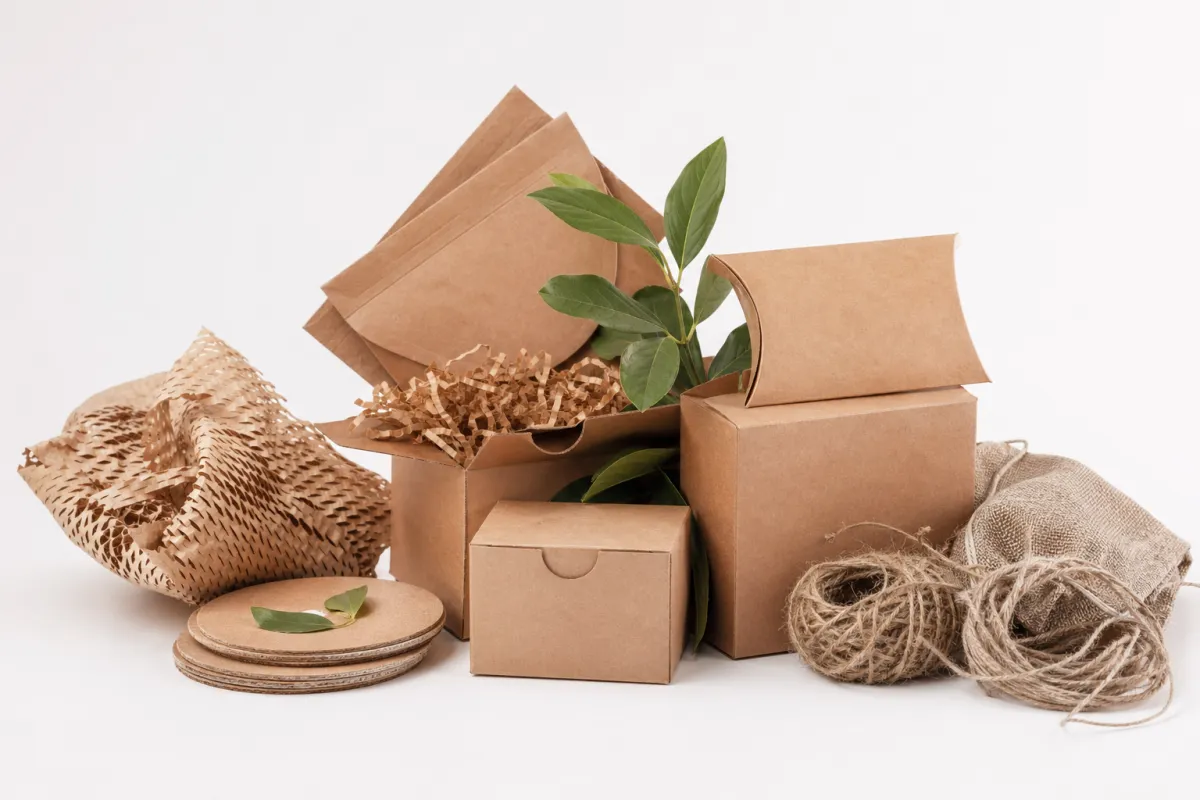
At its core, sustainable Packaging for Small brands means reducing environmental impact without sacrificing product protection or the customer experience. That can come from recycled fiber, right-sized dimensions, fewer components, lower shipping weight, or a structure that fits existing recovery streams more cleanly. It does not require every package to be compostable. It does not mean the lightest possible material is always the smartest one.
That distinction matters because many brands assume a green label solves the problem. It does not. A package is only as responsible as its full build: material, ink, adhesive, coating, closure, and disposal path all matter. A paperboard carton with a plastic window may still be acceptable for some uses, while the same feature can complicate recycling elsewhere. A compostable mailer sounds ideal until the customer has no compost access and the package ends up in regular waste.
The practical levers are often the simplest ones. Material source, print coverage, insert design, shipping weight, and the number of parts in the pack usually determine whether a package feels efficient or bloated. A two-piece rigid box with a fitted insert can be elegant, but if the product can be protected in a properly sized kraft mailer, a smaller component count may be better. I know that sounds almost too plain to be strategic, but plain often wins here.
Small brands also need a clear-eyed view of tradeoffs. The goal is not always cheap, not always universally recyclable, and not always visually plain. The best package for a young brand is the one that balances protection, shelf impact, and repeatable production in a way the business can actually sustain. If that balance slips, the package may look polished while quietly inflating freight, labor, and replacement costs.
Practical rule: if a package cuts material but raises damage, it is not more sustainable in reality. The strongest packaging strategy protects the product first, because every broken unit adds its own waste stream.
Good packaging decisions start with grounded questions. How many parts does the pack use? What kind of abuse does it face in transit? Is the product fragile, oily, temperature-sensitive, or moisture-sensitive? Can the customer realistically recycle the full package where they live? Those questions usually lead to better answers than color swatches or finish samples. Sustainability starts with the real end-of-life story, not the marketing copy.
If you want a quick way to compare formats, the product range at Custom Packaging Products is useful because it lets you see how different structures behave before you commit. The right choice for sustainable Packaging for Small brands often becomes obvious once options are laid out side by side instead of imagined from a render.
How Sustainable Packaging for Small Brands Works in Production
The production path usually starts with measurements. The dieline has to fit the product closely enough to hold it securely, but not so loosely that the package becomes wasteful. After that come material selection, print method, converting, finishing, assembly, and fulfillment. Each step can help the goal or quietly undermine it.
Early decisions carry the most weight. A box oversized by even a small amount can trigger extra void fill, lower pallet density, and higher freight cost. Decorative add-ons can make a package look more elaborate, yet they also add complexity to the run and often make recovery harder. In many cases, the cleanest-looking design on a screen is not the cleanest design in production.
Engineering matters because a lighter material that fails in transit creates more waste than a slightly heavier but better-structured alternative. A 14pt paperboard carton may be enough for a dry, low-fragility item on a retail shelf. A 32 ECT corrugated mailer may be the better choice for a parcel moving through a rough shipping chain. The better choice is the one that survives real handling without excess. That comparison is not theoretical; it is one of the first things production teams see when the test shipments come back dented.
Testing is where many new brands discover the gap between intention and reality. Compression testing, drop testing, vibration, moisture exposure, and shelf-life checks can show whether a package is actually fit for purpose. The test plan does not need to be elaborate, but it does need to reflect how the package will be used. Industry references such as ISTA help frame transit expectations, and ASTM-based methods are often part of a more formal validation path. For a small production team, testing is how you keep waste from showing up later.
The brands that save the most material and money usually do a few things consistently well. They reduce empty space. They standardize sizes across SKUs. They remove unnecessary inserts. They plan pack-out so cartons nest efficiently in master cases. Each step seems small in isolation. Together, they change the economics of the entire run. A good packaging program often comes from deleting one unnecessary component rather than chasing a dramatic new substrate.
- Product dimensions: build around measured reality, not catalog guesses.
- Material choice: match paperboard, corrugated board, or molded fiber to the actual abuse level.
- Print method: keep ink coverage restrained and avoid finish stacks that make recovery harder.
- Pack-out logic: make assembly easy enough that fulfillment teams can repeat it without drift.
Designing with a closed-loop mindset usually changes supplier conversations too. If all teams agree on simple part counts and one or two material families, turnaround improves, and fewer iterations are needed before approval. It also makes future reorders less fussy, which is a quiet advantage that small teams tend to appreciate once the launch dust settles.
Is Sustainable Packaging for Small Brands Right for Every Product?
Short answer: not automatically. Not every product can go into every system. But the right model for small-volume launches is almost always a structured trade-off exercise. You can think of sustainability here the way a finance team thinks about margin: one decision point at a time, one variable at a time, one test cycle at a time.
Some products can use very light retail-ready cartons and still pass transit checks. Others, especially glass, glass-like ceramics, glass jars, or electronics with vibration sensitivity, need more shell and more controlled cushioning. The decision is not moral purity versus appearance. It is performance, cost, and the expected path the package takes after sale. A tiny line of candles may require a very different strategy than a small-batch skincare launch. Even within one category, weight and fill level can change the answer by a lot.
There is also a channel question that gets ignored too often. A direct-to-consumer order goes through different handling than a store-delivered case pack. Shelf packaging and shipping packaging are cousins, not twins. A Brand That Sells both online and through retail may need one structure that works for presentation and another outer layer that survives parcel distribution. That kind of split sounds inconvenient, but it can be the more sustainable move if it prevents damage and avoids overbuilding the retail carton.
Key Material and Design Factors to Evaluate
Choosing Materials for Small teams is rarely about finding one perfect substrate. It is about matching the product, channel, budget, and recovery system. Kraft paperboard, recycled paperboard, corrugated board, molded fiber, and select biobased or compostable materials each solve a different problem. A cosmetics carton, a subscription mailer, and a food-contact package do not ask the same things from a package, so the material has to follow the use case.
Recyclability is especially easy to oversimplify. A package is not recyclable just because the main material is paper. Coatings, adhesives, magnets, windows, foils, and mixed-material components can all affect whether the package moves through local recycling streams cleanly. That is why this topic should be evaluated as a full build rather than as a single line in a spec sheet. The better question is not "Is it paper?" The better question is "Can the customer dispose of the full package in a useful way?" For many brands, the answer depends on how simple the structure is and how much mixed material appears in the final design.
Print and finish choices matter more than many teams realize. Water-based inks, minimal ink coverage, and uncoated surfaces can support a cleaner end-of-life profile. A heavy soft-touch lamination may feel luxurious, but it can interfere with recovery, especially when paired with foil stamping, metallic ink, or a plastic window. That does not mean premium branding is off the table. It means restraint tends to improve both clarity and recovery. A small brand can still feel elevated without burying the product under layers of treatment.
Structural design is where sustainability and performance really meet. Right-sizing removes wasted air. Self-locking closures can reduce glue usage and speed assembly. Inserts can be redesigned to use less material while still securing the product. A molded fiber insert may replace a thick foam cradle, or a clean tuck-end structure may eliminate an extra sleeve. In many cases, the package looks more premium because it is clearer, not because it has more layers.
Brand identity still matters. Packaging is not just a shipping container; it is also branded packaging that tells customers what the brand values. The feel of the board, the closure strength, the shelf presence, and the visual rhythm all shape perception. A brown kraft carton can signal honesty and material efficiency. A crisp white recycled board carton can feel more polished and retail-ready. The goal is not to erase the brand. It is to make packaging support the brand story instead of competing with it.
For a practical frame of reference on recycling behavior and consumer disposal habits, the EPA recycling guidance is useful because it reminds brands that local systems vary. That variance is exactly why simple builds are often easier to explain and easier to recover. Less confusion usually means better disposal behavior. One extra liner or finish can turn a straightforward pack into something customers are unsure how to handle, and uncertainty is where good intentions go to die.
| Material / Format | Best Use | Typical Strength | Relative Cost | Common Watch-Out |
|---|---|---|---|---|
| Kraft paperboard folding carton | Retail-ready light to medium products | Good shelf presentation, moderate protection | $0.18-$0.35 per unit at 5,000 pieces | Can dent if the product is heavy or sharp-edged |
| Recycled paperboard carton | Branded packaging with a clean printed surface | Good printability, light-to-moderate duty | $0.20-$0.40 per unit at 5,000 pieces | Finish choices can affect recyclability |
| Corrugated mailer | E-commerce and direct-to-consumer shipping | Higher crush resistance, strong transit performance | $0.32-$0.65 per unit at 5,000 pieces | Can use more board than a simple carton if oversized |
| Molded fiber insert | Product stabilization inside carton or mailer | Excellent fit and cushioning | $0.10-$0.30 each depending on cavity count | Tooling and fit must be dialed in early |
| Biobased / compostable specialty film | Specific applications with controlled disposal paths | Useful in narrow use cases | Higher and more variable | End-of-life depends heavily on local access |
That table is not a recipe. It is a snapshot of how this decision process tends to play out in real production. Material choice, structure, and finish all interact. A package that looks inexpensive can become costly if it causes returns or breakage, while a slightly better-built system can lower total cost once shipping, labor, and damage are included. That is where small brands sometimes get surprised, because the cheapest quote is not always the cheapest program.
Cost and Pricing Factors in Sustainable Packaging for Small Brands
Pricing is driven by more than raw material. The biggest variables are material grade, order quantity, custom tooling, print complexity, finishing steps, insert count, and whether the package needs special performance testing. A small brand can save money quickly by removing unnecessary parts, but if that change weakens the pack, the savings may vanish into replacements and re-shipments.
Unit price only tells part of the story. Total landed cost includes freight, warehousing, assembly labor, damage reduction, and the effect the pack has on fulfillment speed. A package that arrives flat, stacks well, and assembles in a few seconds may cost slightly more per unit than the cheapest option, yet still lower the total cost of ownership. That is often the hidden advantage, especially when the packaging lifecycle gets fewer waste loops in transit and fulfillment.
Small brands feel the most pressure at lower quantities. Short runs carry higher setup costs, and custom tooling gets spread across fewer units. Add several print colors, spot coatings, foil, or multiple inserts, and the price moves quickly. Simpler structures, fewer components, and standard material sizes help keep the quote in range. In many cases, the cheapest path is not a bargain substrate. It is a simpler spec that still does the job.
Unit price also needs to be weighed against how packaging affects conversion. Customers respond well to clean, confident package branding, especially when the structure feels solid in hand and the graphics are restrained. A package that looks thoughtful can support product perception, and that matters for brands trying to earn repeat orders. There is a reason a lot of premium brands do not shout; the package does enough talking on its own.
Comparing quotes takes discipline. One recycled paperboard carton is not the same as one laminated rigid box, even if the price lines up. Ask whether tooling is included, whether sampling is included, whether the price assumes one or two print passes, and whether insert production is separate. Ask how the unit price changes as quantity rises. Those details matter more than a headline quote, especially for long-range planning where every variable shifts with volume.
Here is a simple way to think about the economics:
- Material cost: board grade, fiber content, thickness, and specialty finishes.
- Setup cost: dies, plates, tooling, and initial sampling.
- Operational cost: assembly time, fulfillment speed, and carton density in shipping.
- Risk cost: damage, returns, reships, and customer dissatisfaction.
- Environmental cost: energy, disposal complexity, and carbon footprint impact over repeated cycles.
That last line is the one people forget. A package that saves three cents but causes a small rise in damage can push the economics in the wrong direction fast. A good packaging buyer understands that this is not only a procurement decision; it is a balance-sheet decision with brand consequences attached. The cheapest option on paper can become the most expensive choice after a few thousand units hit the road.
For brands comparing formats and capabilities before asking for pricing, the Case Studies section can help because it shows how different packaging goals turn into real structures. That kind of comparison is especially useful when shaping a program around a launch budget.
Step-by-Step Process and Timeline for Small Brands
The most efficient projects follow a clear sequence: define the goal, confirm product measurements, choose materials, review prototypes, test for shipping, finalize artwork, and approve production. Skip one of those steps and the project usually pays for it later in revisions, launch delays, or expensive changes that should have been caught earlier.
A realistic timeline depends on complexity, but custom structures move faster when the team already knows the dimensions, pack count, shipping method, and sustainability goals. If a team can say, "We need a recyclable paper-based carton for a 2.6-ounce product, shipped in an outer mailer, with minimal ink coverage," the job can move with purpose. If the conversation starts with "We want something greener," the process slows because nobody has defined what the package needs to do.
Delays usually come from a small set of predictable issues. Unclear specs create rework. Late artwork changes trigger new proofs. Indecision over material choice stalls tooling. Testing may show that the structure needs more support, which adds time but usually saves trouble later. In many cases, the extra week spent on a prototype is cheaper than the extra month spent fixing a bad launch. I would take the prototype week every time.
A simple internal checklist helps keep the project moving:
- Product size, weight, and fragility
- Pack count per carton or mailer
- Primary shipping method: parcel, fulfillment center, or retail distribution
- Sustainability claim the brand can actually support
- Budget ceiling and acceptable unit range
- Target launch date and buffer for revisions
- Any must-have retail or e-commerce requirements
Coordination with the supplier matters as much as the checklist. Sampling, revisions, and production slots all need to line up with the sales calendar, especially when a launch is tied to a campaign or seasonal reset. A good packaging partner can usually point out where the schedule may tighten, but the brand still needs to know when artwork is final and when changes stop. That discipline protects both cost and quality.
Timelines vary by format. A straightforward printed folding carton may move from approved dieline to finished sample relatively quickly, while a new insert tool or a more complex retail pack can take longer. If testing is required, add time for at least one review cycle after the first prototype. I usually tell brands to leave a cushion because once a package enters production, small changes become expensive. That is true whether the run is 1,000 units or 50,000.
Teams that stay organized usually do one thing well: they document decisions as they go. Keep the approved dieline, board spec, print method, and sample photos in one place. That simple habit makes repeat orders smoother and reduces the chance that a future run drifts away from the original intent. It also gives the next person in the chain a fighting chance, which is not a small thing in a growing brand.
Common Mistakes Small Brands Make with Sustainable Packaging
The first mistake is choosing a material because it sounds green without checking whether it actually protects the product or fits the local recovery system. A paper-based mailer may be more recyclable than a mixed-material alternative, but if the product is fragile and the mailer crushes in transit, the brand ends up shipping replacements. That is not a sustainability win. The right package has to work for the customer, the warehouse team, and the carrier at the same time.
The second mistake is overengineering. Too many inserts, oversized boxes, decorative extras, and complex finishes add waste and cost without adding value. Small brands sometimes assume that more layers equal more premium, but the opposite is often true. A clean, well-proportioned structure with careful print restraint usually feels more confident than a box loaded with unnecessary add-ons. This is where brands often get a little lost chasing "elevated" looks and end up with a package that is merely busy.
Another common problem is vague environmental language. If a package mixes materials in a way that makes recycling difficult, or if the brand cannot substantiate a claim, the marketing message creates risk. Buyers are getting careful about what can be said on pack, and that caution is healthy. A responsible approach describes the material system and disposal logic clearly instead of promising a universal outcome that varies by region.
Skipping transit testing is another expensive mistake. Crushed corners, cracked product, scuffed graphics, or torn closures can trigger replacements and re-shipments, which increases the footprint of every sale. A package that has not been tested for compression, drop, and vibration is basically a guess. It is wiser to validate first than discover failures after hundreds of units are already in the market.
Then there is the design-only problem: a beautiful render with no thought given to manufacturability. Sometimes the structure is difficult to assemble, the print areas are too busy, or the material choice does not suit the product weight. It looks good on screen and performs poorly in reality. That gap is exactly where experienced packaging design earns its keep. The most effective projects are usually the ones that feel simple because the hard thinking happened early.
Common-sense check: if the package looks elegant but costs more to ship, more to assemble, and more to replace, it may be a branding win but a packaging loss. The whole system has to be counted.
If you want a quick reality test, ask whether the final package reduces total waste or just moves it around. A thinner board that needs extra void fill, a flashy finish that blocks recyclability, or a weak closure that causes returns all point to the same issue: the package was judged by appearance before function.
Expert Tips for Small Brand Packaging Decisions
My first tip is simple: design the package from the product outward, not from a trend board inward. Start with the object, the shipping environment, and the level of protection it needs, then build the structure around those facts. That order of operations keeps the packaging plan grounded in reality, where good decisions usually live.
Second, try to stick with one or two core material families across the line if you can. A brand that uses recycled paperboard for cartons and corrugated for shippers can simplify sourcing, reduce confusion, and make the packaging program easier to manage as the catalog grows. Consistency also helps with economies of scale. A fragmented material strategy can work, but it usually creates more quoting and more variation than most small teams need.
Third, use print restraint as a design tool. Strong typography, intentional spacing, and a few well-placed color fields can feel premium without requiring a lot of ink or finishing. Many brands worry that fewer effects will make the package look cheap, but that is not automatically true. Clean surfaces and confident hierarchy often read as more refined than visual clutter. That is one of those funny packaging truths that feels backward until you see the side-by-side samples.
Fourth, request samples early and compare the actual handfeel, closure strength, and shipping behavior before committing to a run. A prototype tells you more than a spec sheet ever will. How does the board fold? Does the insert hold the product snugly? Does the closure spring open or stay secure? Does the print look balanced under normal light? Those questions are practical, and they keep decisions from drifting into expensive assumptions.
Fifth, document what works. Keep notes on the approved material, print setup, insert geometry, and any assembly tips from the fulfillment team. That record becomes valuable as soon as the brand grows or adds new SKUs. Future orders go faster when the decision trail is clear, and small improvements become easier to repeat. Over time, this habit can lower waste, reduce rework, and improve consistency across the line.
If you are still comparing formats, the best starting point is often a contrast between two or three structures, not a dozen. A conversation with Custom Packaging Products can save time, because the path from concept to quote gets clearer once the format is chosen. It also helps to review Case Studies to see how different product categories solve protection and presentation at the same time.
Next Steps for Sustainable Packaging for Small Brands
The best next move is to define the product, the shipping environment, the brand experience, and the sustainability goal before choosing a material. Once those four things are clear, the rest of the decision becomes far easier. That is why this work works best when it is treated as a structured project rather than a style preference.
A short decision matrix can help. Weigh protection, cost, recyclability, shelf appeal, and fulfillment efficiency. If one option wins on shelf appeal but fails on damage risk, it is probably not the right pick. If another option is cheaper but adds handling time, it may not be the true low-cost choice. The strongest package usually lands in the middle of those pressures rather than at one extreme.
Before asking for a quote, gather the basics: dimensions, quantity, print needs, insert requirements, target launch date, and any must-have sustainability criteria. It also helps to know whether the product is fragile, moisture-sensitive, or heavy for its size. The more concrete the brief, the more useful the quotation. That is especially true for small brands, where a small spec change can move the price more than expected.
One more practical point: do not make the decision by guesswork. Test the package, measure the results, and refine if needed. A package that survives transit, looks good on shelf, and uses fewer materials is worth more than a package that merely sounds responsible in a marketing meeting. That is the real promise of sustainable Packaging for Small brands, and it is why the smartest teams keep improving the system instead of treating the first version as final.
To put it plainly, sustainable Packaging for Small brands is most successful when the design is honest, the structure is tested, and the materials fit the job. Get those three pieces aligned, and the package will usually support the product, the brand, and the budget in a way that lasts. If you want one action to take this week, measure the current pack against the product, the shipping method, and the likely disposal path. That one comparison usually tells you more than another round of pretty mockups ever will.
What is the best packaging approach for small teams with limited budgets?
Start with right-sized paperboard or corrugated packaging, because reducing empty space usually lowers both material use and shipping cost. In most cases, the best budget strategy is the simplest structure that still protects the product well. Choose one solid recyclable material system first, then add complexity only if the product truly needs it.
Is smaller-brand packaging always recyclable?
No, not automatically. Local collection systems vary, and mixed-material builds can complicate recovery even if the main substrate is paper-based. The safest approach is to review the full package build, including coatings, adhesives, windows, magnets, and any specialty finishes, before making a disposal claim.
How can small brands lower packaging costs?
Use standard sizes, reduce component count, and keep printing simple. Those changes cut setup time and often improve manufacturing efficiency. It also helps to compare total cost, not just unit price, because freight, warehouse space, assembly labor, and damage risk can matter as much as the substrate itself.
How long does it take to develop custom packaging?
Simple projects can move quickly if the dimensions, artwork, and material goals are already clear. More complex jobs need time for prototyping, test fitting, and transit validation. If you want a clean launch, build in buffer time for revisions and approval rounds so the schedule does not get squeezed.
What should a brand ask before approving a packaging design?
Ask what the package is made of, how it performs in transit, and whether any finishes or inserts affect recyclability. Ask for prototype photos or samples, plus the print method, order minimums, and production timeline. It is also smart to ask how the quote changes with quantity, because volume can materially affect the final unit cost.


