Buyer Fit Snapshot
| Best fit | Sustainable Rigid Boxes with Logo projects where brand print, material claims, artwork control, MOQ, and repeat-order consistency need to be specified before quoting. |
|---|---|
| Quote inputs | Share finished size, material target, print colors, finish, packing count, annual reorder estimate, ship-to region, and any compliance wording. |
| Proofing check | Approve dieline scale, logo placement, barcode or warning zones, color tolerance, closure strength, and carton packing before bulk production. |
| Main risk | Vague material claims, crowded artwork, missing packing details, or unclear freight terms can make a low unit price expensive after revisions. |
Fast answer: Sustainable Rigid Boxes with Logo: Board, Finish, Dieline, and Unit Cost should be specified like a repeatable production item. The safest quote records material, print method, finish, artwork proof, packing count, and reorder notes in one written spec.
Production checks before approval
Compare the actual filled-product size with the drawing, then confirm tolerance on folds, seals, hang holes, label areas, and retail display edges. Reserve space for logos, QR codes, warning copy, and material claims before decorative graphics fill the panel.
Quote comparison points
Review material grade, print process, finish, sampling route, tooling charges, carton quantity, and freight assumptions side by side. A quote is only useful when the supplier can repeat the same color, closure quality, and packing count on the next order.
Sustainable Rigid Boxes with Logo: what to know first
Sustainable rigid Boxes with Logo are often the smartest place to put packaging budget when a product needs a premium presentation without turning into a freight problem. A lot of premium boxes fall short not because they look inexpensive, but because they are oversized, overbuilt, or heavier than the product really needs. If you are starting from scratch, a practical place to begin is Custom Packaging Products, then narrow the structure from there instead of guessing at board thickness, inserts, and finishes.
What sustainable rigid boxes with logo actually change
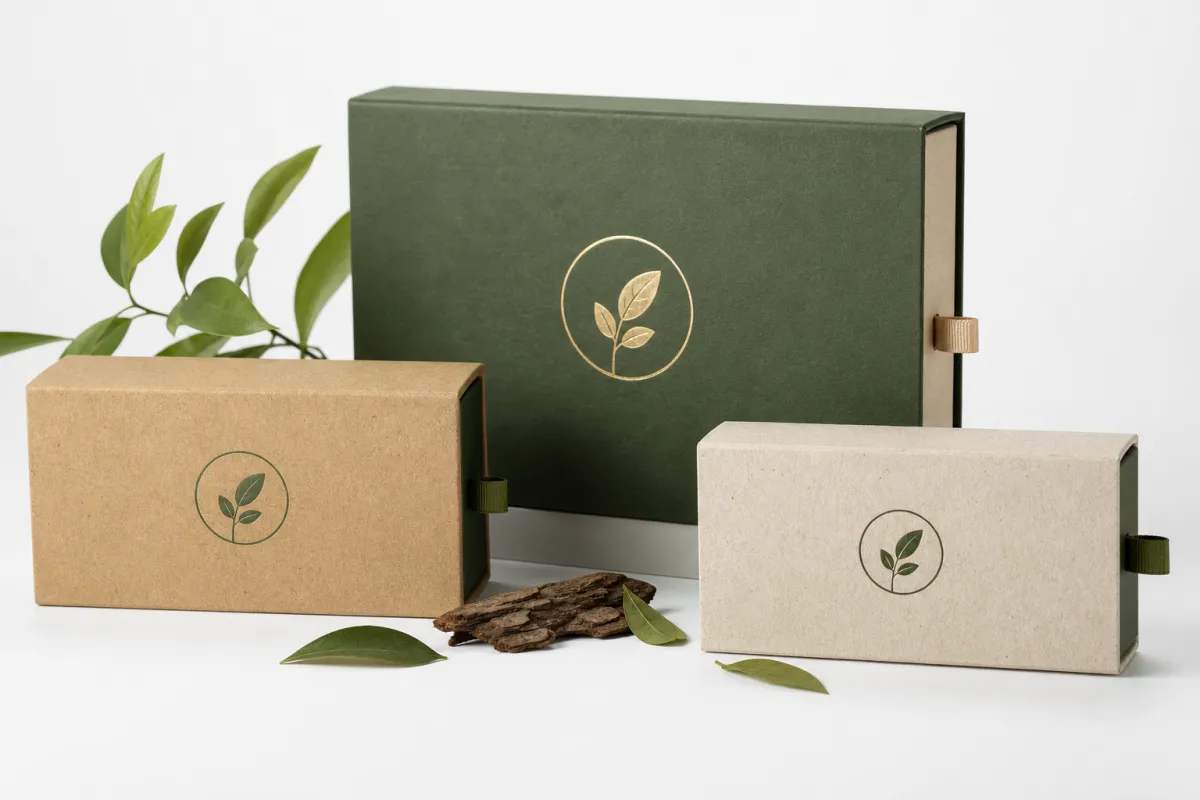
Sustainable rigid boxes with logo change more than the look of the package. They affect board usage, shipping footprint, damage rates, and the way a customer reads the brand in the first few seconds after opening a parcel or lifting a retail lid. That may sound dramatic, yet packaging teams know how quickly a box can feel expensive while still wasting material, or feel efficient without slipping into cheap-looking territory. The sweet spot is a box that protects the product, supports the brand, and leaves out the extra layers that only add cost.
A rigid box differs from a folding carton in one obvious way: it does not ship flat. The board core is fixed, usually made from greyboard or chipboard, then wrapped with printed paper or plain stock. That makes rigid packaging sturdier, heavier, and better suited to luxury items, gift sets, cosmetics, candles, electronics, and apparel. Sustainable rigid boxes with logo keep that same premium structure, but the build uses smarter material choices and a cleaner layout. The goal is not to make the box look like a compost bin. The goal is to reduce waste where it does not help the product.
What makes sustainable rigid boxes with logo genuinely sustainable? Recycled board helps. Responsibly sourced wrap paper helps. Inks and coatings that do not create needless recycling problems help. The structure itself matters just as much. If the box is several sizes too large, packed with foam, wrapped in plastic film, and finished with decorative extras that do not serve the product, the sustainability story weakens no matter how polished the logo looks. A tighter structure with well-placed branding usually does more work than a flashy box that behaves badly through the supply chain.
The logo matters because it gives the box its identity without forcing the structure to carry the entire brand story. A sharp mark, clean typography, and careful placement can create a strong premium read with less decoration. That is one reason sustainable rigid boxes with logo often outperform ornate designs. The brand does not need to shout. It needs to look deliberate. Anyone who has opened a box that felt like it was trying too hard already knows how quickly that illusion falls apart.
Sustainable does not mean flimsy, and premium does not have to mean wasteful. Those ideas get mixed up constantly. A well-designed rigid box can use 1.5mm to 3mm chipboard, a recycled paper wrap, and a restrained print treatment, then still look and feel expensive. Sustainable rigid boxes with logo work best when the design team treats the package like a functional object first and a marketing object second. That order saves money, reduces damage, and usually produces a cleaner result.
Sustainable rigid boxes with logo should remove waste, not remove confidence. If the box protects the product and presents the brand well, the structure is doing its job.
For brands that want a practical benchmark, the packaging industry has long pushed for source reduction and better material choices. The EPA has similar thinking in its broader waste-reduction guidance: use less material where possible, avoid unnecessary complexity, and design for recovery instead of chaos. That applies directly to sustainable rigid boxes with logo. Good packaging is not magic. It is disciplined design.
In my own packaging reviews, the boxes that held up best were rarely the most decorated ones. They were the ones where the size was dialed in, the logo sat naturally on the lid, and the insert did the quiet work of keeping everything in place. That kind of restraint is kinda underrated.
How sustainable rigid boxes with logo are built
Sustainable rigid boxes with logo are usually built from a core, a wrap, a print layer, and sometimes an insert. The core is the rigid board, often chipboard or greyboard. The wrap is the outer paper that carries the brand finish. The print layer can be offset, digital, or specialty print depending on the artwork and quantity. Then there is the adhesive, which sounds like a detail until someone specifies a finish that breaks down badly in the recycling stream. Small choices add up quickly.
Here is the basic structure most buyers should understand:
- Core board: often 1.5mm, 2mm, 2.5mm, or 3mm chipboard depending on product weight and feel.
- Wrap paper: usually 120gsm to 157gsm, sometimes recycled content or FSC-certified stock.
- Artwork: printed paper wrap, direct print in some cases, or a combination of both.
- Adhesive: applied to hold the wrap and structure together; water-based systems are common in cleaner builds.
- Insert: paperboard, molded fiber, pulp, or other support that holds the product in place.
- Extras: magnets, ribbons, windows, foils, embossing, or specialty coatings when the design truly needs them.
The structure itself can be wrapped rigid construction, edge-wrapped construction, or a paper-over-board build with no extra layer hiding the surface. Sustainable rigid boxes with logo often look best when the exterior stays simple and the logo is placed with restraint. Offset print gives the best color consistency at scale. Digital print can make smaller runs easier. Specialty print works when a brand needs texture or a unique surface, but it should be used because it adds value, not because the sales sample happened to sparkle on a desk.
Material sourcing matters as well. If you want a cleaner spec, look for FSC-certified paper wraps and recycled board content where the product and appearance allow it. The FSC system is not a magic wand, but it is a real sourcing standard that helps buyers verify responsible forest management in the paper chain. Sustainable rigid boxes with logo often use a mix of recycled board and responsible paper wrap because that balance is practical. It keeps the box premium without forcing a single-material story that does not suit the product.
There is a tradeoff, of course. Magnets, foam inserts, plastic windows, and thick lamination can make a box feel more luxurious, but they also complicate recyclability. Some of those features are worth it if the product is fragile, expensive, or meant for repeated use. Some are just decoration. If a material does not protect the product, reinforce the structure, or improve the unboxing experience in a meaningful way, it is probably adding weight and cost for no useful return.
That is why the best-looking eco boxes often come from disciplined material selection rather than from stacking on effects. Sustainable rigid boxes with logo do not need to look stripped down or dull. They need to look intentional. Clean print, proper board thickness, and a good closure detail can carry the entire presentation. A strong logo does a lot of work here. A weak structure with a fancy finish does not.
For teams comparing build options, it helps to think in terms of manufacturing steps. The more hand work involved, the higher the unit cost and the more variation risk you carry. A straightforward wrapped rigid box with a paper insert is usually easier to control than a box with a magnet closure, ribbon lift, soft-touch lamination, foil, and multiple nested parts. Sustainable rigid boxes with logo are rarely about doing less in every category. They are about doing the right things and leaving the rest out.
Key factors that decide quality, durability, and shelf appeal
Quality starts with the board, and this is where many buyers get surprised. A 1.5mm board can be fine for a lightweight skincare set or a small accessory kit. A 2mm board is a common middle ground for many premium retail items. A 2.5mm or 3mm board makes sense for heavier goods, higher-end gifting, or boxes that need to hold their shape during transport. Sustainable rigid boxes with logo should match the board to the product, not to a vague idea of “premium.” If the board is over-specified, you pay for stiffness you do not need. If it is under-specified, the box bows, dents, or collapses after the first rough shipment.
Fit matters just as much as board thickness. A box that is even a few millimeters too large can waste material, increase shipping volume, and let the product rattle inside. That is bad for sustainability and bad for customer experience. Sustainable rigid boxes with logo work best when the internal cavity is measured around the product, insert, and closure style together. A tight, well-drawn dieline reduces void space. Less void space means less paper, less corrugate in outer packs, and fewer breakages. Simple math, really.
Logo placement sounds like a branding choice, but it affects perceived quality more than people admit. Centered, balanced placement on the lid often feels calm and premium. A small blind deboss can read elegant if the substrate is right. A full-coverage print can be strong for retail displays, but only if the colors are controlled. Sustainable rigid boxes with logo should not rely on a dozen extras to look valuable. One clean logo on a well-made surface usually beats a noisy design with five finishes competing for attention.
Color control matters because recycled or uncoated paper behaves differently than the bright white stocks used in standard mockups. Dark inks can absorb differently. Warm whites can shift the palette a little. That is normal. Buyers who expect laboratory-perfect consistency on a natural substrate are setting themselves up for disappointment. Sustainable rigid boxes with logo can still look sharp, but the artwork has to be built for the material, not just dropped onto it and hoped for the best.
Different product categories need different priorities:
- Cosmetics: shelf appeal and clean print usually matter most, with inserts that keep bottles from shifting.
- Apparel: presentation and storage shape matter more than crush resistance, unless the box ships directly to consumers.
- Candles: height control and cushioning matter because glass containers do not forgive sloppy sizing.
- Electronics: fit, protection, and transit testing matter more than decorative extras.
- Gift sets: unboxing flow and lid strength often outweigh highly complex finishes.
Retail handling matters, too. A box can look beautiful on the render and still fail in a warehouse. Corners scuff. Edges crush. Dust shows on dark wraps. A magnet that feels elegant in a sample can become a weak point after repeated opening. Sustainable rigid boxes with logo should be evaluated as a real packaging system, not as a photo prop. If it is going to sit on a shelf for six weeks and then ship across the country, design for both jobs. Plenty of boxes only survive one of them.
Testing is the boring part that saves the most money. For transport performance, many brands reference ISTA testing protocols because they give a concrete way to evaluate drop resistance, vibration, and compression behavior. You do not need to overcomplicate the process, but you do need a real sample under real conditions. Sustainable rigid boxes with logo can pass a shelf test and still fail a transit test if the insert is weak or the lid fit is sloppy. The box should not just look premium; it should stay premium after handling.
A practical rule helps here: if the product is light and presentation matters most, spend more on print quality and logo execution. If the product is heavy, spend more on board strength and insert design. If the product ships a long distance, spend more on protective fit. Sustainable rigid boxes with logo are at their best when the spend follows the risk. That is how packaging stops being decorative overhead and starts acting like a business tool.
Cost, pricing, and MOQ for sustainable rigid boxes with logo
Cost is where reality shows up with a clipboard. Sustainable rigid boxes with logo are not priced like folding cartons because the build is more labor-heavy and more dependent on manual wrapping. The main cost drivers are box size, board grade, wrap paper, print coverage, finish complexity, insert style, and whether the design needs multiple assembly steps. If the box uses a magnetic closure, a custom insert, foil, embossing, and soft-touch coating, the unit price climbs fast. That is not a supplier being dramatic. That is labor and materials doing what they do.
Small runs are expensive because setup costs do not shrink just because the order is modest. Printing plates, cutting tools, sample approvals, and hand assembly all need to be absorbed somewhere. Sustainable rigid boxes with logo at 300 units will often carry a much higher per-unit cost than the same box at 3,000 units. That is why buyers who want premium packaging and also want low unit cost need to think hard about which details are actually necessary. A lot of “must-haves” are really nice-to-haves wearing a tie.
For practical budgeting, these ranges are common enough to use as a starting point, though every spec changes the picture:
| Option | Typical build | Approx. unit price at 1,000 units | Best for |
|---|---|---|---|
| Lean eco rigid box | 1.5mm-2mm board, recycled paper wrap, CMYK print, paper insert | $1.10-$2.25 | Skincare, accessories, light gift items |
| Mid-premium rigid box | 2mm board, FSC wrap, spot color or richer CMYK, printed insert | $1.80-$3.60 | Apparel, candles, beauty sets, small electronics |
| High-touch rigid box | 2.5mm-3mm board, specialty coating, magnet closure, custom insert | $3.50-$7.50 | Luxury gifts, premium launch kits, higher-value retail |
Those numbers are not a promise. They are a working range so you can spot nonsense quickly. Sustainable rigid boxes with logo can land below or above those bands depending on the market, supply chain, and order mix. A simple two-color print might be cheaper than a full wrap with heavy coverage. A molded fiber insert might save cost compared with a complex die-cut tray. Or not. The spec tells the truth. Vague quotes do not.
MOQ is another place where the packaging world likes to be polite about a very un-polite fact. Rigid boxes need meaningful minimums because the process involves setup and manual labor. Many manufacturers will want 500, 1,000, or more units for a competitive price. Lower MOQs are possible, but the unit cost usually rises and the option set shrinks. Sustainable rigid boxes with logo at tiny quantities can still happen, especially for product testing or limited launches, but the buyer needs to accept that premium handwork does not become cheap just because the run is small.
When comparing quotes, check the line items one by one. Does the price include proofing? Is the insert included or priced separately? Does freight add a meaningful amount? Are you comparing the same board thickness and the same wrap stock? Does the quote assume one artwork version or several SKUs? Sustainable rigid boxes with logo should be evaluated on the full landed cost, not just the glossy headline number. A quote that looks low can become expensive once sampling, tooling, and shipping show up.
There is also a value question that matters more than people admit. A slightly higher unit price can still save money if the box reduces damage, improves retail sell-through, or supports a higher shelf price. That is not theory. It is the normal math of premium packaging. If sustainable rigid boxes with logo raise the perceived value of a $40 or $80 product, spending a little more on the pack is usually rational. If the packaging costs more than the item margin can support, the design is out of control. Both things happen all the time.
Process and timeline for sustainable rigid boxes with logo
The cleanest production path is straightforward, even if the work behind it is not. First comes the brief: product dimensions, target price, branding needs, shipping method, and any sustainability requirements. Then comes the dieline, which is the exact structural map of the box. After that, artwork gets placed onto the dieline, materials are selected, and a sample is made. Once the sample is approved, production, quality control, and packing follow. Sustainable rigid boxes with logo move fastest when each step is approved once, clearly, and without mystery edits sent at the last minute.
Timeline depends heavily on complexity, but a useful planning frame looks like this:
- Artwork and dieline alignment: 2-5 business days if the product size is already known.
- Sampling: often 5-10 business days for a standard prototype, longer for custom inserts or special finishes.
- Prepress approval: 1-3 business days if the files are clean and no changes are needed.
- Production: commonly 12-20 business days for straightforward builds, longer for complex hand assembly.
- Final packing and freight: varies by destination, but should always be padded into the schedule.
That schedule can tighten or stretch depending on the spec. Sustainable rigid boxes with logo that use a basic wrapped structure and a standard paper insert are generally faster than boxes with magnets, ribbons, multiple inner trays, or specialty coatings. If the design needs new tooling or a new insert die, add time. If artwork is still in motion while sampling starts, add time. If three departments need sign-off and none of them talk to each other, add even more time. Packaging delays are rarely mysterious. They are usually paperwork wearing a fake mustache.
Late changes cause the most pain. A logo that is not vector art. A finish change after the proof is approved. A product dimension that was “roughly” given at the beginning. A closure that sounded elegant but does not actually hold. Sustainable rigid boxes with logo reward teams that lock the spec early and keep changes small once sampling begins. Every revision increases the chance of mismatched expectations. In rigid packaging, small errors become visible because the box does not hide anything.
One practical habit helps a lot: build a small buffer before launch. If the boxes need to support a product drop, a retail reset, a seasonal promotion, or an event, do not schedule the order to arrive on the same day the product ships. That is how teams end up reboxing in a panic. Sustainable rigid boxes with logo are worth doing properly, and proper production needs time. The safest budget plan is the one that leaves breathing room for approvals, freight variation, and the occasional sample that proves a design problem before 10,000 units are made.
For teams that want to speed things up, keep the brief precise. Product weight, dimensions, target use case, closure preference, sustainability priorities, and print limits should all be clear before quoting. Sustainable rigid boxes with logo are much easier to quote accurately when the supplier is not guessing whether the insert will need a full cavity cut or just a simple support tray. Guessing is expensive. Precision is cheaper. Packaging likes precision almost as much as it likes tape guns.
Common mistakes that make eco rigid boxes underperform
The biggest mistake is assuming recycled content alone makes the package sustainable. It does not. A recycled board can still be oversized, overfinished, and awkward to recycle if the structure is packed with mixed materials. Sustainable rigid boxes with logo should be judged on the whole system: board, wrap, coating, insert, closure, shipping fit, and end-of-life behavior. If the box is full of features that look eco-friendly in a sales deck but create more waste in reality, the spec is wearing a costume.
Another common issue is overbranding. Too much foil, too much plastic lamination, too many decorative layers. People think premium means piling on visual effects until the box gasps for air. Usually it does not. Strong branding is not the same as overdecorated branding. Sustainable rigid boxes with logo often look better with one focused effect than with five competing ones. If a logo is clean and the structure is well made, the box already has presence. Extra shine does not automatically add value.
Loose fit is a quieter problem, but it creates real cost. A weak insert lets the product move. That movement causes scuffing, chipped corners, and customer disappointment. Replacement units, returns, and damaged inventory all carry hidden waste. Sustainable rigid boxes with logo need fit control because protection is part of sustainability. A box that reduces damage is often greener than a box that merely uses recycled content but fails in transit. Protection is not a side issue. It is the core job.
There is also the greenwashing trap. A spec can sound responsible on paper while ignoring sourcing details, coating behavior, or the way the package gets disposed of in the real world. Buyers should ask whether the board is recycled or responsibly sourced, whether the wrap paper has certification where relevant, and whether the design uses adhesives or finishes that complicate recycling. Sustainable rigid boxes with logo do not need to be perfect in every market, but they should be honest. Honest packaging performs better because it is built around what the product actually needs.
Last, there is the low-price trap. A quote that undercuts everyone by a wide margin can be tempting. It can also mean weaker board, inconsistent wrapping, poor color control, or a finish that ages badly. Sustainable rigid boxes with logo that look fine in the sample and fall apart in production are not a bargain. They are a headache with a nice invoice. Compare board thickness, insert material, coating, and production consistency before you choose the lowest number.
Short version: sustainability is not a sticker. It is a set of choices that either reduce waste or pretend to. Buyers who treat sustainable rigid boxes with logo as a system usually end up with better packaging and fewer surprises.
Expert tips and next steps for sustainable rigid boxes with logo
Start with a packaging audit. Measure the product. Check the current damage rate. Look at the shipping method. Note whether the product is sold in-store, direct-to-consumer, or both. Sustainable rigid boxes with logo should be designed around real use, not just brand mood boards. If the current package is wasting space or arriving crushed, that is the first thing to fix. Fancy finishes do not matter if the box is oversized by 20%.
Then rank your priorities before you request quotes. Pick the order: sustainability, cost, shelf impact, unboxing, protection. Do not ask a supplier to optimize all five equally because that usually produces a muddled spec and an awkward price. Sustainable rigid boxes with logo work best when the team knows what matters most. A luxury beauty brand may care most about shelf presence. A DTC brand may care most about damage control and shipping efficiency. A gift brand may want the unboxing to feel generous without bloating the material count. Different jobs, different answers.
Request samples in two stages if you can. First, a plain structural prototype. Second, a printed sample or production-like proof. The plain sample checks fit, lid behavior, insert stability, and closure strength. The printed sample checks logo size, color balance, and finish. Sustainable rigid boxes with logo are much easier to approve when the structure is proven before the brand work starts competing with it. That avoids the classic mistake where everyone falls in love with a render and ignores the fact that the box does not close properly.
Compare at least two specs side by side. One should be lean and recyclable. The other can be more premium if the product needs it. This is the fastest way to see where the real value sits. For many brands, the better choice is not the most decorative one. It is the one that looks strong, uses less material, and survives shipping without drama. Sustainable rigid boxes with logo usually have a “good enough” version that performs nearly as well as a more expensive version. The job is to find it.
Use the right materials for the right product. Recycled board with a responsibly sourced paper wrap is a strong default. Paperboard inserts often make more sense than foam for many products. Soft-touch coatings can feel nice, but they are not always the best sustainability move. Magnets should earn their keep. Sustainable rigid boxes with logo should not be designed like a wish list. They should be designed like a packaging system that has to survive a supply chain and still look composed at the end of it.
If you need a place to explore formats and move from idea to spec, Custom Packaging Products can help narrow the options without getting lost in packaging jargon. The main thing is to lock the dieline, confirm the materials, and approve one final production spec before ordering. Sustainable rigid boxes with logo reward careful decisions. They punish vague ones.
If I had to boil the process down to one practical sequence, it would be this: choose the board thickness based on product weight, keep the wrap paper honest to the brand, pick an insert that stops movement without excess material, and place the logo where it can breathe. Do those four things well and the box will already be ahead of most options on the table.
That is the practical version: clean structure, sensible materials, clear fit, and branding that does not fight the box. Sustainable rigid boxes with logo are not about looking virtuous. They are about building packaging that earns its keep from the first shipment to the last shelf display. If the box is doing that, it is doing the job.
Frequently asked questions
Are sustainable rigid boxes with logo recyclable?
Usually yes, if the box uses paper-based board, a paper wrap, and minimal mixed materials. Sustainable rigid boxes with logo become harder to recycle when they include foil-heavy decoration, plastic windows, magnets, or thick lamination. The spec matters more than the label, so ask what the box is actually made of instead of assuming every “eco” claim means the same thing.
What is the best material for sustainable rigid boxes with logo?
Recycled chipboard or greyboard with a responsibly sourced paper wrap is the safest default. For many projects, that combination gives a good balance of strength, print quality, and cost. The best material for sustainable rigid boxes with logo still depends on the product weight, shipping method, and how much shelf presence the box needs.
How long does production take for sustainable rigid boxes with logo?
Sampling and artwork approval usually take the longest because that is where the changes happen. Once the spec is locked, production is often 12-20 business days for a straightforward build, though more complex sustainable rigid boxes with logo can take longer. Custom inserts, specialty finishes, and multiple hand-assembly steps add time.
What MOQ should I expect for sustainable rigid boxes with logo?
Expect a real minimum order because rigid boxes are setup-heavy and hand-finished. Lower MOQs are possible, but the unit cost usually rises when the run is small or the design has special finishes. Sustainable rigid boxes with logo tend to price better once the order volume spreads the tooling and labor across more units.
Can I use foil, embossing, or magnets on sustainable rigid boxes with logo?
Yes, but each added feature changes the sustainability and recyclability profile. Those effects are fine when they support the brand story or protect the product, but they should not be added just because they look expensive on a quote sheet. Sustainable rigid boxes with logo should use embellishment with a reason, not out of habit.
Choosing sustainable rigid boxes with logo is really a decision about discipline. Use the right board, keep the structure tight, keep the brand mark clean, and spend only where the box needs to earn its keep. Do that, and sustainable rigid boxes with logo can look premium, ship efficiently, and stay honest about what they are made of. The best next move is simple: lock the spec around the product itself, not around a wish list, and the packaging will usually sort itself out from there.


