Buyer Fit Snapshot
| Best fit | Sustainable Shipping Bags for Brands projects where brand print, material claims, artwork control, MOQ, and repeat-order consistency need to be specified before quoting. |
|---|---|
| Quote inputs | Share finished size, material target, print colors, finish, packing count, annual reorder estimate, ship-to region, and any compliance wording. |
| Proofing check | Approve dieline scale, logo placement, barcode or warning zones, color tolerance, closure strength, and carton packing before bulk production. |
| Main risk | Vague material claims, crowded artwork, missing packing details, or unclear freight terms can make a low unit price expensive after revisions. |
Fast answer: Sustainable Shipping Bags for Brands: Practical Overview should be specified like a repeatable production item. The safest quote records material, print method, finish, artwork proof, packing count, and reorder notes in one written spec.
Production checks before approval
Compare the actual filled-product size with the drawing, then confirm tolerance on folds, seals, hang holes, label areas, and retail display edges. Reserve space for logos, QR codes, warning copy, and material claims before decorative graphics fill the panel.
Quote comparison points
Review material grade, print process, finish, sampling route, tooling charges, carton quantity, and freight assumptions side by side. A quote is only useful when the supplier can repeat the same color, closure quality, and packing count on the next order.
Sustainable Shipping Bags for Brands: Practical Overview
A shipping bag is only sustainable if it protects the product, fits the workflow, and has a real end-of-life path. Pretty color? Nice. Leaf icon? Fine. None of that matters much if the bag splits in transit, uses more material than necessary, or makes a claim the customer cannot act on. Sustainable shipping bags for brands should lower waste without creating a new mess in the warehouse, the carrier network, or the recycling bin.
That sounds simple. It is not. Brands have to balance durability, freight cost, print requirements, customer expectations, and disposal guidance at the same time. A mailer that looks clean on a render can still be a bad fit if it is too large, too heavy, too brittle, or built from materials that cannot be recovered in any meaningful way. Packaging is not decoration. It is part of the product experience, part of logistics, and part of the sustainability claim.
The real choice is rarely paper versus plastic in the abstract. It is usually a decision about total material use, shipment performance, and the recovery system behind the package. Recycled-content films, paper mailers, compostable structures, and mono-material formats all solve different problems. Each one has tradeoffs. If you are comparing those options alongside Custom Poly Mailers, Custom Shipping Boxes, or the rest of our Custom Packaging Products range, the details matter more than the label on the front.
A mailer that saves half an ounce but fails once every twenty orders is not sustainable in practice. Replacement shipments, repacking, and customer complaints erase the benefit fast.
What Sustainable Shipping Bags for Brands Actually Are
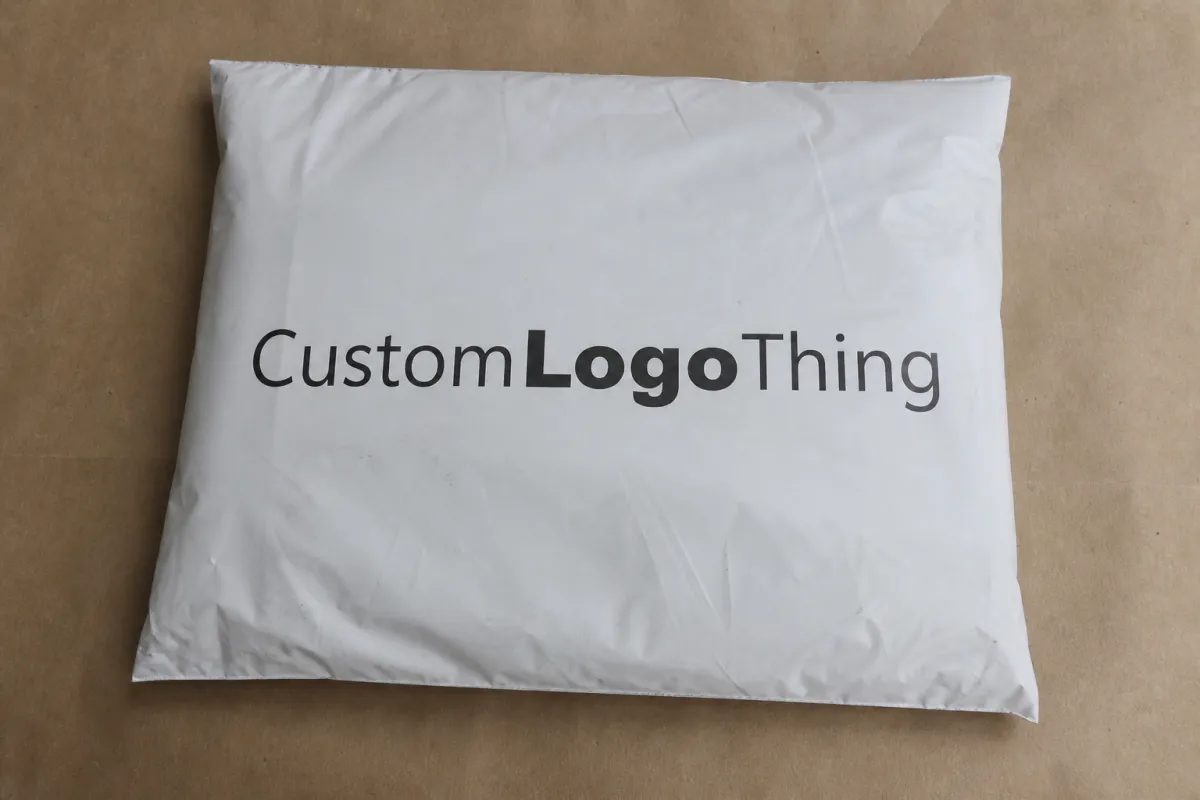
Shipping bags are protective mailers designed for ecommerce and parcel delivery. People call them courier bags, poly mailers, paper mailers, compostable mailers, or hybrid mailers depending on the structure and finish. The category includes flat mailers, gusseted mailers, padded paper formats, and return-friendly designs with a little extra puncture resistance. The job is always the same: move a product from warehouse to doorstep with less material, less freight volume, or a more recoverable build than a heavier alternative.
Sustainability starts with the substrate, but it does not end there. A recycled-content poly mailer can reduce virgin resin use. A paper-based mailer can support fiber recovery. Compostable films can fit a specific brand and disposal strategy, but only if the customer has access to industrial composting and the instructions are clear enough to be followed. Mono-material formats try to simplify recovery by avoiding layered constructions that are hard to sort. None of these options wins by default. The right choice depends on the product, the route, and the infrastructure around it.
Source reduction matters too. Right-sizing often does more than any eco label. A bag that fits the item properly uses less material, reduces void space, lowers transport volume, and can cut dimensional weight charges. The same idea applies to printing, coatings, inserts, and closures. Full-wrap branding may look polished, but a smaller print area or fewer colors can do the job without turning the mailer into a materials-heavy project. Less surface, fewer layers, simpler recovery. That is usually the cleaner path.
Brands also need to separate what the package is from what the package claims. Recyclable does not always mean curbside recyclable. Paper does not always mean recyclable everywhere. Compostable does not mean “throw it in any bin and call it done.” Teams now check claims against local guidance, FSC sourcing for paper, and the actual behavior of their customer base. EPA recycling guidance helps with consumer education, and FSC certification supports responsible fiber sourcing: EPA recycling resources and FSC.
From a buyer’s point of view, sustainable shipping bags are mailers built to balance protection, material efficiency, print needs, and end-of-life reality. The best version works as transit packaging first and a brand signal second. If it cannot survive the route, it is not doing its job.
How Sustainable Shipping Bags Work From Factory to Doorstep
The structure starts with the substrate. Recycled-content plastic bags usually use film with post-consumer or post-industrial resin blended in. Paper mailers often rely on kraft paper or a paper composite, with reinforcement around seams, folds, or the closure area. Compostable formats use plant-based or certified compostable films, though the exact construction can vary a lot from supplier to supplier. Mono-material designs keep the main layers in one recovery stream, which makes sorting easier if local systems actually accept them.
Once the base material is chosen, conversion turns it into a usable bag. That can include extrusion, forming, cutting, gusseting, heat sealing, adhesive application, tear notches, and peel-and-seal strips. Heavy soft goods and items with sharp corners need more reinforcement. A stronger side seal, thicker gauge, or gusseted bottom can be the difference between a clean delivery and a split bag after the package has already left your facility and become someone else’s problem.
Protective performance is not mysterious. A mailer in transit sees friction, stacking pressure, conveyor contact, drops, compression, and sometimes moisture. A good bag handles abrasion without scuffing through, keeps the product centered, and resists puncture where corners or closures press outward. Testing matters here. Packaging teams often use ASTM and ISTA methods for distribution simulation, and ISTA drop and vibration guidance is useful for checking how a package behaves under real shipping conditions: ISTA testing standards.
Printing and branding affect recovery too. A simple one- or two-color print usually keeps production cleaner than a full-wrap design with multiple coatings. Heavy flood coats, metallic inks, and laminated finishes can make recycling or composting harder. That does not mean brands should hide their identity. It means the print spec should match the environmental claim and the production reality. A clean logo, a short message, and a few well-placed colors often deliver the same unboxing effect without turning the mailer into a science project.
On the warehouse floor, the bag has to run cleanly through fulfillment. A mailer that opens easily, seals the same way every time, and stacks neatly saves time for packers. An adhesive that grabs too hard, too soft, or inconsistently slows the line and increases scrap. At scale, even a few seconds per pack become real labor cost. The bag is not just a branding surface. It is shipping material that has to keep up with staff, equipment, and deadlines.
The last step is disposal, and this part gets messy fast. The best outcome depends on what customers can actually access. Paper recovery may be straightforward in one region and weak in another. Recyclable Poly Mailers may rely on store drop-off programs or local acceptance rules. Compostable options only help if the route exists and the brand explains it clearly. A label does not create infrastructure. It only tells people what the intended path should be.
Key Factors That Shape Performance, Claims, and Fit
The product should drive the packaging choice first. Soft goods like tees or socks behave very differently from boxed cosmetics, supplement pouches, or small accessory kits. A soft item can often ship well in a thin recycled mailer. A rigid item may need more structure or a box. Sharp edges, glass, liquids, and fragile closures move protection higher on the list. A packaging review that starts with the product tends to land much closer to the right answer than one built around trend-chasing.
Size and gauge matter a lot. A mailer that is too large wastes material and can increase dimensional weight, which affects freight pricing and carrier efficiency. A bag that is too small strains the seams or forces packers to overstuff the package, which raises the odds of split seals and returns. For many brands, the sweet spot is a size that fits the product with modest clearance and enough room to seal confidently. Thickness works the same way. Too heavy and the cost climbs. Too light and the bag fails under load. Not complicated. Just inconvenient.
Environmental conditions change the result too. Humidity can affect paper-based structures, especially if the warehouse stores them near loading docks or in unconditioned space. Temperature swings can alter adhesive performance, particularly for peel-and-seal closures. Long routes, multiple carrier handoffs, and rough handling increase the need for tear resistance and edge strength. If the brand ships coast to coast, the package should be tested for more than a short local route. Transit packaging lives in the real world, not in a showroom.
Brand presentation is not fluff either. A customer opening experience can reinforce trust, but only if the mailer feels intentional and holds up in use. Clean print registration, a surface that does not scuff easily, and a tear path that opens without shredding all help. For brands that manage returns, the closure and recloseability matter too. A better bag can reduce customer friction on the outbound and return journey. That is one reason many apparel sellers compare mailers with boxes before making a final decision. Sometimes the right package is not the lightest one. Sometimes it is the one that keeps the whole shipping process from wobbling.
Claims are the last factor, and they need discipline. “Recyclable,” “compostable,” “made with recycled content,” and “plastic-free” are not the same thing. Each one means something different and needs different proof. A sustainability claim should match the actual build, including inks, closures, coatings, liners, and seams. Mixed materials that are hard to separate need honest language. Honest claims build trust and lower the odds of customer confusion or regulatory trouble.
- Product type: soft goods, rigid goods, liquids, and sharp-edged items change the strength requirements.
- Shipping route: local delivery is not the same as a long carrier network with multiple handoffs.
- Warehouse conditions: humidity, storage time, and machine compatibility influence performance.
- Claims language: recyclable, recycled-content, or compostable each need the right evidence.
- Customer behavior: the bag should match how your buyers actually dispose of packaging.
If you want a clearer look at how those tradeoffs play out, our Case Studies page shows the kinds of packaging decisions brands make across different product categories. The pattern is boring in a useful way: the best package fits the product, the route, and the people running the line.
Production Steps, Process, Lead Time, and Turnaround
Production usually starts with a spec conversation. Buyers should show up with product dimensions, target unit weight, shipping method, print goals, order volume, and any sustainability constraints that matter. A good supplier will ask about fulfillment setup too, because a bag used for manual packing may need a different build than one going through semi-automated equipment. If the brand wants a recycling or composting claim, that needs to be stated early so the structure, ink system, and wording can be checked before anyone wastes time on the wrong sample.
Sampling saves the most trouble later. A prototype lets teams check fit, seal strength, tear behavior, and how the bag feels in hand. It also shows whether the print area is large enough for logos and instruction copy without turning the surface into a crowded mess. If the mailer is meant for ecommerce shipping at scale, the sample should be packed with the real item, not a stand-in that barely resembles it. A tee wrapped in tissue paper will not tell you much about a dense product or an awkward shape.
Manufacturing then moves through material conversion, printing, cutting, sealing, inspection, and packing. Delays usually show up in ordinary places: incomplete artwork, a substrate that needs special sourcing, tooling changes for an odd size, or proof cycles that drag on because someone cannot settle on the wording. Color corrections, substrate availability, and changes after sample approval cause more slowdowns than anything dramatic. Even a simple design can stall if the team keeps revisiting claim language or barcode placement.
Lead time depends on format. Stock or lightly customized mailers can often move within about 12-20 business days after proof approval, depending on quantity and current production load. Semi-custom runs with unique print setups or less common sizes usually need more time. Fully custom builds with new tooling or specialty materials need a bigger buffer. More control means more planning. That is the tradeoff. No one gets to have it both ways, despite what sales decks like to suggest.
Turnaround also depends on order size. Small runs may be faster to approve but slower to produce if the line is set up for larger quantities. Large runs can improve unit economics, but they demand more storage, more cash tied up in inventory, and more confidence in the spec before production starts. Brands that need speed sometimes use a stock base with custom branding first, then move toward a dedicated structure after volume proves out. That staged path can be the smart move when risk matters and the deadline is not waiting around to be polite.
Build in buffer time for testing. A sample that looks great on screen can still show seal creep, print distortion, or shipping abrasion once it moves through actual handling. If the bag is replacing a box or another transit package, the testing should include drop checks, compression checks, and real pack-out trials. The best turnaround is the one that does not create a packaging headache later.
Sustainable Shipping Bags: Cost, Pricing, and MOQ Basics
Pricing starts with material, and the differences show up fast. Recycled-Content Poly Mailers often sit in a different cost band than paper mailers or compostable structures because resin, paper, and specialty feedstocks move through different supply chains. Paper options vary depending on basis weight, coating, and reinforcement. Compostable films usually land at the higher end because the material and certification path can add cost. None of that is good or bad on its own. It just means buyers should compare the right formats instead of chasing the lowest number on a quote sheet like it means anything by itself.
Print and finishing drive the next layer of cost. A simple single-color logo on a standard mailer usually costs less than a full-coverage design with multiple colors, internal printing, custom seams, tear strips, or specialty adhesive closures. Every added feature can raise tooling complexity or add setup time. If the package will be handled by a fulfillment center, the closure method matters as much as the graphic. A strong adhesive strip that seals once and stays shut can save labor and reduce waste from failed packs.
Minimum order quantity, or MOQ, shapes the buy more than many teams expect. Smaller brands usually need to balance the desire for a custom look with storage, cash flow, and inventory turnover. A stock format with custom printing can be the practical path. Larger brands, or anyone with stable monthly volume, can justify a dedicated custom run that improves unit economics over time. The real question is not just how many bags you want. It is how fast you can use them without trapping working capital in slow-moving packaging.
Indicative pricing helps with planning, though every project still needs a formal quote. At moderate volumes, printed recycled-content poly mailers may often fall somewhere around $0.16-$0.32 per unit, depending on size, gauge, and print coverage. Paper mailers may run roughly $0.22-$0.45 per unit, while compostable formats can land around $0.24-$0.48 per unit or higher if the structure is more complex. Those ranges are planning numbers, not promises. Freight, carton pack-out, and sampling can shift landed cost more than buyers expect.
| Format | Typical Strengths | Common Tradeoffs | Indicative Unit Cost at Moderate Volume |
|---|---|---|---|
| Recycled-content poly mailer | Lightweight, moisture resistant, efficient for soft goods, often good for dimensional weight control | Recyclability depends on local acceptance and clear customer instructions | $0.16-$0.32 |
| Paper mailer | Fiber-based feel, strong brand story, useful for customers who prefer paper packaging | Lower moisture resistance, may need reinforcement for corners or heavier items | $0.22-$0.45 |
| Compostable mailer | Useful for specific brand and disposal strategies, can support a clear environmental narrative | Requires the correct disposal path, plus careful claims language and certification support | $0.24-$0.48+ |
| Mono-material mailer | Designed to simplify recovery, often a good fit for recycling-focused programs | Performance and recovery still depend on local infrastructure and bag construction | $0.18-$0.36 |
Quote comparison should be disciplined. Ask vendors to separate material cost, conversion cost, printing, freight, and sample charges. If one supplier looks cheaper only because freight is missing or print setup is buried inside a larger hidden batch, the savings vanish. A fair comparison should include waste and claims risk too. A mailer that cuts damage, repacking, and customer service contacts can cost less in practice even if the invoice is higher. That is the kind of landed-cost thinking that matters for brands shipping at scale.
For teams choosing between bag formats and box formats, the answer depends on product shape and carrier pricing. Our Custom Shipping Boxes page is useful if the product needs more rigidity, while lighter apparel and flat goods often fit better in mailer structures. The packaging should follow the item, not the trend.
Common Mistakes Brands Make When Choosing Shipping Bags
The most common mistake is assuming a package is sustainable because it looks the part. A muted green color, a recycled icon, or a line of environmental copy does not prove much. If the structure uses layers that are hard to separate, if customers have no disposal path, or if the package creates extra waste through returns and damage, the environmental benefit shrinks. Smart buyers look past the surface and ask what the bag is made of, how it is recovered, and how it behaves in transit.
Another common error is choosing packaging for the shelf instead of the packing line. A bag can look elegant in a sample photo and still irritate packers if the opening is awkward, the adhesive is weak, or the seams split under pressure. Order fulfillment teams feel those problems immediately. Slower pack-out, more rework, and more damaged shipments all create hidden cost. A bag that is slightly faster to make but much slower to use is usually the wrong choice.
Testing with the actual product is non-negotiable. A mailer that handles one lightweight garment may fail once a heavier knit, a boxed accessory, or something with stiff corners goes inside. The failure may start small: a stress mark, a loose seal, a corner tear, or a package that arrives scuffed and dented. Those little issues stack up over volume. A proper pilot should include the exact product mix the brand will ship, not the nicest possible sample load.
Operational fit gets overlooked too often. Some packaging formats jam on automated equipment, stack badly in bins, or demand extra folding steps that slow the team down. Others create too much air, which increases dimensional weight and shipping cost. A bag that is 10 percent larger than necessary may seem harmless. Over thousands of shipments, that extra space becomes real money and real material use. The best transit packaging fits the product snugly without forcing overpacking.
The cheapest mistake in packaging is often the most expensive one to fix later. A poor bag can turn into replacement shipments, customer complaints, and a new round of sourcing that eats time and budget.
The last mistake is skipping the rollout plan. Packaging changes affect customer service, warehouse SOPs, and the way sustainability claims are communicated. If the team says the package is recyclable, the website, insert copy, and internal training all need to match. If the bag is compostable, the instructions have to be careful enough to avoid misleading people. A clean launch is not just about getting bags delivered on time. It is about making sure the whole organization knows how to use them and how to explain them without making things worse.
Expert Tips and Next Steps for Choosing the Right Bag
Start with the current package, not the fantasy version someone mocked up in a slide deck. Measure damage rates, average shipping weight, pack-out time, and customer complaints. Look at how many replacement shipments happen, how often the team repacks orders, and whether there are recurring issues with seam splits, moisture, or excess void. Those numbers show you which problem the next bag needs to solve. Without a baseline, a new mailer can feel better on paper while doing very little for the business.
Build a simple scorecard for every sample. Keep it practical: product fit, seal reliability, print clarity, sustainability claim strength, unit cost, and warehouse usability. If the bag looks great but slows packing or fails in transit, it is not ready. If it performs well but the claim language is muddy, it still needs work. A checklist like that keeps the team from worshiping one feature while the rest of the package falls apart.
Ask for side-by-side samples whenever possible. Two or three mailers in hand reveal differences that disappear in a PDF. One may feel better, another may seal more consistently, and a third may be stronger but too stiff for the product. That side-by-side comparison is usually the quickest way to a sensible decision. For brands comparing multiple product lines, it also helps to review options in Custom Packaging Products so the discussion stays tied to use case instead of drifting into material preference theater.
Run a pilot before a full rollout. A limited launch across a few SKUs or one fulfillment lane gives the operations team a chance to report back on seal integrity, customer reaction, and packaging headaches. Customer service should be part of that review because they hear the complaints first. Buyers should listen to the warehouse, the brand team, and support together. A sustainable package only works if the entire chain can use it with confidence.
There is real value in choosing the bag that matches the route. A lightweight apparel brand shipping flat goods may do very well with a recycled-content mailer that keeps dimensional weight under control. A beauty brand with fragile components may need a paper mailer with more structure or a box for a safer trip. That is why our Custom Poly Mailers page is often a starting point for soft goods, while more rigid or delicate products may need a different format. The right choice is not the most eco-looking one. It is the one that fits the product and tells the truth.
Use this decision path when narrowing the options:
- Define the product’s dimensions, weight, and fragility.
- Decide which recovery path you can support with honest instructions.
- Request samples in at least two structures, ideally with matching print options.
- Compare true landed cost, not only the unit price.
- Test with the real item in the real packing flow.
- Launch with customer-facing instructions and internal SOPs already in place.
For teams that want to reduce waste without making the process harder, that sequence usually beats a quick scroll through product photos. Brands that study shipping materials in context tend to make better calls, and the result is packaging that protects the product, respects the route, and fits the business model. If you need a broader place to compare formats and build a packaging roadmap, the options in Custom Packaging Products can help frame the next step.
The strongest packages are rarely flashy. They close properly, protect reliably, and back up the story the brand is willing to stand behind. That is the real promise of sustainable shipping bags for brands: less waste, better fit, and a shipping system that behaves from the packing bench to the customer’s hands. If you only take one step from here, make it this one: measure the product, the route, and the recovery path before you choose the material. The bag should follow those facts, not the other way around.
Frequently Asked Questions
What makes sustainable shipping bags for brands truly sustainable?
The bag should reduce unnecessary material, fit the product well, and match a real recovery path that customers can understand and access. A structure made with recycled content, paper, or compostable material is only part of the picture. Inks, coatings, closures, and the actual disposal route all affect whether the sustainability claim holds up in practice.
Are recycled-content shipping bags better than compostable ones?
Not always. Recycled-content bags can be a strong choice when the brand wants to reduce virgin material use and keep the package close to familiar recycling pathways. Compostable bags can make sense in the right program, but they depend on the product, the disposal system, and clear customer instructions. The better option is the one that matches your shipping reality and the end-of-life system your buyers can actually use.
How do I compare sustainable shipping bags for brands on price?
Compare quotes on the same basis: material, printing, freight, sampling, and MOQ. A lower unit price may hide a bigger minimum order or a freight charge that changes the final number. It also helps to compare total landed cost, because a bag that reduces damage, repacking, and returns can save more money than a cheaper bag that fails more often.
What lead time should brands expect for custom sustainable shipping bags?
Stock or lightly customized formats often move faster, while custom sizes, specialty materials, and more complex print setups add time. In many cases, production can take about 12-20 business days after proof approval for simpler runs, with longer timelines for fully custom builds. Sampling, artwork approval, and supply availability usually shape the schedule as much as the factory run itself.
What should I test before ordering sustainable shipping bags for brands?
Test the actual product in the actual bag. Check seal strength, drop performance, puncture resistance, moisture behavior, and how the package looks after normal carrier handling. It is also smart to ask packers and customer service for feedback on opening, packing speed, and customer instructions, because the bag has to work on the floor, not only in a spec sheet.

