Buyer Fit Snapshot
| Best fit | Sustainable Shipping Packaging for Subscriptions projects where brand print, material claims, artwork control, MOQ, and repeat-order consistency need to be specified before quoting. |
|---|---|
| Quote inputs | Share finished size, material target, print colors, finish, packing count, annual reorder estimate, ship-to region, and any compliance wording. |
| Proofing check | Approve dieline scale, logo placement, barcode or warning zones, color tolerance, closure strength, and carton packing before bulk production. |
| Main risk | Vague material claims, crowded artwork, missing packing details, or unclear freight terms can make a low unit price expensive after revisions. |
Fast answer: Sustainable Shipping Packaging for Subscriptions: Material, Print, Proofing, and Reorder Risk should be specified like a repeatable production item. The safest quote records material, print method, finish, artwork proof, packing count, and reorder notes in one written spec.
Production checks before approval
Compare the actual filled-product size with the drawing, then confirm tolerance on folds, seals, hang holes, label areas, and retail display edges. Reserve space for logos, QR codes, warning copy, and material claims before decorative graphics fill the panel.
Quote comparison points
Review material grade, print process, finish, sampling route, tooling charges, carton quantity, and freight assumptions side by side. A quote is only useful when the supplier can repeat the same color, closure quality, and packing count on the next order.
I still remember standing on a fulfillment floor in Charlotte at 6:10 a.m., one hand on a tape gun and the other on a subscription box that should have been simple. It held a $12 product, but the carton, void fill, tape, and freight were already eating into the margin before the first label got scanned. That is the kind of leak sustainable shipping Packaging for Subscriptions is meant to close, and it is why I keep coming back to this subject after years of measuring boxes, arguing over die lines, and fixing packouts that looked elegant on a render and painful on a conveyor. The box is not magic. I wish it were, because it would have saved me a few gray hairs and at least one $8,000 pilot that went sideways in the Midwest.
For me, sustainable shipping Packaging for Subscriptions has never meant brown paper and a clean conscience. It means packaging that protects recurring shipments with less material, lower-impact inputs, and a packout plan that respects the product, the carrier lane, and the people in the warehouse doing the work with scanners that beep like they have opinions. On a 14-bay line in Cleveland, that might be a 350gsm C1S artboard sleeve for a lightweight skincare kit. For glass bottles headed 1,200 miles on UPS Ground, it may be a 32 ECT corrugated shipper with a molded fiber insert made in Dongguan. Good packaging should make the warehouse calmer, not louder. That sounds simple, but after a few thousand orders, simple is usually where the real savings show up.
Recurring programs behave differently from one-off ecommerce orders. One wasted gram turns into thousands of wasted grams when you ship 8,000 boxes a month. One extra inch of void space can push every parcel into a worse dimensional weight bracket, adding $0.38 to $1.12 per shipment depending on the lane. One awkward insert can slow the line just enough to matter by Thursday afternoon, when the team is already tired and the label printer is acting dramatic. That is why I like brands to treat sustainable shipping Packaging for Subscriptions as both a design choice and an operations choice. If you want a place to start while you map that out, you can browse Custom Packaging Products and compare the structure to the product instead of forcing the product into the wrong box. I have seen that mistake made with 10 x 8 x 4 cartons that should have been 8 x 6 x 3, and it is a mess every time.
Sustainable shipping packaging for subscriptions: what it means
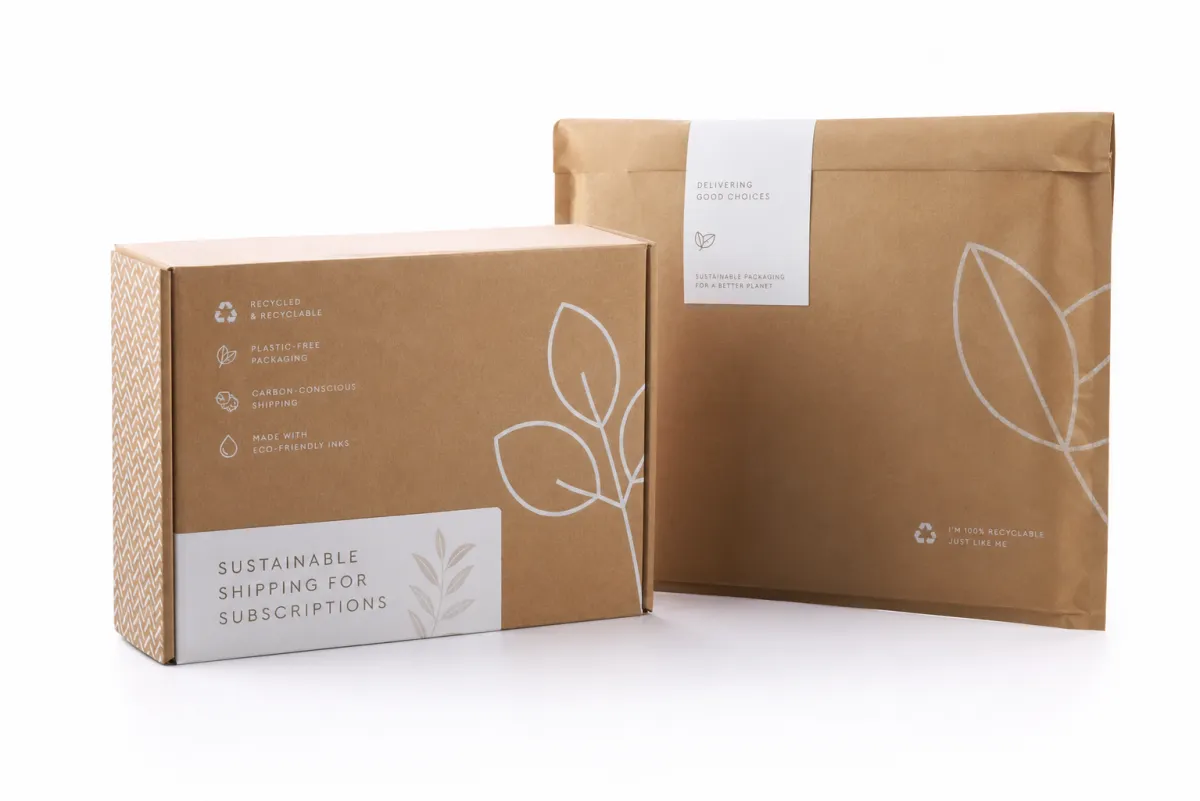
Plain English first: sustainable shipping Packaging for Subscriptions is packaging that uses less material, creates less waste, and still arrives in one piece. That can mean a mailer, carton, or insert system that keeps a monthly refill, seasonal kit, or mixed-SKU bundle safe without wrapping it in layers of unnecessary protection. On a good day, that might be a recycled paperboard mailer for a lightweight skincare set that weighs 6.4 oz. On a harder day, it is a corrugated shipper paired with a molded pulp insert that keeps glass bottles from rattling around like marbles in a coffee tin. I have seen both succeed, and I have seen the second one win more often once gravity and rough handling get involved.
I visited a client warehouse near Indianapolis where the team was packing a body serum into a 10 x 8 x 4 box with 18 inches of kraft paper around one small bottle. The box looked premium enough for a product shoot. Freight did not care. The customer did not care. The planet definitely did not care. After we switched to a right-sized carton, filler dropped by 71% and each shipment saved $0.38. That is sustainable shipping Packaging for Subscriptions doing the actual job it should do, which is a lot better than staring at a pallet of wasted dunnage and calling it a brand decision.
Subscriptions magnify every choice. If a one-time order wastes 40 grams of paper, that is annoying. If a subscription wastes 40 grams of paper 12 times a year for 25,000 customers, the waste becomes a mountain with a shipping label on it, and the annual total lands at about 12,000 kg of avoidable paper. The same applies to carrier spend, customer complaints, and damage claims. A subscription brand lives on consistency, so sustainable shipping packaging for subscriptions has to be built for scale rather than for a glossy mockup on a conference table. I have sat through those meetings in Austin and Chicago, and there is always one person who wants the unboxing to feel like a jewelry reveal, even if the product is a refill pouch. The pouch does not need velvet theater. It needs to arrive intact, on time, and ready for the next cycle.
"We thought the box was the brand," a client told me after six months of re-ships in a 9,000-order skincare program. "Turns out the box was just expensive cardboard if the product arrived broken." That became a $2.90 lesson per order, and they learned it the hard way.
There is a brand side to this too. People still care about unboxing. They just do not want guilt attached to opening a package. Good sustainable shipping packaging for subscriptions can still look polished, support branded packaging, and create a premium moment without drowning the customer in plastic film, oversized inserts, or giant air pillows that burst across the floor like angry little clouds. I have seen simple kraft mailers, one-color custom printed boxes, and clean paper wraps outperform more elaborate retail packaging because the whole thing felt intentional instead of wasteful. A matte artboard sleeve with a single black logo can feel more considered than a six-color carton with foil, emboss, and a plastic window that adds unnecessary mixed-material waste. That quiet kind of design tends to hold up better over time, which is exactly what a subscription brand needs.
Many teams start in the wrong place. They ask, "How do we make it look sustainable?" The better question is, "How do we make it ship sustainably, then make it look good?" That order matters. Packaging design should begin with protection, dimensions, and fulfillment speed, then move into print, texture, and package branding. If the base structure is off by half an inch, no amount of spot gloss is gonna rescue the economics of sustainable shipping packaging for subscriptions. I have tried to save a bad structure with fancy print before, once in a sample room outside Shenzhen and once in a factory near Ningbo. It felt a little like putting lipstick on a pallet jack.
How does sustainable shipping packaging for subscriptions work?
The system starts in the warehouse, not in the design file. I look at product size, fragility, how many SKUs ship together, and whether the fulfillment team can actually pack the item without a 12-step dance. Then I ask about carrier lanes. A box that survives a 20-mile regional route out of Dallas may behave very differently on a cross-country ecommerce lane with three hub touches and a weekend in a hot trailer. Sustainable shipping packaging for subscriptions only works when the packout matches that real-world abuse. That part is not glamorous, but it is where the truth lives, especially if your DC runs 850 orders a day and the line gets backed up at 4:45 p.m.
On a practical level, the package has four jobs to do: protect the product, keep the shipper efficient, fit the fulfillment process, and tell the brand story. That can be as simple as a recycled paperboard mailer with a friction lock, or as engineered as a custom printed box with a molded pulp tray and a printed insert that separates glass, paper, and refill components. I have seen monthly coffee refills ship well in a thin corrugated mailer, and I have seen the same product fail because someone shaved 3 mm off the internal depth to save "space." Three millimeters. The carton did not care that procurement had a spreadsheet, and neither did the carrier. A good spec sheet should list board caliper, inside dimensions, and closure style, not just a pretty render.
Dimensional weight is where a lot of brands get humbled. A box that is 0.75 inch too tall can jump into the next DIM bracket and add dollars across an entire lane. Void fill makes the problem worse when it is used as a lazy substitute for proper sizing. In one Chicago meeting, finance wanted to save $0.03 on a carton, and I said no because the packout was already losing $0.22 in freight and $0.14 in re-ships. They finally listened after the return data came back. Sustainable shipping packaging for subscriptions works only when the math is larger than one line item. If you ignore the freight math, the freight math will eventually ignore your feelings, usually after 5,000 parcels and a very expensive quarter.
For testing, I still like ISTA 3A-style transit testing or an equivalent D4169-inspired protocol, depending on the product and lane. The ISTA standards are a good reality check because they put the package through the kind of shake, drop, and compression abuse that a polished mockup never sees on a desk. If a sample survives the lab and the production line can pack it in under 45 seconds, you are getting close to a real solution for sustainable shipping packaging for subscriptions. If the sample only survives when everyone handles it like a Faberge egg, then we are not done yet, and the line supervisor in Columbus will tell you so within the first hour.
Here is the simple logic I use when I am building a packout plan:
- Match the outer size to the filled product footprint within 0.25 to 0.5 inch where possible.
- Use inserts only where the product needs separation, not because the mockup looks empty.
- Keep the number of materials low so order fulfillment stays fast and training stays simple.
- Verify that the customer can recycle or separate the components without a scavenger hunt.
That is the cleanest version of sustainable shipping packaging for subscriptions: a package that feels intentional, packs quickly, ships cheaply, and survives the carrier ride without demanding five extra layers of protection. I am a fan of packaging that behaves itself. There are enough chaotic things in ecommerce already, from a missed pick on aisle 7 to a late pallet from a converter in Qingdao.
Sustainable shipping packaging for subscriptions: cost and pricing
Here is the annoying but true part: the cheapest unit price is not always the cheapest packaging. I have seen brands brag about shaving $0.07 off a carton and then lose $1.80 in freight, $0.42 in labor, and another $6.50 when the product broke in transit. One client once celebrated a tiny board savings in a meeting, and I remember thinking, "Great, we saved the price of a sad cup of coffee and bought ourselves a pile of returns." Once you account for chargebacks, re-ships, and customer service time, sustainable shipping packaging for subscriptions should be priced by total landed cost, not by the stack of cartons sitting on a pallet in a warehouse outside Atlanta.
Tooling and MOQ matter as well. A simple printed paperboard mailer might start around $0.18 to $0.42 per unit at 10,000 pieces, depending on board weight, print coverage, and finish. At 5,000 pieces, I have seen a plain kraft mailer land at $0.15 per unit when the spec is straightforward and the print is minimal. A custom corrugated shipper with one-color exterior print may land closer to $0.62 to $1.15 at similar volume. Add a molded fiber insert, and you can tack on another $0.10 to $0.35 per set. That sounds expensive until you compare it to a 4% damage rate on a product with a $28 retail price. Sustainable shipping packaging for subscriptions gets a lot less abstract once breakage turns into dollars, especially when a few broken bottles can erase the savings from an entire month of packaging optimization.
I was in a Shenzhen sampling room once where a supplier quoted me $0.19 for a folded mailer, then $0.27 after we added a second-color logo and a water-based coating. Fair enough. Ink, coating, and setup are real costs. The converter also told me bluntly that the recycled board they could source that week had a 3- to 4-day longer lead time than virgin stock, and the factory in Dongguan could hold the board spec but not the launch date if the liner changed after approval. That is the kind of detail most brand teams miss when they want sustainable shipping packaging for subscriptions to be eco-friendly, cheap, and available tomorrow. Packaging does not care about wishful thinking. It cares about board mills, lead times, and whether the truck from the paper plant actually rolled out on Friday at 5:30 p.m.
Here is a straight comparison I use with clients when we are balancing packaging design, packaging cost, and damage risk:
| Option | Typical unit cost at 10,000 | Best for | Main tradeoff |
|---|---|---|---|
| Recycled paperboard mailer | $0.18-$0.42 | Lightweight kits, refills, small accessories | Lower crush protection than corrugate |
| Corrugated shipper | $0.62-$1.15 | Fragile products, mixed-SKU subscriptions | Higher material and freight weight |
| Molded fiber insert in carton | $0.10-$0.35 added | Glass, ceramics, premium product packaging | Tooling and fit need careful testing |
| Poly mailer with paper insert | $0.14-$0.28 | Soft goods, apparel, flat items | Less premium feel for some brands |
If you are shipping a lot of soft goods, a well-specified poly mailer can still fit into sustainable shipping packaging for subscriptions if the product and the market match. I am not sentimental about materials. Paper is not sacred, and plastic is not automatically the villain. The question is fit, weight, and end-of-life. For recurring apparel programs, I have seen Custom Poly Mailers reduce cube and labor enough to outperform heavier box systems, especially when the customer does not need a rigid presentation and the monthly volume is 15,000 units. I know that makes some packaging purists twitch, but the warehouse usually has better data than the mood board, especially when the sorter is moving 1,800 parcels an hour.
Where brands usually overspend is not in the carton itself. It is in over-engineering the wrong part. A custom insert for a $9 item? Maybe not. A premium finish on a box that will be crushed by the carrier anyway? That is money set on fire. A slightly higher unit cost can be worth it when it cuts returns, improves pack speed by 10 to 15 seconds, or lets you standardize one size across three SKUs. That is sustainable shipping packaging for subscriptions behaving like a business decision instead of a mood board. And yes, I have seen a founder fight for a foil logo on a box that was then stacked under 70 pounds of other freight in a Memphis hub. The foil did not survive. The ego did not either, though it took longer.
One more number matters: labor. If a packout takes 52 seconds instead of 34, that is not a small inconvenience. At 900 orders a day, that delta can add 4.5 extra labor hours every shift. I would rather spend $0.08 more on a better-formed insert than hire another picker because the packaging is awkward. Good sustainable shipping packaging for subscriptions should reduce touchpoints, not add them. If it makes the team sigh every morning, the package is already costing more than it should, and the supervisor in the Sacramento warehouse will notice before procurement does.
Step-by-step guide and timeline for implementation
The cleanest rollout begins with an audit. I want the current carton sizes, fill weights, damage rates, return reasons, and freight charges across at least 30 to 60 days of orders. If a client only hands me a glossy mockup, I usually ask for actual packout photos from the floor. Those photos tell me whether the team is using 4 inches of filler because the box is too big, or because someone designed the box before measuring the product. That is a classic mistake in sustainable shipping packaging for subscriptions, and it costs real money. It also wastes the time of people who are already busy, which is a special kind of bad when the shift starts at 7:00 a.m. and the line is already full.
After the audit, define the goal in plain numbers. Do you want to cut material by 25%? Reduce damage from 3.2% to under 1%? Lower average freight spend by $0.40 per shipment? Move to FSC-certified board? Create a cleaner branded packaging moment? Good goals keep the design honest. I have seen too many teams say they want "eco-friendly packaging" and then discover they really want smaller cartons, faster packout, and fewer customer complaints. That is fine. Just say it clearly so sustainable shipping packaging for subscriptions does not drift into vague marketing language. Vague language is where projects go to hide, usually right next to the unused sample drawer.
Sampling comes next. In a normal project, I like to see concept art in week 1, structure samples in week 2 or 3, transit samples in week 3 or 4, and revised preproduction samples after that. If the design is simple and the print setup is straightforward, a clean swap can move from concept to production in about 12 to 15 business days after proof approval. If you are adding custom printed boxes, inserts, coating, or tight registration, plan on a longer cycle because sampling and shipping tests are not optional when the brand promise depends on the package surviving carrier abuse. That is just how sustainable shipping packaging for subscriptions works in the real world. The calendar does not bend because somebody wants a launch on Friday, and a plant in Ningbo still needs the artwork file by Tuesday at 3 p.m.
Who needs to be in the room? Operations, design, procurement, fulfillment, and customer service. Leave one of those groups out, and expect a surprise later. Design will care about print and package branding. Operations will care about line speed and cube. Procurement will care about material availability and lead times. Customer service will care about the one-in-100 breakage issue that turns into ten angry emails. In my book, a pilot with 500 to 1,000 orders saves everybody from a much larger mess. I would rather eat one small delay than relaunch a failed sustainable shipping packaging for subscriptions program after 18,000 units are already in the wild. That kind of clean-up is not fun, and I am speaking from experience, not theory, after a launch in Phoenix that had to be reworked in week three.
Here is the timeline I usually map:
- Audit: 3 to 5 business days for size, damage, and freight review.
- Concept: 3 to 7 business days for die lines, structure, and print direction.
- Sampling: 5 to 10 business days for prototype cartons and inserts.
- Testing: 3 to 7 business days for drop, compression, and fit checks.
- Revision: 3 to 5 business days for trim changes or artwork fixes.
- Production: 10 to 20 business days depending on board, print, and volume.
That schedule is not fantasy. It is the kind of timeline I have negotiated with converters after factory visits where the paper mill was late, the liner stock changed, or the customer decided the logo should move 6 mm to the left because the founder had a fresh idea at 11 p.m. Founders do love a midnight thought. One reason I like working with Custom Shipping Boxes is that the structure can be tuned for the product instead of forcing the product to obey the box. That is the whole point of sustainable shipping packaging for subscriptions. The box should fit the item, not the other way around, and the approved sample should match the production spec within 1 mm on the internal dimensions.
Key factors that make the packaging succeed or fail
Material selection
Material choice is where most of the wrong assumptions live. Recycled paperboard works well for light, flat, or semi-rigid products, especially in the 300gsm to 350gsm range for sleeves and mailers. Corrugate is the safer bet for crush resistance and mixed-SKU kits, with E-flute and B-flute both showing up often in U.S. programs. Molded fiber is excellent when you need separation and want a paper-based structure that does not behave like loose filler. Compostable materials can be useful in some programs, but I would not recommend them just because they sound noble. I have watched more than one team choose a material because it sounded good in a deck, then discover the board buckled, the humidity rose to 78%, and the launch became an exercise in regret. The right choice depends on product weight, humidity, shipping distance, and the customer’s recycling access. That is why sustainable shipping packaging for subscriptions has to be matched to the item, not to a trend or a trade-show pitch.
Protection performance
I have seen a beautiful box fail because the flute direction was wrong and the product punched through one corner on a 22-pound compression test. I have also seen a plain uncoated shipper perform better than a fancy coated version because the fit was tighter by 4 mm and internal movement dropped close to zero. When I say test, I mean real tests: drop height, vibration, humidity exposure, and stack strength. Packaging.org has useful industry context on material choices and packaging systems at Packaging Council resources, and I still send younger brand managers there when they confuse "sustainable" with "lightweight and hopeful." Sustainable shipping packaging for subscriptions needs proof, not vibes. Vibes do not survive a conveyor belt in Reno or a week in a hot trailer outside Nashville.
Brand experience
Good package branding can make a recurring shipment feel considered without wasting a pound of material. A single-color logo on a kraft mailer, a neat unboxing panel, or a clean internal message can do more than a flood of foil and spot UV. I worked with one subscription coffee brand that switched from a loud six-color outer to a restrained one-color custom printed box with a structured interior message. Their returns did not change, but customer comments about "less waste" jumped by 38% in the first month, measured across 4,200 orders. That was a useful signal. Sustainable shipping packaging for subscriptions can support the story if the design stays disciplined. Quiet confidence usually reads better than expensive noise, especially after the third monthly shipment.
End-of-life claims
Brands get themselves into trouble here. A package is not recyclable in practice just because someone wrote that on a sales deck. Mixed materials, black plastics, laminated layers, and glued-on decorations can break the end-of-life path. If you want to claim recyclable, compostable, or FSC-backed, make sure the entire system supports that claim. I usually tell clients to keep the disposal story simple enough that a customer can understand it in one sentence. If the claim needs a footnote and a lawyer, it is probably too clever for sustainable shipping packaging for subscriptions. I have seen too many "green" claims turn into awkward customer support tickets, especially after the first 500 subscribers try to figure out what goes in curbside recycling and what does not.
For a clean benchmark, I also point teams to the EPA’s guidance on source reduction and reuse at EPA reducing and reusing basics. That page is not glamorous, but it is honest. Which is more than I can say for some eco packaging claims I have had to review after a late-night supplier call from a factory in Ningbo. The factory was tired, I was tired, and the claim sheet was trying very hard to sound like a poem while the actual spec was still unresolved at 9:40 p.m.
"If the package looks green but behaves wasteful, the customer notices by box number three." That line came from a brand director I worked with in Portland, and she was right. Recurring shipments train customers fast, usually by the third delivery and definitely by the sixth.
When all four factors line up, sustainable shipping packaging for subscriptions feels easy to the customer and boring to the warehouse. That is a compliment. Boring packaging is often the best packaging because it arrives on time, opens cleanly, protects the product, and does not create a ticket in the CRM. If nobody in operations is panicking, that is usually a good sign, especially in a month where the DC is processing 18,000 units and the returns desk is quiet.
Common mistakes with subscription shipping packaging
The first mistake is calling something sustainable because it is brown. Brown does not equal responsible. I have seen uncoated boxes with massive void space, fragile products rattling inside, and expensive damage claims all wrapped in the comforting language of "eco-friendly." That is not sustainability. That is brown theater, and it is expensive. It also has a habit of making executives feel virtuous while the warehouse quietly absorbs the mess, usually in the form of a 2.8% damage rate and a stack of replacements in the back room.
The second mistake is picking a package that is either too small or too large. Too small and the product crushes or scuffs. Too large and freight costs rise, dunnage explodes, and labor slows down. I once watched a team try to force four skincare items into one tiny tray to save 0.06 square inches of board. The trays cracked, the labels wrinkled, and the customer service queue was still angry three weeks later. Sustainable shipping packaging for subscriptions only works when the fit is honest. There is no shortcut around physics, and trust me, I have watched people try, from a boardroom in New York to a packing bench in Sacramento.
The third mistake is ignoring what happens after launch. Returns, replacements, and damaged parcels tell you more than the prototype ever will. If your breakage rate climbs from 0.8% to 2.5% because the insert was too loose, that is not a minor issue. On 20,000 shipments, that is 340 extra problem orders. I would rather spend $0.12 more on structure than deal with that mess. A lot of sustainable shipping packaging for subscriptions programs fall apart because nobody built a feedback loop. The launch happens, everyone claps, and then the damage rate sneaks in like a raccoon in the rafters, usually by week six.
The fourth mistake is penny-pinching on the wrong line item. People love to chase $0.02 off a carton and ignore the $0.65 in freight or the $7 replacement shipment. I have sat in procurement meetings where someone celebrated a quote reduction while the warehouse supervisor quietly showed me a stack of crushed returns. You cannot save your way into good sustainable shipping packaging for subscriptions by haggling on paper thickness alone. Savings have to show up in the total system, not just on one spreadsheet tab that nobody revisits after the quarter closes.
- Do not overprint the outer if the package will be discarded before the customer notices the art.
- Do not use mixed materials unless the separation path is obvious and local recycling supports it.
- Do not approve a structure without testing it on the actual line speed and actual carrier route.
- Do not let one founder preference for "premium" override the math on damage, freight, and labor.
Honestly, the worst launches I have seen were not bad because the brand lacked taste. They failed because the team treated sustainable shipping packaging for subscriptions like a branding exercise instead of an operating system. Packaging is part of the product. Pretending otherwise costs money. Usually more money than people want to admit in the room, especially after the first damage report lands from the West Coast distribution center.
Expert tips and next steps for a smarter rollout
My first tip is simple: start with one or two core ship sizes. Do not create a custom carton for every SKU unless your order mix is huge and the volumes justify it. I have seen brands with 14 carton sizes and a warehouse floor that looked like a corrugated graveyard. Standardizing to two or three sizes can cut complexity, reduce mistakes, and improve order fulfillment speed. That is a very practical way to make sustainable shipping packaging for subscriptions pay off quickly. It also makes the team less likely to mutter under their breath while packing 400 orders by 2 p.m., which is a nice bonus.
Second, pilot with a real fulfillment team, not just a designer and a founder. Give the packout to the people who will actually run it for a week. Measure pack speed, mis-picks, tape usage, and damage. Ask them what annoys them after 50 boxes, not what looks nice in the sample room. I learned that lesson in a factory outside Dongguan when a beautiful insert turned into a headache because the top tray needed two extra hand motions. One extra hand motion, repeated 9,000 times, becomes a labor bill. That is why sustainable shipping packaging for subscriptions should be tested by the floor first. The floor is brutally honest, which is one reason I trust it more than a polished render.
Third, negotiate around supply chain realities, not just price. Ask about paper lead times, print windows, pallet configuration, FSC options, and whether the supplier can hold your spec if a liner grade changes. I have had a supplier from WestRock quote one rate for virgin stock and another for recycled content with a 4-week longer lead. That is not a problem if you plan for it. It is a problem if you pretend the paper mill runs on your launch calendar. Smart sustainable shipping packaging for subscriptions programs are built on honest lead times, and honestly, I would rather hear "no" from a factory than "sure" from someone who has not checked the mill in Guangzhou or the converter in Suzhou.
Fourth, use the right structure for the channel. A premium beauty refill might need a polished paperboard mailer. A tougher mixed-SKU kit may need a corrugated shipper. A soft-goods subscription might perform better in a lighter mailer system. If you want a branded finish without overbuilding, choose the structure first and the decoration second. That is also where a vendor like Custom Shipping Boxes can help you tune dimensions instead of forcing a one-size-fits-all carton. You can also pair it with Custom Poly Mailers when the item profile justifies a lighter build. That flexibility is usually the difference between a clever concept and a usable sustainable shipping packaging for subscriptions program, especially when the monthly volume moves between 4,000 and 18,000 units.
Here is the practical launch plan I give teams that want to move quickly without making a mess:
- Audit the current packout, current damage rate, and current freight on 100 to 300 orders.
- Define one measurable goal, such as a 20% material reduction or a sub-1% damage target.
- Request 2 to 4 sample structures and test them with real product weight, not a dummy load.
- Run transit tests and a 1-week fulfillment pilot with the same people who pack the live orders.
- Approve print, board, and insert specs only after the pilot data looks clean.
- Launch in a controlled window so customer service can watch for 7 to 10 days.
If you do that, you will have a much better shot at building sustainable shipping packaging for subscriptions that actually survives the real world. Not the slide deck. The real world. The one with bad weather, tired packers, and carriers who do not care how much your box cost. They are not reading your brand deck on the truck, which is rude but also true, whether your facility is in Phoenix, Portland, or Pittsburgh.
My final advice is the same one I give every brand that asks whether sustainability will hurt the unboxing experience. No, not if you design well. Some of the strongest subscription brands I have seen use fewer materials, tighter packouts, and cleaner graphics than the overbuilt competition. The result feels calmer, more expensive, and more honest. That is the sweet spot for sustainable shipping packaging for subscriptions, and it is well within reach if you plan it like an operator, not a dreamer. I really do believe that, especially when the spec sheet is tight, the lead time is 12 to 15 business days, and the first pilot run comes back clean.
What is the best sustainable shipping packaging for subscriptions?
The best option is the one that protects the product with the least material and the lowest shipping cost. For many brands, right-sized corrugate, recycled paperboard mailers, or molded fiber inserts are the practical winners, especially when the product weighs under 2 lb and ships every month. If the package is easy to pack and hard to break, you are already in a good place. In practice, that often means a lightweight mailer for refills or a corrugated box for fragile, mixed-item kits.
How do I lower the cost of sustainable subscription packaging?
Standardize package sizes and reduce void space before you chase fancy materials. Compare total landed cost, not just packaging unit price, because freight, labor, and damage claims can erase a $0.05 savings fast. I have seen that movie too many times, and the ending is always annoying. A real target might be cutting filler from 18 inches of kraft to 6 inches and saving $0.38 per shipment across 10,000 monthly orders.
Which materials work best for sustainable shipping packaging for subscriptions?
Recycled corrugate and paperboard are usually the easiest to source and recycle. Molded fiber and paper-based cushioning can work well when the product needs more protection or separation, especially for glass, ceramics, and mixed-SKU kits. The real trick is choosing the material that fits the product, not the material that sounds best in a pitch. A 200gsm sleeve can work for a 7 oz refill, while a corrugated shipper is better for a fragile multi-item box.
How long does it take to switch subscription packaging?
A simple swap can happen in a few weeks if the dimensions and print setup are straightforward. Custom structures, new inserts, or retail-ready branding usually take longer because sampling and transit testing are not optional if you want the package to survive shipping. I usually tell people to plan for a little more time than they hope for, because shipping has a way of teaching humility. For a typical custom run, 12 to 15 business days from proof approval is realistic when the board is already approved and the factory is in Dongguan or Ningbo.
Can sustainable shipping packaging still protect fragile subscriptions?
Yes, if the structure is engineered for the product instead of just looking eco-friendly. Use compression testing, drop testing, and the correct fit before launch so the package does not fail the first time a carrier throws it around. Fragile items are not the place to improvise and hope for the best. I have seen glass survive in a corrugated box with a molded pulp tray and fail in a prettier carton with 6 mm of empty headspace.
What should teams do after the first launch?
Track breakage, returns, pack speed, and customer feedback for the first 7 to 10 days, then again after the first full refill cycle. If damage creeps up or packout slows down, fix the structure before you blame the carrier or the warehouse team. The best programs keep learning after launch because subscription packaging is a repeating system, not a one-time reveal. That feedback loop is what keeps sustainable shipping packaging for subscriptions honest over time.

