Takeout Paper Bags handle options comparison matters because the handle is part of the load-bearing system, not just an aesthetic detail. If the grip slips, the top edge tears, or the bag tilts under weight, the order arrives with avoidable damage and the customer remembers the failure, not the paper grade.
The right choice depends on what the bag carries, how far it travels, and how often staff handle it. A sample that looks fine on a counter can behave very differently once hot containers, condensation, and one-handed carrying enter the picture. That is why buyers should compare handle styles by use case, not by appearance alone.
Takeout Paper Bags Handle Options Comparison: What Buyers Miss
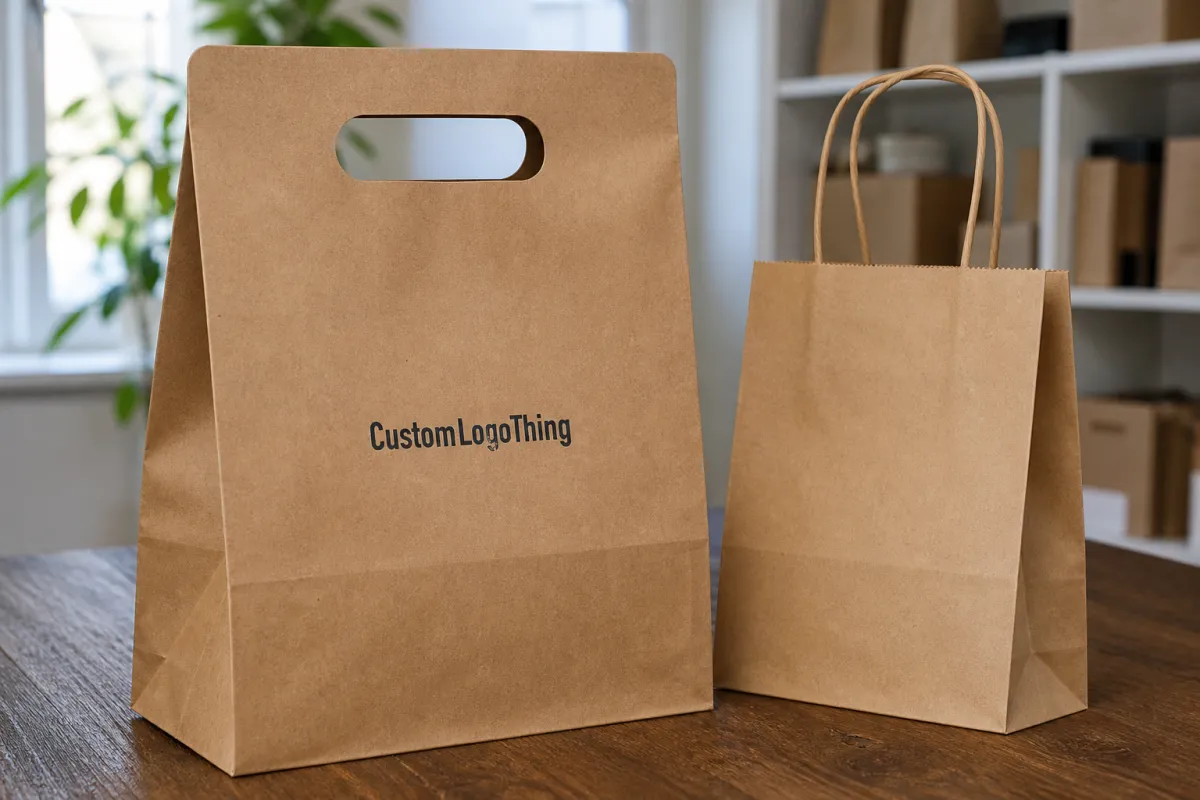
Many packaging reviews start with print and paper thickness, but handle construction often decides whether the bag is usable in real service. It affects grip comfort, top-edge support, and the chance of tears at the attachment point. In a practical takeout paper bags handle options comparison, that functional difference usually matters more than a polished mockup.
The cheapest handle is not always the lowest-cost bag. If a weak handle causes remakes, refunds, or complaints, the savings disappear quickly. For restaurants and ghost kitchens, the real cost is usually labor, delay, and service disruption.
A handle should survive the heaviest realistic order, not just the nicest empty sample.
A quick way to sort options is by the job the bag has to do:
- Heavy meals: prioritize load spread and top-edge reinforcement.
- Long delivery routes: focus on grip comfort and tear resistance.
- Premium branding: the handle should feel deliberate, not flimsy.
- Fast service: the bag should pack quickly without twisting or collapsing.
Moisture is easy to overlook. Steam, grease, chilled condensation, and wet weather all weaken the attachment area faster than dry testing suggests. If the menu includes soup, fried food, or cold drinks, the handle spec needs to account for damp conditions as well as dry ones.
How Each Handle Style Works in Real Takeout Use
Twisted paper handles are the most balanced default. They distribute load well, are familiar to staff, and usually combine acceptable strength with reasonable cost. For mixed menus, they are often the safest general-purpose choice.
Flat handles are simpler and can cost less to produce. They suit lighter orders and budget-focused packaging, but they may feel less secure in the hand, especially when the bag is full or the walk is longer than expected.
Die-cut handles remove extra parts, which helps with stacking and storage. They work best for lighter loads, shorter carry distances, and operations that want a clean, minimal look. Rope handles sit at the premium end of the range. They usually feel strongest and are a better fit for heavier bags or food retail programs that want a more finished presentation.
A useful quick filter:
- Twisted paper: balanced, familiar, and easy to justify.
- Flat handle: lower cost, lighter use, plain presentation.
- Die-cut: efficient stacking, clean appearance, lighter orders.
- Rope: strongest hand feel, higher cost, more premium signal.
The real test is one-handed carry at chest height while the customer is also dealing with a door, a drink, or bad weather. If the handle slips or the bag tilts under that basic scenario, the construction is too light for the job.
Strength, Comfort, and Brand Perception: The Core Decision Factors
Strength alone does not settle the decision. A handle can pass a basic load test and still feel poor in use if it digs into the hand or shifts too much under weight. A good spec starts with comfort and stability, then checks the heaviest realistic load.
The attachment area matters as much as the handle itself. Reinforced patches, glue coverage, and top-gusset construction can decide whether the handle tears out under stress. Wider gussets help boxy containers sit flatter, which reduces pressure at the top edge and improves balance.
Brand perception follows function quickly. Twisted paper reads practical and dependable. Flat handles often read value-first. Rope feels more upscale. Die-cut can look efficient and modern. Those signals are subtle, but buyers and customers notice them before the bag is opened.
For a more realistic check, ask for a filled-bag test with a short drop-and-carry sequence. You do not need a formal lab setup to learn something useful. A proper sample with a real menu load will show more than an empty bag ever can.
Sustainability claims should also be verified. If a brand wants FSC sourcing, ask for chain-of-custody documentation rather than relying on a vague green statement. The FSC system is useful because it gives buyers something they can actually check. The same rule applies to material claims in general: if it is not on the spec sheet, it is only marketing.
Cost, MOQ, and Unit Price Tradeoffs by Handle Type
Unit price is only one part of the cost picture. The full number includes paper grade, handle construction, reinforcement, freight, carton pack-out, and the waste created when a bag fails in use. A low quote can still become the most expensive option if it breaks or ships inefficiently.
| Handle style | Typical feel | Typical unit cost at 5,000 pcs | Common MOQ range | Typical lead time | Best fit |
|---|---|---|---|---|---|
| Twisted paper | Balanced and familiar | $0.16-$0.28 | 3,000-5,000 | 12-18 business days | General takeout, mixed menus, daily service |
| Flat handle | Simple and functional | $0.14-$0.24 | 3,000-5,000 | 10-16 business days | Value takeaway, lighter meals, high-volume use |
| Die-cut | Clean and minimal | $0.10-$0.20 | 5,000-10,000 | 8-14 business days | Light orders, tight storage, fast packing |
| Rope | Premium and sturdy | $0.22-$0.40 | 3,000-5,000 | 14-20 business days | Upscale food retail, heavier carry loads |
These ranges move with paper weight, print coverage, reinforcement, and freight. A plain kraft bag with one-color print usually sits near the low end. Add heavier stock, more ink, or a more complex handle attachment and the landed cost rises quickly.
MOQ matters almost as much as price if you are testing a new menu or seasonal program. A slightly higher per-unit cost can still make sense if it lowers storage pressure, reduces scrap, or avoids overbuying bags you will not use. The better question is which handle fits the program without creating waste.
Production Process and Lead Time: What Changes the Timeline
Handle style changes the production path. Die-cut bags may move faster because they use fewer parts, while glued handles, reinforcement patches, and premium constructions add setup steps. More steps mean more chances for delay, especially if artwork is still changing.
Custom print and special paper stock are common schedule drivers. Multiple colors, exact PMS matching, or heavier kraft stock can extend prepress and slow the run. If the handle needs a different construction method, the supplier may need a separate line setup, which affects both timing and MOQ.
Approval delays are often the biggest cause of schedule slippage. Sample review, copy corrections, and sign-off cycles regularly take longer than production itself. If the opening date is fixed, ask which handle styles are already tooled and which paper grades are in stock. Standard construction with custom branding is usually faster than fully customized packaging.
Two questions save time quickly:
- Which handle styles can be produced without new tooling?
- What is the lead time after final proof approval, not after first contact?
Also ask how the bags are packed. Flat-packed cartons, bundle counts, and outer carton strength all affect shipping damage and warehouse efficiency. A bag can look inexpensive on paper and still become costly in transit if the cartons are weak or the pallet pattern is inefficient.
Step-by-Step Selection Guide for Menu Weight and Volume
Start with the heaviest typical order, not the average one. Average orders flatter a spec. Heavy orders reveal weak handle attachment, poor gusset sizing, and bad balance. If your best-selling combo includes two boxes, a soup, and a drink carrier, that is the real test case.
Then watch how the filled bag behaves. Does it stand upright? Does the top collapse? Does the handle pull the contents to one side? Can a staff member or customer carry it one-handed for a few minutes without the bag biting into the palm? Those details are small until they become complaints or remakes.
A practical sequence keeps the selection honest:
- Weigh the heaviest order your team actually sends out.
- Check bag width, gusset, and top reinforcement against that load.
- Compare two handle styles with the same fill weight.
- Test rain, condensation, and short-drop abuse.
- Review packing speed at the counter or dispatch table.
Volume changes the answer too. A restaurant moving thousands of bags a month can justify a different choice than a shop using limited runs for a seasonal menu. If staff touch the bag constantly, a forgiving handle can save time and reduce friction. If volume is lower, presentation and MOQ flexibility may matter more than marginal speed.
As a rough rule: heavy loads plus frequent delivery usually point to twisted or rope handles; lighter carry plus tight budget usually points to flat or die-cut; premium food retail usually needs a stronger visual cue than a plain utility bag.
Common Mistakes That Waste Budget or Create Breakage
The first mistake is choosing the cheapest handle without testing load. That is a fast route to complaints. The second is assuming all paper bags behave the same once printed. They do not. Ink coverage, fiber mix, and gusset size can all change how stress moves through the handle area.
Another expensive mistake is ignoring freight and carton pack-out. A lower unit price can still become a higher landed cost if the cartons are bulky, the pallet count is inefficient, or extra protection is needed to prevent damage. Unit pricing is easy to compare; the rest of the bill shows up later.
Moisture is the hidden problem. Grease, steam, cold condensation, and wet weather all attack the attachment area. If you serve soup, fried food, or chilled containers, the bag needs a paper and handle spec that survives damp conditions. Otherwise the failure happens at the worst possible moment: when the customer lifts it.
Overbuying a premium handle is another easy way to waste budget. If the meal is low-priced and the bag is only used for a short walk home, rope handles may add cost without enough return. Good packaging is not the fanciest option. It is the one that matches load, route, and service level.
Expert Tips and Next Steps to Lock the Right Spec
Shortlist two handle styles and run them through the same filled-bag test. Same fill weight. Same carry route. Same staff member, if possible. That gives you a fair comparison instead of a debate built on taste. One person may prefer the premium feel of rope, while another values the speed of die-cut, but the bag has to work for the order flow.
Ask for quotes that break out stock, handle, printing, reinforcement, and freight. If the supplier only offers one blended number, there is no way to see where the cost is coming from. A proper quote also makes it easier to compare vendors without mixing paper grade, construction, and shipping into one vague figure.
Confirm MOQ, Lead Time, and replacement policy in writing. Then check sample approval timing, because that often becomes the hidden delay. If the launch date is fixed, ask for the simplest spec that still meets the carrying requirement. Simpler usually moves faster.
The best spec survives the heaviest order, packs quickly on a busy shift, and does not turn the delivery team into quality-control volunteers.
Use this takeout paper bags handle options comparison to narrow the field, then order samples, fill them with the real menu, and make the bag prove itself before production starts. That is how you avoid buying a thousand “acceptable” bags that fail once they are in daily use.
Which takeout paper bag handle option is best for heavy meals?
Twisted paper or reinforced rope handles usually carry more weight comfortably. If the order includes soup or multiple boxes, focus on reinforced attachment and a wider gusset, not only thicker paper. Test with the heaviest real order before approval.
Are flat handles cheaper than twisted handles for takeout paper bags?
Usually yes on material and assembly, but the difference depends on paper grade, print coverage, and reinforcement. A lower unit price can lose value if the bag feels flimsy or breaks under load. Compare unit price, freight, and scrap, not only the quoted per-bag number.
Do die-cut handles work well for delivery bags?
They work well for lighter orders and brands that want a clean look. Add reinforcement if the bag will be stacked, pulled from car seats, or carried long distances. They are less forgiving when customers overpack them.
How does handle choice affect MOQ and lead time?
More custom handle construction usually means more setup and sometimes a higher MOQ. Simpler handles and in-stock materials often ship faster. Confirm sample approval time, because that can push the schedule more than production itself.
What should I ask for in a quote comparison for takeout paper bags?
Request pricing by quantity, handle style, paper weight, print colors, and freight. Ask whether reinforcement, tooling, and packaging are included. Use the same spec sheet for every supplier so the comparison stays consistent.

