Takeout Paper Bags low MOQ custom order requests usually come from buyers who want branded packaging without locking cash into a large print run. Done well, a small order still looks deliberate, carries weight properly, and matches the rest of the packaging system. The difference is in the spec: paper grade, handle style, bottom construction, and print layout do most of the work.
That is why low MOQ matters for more than price. It lets a team test a menu launch, a seasonal offer, a pop-up counter, or a catering program with packaging that looks finished on day one, then adjust the bag after real use exposes the weak points. A shape that seems fine on paper can fail once staff start packing hot containers, drinks, and paper liners under time pressure.
Takeout paper bags low MOQ custom order: what small runs actually buy you
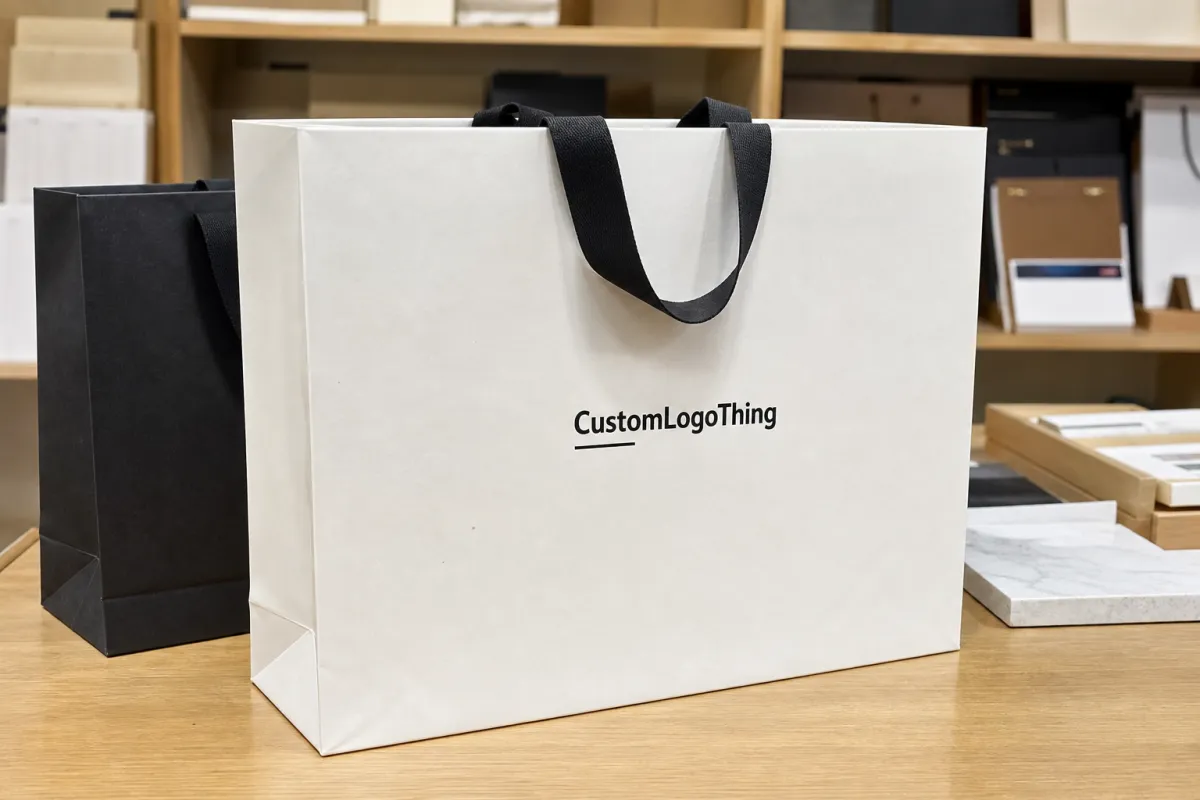
A takeout paper Bags Low MOQ Custom Order is not automatically a compromise. If the structure is right, even a modest run can look like a considered extension of the brand instead of a plain carrier with a logo stamped on top. That matters because the bag is often the first physical item a customer touches after payment, and small touchpoints shape perception faster than most teams expect.
Small runs are especially useful for a new menu launch, a seasonal promotion, a pop-up service, or a catering test where the right size is still uncertain. A lower minimum also protects cash flow. You are not paying to warehouse months of inventory before you know whether the bag holds a salad bowl, a boxed meal, or two drinks plus sides.
From a packaging buyer's point of view, the main benefit is control. You can compare kraft against bleached stock, trial a wider gusset for clamshell boxes, or change the artwork after seeing how the bag behaves in the hand. That makes low MOQ a testing tool, not just a smaller purchase.
A run can be small in quantity and still be high in performance if the paper, handle, and print area are matched to the contents.
The real levers are paper grade, print complexity, and construction. MOQ matters, but it is rarely the only thing driving value. A simple one-color bag on a standard size can be efficient, while a full-wrap, multi-color concept on a custom die is a different job entirely. If you are comparing takeout bags with other branded formats such as Custom Packaging Products, think in terms of the whole service flow rather than a single item.
Paper grades, GSM, and grease resistance for takeout use
Kraft paper is still the default for many takeout programs because it has a natural look, handles wear well, and gives a stable surface for simple printing. Bleached or coated stock gives a cleaner field for sharper logos and stronger contrast, which helps when a brand depends on crisp lines or a brighter visual style. Heavier paper feels stiffer in the hand, especially when the order includes stacked boxes, drinks, or mixed meal kits.
GSM is one of the first numbers to check. Lighter paper can work for small carryout items, but once the bag needs to support hot containers or multiple meals, more weight usually earns its place. For many foodservice buyers, the sweet spot is not the heaviest sheet available; it is the one that balances strength, foldability, and unit cost without making the bag bulky or wasteful.
Grease resistance and moisture resistance matter because takeout bags deal with warm containers, condensation, and the occasional sauce contact. These are not decorative extras. A lightly coated or treated surface can help the bag stay presentable longer, but the choice should match the food contact pattern and the look you want. Recycled content can work well too, as long as the material still holds seam strength and gives enough contrast for the print.
For sustainability-minded programs, certifications such as FSC can support chain-of-custody claims. For foodservice, the more practical question is whether the bag survives transit stress, repeated lifting, and a damp carry home without tearing at the handle or splitting at the fold. That is the difference between a marketing claim and a bag that actually performs.
Bag sizes, handles, bottoms, and print areas to lock in
Size is more than width and height on a spec sheet. The width, gusset, and depth determine whether the bag holds a single box neatly or collapses under stacked containers. A narrow bag can look tidy at the counter, but if the side gusset is too shallow, containers tilt and stress the handles. A wider bag solves that quickly, although it also uses more material and changes the visual proportion of the artwork.
Handle selection deserves the same attention. Paper twist handles give a familiar restaurant look and usually feel stronger than they first appear. Flat paper handles can be economical and clean, while die-cut handles suit lighter carryout and a more streamlined appearance. Each option affects comfort, presentation, and production cost.
The bottom matters just as much. A reinforced block bottom helps the bag stand at the counter, distribute weight evenly, and survive repeated picking up and setting down. That is especially useful in delivery and carryout environments where the bag may be carried one-handed, dropped into a car, then lifted again at the door. In commercial packaging, those details separate a bag that merely exists from one that feels well made.
For print area planning, the cleanest low-MOQ results usually come from a front panel, back panel, or a simple wraparound layout with controlled ink coverage. Full-bleed graphics can be powerful, but they are less forgiving on smaller runs because registration, ink density, and paper variation become more visible. If the artwork has breathing room and the logo sits away from folds and handles, the result usually looks sharper and costs less to produce.
| Option | Best For | Typical Effect on Unit Cost | Practical Note |
|---|---|---|---|
| One-color kraft bag | Casual dining, cafes, trial runs | Lowest | Usually the easiest path for a low MOQ custom order |
| Two-color printed bag | Branded packaging with stronger identity | Moderate | Still efficient if the artwork stays clean |
| Coated or bleached stock with full-wrap print | Retail packaging and higher presentation needs | Higher | Better visual impact, but more setup and proofing care |
| Reinforced handles and bottom | Heavier meals and mixed container loads | Moderate to higher | Worth it when carry performance matters more than the lowest price |
If you are comparing bag styles with Wholesale Programs, start with use case, then cost. A cheaper bag that fails in the hand is not a savings.
Pricing, MOQ, and unit cost: what moves the quote
For any takeout paper bags Low MOQ Custom order, the quote usually comes down to a handful of practical choices: bag size, paper weight, handle style, print colors, finish, and whether the bag uses a standard die or a custom tool. If those inputs stay stable, pricing is easier to predict. If they change after the quote, the budget changes with them.
Low MOQ does not always mean low effort. In many cases, a smaller run carries tighter limits on color count, dimensions, or special construction because setup has to be spread over fewer units. That is why a one-color logo on a standard size usually lands at a cleaner unit cost than a full-color retail concept with coatings or heavy reinforcement.
Freight and packing belong in the math too. Buyers sometimes focus on piece price, then discover the landed cost is higher once carton count, shipping weight, proofing, and destination are included. A better comparison is the total cost to get the bag ready for service. For delivery programs and chain rollouts, transit performance matters as much as print quality, which is why many teams look at transport guidance from groups like ISTA when they are planning pack-out and shipping risk.
A practical price range helps frame the decision:
| Common Spec | Typical Price Band | MOQ Pressure | Notes |
|---|---|---|---|
| Standard kraft, one-color print | Low cents to low dollars per bag | Low | Most efficient for trial runs and simple branding |
| Standard size, two-color print | Mid cents to higher cents per bag | Moderate | Good balance between identity and cost |
| Custom size with reinforced handle | Higher cents to about a dollar or more per bag | Moderate to high | Better for heavier meals or catering packs |
| Special coating or premium finish | Highest in the group | Higher | Useful when presentation matters more than lowest cost |
Those ranges are broad by design. The real quote still depends on artwork, material availability, and freight. What matters most is understanding which choice is pushing the price up and whether that upgrade actually improves the customer experience.
Process, proofing, and turnaround from artwork to shipment
The production path is usually straightforward when the artwork is ready. It starts with specification review, moves to quote confirmation, then artwork checking, proof approval, production, inspection, and packing. The delay points are predictable too: missing dimensions, unclear color references, or a logo file that is not prepared for print.
Proofing deserves real attention. A proof is where the bag size, logo position, bleed area, and color expectation are checked before the order is committed. If the proof shows a logo too close to a fold or handle zone, that is the time to correct it. Once production starts, those changes are slower and more expensive. In practice, the approval step is where many timelines slip, not the press line itself.
For standard specifications, proofing can move quickly, and production can follow on a practical schedule once artwork is signed off. Typical timelines for simpler jobs often fall around 7 to 15 working days after approval, while custom structures or special finishes can stretch into 15 to 30 working days before transit. The more unusual the bag, the more likely lead time rises because the supplier must secure the right material and confirm how it behaves in production.
If repeat ordering is likely, keep the final approved spec on file so the next purchase is a reorder rather than a fresh development job. That is where simple packaging design pays off. A clean logo file, a controlled print layout, and a stable bag structure make the whole process easier, especially if the order sits alongside other branded packaging pieces.
Custom finishes and functional upgrades that improve carry and presentation
Finishes change the mood of the bag immediately. Matte paper feels quieter and more natural, glossy stock looks brighter and more promotional, and soft-touch finishes add a smoother hand feel that suits a premium food or retail program. Uncoated paper keeps the look honest and simple, which is often the right choice for cafes, bakeries, and fast-casual brands that want a grounded feel rather than a polished sheen.
Functional upgrades matter just as much. Reinforced tops help the bag hold shape during loading, stronger glue points reduce the chance of failure at the fold, and thicker handle attachment makes a difference when the order includes multiple containers. Side and bottom gusset adjustments can help the bag sit better around boxes, drink carriers, or trays, which matters more than many first-time buyers expect.
There are also options suited to foodservice specifically. Window cutouts can show product without opening the bag, liners can improve grease resistance in the right application, and food-safe coatings may be useful depending on the menu. The best choice depends on the actual use case, not on what sounds impressive in a spec sheet.
The strongest orders stay focused. A low MOQ project does not need every upgrade available. It needs the upgrades that support real handling, real presentation, and a clean handoff from counter to customer. That is where brand packaging becomes useful instead of ornamental.
For buyers comparing details before ordering, it also helps to think through what the bag must survive: stacking, walking, car transport, and the occasional busy shift when staff are moving fast. Those are the conditions that decide whether a finish is worth paying for.
Common ordering mistakes that slow approval or raise cost
The most common mistake is vague specification. A buyer may know the bag should hold a combo meal, but if the dimensions are not confirmed, the quote is only an estimate. Another frequent issue is a logo file that is too low in resolution or not supplied as vector artwork, which forces extra cleanup before proofing can move ahead.
Color references matter too. If a brand uses a specific red or black, say so early and provide a Pantone reference if available. Otherwise, the printed result may be close but not exact, especially on kraft paper where the substrate changes how the color reads. That is true for package branding across most print formats, not just bags.
Changing the spec after approval is another way to create avoidable cost. A wider gusset, a different handle, or an added finish can reset timing and sometimes require a new sample review. Low MOQ orders are especially sensitive to overdesign because every extra color or special effect has more impact on a smaller run. A simple design with a strong logo often performs better than a crowded layout that tries to do too much.
A practical checklist helps:
- Confirm exact dimensions and target contents.
- Send vector artwork with brand colors.
- Choose handle style and paper weight before quoting.
- Set the delivery date and destination upfront.
- Approve the proof only after checking folds, bleed, and print area.
That approach reduces surprises and keeps the order moving with fewer revisions. It also gives the supplier enough detail to recommend the right structure instead of guessing.
Next steps: what to send for a fast custom order
If you want a quick quote for a takeout paper bags low MOQ custom order, send the essentials in one message: bag dimensions, quantity, paper type, handle style, number of print colors, finish preferences, and delivery location. If the order has a target launch date, include that too. It helps judge whether the spec can meet your timeline or whether a simpler version would be smarter for the first run.
Artwork should be clean and ready for review, ideally as a vector file with clear brand color references. If you have a sample bag, a packaging mockup, or even a rough sketch showing how the contents need to fit, send that as well. Good suppliers use those details to match the bag to the use case instead of quoting a generic size.
If this is a one-time launch, say so. If it is likely to repeat, say that too. Reorder planning matters because a low MOQ test can turn into a stable program once the size and print layout prove themselves. That is where a partner offering Wholesale Programs can make follow-up purchasing simpler and more predictable.
For brands building a cleaner handoff from menu to carrier to customer, a well-planned bag does three things at once: protects the food, presents the logo, and keeps the order moving. The strongest result usually comes from a restrained spec, a careful proof, and a design that respects how the bag will actually be used.
FAQ
What is the minimum order for takeout paper bags low MOQ custom order?
Minimums vary by size, print count, and handle style, but low-MOQ programs usually start much lower than traditional custom packaging runs. Standard dimensions and simpler artwork are usually the easiest way to keep the minimum practical and avoid extra setup cost. If the structure is highly specific, the MOQ may rise because tooling and sourcing become less efficient.
Can I get custom logos on takeout paper bags with a small order?
Yes, custom printing is common on small orders when the artwork is clean and the print area is planned correctly. One-color or two-color designs usually work best for low MOQ because they keep setup simpler and the unit cost more stable. Large solid backgrounds, tight registration, or full-wrap artwork can raise the price and may need more proofing.
Which paper weight is best for takeout paper bags with food containers?
Lighter weights can work for simple carryout, but heavier meals, stacked boxes, or drink carriers usually need a sturdier GSM. Grease resistance and reinforced bottoms matter as much as paper weight when bags carry warm or humid food. The right choice depends on what the bag must hold in real use, not just on appearance.
How long does a takeout paper bag custom order usually take?
Timing depends on artwork approval, material availability, and whether the bag needs a custom structure or special finish. Proofing is usually the first step, and delays most often come from missing artwork details or late approval. Once approved, standard jobs often move in about 7 to 15 working days, while more complex orders can take longer before shipping.
What details do I need to request an accurate quote quickly?
Share bag dimensions, quantity, paper type, handle style, print colors, and any coating or finish requirements. Include artwork files, brand colors, and the delivery location so freight and production costs are calculated correctly. If the order is time-sensitive, add your target ship date so the quote reflects a realistic timeline.

