Tea Brand Poly Mailers MOQ: How to Size the First Run
Tea buyers notice packaging before they taste anything. That is not vanity. It is retail reality. A well-built outer mailer sets the tone for the order, protects the product during transit, and keeps the brand from looking improvised on the way to the customer. That is why tea Brand Poly Mailers MOQ matters on the first purchase. A low minimum gives a small tea label room to test branded shipping bags without locking cash into a giant run of inventory that may need revision three weeks later.
The real decision is not whether custom mailers are possible. They are. The real question is how low the quantity can go before the order starts getting awkward on price, print quality, or shipping performance. A sensible MOQ gives you enough pieces to test artwork, confirm sizing, and see how the mailer behaves in actual fulfillment. That is a better use of money than guessing, printing 5,000 bags, and discovering the adhesive peels when the weather turns humid.
Tea packaging has a split job. The inner pouch or tin protects the product itself. The outer mailer handles privacy, water resistance, courier abuse, and the first visual hit. If the outside looks cheap, the customer assumes the brand cut corners everywhere else. Fair? Not really. Common? Absolutely.
Why tea brand poly mailers MOQ is the smart small-batch test
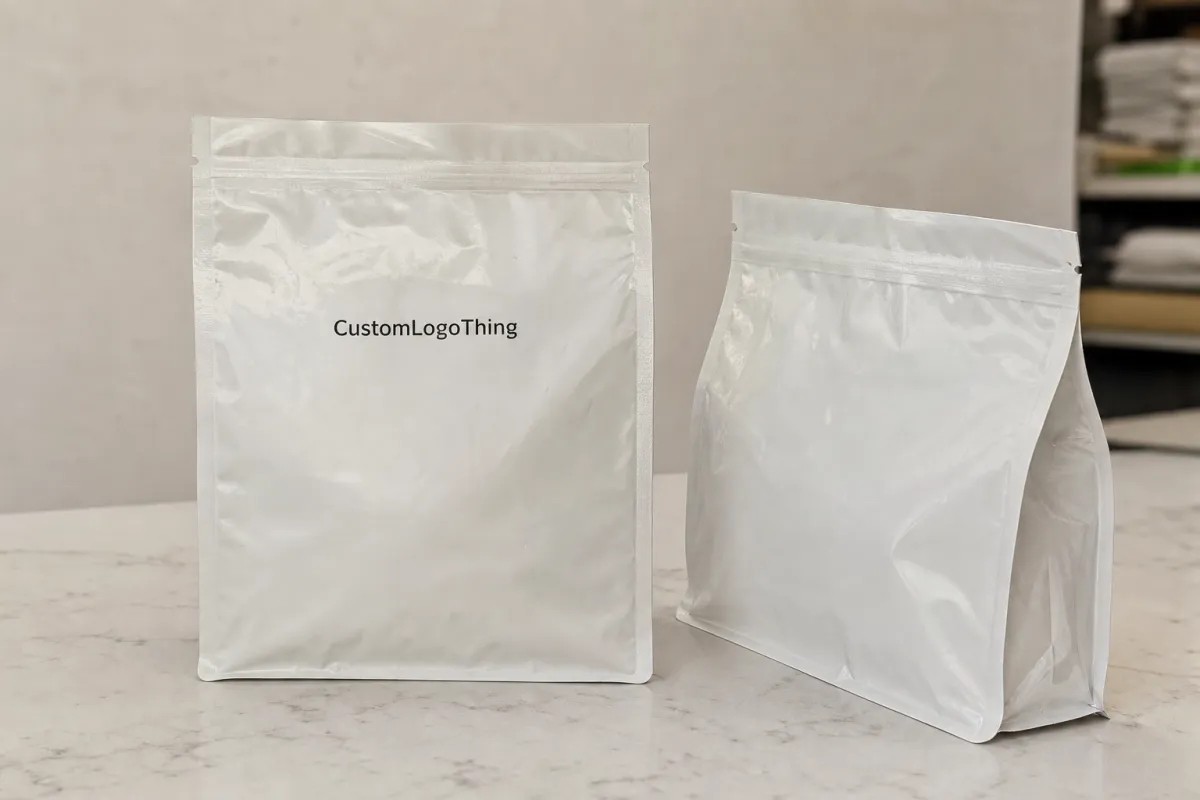
Most tea brands do not start with perfect demand forecasting. They start with a blend, a small catalog, and a lot of hope. That makes packaging a useful place to test before scale gets involved. A low MOQ lets you try a design on a real product without overcommitting to one size, one colorway, or one visual direction.
tea Brand Poly Mailers MOQ is especially useful for seasonal teas, sampler packs, subscription refills, and early retailer drops. Those orders tend to change. A new bundle format might run wider than expected. A holiday SKU may include inserts or gift cards. The first run tells you whether the bag actually fits the finished order and whether the design still looks clean once it is stuffed, sealed, and handled by a carrier that has zero emotional attachment to your brand.
Low MOQ does not have to mean flimsy materials or sloppy printing. It usually means one or more of three things: a standard size, a simpler print setup, or a smaller film spec. That tradeoff makes sense for a launch. The packaging should support the test, not become the expensive thing that makes the test impossible.
"The cheapest mistake is the one you catch before 5,000 bags are on a pallet."
For brands comparing outer packaging systems, it helps to look at the broader structure first. A mailer can carry the whole brand story or it can stay quiet and let the inner pack do the talking. That choice affects cost, print coverage, and MOQ more than people expect. If the product sits inside a premium pouch, the mailer does not need to carry every visual idea the brand has ever had.
There are three practical checks worth making before you approve a small run:
- Customer perception - Does the mailer feel appropriate for the price point and product type?
- Transit safety - Can the bag survive corners, stacking, and rough handling without splitting?
- Brand consistency - Do the logo size, color, and finish match the rest of the packaging system?
If the answer to any of those is shaky, the order is probably too aggressive. Better to correct the spec now than explain a dented bundle to customers later.
Mailers, materials, and print styles that fit tea packaging
Tea brands usually do best with opaque poly mailers. They hide the contents, shed water, and keep weight low. That matters because shipping costs are already annoying enough without adding unnecessary grams. A matte finish often reads more premium than glossy film, especially for herbal, wellness, and specialty tea labels that want a calmer visual tone instead of something loud and plastic-looking.
The most common construction is co-extruded polyethylene with a strong self-seal adhesive strip. It is the standard because it works. For light orders, that is often enough. For boxed tea sets, mixed bundles, or orders with hard corners, step up the film thickness and check the seal area carefully. A bag that looks fine in a flat sample can fail once a carton edge pushes against it during transit.
Print style changes the economics fast. One-color logos are usually the cleanest choice for small runs. They reproduce more predictably on plastic and keep the quote from ballooning. Two-color work is still manageable if the layout is restrained. Full-coverage art can look strong, but it adds setup complexity and usually raises the unit cost. On small mailers, minimal branding often looks better than busy art anyway. Too many details get crushed visually once the bag is folded, stacked, and taped.
Material details are where a lot of generic packaging advice falls apart. Not every "eco" claim means the same thing. Recycled content may apply to some film blends, but not all. FSC certification applies to paper-based components, such as cartons or inserts, not the plastic film itself. If a supplier blurs those lines, ask for a cleaner explanation. Greenwashing is easy. Clear spec sheets are harder.
For brands that want a lower-risk launch, a plain or lightly printed outer mailer with a branded insert inside can be a smart move. It keeps the shipping piece simple while still giving the customer a visual brand moment when the package opens. That is especially useful for tea orders that already include a printed pouch or gift box.
Three material traits matter more than almost anything else:
- Tear resistance for boxy packs, corners, and bundled orders.
- Water resistance for warehouse handling, porch exposure, and carrier sorting.
- Opacity to protect privacy and hide the shape of the contents.
One caveat that gets missed a lot: the outer mailer is not the product barrier. It does not preserve aroma the way a sealed inner pouch does. If the tea itself needs odor or freshness protection, that has to happen inside the package structure. The mailer is there to ship, not to replace the inner pack.
Size, thickness, and finish specs that protect loose-leaf tea orders
Size mistakes are common because tea is compact right up until it is packed for shipping. A pouch looks small on a desk and suddenly becomes awkward once a thank-you card, sampler, or insert gets added. Measure the finished packed order, not the empty container. Then add enough room so the mailer closes cleanly without bulging at the seam.
For flat sample packs or slim pouch orders, a standard mailer may be enough. For boxed teas or subscription bundles, you may need a wider format or a gusseted build. That extra space is not waste. It reduces strain on the adhesive and stops the package from looking stuffed to the point of failure.
Film thickness deserves a real conversation instead of a shrug. A very light film can look acceptable on a quote sheet and still split on sharp corners or heavier multi-item shipments. For tea mailers, a common range is about 2.5 mil to 4 mil, depending on what goes inside. Lighter single-pouch orders can stay toward the lower end. Heavier kits, boxed sets, and dense bundles usually deserve the thicker option.
Before requesting pricing, confirm the following:
- Width and length of the finished mailer.
- Seal type and adhesive strength.
- Film thickness or gauge.
- Printable area so logo placement does not get cut off.
- Finish preference such as matte, gloss, white, black, or metallic.
The finish changes more than the look. Matte can hide scuffs better. Gloss can make color pop more strongly under retail lighting. Metallic or specialty films can lift the presentation, but they usually add cost and may increase the risk of small production inconsistencies if the supplier is not careful.
Shipping math matters too. A better-fitting mailer can save more on freight than a slightly cheaper unit price ever would. Oversized packaging wastes dimensional weight, and dimensional weight is where shipping budgets go to die. If the bag is much larger than the product, you pay for air. That is not a premium feature.
If the order needs a performance check, use a simple transit test before you approve production. Fill a sample, seal it, toss it in a carton, and move it around. Compression, corner pressure, and seal reliability tell you more than a mockup does. For a more formal benchmark, ISTA test methods are the standard reference point. You do not need a lab badge to understand the principle: the mailer has to survive movement, stacking, and handling before it reaches the customer.
Pricing, MOQ, and unit cost drivers
Custom mailer pricing is usually driven by four things: size, thickness, print colors, and total quantity. Change one of those and the quote changes. Change all four and the comparison gets noisy fast. Keep the spec consistent if you want pricing that actually means something.
tea Brand Poly Mailers MOQ affects price more than many buyers expect. Smaller runs cost more per piece because setup work is spread across fewer units. Larger runs lower the unit price, but they tie up cash and storage space. There is no trick that cancels that tradeoff. Buyers either pay more per bag or buy more bags than they need. Packaging is very democratic that way.
Setup cost and run cost are not the same thing. A new size, a new artwork file, or a more complex print job can make the first order feel expensive even if the bag itself is not. Short-run methods can ease tooling pressure, but they often raise the per-piece cost. A quote that looks cheap at first glance may be more expensive once freight, revisions, and packaging waste are added in.
| Option | Typical MOQ | Typical unit cost | Best fit |
|---|---|---|---|
| Plain stock poly mailer | 100-500 pieces | $0.08-$0.18 | Fast launches, marketplace orders, internal test runs |
| One-color custom logo print | 500-1,500 pieces | $0.16-$0.32 | Tea brands testing brand consistency and basic visual branding |
| Full-color or premium finish mailer | 1,000-3,000 pieces | $0.24-$0.55 | Established SKUs, subscription boxes, stronger shipping presence |
Those ranges are practical estimates, not guarantees. A small order with high ink coverage can cost more than a larger run with a simple layout. A thicker film can push the price up faster than expected. Freight can also shift the landed number enough to erase the savings from a slightly cheaper bag price. That is why asking for only the factory price is a half-answer.
The smarter move is to compare landed cost, not just unit cost. Include freight, carton count, and any artwork or proof fees. If a supplier gives you a low per-piece price but high shipping, the math may not be better. It just looks better in the first email.
For a launch order, the smallest viable MOQ is usually the right answer. It gives you room to test the design and the packaging performance without committing to a warehouse full of inventory. If the first run works, scale into a larger volume once the spec is stable. If it does not, fix the problem before it gets multiplied.
Production process and lead time from proof to ship date
A good order process should feel boring. That is a compliment. The clean version usually looks like this: inquiry, spec review, artwork check, proof approval, production, inspection, packing, and shipment. If one step gets fuzzy, the timeline starts slipping.
The usual delays are not mysterious. They come from missing measurements, low-resolution artwork, file changes after approval, or unclear finish choices. If the design team is still debating logo size while production is supposed to start, the schedule is already in trouble. Packaging is not a place to improvise under pressure unless you enjoy paying for avoidable rush fees.
For most custom printed mailers, a realistic turnaround after proof approval is often 12 to 20 business days for straightforward orders. Special finishes, heavier print coverage, and larger volumes can take longer. Short-run methods can move faster, but they do not always beat stock bag timing just because the quantity is lower. The process still has to go through proofing and inspection.
Three questions should get answered before you approve the order:
- Can you review a proof or sample before production starts?
- What is the estimated turnaround after artwork approval?
- Does the timeline change if the proof needs revisions?
That last one matters more than people think. A quoted lead time often assumes the artwork is ready on day one and nobody changes their mind after the proof lands. Real projects do not behave that neatly. Build in buffer time if the packaging has to arrive before a launch, a holiday drop, or the first subscription shipment.
Quality control should also be part of the schedule, not an afterthought. A pre-shipment check can catch print alignment issues, weak seals, color drift, or film defects before the boxes leave the warehouse. For tea brands shipping premium tins or boxed blends, that check is worth asking for. It is basic protection against embarrassing arrivals.
Useful checks include seal strength, opacity, print registration, and scratch resistance on the finished surface. If the mailer is matte, make sure the finish does not mark too easily during packing. If it is glossy, check that the ink does not smear or rub too fast. Small flaws are easier to catch on a sample than on a pallet.
Why tea brands reorder from a supplier that understands scale
The first order tests the packaging. The second order tests the process. Once the size, print, and seal are proven, reorders should be simpler and faster. That is where a supplier that understands scale starts paying off. The team already knows the spec, the proof style, and the quality expectations, so you are not re-explaining the same order from scratch every time.
Consistency is the real value. Same size. Same color. Same finish. Same seal performance. That matters for brand consistency, but it also matters for warehouse efficiency. If the packaging shifts from batch to batch, fulfillment gets slower and error-prone. Nobody wants to find out the new run is a half-inch off after the packing line has already started.
A supplier worth reordering from should also give straight answers. Not polished fluff. Buyers need clear guidance on what will print cleanly, what will raise the cost, and what will create production risk. A vague promise that "anything is possible" is not helpful. It is usually the start of a proof cycle that wastes time.
There is also a scale advantage that shows up quietly. Once the spec is stable, a reorder can be planned around sales rather than emergency packaging. That lowers stress, reduces rush shipping, and makes it easier to hold a sensible safety stock. Small brands often underestimate how much time they save when the packaging is no longer a moving target.
"A reorder should feel like a repeat, not a new project."
If you are comparing long-term packaging options, look for repeatability over novelty. Fancy effects can be useful, but only after the base structure is stable. The brands that scale cleanly usually start with a package that can be reordered without rethinking the whole job every single time.
What to send for a fast quote and a clean first order
A useful quote starts with useful inputs. Vague requests lead to vague numbers, and vague numbers do not help anyone. If you want accurate pricing for tea brand poly mailers MOQ, send the details that actually move the quote.
Use this list:
- Bag size - width, length, and gusset if needed.
- Quantity target - your MOQ request plus one higher tier for comparison.
- Tea format - pouch, tin, box, sampler, or subscription bundle.
- Print colors - one-color, two-color, or full coverage.
- Finish - matte, gloss, white, black, metallic, or custom film.
- Ship-to location - freight changes the landed number.
Send artwork early and, if possible, send vector files. That reduces prepress problems and keeps the proof cycle short. If the logo file is rough or incomplete, ask for a preflight check before anyone starts talking about production. It is a small step that avoids a lot of expensive back-and-forth.
Ask for two quotes at once: one at the target MOQ and one at a higher tier. That makes the price break obvious. Sometimes the jump from 500 to 1,000 pieces barely changes the unit cost. Sometimes it changes it enough to justify the larger order. Without both numbers, the decision is guesswork with a spreadsheet costume on.
The final check is simple:
- Confirm the mailer size against the packed tea product.
- Approve the proof or sample before production starts.
- Compare landed cost, not just factory price.
- Lock the timeline before the launch date gets too close.
For tea brands that want branded shipping bags without overbuying, the best first move is usually a small run with a clean spec and one volume comparison. That gives you a real decision instead of a hopeful one.
What is the typical MOQ for tea brand poly mailers?
For custom printed bags, many suppliers start somewhere around 500 to 1,500 pieces for simple one-color work. Plain stock mailers can start lower, sometimes around 100 to 500 pieces. The exact number depends on size, print method, and film choice.
Can I order samples before placing a tea brand poly mailers MOQ order?
Yes, and a sample is worth requesting if the order has a tight fit, a heavy bundle, or a premium finish. A sample helps confirm the seal, the print clarity, and the feel of the bag before production quantity is locked in.
How do I choose the right size for tea pouches or boxed sets?
Measure the product after it is fully packed, then add enough room for easy insertion and a clean seal. If the order includes multiple items, size the mailer around the widest combined bundle, not the smallest pouch.
What affects the price of custom tea mailers the most?
Size, thickness, number of print colors, and total quantity drive most of the cost difference. Artwork revisions, special finishes, and lower MOQ orders can also raise the unit price quickly.
How long does production usually take after I approve the proof?
Straightforward orders often need about 12 to 20 business days after proof approval, but special finishes, heavier coverage, and larger quantities can take longer. Always confirm the timeline before final approval so shipping stays aligned with your launch date.
If your tea order needs a first run that fits the budget and the product, send the specs, compare two quantity tiers, and keep the packaging build simple enough to repeat. That is usually the shortest path to a clean reorder.


