A knit beanie can look heavy and still feel thin once it is on the head. That is the first thing buyers usually learn the hard way. Visual bulk is not the same as insulation, and a simple glance at a sample will not tell you how it behaves in wind, under a hood, or after an hour of wear.
Thickness changes more than warmth. It affects cuff recovery, embroidery stability, packing density, freight cost, and how the finished piece sits on different head shapes. If the order is for retail, uniforms, or promotional use, those small details decide whether the product feels considered or cheap.
This guide breaks down the practical side of tea Cuffed Knit Beanies Material Thickness guide decisions: what actually creates thickness, how to compare samples, where the pricing moves, and which checks keep a bulk run from drifting away from the approved handfeel.
Tea Cuffed Knit Beanies Material Thickness Guide: What Thickness Actually Means
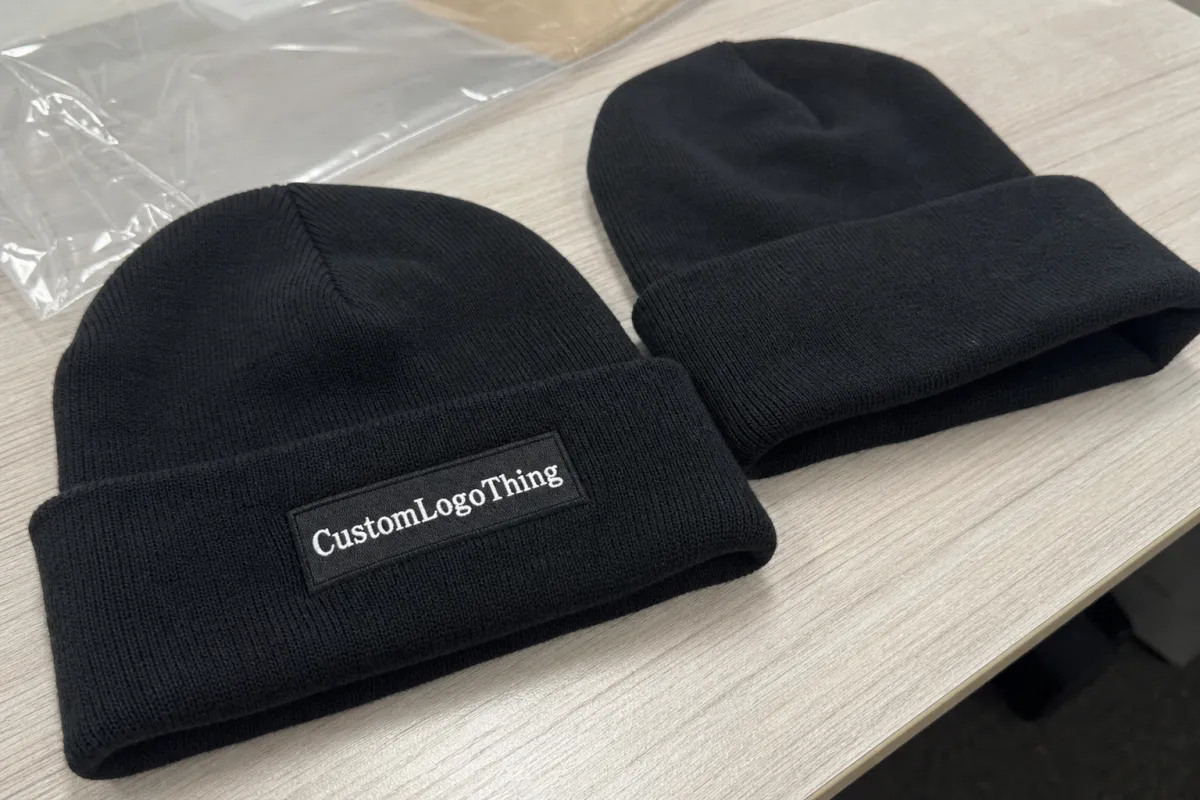
Thickness is not one number. It is the result of yarn size, stitch gauge, loop structure, cuff depth, and how much air the knit traps. A beanie that weighs 95g can feel denser than a 115g version if the first one uses a tighter structure and a more stable rib. That is why gram weight alone is useful, but never enough.
The other trap is assuming the thickest sample is the warmest. Sometimes the looser beanie has more loft and traps air better. Sometimes it just collapses faster. Air is the real insulator, and the shape of the knit decides how much air stays inside the fabric instead of escaping through it.
For buyers, thickness should be judged by a combination of measurements and wear behavior:
- Finished weight in grams
- Relaxed width and length before and after stretch
- Cuff depth and whether it holds a folded edge
- Recovery after 20 to 30 minutes of wear
That last check matters more than most teams expect. A cuff that looks crisp on a table can go soft after one wear cycle. If the beanie is supposed to stay neat in customer photos or on-store presentation, poor recovery becomes a visible defect, not a minor comfort issue.
Thickness also changes the use case. A denser cuff usually gives better support for embroidery and woven labels. A lighter knit may fit under a helmet or hood more comfortably, but it can lose structure faster. The right choice depends on whether the job needs warmth, decoration support, or a lower-profile fit. Usually it needs at least two of those, not all three.
One practical rule helps cut through the noise: compare weight, gauge, and worn feel together. A sample photo or a flat lay does not show the whole picture. Neither does a supplier quote on its own.
How Gauge and Loft Change Warmth, Stretch, and Cuff Hold
Gauge tells you how many stitches sit in a given space. Tighter gauge means more density, usually better wind resistance, and a cleaner edge for decoration. Looser gauge tends to drape more, breathe more, and feel softer at first touch. Those are helpful tendencies, not guarantees.
Loft is the quieter part of the equation. Raised loops, brushed yarn, and small air pockets can add warmth without pushing the weight much higher. That is why a brushed acrylic beanie or a wool blend with decent loft can outperform a flatter knit that weighs more on paper.
Cuffed styles introduce another layer of behavior. A folded cuff adds structure around the logo area and gives the beanie more visual weight. It also creates a zone where poor recovery shows quickly. If the cuff loosens out over time, the whole piece starts looking tired even if the body still feels fine.
There is a tradeoff buyers often miss: more stretch is useful until recovery fails. A stretchy beanie fits more head sizes and feels comfortable on day one. If the fabric grows and does not return, though, the cuff bags out, the crown slouches, and the line between “relaxed” and “worn out” disappears.
In practice, a few structure differences matter a lot:
- Tighter gauge usually gives stronger cuff hold and better wind resistance
- Looser gauge usually feels softer and breathes more, but may lose shape sooner
- Higher loft usually improves insulation, though it can add visible bulk
- Better recovery usually means fewer shape complaints after repeat wear
For embroidery, the safest target is usually a midweight structure with enough body to hold the stitch field flat. For minimal branding or casual wear, a softer structure can work if the customer expects a relaxed fit. The wrong move is assuming one knit will do all jobs. It will not.
Material Factors That Change the Final Feel
Fiber content sets the baseline for warmth, handfeel, durability, and cost. Acrylic is common because it is affordable, dye-consistent, and easy to scale. It also keeps quotes predictable, which matters for promotional programs. Cotton feels softer against the skin, but it is usually less insulating and can relax more if the knit is too open. Wool blends often deliver the best warmth-to-weight ratio, though they raise cost and may need tighter handling during production.
Yarn twist changes the story again. A tighter twist usually improves durability and helps the beanie keep a clean outline after wear and washing. A softer twist can feel richer in hand, but it may pill sooner and show wear at the cuff edge. If the design includes detailed decoration, more stable yarn is usually the safer choice.
The stitch pattern matters too. Rib knits stretch well and recover better than many flat constructions, which is why they show up so often in cuffed beanies. Seed stitch and textured patterns can look premium, but they also create more surface volume, which makes the beanie feel thicker than the gram count suggests. A deep fold on the cuff does the same thing. It doubles the visible structure around the logo area and can make a midweight piece feel heavier in use.
Finishing changes the final handfeel. Brushing increases softness and usually adds perceived warmth, but it can soften the edge definition around a logo. Pre-wash treatment can reduce surprises later, yet it also changes the look of the knit. If the decoration needs sharp lines, a smoother finish is usually easier to control.
A buyer-friendly comparison looks like this:
- More acrylic usually means lower cost and steadier color matching
- More cotton usually means a softer touch and less heat retention
- More wool usually means better warmth-to-weight performance
- More twist usually means better shape retention
- More brushing usually means a plusher feel and slightly less logo crispness
Packaging can affect perceived quality more than people admit. Corrugated cardboard with kraft paper inserts keeps shape better than loose packing. If a brand wants recycled materials, post-consumer waste content, or FSC certified paper inserts, that can support the sustainability story. Biodegradable packaging can work for samples or lightweight mailers, but only if the knit still arrives uncompressed and dry. A green claim is not useful if the beanie shows up flattened.
For shipment durability, ISTA testing standards are a good reference point. For paper sourcing claims, FSC is the cleaner benchmark. Those references do not replace testing, but they do give buyers a more grounded way to talk about packaging and transit risk.
Cost, Pricing, and Unit Cost Tradeoffs for Bulk Orders
Thickness changes price in several directions at once. Denser knits use more yarn, often run slower on the machine, and can require more finishing time to keep the cuff even. Decoration also shifts the math. A simple woven label on a midweight beanie is not priced the same way as dense embroidery on a plush cuff.
If you are comparing quotes, ask for the price broken out by thickness level. A low quote may assume lighter yarn, a looser gauge, or no custom cuff adjustment. Another quote can look high until you see it includes a better structure, stronger recovery, and cleaner logo placement. The second option may cost more upfront and less in returns.
| Thickness band | Typical finished weight | Common buyer use | Indicative unit cost at 1,000 pcs | Production note |
|---|---|---|---|---|
| Lightweight | 60-80g | Giveaways, mild climates, layered wear | $2.10-$2.70 | Lower yarn use, easier carton packing |
| Midweight | 90-120g | Most retail and corporate orders | $2.60-$3.40 | Best balance of warmth and cuff stability |
| Heavyweight | 120-160g | Cold-weather programs, premium retail | $3.10-$4.60 | More yarn, slower knit time, stronger handfeel |
Use those figures as planning ranges, not fixed pricing. Yarn blend, knit complexity, color count, and decoration density all move the final number. A one-color woven label might add very little. A patch, dense embroidery, or a custom wash finish can move the quote enough to matter at scale.
MOQ and setup also shift with thickness choices. If you want two thickness levels in one order, some suppliers will split the run or add a higher setup fee. That is normal. The key is knowing it before you approve the sample. Ask for the sample fee, unit cost, shipping weight, and any decoration add-on separately. Freight can hide a lot of unpleasant surprises if packed dimensions are ignored.
A thin knit that ships cheap but comes back in returns is not a bargain. A slightly more expensive midweight beanie that lands correctly the first time is usually cheaper in the real budget.
Process and Timeline: From Yarn Spec to Approved Sample
The cleanest production runs start with a tight spec. The buyer should lock the yarn blend, target gauge, finished weight, cuff depth, logo placement, and tolerance range before the first sample is knit. That sounds basic. It saves a lot of revision time later.
A practical path usually looks like this: brief, yarn selection, gauge confirmation, sample knit, revision round, bulk production, final quality check. If the yarn is in stock, the first sample often takes 7-12 business days. Revisions can add another 3-5 business days. Bulk production after approval often lands in the 12-20 business day range for standard runs, although larger or more complex orders will stretch that.
The slowest step is rarely the knitting itself. It is usually a late material change or a cuff revision that forces the structure to be rebuilt. If a buyer approves a lighter sample and then asks for more density after the fact, lead time shifts fast. The same happens when a small front mark becomes a larger cuff graphic. The knit has to support the decoration, not fight it.
Sample shipping deserves the same attention as the sample itself. Corrugated cardboard and kraft paper fillers help protect shape during transit. If the packaging is too loose, the sample can arrive compressed and misleading. That makes review harder than it should be. For brands tracking paper claims, FSC certified inserts or documented recycled content are easier to defend than vague eco language.
If the sample looks right but the cuff collapses after one wear, the job is not ready. Measure the recovery, not just the appearance.
That is the test I would keep in front of the team. Wear it briefly, stretch the cuff a few times, then lay it flat and compare the shape to the original sample. A little change is normal. A sloppy rebound is a warning sign. If the sample never returns to form, bulk production will not magically fix it.
For teams handling multiple SKUs, a one-page spec sheet is worth more than a long thread of messages. It keeps everyone aligned on gauge, weight, fit, finish, and packing. It also reduces the chance that the “heavier sample” and the “lighter sample” get mixed up halfway through review.
Common Thickness Mistakes That Create Returns
The biggest mistake is approving a beanie by appearance. Thick-looking knits can flatten during transit or feel airy on the head. Buyers see a substantial sample and assume warmth, but structure is what usually decides performance. A tighter knit with decent loft often beats a visually bulky piece with weak recovery.
Ignoring stretch after wear is another common miss. A sample can fit well for ten minutes and then soften out by lunch. That creates returns because the cuff starts to slump, especially around the forehead and embroidery zone. If the beanies are going to be worn all day, recovery matters more than first-touch softness.
Decoration failures often point to a thickness mismatch rather than a decoration problem alone. Plush or oversized knits can push embroidery out of line, make patches lift at the edges, or cause woven labels to buckle. The knit and the logo need to agree with each other. If one is too soft for the other, the product starts to look unfinished.
"The logo should sit on the beanie, not fight the beanie."
That sounds obvious until a run comes back with distorted stitching. A cuff can support cleaner embroidery, but if the yarn is too lofty, the stitches sink unevenly and the design loses definition. The same logic applies to labels and patches. More body is only useful if it holds the detail.
Wash behavior is the final trap. A shift in fiber blend or finishing can move shrinkage enough to change fit after the first wash. Cotton-heavy knits tend to be more sensitive here than acrylic-dominant blends. If the piece is for retail, ask for post-wash tolerance before the run is approved. A beanie that looks right fresh out of the bag but changes size after one wash is a return waiting to happen.
Use a short pre-approval checklist:
- Compare measured weight, not only visual size
- Check recovery after a wear test
- Inspect embroidery or patch placement on the actual cuff
- Confirm shrinkage and wash response
- Review packed dimensions if cartons are tight
Most returns come from a gap between expectation and structure. Closing that gap before bulk production is cheaper than explaining it afterward.
Expert Checks Before You Order
The smartest buyers keep the spec boring on purpose. One page. Clear numbers. No ambiguity. Write down the yarn blend, gauge, finished weight, cuff depth, acceptable size tolerance, decoration method, and packing requirement. If you are comparing tea Cuffed Knit Beanies Material thickness guide options, add the sample names or thickness bands so nothing gets confused later.
Ask for two samples if the budget allows: one slightly lighter and one slightly heavier than your target. Side-by-side comparison shows more than a single sample ever will. You can feel which one sits better under a hood, which one recovers faster, and which one gives the logo cleaner edges. A single sample can mislead; a comparison forces the tradeoff into view.
Test the samples on real heads, not just on a table. One beanie may feel fine in a studio and too shallow on a larger head. Another may feel great indoors and become too warm outdoors. Have someone stretch the cuff, wear it for 20-30 minutes, then remove it and check whether the shape returns. If the product is for retail, a short wash test is worth the time too.
The order of operations should be simple:
- Lock the target thickness band and yarn blend
- Approve two sample weights if possible
- Check decoration on the exact knit structure
- Confirm carton packing, label copy, and packaging materials
- Approve only after fit, recovery, and finish all pass
Packaging details still matter here. Ask whether sample sets ship in corrugated cardboard with kraft paper protection, or whether the supplier can offer biodegradable Packaging for Smaller mailers. If the brand cares about sourcing language, request FSC certified paper components and clear notes on post-consumer waste content. Those details do not change the knit, but they do change arrival condition and how defensible the claim sheet is later.
Good thickness decisions are not dramatic. They are measured, repeatable, and a little unglamorous. That is usually a good sign.
FAQ
How do I measure tea cuffed knit beanies material thickness before ordering?
Use more than one metric. Finished weight, stitch gauge, cuff depth, and stretch recovery all matter. Ask for a flat measurement and a worn-fit check, then compare at least two thickness levels so the warmth and comfort tradeoff is obvious.
What thickness works best for embroidered cuffed knit beanies?
A midweight knit usually gives the best balance of cuff stability and clean embroidery placement. Very lofty yarns can blur fine detail or make the stitch field sink. Ask for a stitch test on the exact decoration area before bulk approval.
Does a thicker beanie always feel warmer?
No. Density, loft, and wind resistance can matter as much as visible bulk. A tighter knit with good air trapping can outperform a heavier but looser construction. Side-by-side wear testing is the fastest way to see the difference.
How does thickness affect MOQ and unit cost?
Higher-density knits often cost more because they use more yarn and take longer to produce. Custom blends, special gauges, and multiple thickness options can increase MOQ or setup fees. Ask for the quote split by sample fee, unit cost, and shipping weight so comparisons stay honest.
What should I confirm before approving a sample?
Check the yarn blend, finished weight, cuff depth, and acceptable size tolerance. Ask how the sample was measured and whether shrinkage or relaxation was included. Confirm the lead time, revision policy, and which changes would affect production timing.


