If you are comparing samples for a winter drop, the vitamin Cuffed Knit Beanies Material thickness guide matters because two beanies can look similar on screen and feel completely different in hand. Knit density, cuff depth, yarn weight, and finishing all change warmth, fit, decoration quality, and shelf presence.
Thickness is not one clean number. It is a mix of fabric weight, stitch tightness, cuff layers, and how the beanie rebounds after stretching. Buyers who want the right spec need to judge comfort, logo stability, and packing behavior together, not one at a time.
What vitamin cuffed knit beanies material thickness really means
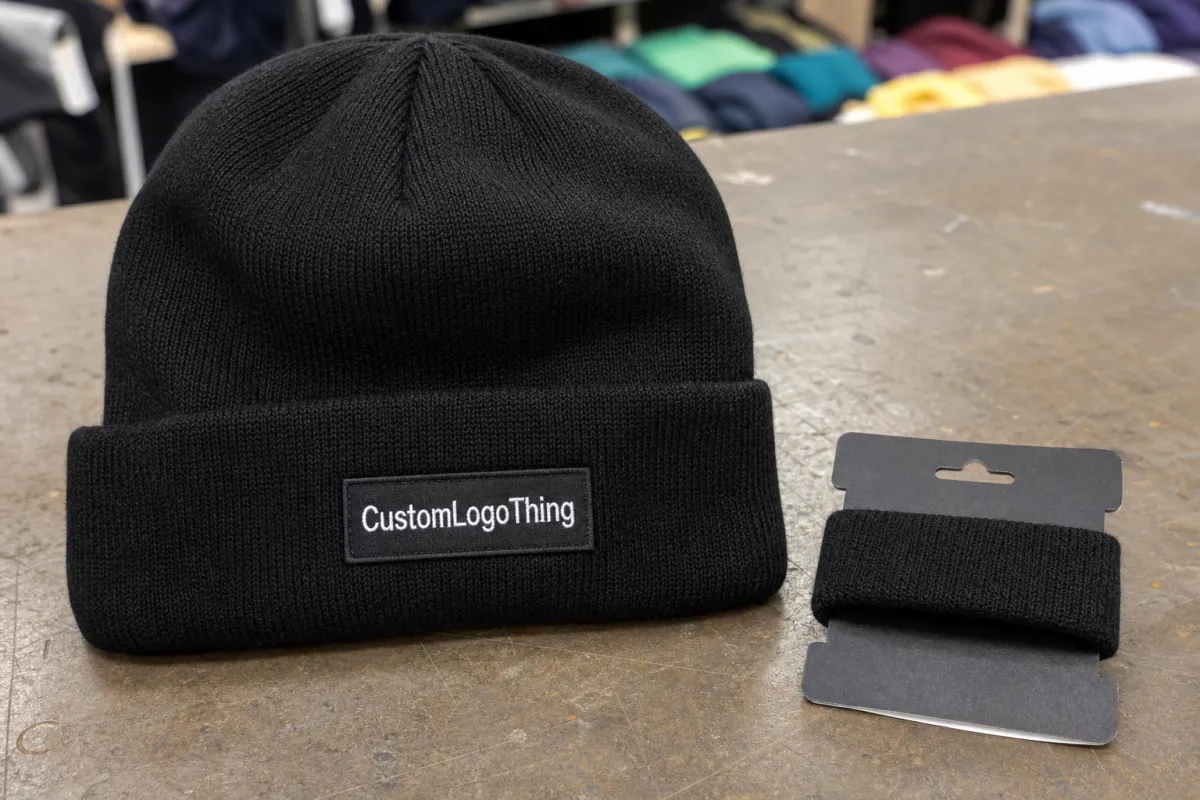
Words like “light,” “medium,” and “heavy” are useful only if everyone uses them the same way. In practice, thickness comes from yarn construction, stitch density, fabric weight, and how much extra layering the cuff adds at the front. A dense 1x1 rib can feel firmer than a looser 2x2 rib even when the yarn type is similar.
That is why measurable references matter more than adjectives. Finished weight per piece, relaxed circumference, stretched circumference, cuff depth, and overall length tell you more than a quote full of marketing language. If the supplier can also provide a thickness method such as ASTM D1777, that gives you a more reliable comparison point. Handfeel is useful, but it is not a spec.
Thickness affects four buyer concerns: comfort, warmth, shape retention, and decoration performance. A denser beanie usually feels warmer and holds its silhouette better, but it can also feel tighter at the forehead. A lighter knit can be easier to wear all day, yet it may collapse under embroidery or look too soft for retail display.
Use the product’s end use to decide. Cold-weather retail, employee gifts, and stadium merch usually need more body and a firmer cuff. Fashion-led programs often want a softer crown and more drape. The best choice is the one that matches the use case, not the label on the sample bag.
How knit density and cuff construction change performance
Knit density is the first thing to check after fiber content. A tighter knit traps more air, which usually improves warmth and helps the beanie recover after being stretched. A looser knit feels lighter and more breathable, but it may show scalp outline more easily and lose structure faster.
The cuff changes the equation again. A cuffed beanie creates a double-layer zone at the front opening, which adds insulation where wearers feel cold first. It also improves decoration stability because the fold acts like a support band for embroidery, woven labels, or stitched patches. If the cuff is too short, decoration gets cramped; if it is too deep, the front can look bulky.
Body thickness and cuff thickness do not need to match. A buyer may want a lighter crown for comfort with a denser cuff for warmth and logo support. That combination is common in retail programs because it balances wearability with presentation. You get a softer feel above the ears and a more controlled front panel.
Material choice affects behavior too. Acrylic tends to feel smooth and consistent. Wool blends usually feel warmer at the same apparent thickness because the fiber crimp holds air. Recycled yarns can show slight texture variation, which is normal when the fiber stream includes post-consumer input. The point is to compare the actual yarn, not the label alone.
Construction method matters as well. Linked finishes often look cleaner inside and feel smoother against the scalp. Simpler seamed builds can be more economical, but the seam may add a ridge that changes how the beanie sits. That is not a flaw by itself; it is a detail that should be decided before sampling begins.
Key factors that influence the right thickness choice
Start with yarn weight and ply count. A thicker yarn or multi-ply construction usually gives more body, stronger coverage, and better resilience after wear. That said, a heavier yarn is not the only way to get a premium feel. A tightly controlled gauge with the right stitch structure can produce a dense, refined beanie that still wears comfortably.
Cuff depth is the next lever. A deeper cuff gives more room for decoration and often makes the product feel warmer, but it also adds visual mass at the forehead. If the beanie is meant for retail photography, a cuff that is too deep can make the crown look short. If it is too shallow, the logo may sit too close to the fold and distort when worn.
Decoration method should guide the spec. Embroidery needs a surface stable enough to hold stitches without distortion. Woven patches and silicone badges tolerate a wider range of thickness, while some heat-applied treatments need a flatter knit face. If the artwork is detailed, the right thickness is the one that keeps the logo readable instead of sinking into the texture.
Fit range deserves real attention. A beanie can look fine on a table and still fail on stretch recovery or forehead pressure. Ask for relaxed and stretched measurements, not just a nominal size. If the knit is dense or the cuff is deep, one wearer may love it while another feels squeezed. That is why approval samples should be worn, folded, and stretched, not just photographed.
Lead time is part of the thickness decision because sample and production timing can tighten quickly. A custom beanie sample may take 7 to 14 days if yarn is in stock and decoration is simple. Production often lands in the 25 to 45 day range depending on quantity, revision count, and whether the factory needs special yarn matching. Holiday shipping or packaging revisions can stretch that timeline further.
Cost, pricing, MOQ, and unit cost for thicker knits
Thicker beanies usually use more yarn and may run a little slower on the knitting machine, so material and labor can both push price upward. At higher quantities, the gap between light and heavy knit options is often manageable. At lower MOQ, setup and sampling are spread over fewer pieces, so the thickness premium can feel more noticeable once decoration and finishing are added.
As a rough market check, light cuffed knits often sit near the base price, medium knits may add about $0.10 to $0.35 per piece, and heavy knits can add around $0.30 to $0.70 depending on fiber, gauge, and decoration. Those numbers are not universal, but they help spot quotes that are too low to be realistic. Compare landed cost, not just ex-factory price, because freight and pack-out can erase small savings fast.
MOQ changes the math more than many buyers expect. At 300 to 500 pieces, a thicker knit can feel expensive because setup and decoration work are spread thin. At 2,000 to 5,000 pieces, the unit difference often narrows and the heavier option can look more reasonable, especially if it reduces rework or logo issues. A thicker cuffed construction can also improve shelf presence and logo clarity, which may justify the extra cost.
Packaging matters too. Folded units in corrugated cardboard cartons, kraft paper wraps, retail belly bands, and hangtags all add time and material. If the brand wants recycled or FSC-certified components, ask exactly which piece is certified and which piece is simply recyclable. Those terms are not interchangeable. For transit testing and pack-out planning, ISTA standards are useful, and the EPA has practical guidance on recycled materials at epa.gov/recycle.
Using the vitamin cuffed knit beanies material thickness guide to spec the beanie correctly
- Define the use case first. Cold-weather retail, promo giveaways, employee gear, and fashion-led merch all point to different thickness ranges. A beanie for outdoor crews needs more warmth than one meant to sit in a branded welcome kit.
- Choose a thickness band from a physical sample. Compare how it stretches, how fast it rebounds, and how the cuff sits after folding. If the sample feels stiff in the fingers, it will probably feel stiff on the head too.
- Match decoration to the fabric. Make sure the logo area is flat and stable enough for embroidery, a woven patch, or a label treatment. Delicate artwork often reads better on a medium knit than on a very dense rib.
- Lock in dimensions before quote approval. Finished circumference, cuff depth, body length, and tolerance ranges should all be on the spec sheet. That keeps the supplier from guessing about the final shape.
- Confirm packing early. Bulk-packed beanies, folded retail units, and labeled sets can all change turnaround time and carton count. A thicker knit occupies more space, which affects freight and warehouse handling.
Ask for the exact yarn, knit density, and cuff construction used on the approved sample. A beanie that “feels similar” is not enough if the final product has to carry a logo cleanly or fit a specific retail wall. The more the sample matches production, the less risk of approving the wrong handfeel and discovering it later.
The best comparison is two samples side by side. Even a 10 to 15 gram difference per piece can change warmth, shape, and packing efficiency more than photos suggest. Put both on a flat table, fold the cuff the same way, and look at the logo area from arm’s length. That simple check usually tells you more than a polished sales description ever will.
Common mistakes buyers make with thickness decisions
The biggest mistake is choosing from photos alone. Lighting can make a medium knit look bulky, and styling can make a heavy knit look lighter than it is. Once the sample arrives, the customer notices the real cuff depth, the actual stretch, and the way the crown collapses or stands up on its own. A photo sells mood; a sample exposes reality.
Another common miss is ignoring cuff depth. A strong cuff can make a beanie feel warmer and look more premium even if the crown knit is moderate. But if the cuff is too deep, the front can feel heavy and the logo can sit too low. Buyers who only judge body thickness often miss that detail until the first wear test.
Decoration mismatch is another expensive problem. Trying to force a small logo onto a textured heavy knit can make the mark disappear. The reverse can happen too: a large patch on a light knit may buckle the fabric and create a sloppy front panel. The decoration has to fit the cloth, not just the artwork.
Fit across wearers is easy to overlook. A sample may fit one head beautifully and feel tight on another, especially if the knit is dense or the cuff is deep. If the beanie is for a team or retail audience, ask for the relaxed and stretched measurements so you can judge the real range. That one request can prevent a lot of size complaints later.
Finally, many buyers forget to check the folded state. A cuffed beanie can look completely different once folded, and the folded state is what matters for decoration, photography, and shelf presentation. If you are comparing suppliers, the folded measurement should be part of every quote, not an afterthought.
Expert tips and next steps before you place the order
Ask for a sample made with the exact yarn, gauge, and cuff construction you plan to run. A generic reference beanie can be useful as a starting point, but it should not replace a production-like sample when the logo area, warmth level, and retail look all need to line up.
Request two thickness options whenever the project has room for comparison. The differences are often easier to feel than to describe. One sample may be better for embroidery clarity, while the other may wear more comfortably in mild weather. That side-by-side test is usually faster and more reliable than debating quote notes in an inbox.
Track the details that matter for future reorders: weight per piece, measured cuff depth, finished circumference, yarn content, and decoration method. Those numbers make the second order smoother and help you spot drift if a supplier changes a material or knitting setup later. If a quote only says “light,” “medium,” or “heavy,” ask for the actual measurements before approving it.
Keep the timeline realistic. If a beanie needs custom yarn sourcing, color matching, embroidery approval, and retail packaging, the schedule will move. Build in time for a first sample, one revision round if needed, and final pre-production signoff. Rushing the thickness decision is how buyers end up with a warmer beanie than they wanted, or one that looks washed out in retail.
Frequently Asked Questions
How thick should cuffed knit beanies be for embroidery?
A medium-density knit usually gives embroidery enough stability without making the fabric so rigid that the crown loses comfort. Ask for a sample stitch-out so you can see whether the logo sits flat, the stitches sink too deeply, or the knit distorts around the design. If the beanie is very thick, a patch or woven label may read cleaner than dense embroidery.
Does a thicker vitamin cuffed knit beanie always cost more?
Not always. Unit cost also depends on MOQ, decoration complexity, and how much finishing the beanie needs. A thicker knit usually uses more yarn and can slow production, but a simple build at a higher quantity may still price competitively. Compare quotes using landed cost, not just the knit price, so you see the full value difference.
What thickness works best for mild-weather promotional beanies?
A lighter to medium-weight cuffed knit usually works best when the goal is comfort, wearability, and broad seasonal use. Choose enough structure for the cuff to hold a logo cleanly, but avoid an overly heavy body that may feel too warm indoors. A breathable acrylic or blend can be a good match when the promotion is not aimed at harsh winter weather.
How long does sample turnaround usually take for custom beanies?
Timing depends on yarn availability, decoration type, and whether the sample needs revisions after the first review. Plan for extra time if you need multiple thickness options compared side by side, because each version requires its own setup and approval. Ask the supplier for a dated sample schedule before you finalize the quote so your launch plan stays realistic.
What should I measure before requesting a quote on cuffed knit beanies?
Measure finished circumference, cuff depth, and overall length so the supplier can match the silhouette you want. Share the target thickness, decoration method, color count, and order quantity, since all of those influence pricing and lead time. If possible, send a reference sample or swatch so the supplier can quote against a real handfeel instead of a vague description. That is the fastest way to keep your vitamin Cuffed Knit Beanies Material thickness guide decision consistent from quote to production.


