Buyer Fit Snapshot
| Best fit | Telescoping Shipping Boxes for Posters projects where brand print, material claims, artwork control, MOQ, and repeat-order consistency need to be specified before quoting. |
|---|---|
| Quote inputs | Share finished size, material target, print colors, finish, packing count, annual reorder estimate, ship-to region, and any compliance wording. |
| Proofing check | Approve dieline scale, logo placement, barcode or warning zones, color tolerance, closure strength, and carton packing before bulk production. |
| Main risk | Vague material claims, crowded artwork, missing packing details, or unclear freight terms can make a low unit price expensive after revisions. |
Fast answer: Telescoping Shipping Boxes for Posters: Board, Finish, Dieline, and Unit Cost should be specified like a repeatable production item. The safest quote records material, print method, finish, artwork proof, packing count, and reorder notes in one written spec.
Production checks before approval
Compare the actual filled-product size with the drawing, then confirm tolerance on folds, seals, hang holes, label areas, and retail display edges. Reserve space for logos, QR codes, warning copy, and material claims before decorative graphics fill the panel.
Quote comparison points
Review material grade, print process, finish, sampling route, tooling charges, carton quantity, and freight assumptions side by side. A quote is only useful when the supplier can repeat the same color, closure quality, and packing count on the next order.
Telescoping Shipping Boxes for Posters: What to Know starts with a practical observation I have seen repeated on packing benches in Dongguan, Guangdong; Suzhou, Jiangsu; and the loading bays outside Newark, New Jersey: poster damage usually shows up at the edges first. Corners get scuffed, coatings lose their gloss, and paper fibers pick up moisture long before anyone notices a dramatic crush mark down the center. I have opened cartons that looked fine from ten feet away and found 24 x 36 posters with bruised corners, a soft gray rub where the finish dragged against the carton wall, and one damp edge from a handoff that sat in light rain for 17 minutes. That is the kind of shipment where telescoping shipping boxes for posters can outwork basic tubes and give the print a better chance of arriving in the same condition it left the plant.
Telescoping Shipping Boxes for Posters: What They Are
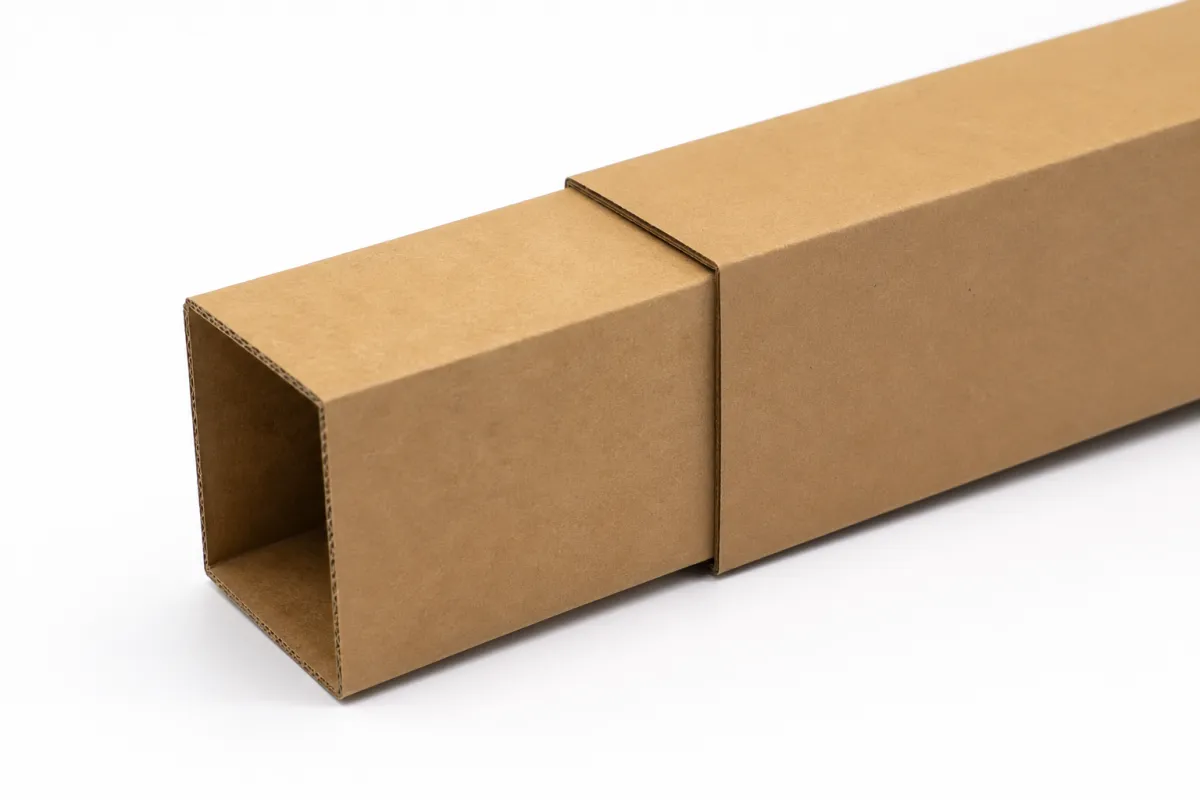
Telescoping shipping boxes for posters are two-piece corrugated cartons that slide into one another to create an adjustable length. One section serves as the base, the other becomes the sleeve, and the finished box locks to the right depth without leaving a lot of unnecessary air around a flat print. That flexibility matters because an 18 x 24 campaign poster, a 24 x 36 retail graphic, and a 27 x 40 movie one-sheet do not deserve three different fixed cartons if they are moving through shipping every week. In a plant I visited in Foshan, Guangdong, one production line used a 2-inch telescoping range to cover all three sizes with a single die line and a single bundle spec.
I remember a supplier meeting in Shenzhen where a converter laid out three fixed-size cartons next to one telescoping set, almost like he was daring the room to keep overcomplicating things. The fixed boxes were strong enough on paper, but the SKU picture was a mess: too many sizes, too much shelf space, and too many chances for a picker to grab the wrong blank. The telescoping shipping boxes for posters option collapsed that whole conversation into one spec sheet, one die line, and a cleaner warehouse layout. That is the real win, especially for teams trying to tighten order fulfillment without adding more carton families just because somebody in the meeting said, "Well, maybe we should cover every possible edge case." That sentence has cost people money for decades, and on one account it added 14 pallets of dead stock by the end of Q3.
Compared with mailing tubes, flat mailers, and rigid cartons, telescoping shipping boxes for posters solve a different problem. Tubes can be cheaper, but they force the print into a curl, which is not ideal for premium art prints or coated surfaces that can crack along a tight roll. Flat mailers protect shape, yet they do not always handle thicker stacks, foam boards, or assembled kits well. A rigid carton can work, though fixed depth often leaves dead space unless the dimensions are exact. Telescoping corrugated keeps the item flat, reduces movement, and cuts the odds that a poster reaches the customer with a bent edge noticed before the box is even opened. For a 350gsm C1S artboard print that has a satin varnish, that flat transport matters more than the difference between a 9-ounce and a 10-ounce carton blank.
These boxes show up in art print studios, museum shops, promotional poster programs, retail display kits, and fragile paper goods that need package protection more than they need speed alone. I have seen them used for signed lithographs, trade show graphics, and seasonal window displays that had to look perfect after a 600-mile parcel move from Chicago, Illinois to Atlanta, Georgia. If you are building a wider lineup of Custom Packaging Products, these cartons fit alongside Custom Shipping Boxes instead of replacing every format in the stack. For lighter inserts and low-profile add-ons, Custom Poly Mailers still make sense in some programs, but not for flat artwork that needs stiffness and edge control.
I use a simple filter before I spec any program: if the shipment has to stay flat, survive parcel handling, and still look respectable after a cross-dock transfer, telescoping shipping boxes for posters deserve a serious look. Size, board strength, closure style, cost, and production timing matter as much as the box shape itself. Leave out one of those five, and the package can fail in a way that feels random even though the cause was sitting in the spec from the start. A good spec sheet names the board grade, the target caliper, the artwork side, and the finishing method, not just the outer dimensions.
How Telescoping Shipping Boxes for Posters Work
The construction is straightforward. Telescoping shipping boxes for posters use a base section and a sleeve section that slide together to create the final length. In practical terms, one carton family can cover multiple poster depths, which is a relief for teams managing several campaigns at once. I have watched a fulfillment supervisor in Louisville, Kentucky cut a six-SKU packing wall down to two SKUs simply by choosing a telescoping design with a 1-inch adjustment range and a clear labeling system. He looked weirdly happy about it, too, which I respect. Few things are as satisfying as deleting four unnecessary carton sizes from a spreadsheet and watching the replenishment count drop by 38 cases.
That adjustability matters because the box can be trimmed, nested, or set to the nearest safe depth without forcing the team to stock a different blank for every artwork size. In a busy ecommerce shipping environment, that means fewer picking errors, less shelf clutter, and a shorter learning curve for seasonal staff who are already trying to remember which end of the tape gun the tape comes out of. When a warehouse is shipping 300 posters a day, a little tolerance is not a luxury. It is what keeps the line from stalling every time an odd size shows up. I have seen one fulfillment floor lose 11 minutes in a shift because the operators kept hunting for a 22-inch blank that had been mislabeled as 24-inch.
Protection comes from rigidity and support. Flat posters do not like bending forces, and they do not like edge friction. A corrugated sleeve and base create a stiff shell that resists flex better than a soft poly bag or a rolled tube. When the inside dimensions are set correctly, the poster stays centered, edge wear drops, and the print does not rub against the walls. That is why telescoping shipping boxes for posters are often a better match for premium paper stock, laminated graphics, and coated sheets that would show scuffs after a rough route. Honestly, I think that is the part people underestimate most: the box does not need to look fancy, it needs to behave like a decent bodyguard on a 2,000-mile parcel line.
Closure details matter more than people expect. A friction fit can help, but I would never rely on it alone for anything moving through parcel sorting. I have seen one client lose a batch because the sleeve backed off slightly during transit and the edges picked up dust and seam rub. Not glamorous, not mysterious, just annoying in the way that makes a good morning feel personal. A proper tape pattern across the overlap, a snug internal insert, and, in some cases, corner pads or a backing board create a much steadier build. For heavier posters or boxed print sets, a small strip of void fill or a 1/8-inch chipboard liner can keep movement down without turning the package into a brick. A 12-inch strip of reinforced tape across the spine overlap is often enough to stop the sleeve from walking during a 36-hour regional move.
There is also a real difference between light-duty and heavy-duty builds. A short regional run with a 32 ECT single-wall carton may be perfectly fine for standard posters under 1 pound, while a cross-country shipment of premium art prints may justify double-wall BC flute, stronger liners, or reinforced corners. One client in a trade show program told me, after their third damaged return in a month, "We were saving 11 cents and losing $19 in reprint cost." That kind of math changes minds fast. In a good setup, telescoping shipping boxes for posters are not only a shape choice; they become a system choice tied to the whole shipment path from the plant in Guangdong to the customer porch in Ohio.
Choosing the Right Size, Material, and Finish
Start with the poster, not the box catalog. Measure the finished print size, then add clearance for tissue, a backing board, a protective sleeve, and any handling tolerance. For a 24 x 36 poster, I usually want enough room for a 1/8-inch board or a thin wrap layer without forcing the edges to bow. If the box is too loose, the contents slide. If it is too tight, the corners catch and the whole purpose of telescoping shipping boxes for posters gets undermined before the carton even hits the tape gun. I have made that mistake once on a sample run in Suzhou, and I do not recommend the little burst of panic that follows when you realize the fit looked "fine" only because nobody had actually inserted the poster yet.
Material choice should match the shipping lane. Single-wall corrugated, especially around 32 ECT, can work for shorter regional routes and lighter paper goods. Double-wall construction makes more sense for long-haul parcel networks, heavier art stock, or shipments that may be stacked, dropped, and rehandled three or four times. I once sat through a supplier negotiation in Dongguan where the buyer wanted to save 8 cents per unit by dropping from double-wall to single-wall, and the converter asked one question: "What costs more, the extra board or the second reprint?" The room went quiet. That is the kind of calculation telescoping shipping boxes for posters force you to make honestly, because the expensive choice is not always the stronger box. For a 27 x 40 one-sheet packed with a 1/8-inch chipboard backer, the heavier board grade usually earns its keep on the first rough sort.
Finish options change both presentation and price. Plain kraft is practical and usually the most economical. White exterior board presents better in retail and gift channels. Printed branding can make the package feel intentional before the customer even opens it. Moisture-resistant coatings help in rainy climates or mixed-transport routes, though they are not a cure-all; a wet carton can still fail if it sits in standing water. If sustainability matters, ask for FSC-certified board and recycled content where the application allows. The FSC certification system is worth checking if your brand wants a cleaner paper trail on sourcing. For premium retail programs, I have seen a 350gsm C1S artboard wrap laminated to E-flute produce a sharper shelf look than plain kraft without adding much bulk.
Workflow matters too. If the box is packed by hand, a slightly looser fit may speed insertion and reduce jam-ups. If automation is involved, consistency becomes more important than a wide tolerance. I have seen a fulfillment line in Monterrey, Nuevo Leon lose 14 minutes per hour because inserts varied by just 3 millimeters and operators kept reworking the stacks. That kind of bottleneck is common in order fulfillment, especially when teams are moving from sample approval to daily production. The best telescoping shipping boxes for posters balance protection, storage efficiency, and dimensional weight, not just stiffness on a spec sheet. On a carrier rate card, 2 extra inches of empty depth can matter more than a 3-cent upgrade in board grade.
A practical checklist helps before you commit:
- Measure the poster length, width, and stack thickness to the nearest 1/16 inch.
- Confirm whether the artwork ships flat, sleeved, or with a backing board.
- Choose the smallest safe telescoping range that still allows easy insertion.
- Match board grade to route length and handling risk.
- Decide whether the customer should see kraft, white, or printed exterior board.
Cost and Pricing: What Changes the Price
Board grade, box dimensions, print coverage, order quantity, and custom inserts usually drive the price more than anything else. A 12 x 18 telescoping set in plain kraft is not priced the same way as a 26 x 38 branded version with double-wall construction and a moisture barrier. For budget planning, I usually separate the discussion into unit cost, setup cost, and total landed cost. That is the only way telescoping shipping boxes for posters can be compared fairly with other shipping materials. A carton that looks cheap at $0.54 may not stay cheap if the freight class jumps and the pack-out needs a second insert.
One reason these cartons can save money indirectly is that a single adjustable box may replace three or four fixed-size cartons. That lowers SKU count, reduces dead stock, and cuts the storage footprint on the packing floor. At a client meeting last quarter in Portland, Oregon, a marketing team wanted six separate sizes for a poster launch. Operations pushed back with one telescoping format and one spacer spec, and the result was 42 fewer pallet positions over the season. That kind of warehouse efficiency is often invisible until the rent bill arrives, which is usually the moment everybody becomes very interested in cardboard geometry.
| Option | Typical Unit Price at 1,000 | Typical Unit Price at 5,000 | Best Fit |
|---|---|---|---|
| Plain kraft single-wall telescoping box | $0.82 | $0.54 | Regional poster shipping, lower-cost campaigns |
| White printed telescoping box with branding | $1.12 | $0.78 | Retail presentation, museum shop programs, premium unboxing |
| Double-wall telescoping box with inserts | $1.38 | $0.97 | Long-haul parcel routes, heavier art prints, higher risk handling |
Those numbers move with flute choice, coating, print coverage, and whether the spec includes a backing board or Custom Die Cut. A buyer in Milan, Michigan once told me the price difference looked tiny until the full season landed, and then the adjustable box saved them from over-ordering four underused SKUs. That is the quiet advantage of telescoping shipping boxes for posters: the value often shows up in storage, labor, and reduced damage claims rather than on the first line of the quote.
Process and Timeline: From Spec to Shipment
The process usually begins with a sample or exact drawing. I prefer a spec that lists the poster dimensions, target fit, board grade, print finish, closure method, and shipping lane. If a buyer sends only "need box for posters" and nothing else, the project usually burns time chasing answers that should have been in the first email. Once the dimensions are set, the converter can build a dieline, confirm fit, and prepare samples. That is where telescoping shipping boxes for posters either become a tidy production run or a long series of revisions driven by assumptions nobody wrote down.
After sample approval, the factory schedules board conversion, printing, die cutting, and folding or gluing depending on the design. In a plant I toured in Dongguan, the line used a separate stacker for sleeves and bases so the packing team could kit them just before shipment. That small change cut handling time and reduced edge scuffing. For larger programs, the schedule often includes material lead time, tooling approval, and a pre-production check. If the board is printed, you also need drying and finishing time, especially for coatings that affect slip, abrasion resistance, or moisture behavior.
I tell clients to leave room for one round of actual packing tests, not just visual approval. A carton can look perfect on a flat table and still behave badly once the poster, tissue, chipboard, and tape are all inside. A 2-millimeter difference can matter when the box is moving through a parcel line that does not care about intentions. That is why telescoping shipping boxes for posters should be validated under realistic conditions, including stacked storage, drop handling, and the exact closure sequence the warehouse will use every day.
For a smooth launch, I like this sequence:
- Confirm the finished poster size and pack-out components.
- Review dielines and the telescoping adjustment range.
- Approve material, finish, and closure style.
- Test a full pack and a short transit simulation.
- Lock the spec before the first production run.
Common Mistakes When Packing Posters
The first mistake is sizing the carton to the poster and forgetting the protective materials. A flat print needs breathing room for a backing board, a sleeve, and sometimes a little buffer for hand packing. If that space is ignored, the edges pinch and the package behaves like it was designed by someone who has never had to replace damaged inventory. I have seen this most often with rushed seasonal programs where the team ordered telescoping shipping boxes for posters before the final insert spec was approved.
The second mistake is choosing the lightest board because the unit price looks attractive. It is a classic false economy. A thinner carton can arrive looking acceptable in the warehouse and still fail after the second conveyor turn or a stack of heavier parcels dropped on top. The cost of a reprint, a credit, and the extra labor can erase the savings in one afternoon. That is especially true for premium art prints, exhibition posters, or retail graphics where the damage is visible the moment the customer opens the package.
The third mistake is forgetting about labeling and warehouse behavior. If the sleeve and base are not marked clearly, a team under pressure will mix components, force a bad fit, or tape a box that should have been changed out. I have watched an otherwise disciplined shipping floor in Monterrey spend half a shift fixing cartons that were technically correct but practically annoying. Good telescoping shipping boxes for posters do not just protect the product; they have to fit the habits of the people packing them.
Other errors include using too much void fill, skipping corner protection for large formats, and ignoring carrier handling patterns. A carton that travels fine on a local van route may struggle once it enters a hub-and-spoke network with more handoffs and more compression. If the box has to cross several facilities, treat the pack-out as a system, not a single carton choice. That shift in thinking usually does more for damage reduction than any one material upgrade.
Expert Tips and Next Steps
My first tip is to spec from the inside out. Start with the artwork, the backing board, the sleeve, and the closure, then build the carton around that stack. The second tip is to keep a single reference sample on the packing floor and another in the purchasing file so the team is not comparing memory against a PO months later. That one habit prevents a surprising amount of drift in telescoping shipping boxes for posters programs.
My third tip is to think in routes, not just units. A box that works for regional distribution may not be the right answer for a coast-to-coast parcel network or a mixed freight handoff. The best package is the one that survives the actual trip, not the one that sounds elegant in the conference room. If your posters are part of a broader packaging lineup, make sure the carton style also fits the rest of your custom packaging strategy so the warehouse is not juggling incompatible systems for the sake of small preferences.
If you are still deciding, order samples with two different fit tolerances and test them in the real pack-out sequence. One version should prioritize speed, the other should prioritize tighter movement control. Then check edge wear, tape performance, and customer presentation after a short transit. That little test usually reveals more than a week of spreadsheet discussion, especially when the sample actually moves through the same route your shipments will use.
For brands that ship posters regularly, telescoping shipping boxes for posters are worth treating as a repeatable packaging platform rather than a one-off carton purchase. Once the spec is right, the carton family can support promotions, retail drops, museum sales, and wholesale orders with only minor adjustments to insert material or finish.
How do telescoping shipping boxes for posters protect flat artwork?
Telescoping shipping boxes for posters protect flat artwork by keeping the print rigid, centered, and separated from the carton walls. The two-piece corrugated structure reduces flex, which helps prevent bent corners, surface rub, and scuffing on coated paper stocks. When the poster is paired with a backing board or chipboard liner, the package gains more edge protection and less internal movement, which matters a great deal in parcel networks that handle each shipment several times before delivery.
The second layer of protection comes from fit. A telescoping carton can be set to the right depth so the poster does not slide around or sit in a pocket of empty air. Less movement means less abrasion. If the closure is taped correctly and the board grade matches the route, the result is a package that behaves more like protective packaging than a simple mailer. That is why these cartons often outperform tubes for premium prints that need to arrive flat, clean, and ready to display. They are not magic, though. If the pack-out is sloppy or the carton is underbuilt, the box will still lose the fight.
There is one detail I always stress to clients: flat protection is a chain, not a single feature. The board, the sleeve fit, the insert, the tape pattern, and the carrier route all matter. A good telescoping box gives the shipment structure, but the rest of the system has to do its part too. That is the difference between a package that survives a Friday cross-dock and one that comes back with a dented edge and a sorry note from the receiver.
Frequently Asked Questions
Are telescoping shipping boxes for posters better than poster tubes?
For flat artwork, often yes. Poster tubes are useful when curl is acceptable, but telescoping shipping boxes for posters keep the print flat and reduce the risk of edge damage, surface scuffs, and finish cracking on coated stock.
What board grade should I choose?
Light regional shipments can work with single-wall corrugated, while heavier art prints or longer routes often justify double-wall. The right choice depends on the route, the paper weight, and how much handling the package will see.
Do telescoping shipping boxes for posters need inserts?
Not always, but backing boards, chipboard liners, or corner pads can improve package protection when the artwork is valuable or the route is rough. Inserts are especially helpful when the pack-out includes multiple sheets or fragile finishes.
Can these boxes be custom printed?
Yes. Many brands use printed branding on the exterior for retail presentation or promotional shipments. Just keep the finish aligned with the use case so the design supports the package without adding unnecessary cost.
How do I keep dimensional weight under control?
Use the smallest safe telescoping range, avoid extra empty depth, and choose a board spec that fits the route instead of overbuilding every shipment. Small changes to carton depth can have a bigger effect on dimensional weight than a minor board upgrade.
What is the best use case for telescoping shipping boxes for posters?
They work best for flat prints, retail graphics, museum pieces, promotional campaigns, and any shipment where appearance matters as much as survival. If the poster must arrive flat and presentable, telescoping shipping boxes for posters are usually the right conversation to have first.
How much can one box style actually simplify a program?
In many accounts, a single adjustable format replaces several fixed cartons, reduces storage clutter, and cuts picking mistakes. That is one reason telescoping shipping boxes for posters are popular with teams trying to improve order fulfillment without adding complexity.
What should I check before approving a production run?
Verify the artwork size, insert stack, adjustment range, closure method, and carrier lane, then pack a real sample and send it through the same route your orders will use. If the box survives that test without corner rub or sleeve shift, you are in good shape.
What is the simplest rule for Choosing the Right build?
Match the carton to the shipment, not to the quote sheet. If the poster stays flat, the fit is controlled, and the route is rough enough to justify the board grade, the spec is probably right.

