Buyer Fit Snapshot
| Best fit | Thermal Shipping Labels Wholesale projects where brand print, material claims, artwork control, MOQ, and repeat-order consistency need to be specified before quoting. |
|---|---|
| Quote inputs | Share finished size, material target, print colors, finish, packing count, annual reorder estimate, ship-to region, and any compliance wording. |
| Proofing check | Approve dieline scale, logo placement, barcode or warning zones, color tolerance, closure strength, and carton packing before bulk production. |
| Main risk | Vague material claims, crowded artwork, missing packing details, or unclear freight terms can make a low unit price expensive after revisions. |
Fast answer: Thermal Shipping Labels Wholesale: Pricing, Specs & More should be specified like a repeatable production item. The safest quote records material, print method, finish, artwork proof, packing count, and reorder notes in one written spec.
Production checks before approval
Compare the actual filled-product size with the drawing, then confirm tolerance on folds, seals, hang holes, label areas, and retail display edges. Reserve space for logos, QR codes, warning copy, and material claims before decorative graphics fill the panel.
Quote comparison points
Review material grade, print process, finish, sampling route, tooling charges, carton quantity, and freight assumptions side by side. A quote is only useful when the supplier can repeat the same color, closure quality, and packing count on the next order.
Thermal Shipping Labels Wholesale: Pricing, Specs & More
Warehouses do not lose money because labels are glamorous. They lose money because thermal shipping labels wholesale orders arrive late, rolls do not fit the printer, or adhesive gives up halfway through order fulfillment. I have watched a perfectly normal packing day turn into a mess over something as small as a mislabeled core size, and that is how a cheap label becomes an expensive problem.
If your business ships steady volume, thermal shipping labels wholesale is not a luxury buy. It is the practical route. You get tighter control over cost, fewer reorders, and less chaos on the packing line. That matters whether you run a brand warehouse, a 3PL, or an eCommerce operation that cannot afford to stall because someone ordered the wrong roll diameter.
Why thermal shipping labels wholesale beats piecemeal buying
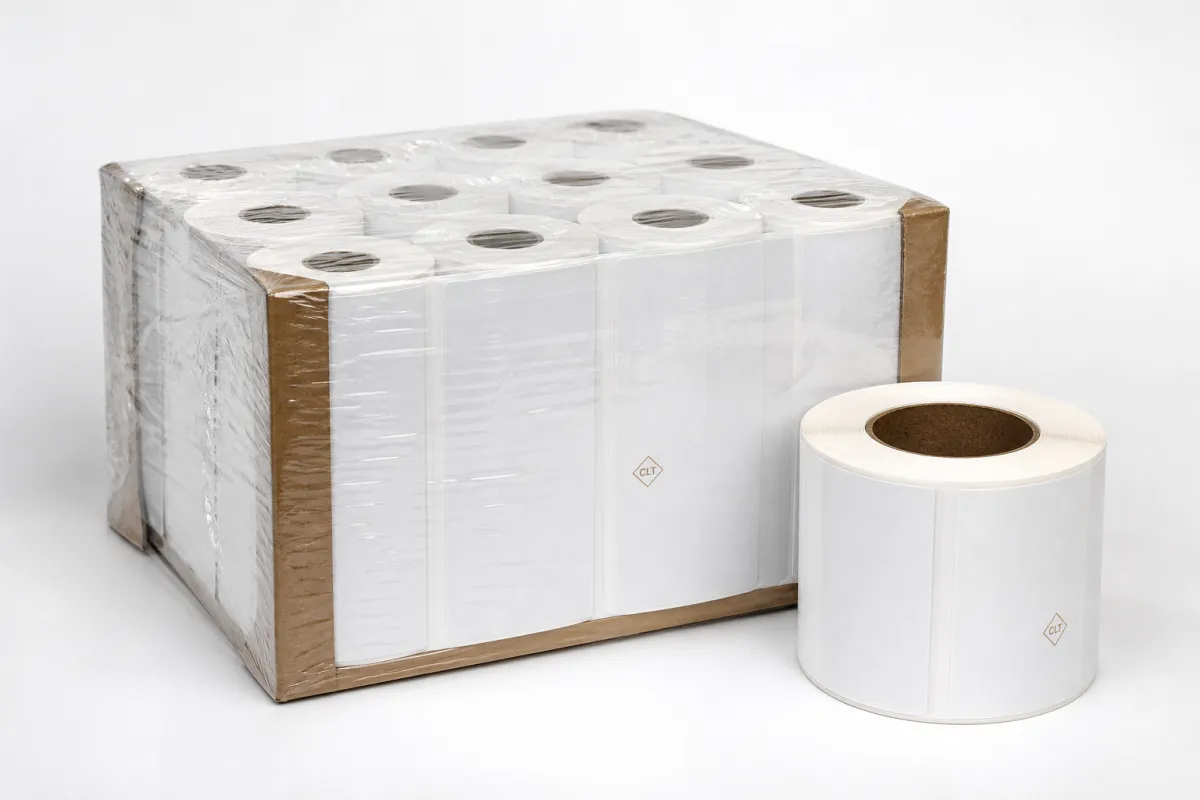
Piecemeal buying looks harmless until the second or third rush week. Then the math changes. A missing roll at 4:30 p.m. stops cartons from leaving the dock. A mismatched liner causes misfeeds. A label that prints too light sends a barcode back through the scanner three times, which is a lovely way to slow down order fulfillment and irritate everyone standing near the conveyor.
Thermal shipping labels wholesale makes sense any time label use is predictable. If you ship daily, if you have more than one packing station, or if a 3PL team is pulling from the same inventory all week, wholesale buying removes a lot of friction. You are not just buying adhesive paper. You are buying consistency, lower unit cost, and fewer supply interruptions.
From a packaging buyer’s point of view, the real advantage is control. One label spec across every station means the printer settings stay stable. The barcode darkness stays stable. The adhesive behavior stays stable. That reduces reprints, which reduces waste, which also helps with shipping materials budgeting. Nothing fancy there, just cleaner purchasing and fewer surprises in the warehouse.
There is also the supply side. Thermal shipping labels wholesale usually gives you room to plan on a replenishment cycle instead of gambling on spot buys. That matters in ecommerce shipping where sales spikes happen without warning, and in warehouse operations where a delayed resupply can turn into a labor bottleneck. Wholesale orders are not only about a lower unit price; they help you keep production moving.
Another hidden cost shows up outside the label itself. If a roll is too large for the printer, someone trims packaging or swaps equipment. If the adhesive is weak, returns and relabeling go up. If the core is wrong, the printer jams. These are not dramatic failures. They are just enough drag to wreck efficiency one shift at a time.
If the label spec is wrong, the packing line does not care that you saved two cents a unit. It will still stop.
That is why thermal shipping labels wholesale is a better decision than piecemeal buying for steady volume users. It gives you cleaner forecasting, better print consistency, and fewer interruptions when the dock is busiest.
If you are comparing supply partners, it helps to look beyond labels alone. Many buyers pair label programs with broader Wholesale Programs so they can coordinate shipping materials, transit packaging, and inventory timing in one place. For buyers who also need branded cartons or mailers, Custom Packaging Products can keep the visual system consistent across the shipment.
Thermal shipping labels wholesale product details and formats
Not every thermal label is built the same. That sounds obvious, yet a surprising number of orders start with “we need shipping labels” and end with a printer compatibility mess. Thermal shipping labels wholesale should be selected around the printer, the shipping environment, and the amount of handling the parcel will see before delivery.
The first decision is direct thermal versus thermal transfer. Direct thermal labels do not need a ribbon. The print appears through heat-sensitive coating on the face stock. That keeps the process simple and is why so many parcel operations use direct thermal stock for day-to-day ecommerce shipping. Thermal transfer labels, on the other hand, use a ribbon to transfer ink to the label surface. They are better when you need stronger durability, better resistance to abrasion, or longer storage before use.
For most parcel shipping, thermal shipping labels wholesale in the standard 4 x 6 format is the default. It works with a huge share of desktop and industrial printers. It fits carrier labels, marketplace shipping labels, and warehouse routing labels without forcing the operator to cut or fold anything awkward. If your team uses Amazon FBA workflows, 4 x 6 is also the size most buyers expect because it aligns with common fulfillment systems.
Other formats do matter. Fanfold labels are useful in high-volume stations where operators want faster loading and fewer roll changes. Rolls are still the common choice for desktop printers and smaller work cells. Industrial printers usually prefer larger outer diameters, while compact desktops need tighter roll specs and smaller cores. If the printer manufacturer says 1-inch core, use 1-inch core. If the max roll diameter is 5 inches, do not try to force an 8-inch roll into the conversation and hope for the best.
Here is the practical build detail that buyers should not ignore:
- Adhesive strength: permanent acrylic for standard cartons, freezer-grade for cold-chain use, removable only when peel-off behavior is truly needed.
- Liner type: glassine or premium paper liner, depending on feed smoothness and waste handling preferences.
- Perforation: useful for hand application and fast separation on a packing table.
- Roll direction: affects printer loading and print orientation.
- Core size: usually 1 inch for desktop units and 3 inch for many industrial setups.
Standard specs are fine for many buyers. If your labels are only going from printer to carton to carrier scan, standard direct thermal stock with a permanent adhesive usually does the job. But thermal shipping labels wholesale becomes more interesting when your operation has special conditions. Cold storage, high humidity, oily cartons, rough handling, or long in-transit exposure can justify a custom format or upgraded adhesive.
For buyers who also need label-centric branding or SKU control, it can help to see how thermal items fit into a broader label program. Our Custom Labels & Tags category is a useful reference point when you need more than plain shipping stock and want a consistent packaging system across product, carton, and dispatch labels.
Thermal shipping labels wholesale specifications to check first
If you want a clean quote, start with the specs. That sounds dull, but it saves time. Thermal shipping labels wholesale orders go wrong when the buyer assumes the printer can handle “any 4 x 6” or when someone forgets that roll diameter matters more than it does on paper.
The compatibility check list should be short and exact:
- Printer model: confirm the brand and series, not just “desktop printer.”
- Printer type: direct thermal or thermal transfer.
- Core diameter: 1 inch, 1.5 inch, or 3 inch depending on hardware.
- Max roll outer diameter: this controls whether the roll physically fits.
- Label size: 4 x 6 is common, but not universal.
- Roll or fanfold: make sure the feed path matches the machine.
Environmental use matters just as much. A label that performs fine in a climate-controlled packing room may fail in a freezer, on a wet carton, or on a box that rubs against other packages in transit packaging. If labels cross from storage into cold-chain handling, ask for freezer-grade adhesive. If the package surface is dusty or slightly rough, ask about adhesive performance on corrugated board rather than assuming standard tack is enough.
Image quality is another real check. Good thermal shipping labels wholesale stock should produce a dark, even print with clean edges. That matters for barcodes, QR codes, and any scan-based workflow. If the image looks gray instead of black, scan rates can suffer. On fast-moving conveyor lines, that means staff slow down to manually key in tracking data. Nobody wants that, and nobody wants to hear the same label gets blamed twice in one shift.
You can also ask for test indicators before you place the order. For example, ask how the label performs after 24 hours on corrugated board, whether the adhesive holds after freezer exposure, and whether the barcode still scans after light abrasion. If a supplier can answer those questions clearly, that is a sign they understand warehousing, not just sales.
Packaging details matter more than many buyers expect. Ask how many labels are on each roll, how many rolls are packed per case, and whether the cartons are arranged for easy inventory counting. Good pack-out reduces mistakes during receiving and helps with reorder planning. If your team uses pallets, also ask how the cartons stack, because bad stacking wastes space and can create unnecessary dimensional weight if you are shipping finished goods together with other transit packaging.
For buyers who care about standards, this is where third-party references help. The ISTA site is useful if you want to understand how shipping materials get tested under transit conditions. For packaging terminology and broader materials context, packaging.org is a helpful reference point. Those are not substitutes for a real sample test, but they keep the conversation grounded.
Thermal shipping labels wholesale should never be chosen on price alone if the spec is unclear. A roll that prints cleanly and feeds properly is worth more than a bargain batch that jams twice a day.
Thermal shipping labels wholesale pricing, MOQ, and quote basics
Pricing only makes sense when you know what is inside the quote. Thermal shipping labels wholesale costs move with material grade, adhesive, size, print method, packaging format, and total volume. A buyer comparing random unit prices without matching specs is comparing apples to forklift batteries.
For standard direct thermal 4 x 6 labels, wholesale pricing often lands in these rough ranges:
| Option | Best For | Typical Wholesale Range | Notes |
|---|---|---|---|
| Direct thermal stock rolls | Daily parcel shipping | $18-$38 per 1,000 labels | Good for common ecommerce shipping and warehouse use |
| Fanfold direct thermal | High-volume stations | $22-$45 per 1,000 labels | Often easier to load in fast-moving pack areas |
| Thermal transfer labels | Durability or longer storage | $42-$95 per 1,000 labels | Requires ribbon and usually costs more to run |
| Custom printed / branded labels | Brand presentation and routing control | $60-$140+ per 1,000 labels | Setup and artwork can affect total cost |
Those numbers are not magic. They are working ranges. Volume, print coverage, and paper grade push them up or down. If you order a standard stock size by the pallet, your per-unit cost can improve. If you want specialty adhesive, tight tolerances, or custom pack-out, the price rises. That is normal, and frankly, it is better to hear it up front than find out after the quote is already approved.
Thermal shipping labels wholesale MOQ also depends on what you are buying. Stock items may start at case quantities, sometimes as low as 6 to 12 rolls per case depending on pack configuration. Custom sizes or adhesive upgrades usually need more volume before the pricing makes sense. A realistic custom MOQ is often one to three pallets, but some programs can start lower if the spec is simple and the supplier already has the face stock available.
Here is how a proper quote should be built:
- Unit price: price per roll, case, or thousand labels.
- Setup or plate fee: applies when artwork or custom die work is involved.
- Freight: pallet or carton shipping cost, not just product cost.
- Sample charge: sometimes credited back on order, sometimes not.
- Lead time: production window plus delivery window.
Do not forget freight. A quote can look cheap until the shipping bill shows up. If the supplier ships in oversized cartons or inefficient pallet loads, you can lose the savings before the labels even hit your dock. That is especially true when businesses are trying to balance shipping materials budgets across multiple suppliers and want predictable replenishment for order fulfillment.
For some buyers, the cheapest label is actually the most expensive one. A low bid that jams printers, fails in cold storage, or prints faint barcodes creates hidden labor costs. That is why thermal shipping labels wholesale should be evaluated against scan quality, adhesive reliability, and total landed cost, not just list price.
One practical buying rule: if a quote is 15% lower than the rest, ask what changed. Usually it is one of three things - face stock grade, adhesive quality, or freight assumptions. Sometimes all three. Fun, right?
Process and timeline for thermal shipping labels wholesale orders
A clean order process matters because the label is only one part of the shipment. The rest is proofing, approval, packing, and delivery. With thermal shipping labels wholesale, the smoother the front-end information, the faster the job moves. If the first email is vague, the quote gets vague too. That is not a mystery.
The best inquiry includes the printer model, label size, adhesive requirement, core size, roll direction, monthly usage, and whether the labels are for direct thermal or thermal transfer printing. Add the shipping destination, too. A pallet going to one warehouse has a very different freight setup from cartons going to three separate locations.
Sampling is worth the time. Always. A test roll tells you whether the label prints at the right darkness, peels cleanly from the liner, feeds without wobble, and stays stuck on your carton surface. For barcode-heavy operations, a sample is not optional. One bad batch can cost more in reprints than the whole sample run, and that is not a risk I would brush off.
A normal thermal shipping labels wholesale timeline often looks like this:
- Inquiry and quote: 1-2 business days if the spec is clear.
- Sample review: 2-5 business days depending on stock availability.
- Order confirmation: same day once the details are approved.
- Production: often 7-15 business days for standard stock or simple custom runs.
- Quality check and packing: built into production, but allow extra time for custom pack-out.
- Shipping: depends on freight method and destination.
Where do delays happen? Usually in two places: artwork/spec approval and freight booking. The labels themselves are not always the bottleneck. Sometimes the buyer is still deciding between 1-inch and 3-inch cores, or the warehouse wants one pack format while finance wants another. That can eat days fast.
Rush orders are possible in many cases, but they come with tradeoffs. Faster turnaround can tighten spec options, raise freight cost, or eliminate some customization. If the order must ship faster, say so early. A supplier can usually tell you what can be accelerated and what cannot. Late surprises are what cause actual problems, not honest lead times.
From a packaging operations standpoint, reorder discipline matters as much as the first order. Set a reorder point based on your monthly use and the real lead time. If you use 20 cases a month and the lead time is two weeks, do not wait until the last case is open. That is how good purchasing turns into a fire drill.
Thermal shipping labels wholesale works best when the process is simple: request sample, approve spec, lock production, receive on schedule, and put the item on a reorder cycle. The fewer open decisions, the fewer mistakes. That is true for labels, cartons, and pretty much every other piece of transit packaging.
If you are building a broader shipping system, the label order should align with your cartons, mailers, and void-fill choices. Matching your label program with Custom Poly Mailers or other packaging formats can make the whole outbound process easier to control. Different products, same goal: fewer surprises at the dock.
Why choose us for thermal shipping labels wholesale
Buyers usually say they want a good price. They do. But after the first bad shipment, price moves down the list and consistency moves up. That is the truth of thermal shipping labels wholesale. If the same label runs cleanly month after month, the packing team stops worrying about it. That is the real win.
Consistency starts with material control. The same face stock, the same adhesive, the same liner, the same roll build. When those pieces stay stable across repeat orders, your printer settings stay stable too. That reduces wasted labels and makes reorders easier to predict. Small thing? Maybe. But a packing station measures small things all day long.
Quality control also matters more than most buyers realize. A wholesale label should be checked for print clarity, unwind behavior, liner release, and barcode readability. If the roll is too tight, the printer can struggle. If the liner cuts badly, operators waste time. If the adhesive bonds too slowly, parcels can be handled before the label fully sets. None of that looks dramatic on a quote sheet, but it absolutely shows up in production.
Thermal shipping labels wholesale buyers also need supply reliability. A factory can offer a nice unit price, but if the reorder response is slow, your inventory risk goes up. That is especially painful for 3PLs and eCommerce teams because outbound volume does not politely wait for a restock email. Real support means answering spec questions quickly and helping the customer Choose the Right MOQ, not selling them the cheapest roll and disappearing.
From our side, practical support means three things:
- Spec guidance: help match printer, core, roll size, and adhesive to the real use case.
- Test support: provide samples or review print requirements before the bulk run.
- Reorder planning: help set a schedule that avoids stockouts.
We also look at the broader packaging picture. If the buyer needs a label program that fits product packaging, carton labeling, and outbound logistics together, it is usually smarter to think in systems rather than isolated parts. That is where thermal labels, branded cartons, and shipping supplies should speak the same language. Otherwise you end up with a great label on a weak process, which is not much of a victory.
In practice, the best thermal shipping labels wholesale program is boring in the right way. It arrives on time. It runs in the printer. It scans cleanly. It sticks where it should. The packing line does not talk about it, because nothing is going wrong. That is exactly what buyers should want.
If you need a wider mix of shipping materials around the label order, browse our Custom Packaging Products to keep your outbound setup aligned instead of piecing it together from unrelated vendors.
Next steps for placing your wholesale label order
If you are ready to buy, keep the decision process clean. Thermal shipping labels wholesale does not need to be complicated, but it does need accurate inputs. The more precise your starting point, the faster you get a useful quote and the less time everyone wastes correcting preventable mistakes.
Use this checklist before you request pricing:
- Printer model: exact brand and model number.
- Label size: standard 4 x 6 or another required format.
- Printer type: direct thermal or thermal transfer.
- Adhesive need: standard permanent, freezer-grade, or specialty bond.
- Monthly volume: expected label usage so MOQ and unit price make sense.
- Shipping destination: where the order is going and whether it is palletized.
- Sample request: yes or no, and what you need tested.
Compare quotes by total landed cost. That means product price, freight, setup charges, and any sample or pack-out fees. A lower sticker price can be a bad deal if freight is high or the labels require manual rework. In wholesale buying, the cheapest quote is not automatically the smartest one. It is just the easiest one to misread.
A fast decision path is usually the best one: request a sample, confirm the spec, approve the timeline, and reserve your reorder schedule before stock gets thin. That approach reduces stockouts and keeps your order fulfillment moving without the usual scramble. It is not glamorous. It is just effective.
For buyers comparing different shipping components at the same time, the most efficient move is to line up labels, cartons, and mailers as one procurement cycle. That keeps packaging buys coordinated and reduces the risk of one part arriving early while another is stuck in production. Less drift. Less waste. Fewer apologies to operations.
If you are ready to move, gather your specs now and ask for a thermal shipping labels wholesale quote that reflects the real use case, not a generic guess. Good numbers come from good inputs. That is true whether you ship 500 parcels a week or 50,000.
What sizes are most common for thermal shipping labels wholesale?
4 x 6 is the standard for most parcel shipping workflows. It fits common carrier labels, warehouse labels, and ecommerce shipping setups without extra trimming. Some buyers also need smaller inventory or product labels, but 4 x 6 covers the bulk of wholesale shipping label demand. For higher-speed operations, that size also keeps printer setup simple and reduces loading mistakes.
What MOQ should I expect for thermal shipping labels wholesale orders?
MOQ depends on the material, size, and whether the labels are stock or custom. Many thermal shipping labels wholesale orders start at case quantities, while custom specs may need higher volume to stay cost-effective. If the spec is simple and the roll build is standard, the minimum can be fairly approachable. Special adhesives, custom printing, and unusual pack-out usually push the threshold higher.
How do I compare thermal shipping labels wholesale quotes accurately?
Compare the full landed cost, not just the unit price. Check material quality, adhesive strength, core size, freight, and lead time before choosing the lowest quote. A cheap label that jams printers or fails in transit is not saving you money. Ask for the same spec across every quote so you are comparing the same product, not three different versions of it.
Do thermal shipping labels wholesale orders work with all printers?
No. The label stock must match the printer type, core size, and roll diameter. Always confirm compatibility first or the labels can jam, misfeed, or print too lightly. Thermal shipping labels wholesale should be matched to the machine, not forced into it. A quick sample run usually tells you whether the setup is correct before you commit to bulk inventory.
How long does production usually take for thermal shipping labels wholesale?
Standard production depends on order size, spec complexity, and current factory load. If you need faster delivery, ask for rush options early because expedited jobs usually tighten approval and shipping windows. For many standard runs, a realistic production window is often 7-15 business days after approval. Add freight time on top of that if the order is shipping on pallets or going to multiple locations.


