Retail buyers do not choose a tote because it looks good in a mockup. They choose it because a reusable bag keeps a brand moving through stores, offices, commutes, and events long after a brochure has been discarded. A strong tote earns repeated impressions for months. A weak one can fail on the first outing, which is why material, construction, and print method matter as much as the artwork itself.
That is the real buying equation for Tote Bag Bulk personalized orders: visibility, durability, and total landed cost. If the bag is supporting a promotion, a retail kit, a trade show, or a seasonal launch, it needs to do more than carry product. It has to carry the brand in public, repeatedly, without becoming a problem in receiving, storage, or use.
The buyers who get the best results usually start with the function, then narrow the decoration. The bag size needs to fit the contents. The handles need to hold the load people will actually put in them. The print area needs to suit the logo, not force the logo to fit a bad bag choice. Once those pieces are aligned, the order gets easier to price, approve, and deliver on time.
Why personalized tote bags outperform generic promo bags
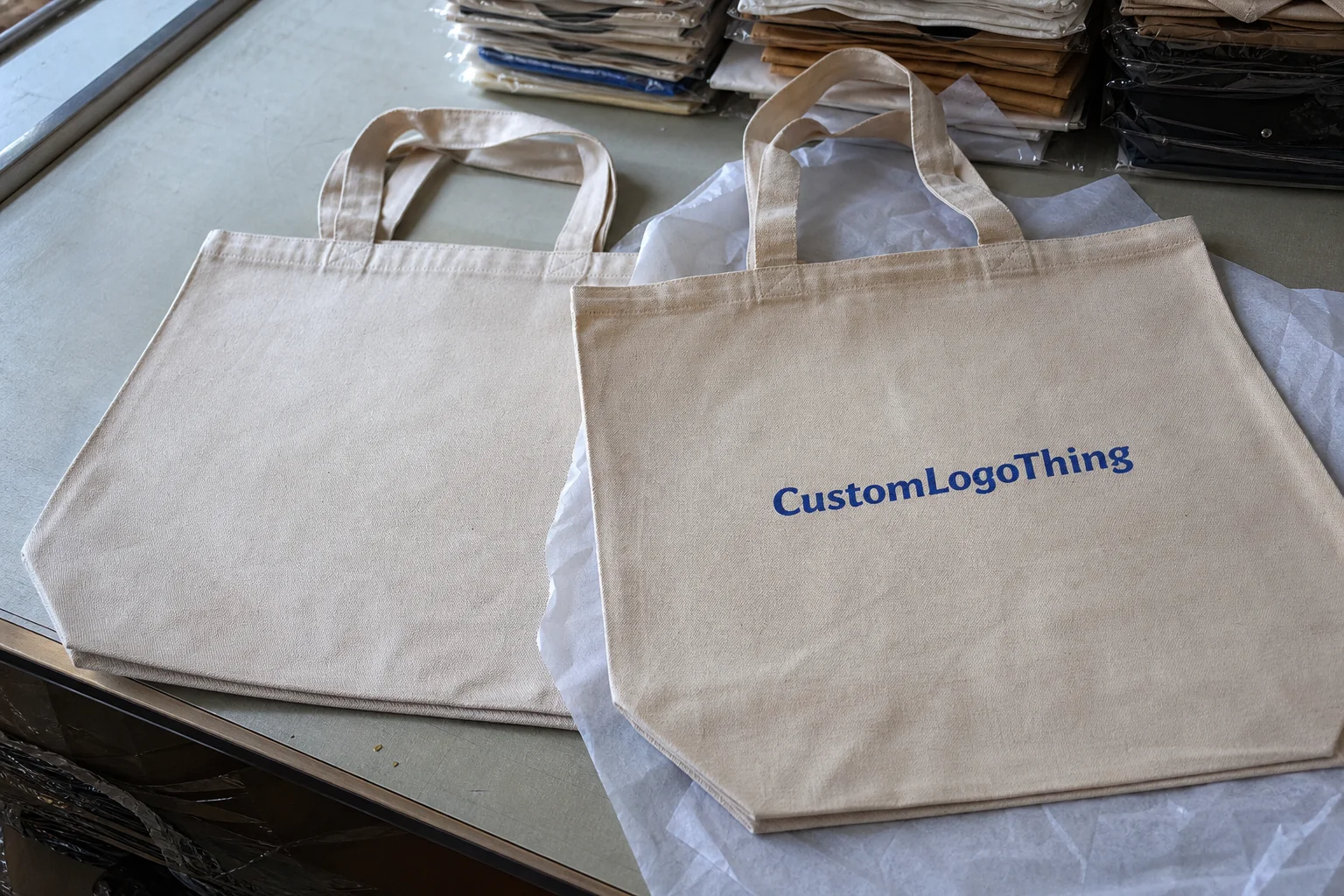
A plain giveaway disappears fast. A personalized tote gets used, and that difference matters more than buyers sometimes expect. A shopper may use the same bag at checkout, then for errands, then for carrying work items, and sometimes for travel. Each reuse is another brand impression without additional media spend.
That is why tote programs tend to outperform one-time print pieces. A flyer might be glanced at and recycled. A tote can stay in circulation for months, especially if the fabric feels decent and the stitching does not fail at the first heavy load. For retail teams, that makes the bag a packaging decision, not just a promotional one.
Personalized Tote Bags are a fit for several common programs:
- Retail packaging for paid carryout bags or premium gift purchases
- Trade shows where attendees collect samples, catalogs, and inserts
- Onboarding kits for employees, partners, or franchise openings
- Subscription and PR boxes that need a reusable carrier
- Seasonal promotions tied to holidays, store events, or product drops
The mistake that causes the most frustration is treating the tote like decoration. It is a working item. If the bag is meant for a light event handout, a simple construction may be enough. If it needs to carry groceries, catalogs, apparel, or boxed goods, the seam strength and handle attachment need real attention. A print that looks sharp on screen will not save a bag that tears under load.
For recurring promotions, the better tote is usually the one people keep grabbing. A bag that folds well, holds its shape, and tolerates everyday handling can stay visible far longer than a more expensive item that feels fragile in use. That is why buyers should think in terms of reuse cycles, not just first impressions.
“The value of a tote is measured after the first use. If people keep reaching for it, the print budget was spent well.”
There is also a timing factor. If the tote supports a launch window, the supplier has to hit proof approval, production, and freight with discipline. If those steps are loose, the bag may arrive after the campaign has already peaked. Good packaging buying is as much about schedule control as it is about artwork.
Materials, handle styles, and print areas that change the result
Material choice changes nearly everything: the feel in hand, the carrying strength, the way the ink sits on the surface, and the price. Most bulk tote programs fall into a few common construction types.
| Material | Typical use | Strength / feel | Best for |
|---|---|---|---|
| Non-woven polypropylene | Promotions, events, short-term retail use | Light, economical, water resistant | High-volume giveaways with simple artwork |
| Woven polypropylene | Reusable retail carry bags | Stronger than non-woven, more structured | Heavier contents and longer life |
| Cotton canvas | Premium retail and branded merchandise | Soft hand, higher perceived value | Upscale presentation and repeat use |
| Laminated bags | High-visibility promotions and gift programs | Durable surface, sharper printed look | Bold graphics and a polished finish |
Non-woven polypropylene is usually the cost-control option. It suits campaigns that need volume and visibility more than a premium hand feel. Woven polypropylene costs more, but it generally performs better in real use, especially when the bag is loaded repeatedly. Canvas sits higher on the value ladder. Buyers often choose it for retail resale, staff kits, or partner gifts because the tactile value is obvious the moment someone picks it up.
Handle style matters just as much as the body fabric. Sewn handles usually feel stronger and support more weight. Heat-sealed seams can lower cost on some promotional styles, but they are not always the right choice for heavier contents or repeated use. Reinforced stitching at the stress points can make a visible difference in how long the bag lasts, and it is often money well spent. Gusset depth also deserves attention. A 4-inch or 6-inch gusset changes usable capacity more than many first-time buyers expect.
Print area is the other variable that gets underestimated. A flat front panel may only allow a single logo with limited coverage, while a boxier tote can support larger artwork, side prints, or wraparound branding. If the design includes fine lines, small type, or gradients, the bag style and print method need to be checked before approval. A logo that looks clean on a flat art board can still fail visually if the print surface is textured or the panel is too narrow.
Use-case matching keeps the order grounded:
- Lightweight retail handouts: non-woven polypropylene, simple one-color print
- Heavier grocery-style use: woven polypropylene with reinforced handles
- Premium event totes: canvas or laminated construction with larger art space
- Long-life reusable bags: stronger stitching, tested load capacity, and clean print registration
For buyers comparing tote bag bulk personalized options, this is where the conversation should shift from marketing language to production facts. Material grade, handle length, seam type, and print method will tell you more than a product description built around adjectives.
Specification checks that protect artwork and durability
Before approving a tote, confirm the basics in writing. Bag dimensions. Gusset depth. Fabric weight. Handle length. Print colors. Finish. If any of those details are vague, the order can drift, and drift is expensive.
Artwork setup deserves more attention than it usually gets. Thin lines can disappear on textured surfaces. Small text can blur if the print method is not a match. Gradients can shift in ways that look acceptable on a screen but disappointing in production. A vector file reduces risk, especially for logos that need clean edges and precise scaling.
Color matching should be discussed early, not after the proof is already on the table. If Pantone matching is required, say so before approval. If the job uses a one-color imprint or a limited palette, confirm how the supplier converts the artwork. Screen print, heat transfer, and other decoration methods handle detail and color differently, and that affects the final result more than many buyers realize.
Durability needs a checkpoint too. Ask about intended load weight, seam strength, and whether the style has been tested for repeated use. A tote that tears early does more harm than a neutral bag ever could. It places the logo on a failure story, and that is a costly outcome for something that was supposed to extend brand presence.
For buyers who need a quick spec checklist, this is the clean version:
- Bag size: width, height, and gusset depth
- Material: non-woven, woven, cotton canvas, or laminated
- Handle details: length, attachment method, reinforcement
- Artwork file: vector preferred, with fonts outlined
- Print method: single-color, multi-color, or full coverage
- Finish: matte, gloss, laminated, or natural texture
- Use target: lightweight promo, retail carry, or long-term reuse
Skipping those checks is one of the fastest ways to create reprints. That is not just a production issue; it is a budget issue. Every correction costs time, and in a launch schedule time is money. Buyers who want tighter quality control often cross-check against industry resources such as the Packaging Machinery Manufacturers Institute and transport testing guidance from ISTA.
Pricing, MOQ, and unit cost planning for bulk orders
Price depends on a few hard variables: material, size, print complexity, and quantity. A basic non-woven tote with one-color printing sits in a very different cost band from a laminated canvas-style bag with a large logo and multiple imprint locations. That spread is normal.
As a practical planning range, simple tote bag bulk personalized orders can begin around $0.18-$0.28 per unit at 5,000 pieces for basic promotional styles, while premium materials or heavier decoration can move into the $0.60-$1.50+ range per unit or higher. Those figures change with fabric weight, decoration method, and shipping lane, so they are not universal. They are useful for early budgeting, not final approval.
MOQ is another detail that should be confirmed early. Minimums are often lower on stock items with a standard imprint and rise when the bag color is custom, the construction is special, or the artwork needs multiple placements. A supplier may quote one MOQ for a simple single-color run and a different MOQ for a more involved version.
The tradeoff that matters most is volume versus flexibility. Higher quantities usually lower the unit price, but they also increase total cash outlay and storage needs. A 10,000-unit order may save pennies per bag versus a 2,500-unit order, yet still require a much larger commitment up front. That only makes sense if the bag will be used across multiple campaigns or channels.
Buyers should compare the landed price, not just the headline unit cost. Freight, setup fees, proof charges, and any rush production costs can change the real number quickly. A quote that looks cheap on paper can become the most expensive option once everything is included. If two quotes are close, the one with clearer specification control usually wins because it reduces the chance of correction later.
For budget planning, compare three scenarios side by side:
- Standard run: stock material, one-color print, normal production timing
- Better presentation: upgraded material or larger imprint area
- Speed case: rush schedule with less room for revisions
That kind of comparison keeps the buying team from arguing over price alone. The right question is not “What is the cheapest tote?” It is “Which bag fits the use, the timeline, and the budget without creating waste later?”
If your team is planning several branded items together, reviewing a broader Wholesale Programs structure can help you see how tote volume fits into the rest of the packaging mix.
Production steps, proofing, and lead time
The cleanest orders follow a straightforward path: request a quote, confirm the spec, submit artwork, receive a proof, approve it, then move into production. That sounds basic because it is. Delays usually happen when one of those handoffs is rushed or incomplete.
Proofing is the stage where good projects stay good. If the artwork needs a resize, a color correction, or a layout adjustment for the bag panel, fix it before production begins. A corrected proof is much cheaper than a corrected run. Buyers sometimes assume the supplier can just make it work. In practice, that usually means extra time, extra cost, or both.
Lead time should be separated into three parts:
- Proofing time: usually 1-3 business days if artwork is ready
- Production time: often 10-15 business days for standard bulk runs after approval
- Shipping time: depends on destination, carrier, and service level
That split matters because buyers often quote only the production clock and forget transit. If the tote is tied to a store opening, trade show, or product launch, freight needs to be planned with the print schedule. Air freight can rescue a deadline, but it can also erode margin quickly.
Rush orders are possible in many cases, but only if the spec is standard and the file is press-ready. If the order needs custom color matching, non-standard construction, or multiple approvals, the schedule gets tighter. There is no honest shortcut around that. Better to plan the schedule realistically than to try to compress a process that needs three or four clean handoffs.
Many packaging teams also reference environmental and material guidance from the U.S. Environmental Protection Agency when comparing reusable formats and waste reduction goals. That does not replace buyer math, but it helps frame a more responsible procurement decision.
Vendor controls that reduce reprints, delays, and waste
Reliable suppliers do more than print a logo. They manage prepress review, material consistency, inspection, packing, and ship-date communication. Those controls are not overhead. They are what keeps the order from turning into a problem.
Prepress review catches issues before they become costly. Is the file vector-based? Are fonts outlined? Are colors defined? Does the artwork fit the bag panel cleanly? If the supplier answers those questions early, the chance of a reprint drops. That is especially important on bags with narrow print areas or multi-panel artwork, where a small mistake can affect the whole run.
Material consistency matters just as much. Problems start when bag thickness varies, handle attachment points shift, or print surfaces are inconsistent from batch to batch. Buyers rarely see that in the quote stage, but they feel it when the order arrives. A tote line that looks simple on paper can still require close control during cutting, stitching, printing, and packing.
Inspection and pack-out deserve attention too. Carton labeling should make receiving simple. Counts should be clear. If the order ships in multiple cartons or split deliveries, the paperwork should say so. That saves time for the receiving team and prevents disputes when the boxes are checked in. It also helps if the buyer has to route product to more than one location.
“A lower-cost tote is not really cheaper if it creates one more emergency reorder. Reliability is part of the price.”
Documentation makes repeat orders easier. Keep the approved proof, the final specs, carton count, and ship method in one place. The next order will move faster, and the next buyer on your team will not have to reconstruct the spec from scratch. That kind of recordkeeping sounds ordinary, but it prevents a surprising amount of avoidable friction.
There is also a waste angle. Fewer defects mean fewer reprints and less scrap. In a category built around reusable products, that is a useful standard to hold. FSC-certified paper components may matter for related inserts or hangtags when paper packaging is part of the kit; for certification references, buyers can review FSC.
Next steps for samples, artwork, and release approval
If you want the fastest quote path, gather three things first: target quantity, bag style, and final artwork files. Those three inputs determine most of the price, lead time, and proofing questions. If they are ready, the supplier can usually give a cleaner answer on the first round.
For launch-sensitive orders, request a sample or digital proof before release. A sample is especially useful when the bag will be sold at retail or included in a premium kit. It lets you check print placement, hand feel, and overall presentation before the full run is committed.
Also confirm the logistics details before production starts:
- Ship-to destination and receiving hours
- Carton requirements and label format
- Split delivery needs if the order serves multiple locations
- Release approval from the buyer or brand owner
That last point matters more than it first appears. A lot of delays come from waiting on internal sign-off that was never scheduled into the timeline. If procurement, marketing, and operations all need to approve the tote, build that into the process before the proof lands.
The cleanest path is simple: compare specs, compare landed pricing, approve the artwork, and leave enough time for proofing and freight. That is the most reliable way to buy tote bag bulk personalized production without last-minute changes, avoidable waste, or a launch-day scramble.
FAQ
What is the usual MOQ for tote bag bulk personalized orders?
MOQ usually depends on the bag material, print method, and whether the style is stock or custom. Standard sizes with one-color printing often allow lower minimums than multi-color or specialty finishes. Ask for the MOQ alongside the quote so you can compare options on the same basis.
Which material is best for personalized tote bags in bulk?
Non-woven polypropylene is often chosen for low-cost promotions and short-term campaigns. Woven polypropylene and canvas are better when the bag needs stronger seams and longer reuse. The right choice depends on budget, carry weight, and how long the brand needs the bag to stay in use.
Can I mix sizes or print versions in one order?
Sometimes, but mixed orders usually need separate setups, which can raise the unit cost. The cleanest pricing comes from one size, one artwork file, and one production run. If you need variants, ask whether the supplier can combine them under one artwork approval and shipment plan.
How long does production usually take after proof approval?
Lead time depends on bag type, quantity, print complexity, and current plant capacity. Proof approval starts the production clock, but freight time should be added separately. If the date is fixed, confirm both production time and transit time before you approve the order.
What artwork files do you need for a tote bag bulk personalized quote?
Vector files are preferred because they scale cleanly and reduce prepress issues. Include logo placement, size preferences, and any color matching notes when you request pricing. If the file is incomplete, a supplier may still quote the job, but proofing will usually take longer.