Toy Logo Patch Beanies bulk order planning is not only a hat project. It is a materials, artwork, sizing, packing, and timing project wrapped around a soft knit product that may be handled by kids, judged by parents, photographed for retail, or handed out at an event where nobody has time for surprises.
A beanie with a toy mascot on the cuff can feel like a proper brand item, a winter gift set bonus, or a collectible piece tied to a product launch. It can also look like leftover promotional stock if the patch is muddy, the cuff buckles, or the color choice makes the character disappear. The difference usually comes down to practical decisions made before the quote is requested: patch construction, beanie style, quantity, approval steps, packaging, and a delivery window that respects production reality.
For Custom Logo Things buyers, this planner keeps the focus on what changes the final product. No promises of perfect quality at impossible speed. No vague merchandising language. Just the details that affect bulk custom beanies before money, artwork, and launch dates are on the line.
Toy Logo Patch Beanies Bulk Order Planning Starts With Use Case
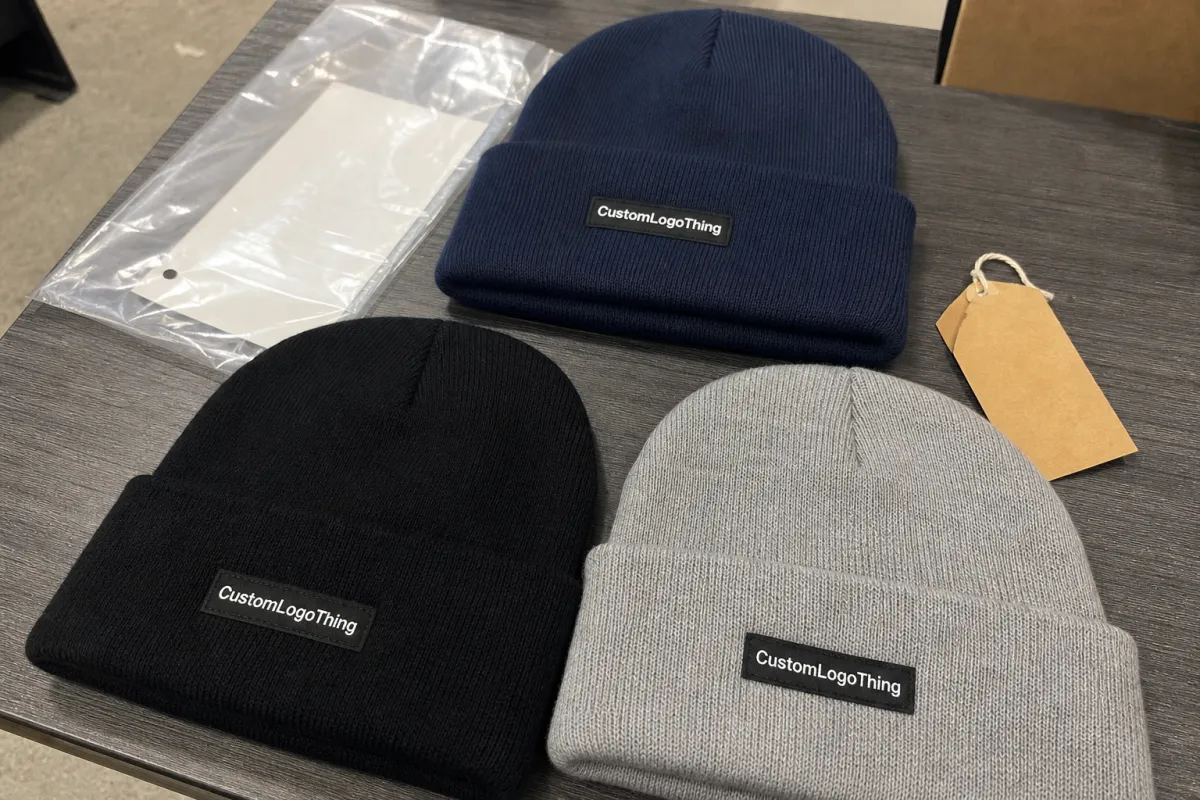
Start with the job the beanie has to do. A plush toy bundle, a retail merch drop, a school fundraiser, and a trade show giveaway do not need the same build. The right decisions depend on whether the beanie is meant to create perceived value, move quickly at a low unit cost, sit cleanly on a shelf, or match a larger toy line with strict brand controls.
Common programs include toy brand launch merchandise, plush add-ons, holiday gift sets, game studio merch, school fundraising kits, fan rewards, retail loyalty items, and event giveaways. Each has a different tolerance for decoration detail, packaging labor, price, and freight. A giveaway might need 500 to 1,500 pieces with a stock acrylic beanie and a fast patch approval. A retail holiday program may need 3,000 to 20,000 units with hangtags, barcode labels, inner carton sorting, and cleaner SKU separation by size or color.
Patch beanies usually give a toy logo more perceived value than direct embroidery, especially when the artwork includes a mascot, small eyes, tiny accessories, bright color blocks, or an unusual character silhouette. Direct embroidery can be attractive on simple marks, but it can also distort cute artwork quickly. A bear face with delicate cheeks and small pupils may look charming on screen and oddly melted in thread.
Bulk planning matters because each choice affects cost and lead time. Quantity controls price breaks. Patch material affects setup and sampling. Beanie knit affects how flat the patch sits. Size mix affects inventory and packing. Packaging affects labor and carton volume. Approval speed decides whether production moves or sits idle while one more person reviews a proof.
Buying rule: decide whether the beanie is a giveaway, a retail product, or a bundle component before asking for the cheapest quote. “Cheap” means something different in each lane.
For toy brands, the goal is not simply getting custom logo beanies made. The goal is a beanie that feels intentional in a parent’s hand, supports the character artwork instead of fighting it, photographs well with the toy line, and arrives in time for the launch, event, or retail ship window.
Best Patch Styles for Toy Logos, Characters, and Mascots
Patch choice can make or damage the logo. Toy artwork often has rounded characters, small pupils, thin outlines, color shading, tiny teeth, product names, and licensing text that looked harmless on a design screen. Textiles are less forgiving.
Woven patches are usually the safest choice for detailed toy logos, small lettering, mascot faces, and color-heavy artwork. They use thinner threads than standard embroidery, so they can hold sharper lines and tighter details. For many toy logo patch Beanies Bulk Order Planning projects, woven patches are the first option to review when facial features or small marks fall under about 0.25 inches wide.
Embroidered patches work better for bold logos, simple icons, chunky lettering, and toy brands that want a classic textured look. They add height and softness. That can be ideal for a rocket, bear paw, star, badge shape, or block-letter brand mark. It is less reliable for a character with eyelashes, freckles, tiny shoes, and a backpack.
PVC patches, often called rubber patches, suit modern toy lines, collectible brands, outdoor play products, and designs that need strong color with raised dimension. PVC is durable, easy to wipe clean, and visually strong on a cuffed beanie. It may involve mold fees, and very fine details often need to be simplified before production. For collectible-style merch, though, PVC can look more premium than its unit cost suggests.
Leatherette patches and felt patches are more selective options. Leatherette works for premium winter gift sets, boutique plush brands, or neutral campaigns where a simple logo can be debossed or printed cleanly. Felt gives a softer handmade look and can pair nicely with cozy plush programs, but it is not the best answer for tiny text or complex multi-color character art.
| Patch Type | Best For | Typical Tradeoff | Common Bulk Use |
|---|---|---|---|
| Woven patch | Detailed mascots, small type, color artwork | Less raised texture than embroidery | Retail toy merch and character beanies |
| Embroidered patch | Bold marks, simple icons, chunky logos | Fine details can fill in | Giveaways, school kits, heritage brands |
| PVC patch | Bright logos, modern collectibles, outdoor toys | Mold fees and shape limitations | Premium merch drops and fan gear |
| Leatherette patch | Minimal marks, premium gift sets | Limited color expression | Winter bundles and boutique plush lines |
| Printed fabric patch | Gradients, illustrations, full-color art | May feel flatter and less dimensional | Artwork-heavy campaigns |
Placement changes the read of the product. Front cuff center is the standard because it is easy to see and easy to photograph. Side cuff placement feels more retail and less promotional. Offset patches can look sharp if the beanie is styled consistently. Double-patch layouts work for collaborations, age ranges, or toy line sub-brands, but they add cost and more chances for placement variation. A printed hangtag is often a better place for safety notes, a collection name, a barcode, or small legal language than the patch itself.
Gradients, thin outlines, tiny marks, and too many colors can create production problems or push up cost. Clean up the artwork early. Waiting until the sample arrives to discover that the mascot’s eyes have blurred together is a slow and avoidable way to learn about thread limitations.
Beanie Specifications That Change the Final Result
The beanie blank is not just a surface for decoration. It affects fit, perceived value, patch stability, color contrast, and how the finished piece looks in product photos. The blank and the patch should be chosen together, not treated as separate parts pulled from two unrelated catalogs.
Cuffed acrylic beanies are the bulk workhorse. They are durable, widely available, cost controlled, and practical for mixed audiences. Rib knit beanies add texture and stretch, which can look richer but may require closer attention to patch attachment. Pom beanies feel playful and winter-gift friendly, though the pom increases carton volume and can complicate packing. Slouch beanies feel more fashion-forward, but they may not suit younger children as well. Kids-size beanies fit better for child-focused programs, yet they require better SKU control.
Material choice should match both budget and use. Acrylic is common because it balances cost, durability, and availability. Cotton blends feel softer but may not recover shape the same way after heavy wear. Recycled polyester can support sustainability messaging if the brand is already making credible lower-impact choices in packaging or product materials. Wool blends feel premium for winter retail, but they cost more and may raise care-label expectations.
Adult one-size beanies are simpler when the order goes to parents, teens, staff, and older kids. Youth or kids sizing looks better for child-focused bundles, but it forces more planning. A mixed order may need ratios such as 70% adult and 30% youth, or separate SKUs by age band. Guessing can leave a brand with cartons of the wrong size after the event or launch window has passed.
Knit gauge and cuff height are not small decorative details. A loose, uneven knit can make a patch buckle. A short cuff can squeeze the patch too close to the fold. For most logo patches, a cuff height around 2.75 to 3.5 inches gives enough room for clean front placement. Larger PVC patches may need more space, especially if the patch is shaped around a character head or wide badge.
Color planning needs realism. Yarn colors are not Pantone paint. Close matches are normal; exact matches may require custom dyeing, higher minimums, longer lead times, or all three. If the brand color is a very specific teal, orange, lime, or neon shade, ask early whether a stock yarn is close enough. Also check contrast. A dark patch on navy knit may feel premium in a mockup and nearly invisible under retail lighting.
Sewn-on patches are usually safest for thick knits because stitching holds through stretch, handling, and repeated wear. Heat press can work for certain patch materials and smoother surfaces, but ribbed or heavy knits are less forgiving. For toy-adjacent orders, check for secure stitching, no sharp corners, no loose parts, and appropriate labeling if the beanie is bundled with children’s products. Compliance depends on product use, sales market, and age claim, so buyers should confirm legal labeling requirements with their own compliance team. It is not exciting work, but it is far cheaper than correcting cartons after production.
Pricing, MOQ, and Unit Cost Drivers for Bulk Beanies
Pricing is not one hidden number. Unit cost depends on beanie style, patch type, patch size, artwork complexity, color count, order quantity, packaging, shipping method, and whether the beanie is stock or fully custom. A useful quote needs those details before it can be accurate.
For planning purposes, stock beanies with sewn-on woven or embroidered patches usually have lower minimum order quantities than fully custom knit beanies. A stock-color beanie order may make sense around a few hundred pieces, depending on patch setup and supplier program. Custom yarn colors, private labels, special trims, multiple sizes, or molded PVC patches may push the MOQ to 500, 1,000, or several thousand pieces based on the build.
Price ranges move with market conditions, material choice, labor, and freight, but broad buckets help. A basic stock acrylic cuff beanie with a simple woven or embroidered patch can often fall in the low-to-mid single digits per unit at stronger quantities. Premium knits, PVC patches, retail hangtags, barcode labels, individual packing, or complex size sorting can move that number higher. Air freight can also change the landed cost quickly because beanies are soft but not weightless, and cartons with pom styles or retail packaging take up space.
Common cost drivers include large patches, PVC mold fees, many thread colors, custom dyed yarn, multiple beanie sizes, individual polybags, printed hangtags, barcode labels, rush production, split shipping, and retail carton requirements. Setup costs may include woven patch setup, embroidery digitizing, PVC mold fees, sample charges, and private label setup. These charges are not automatically red flags; they often represent tooling, artwork conversion, sampling, and labor that must happen before the bulk run can be made correctly.
| Decision | Lower-Cost Route | Higher-Cost Route | Buyer Advice |
|---|---|---|---|
| Beanie base | Stock acrylic cuff beanie | Custom yarn, custom knit, wool blend | Use stock if timing or budget is tight |
| Patch decoration | Standard woven patch | Molded PVC or multi-layer specialty patch | Match patch style to artwork detail first |
| Packaging | Bulk pack or standard polybag | Retail hangtag, barcode, SKU sorting | Plan retail packaging before quoting |
| Shipping | Ocean freight with planning time | Express air for urgent delivery | Do not choose ocean freight for an event next week |
Quantity affects price breaks because setup costs spread across more units and production runs more efficiently. Still, over-ordering just to chase a lower unit cost can create dead inventory. If the need is 1,200 pieces, ordering 3,000 only makes sense when there is a real second use, such as retail replenishment, holiday kits, school programs, or warehouse capacity already planned.
For accurate toy logo patch Beanies Bulk Order Planning, send the target quantity, delivery deadline, artwork file, desired patch size, beanie color, size needs, packaging requirements, destination ZIP or port, and retail compliance notes. Asking for good-better-best options is often smarter than chasing one vague price. Three builds make the tradeoffs visible: lower cost, better retail finish, or faster delivery.
If your team already buys promotional merchandise in volume, Custom Logo Things can align the beanie order with broader Wholesale Programs, including repeat runs, seasonal replenishment, and multi-item campaigns.
Process and Timeline From Artwork to Finished Beanies
The production path is straightforward when the buyer is organized: inquiry, artwork review, quote, material selection, digital proof, sample or pre-production photo, bulk approval, production, quality check, packing, and shipping. Skipping steps usually costs time, money, or both.
Fast stock beanie orders can move quickly, especially with standard woven or embroidered patches and clear artwork. Custom yarn colors, special patch materials, retail packaging, and large holiday orders need more lead time. A practical planning window may be 2 to 4 weeks for simpler stock-based projects after proof approval, and 5 to 10 or more weeks for custom builds or freight-sensitive bulk orders. Capacity, shipping lane, sample requirements, and approval speed all matter.
The biggest timeline problems are rarely mysterious. Late artwork. Unclear approvals. Changing patch size after sampling. Adding colors midstream. Waiting on licensing review. Choosing ocean freight for an event happening too soon. Physics does not negotiate.
Artwork proofing deserves careful attention. Check spelling, logo shape, character expression, patch size, thread or PVC colors, placement, and contrast against the beanie color. If the toy logo has a face, inspect the eyes, mouth, and outline at actual patch size, not zoomed to 300% on a monitor. Many mascot problems only show up when the artwork is reduced to real decoration scale.
Sample options depend on budget and timing. Digital mockups are fast and useful for layout. Patch samples help confirm how the logo translates before sewing. Full pre-production samples are best for higher-value or retail orders because they show the actual beanie, patch, placement, and hand feel. Production photos can help when time is tight, but they are not a perfect substitute for physical approval.
Shipping choices should be part of the quote, not a surprise after production. Express air works for urgent orders but costs more. Standard air balances speed and price. Ocean freight suits larger orders with enough planning time. Split shipping can be useful when 300 pieces are needed for a launch event and the remaining 2,700 can arrive later by a lower-cost method.
One decision-maker should own final signoff. Committees have a way of turning a simple patch approval into a calendar problem.
Quality Checks That Prevent Ugly Retail Surprises
Quality control is not about pretending textiles behave like machined metal parts. It is about catching obvious issues before cartons ship. For toy Logo Patch Beanies Bulk Order planning, the most useful checks focus on logo accuracy, placement, stitching, sizing, color consistency, and packing accuracy.
Before shipment, verify patch size, logo accuracy, stitching security, beanie color, knit consistency, cuff height, label placement, packaging count, and carton markings. If the order has retail SKUs, confirm barcode visibility, hangtag orientation, inner carton organization, and separation by size or color. A beautiful beanie packed under the wrong SKU still creates a warehouse problem.
Common defects include crooked patches, loose stitching, puckering around the patch edge, uneven cuffs, mismatched yarn lots, distorted mascot faces, weak contrast, and patches placed too high or too low. Some of these sound small until a retailer photographs the product or a parent posts a close-up. Then the small issue becomes the only thing people notice.
Artwork translation is a real risk. A digital logo can look perfect on screen and mediocre on fabric if the linework is too fine or the colors are too close. Character-heavy toy logos deserve pre-production approval because eyes, mouths, cheeks, outlines, and tiny accessories carry the personality of the brand. If the mascot looks annoyed instead of cheerful, the patch did not mostly work. It missed the point.
Acceptable tolerances should be understood before production. Slight variation in patch placement, yarn shade, and knit size is normal in textile production. Large inconsistency is not. A small placement variance on sewn patches may be expected; patches wandering visibly across the cuff from piece to piece should be flagged.
For broader packaging expectations, standards bodies can help buyers frame transit and handling risks. The International Safe Transit Association publishes test procedures for packaged products, and FSC certification may matter if retail hangtags, paper bands, or cartons need responsibly sourced paper claims. Not every beanie order needs formal testing or certified materials, but retail programs should ask early.
Custom Logo Things is practical, not magical. The work is to catch problems early, explain tradeoffs clearly, and produce beanies that look intentional in real hands, not just in a polished mockup.
Next Steps Before You Request a Beanie Quote
Before asking for pricing, make six decisions. Choose the beanie style. Pick one or two patch types. Estimate the quantity. Confirm the target delivery date. Gather artwork files. Note packaging needs. That short list can save days of back-and-forth.
Vector artwork is best: AI, EPS, or SVG. A clean high-resolution PDF or PNG may work if the logo is simple and large enough. A tiny screenshot from a sales deck is not production artwork. If the logo includes a licensed character, get approval channels lined up before proofing begins, because licensing review can add several business days or more.
Bring a target budget range. Not because anyone needs to play pricing games, but because it prevents wasted quoting. If the real budget points to stock acrylic beanies with woven patches, say that. If the project needs premium retail merch with custom labels, hangtags, and molded PVC patches, say that too. A supplier can steer materials faster when the budget is not treated like a secret.
Ask for comparison options: stock beanie versus custom color, woven patch versus PVC patch, standard polybag versus retail hangtag, and air freight versus ocean freight. These comparisons turn the quote into a buying tool instead of a single number with hidden compromises.
- Logo file: vector preferred, clean PDF or PNG if needed
- Patch size: width and height in inches, or target visual size
- Beanie color: stock color, close brand match, or custom yarn request
- Quantity: total units plus size or color split if needed
- Deadline: in-hands date, not just event date
- Packaging: bulk pack, polybag, hangtag, barcode, or retail carton rules
Custom Logo Things can also answer common order questions through the FAQ, especially around artwork, bulk ordering, and production steps. For more complex toy brand programs, include whether the order is for adults, kids, or mixed sizing, and flag any labeling or retail compliance requirements before production starts.
For toy Logo Patch Beanies bulk order planning, the smartest move is simple: lock the use case, artwork, quantity, and deadline first, then quote the decoration options that fit the job instead of forcing the project around a guess.
FAQ
What is the best patch type for toy logo beanies in a bulk order?
Woven patches are usually best for detailed toy logos, mascot faces, small lettering, and colorful character art because they hold fine lines better than standard embroidery. Embroidered patches work better for bold, simple logos with fewer tiny details. PVC patches are a strong option for modern toy brands that want bright color, raised texture, and a more collectible feel.
What MOQ should I expect for custom toy logo patch beanies?
MOQ depends on whether you use stock beanies or fully custom beanies. Stock beanies with sewn-on custom patches usually allow lower order quantities than custom knit colors or private label beanies. Custom yarn colors, multiple sizes, special packaging, and molded PVC patches can increase MOQ, so the build needs to be defined before anyone promises a number.
How much do bulk toy logo patch beanies cost?
Unit cost depends on beanie style, patch type, patch size, artwork complexity, quantity, packaging, and shipping method. Larger quantities usually reduce unit cost because setup and production labor are spread across more pieces. The fastest way to get accurate pricing is to send quantity, artwork, delivery deadline, beanie color, patch size, and destination.
How long does production take for logo patch beanies in bulk?
Lead time depends on stock availability, sample requirements, patch type, order size, approval speed, and shipping method. Stock beanie orders with standard woven or embroidered patches are usually faster than custom dyed yarn or molded PVC patch orders. Late artwork approvals and last-minute design changes are the most common causes of delays.
Can Custom Logo Things help plan packaging for toy brand beanies?
Yes. Packaging options can include individual polybags, printed hangtags, barcode labels, retail-ready packing, carton labels, and bundled kit preparation. Packaging should be planned before quoting because it affects unit cost, packing labor, carton size, and shipping cost. Toy brands should also flag any retail, age-labeling, or compliance requirements before production starts.


