Skincare Woven Label Beanies Bulk Order Planning Tips
Skincare Woven Label Beanies Bulk Order Planning Starts at the Vanity, Not the Warehouse
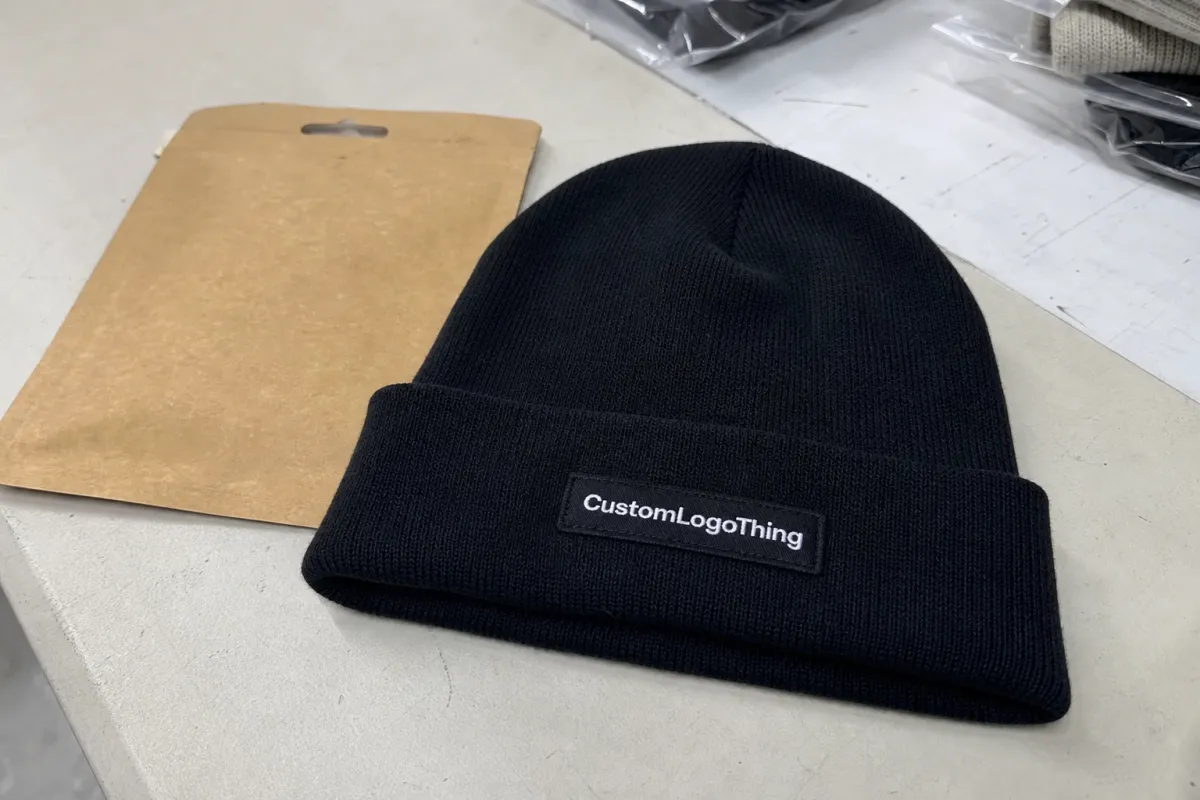
A beanie may be worn outdoors, but for a beauty brand it often begins beside a serum carton, a moisturizer jar, a folded insert, and a tissue-wrapped launch kit. That is why skincare woven label Beanies Bulk Order Planning should start with the customer moment, not only with a warehouse count.
For a packaging buyer, the beanie is not simply winter merchandise. It may be part of an influencer mailer, a spa counter gift, a subscription box, a loyalty reward, or a retail bundle packed with jars, tubes, cartons, and printed cards. If the yarn feels scratchy, the label looks bulky, or the color misses the brand palette by two shades, the whole kit feels less considered.
Small details carry more weight in beauty than many teams expect. A skincare buyer usually wants a soft handfeel, a calm surface texture, and a label that can hold fine logo lines without turning into a generic giveaway patch. Woven labels are useful here because the design is built with threads on a loom, not stitched directly into the knit. They can support delicate typography, small icons, ingredient-inspired marks, and clean monochrome logos with more control than many direct embroidery applications.
Controlled bulk planning also protects cost and consistency. Ordering 500 pieces in a rush, then adding 700 more three weeks later, can create shade variation, different label batches, mismatched carton counts, and extra freight. Planning 1,200 pieces at once often gives cleaner color control, better unit economics, and simpler kitting for a fulfillment partner.
Practical rule: if the beanie will sit next to premium skincare packaging, plan it like a packaging component, not a leftover promo item.
Custom Logo Things helps turn the creative idea into production-ready specifications: beanie style, yarn or fabric blend, label construction, stitch placement, folding, bagging, carton labeling, and delivery timing. That practical work is the backbone of beauty merchandise planning, especially when the campaign has a fixed launch date and every component has to arrive before the pack-out window opens.
Beanie Styles and Woven Label Details That Fit Beauty Merch
The best beanie style depends on the campaign, the perceived value of the skincare line, and how the finished piece will be presented. A cuffed acrylic beanie is often the most cost-efficient choice for broad promotional use because it has predictable sizing, steady stock availability, and enough cuff height for a woven label. A rib-knit beanie tends to look cleaner and more retail-ready. Cotton-rich blends feel softer and more breathable, although they may cost more and can stretch differently than acrylic. Heavier knits make sense for premium winter bundles, outdoor activations, and gift-with-purchase programs where the beanie is expected to feel substantial.
Woven Label, Embroidered Patch, or Direct Embroidery
A woven label is made on a loom using fine threads, then cut and finished before being stitched to the beanie. It can hold small type better than many embroidery applications, especially if the logo has thin strokes or compact wording. An embroidered patch has a thicker raised surface and can be strong for bold marks, but it may feel more rugged than spa-like. Direct embroidery goes straight into the beanie, which can work for short, bold logos, yet fine beauty branding can lose crispness on ribbed knit surfaces.
Common woven label formats include flat labels, center-fold labels, end-fold labels, and merrowed-edge patches. For cuffed beanies, a flat label stitched on all sides is common and secure. A center-fold label can create a small garment-tag look at the cuff edge. End-fold labels give a clean edge without exposed cut threads. Merrowed-edge patches add a border and more structure, but they may feel too heavy for restrained skincare branding unless the overall campaign has a sport, ski, or outdoor direction.
Placement and Proportion
Front-center cuff placement is the standard choice because it photographs clearly and is easy to align during production. Side cuff placement feels quieter and more boutique, which suits minimalist skincare brands, spa retailers, and clean clinical identities. Label size should be planned in inches or millimeters, not guessed from a screen mockup. A 2.0-inch wide label can look balanced on a slim cuff, while a 2.75-inch patch may be better on a thick rib-knit style.
The beanie and label should always be reviewed together. A beautiful woven label can look wrong if the yarn color fights the thread colors, the rib spacing distorts the edge, or the cuff height leaves the label feeling cramped. For brands comparing options, Custom Logo Things can pair beanie samples with Custom Labels & Tags so the final piece feels intentional from the first touch.
Specifications to Confirm Before You Request a Quote
A tight quote starts with clear specifications. You do not need every answer before asking for help, but the more useful details you share, the fewer surprises you will see later. For skincare woven label Beanies Bulk Order Planning, gather the core specs before chasing a per-piece number.
- Beanie style: cuffed, rib-knit, slouch, fisherman, cotton-rich, acrylic, recycled blend, or heavyweight knit.
- Material direction: 100% acrylic, cotton/acrylic blend, wool blend, recycled polyester blend, or another requested fiber.
- Color target: exact brand shade, Pantone reference if available, or approved neutral range.
- Label details: size, fold type, thread colors, edge finish, and stitch position.
- Fit preference: snug retail fit, relaxed slouch, shallow cuff, tall cuff, or thick cold-weather profile.
- Pack-out: individual polybags, belly bands, hang tags, carton labels, master carton limits, or direct shipment to a fulfillment partner.
Vector artwork is best for woven labels. AI, EPS, or clean PDF files usually give the production team sharper paths to work from. A high-resolution PNG may help with early quoting, but the final label art often needs cleanup before weaving. Gradients, tiny ingredient claims, hairline rules, and very small registered marks can be difficult to reproduce in thread.
Thread color planning deserves care. Four to six colors are common for many woven labels, but more colors can raise cost and sometimes reduce crispness in small artwork. A black logo on cream thread may look beautiful on a screen, then feel too harsh on a warm oat-colored knit. Mineral gray, spa green, muted blush, clay, ivory, and clean black-and-white palettes all behave differently on textured yarn than they do on printed cartons or coated labels.
Packaging needs should be documented early. If each beanie must be folded with the label facing up inside a clear bag, that instruction belongs in the quote. If cartons need SKU labels, lot references, or count verification for a co-packer, say so before production begins. Organizations that care about paper sourcing can also review guidance from the Forest Stewardship Council when planning hang tags, belly bands, or printed inserts.
Pricing, MOQ, and Unit Cost Drivers for Bulk Beanies
Pricing for custom beanies is built from several layers: the base beanie, order quantity, yarn content, knit complexity, label type, number of woven label colors, stitch application, packaging, and freight route. A one-line request for “500 beanies with logo” rarely produces the most accurate answer because it leaves out the decisions that influence both cost and production risk.
For stock cuffed beanies with a Custom Woven Label, lower minimums are often possible because the beanie body already exists and the custom work is concentrated in the label and sewing. Fully custom knit colors, special yarn blends, private-label construction, or uncommon sizing usually require higher minimums because yarn procurement, machine setup, dye matching, and production scheduling all carry fixed costs.
Unit cost usually improves as quantity rises. Setup, artwork handling, label weaving, sewing coordination, packing instructions, and quality review are spread across more pieces. The part many buyers underestimate is the full landed project cost: the difference between 300 and 1,000 units may be less dramatic than expected once sampling, freight, and handling are included.
| Option | Typical Use | Common MOQ Direction | Estimated Cost Factors |
|---|---|---|---|
| Stock cuffed acrylic beanie with woven label | Launch gifts, spa events, influencer mailers | More flexible, often suited to smaller bulk runs | Base beanie, label size, 2-6 thread colors, sewing, bagging, freight |
| Rib-knit retail-style beanie with custom label | Premium gift-with-purchase or retail add-on | Moderate minimums depending on stock color | Knit quality, cuff height, label finish, folding method, hang tag |
| Custom color knit with woven label | Brand-matched seasonal bundle | Higher minimums due to yarn and production setup | Color matching, yarn availability, sample approval, longer lead time |
| Heavyweight or specialty blend beanie | Premium winter kit or cold-weather retail campaign | Varies by material and construction | Yarn blend, knit density, label compatibility, carton weight, freight |
Real project pricing can vary widely. Simple stock programs may fall into a broad promotional range, while a custom color knit with premium packaging can climb quickly once sampling, special handling, and freight are included. Quantity, artwork complexity, country of production, delivery window, and packing instructions all matter. A standard stock beanie with a modest woven label will not price like a private-label knit in a controlled brand color with hang tags, individual bags, and split shipments.
Hidden cost variables include pre-production samples, rush fees, individual bagging, hang tags, carton relabeling, split shipments, color-match revisions, and rework caused by late art changes. If a launch kit is going to an assembly warehouse, the quote should include packing instructions and carton labeling from the start. Custom Logo Things can compare stock beanie plus woven label against a custom color knit through its Wholesale Programs, helping buyers balance cost, finish, and delivery timing without stripping out details that matter later.
Process and Timeline From Artwork to Finished Bulk Order
The production path is fairly straightforward, but each step needs clean approval. A typical order moves through inquiry, specification review, artwork check, quote, digital mockup, sample or pre-production approval if needed, bulk production, quality review, packing, and shipment. For skincare woven label Beanies Bulk Order Planning, the biggest timeline risks are usually late artwork, unclear packaging instructions, and sample revisions that happen too close to the launch date.
Timeline depends on complexity and quantity. Stock beanies with standard woven labels can often move faster than custom knit colors or specialty blends. A realistic schedule may include several business days for artwork review and quoting, additional time for digital proof approval, then time for label production, sewing, packing, and transit. If a physical pre-production sample is requested, add time for making the sample, shipping it, reviewing it, and approving any revisions.
Woven label art cannot be judged the same way as a flat screen graphic. Tiny text may need to be enlarged. Thin strokes may need more weight. Gradients may need to become solid thread colors. A mark that looks elegant on a 4-inch carton panel may become unreadable on a 1.75-inch woven label unless it is simplified. Better to solve that before the loom is set up.
For skincare launches, plan backward from the packing date, not the public release date. If a fulfillment team needs 10 business days to kit jars, cartons, inserts, tissue, mailers, and beanies, the beanies need to arrive before that window begins. Holiday gift sets, spa activations, subscription boxes, and influencer mailers all face the same pressure because one late component can hold the whole pack-out.
Transit and handling standards matter too. For larger shipments, carton strength, count accuracy, and distribution handling should be treated seriously. Buyers who ship through parcel and warehouse networks may find useful testing references through ISTA, especially when cartons must survive multiple handling points before reaching a fulfillment center or event location.
Quality Checks That Keep the Beanie On-Brand
Quality control for beauty merchandise is not only about whether the item is usable. It is about whether the beanie looks worthy of sitting next to premium skincare packaging. The checks are practical: consistent knit color, even cuff height, clean label stitching, centered placement, readable woven detail, smooth label edges, and comfortable fit.
Woven labels should be inspected for thread floats, blurred edges, weak contrast, misshapen letters, and registration issues between colors. Digital proofs can hide these problems because screens show perfect edges. Thread has thickness. Yarn has texture. Rib knit moves. A label that is too small for the artwork may still be technically produced, but the brand mark may not read well in product photography, retail displays, or unboxing content.
Packaging checks are just as useful. Are all beanies folded the same way? Does the label face up through the clear bag? Are hang tags attached in the same location? Can a fulfillment center verify counts quickly without opening every inner pack? A carton packed 50 pieces per case may work for an event team, while a co-packer might prefer 100 pieces per master carton with inner bundles of 25 for faster line setup.
Brand consistency is the real target. If the skincare line uses soft-touch cartons, FSC paper inserts, and calm color blocking, the beanie should not arrive with a huge patch that feels like sports merchandise unless that contrast is intentional. Label scale, yarn color, fold presentation, and bag clarity all shape how the finished item feels in photos and customer shipments.
Prevention is cheaper than correction. Approve a realistic mockup. Simplify tiny artwork before weaving. Confirm label dimensions in inches or millimeters. Request pack-out details in writing. Ask how the beanie will be folded. If color sensitivity is high, discuss sample options early. ASTM textile test methods, ISTA distribution tests, and FSC sourcing references do not all apply to every beanie order, but the discipline is the same: define the requirement before production, then check against it.
Next Steps Before You Place a Bulk Beanie Order
Before placing a bulk beanie order, define the campaign in plain terms. Is the beanie a gift, a retail add-on, an employee item, a spa event piece, or a launch kit component? That answer drives the style, budget, packaging, and acceptable timeline.
- Choose the use case and target delivery date.
- Estimate the quantity, plus a small overage if the beanies are part of kitting or event distribution.
- Gather logo files, preferably vector artwork.
- Select the preferred beanie style, fit, and color direction.
- Decide whether the label should sit front-center, on the side cuff, or at the cuff edge.
- Share packaging needs such as individual bags, hang tags, belly bands, carton labels, or shipment to a co-packer.
Define the feel before locking the spec. Soft and spa-like calls for a different beanie than bold and streetwear-inspired. Clean and clinical may point toward black, white, warm gray, or a very controlled neutral. Warm and outdoorsy may support heavier knit textures, deeper mineral shades, and a slightly larger label. Minimalist and premium often benefits from a smaller woven label with strong contrast and quiet placement.
Prepare two or three acceptable beanie colors. Shade availability can change, and custom color knitting may raise the MOQ or extend the lead time. If the preferred muted blush is not available in the right construction, having ivory, oat, or mineral gray as approved alternates can keep the quote moving.
Ask for a quote that reflects the full project, not only the lowest base price. Sampling, label complexity, folding, bagging, freight, carton labels, and split shipments can all affect the delivered cost. If questions remain, the Custom Logo Things FAQ can help frame the basics before a detailed quote is built.
For a skincare beanie program, send your logo, quantity range, preferred beanie style, delivery window, and any kitting requirements so Custom Logo Things can recommend a production path that fits the brand, budget, and launch schedule without leaving the important details to guesswork.
FAQ
What should I prepare for skincare woven label beanies bulk order planning?
Prepare your logo file, target quantity, preferred beanie color, label size or placement idea, delivery date, packaging needs, and the planned use: retail, gifting, events, spa counters, loyalty rewards, or influencer mailers. If you do not know the exact specs yet, share the brand look, target budget range, and delivery window so the quote can compare practical options.
What MOQ should skincare brands expect for custom woven label beanies?
MOQ depends on whether you choose a stock beanie with a custom woven label or a more customized knit color and construction. Stock beanie programs usually offer more flexible minimums, while custom yarn colors, special blends, or fully custom knitting often require higher quantities because setup, material sourcing, and production scheduling are more involved.
How long does a bulk order of woven label beanies usually take?
The timeline depends on artwork approval, sample requirements, order quantity, label production, beanie availability, packing needs, and shipping method. Plan backward from the date your fulfillment team, event crew, or kit assembler needs the beanies in hand, not only from the public launch date.
Are woven labels better than embroidery for skincare beanies?
Woven labels are often better for small logo text, fine lines, and a polished garment-label look. Embroidery can work well for bold marks, but it may feel heavier and can lose detail on very small typography, thin strokes, or delicate beauty branding.
What affects the unit cost of skincare branded beanies in bulk?
Major cost drivers include beanie style, yarn blend, quantity, label size, number of woven colors, stitching, sampling, packaging, freight, and rush requirements. The most accurate quote comes from sharing the full project scope, including pack-out and delivery needs, rather than asking only for a base beanie price.