When a booth team needs a stack of branded handouts by Friday, trade show Die Cut Stickers unit cost turns into a very practical question, because the lowest line item on a quote does not always fit the show floor, the audience mix, or the clock ticking toward load-in. A sticker that looks simple on a screen can still carry artwork cleanup, cut-path setup, proofing, material selection, and packing decisions that move the final number in ways many buyers only notice after the quote lands. That is the part people tend to miss at first glance, and it matters a lot more than it seems.
For a packaging buyer, that is where the smartest choices usually happen. The goal is not just to chase the lowest per-piece number; it is to find the quantity, stock, adhesive, and shape that keep trade show Die Cut Stickers unit cost in a workable range while still giving the handout enough presence to be picked up, carried, and remembered. In other words, the cheapest option on paper is not automatically the best deal.
That balance matters on the trade show floor because a sticker is often judged in seconds. If it feels flimsy, curls at the corners, or blends into every other giveaway in the bowl on the counter, it loses the chance to represent the brand well. If the outline is crisp, the print holds color, and the finish survives a day inside a tote bag, it earns its keep. The right trade show Die Cut Stickers Unit Cost is the one that supports that result without paying for specs that do not pull their weight.
Trade Show Die Cut Stickers Unit Cost: Why Small Runs Cost More
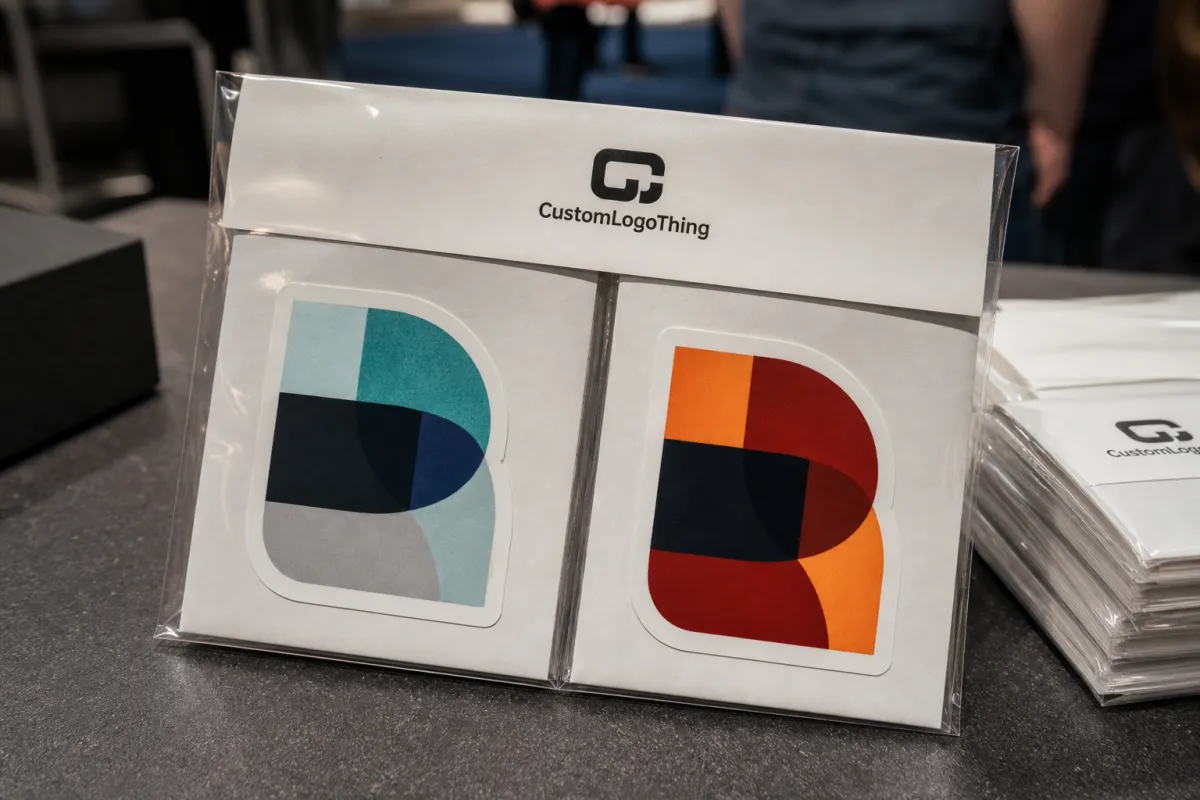
A booth team may only need 250 or 500 pieces for one expo, and that is exactly where trade show Die Cut Stickers unit cost usually climbs. The reason is simple enough: the press does not care that the order is small. Artwork review, file cleanup, proof creation, cut-path preparation, machine setup, and quality checks still have to happen, and those costs are spread across fewer stickers.
That is why a run of 250 pieces can cost more per sticker than a run of 2,500 pieces, even when the artwork stays the same. The production team still has to register the print, inspect the dieline, confirm the adhesive behavior, and verify the cut depth. Those are real labor steps, and on a short run they become a larger share of the trade show die cut stickers unit cost. If the order also needs a hard proof or a rush slot, the price rises again in a way that feels annoying but is usually pretty logical once you see the workflow.
Die cut shapes add another layer. A plain square or circle is usually efficient, while a custom contour with sharp corners, deep curves, or small internal cutouts may require slower cutting and more careful inspection. That added handling does not always dominate the quote, yet it does influence the final trade show die cut stickers unit cost, especially when the order is short and the shape is intricate. A simple outline nests better, weeds faster, and wastes less material; a fussy outline can do the opposite.
A clean quote is more than a number. It is a snapshot of how much setup, cutting, proofing, and packing the job really needs.
There is also a trade show mistake that shows up often: buyers look only at the sticker face value and ignore the work around it. A piece can be two inches wide and still need a custom die line, lamination, a white ink layer on clear stock, or special packing so the stickers arrive flat. Once those details enter the spec, trade show die cut stickers unit cost starts to reflect the actual production path instead of just the printed surface.
In practice, the answer is usually not to strip away every feature. It is to match the spec to the use. A sampler insert for a VIP gift may justify a thicker stock and a more polished finish. A mass handout at a busy booth may be better served by a simpler paper face or a standard BOPP build. That is how buyers keep trade show die cut stickers unit cost under control without making the piece feel thin or forgettable. No one wants a giveaway that looks bargain-bin cheap, especially after spending money to get people into the booth.
The best buyers I work with tend to treat the first quote as a planning tool rather than a final verdict. If the price looks high, ask whether the increase is coming from quantity, contour complexity, or a finish that does not actually help at the booth. In many cases, a small shift in run size or shape efficiency can improve trade show die cut stickers unit cost faster than changing the print method ever will.
What Trade Show Die Cut Stickers Are Built to Do on the Show Floor
Trade show die cut stickers are custom-shaped stickers trimmed to follow the outline of the artwork rather than a standard rectangle. They show up in giveaway bags, product inserts, notebook swag, box toppers, booth counter handouts, and mailers that need a more deliberate look than a plain label. The shape is part of the selling power, which is why trade show die cut stickers unit cost should always be measured against the impression the piece is meant to create.
On a crowded show floor, shape matters. A sticker cut to the contour of a logo, mascot, product silhouette, or graphic symbol stands out in a pile because it looks intentional. That does more than improve appearance; it helps with selection. If the goal is to get the handout pocketed instead of left on the table, the contour can be a real advantage, even if it nudges trade show die cut stickers unit cost upward a bit.
Different trade show uses call for different builds. A laptop sticker that may stay in circulation for months needs a stronger adhesive and a more durable face. A badge-pack insert might only need moderate tack and a lighter print construction. A VIP gift insert could justify a soft-touch or gloss-laminated finish because the piece is meant to feel premium when someone opens the package. Those decisions change both performance and trade show die cut stickers unit cost.
Here is the practical way to think about the product:
- Giveaway use: easy to hand out, simple to store, and shaped to be grabbed quickly.
- Product seal use: should bond cleanly to packaging without lifting at the corners.
- Insert use: often more about visual impact than heavy-duty durability.
- Mailer use: benefits from better scuff resistance and flatter packing.
The same item can be ordered as a short-run event piece or as a larger campaign asset, but the intended use should drive the material and adhesive. A clear BOPP sticker on a glossy folder behaves very differently from a paper face on a kraft envelope. If the use case is not clear, the quote may be technically correct and still not give you the best trade show die cut stickers unit cost for the job.
If your event kit includes related labels, inserts, or branded tags, our Custom Labels & Tags page is a useful place to compare material options before you commit to a spec. That comparison often helps buyers see whether the trade show sticker should be simple, durable, decorative, or somewhere in between.
There is also a brand-control angle. Die cut stickers are often passed around by people who may not know the company well, so the piece has to carry the identity on its own. A sharp outline, crisp print, and appropriate finish can do a lot of work there. When the sticker does that well, trade show die cut stickers unit cost starts to look less like an expense and more like a controlled piece of event marketing.
Specifications That Shape Size, Finish, and Adhesion
Before anyone can quote trade show die cut stickers unit cost with confidence, the core specifications need to be locked in. The biggest ones are finished size, stock type, adhesive strength, finish, and die line complexity. If any of those are vague, the quote will either come back padded with risk or change later after the artwork is reviewed. That is why early specification work saves so much time on the back end.
Finished size is not just a design detail. A 2-inch sticker and a 4-inch sticker do not use the same amount of material, do not nest the same way on a sheet or roll, and do not always cut with the same efficiency. Larger pieces can be more expensive simply because they consume more stock and reduce nesting yield, which is one of the quiet drivers behind trade show die cut stickers unit cost. The same artwork scaled up also tends to produce more waste around the contour, and that adds up quickly on smaller orders.
Stock type matters just as much. Paper stocks are often the most economical choice for indoor use, paper mailers, and short-life event handouts. BOPP is a strong option when moisture resistance or scuff resistance matters. Vinyl is usually chosen for longer wear, higher flexibility, or placements where the sticker may see abrasion, handling, or repeated movement. Each option changes the print feel and the trade show die cut stickers unit cost in a different way. If a buyer knows the sticker is going on a dry, indoor package insert, there is no reason to pay for a tougher build just because it sounds premium.
Finish is where presentation and durability meet. A matte lamination gives a softer, less reflective look and can hide fingerprints better at a busy booth counter. A gloss laminate usually gives brighter color response and more surface pop under show lighting. On stickers that will be handled a lot, finish also helps with scratch resistance. That is why a finish choice is not cosmetic only; it can change both the customer experience and trade show die cut stickers unit cost.
Adhesion is another practical decision. A removable adhesive can be right for short-term event use, while a stronger permanent adhesive may be needed for product sealing or laptop placement. Surface compatibility matters too. Matte cardboard, coated cartons, textured kraft, and glossy poly all behave differently, so the intended surface should always be named in the quote request. If the surface is unclear, the factory has to guess, and guesses are bad for trade show die cut stickers unit cost. Honestly, that one detail alone can change whether the sticker performs well or peels back at the corners after a day in the field.
Cut quality depends heavily on outline behavior. Tight points, tiny internal shapes, and very narrow bridges can all create risk in production. Even a technically valid design may need a small adjustment so the sticker weeds properly and the final cut edge stays clean. A good vendor will flag this before production. That saves time, and it can also protect trade show die cut stickers unit cost by preventing rework.
One useful standard to keep in mind is transit durability. If the stickers are going inside a larger booth kit, the packing method should account for compression, vibration, and edge wear during shipping. For buyers who also think about the carton and shipper around the stickers, the handling logic used in distribution testing from the International Safe Transit Association is a good reference point. It is not a sticker standard, but it is a practical way to think about how product arrives intact.
Material sourcing can matter too. If the job calls for paper, some buyers will ask about FSC options. That is often a smart question when the event program has sustainability expectations. The stock itself may be a modest part of the total budget, but the material choice still affects perception, compliance, and sometimes the quote. In other words, stock choice can move trade show die cut stickers unit cost for reasons that are partly technical and partly brand-facing.
One more production wrinkle: sheeted stickers and roll stickers are not always priced the same way. Sheets can be easier for handouts, while rolls may make sense for automated application or packaging lines. The wrong format for the job can create waste later, which is another reason the best quote starts with how the sticker will actually be used rather than how it looks in mockup.
Trade Show Die Cut Stickers Unit Cost: Pricing, MOQ, and Quote Inputs
This is the part buyers usually care about first: what drives trade show die cut stickers unit cost, what the MOQ means, and what information belongs in the quote request. The short answer is that the quote is shaped by quantity, size, material, finish, print coverage, and the complexity of the cut line. The longer answer is that each of those factors affects how much setup work is spread across the run, and that setup work is where a lot of the real cost lives.
MOQ, or minimum order quantity, is not just a sales rule. It reflects the reality that a press, cutter, and inspection process take time to prepare. If a factory spends the same setup effort on 200 pieces that it would spend on 2,000 pieces, the smaller order will almost always carry a higher trade show die cut stickers unit cost. The setup charge is the same idea; it is the fixed work that has to be absorbed somewhere.
That is why bulk pricing matters. Once the order gets larger, the setup work is distributed over more units, and the per-piece rate drops. Total spend goes up, of course, but the trade show die cut stickers unit cost usually improves. For trade show planners, that often means the best move is not ordering the absolute minimum; it is finding the break point where the run size becomes efficient without creating waste. If you have a second event on the calendar, the math can get even better pretty fast.
| Run Size | Illustrative Unit Cost | Typical Setup Notes | Best Fit |
|---|---|---|---|
| 250 pieces | $0.55-$0.90 each | Higher setup share, proofing and cutting spread across few units | Small booth drops, internal use, last-minute event needs |
| 1,000 pieces | $0.22-$0.38 each | Balanced order size, usually better nesting and lower cost per piece | Standard trade show giveaway packs |
| 5,000 pieces | $0.08-$0.16 each | Better bulk pricing, setup charges diluted across volume | Multi-event campaigns, regional show circuits |
| 10,000 pieces | $0.05-$0.10 each | Most efficient unit cost when the spec is stable | National event programs, resale, broad distribution |
The numbers above are illustrative, not a promise. A clear vinyl decal with lamination, a complex contour, or a special surface adhesive will price differently from a simple paper sticker. Still, the pattern holds: as quantity rises, trade show die cut stickers unit cost usually falls because the fixed work gets spread thin. That is true even if the total order value rises, which is why buyers should separate unit cost from total spend before making a decision.
For a useful quote, send more than just a logo. A strong request includes finished size, quantity, intended use, stock preference, finish preference, delivery location, needed date, and whether you want samples or split shipments. If the artwork is already prepared, include a vector file and a separate dieline. That one step can save back-and-forth and reduce the chance that trade show die cut stickers unit cost changes after proofing starts.
It also helps to be explicit about quantity strategy. If you need 3,000 pieces but plan to split them across three events, say so. If you only need one show and want to keep cash tied up lower, say that too. Good quoting depends on the use plan, because the production team can sometimes suggest a spec that gives you a better trade show die cut stickers unit cost without weakening the sticker's purpose.
One more point that buyers often miss: print coverage can matter. Heavy background ink, large solid areas, white ink underlays on clear stock, and complex color transitions can all affect press time and waste. A logo on a white paper sticker is not the same production job as a transparent badge decal with layered ink. The quote should reflect those differences, and so should your expectations for trade show die cut stickers unit cost.
If your program includes multiple branded items, it can be smart to compare sticker specs against a related order of tags or labels. In some cases, combining several pieces of artwork into one larger run can improve yield and reduce per-unit setup burden. That is not always the right move, but it is worth asking if you are trying to keep trade show die cut stickers unit cost in line across an entire event kit.
There is also a practical timing factor. If the run is large enough, material lead time can become part of the cost structure, especially for specialty films or custom finishes. A quote that looks cheap can become expensive once the schedule shifts and rush shipping enters the picture. So the cleanest comparison is not just sticker price against sticker price; it is complete landed cost against complete landed cost.
Production Steps, Timeline, and Lead Time for Trade Show Orders
Once the quote is accepted, production usually follows a predictable path: artwork review, digital proof, approval, setup, printing, cutting, finishing, packing, and shipping. Each of those steps affects schedule and, indirectly, trade show die cut stickers unit cost because rush handling, reproofs, and late changes all create extra work. It is a lot more manageable when the file arrives clean the first time.
The proof stage is where many delays begin. If the art file has missing fonts, a blurry logo, an unclear dieline, or an outline that does not match the intended finished shape, the job pauses. That pause can push the order past a normal production window and sometimes forces expedited handling. Clean vector artwork reduces that risk and helps keep trade show die cut stickers unit cost from drifting upward because of schedule pressure.
Typical production windows depend on the job, but a straightforward trade show order often runs about 12-15 business days from proof approval, with shipping added on top. More intricate shapes, specialty stocks, or larger volumes may take longer. If the event date is close, it is always better to mention the deadline up front than to discover later that the schedule no longer supports the planned trade show die cut stickers unit cost.
Rush orders are possible in many cases, but they are not free. The factory may have to rearrange queues, expedite material pulls, or fast-track inspection. Those steps can increase the price. A rush can be worth it when the booth deadline is fixed, but it should be treated as an exception, not a baseline assumption. Otherwise the buyer may be comparing the wrong version of trade show die cut stickers unit cost.
Shipping deserves its own planning block. If the stickers are going directly to a show site, the receiving window, dock rules, and freight class matter. If they are going into a booth kit with other printed pieces, the packing method matters just as much. A stacked sheet can curl, a roll can loosen, and a loose carton can scuff the edges. These details may seem small, but they are part of how the final order protects the value behind trade show die cut stickers unit cost.
There is also a difference between production time and transit time. Buyers often ask for a fast turnaround when they really mean a fast arrival date. Those are not the same thing. A job can be completed on schedule and still miss the event if freight is delayed. That is why the order should be checked against the event calendar, booth build date, and the ship-to location before anyone finalizes trade show die cut stickers unit cost assumptions.
From a process control standpoint, the best jobs are the ones that arrive with a clear file structure, a named output size, and a simple approval chain. One person should own proof review. If three people are changing the shape, text, and color at once, the schedule becomes unstable very quickly. Stable approvals help preserve both lead time and trade show die cut stickers unit cost.
For buyers who care about repeatability, this is a strong advantage of working from a manufacturing-first process. Once a shape and spec are approved, future reorders can often move faster because the cut line and stock choice are already known. That means the next event may come with less friction and a more predictable trade show die cut stickers unit cost. It also makes budgeting easier, which is one less thing for a marketing team to chase during a hectic show season.
Why Choose Us for Trade Show Die Cut Stickers
What matters most in a trade show sticker order is not a marketing promise; it is whether the finished pieces arrive on time, cut cleanly, and match the approved spec. That is the lens we use when handling trade show die cut stickers unit cost. We focus on practical quoting, straightforward proofing, and the kind of cut quality that holds up when the stickers are handed out one by one at a busy booth.
One reason buyers come back is consistency. A sticker that is slightly off-center or rough at the edge is easy to spot when it is repeated in volume. Good production control keeps those issues from becoming visible. That matters more on custom contours than on basic rectangles, because the outline is part of the design. Consistent cut work keeps the value side of trade show die cut stickers unit cost intact.
We also take the proof process seriously. If a corner is too sharp, a small word is too close to the cut edge, or the sticker will be hard to weed cleanly, that should be identified before the press runs. It is better to correct the dieline early than to absorb waste later. Buyers usually appreciate that honesty because it protects schedule and protects trade show die cut stickers unit cost from avoidable changes.
Material guidance matters just as much as print quality. A paper sticker may be a great fit for indoor promotion, while a BOPP or vinyl build may be better for longer handling or light exposure. We recommend materials based on use, not hype. That practical approach helps event teams land on a spec that fits the job instead of chasing a finish that adds cost without adding much value to trade show die cut stickers unit cost.
There is also value in reordering without starting from scratch. Once a shape is approved and the basic spec is locked, repeat event runs can move faster. That is useful for companies that attend multiple shows, regional roadshows, or seasonal launches. The sticker becomes part of the event system, not just a one-time purchase, and that usually makes trade show die cut stickers unit cost easier to manage over time.
For teams coordinating more than one printed piece, our Custom Labels & Tags page can help with material comparisons and match-up planning. That is often where the smartest budget decisions happen, because the best event kits are usually built by aligning the sticker, the insert, and the tag rather than treating them as unrelated orders.
We also respect the reality of deadlines. A trade show does not wait for a delayed proof chain, and a booth team cannot hand out a sticker that is still being debated in email. Clear communication, quick feedback, and realistic scheduling are part of the service. That keeps the ordering experience grounded and helps buyers make confident decisions about trade show die cut stickers unit cost.
What this really comes down to is fit. The right sticker spec is the one that survives handling, looks sharp under expo lighting, and makes financial sense for the number of people you actually expect to reach. That is the kind of balance that keeps the project sane on both the creative and production side.
Next Steps to Lock In Your Quote and Order Plan
If you want a fast, accurate quote, gather the essentials before you reach out: finished size, quantity, intended use, preferred stock, finish, artwork file, and target delivery date. That simple checklist removes most of the guessing from trade show die cut stickers unit cost and gives the production team enough detail to quote efficiently.
It also helps to confirm where the order is going. A direct ship to a show venue, a warehouse, or a marketing office can each carry different timing and receiving constraints. If the sticker has to travel with a larger booth shipment, say that early. Shipping logic and production logic have to line up, or the project may look inexpensive on paper while the actual trade show die cut stickers unit cost becomes harder to justify.
Before approving the proof, check the cut line, copy, color balance, placement, and final dimensions. Small changes after approval can affect schedule and, in some cases, cost. That is true for simple shapes and even more true for intricate contours. A careful proof review keeps the finished order aligned with the original plan and protects the intended trade show die cut stickers unit cost.
Then decide whether the quantity is right for the program. If the event has a single booth and a limited audience, a smaller run may be enough. If the sticker will be used across several shows, a larger bulk order may produce better trade show die cut stickers unit cost and reduce the need for reordering. The right answer depends on how many pieces you will actually place in the hands of attendees. That sounds obvious, but it is where a lot of budgets quietly get overspent.
My practical advice is simple: request pricing, review the proof with one decision-maker, and place the order once the spec matches the event plan. That sequence keeps the job moving and avoids the kind of slow revision cycle that inflates trade show die cut stickers unit cost without adding value. When the quantity and spec are aligned, the order feels easy because the math and the timing both make sense.
For trade show buyers, the real win is a sticker that looks sharp on the table, travels safely, and lands inside budget. That is what a solid quote should support, and that is why the smartest teams treat trade show die cut stickers unit cost as a planning metric, not just a number on a line. Lock the size, stock, finish, and quantity before approval, and the rest of the job gets a whole lot simpler.
Frequently Asked Questions
What affects trade show die cut stickers unit cost the most?
Quantity is usually the biggest driver because setup work gets spread across more pieces at higher volumes. Size, stock type, finish, and contour complexity also matter, since heavier materials, added lamination, and intricate cut paths all add production time. If you are comparing options, the quickest way to improve trade show die cut stickers unit cost is usually to increase the run size or simplify the spec where the application allows it. Even a modest jump in quantity can make a noticeable difference once the setup fees are diluted.
What is the typical MOQ for custom trade show die cut stickers?
MOQ varies by size, material, and print method, but most pricing structures are built so the factory can cover setup charges efficiently. Small runs are possible, yet the unit cost is typically higher because the same prep work is shared across fewer stickers. If you need multiple versions, it can be smarter to combine them into one run when the artwork and dimensions allow it, because that can improve trade show die cut stickers unit cost without changing the overall look. A clear spec sheet also helps the quote land closer to reality the first time.
How long does production usually take after proof approval?
Production time depends on the order size, cut complexity, and whether the stock is in inventory. A straightforward trade show order often runs about 12-15 business days after proof approval, though intricate shapes or specialty finishes may take longer. Shipping time should be added separately, especially if the stickers must arrive before a booth build or event freight cutoff. Fast approvals help keep trade show die cut stickers unit cost from creeping up because of rush handling, and they lower the chance of missing the event calendar entirely.
What file format is best for trade show die cut stickers?
Vector files are preferred because they keep the cut line clean and scalable without losing edge quality. A layered file with the artwork and dieline separated helps speed proofing and reduces back-and-forth. If the design has small type or very tight corners, a clean source file becomes even more important, since poor file prep can affect both turnaround and trade show die cut stickers unit cost. If you only have a raster image, expect extra prep time while the shape is rebuilt.
Can I lower trade show die cut stickers unit cost without changing the design?
Yes. Larger quantities often lower the per-piece price even if the total spend rises, and choosing a simpler stock or finish can help when the application does not require extra durability. Keeping the shape efficient and avoiding unnecessary size changes can also improve pricing without altering the brand look. Those are usually the cleanest ways to reduce trade show die cut stickers unit cost while keeping the artwork intact. If the sticker is going into a simple handout or insert, a lighter build is often enough.
Are clear stickers always more expensive than paper stickers?
Not always, but they often are once white ink, registration, and extra prep are added. Clear stock can look excellent on the right package or insert, yet it usually requires more attention to print order and surface compatibility. That can push trade show die cut stickers unit cost higher than a comparable paper piece. If the clear look is not doing real work for the display, paper is often the more practical choice.

