Electronics Seller Die Cut Stickers Unit Cost Quote might sound simple on the surface, but the number can shift quickly once the material, cut shape, finish, adhesive, and packing method are placed side by side. Two artwork files can look nearly identical on a monitor and still land at very different price points on press, because the real quote starts with production details, not with the logo alone.
For electronics sellers, a sticker often does more than decorate a box. It may seal a retail carton, label a warranty insert, identify an accessory pack, brand a shipping box, or sit inside a product kit as a small promotional piece that still needs to feel precise and durable. That is why electronics seller Die Cut Stickers unit cost should be judged together with appearance, adhesion, and handling performance. Clean edges, stable color, and reliable release from the liner are not extras; they are the baseline.
From a packaging buyer’s perspective, the best order is usually the one that balances presentation with production efficiency. The logo itself rarely drives electronics seller Die Cut Stickers unit cost as much as the stock, adhesive, size, and cut path efficiency. When the design nests well on the sheet or roll, when the finish suits the package surface, and when the adhesive matches the application, the job becomes easier to quote and easier to repeat. That is where real value sits.
I have seen plenty of jobs where a buyer focused only on the artwork and missed the quieter cost drivers hiding underneath. A sticker that looks expensive on screen may print cheaply, while a clean-looking design with tight internal cutouts can eat up time and scrap. So yeah, the design matters, but the spec sheet usually decides whether the order feels easy or fussy.
Why Electronics Seller Die Cut Stickers Unit Cost Changes Fast
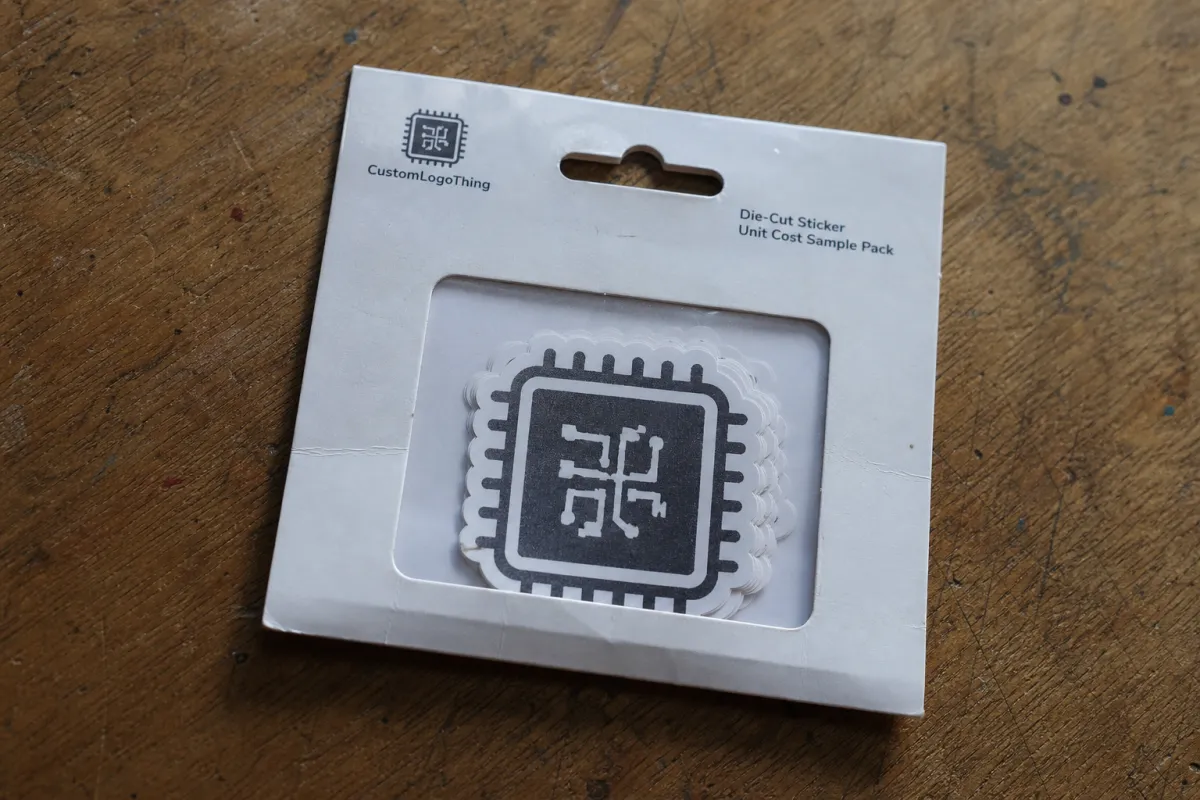
Electronics seller Die Cut Stickers unit cost changes fast because sticker production is built from a chain of small decisions, and each one affects labor, waste, and press time. A square label with a simple brand mark is one thing. A custom contour cut around fine lines, charging icons, or tiny cutout details is another. Even when the artwork is the same size, a tighter shape can raise waste on the sheet, add cutting complexity, or demand more careful inspection before packing. That is why electronics seller die cut stickers unit cost should always be compared using the exact same spec set.
The most common uses in this category are practical rather than decorative. I usually see electronics sellers order die cut stickers for product seals, warranty labels, accessory packs, retail inserts, shipping box branding, and promo giveaways. Each use case has a different tolerance for scuffing, moisture, and repeated handling. A sticker placed on a shelf-facing box may need a cleaner finish and stronger color hold than one tucked inside a kit. Once those use cases are defined, electronics seller die cut stickers unit cost becomes far easier to forecast.
Another reason pricing shifts is that buyers often compare artwork instead of comparing production details. A supplier might quote one job on gloss BOPP with lamination and another on coated paper without it, then the buyer wonders why electronics seller die cut stickers unit cost differs so much. The answer is usually in the material stack and the processing steps, not in the logo. If the label needs to survive friction in transit or repeated handling by warehouse staff, the production path changes, and so does the unit cost.
In practical terms, electronics seller die cut stickers unit cost is best understood as a reflection of how efficiently the order can be produced. A good die cut sticker job is not just about shape. It is about reliable adhesion, color control, cut accuracy, and enough nesting efficiency to keep scrap down. The more those elements line up, the more predictable the quote becomes. That stays true whether the order is for a small brand launch or a recurring replenishment run.
“The artwork is the easy part. The cut path, substrate, and finish are what usually decide electronics seller die cut stickers unit cost.”
For buyers who want a baseline on packaging performance, it helps to look at widely used transit and sustainability references. The ISTA test framework is a useful reference point for shipping durability, and FSC sourcing matters when the sticker stock is part of a broader packaging claim. Those standards do not set sticker prices, but they do help a buyer ask sharper questions before approving a run.
Product Details: What Electronics Seller Die Cut Stickers Need
Die cut stickers are trimmed to the exact outline of the design, so the finished piece follows the logo, badge, or icon rather than sitting inside a plain rectangle. That creates a tighter brand presentation and often fits electronics packaging better, where clean geometry and precise spacing matter. For electronics seller die cut stickers unit cost, that exact outline can help or hurt depending on how efficiently the shape nests and how many labels fit across the production format.
Electronics sellers usually need to choose between kiss-cut and full die cut, then decide whether the stickers should ship on sheets or rolls. Kiss-cut stickers stay on a backing liner and are often easier for hand distribution, while full die cut pieces are cut all the way through and can feel more premium when used as inserts or giveaways. Roll format tends to work well for applicators or faster packing lines, while sheet format is often more convenient for manual use. Those choices influence electronics seller die cut stickers unit cost because they change finishing time and handling.
Finish choice matters more than many buyers expect. A gloss finish gives a vivid retail look with stronger color pop, which can help a small logo stand out on a black box or a brushed-metal themed carton. Matte creates a more restrained, technical feel, which often suits electronics brands that want a clean and precise look. Lamination is worth considering when the sticker will see scuffing, moisture, or repeated contact. The right finish protects appearance, but it also affects electronics seller die cut stickers unit cost because it adds material and another production step.
Electronics packaging can be unforgiving. Dark cartons show edge flaws quickly. Anti-static bags can reveal weak contrast. Accessory kits may be handled by several people before the end user sees them. That is why legibility and edge quality matter as much as color. A high-contrast logo with a crisp contour cut gives the impression of a controlled, professional production process, while a label with fuzzy edges or weak adhesion can cheapen the whole package, even if the electronics inside are well made.
It helps to think through the label’s job before requesting a quote. Will it be handed out at trade shows, packed by a fulfillment team, or applied during final assembly? Will it sit on cardboard, coated paper, poly mailers, or a textured box? Will it face abrasion inside a shipping carton? These questions shape electronics seller die cut stickers unit cost because they define the right material and adhesive from the start. When the application is clear, the supplier can quote more accurately and recommend the most practical format.
Useful decisions to settle before quoting
- Format: sheet, roll, or individual die cut pieces.
- Cut style: kiss-cut for liner use or full die cut for standalone pieces.
- Finish: gloss, matte, or laminated surface.
- Use case: retail packaging, shipping cartons, inserts, or giveaways.
- Surface: cardboard, coated carton, poly, anti-static packaging, or mixed surfaces.
If you already know the application, it may be worth pairing sticker specs with related packaging items such as Custom Labels & Tags for product line consistency. Many buyers also coordinate stickers with Custom Labels & Tags so the visual system matches across cartons, inserts, and shipping materials. That coordination does not just look better; it can simplify ordering and lower the chance of mismatched finishes across the line.
Specifications That Control Unit Cost and Durability
Specifications are where electronics seller die cut stickers unit cost is really decided. The substrate, adhesive, ink coverage, cut complexity, and any protective coating all sit in the same production chain, and each one can add cost or reduce it. A buyer may ask for “just a sticker,” but the production team has to think about press behavior, waste, packing, and how the item will perform after it leaves the box. That is why the most efficient quote starts with a complete spec sheet.
Common material choices usually fall into three practical groups. Paper works for short-term indoor use, simple branding, and lower-touch applications. BOPP offers better moisture resistance and is often the better option for retail packaging and shipping environments. Vinyl is useful when the label needs more flexibility or tougher handling. Stronger adhesives are worth considering if the stickers will live on shipping cartons, warehouse totes, or any surface that sees repeated movement. These choices have a direct effect on electronics seller die cut stickers unit cost because they influence both raw material price and the production method.
Size and shape can matter more than many buyers realize. A smaller label may fit more efficiently on a sheet or roll, which lowers waste and improves yield. A shape with smooth contours can be faster to cut than a design with sharp interior points or tight cutouts. The more efficiently the design nests, the more it helps electronics seller die cut stickers unit cost. Even a small reduction in blank space between labels can improve the economics on a larger run.
Buyers should request a few key specs up front so the quote comes back with fewer assumptions. Exact dimensions matter. So does the corner style, the finish, the quantity per design, and the application surface. If the sticker must survive friction, humidity, or rough warehouse handling, say so early. That information helps the supplier choose the right adhesive and finish before the job enters production. It also reduces the risk of rework, which is one of the fastest ways to inflate electronics seller die cut stickers unit cost after approval.
There is also a difference between what looks good in a design file and what runs well on press. Fine text, delicate outlines, and layered shapes can all increase inspection time. If the artwork is small and detailed, ask for a proof that shows the actual cut path. That one step can catch a problem before it turns into setup charges, file corrections, or a rerun. For electronics seller die cut stickers unit cost, prevention is usually cheaper than correction.
One honest caveat here: not every cheap-looking sticker is a bad purchase, and not every premium spec is justified. If the label lives inside a kit and never sees the weather, there is no need to push material upgrades just for the sake of it. The trick is matching the build to the job, not dressing the order up because it sounds nicer on paper.
Specs that deserve a real answer
- Substrate: paper, BOPP, vinyl, or another synthetic stock.
- Adhesive: standard, strong bond, or removable.
- Coverage: solid color fields, spot color, or full print coverage.
- Protection: laminate or no laminate.
- Handling: indoor, shipping, warehouse, or retail shelf use.
For buyers who want packaging guidance beyond stickers, resources like EPA recycling guidance can help frame substrate choices, especially if a packaging program includes paper-based claims or mixed-material concerns. The right material is not always the cheapest one. It is the one that fits the job without adding avoidable waste or premature failure.
Pricing, MOQ, and Electronics Seller Die Cut Stickers Unit Cost
Pricing usually works by spreading fixed setup charges across the run, which means electronics seller die cut stickers unit cost often drops as quantity rises. That is the basic pattern, but the slope of the pricing curve depends on a few practical variables: size, material, finish, print coverage, and whether the order needs extra steps such as lamination, special packing, or proof approval. A 500-piece run and a 5,000-piece run are not priced by the same logic, even if the artwork is identical.
MOQ exists for a reason. Press setup, cutting dies, proofing, and finishing all take time, and that time has to be recovered somewhere. Some digitally printed sticker jobs can support lower minimums because the setup is lighter, while custom shape work or more specialized finishing may need a higher floor. Buyers sometimes focus only on quantity, but MOQ is tied to the cost structure behind the job. If the supplier can spread those fixed steps over more units, electronics seller die cut stickers unit cost usually becomes more attractive.
It helps to ask for a quote that separates the main cost buckets. A clear quote should show the base print price, the cutting charge, any finishing cost, proof fees if applicable, packing, and freight. If there are tooling fees, ask whether they are one-time or repeated, and whether setup charges are included in the unit price or listed separately. That clarity makes supplier comparisons much easier, especially if one quote looks lower only because shipping or finishing was left out. For electronics seller die cut stickers unit cost, hidden assumptions are usually more expensive than an honest mid-range quote.
| Material / Format | Typical Use | Indicative Unit Cost at 5,000 pcs | MOQ Notes |
|---|---|---|---|
| Paper, sheet | Short-term indoor inserts or giveaways | $0.12-$0.24 | Often the lowest minimum because finishing is simpler |
| BOPP, sheet or roll | Retail cartons, accessory packs, shipping boxes | $0.18-$0.36 | Common choice for better moisture resistance and handling |
| Vinyl with laminate | More durable branding or higher-touch packaging | $0.28-$0.55 | Usually higher due to added material and finishing |
| Custom contour cut, premium finish | Launch kits, display packaging, branded inserts | $0.32-$0.60 | Shape complexity and inspection time can raise unit cost |
Those ranges are practical reference points, not promises, because electronics seller die cut stickers unit cost will move with design complexity, print coverage, and the actual size of the sticker. A compact 1.5-inch mark with simple color can land well below a 4-inch custom silhouette with heavy ink coverage and laminate. The buyer gets the best value by matching the spec to the use case rather than chasing the lowest number on paper.
Here is the decision rule I usually recommend: if the sticker is going on retail packaging, choose the spec that protects brand appearance first, then optimize quantity for electronics seller die cut stickers unit cost. If it is a giveaway or internal label, you may have more flexibility to reduce finish level or simplify the cut. That order of priorities keeps the label from failing at the exact moment it should be reinforcing the product.
Bulk pricing is rarely about volume alone. It is about how well the order fits the production setup. Two thousand pieces with a clean, efficient size may cost less per piece than a smaller batch with a complicated shape, especially if the latter needs more manual handling. That is why cost per piece, MOQ, and tooling fees should be evaluated together rather than separately. Electronics seller die cut stickers unit cost becomes much easier to forecast once those factors are on the table.
In my experience, the jobs that cause the fewest surprises are the ones where the buyer sends a clean spec and does not hide the real use case. If the sticker is going on a box that will be stacked, rubbed, and opened at least twice, say that plainly. It saves everyone from guessing, and guessing is where budgets start to drift.
Process and Timeline: From Proof to Production Steps
The production flow is usually straightforward, but each step affects electronics seller die cut stickers unit cost and delivery timing. The process begins with artwork review and file cleanup. A digital proof follows, and that proof should show size, shape, and placement clearly enough that the buyer can approve it without guessing. After approval, the shop prepares the press, prints the job, cuts the shape, applies any finish, inspects the output, packs the order, and ships it out. Every one of those steps can add time if the spec is unclear.
Turnaround depends heavily on whether the artwork is ready to print. If the file needs cleanup, if the cut path is complicated, or if the order calls for a custom laminate, production time expands. The same is true if a sample is requested before full production starts. Electronics seller die cut stickers unit cost is often easiest to hold down when the buyer submits complete files and responds quickly to the proof. A smooth approval cycle can save days.
Lead time can stretch further when the order includes multiple SKUs, each with a different size or finish. That kind of mixed run can be managed well, but it requires tighter scheduling and more internal checks. If the stickers need to align with a launch date, a trade show kit, or a replenishment schedule, give the supplier a realistic target window rather than a vague deadline. It is better to build a little cushion into the plan than to rush the job and push electronics seller die cut stickers unit cost upward with expedite charges.
For a typical custom run, many buyers should expect something in the range of 10-15 business days after proof approval for a standard order, with longer timelines if there is complex finishing, large quantities, or extra approval steps. That is not a hard rule, because every shop and every spec is different, but it is a more grounded expectation than a blanket promise. If you need faster turnaround, ask whether the material is in stock and whether the cut shape can be produced without a new tooling step. Those two details affect both timing and electronics seller die cut stickers unit cost.
Quality control should not be an afterthought. I like to see checks for cut alignment, edge finish, color consistency, and packing accuracy, especially on multi-SKU orders. If a sticker is slightly miscut, the issue might not show on the liner, but it shows immediately on a retail box. If the color drifts between batches, the packaging line loses consistency. Electronics seller die cut stickers unit cost is only worthwhile if the delivered product matches the spec that was approved.
Production checkpoints that reduce risk
- Artwork review: confirm size, bleed, and cut path.
- Proof approval: lock the layout before print starts.
- Material confirmation: verify substrate and adhesive for the application surface.
- Inspection: check edge quality, print alignment, and pack count.
- Shipping: protect the finished stickers from bending or edge damage.
For buyers who care about shipping performance, it is worth asking whether the supplier tests against common transit conditions or references accepted logistics standards such as those published by ISTA. That does not mean every sticker needs full transit simulation, but it does help to know the supplier thinks in terms of handling, abrasion, and package integrity rather than just print output. The more disciplined the process, the more stable electronics seller die cut stickers unit cost stays from order to order.
Why Choose Us for Electronics Seller Die Cut Stickers
The best reason to choose a supplier in this category is consistency. Electronics packaging is unforgiving, and buyers usually need stickers that cut cleanly, hold color accurately, and arrive packed in a way that makes sense for the line or the warehouse. When a sticker looks intentional on the shelf and in the box, it supports the product instead of fighting it. That consistency is a real part of electronics seller die cut stickers unit cost, because low-cost work that needs reprints is not actually low cost.
Technical guidance matters too. A good supplier should help a buyer balance appearance, durability, and unit cost without pushing unnecessary upgrades. For example, a matte BOPP sticker with a strong adhesive may solve a shipping carton problem without needing a premium laminate. In another case, a gloss finish may be the right answer because the brand needs a stronger retail shine. That kind of spec-level advice protects electronics seller die cut stickers unit cost from creeping up for no reason.
Quality control is also about the small things that buyers notice after the order lands. Cut alignment, edge finish, color consistency, and packing accuracy all matter, especially when several SKUs are being shipped together. A well-run sticker order should feel organized the moment it is opened. If the cartons are packed by size, the labels are counted correctly, and the finish matches the proof, the seller can move into assembly or fulfillment without extra sorting time. That is a practical benefit, not a marketing line.
Clear answers on materials, MOQ, and timeline reduce risk before production starts. That matters during channel launches, seasonal replenishment, and retailer onboarding, where one delayed sticker order can slow the whole package schedule. The supplier who explains the tradeoffs early is usually the safer partner. Electronics seller die cut stickers unit cost is easier to manage when the quote is built on real production limits, not vague assurances.
There is also value in matching the sticker to the rest of the package architecture. A custom logo sticker can complement carton branding, inserts, and tags if the finishes are chosen well. If you need that broader packaging alignment, pairing the sticker order with Custom Labels & Tags is often a sensible move. The same eye for detail that improves a die cut sticker usually improves the rest of the branded package as well.
Honestly, the strongest production partners are the ones who tell you where the cost pressure is coming from. If the shape is wasting sheet area, if the finish is unnecessary, or if the MOQ is being driven by a second setup step, you should hear that plainly. That kind of transparency makes electronics seller die cut stickers unit cost easier to control and helps the final result look like it belongs on an electronics product, not like an afterthought.
One more thing: a good quote should also explain what happens if the artwork changes after approval. That is where a lot of budgets get bruised, and nobody likes the surprise. A supplier that spells out revision limits and reprint triggers is usually thinking ahead instead of just chasing the order.
Next Steps to Lock In Electronics Seller Die Cut Stickers Unit Cost
The fastest way to get a useful quote is to send a complete spec sheet. Gather the artwork file, final size, shape notes, material preference, finish, quantity, and a clear description of where the sticker will be applied or handed out. If the label is going on a textured carton, a coated box, or a poly mailer, say that directly. Those details help lock in electronics seller die cut stickers unit cost before the proof stage starts.
Ask for two or three pricing scenarios at different quantities. That lets you see where the break points sit and whether the cost per piece improves enough to justify a larger run. Sometimes the best electronics seller die cut stickers unit cost lands just above a quantity threshold, not at the absolute highest order. A small jump in quantity can spread setup charges more effectively, while a very large jump may tie up cash you would rather use elsewhere.
If the artwork has tight edges, small text, or color-critical brand elements, approve a digital proof or sample before full production. That is especially useful for electronics brands, where a tiny color shift or a rough cut edge can stand out immediately on dark packaging. Fixing those issues before production is always cheaper than reprinting. In a category where electronics seller die cut stickers unit cost is already tied to setup and finishing, avoiding a second run is a real win.
One practical habit pays off again and again: decide on the application surface before finalizing the spec. A sticker meant for a shipping box does not need the same build as a sticker meant for a retail insert. A sticker that needs to survive abrasion inside a warehouse should not be priced like a short-term promotional handout. When the use case is clear, electronics seller die cut stickers unit cost becomes straightforward, and the quote you receive is much easier to trust.
If you want the cleanest path forward, send one complete request with the target quantity, the intended surface, and the finish you have in mind. Then ask the supplier to show how electronics seller die cut stickers unit cost changes at smaller and larger volumes. That simple comparison will usually reveal the best balance of appearance, durability, and bulk pricing, and it gives you a clearer answer before you commit to production.
The takeaway is simple: lock the use case first, then compare materials, finish, and quantity on the same spec sheet. If you do that, electronics seller die cut stickers unit cost stops being a moving target and turns into a number you can actually plan around.
What affects electronics seller die cut stickers unit cost the most?
The biggest drivers are size, material, finish, cut complexity, and quantity, because those factors change both print time and how efficiently the stickers nest on the sheet or roll. A small artwork change can lower waste and reduce cost more than a simple quantity bump.
What MOQ is typical for electronics seller die cut stickers?
MOQ depends on the print method and finishing steps, but minimums usually exist because setup time is fixed even on smaller runs. Ask for pricing at multiple quantity levels so you can see the cost break between test orders and full replenishment runs, then compare electronics seller die cut stickers unit cost across those levels.
Which material is best for electronics seller die cut stickers on packaging?
For short-term indoor use, paper can work, but most electronics packaging benefits from BOPP or vinyl because they hold up better to handling and moisture. Choose the material based on the package surface and the amount of friction the sticker will see in transit.
How long does production usually take after artwork approval?
Turnaround depends on order size, finishing, and whether a sample is required, but production starts only after the proof is approved. Fast approvals keep the schedule moving; delays usually come from missing file corrections or late design changes, and both can affect electronics seller die cut stickers unit cost if the order needs rework.
Can I reduce electronics seller die cut stickers unit cost without lowering quality?
Yes, by simplifying the cut shape, choosing a more efficient size, and ordering in a quantity that better spreads setup costs. You can also avoid unnecessary finishing options when the application does not require them, which keeps electronics seller die cut stickers unit cost focused on the features that actually matter.

