For stationery shop Die Cut Stickers moq, the right starting point is not the smallest number that looks good on a quote sheet. It is the quantity that matches how stationery customers actually buy. A shopper standing at the counter is usually making a fast, low-risk decision: do the sticker shape, print quality, and price feel worth tossing into the basket along with the notebook or pen set? A well-planned stationery shop die cut stickers moq order should reflect that real behavior instead of chasing a number for its own sake.
Die Cut Stickers work especially well in stationery retail because they feel finished, collectible, and easy to add on without much hesitation. A compact peg display near the register can outperform a bigger shelf if the artwork is strong and the cut line is clean. That is why stationery shop die cut stickers moq deserves attention before production starts. Buyers need to think about shelf space, margin, sell-through speed, and how much design risk is comfortable on the first run.
The best orders are the ones that stay grounded in actual sales patterns. If the goal is retail movement rather than printed inventory, stationery shop Die Cut Stickers moq should match the display size, the strength of the artwork, and the likelihood of a reorder. A lower quantity protects cash flow, while a larger order can improve unit cost once the design has proven itself on the shelf.
A sticker that reads clearly from a few feet away, peels cleanly from its backing, and feels durable in the hand usually sells better than a larger piece with rough edges or muddy color.
Why stationery shop die cut stickers MOQ works for impulse retail sales
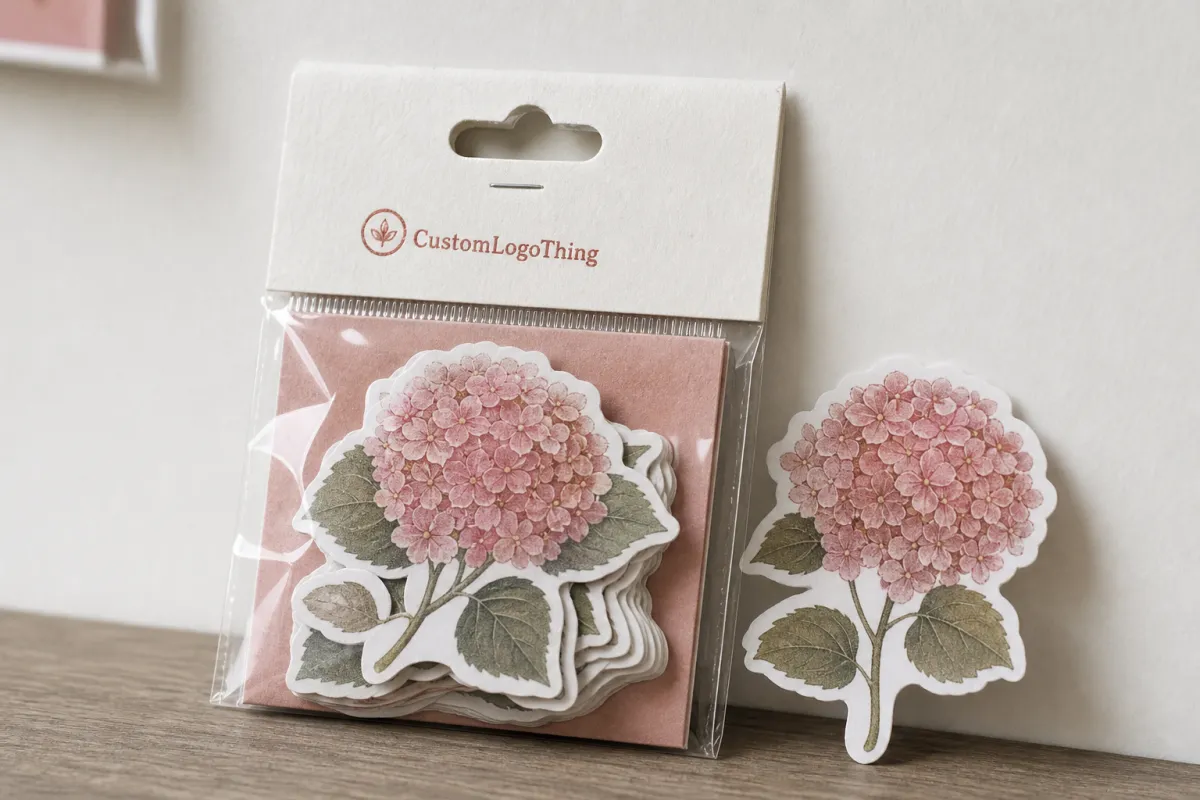
For stationery shop die cut stickers moq, impulse retail is the main reason the format performs so well. A customer walks in for a planner refill, a pack of pens, or a journal, then spots a sticker that fits the moment. The item feels affordable, light, and easy to justify. That small emotional lift is what makes a modest stationery shop die cut stickers moq run useful for a shop that depends on quick add-on purchases.
Die cut shapes fit stationery shoppers because they already enjoy visual variety. People who buy washi tape, notebooks, journaling tools, and desk accessories tend to respond well to mascot art, seasonal themes, logo-driven graphics, and little illustrated pieces that feel collected rather than generic. If a shop is gonna test a new sticker theme, a lower MOQ keeps that experiment from getting expensive. That is where stationery shop die cut stickers moq becomes practical: the store can learn which design, colorway, or theme actually moves before placing a larger reorder.
Control is the real advantage for the buyer. A lower stationery shop die cut stickers moq keeps the first order close to demand, while a larger one can bring down bulk pricing and improve margin once the item has a track record. The smarter move is to match quantity to purpose: a single-piece add-on, a multi-sticker set, a branded giveaway, or a packaging insert tied to another product line.
Storage matters too. Sticker packs take little room, ship efficiently, and are easy to sort by SKU. For small shops with limited backroom space, stationery shop die cut stickers moq is often easier to manage than larger paper goods or seasonal display products. Even a modest quantity can be packed tightly and rotated quickly without crowding the shelf system.
Retail buyers usually get the best results when they tie the order to a real sales habit. If a design is headed for a checkout peg or a small counter tray, a stationery shop die cut stickers moq of 250, 500, or 1,000 pieces can be enough to test the idea before scaling. If the stickers belong to a themed collection, the order can be structured around the theme so the shop can compare which artwork pulls the strongest response.
Four questions narrow the quantity fast: Is the sticker sold alone or in a set? Is it meant for the counter or a premium display? How many designs need to be tested? How quickly will the shop need a second run? Those answers usually tell you more about stationery shop die cut stickers moq than a generic minimum printed on a spec sheet.
For shops that also carry related packaging pieces, sticker programs often pair well with Custom Labels & Tags, since both items can carry brand marks and promotional messaging without taking much inventory space.
Product details: die cut sticker formats, materials, and finishes
Before setting stationery shop die cut stickers moq, the product itself should be defined with care. A die cut sticker follows the outline of the artwork, so the final shape mirrors the logo, icon, mascot, or illustration rather than staying trapped in a rectangle. That outline-driven presentation gives the item a more custom feel and helps it stand out in retail. For stationery shop die cut stickers moq, that detail matters because the shape is part of the appeal, not just a production note.
A few formats show up often in stationery orders. A kiss cut sticker is cut through the top layer while leaving the backing intact, which makes peeling easier and works well for larger graphics. A full die cut goes all the way through the material so the sticker becomes a standalone shape. Sticker sheets keep multiple pieces on one backing. The right choice for stationery shop die cut stickers moq depends on how the product will be displayed and how the customer is expected to use it.
Material choice shapes both the cost and the retail feel. Coated paper can work for indoor, low-cost packs, while vinyl gives a cleaner finish and better durability. Waterproof vinyl makes more sense if the sticker may land on a bottle, lunch box, or laptop. Removable adhesive is worth considering for short promotions or window displays. Anyone comparing stationery shop die cut stickers moq options should think about whether the sticker needs to be decorative, durable, or both.
Finish changes how the artwork feels on the shelf. Matte gives a softer look and does a good job hiding fingerprints. Gloss adds color depth and often pops more under store lighting. Soft-touch creates a smooth, premium feel, though it can raise setup charges or overall cost because it adds another finishing step. Clear laminate is useful when the sticker needs stronger scuff resistance or a more water-resistant profile. For stationery shop die cut stickers moq, the finish often changes perceived value more than a small size adjustment does.
The following comparison helps frame the main options:
| Material / finish | Best use | Durability | Cost impact | Notes |
|---|---|---|---|---|
| Coated paper, matte | Budget indoor sticker packs | Low to moderate | Lowest | Good for short-term merchandising and low stationery shop die cut stickers moq tests |
| Vinyl, matte | Planner brands, branded retail sets | Moderate to high | Moderate | Clean look, strong retail appeal, works well for repeat orders |
| Vinyl, gloss | Bright characters, colorful logos | High | Moderate | Boosts color pop under retail lighting, easy to spot in a counter tray |
| Vinyl with soft-touch laminate | Premium stationery collections | High | Higher | Feels upscale, but may add to lead time and cost per piece |
| Clear waterproof vinyl | Minimal graphics, transparent packaging labels | High | Higher | Useful for select stationery shop die cut stickers moq runs where the design needs a see-through edge |
Edge quality should never be treated as a minor detail. A rough cut line can make the sticker look unfinished or cause lifting at the edges after handling. Adhesive strength matters as well. Buyers sometimes want to know whether the adhesive has been checked against common peel expectations or transit-style standards such as ISTA, and whether the stock aligns with sourcing goals such as FSC chain-of-custody requirements. Those details matter most in stationery shop die cut stickers moq orders that will be bundled with other retail items.
Packaging format also affects the retail result. Loose stock is the simplest choice for fast handling. Cello sleeves keep small sets organized. Backing cards make the sticker feel more finished on the rack. Theme-based assortments can lift basket value when the shop wants a coordinated display. For stationery shop die cut stickers moq, the packaging should support the selling setup rather than just look good in a mockup.
stationery shop die cut stickers MOQ: sizes, artwork, and file specs
The design file is where many stationery shop die cut stickers moq orders either move smoothly or stall in back-and-forth revisions. A clean file makes it easier to confirm the cut path, size, bleed, and print placement. Vector artwork in AI, PDF, or SVG format usually saves the most time, especially when the outline needs to be precise or the typography is small. For stationery shop die cut stickers moq, that kind of file discipline saves money because it lowers the chance of proof corrections and delayed approval.
Finished size should always be confirmed in writing. A sticker described as “about 3 inches wide” can turn into a problem if the actual cut path is 2.6 inches and the details are tight. Bleed is commonly set at 0.125 inch, though some production teams prefer a little more margin for highly irregular shapes. Safe area matters too, since text or fine detail too close to the edge can vanish or look cramped. These are not cosmetic issues; they affect print yield and stationery shop die cut stickers moq efficiency.
Artwork complexity changes the quantity decision. A simple logo with one cut line may work well at a lower MOQ, while a design with several colors, tiny cut tabs, or multiple versions in one run may need a higher stationery shop die cut stickers moq to justify setup and proofing time. Thin stems, sharp corners, and very small internal cuts also raise the chance of variation, so buyers should not assume every shape behaves the same way in production.
Color management deserves the same care. Most retail buyers use CMYK because it is the standard for print output, but spot colors still matter when a design depends on a brand-critical shade. A proof should show whether the art is being matched visually or built from a specific color library. For stationery shop die cut stickers moq, that is important because a color that looks close enough on a screen can become noticeably different under store lighting, especially on bright logos and dark outlines.
Some buyers ask whether the die line needs to be built into the artwork from the beginning. The short answer is yes, or at least reviewed that way before production begins. A clear spec sheet gives the prepress team enough information to set the cut, bleed, and trim safely. If you are quoting stationery shop die cut stickers moq across several designs, group the files by SKU, note the finish for each one, and mark any variant that uses a different shape or backing card.
Here is a useful checklist before quote approval:
- Finished size in inches or millimeters.
- Exact cut path or outline file.
- Bleed requirement and safe area.
- Print method and color mode, usually CMYK.
- Finish choice: matte, gloss, soft-touch, or clear laminate.
- Packaging style, such as loose, sleeved, or carded.
- Quantity split if stationery shop die cut stickers moq includes multiple designs.
Mixed orders can work well when the materials and finishing steps stay consistent. Even then, separate versions still need their own proofing and count control. In other words, stationery shop die cut stickers moq does not have to mean one single design. It can also mean one production family with multiple colorways or themed variants, as long as the job is organized clearly before press time.
Pricing, MOQ, and unit cost: what drives the quote
Pricing for stationery shop die cut stickers moq comes down to a handful of factors: size, material, finish, shape complexity, quantity, and packaging. If a quote looks unusually low or unusually high, one of those variables is usually different from what the buyer expected. The most common mistake is assuming every price can be compared piece for piece. In practice, stationery shop die cut stickers moq pricing depends on what is included before the first sticker reaches the carton.
A lower MOQ often raises unit cost because the work of proofing, setup, cutting, and press preparation is spread across fewer pieces. That does not make a smaller order a bad choice. It simply changes the math. For a first run, many stationery buyers prefer paying a little more per piece to avoid overstock. For repeat business, a larger stationery shop die cut stickers moq can bring the cost per piece down enough to improve margin.
It pays to ask what the quote actually includes. Are artwork checks part of the price? Are there setup charges for file corrections or blade adjustments? Is there a tooling fee if the supplier uses a specialty die or a custom production method? Digital contour cutting often keeps tooling costs lower than traditional die making, but that is not guaranteed across every shop. Anyone comparing stationery shop die cut stickers moq options should get those line items clarified before judging one quote against another.
The table below gives a practical way to compare order tiers. These are planning figures, not promises, and they can change with coverage, finish, and packaging.
| Quantity | Typical cost per piece | Best for | What to watch |
|---|---|---|---|
| 250 pieces | $0.28-$0.65 | Launch tests, small shops, seasonal drops | Higher unit cost, but lower inventory risk for stationery shop die cut stickers moq |
| 500 pieces | $0.18-$0.42 | Proven designs, counter bins, gift shop bundles | Good middle ground for first repeat orders |
| 1,000 pieces | $0.12-$0.30 | Busy retail shelves, multi-location stores | Better bulk pricing, but only useful if sell-through is strong |
| 3,000+ pieces | $0.08-$0.22 | Established SKUs, high-volume promotions | Lowest cost per piece, but storage and reorder timing matter |
Shipping and packaging can move the landed cost more than some buyers expect. A carton rate, a protective insert, or an inner bag can all add dollars to the project total. If the order is going into a retail channel, it makes sense to ask whether cartons are master-packed by SKU and whether labels are applied before dispatch. For stationery shop die cut stickers moq, the real budget is the landed cost, not the print line alone.
Bulk pricing should be measured against sell-through speed. A stationery shop that moves 80 stickers a month does not need a 5,000-piece order just to get a better unit number. It needs the right balance of margin and inventory. Experienced buyers usually compare three numbers side by side: quote total, unit cost, and estimated months of stock on hand. Stationery shop die cut stickers moq works best when those numbers fit the store’s actual sales rhythm.
Repeat orders can produce real savings too. Once the artwork is approved and the spec is locked, the next stationery shop die cut stickers moq often moves faster and can cost less because the prepress work is already done. Buyers planning to reorder the same design should mention that early, since it can shape the pricing structure and reduce unnecessary revision time.
Process and timeline: from artwork approval to delivery
A clear production flow keeps stationery shop die cut stickers moq orders on schedule. The usual path is straightforward: Request a Quote, confirm specs, review artwork, approve the proof, move into production, finish, pack, and ship. Each step matters because a small assumption early on can delay the entire run. A well-managed stationery shop die cut stickers moq order should feel predictable and easy to track.
Proofing is where the preventable mistakes usually surface. A proof should show the cut line, trim area, bleed, and any notes about finish or packaging. The buyer should check spellings, logo proportions, shape balance, and any small text that might disappear after the cut. If the design has multiple versions, each one should be reviewed separately. For stationery shop die cut stickers moq, proof approval is the last point where changes can happen without paying for a production mistake.
Production timing depends on quantity and finish complexity. Simple paper or vinyl jobs usually move faster than laminated, carded, or multi-SKU runs. A straightforward order may be completed in roughly 12-15 business days after proof approval, while more complex packaging or larger volumes can extend that window. Seasonal demand matters too. If a shop is preparing a holiday display, the order needs to be placed early enough that shipping delays do not cut into the selling window. That timing is part of stationery shop die cut stickers moq planning, not a side note.
Communication should stay clear from the first email to the final tracking update. Buyers need to know when proof revisions are due, when production begins, and when dispatch is scheduled. If the order includes mixed designs, it helps to confirm whether each SKU will be counted and packed separately. Rush service is useful only after the specs are already settled. Artwork delays are usually what slow a job, not the press run itself. That is one of the reasons stationery shop die cut stickers moq should be aligned with file readiness as much as with demand.
Shipping method and package protection also matter. Retail stickers are light, but they still need to arrive flat, clean, and ready to sell. If the cartons are going into a distribution chain, transit stress and handling deserve attention. Standards such as ASTM peel testing and transit references like ISTA help keep expectations realistic, especially when the order sits inside a larger retail kit. In that sense, stationery shop die cut stickers moq is about more than print quality; it is about how the product survives the trip from press to shelf.
Before release, these steps are worth confirming:
- Lock the finished size and quantity split.
- Confirm finish and backing style.
- Approve the vector cut path.
- Check the proof line by line.
- Confirm carton count, ship method, and delivery date.
That sequence keeps stationery shop die cut stickers moq moving with fewer surprises. It also reduces the chance of a reorder getting delayed because one file or one size was left vague during the first approval.
Why choose us for stationery shop die cut stickers MOQ orders
What buyers usually want from a supplier is consistency, not drama. Clean cut lines, steady adhesive performance, and repeatable color output matter more than polished wording. For stationery shop die cut stickers moq, that consistency is what turns a proof into a retail product that can actually sit on a shelf and sell. A sticker that looks strong once but shifts from batch to batch creates problems for any stationery program built around brand presentation.
Our approach to these orders follows the same practical priorities a shop would use on the sales floor. The sticker should be easy to display, easy to handle, and easy to reorder. If the product is meant to sit near a cash wrap, the edge finish should be tidy, the backing should separate cleanly, and the artwork should stay readable even when shoppers are moving quickly. That is why stationery shop die cut stickers moq should never be judged by price alone.
File support makes a real difference too. A buyer may send a logo, but the production file still needs proper bleed, a stable outline, and clear size direction. Good prepress review catches those issues before they turn into setup charges or delay notes. For stationery shop die cut stickers moq, that kind of review can prevent avoidable revisions and keep the launch date intact.
Flexibility matters in retail work. Some stationery shops want one design in a higher quantity. Others prefer a themed assortment with several art styles grouped into one program. Repeat orders are usually easier to manage because the working spec already exists. If the first job was structured well, the reprint can move efficiently with less friction. That is the practical side of stationery shop die cut stickers moq: a clean first run creates a better second run.
Quality control needs to stay visible throughout the process. Trim accuracy, finish inspection, and package count verification all affect the retail experience. If a buyer opens a carton and finds badly cut edges or mixed pack counts, the product loses trust before it reaches the shelf. That is why stationery shop die cut stickers moq should be handled like a retail item, not a generic handout.
For shops that need more than stickers, it can make sense to pair a sticker program with other label-based items so the visual system stays consistent across the shelf. A coordinated approach to stationery shop die cut stickers moq and related packaging can make a small display feel more deliberate without adding a lot of inventory complexity.
How to place your order and move from quote to production
The fastest path from quote to production starts with a clear set of decisions: target size, finish, quantity, and artwork file. When those basics are known, stationery shop die cut stickers moq quotes become easier to compare because every supplier is looking at the same job. A buyer saves time by sending brand guidelines, packaging needs, and any cut preferences in the first message rather than piecing them together later.
It also helps to state the commercial goal up front. Is this first order a test batch, or is it a retail launch quantity? That distinction changes how stationery shop die cut stickers moq should be structured. A test batch can justify a lower MOQ and a slightly higher unit cost if the design still needs validation. A launch quantity should be set with sell-through and replenishment timing in mind so inventory does not sit idle.
A single clean approval path usually works best. The artwork should be signed off, the specs should be locked, and payment or purchase order should be complete before production begins. If any of those pieces are still open, the schedule can drift. That is especially true for stationery shop die cut stickers moq jobs with multiple SKUs, special packaging, or premium finishes.
Before the final release, check the delivery date against store events, trade shows, seasonal resets, or launch weekends. A sticker pack that arrives late is not useful, even if the print quality is excellent. Buyers who plan inventory around the actual sales calendar usually get better results from stationery shop die cut stickers moq because the product reaches the shelf when the customer is ready to buy.
The simplest recommendation is the one that works most often: set the MOQ based on the sales plan, not the other way around. A smart stationery shop die cut stickers moq order respects shelf space, margin goals, and the production timeline all at once. If the design is proven, go bigger and improve bulk pricing. If the design is still new, keep the first run tight, watch sell-through, and use the reorder to scale with confidence.
To move forward, choose the size, pick the finish, gather the art files, and send the project for quoting. That is the cleanest way to make stationery shop die cut stickers moq work for a store rather than against it.
What is the typical stationery shop die cut stickers MOQ for a first order?
stationery shop die cut stickers moq usually depends on size, material, and cut complexity rather than a single fixed number. Smaller and simpler shapes can often be produced at a lower entry quantity than multi-color or intricate designs, and the best starting point is the amount that covers your launch display with a little room for reorder testing.
How do stationery shop die cut stickers MOQ and unit cost affect pricing?
A lower stationery shop die cut stickers moq generally raises unit cost because setup and cutting costs are spread across fewer stickers. Larger quantities reduce the cost per piece, but only if the shop can realistically sell through the stock, so it helps to ask for pricing at two or three tiers before choosing a quantity.
How long does production take after artwork approval for die cut stickers?
stationery shop die cut stickers moq production timing depends on the finish, quantity, and whether the artwork needs corrections before approval. Simple orders move faster than laminated or heavily customized runs because there are fewer finishing steps, and the quickest path is always a clean file with a confirmed cutline and no open design questions.
Can I order multiple designs under one stationery shop die cut stickers MOQ?
Yes, stationery shop die cut stickers moq can often cover multiple designs if the sizes, material, and production method are shared. Each design may still need its own quantity allocation, proof, and cut setup depending on complexity, so mixed-design orders work best when the artwork is organized by SKU and packaging format from the start.
What file should I send for stationery shop die cut stickers MOQ quotes?
For stationery shop die cut stickers moq quotes, vector files such as AI, PDF, or SVG are preferred when the cutline needs to be precise. Include the finished size, bleed, and any notes about matte, gloss, or waterproof finish choices, and if the artwork is raster-based, send the highest-resolution version available and confirm print dimensions before quoting.
What should I decide before placing a reorder?
Before a reorder, check sell-through, confirm whether the original finish still fits the shelf display, and make sure the file spec has not drifted. A tidy repeat run usually saves time, but only if the first stationery shop die cut stickers moq was documented well and the packaging count still matches how the product is being sold.

