The trade show Heavyweight Winter Hats Material guide that actually helps buyers starts with a small correction: thickness is not the same thing as warmth. A hat can look substantial in a sample box and still perform poorly if the stitch density is loose, the yarn feels scratchy, or the lining traps too much heat. For winter booths, outdoor staffing, and giveaways that need to survive repeated wear, the material choice affects comfort, decoration quality, price, and production speed all at once.
Dense construction usually beats visual bulk. A tight knit with the right fiber blend and a clean decoration zone tends to outperform a puffier beanie that sags, pills, or turns uncomfortable after an hour.
Trade Show Heavyweight Winter Hats Material Guide
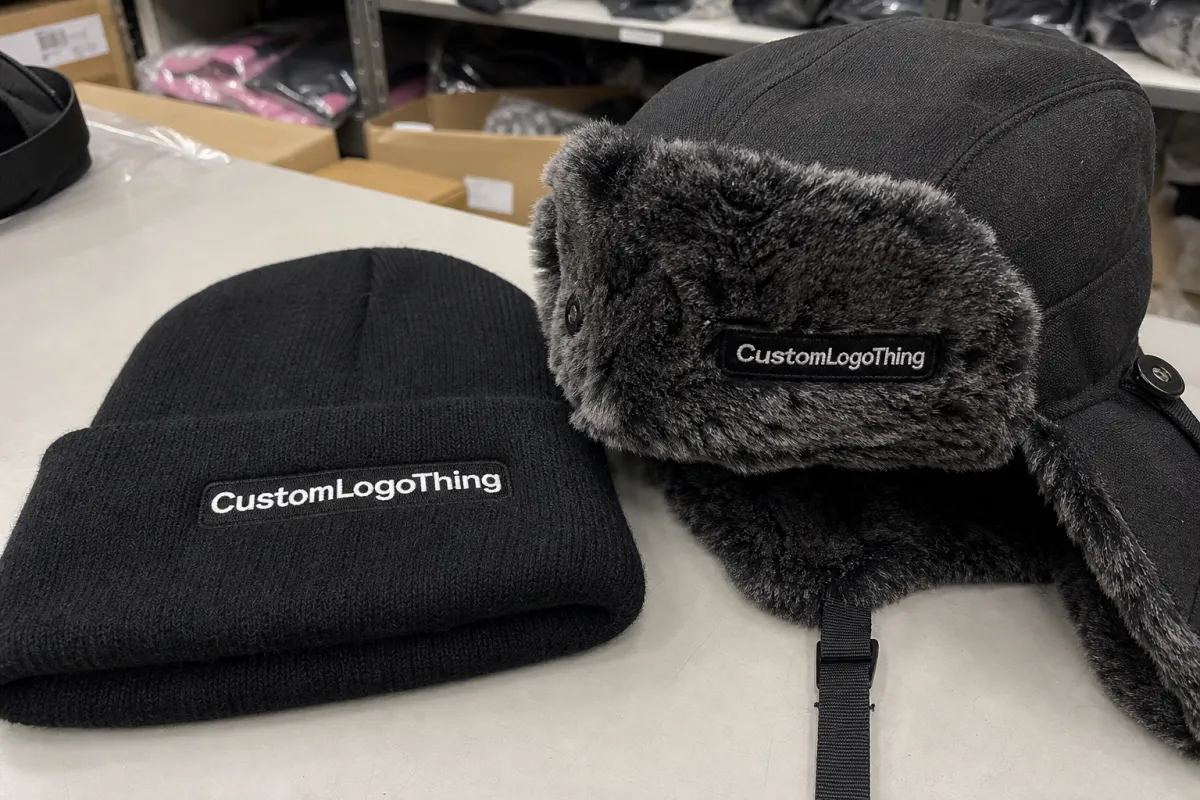
In bulk apparel sourcing, “heavyweight” usually means a thicker knit beanie, a cuffed style, a double-layer construction, or a lined cold-weather cap with more body than a basic promotional hat. Finished weight often lands somewhere around 90-160 grams for unlined knits and higher for lined versions. That range is useful, but it is not a guarantee of warmth. Two hats can weigh the same and feel completely different on the head.
The practical job of a trade show Heavyweight Winter Hats material guide is to separate appearance from performance. A chunky rib knit may photograph well and still leave gaps that invite cold air. A tighter knit can trap heat more efficiently, hold embroidery cleaner, and recover shape better after a long event day. That matters because trade show wear is rarely gentle. Hats move from outdoor lines to shuttle buses to convention halls that can feel overheated under lights.
For buyers, the real challenge is balancing three priorities that pull in different directions: warmth for staff, visibility for branding, and comfort for wear time. Push too hard on warmth and the hat can get hot indoors. Push too hard on decoration space and the knit can become too thin. Push too hard on price and the hat can end up looking fine in a mockup but disappointing in use. The best orders usually sit in the middle, not the extreme.
Gauge and stitch structure matter more than many first-time buyers expect. Lower-gauge knits look chunkier and can feel more premium, but a high-gauge fabric with a tighter loop structure often blocks wind better per gram. That is a useful distinction for winter programs because bulk does not always equal insulation. Like jacket fill, trapped air does the work; the outer volume is only the visible part.
How Heavyweight Knits Hold Warmth on the Show Floor
Warmth in a knit hat comes from the air held inside the yarn structure, not from mass alone. Tight stitches slow heat loss. Lofted yarn adds softness and insulation. A lining adds another barrier between skin and cold air. Double-layer construction helps by creating a pocket of still air between layers, which is why a modest-looking beanie can outperform a much bulkier one.
Single-layer rib knits are breathable and light. They work for milder winter climates or for indoor-heavy event schedules where staff need a branded piece that will not overheat them once they step inside. Double-layer cuffed beanies are the safest middle ground for colder events. They offer better warmth, more structure for logos, and enough flexibility for broad use. Fleece-lined styles feel warmer from the first wear, but they also reduce breathability. On a crowded show floor, that can matter more than the catalog photo suggests. Sherpa-backed or heavily brushed styles are warmer still, though they are usually too warm for moderate conditions and can tighten decoration placement.
Trade show settings create a strange temperature swing. A staffer can move from a freezing sidewalk queue into a hall packed with people and lighting rigs within a few minutes. That swing means moisture management matters almost as much as insulation. Once a hat gets damp with sweat, its warmth drops quickly and the wearer usually stops reaching for it. A warm hat that stays on the head is a better marketing tool than a prettier one that gets stuffed in a bag.
Watch for four comfort problems during sampling:
- Itch from coarse yarns or high wool content.
- Moisture buildup when the knit is too dense for indoor wear.
- Forehead pressure from a tight cuff or thick seam.
- Poor stretch recovery after repeated wear during a long event day.
A common mistake is judging comfort after a five-minute try-on. That tells you almost nothing. The hat has to hold up for an hour, then another hour, then another. If it only feels good during the first impression, it is not ready for a trade show schedule.
Best Material Choices for Warmth, Branding, and Feel
Acrylic is still the workhorse material for bulk winter hats. It is cost-effective, easy to source in large quantities, and usually predictable in decoration. A good acrylic beanie can feel soft enough for giveaways while keeping production simple. That predictability is not glamorous, but it saves time and protects lead times.
Acrylic-polyester blends are useful when shape retention matters. They often feel a little more stable after repeated wear, and they can handle color matching better than some lower-grade yarns. For programs that need a clean, repeatable look across several size lots or multiple events, a blend can be safer than pure acrylic.
Wool and wool blends bring a more premium hand feel and stronger natural insulation. They also bring a higher price, a greater chance of itchiness, and more care requirements. A wool blend can make sense for VIP gifts, sales teams, or executive-facing holiday packages. For large handouts, it is often too expensive for the return.
Recycled yarns, usually recycled polyester or recycled acrylic blends, work well when sourcing needs a sustainability angle. They are not a magic fix. They still need to meet the same standards for softness, stretch, color consistency, and durability. But they do give the program a material story that feels current without changing the basic performance equation.
Linings deserve a separate decision. Fleece lining adds warmth quickly and improves skin feel, which is why it often makes a lower-cost knit feel more substantial. The tradeoff is real: linings reduce stretch, narrow decoration space, and raise unit cost. If the logo sits low on the cuff or needs a wide patch area, check placement against the lined build before approving the art.
Cotton is sometimes requested because it sounds soft, but it is usually a weak winter choice. Cotton absorbs moisture, dries slowly, and loses its insulating value when damp. For a cold-weather event piece, that is a poor return on budget unless the climate is mild and the hat is being used more for branding than warmth.
| Material / Build | Warmth | Decoration Ease | Typical Bulk Price Range | Best Use |
|---|---|---|---|---|
| Basic acrylic rib knit | Medium | Good for embroidery and patches | $1.10-$2.25 per unit at 1,000-3,000 pcs | Staff hats and broad giveaways |
| Acrylic / polyester blend | Medium to warm | Very good, stable shape | $1.25-$2.60 per unit at 1,000-3,000 pcs | Color-focused branding and repeat wear |
| Wool blend | Warm | Good, but placement needs care | $2.80-$4.90 per unit at 1,000-3,000 pcs | Premium gifts and executive teams |
| Recycled yarn blend | Medium to warm | Good, if yarn quality is stable | $1.40-$3.10 per unit at 1,000-3,000 pcs | Sustainability-led programs |
| Fleece-lined acrylic | Warm to very warm | Good, but lining can limit stretch | $2.40-$4.50 per unit at 1,000-3,000 pcs | Outdoor activations and cold-weather staffing |
The question buyers ask most often is not “which material is best?” It is “which one gives the best value for the event?” That answer changes with weather, wear time, and decoration method. Acrylic usually wins on practicality. Wool wins on feel. Blends win on consistency. Lined constructions win only when the climate justifies them.
Cost, Pricing, MOQ, and Unit Cost Tradeoffs
Cost climbs in a fairly predictable order: basic knit, blended yarn, premium fiber, lining, then custom trim. A simple acrylic beanie sits at the low end. Add a special patch, custom dye matching, a woven label, or a private label inside tag, and the number moves up. Add all of those at once and the bill starts to reflect the complexity of the build, not just the hat itself.
MOQ matters because setup cost gets spread across the whole order. At 100-300 pieces, buyers often pay a lot more per unit because knitting setup, sampling, and decoration preparation are all being divided by a small quantity. At 1,000-3,000 pieces, pricing becomes more efficient. Above that, the per-unit cost usually improves again, especially when the decoration process is standardized. That is simple manufacturing math, not marketing language.
There are several cost drivers that catch buyers off guard:
- Custom dyeing for exact brand colors.
- Digitizing for embroidery, especially on dense cuffs.
- Patch construction such as woven, rubber, or leather.
- Pom details and special knit structures.
- Private labeling on inside tags or packaging.
Sampling costs also matter. A simple sample may be inexpensive, while a custom knit sample or a revised decoration proof can add time and money. Freight is another place where budgets get distorted. Lined hats occupy more space and weigh more than a plain knit, so a low unit price can lose its advantage once shipping is added.
Packaging should be treated as part of the product spec, not an afterthought. Most hats ship in corrugated cardboard cartons, often packed by dozens rather than by the piece. If the vendor can supply kraft paper wrap, recycled materials, or post-consumer waste inserts, that can support a cleaner sourcing story. If carton stock is FSC certified, that gives procurement teams something concrete to document. For transit damage control, an ISTA-style drop and vibration mindset is sensible, especially when orders are moving between warehouses and event sites. Biodegradable packaging can work, but only if it still protects the hats from crush and moisture.
Process and Timeline for Bulk Winter Hat Orders
The cleanest production flow starts with construction, not artwork. First choose the hat style, then confirm yarn, knit structure, and color. After that, lock the decoration method and only then approve the final design. Buyers get into trouble when they approve a logo that the material cannot support cleanly.
Timelines depend on how much custom work is involved. Stock styles with simple embroidery can sometimes move in about 12-15 business days after proof approval, plus shipping. Custom knit programs, yarn matching, lining, or patch-heavy builds often need 20-35 business days. If the order includes several custom elements, a production window closer to 35-50 business days is more realistic. Winter calendars compress quickly, especially in the last stretch before peak event season.
The most common delay points are familiar: artwork approval, yarn matching, sample revisions, and congestion before winter trade shows. None of those are unusual, but any one of them can steal a week if nobody is tracking it.
A useful pre-order checklist looks like this:
- Work backward from the event date and include shipping time twice, not once.
- Decide whether factory time or transit time is the main risk.
- Ask for the final delivery window in writing.
- Leave room for one sample revision if logo clarity matters.
- Confirm how the hats will be packed, labeled, and counted on arrival.
Quality control is worth spelling out during this stage. Ask for checks on stitch count, color consistency, seam alignment, logo placement, and stretch recovery. For embroidered pieces, a small shift in cuff position can change logo readability more than buyers expect. For lined hats, ask whether the lining is tacked evenly and whether any seam bulk will press against the forehead. Those details are minor until the hat is worn for eight hours straight.
Step-by-Step Guide to Spec the Right Hat
Start with the event and the wearer. Outdoor staff, indoor staff, and VIP gift recipients do not need the same hat. A line crew standing outside in wind needs more insulation than a booth team moving between the aisle and a heated hall. A premium giveaway can carry wool or a specialty patch. A handout program usually cannot.
Next, choose the build before choosing the decoration. Dense cuffs handle embroidery better than loose knits. A lining can improve warmth but reduce stretch and decoration space. If the logo has thin lines or small text, the knit structure matters more than the mockup suggests.
Use a spec sheet that covers the details buyers often leave out:
- Material composition, including recycled content if it matters.
- Target feel, not just a vague “heavy” description.
- Cuff height and whether it needs a clear logo zone.
- Lining type, if any, and where it starts and stops.
- Logo size and placement in millimeters or inches.
- Quantity tiers so quotes can be compared cleanly.
Then test the sample in real conditions. Wear it for 10-15 minutes outdoors, move inside, and keep it on. If it feels hot, itchy, or starts sliding around, that tells you more than a polished product photo ever could. For hats, the head is the final quality-control tool.
Decoration limits deserve a direct conversation. A 50 mm woven patch may fit where a 70 mm patch becomes awkward. Fine lettering can blur on a thick knit. Too much thread density can make the cuff stiff and uncomfortable. Those are not defects in the production run; they are the result of matching the wrong decoration to the wrong base.
Common Mistakes Buyers Make With Heavyweight Beanies
First mistake: assuming every thick beanie performs the same. They do not. A bulky knit can still breathe poorly, stretch too much, or let cold air through. Visual heft is not proof of insulation.
Second mistake: approving decoration before construction. A logo that looks balanced in a digital mockup can land awkwardly on a cuff seam or sink into a textured knit. On dense winter hats, the material often decides whether the branding reads clearly.
Third mistake: overlooking comfort. Scratchy yarn, over-tight cuffs, and sweaty lining can kill wear rate. A hat that gets removed after ten minutes is not helping the brand, even if the logo is perfect.
Fourth mistake: leaving timing too late. Seasonal inventory changes fast. A style that is easy to source in September can become limited in November. Custom orders need even more cushion because yarn matching and decoration approval rarely move in a straight line.
Fifth mistake: ignoring care requirements. Wool can be the right choice for premium pieces, but it is a poor fit if the end user needs low-maintenance wear. Some buyers learn this after the first wash test, which is a costly lesson. A winter promo hat should survive handling without demanding special treatment.
From a procurement point of view, the wrong hat is not just uncomfortable. It is inventory that occupies storage space, uses freight budget, and fails to create repeated impressions.
There is also a subtle error that shows up often: overestimating the logo. Strong branding helps, but if the wearer keeps adjusting the hat or removes it indoors, the material choice already underperformed. The best beanie is the one people keep on long enough to notice the mark.
Expert Tips and Next Steps for a Smarter Order
The safer purchase is usually the one that matches the actual use case instead of the best-looking sample. A softer acrylic blend can beat a more expensive wool option if the team needs all-day wear and easy care. A fleece-lined hat may be the right answer for outdoor staffing, but it should not become a default upgrade just because the word “premium” appears next to it.
Ask vendors for the details that prevent rework and protect the budget:
- Fabric composition and yarn source, if sustainability matters.
- Stitch style and knit density.
- Decoration limits for embroidery, patches, or labels.
- Packing format for cartons, inner bags, and shipping.
- Landed cost including decoration, freight, samples, and rush fees.
A useful final check is to compare the sample against three questions: does it keep warmth without overheating, does the logo stay readable, and does the hat recover shape after wear? If the answer to any of those is weak, the spec needs a second pass. That is far cheaper than discovering the problem after cartons are already labeled for the event.
For most trade show programs, the best result is not the warmest hat on the market or the cheapest one in the quote stack. It is the hat that gets worn repeatedly, survives production without surprises, and lands at the venue on time. That usually means a sensible fiber blend, a decoration method matched to the knit, and a timeline that leaves room for real-world constraints. The strongest orders are rarely dramatic; they are specific.
FAQ
What material is best for trade show heavyweight winter hats?
Acrylic is usually the most practical choice for bulk trade show orders because it balances warmth, cost, and decoration ease. Acrylic-polyester blends are also strong performers when you want better shape retention, while wool blends make more sense for premium gifts than for mass giveaways.
Are fleece-lined heavyweight winter hats worth the extra cost?
They are worth the upgrade if the hats will be worn outdoors, during long waits, or by staff standing still in cold conditions. If the team moves indoors often or needs maximum stretch, a lined style can feel too warm and less forgiving.
How do I compare quote pricing for winter beanies from different vendors?
Compare the same spec every time: material, knit type, decoration method, quantity, packaging, and freight. A lower unit price can hide setup charges, sample fees, special packaging, or rush shipping, so the total landed cost is the real number to watch.
How far in advance should I order heavyweight trade show hats?
For stock styles, leave a few weeks for production and shipping. For custom knit or lined programs, a lead time of four to seven weeks is safer, and more if the order needs color matching, sampling, or split delivery to multiple sites.
What is the biggest mistake when buying heavyweight beanies in bulk?
Choosing by thickness alone. The better approach is to test real samples for warmth, breathability, decoration quality, and fit recovery. That is the difference between a hat people wear once and a hat that actually works through the season.