Most giveaway mailer problems are measurement problems wearing a branding costume. The Trade Show Giveaway recycled poly mailers packing requirement guide matters because a bag that looks fine on a spec sheet can still wrinkle, pop at the seal, or waste booth time if the kit is the wrong size.
From a packaging buyer's point of view, the real job is simple: Get the Right insert set into the right mailer, keep it clean, and make it fast to hand out when the floor opens. That sounds basic until the sample arrives two days before the show and suddenly nobody agrees on what “fits” means.
If your kit includes brochures, swatches, samples, or a small promo item, the bag is only one part of the system. The rest is the packout plan, and that is where recycled film, closure style, and count accuracy start to matter.
Trade Show Giveaway Recycled Poly Mailers Packing Requirement Guide
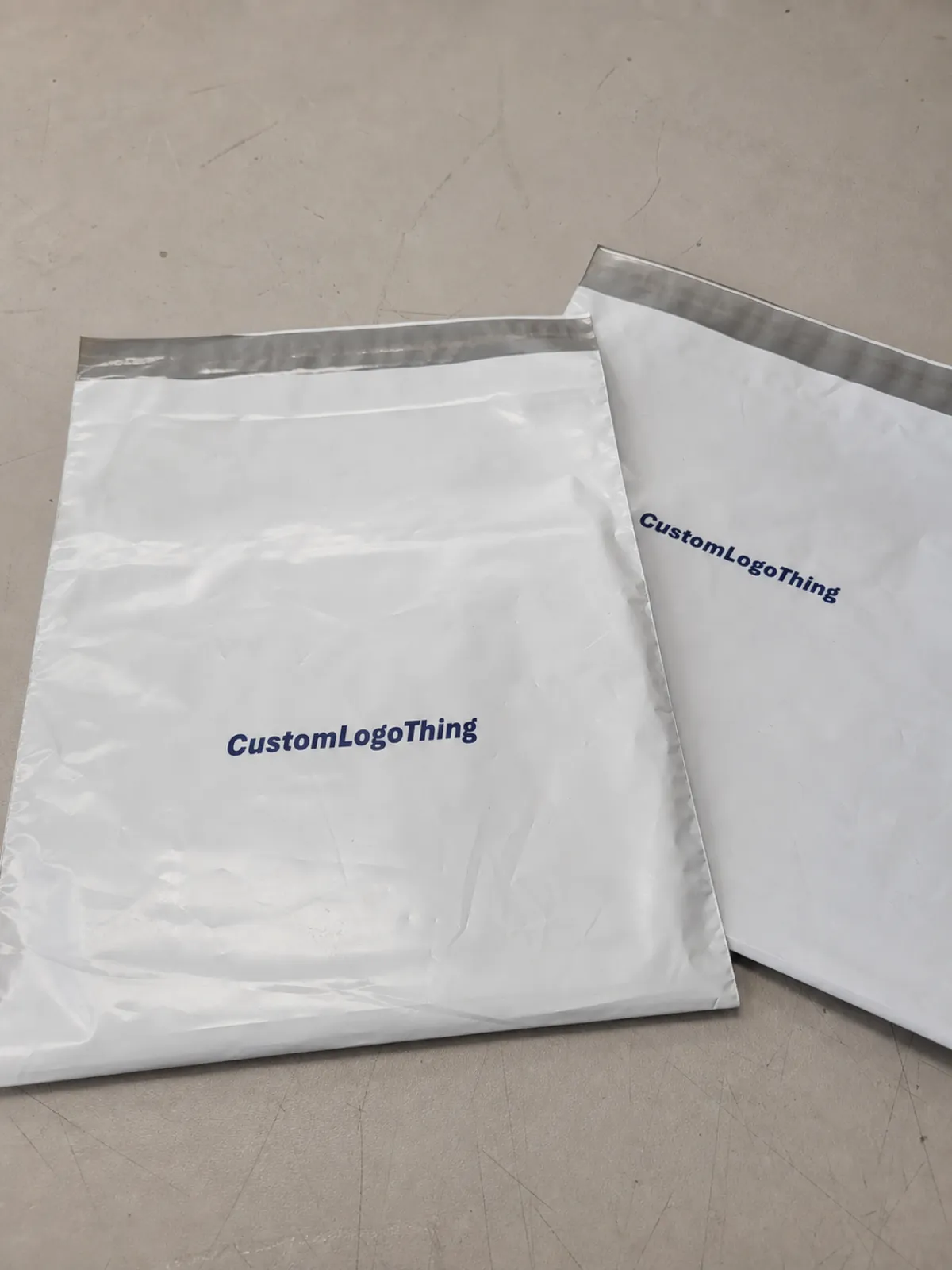
Start with the awkward truth: most giveaway mailer failures come from the kit, not the bag. A recycled poly mailer can be perfectly made and still fail in use if the contents are too thick, too sharp, too heavy, or too awkward for the seal area. Recycled film behaves a little differently from virgin film, too. It can feel slightly less forgiving when the load is uneven, which is why a spec that looked fine on paper can still crease, stretch, or split at the closure.
A proper packing requirement is just the full set of things the mailer has to handle. That includes what goes inside, how many pieces go in each bag, finished thickness, total weight, closure method, and whether the bags ship flat or arrive pre-packed for handout. If you cannot describe those parts clearly, the quote you get is basically educated guesswork with nicer formatting.
Measure the whole kit, not the prettiest piece
A small sample set may fit into a standard 9 x 12 mailer, but that is only useful if the whole stack behaves once it is folded and sealed. A brochure with sharp corners can stress the seam. A product sample bottle can create a thick spot that makes the mailer bulge. Even the opening style matters because booth staff usually need to pull and hand over the item in one motion, not wrestle with it like a stubborn snack bag.
For branded giveaways, I like to think in terms of booth handling first and print second. If the packout takes more than a few seconds per unit, the floor team will hate it. If the closure is fiddly, the team will skip steps. If the opening tears unevenly, the customer sees the mess before they see the logo. That is not the look anyone paid for.
Show me the packed kit, not the artwork. If the inserts do not fit cleanly, the print file is irrelevant until the packout is fixed.
That is why the trade show giveaway Recycled Poly Mailers packing requirement guide should always start with a physical sample kit or, at minimum, a flat lay with real dimensions and real weight. If your bag needs to carry paper inserts, a small sample, and a folded card, the final thickness can be far more important than length and width alone.
If you are still building the offer, the broader Custom Packaging Products catalog is useful because it lets you line up the mailer with any inserts, cartons, or secondary packaging before you place the order.
How the Packing Requirement Process Works
The intake process is less dramatic than people expect, but it has to be precise. A supplier needs the product list, finished dimensions, total weight, target quantity, shipping destination, and whether the mailer is for simple giveaway use or a more polished retail-style presentation. If any of those inputs are fuzzy, the spec will be fuzzy too. Fuzzy specs tend to cost money later. Funny how that works.
- Define the kit. List every item that goes into the bag, including inserts, cards, samples, and any protective wrap.
- Measure the packed set. Use the finished width, height, and thickness after everything is inserted and folded.
- Set the closure. Decide between peel-and-seal, flap tuck, adhesive strip, or a simple open-top handout bag.
- Choose the film spec. For recycled poly mailers, thickness often lands around 2.0 to 3.0 mil for lighter giveaways, with heavier kits needing more.
- Lock the print area. Keep art clear of seams, closure zones, and any fold lines that might distort the logo.
- Confirm the ship method. Decide whether the order ships flat or as a finished kit, because that changes both labor and freight.
Once those inputs are in hand, the supplier can translate them into bag size, seal width, print area, and whether a stock size can work or a custom run is safer. That part sounds routine, but the difference between “almost fits” and “actually fits” is usually where the margin goes.
If the order has a hard deadline, the schedule gets tight fast. Artwork approval, sample approval, production, and freight booking all stack up. One slow step can wreck the whole timeline. A custom packout for a trade show is not a place to be casual with sign-off dates.
When you are comparing bag-only options, the Custom Poly Mailers page is the faster route. If you need the larger system, keep the packing requirement tied to the rest of the branded materials instead of treating it like a separate purchase.
Cost, MOQ, and Unit Pricing for Recycled Poly Mailers
Pricing is where buyers start hoping the math will be kinder than it is. The main cost drivers are bag size, film thickness, print coverage, number of colors, custom sizing, and whether the order uses stock film or a made-to-order recycled blend. A plain recycled poly mailer is cheaper than a custom-shaped one. A one-color logo is cheaper than a full-bleed print. Bigger bags cost more. Smaller quantities cost more per unit. None of that is mysterious, just inconvenient.
| Option | Typical MOQ | Unit Price Range | Best For | Main Watchout |
|---|---|---|---|---|
| Stock recycled poly mailer | 1,000-3,000 | $0.12-$0.22 each | Simple inserts and quick turnarounds | Limited sizing and less control over presentation |
| Custom recycled poly mailer | 3,000-10,000 | $0.18-$0.36 each | Brand-specific fit and cleaner booth handoff | Setup time, proofing, and minimums |
| Pre-packed giveaway kit | 500-5,000 kits | $0.55-$1.20 per kit, plus insert cost | Show-ready handouts with less booth labor | Packing labor and freight can climb quickly |
MOQ tradeoffs are straightforward. Smaller runs usually raise the unit price, but they also keep you from sitting on leftovers after one event. If you only need 1,500 kits for a single show, ordering 10,000 because the price looks prettier is a classic way to turn a savings exercise into a storage problem.
There are a few pricing traps that show up later. Setup charges. Plate or print prep. Sample costs. Rush fees. Freight. Labor if the mailers are being packed before the show. The cheapest quote can become the most expensive order once the last invoice lands.
For recycled-content language and disposal claims, the EPA recycling guidance is a sensible reference point. And if your kit needs to survive rough handling in transit, the ISTA test vocabulary is useful when you want to talk about drop and vibration risk without guessing.
My practical rule is this: compare landed cost per usable giveaway, not just the bag quote. A bag at $0.14 that needs hand-fixing, repacking, or emergency freight is not cheap. It is merely cheap-looking.
If you need a broader benchmark, ask for three quantities. That usually shows the real break point between buying tight, buying safe, and buying a little extra so the show floor does not run dry.
Production Steps From Artwork to Final Packout
The production flow should be boring. Boring is good. First you confirm dimensions. Then you approve the dieline. Then you lock the artwork. Then you validate the material and seal spec. Then you run a sample. Then you move into production and final packout. Every time someone jumps ahead, the job gets more expensive.
What gets checked before full run approval
During sample review, a decent supplier will check film consistency, seal integrity, print registration, count accuracy, and whether the finished mailer still opens and closes cleanly after filling. That sounds like a lot, but it is the minimum if the bags need to perform on a trade show floor where nobody has time to babysit a failure.
If the kit is fragile or heavy, ask whether the order should be checked against a simple handling screen or a drop sequence similar to ASTM D5276. You do not need to turn a mailer order into a lab project. You do need enough testing to know the seam will not give up the moment the box hits a truck deck or a booth cart.
Timing depends on the spec. Stock-printed bags often move faster. Custom sizes, special print treatments, and pre-packed kits need more cushion than most buyers assume. A simple run can be around 7 to 12 business days after proof approval. Custom sizes and more involved packout work often sit closer to 15 to 25 business days. If the order has to be packed by hand and shipped to a show venue, add more buffer. Freight does not care about your calendar optimism.
Once the sample is approved, the freeze point is real. Changing insert size, artwork, or closure style usually means extra lead time and extra money. That is not a mystery. It is just the invoice version of physics.
For buyers building a fuller presentation system, the most efficient path is to finalize the packout first, then align the mailer spec around it. That keeps the Trade Show Giveaway Recycled Poly mailers packing requirement guide tied to actual use instead of wishful thinking.
Common Mistakes That Hurt Trade Show Giveaway Orders
The classic mistake is ordering from a guess instead of a measured kit. Buyers estimate the dimensions, then discover the brochure, sample, and promo item do not fit together the way they imagined. That is usually followed by a second guess, a revised guess, and a very expensive proof cycle.
Another common miss is ignoring how recycled film handles heavier inserts, sharp corners, or uneven shapes. If the contents create stress points, the mailer can show seam strain, edge whitening, or a bag that looks tired before it reaches the booth. Recycled material is perfectly usable for these orders, but it still deserves the right gauge and seal width.
- No buffer for approvals. Trade show dates are fixed. Your art review is not.
- No buffer for freight. Weather, routing, and carrier delays are not rare enough to ignore.
- No buffer for spares. Somebody always drops a stack, miscounts a carton, or hands out more than planned.
- No check on labor. A “cheap” mailer that needs repacking is a labor bill in disguise.
Chasing the lowest unit cost without checking labor and shipping can backfire hard. I see this a lot with trade show giveaway recycled poly mailers packing requirement guide orders: the buyer compares bag price, not the total cost of getting the right number of usable kits to the floor. That shortcut is how budgets leak.
There is also a presentation mistake that gets overlooked. If the opening is awkward or the print zone sits too close to the seal, the bag can look slightly off even when it technically works. On a busy booth, that small visual problem gets multiplied by every handoff.
Put bluntly, a mailer that saves two cents and wastes ten minutes is not a savings. It is a penalty with a barcode on it.
Expert Tips and Next Steps for Ordering
Send a finished sample kit, not a description. I know, that sounds obvious. Yet plenty of buyers still try to specify a packout from memory and a few bullet points. A real sample lets the supplier verify fit, closure behavior, and whether the bag is actually realistic for booth use.
Ask for pricing at three quantities so you can see how MOQ changes unit cost. That is the fastest way to decide whether to buy tight, safe, or slightly overstocked. Most clients do not need a dramatic strategy. They need a smart quantity with enough margin to survive one unexpected issue.
Build in a buffer for freight, spares, and onsite replacements. Trade shows eat inventory for breakfast. Somebody will hand one out to the wrong attendee. Somebody will crush a carton. Somebody will forget the last case at the dock. Plan for that and your day gets easier.
- Measure the packed kit. Finished size matters more than wishful size.
- Choose the closure style. Handout use and shipping use are not the same job.
- Confirm print needs. Keep critical branding away from seams and fold lines.
- Request three quantity quotes. MOQ math should be visible before you commit.
- Approve the sample fast. Every delay compounds the rest of the schedule.
- Lock the ship date early. Show deadlines do not move for convenience.
If you are building a full branded package, start with Custom Packaging Products so the inserts, mailer, and any backup materials all line up. If you just need the bag itself, Custom Poly Mailers is the cleaner path.
Here is the short version: measure the kit, match the bag to the load, price the full landed cost, and leave room for the normal chaos of freight and approvals. That is the real trade show giveaway recycled poly mailers packing requirement guide, and it saves more money than a bargain quote ever will.
Frequently Asked Questions
What size trade show giveaway recycled poly mailers fit a sample kit?
Measure the fully packed kit, not the largest single item. Leave clearance for the seal area and any extra thickness from folded inserts or product samples. If the kit is bulky or uneven, test both flat and gusseted options before you approve the final size.
How do trade show giveaway recycled poly mailers affect unit cost?
Unit cost usually rises with larger bags, heavier film, more print coverage, and lower quantities. Custom sizing and special packout work add more cost than stock mailers with simple printing. Ask for landed cost, not only the bag price, so freight and setup charges do not surprise you later.
What lead time do trade show giveaway recycled poly mailers usually need?
Stock sizes with simple printing are usually faster than custom mailers with special dimensions or packout. Proofing, sample approval, and freight booking all add time, especially when a trade show date is fixed. Always add a buffer for rework or transit delays, because show deadlines are less flexible than anyone wishes.
Can trade show giveaway recycled poly mailers handle heavier inserts?
Yes, if the film thickness, seal strength, and mailer size match the load. Test sharp corners, thick catalogs, and uneven kits because they stress seams and closures differently. For heavy or awkward contents, a thicker gauge or reinforced packout plan is usually safer.
What do I need for a quote on trade show giveaway recycled poly mailers?
Provide finished dimensions, total weight, item count, print details, and target quantity. Include the shipping destination and show date so the supplier can factor in freight and turnaround. If possible, send a real sample kit or a photo of the contents packed together. Guessing is expensive.


