A Trade Show Giveaway has very little time to prove itself, and the mailer often does the first visible job. It is the part attendees touch before they read the insert or see the sample, so the film, seal, and print quality shape the whole kit’s impression. If the bag feels flimsy, prints unevenly, or arrives with inconsistent seals, the package reads as underbuilt.
That makes this a logistics decision as much as a branding one. The mailer has to survive freight, fit the insert stack, close cleanly, and still look presentable after a long day in a booth. Recycled Poly Mailers are useful because they ship flat, stage quickly, and reduce the clutter that slows staff down when traffic spikes.
The decision points are practical: recycled content claim, film thickness, closure type, print method, inspection standard, MOQ, and landed cost. Those are the details that tell a buyer whether the spec will work at show speed.
Why Recycled Poly Mailers Make Trade Show Kits Easier
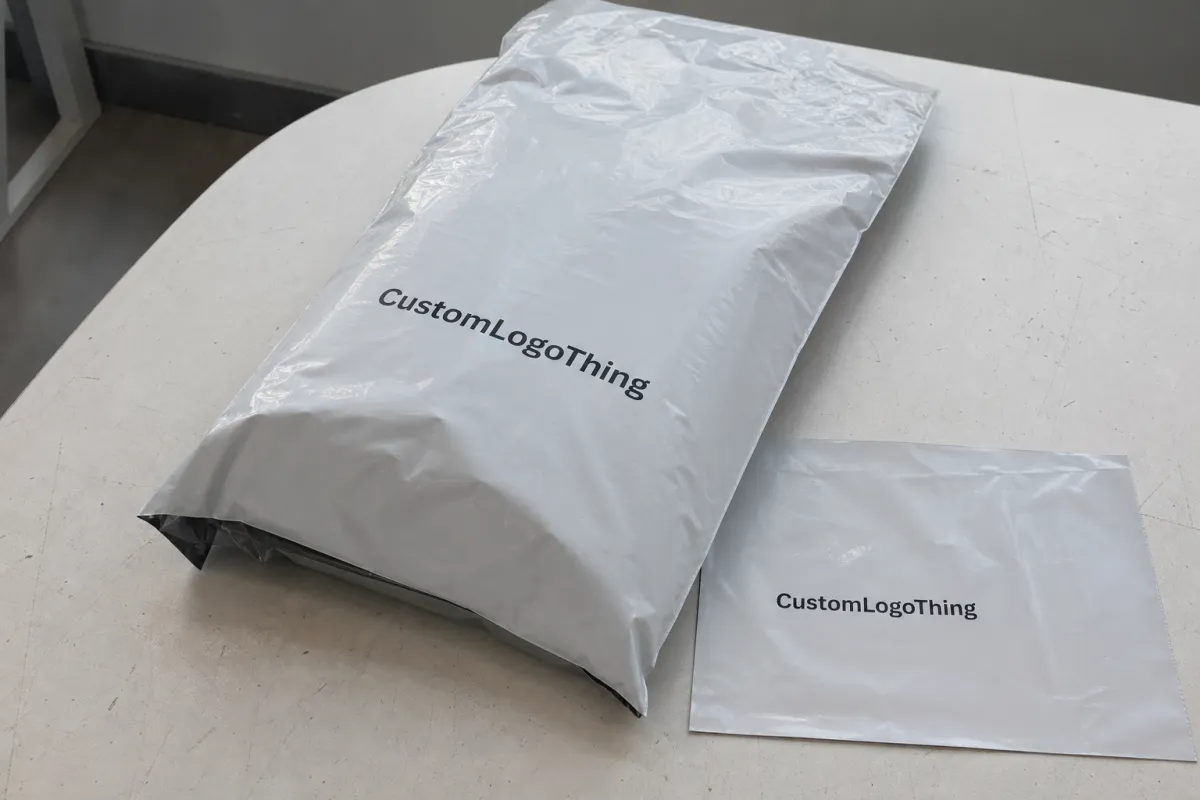
A booth handout package travels through more handling than most marketing pieces. It is packed, freighted, staged, stacked, handed out, and often reused on the show floor. Recycled Poly Mailers work well in that path because they are light, flexible, and easier to store than cartons when the kit is mostly flat literature or mixed soft goods.
That flexibility also helps at the booth. Staff can refill trays quickly, avoid box cutters near printed collateral, and keep inventory easy to count. A mailer that ships flat and opens cleanly trims several small steps, which matters when the line is moving.
The sustainability claim should be precise. Post-consumer recycled content and post-industrial recycled content are not the same thing, and buyers should ask which one is being used. The supplier should be able to state the percentage, the resin basis, and whether the film is a blended recycled formulation. The EPA recycled-content resource is a useful reference when the claim needs to be checked for accuracy.
There is also a consistency benefit across the booth kit. When the mailer matches the inserts, cards, or sample pieces in tone and finish, the handout feels planned rather than assembled from leftovers. That does not need a big brand story behind it; it just needs a coherent spec.
Trade Show Giveaway Recycled Poly Mailers Material Spec Guide
The Trade Show Giveaway Recycled Poly mailers material spec guide starts with a short list of fields. Buyers need enough information to compare quotes on equal terms, not a long narrative. At minimum, include finished size, film thickness, recycled-content claim, print coverage, closure style, pack count, and size tolerance.
Film gauge is one of the first technical choices. A 2 mil mailer can work for flat literature and slim inserts. Once the contents include apparel, sample jars, or items with harder edges, 2.5 to 3 mil is usually safer. Heavier film also changes the feel of the bag and usually makes the seal more dependable.
Recycled resin changes appearance in normal ways. Slight haze, muted color, and small run-to-run variation can happen, so the artwork should be built for that substrate instead of fighting it. Thin type and low-contrast logos often disappear on darker or cloudier film. Stronger typography, simpler layouts, and enough contrast are usually more reliable. If the bag is dark, white ink may be required.
Ask for both a flat sample and a filled sample before approval. Flat shows the artwork placement; filled shows the real fit, seal tension, and how the graphics sit once the inserts are inside. That second sample catches problems that mockups miss, such as a QR code landing too close to a seam or artwork drifting over a fold.
Useful spec-sheet language usually includes:
- Size: finished width and length, plus usable interior space
- Thickness: film gauge in mil or microns
- Recycled content: PCR, PIR, or blended resin claim with percentage
- Print coverage: one side, two sides, full bleed, or spot area
- Tolerance: acceptable variation on dimensions and print placement
- Packaging count: units per case or inner pack
- Closure: peel-and-seal, zip, tamper-evident, or other style
If the bag needs to hold a barcode or QR code, scan it on the final film before sign-off. What reads clearly on a screen can fail on recycled material if the contrast is weak or the code is too small. Catching that early is far cheaper than discovering it on the show floor.
Cost, MOQ, and Quote Drivers for Custom Orders
The clearest way to review a quote is to separate the components. Film, printing, setup, closure hardware if any, freight, and rush charges should be visible. If they are not, the unit price can look attractive while the landed cost moves out of range.
MOQ usually rises as the spec becomes more custom. A stock size with one-color print is the simplest job, so it tends to sit at the lowest price point. Custom dimensions, white ink, multiple print colors, and specialty closures each add production complexity. That is the cost of more variables on press.
| Option | Typical Use | Relative Price | What Moves the Cost |
|---|---|---|---|
| Stock size, 2 mil, one-color print | Flat literature, slim inserts, lightweight handouts | Often the lowest; many quotes land around $0.18-$0.32 per unit at 5,000 pcs | Basic setup, common film width, limited print area |
| Custom size, 2.5 mil, two-color print | Mixed kits, brochures plus small sample items | Usually moderate; often $0.24-$0.45 per unit at 5,000 pcs | Custom cutting, extra ink pass, tighter registration |
| Custom size, 3 mil, white ink or full coverage | Premium kits, darker recycled film, high-visibility branding | Usually the highest; often $0.32-$0.65 per unit or more | White ink, heavier film, more press time, stricter proofs |
Those ranges are directional, not universal. Freight can change the real cost as much as the print spec, especially on smaller orders. To compare suppliers fairly, keep size, gauge, print count, quantity, and ship-to point identical across quotes.
The least dramatic levers are often the best ones. Standardize the size, keep the artwork simple, reduce coverage where possible, and use a common closure. Those changes usually lower cost without weakening the kit.
Process and Timeline: From Artwork to Arrival
Good timing starts with the event date and works backward. A lot of packaging delays happen because teams begin with the quote date and assume the rest will fit. A realistic schedule runs through brief, quote, proof, sample approval, production, quality check, and freight.
- Brief: confirm size, insert weight, recycled-content target, and print intent.
- Quote: compare unit price, MOQ, overrun terms, and shipping assumptions.
- Proof: check the art against the actual bag layout.
- Sample approval: validate seal, fit, and scanability.
- Production: allow time for material sourcing, printing, and curing if needed.
- Quality check and freight: inspect pack count, then ship with buffer time.
For straightforward custom work, 12-15 business days from proof approval to production completion is a reasonable planning window, then another 2-7 business days for freight depending on distance and service level. Add more time if the resin must meet a specific recycled-content target, if the artwork needs multiple revisions, or if the print uses white ink or heavy coverage.
For kits with sensitive inserts or hard edges, transit behavior matters. Bags that seem fine on a bench can shift when they are stacked in a warm truck, compressed in a carton, or handled several times before the event. That is why sample review should include pressure on the seal, not just visual inspection.
If the event cannot slip, hold back some schedule reserve. The most useful cushion is usually the one that absorbs a late artwork correction, a film substitution, or a freight delay.
Sizing, Closure, and Print Choices That Change Performance
Size the mailer for the actual contents, not the hoped-for contents. A bag that is too tight wrinkles at the seams and makes insertion awkward. A bag that is too loose shifts around and feels underfilled. Both problems are avoidable if the exact insert stack is tested before production.
Closure choice should follow booth workflow. Peel-and-seal is the fastest option for one-time handouts. Zip closures make more sense if the recipient is likely to reuse the mailer while carrying other materials. Tamper-evident styles fit sample-control scenarios where the contents need to stay untouched until opened.
Print design has to account for recycled film. Dark or cloudy material reduces contrast, so thin fonts and complicated linework can disappear. Large type, clear hierarchy, and one strong focal point are usually safer. If a QR code is part of the layout, keep it large enough to scan from arm’s length and leave quiet space around it.
The order of information matters on the bag itself. Brand mark first. Offer or product category second. QR code third. Handling cue last. That sequence helps a booth rep hand over the kit with little explanation.
Where paper inserts are used, the material story should stay aligned. Recycled poly mailers do not become biodegradable because the insert is paper. FSC-certified sheets and kraft pieces can strengthen the overall package, but the claim has to match the actual components.
Common Mistakes That Inflate Costs or Weaken the Kit
The fastest way to lose value is to buy too little film for the load. A bag that saves a few cents and tears at the show creates a visible failure in front of the people the kit is supposed to impress. A slightly heavier gauge usually costs less than reprinting late or replacing damaged handouts.
Another common mistake is approving art only on an empty mockup. Flat mailers make centered layouts look better than they may look once packed. Seams, insert thickness, and fold pressure can all move the graphics. The filled sample is the real approval point.
Approve the packed sample, not the empty bag.
Heavy ink coverage can also backfire on recycled film. Dense printing can look rich on a white proof and muddy on the final substrate. If the resin has a natural haze or texture, the better fix is usually a cleaner layout rather than more ink.
Operational problems matter too. Weak seals, staff who have not been shown how much pressure to apply, cartons crushed in freight, and kits exposed to heat or humidity are ordinary risks. The spec should assume they will happen and still survive.
Expert Tips for Higher-Performing Booth Mailers
Standardizing one or two sizes across a show calendar is often smarter than chasing the perfect size for every event. Inventory gets simpler, replenishment gets faster, and the team learns how those formats behave. Repetition also reveals which specs actually hold up and which ones only looked good in proof.
Ask for samples that match the final recycled content and print process. A generic stock substitute can hide the very issues you need to see, especially on color and seal feel. The goal is not a prettier sample; it is a truthful one.
- Keep the message hierarchy simple: logo, offer, QR code, handling cue.
- Check scan quality: test QR codes on the final film finish before production.
- Match the sample to the run: same recycled content, same print method, same closure.
- Review the full kit: align mailer, inserts, and any paper component before approval.
Precision also protects the sustainability story. Recycled content should be documented, not assumed. Biodegradable claims should be avoided unless the material actually meets the relevant standard. Vague language creates compliance risk and slows approvals.
Next Steps: Build a Quote-Ready Spec Sheet
The fastest quote is the one that does not require guesswork. A one-page brief should include finished size, material gauge, recycled-content target, print colors, quantity, event date, ship-to address, and the actual insert dimensions. If the packed stack is still changing, settle that before artwork approval.
Send the same brief to each vendor. That is the only fair way to compare price, MOQ, turnaround, and shipping confidence. If one supplier asks for more detail than the others, that usually means they are pricing the real job rather than a rough approximation.
The strongest event packaging usually comes from disciplined basics: exact measurements, sample review, a realistic schedule, and a clear spec sheet. That is the practical value of a Trade Show Giveaway Recycled Poly mailers material spec guide: it turns a packaging decision into something that can be priced, tested, and repeated without guesswork.
What thickness works best for recycled poly mailers for trade show giveaways?
Use lighter gauges for flat literature or soft items, and move up for kits with hard edges or added weight. A 1.5-2 mil film can work for simple handouts, while 2.5-3 mil is usually safer for branded booth kits. Always test the packed mailer.
Are trade show giveaway recycled poly mailers durable enough for branded sample kits?
Yes, if the film gauge, seal strength, and closure style match the contents. Ask for a filled-sample handling test so you can see how the bag behaves under realistic pressure. A recycled mailer should balance recycled-content goals with practical tear resistance.
How do I compare recycled poly mailer pricing quotes fairly?
Compare landed cost, not only the unit price. Freight, setup, overrun tolerance, print colors, and custom sizing can all change the final number. Request the same spec sheet from every vendor so the quotes are built on the same assumptions.
What lead time should I plan for custom trade show mailers?
Simple orders can move quickly, but custom art, new sizes, and multi-color print need more buffer. A practical plan is to allow time for proofs, sample approval, production, and shipping, then add extra cushion if the booth date cannot move.
Can I print QR codes and sustainability claims on recycled poly mailers?
Yes, if the QR code is large enough, contrast is strong, and the final film finish has been tested. Keep sustainability claims specific and supportable so the package does not create compliance risk. A scan test before production is cheap protection.


