Trade show ribbon handle paper bags bulk order planning that holds up on the floor
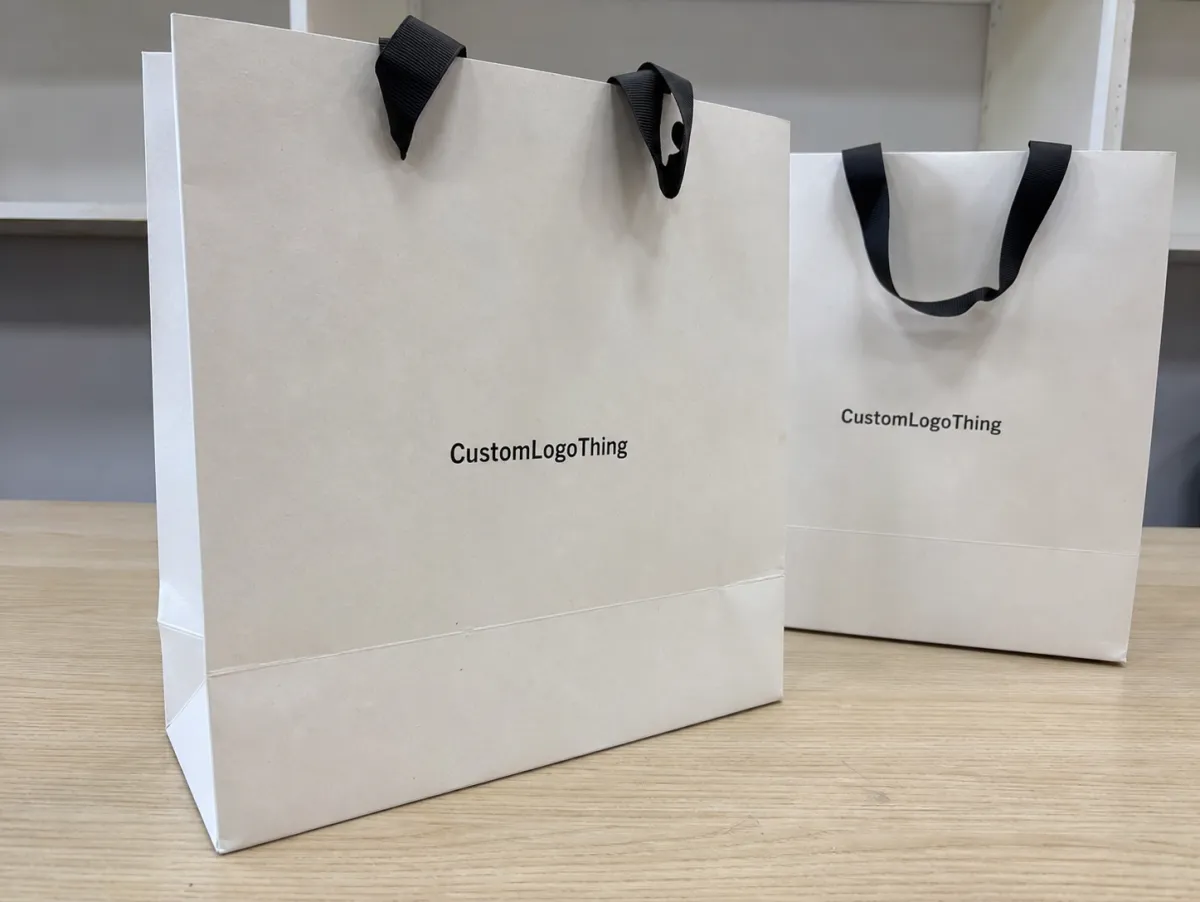
If you are doing trade show ribbon handle paper bags Bulk Order Planning, do not start with artwork. Start with function. At a show, the bag has to look premium, carry brochures or samples without sagging, and survive repeated handoffs without tearing at the fold or splitting at the handle. For most buyers, that means a spec built around 157-250 gsm coated paper, a reinforced base insert, and ribbon handles in the 9-15 mm range.
Ribbon handles earn their keep because they feel better in the hand than thin rope or punched cutouts. That matters when attendees are already juggling a badge, a phone, a coffee, and a stack of handouts. A bag with a clean ribbon handle quietly signals care, and people notice that even if they never say it out loud. In practice, satin polyester ribbon is the most common choice for premium event bags, while cotton ribbon is used when a softer, more natural look is wanted.
The hidden cost of cheap bags is rarely the quote itself. It is the wrinkled stack in receiving, the weak handle attachment that gives out after a few carries, the base that bows on the booth floor, and the last-minute reorder that lands after the show. Savings disappear fast once rush freight enters the picture. A bag that fails a simple 5-8 kg carry test can create more cost in one day than the unit price difference on the whole order.
A pretty bag that collapses in a booth cart is not branding. It is a cleanup problem with a logo.
For Custom Logo Things buyers, the better approach is simple: decide what the bag must do before you worry about decoration. It should photograph well, stand upright on a counter, and feel solid enough that staff can hand it out without apologizing for it. If the bag needs to hold a catalog, product sample, and inserts, spec the gusset and bottom board first, then tune the print and finish around that structure.
Product details buyers should lock before requesting samples
Before asking for samples, lock the build. Paper grade, gusset style, base reinforcement, handle attachment, and surface finish all need to be written down. If those details are vague, the sample only proves that someone can make a bag. It does not prove they can make your bag. A useful brief includes the exact paper weight, ribbon width, print method, board thickness, and whether the bag must pass a load test before approval.
Paper stock is usually the first decision that changes everything else. A lighter coated stock, such as 157 gsm C1S or 170 gsm art paper, works for brochures, program inserts, or simple giveaways. A heavier board-backed construction, such as 210-250 gsm art paper with a 1200-1500 gsm base insert, feels more substantial and holds shape better for product kits or premium handouts. Push the stock too far and you pay for it twice: once in material cost, and again in freight weight.
Handle detail matters more than buyers expect. Ribbon width changes the feel immediately. A 9 mm ribbon looks neat and restrained. A 12 mm ribbon is usually the safest choice for event bags because it balances comfort and appearance. A 15 mm ribbon is better when the contents are heavier or the bag is meant to read more premium. Color is the same story. Stock black, white, or red is efficient. Custom-dyed ribbon makes sense only if brand color accuracy matters enough to justify the extra cost and lead time. If the ribbon is textile-based, ask for OEKO-TEX Standard 100; if it is cotton and an organic claim matters, GOTS is the relevant reference. If the ribbon uses recycled polyester, ask whether GRS applies.
Print coverage should be decided early too. Front-only branding is faster and usually cheaper. Two-sided print gives better visibility in photos and across a busy floor. Full-wrap art, foil stamping, and soft-touch lamination can make sense for VIP kits or launch events, but they should earn their place. Extra finish should improve the bag, not just make the quote look expensive. Typical production uses offset lithographic printing for clean solids and fine type, then matte or gloss lamination for surface protection. Hot foil stamping adds cost, but it can be worth it if the bag is meant to read as premium from several feet away.
If sustainability claims are part of the brief, ask for paper source and certification language up front. FSC chain-of-custody language is the standard reference many teams use; the organization explains the basics at fsc.org. If the supplier is claiming recycled content, ask what portion is recycled and whether GRS is available for the relevant materials. For social compliance, many buyers ask for WRAP or BSCI documentation rather than relying on vague statements. If the order needs transit performance verification, the testing references at ista.org are useful when you need to confirm packaging durability and shipping assumptions.
One more practical point: ask whether the bag must stand upright in a booth. A little structure helps. Too much stiffness, though, and the bag becomes harder to pack, more expensive to ship, and less efficient in cartons. The sweet spot is a polished bag that still behaves like packaging instead of a display prop. For most buyers, that means a glued base insert, reinforced top fold, and ribbon handles attached through die-cut holes with adhesive reinforcement patches.
- Paper grade: choose for load, appearance, and freight weight together.
- Handle style: 9-15 mm ribbon width and stock or custom dye change the feel fast.
- Finish: matte, gloss, soft-touch, and uncoated stock all print differently.
- Structure: base board and gusset depth decide whether the bag stands up.
- Artwork: confirm print coverage before the sample is made.
Size, stock, and print specifications to confirm early
Size is not a cosmetic detail. It changes the quote, the shipping carton, the usable print area, and the way the bag behaves in a crowded booth. The specs that matter are width, gusset, and height, plus the printable area after seams, folds, and handle placements are counted. When buyers do not pin these down, the supplier can only quote a range, and the difference between a loose estimate and a finalized spec can be 10-20 percent.
For trade show use, buyers usually land in a few practical size bands. Small handout bags work for brochures and samples, often around 8 x 4 x 10 inches. Medium bags, around 10 x 5 x 13 inches, are better for catalogs, product kits, and apparel. Larger bags such as 13 x 5 x 18 inches can be useful, but they also eat freight space and look oversized if the contents are light. As a rule of thumb, the bag should be 10-20 percent larger than the packed contents so the top does not flare or buckle.
Paper weight should match what goes inside the bag. Lighter stock is fine for folded literature and low-mass inserts. Heavier stock is the safer call for merch, boxed samples, or higher-value giveaways. If the bag has to handle repeated carrying across a show floor, underspecifying the stock is false economy. For premium event work, 210-250 gsm art paper or 250 gsm kraft over a reinforced insert is common; for more basic handouts, 157-170 gsm can be enough.
Artwork prep is where many orders slow down. Vector files are the cleanest starting point. Fonts should be outlined. Spot colors should be confirmed with the supplier, especially if the bag uses textured stock or matte lamination, both of which can dull color. Tiny reverse type is risky. On rough stock, small white lettering can disappear fast. So can fine hairlines. If the bag is printed by offset, ask for a digital proof first and a press-side color check after the first sheets are running.
Packout specs deserve attention too. Ask how the bags are folded, how many go in each carton, whether inner protection is used, and how pallets are stacked. If your receiving team needs fast unloads, bulk packed cartons are usually easier to handle than individually wrapped bags. If the bags are show-ready and need pristine surfaces, a little more protection may be worth the added labor. A common carton plan is 25 or 50 pcs per inner bundle, with the outer carton labeled by size, color, and lot number for fast receiving.
Inspection checkpoints should be agreed before production starts. The useful ones are incoming paper basis weight and moisture content, print registration, color consistency against the approved proof, handle pull strength, glue-line coverage, and carton count. Many buyers request AQL 2.5 for major defects and AQL 4.0 for minor defects, plus a simple load test at 5-8 kg for standard promotional bags and a drop test from 60-80 cm to confirm the base and handle attachments stay intact.
In practice, the most useful quote request includes the actual bag dimensions, the artwork size, the handle color, and the carton plan. Without those, you are comparing guesses, not prices. Ask for a written sample route as well: blank structure sample, printed pre-production sample, and final production approval against the signed golden sample.
Pricing and MOQ: what changes the unit cost
Unit cost moves for a reason. Quantity is the biggest lever, then paper stock, then print colors, then finishing, then handle type. That order does not change much. A buyer can spend an hour arguing about ribbon color and still miss the main cost driver: total run size. Tooling and setup are spread across the order, so a bigger MOQ usually drops the per-unit price faster than changing a ribbon shade or trimming one print color.
For a typical trade show program, the numbers often land in ranges like these: a simple one-color, ribbon-handle paper bag in a common size might run about $2.50-$4.00 per unit at 500 MOQ when the spec includes premium board, lamination, and custom ribbon. At 3,000-5,000 pieces, a similar bag usually falls closer to $0.55-$1.10 per unit if the structure stays simple and the print is limited to one or two colors. Add matte lamination, a heavier board, or a full-wrap layout, and the range can move to $0.95-$1.80 per unit. Foil stamping, embossing, or a custom-dyed ribbon can push above that.
MOQ is not just a factory rule. It reflects setup time, paper waste, print calibration, and finishing labor. Sometimes ordering a slightly larger quantity lowers the per-unit price enough to offset the extra inventory. Sometimes it does not. If the event is one-off and the extras will sit in a storage room for a year, a larger run is a bad deal dressed up as savings. A practical MOQ band is often 300-500 pcs for simple stock builds, 500-1,000 pcs for fully custom printed bags, and 3,000+ pcs if you want the strongest unit cost on a custom size and ribbon color.
Watch the extra charges. Setup fees, plate charges, proof revisions, sampling, special packaging, and shipping for tight windows can add real money. Rush freight is the one that catches people because it shows up after the bag quote looks good. That is why landed cost matters more than the sticker price on one carton of samples. Typical hidden items include print plates, die-cut tooling, ribbon setup, and extra cartons for protection. A quote that is $0.20 lower on paper can still cost more once those items are added.
| Option | Typical use | Ballpark unit cost | Best for | Tradeoff |
|---|---|---|---|---|
| One-color print, 157 gsm stock, ribbon handle | Brochures, flyers, low-mass handouts | $0.55-$0.95 at 3,000 pcs | Budget-conscious event kits | Less premium feel and fewer finish options |
| 4-color print, 210 gsm stock, matte lamination | Product launches, branded kits, retail giveaways | $0.95-$1.80 at 3,000 pcs | Balanced cost and presentation | Longer proofing and slightly higher freight weight |
| Soft-touch lamination, foil stamping, reinforced base | VIP mailers, premium samples, launch events | $2.50-$4.00 at 500 MOQ | High-visibility, premium positioning | Higher MOQ pressure and more finishing steps |
Process and lead time from proof to delivery
The cleanest projects follow a predictable path. First comes the spec sheet, then the quote, then the artwork proof, then the structure sample or printed pre-production sample, and finally mass production. Buyers who lock the spec early usually save the most time because the supplier can move straight into paper selection, die-cut setup, and print planning without waiting for revisions.
A realistic timeline looks like this: 24 hours for a quote after the size, paper, print, and carton spec are clear; 1-2 business days for the first artwork proof; 3-5 business days for a blank structural sample; 5-7 business days for a printed pre-production sample after proof approval; and 12-18 business days for mass production after the sample is signed off. In a smooth case, the full cycle lands around 18-22 business days before shipping, excluding transit time.
The machines matter because the process is mechanical, not magical. A typical run uses an offset press for the graphics, a laminator for matte, gloss, or soft-touch film, a die-cutting machine for the shape, a folder-gluer for side seams and base assembly, and manual or semi-automatic ribbon insertion for the handles. If foil or embossing is included, that step is usually run separately after the print cure. Each machine adds a checkpoint, and each checkpoint is a chance to catch problems before they turn into scrap.
Sampling should be treated as production rehearsal, not a courtesy. The best sample route is simple: approved artwork proof, blank sample for construction check, pre-production sample for color and fit, then signed production sample used as the master. During sampling, buyers should check paper caliper, print alignment, handle length, knot security or adhesive lock, base stiffness, and whether the bag still closes cleanly when filled to the intended weight. If the handle pull test or carton count is off at sample stage, production will not improve by itself.
Inspection should happen at three points: incoming material, in-process production, and final packing. Incoming checks confirm paper weight, ribbon width, and color consistency. In-process checks confirm print registration, lamination adhesion, and glue coverage on the seams and base insert. Final checks confirm count, fold quality, handle attachment, and carton labeling. That is how you avoid getting a perfect-looking sample and a sloppy production run.
Why repeat buyers stay with one bag spec
Repeat buyers usually do not stay with a supplier because the supplier is lucky. They stay because the bag spec is stable. Once the board thickness, ribbon width, print profile, and carton pack are locked, each reorder becomes faster and less risky. The approved golden sample becomes a control point, and the factory can repeat the same die-cut, the same glue pattern, and the same color values without re-litigating the design.
That stability matters most when the bag is tied to an event calendar. If the same order repeats for spring launch, summer trade show, and fall conference, a locked spec reduces revisions and protects color consistency. It also lowers the chance of getting a slightly different handle feel or a base that no longer sits square on the table. For buyers, the reward is fewer approvals and fewer surprises.
Reorders also benefit from the paper and finish combo staying unchanged. Switching from matte to gloss, or from stock ribbon to custom-dyed ribbon, can shift the look enough that the bag no longer matches the rest of the kit. The same is true when a buyer changes carton count or inner wrapping. Small changes ripple through packing speed, freight volume, and receiving time. A stable spec keeps the landed cost predictable.
For long-running programs, the best practice is to keep one master spec sheet with the exact materials, dimensions, print colors, certification claims, and inspection standards. That way every reorder starts from the same baseline instead of a new conversation.
Next steps to turn the order brief into production
If you are ready to request quotes, send one concise brief with the bag size, paper stock, ribbon width, print coverage, finish, carton count, and target MOQ. Include whether you need OEKO-TEX Standard 100 for ribbon, GOTS for cotton components, GRS for recycled content, or WRAP or BSCI documentation for social compliance. The more specific the brief, the faster the quote comes back in a form you can compare.
It also helps to state the approval path. Tell the supplier whether you want a blank structural sample first, a printed pre-production sample, or direct production after digital proof. If timing is tight, say so early. A supplier can often protect an 18-22 business day window if the first proof is approved quickly, but that timeline gets fragile the moment the artwork or carton spec starts changing.
Finally, ask for the inspection standard in writing. The simplest version is: approved sample as the master, AQL 2.5 major and 4.0 minor, handle pull test, base load test, carton count verification, and photo confirmation before shipment. That gives both sides the same finish line.
FAQ
What is the most common MOQ for ribbon handle paper bags?
For custom-printed bags, 500-1,000 pcs is a common starting point, while 3,000+ pcs usually gives the best unit cost. Simple stock builds can sometimes start lower, but custom size, custom ribbon, or premium finishing usually lifts the MOQ.
What lead time should buyers plan for?
A realistic timeline is 18-22 business days from approved proof to shipment for a standard run, not counting freight transit. Simple samples can be ready in 3-5 business days, and printed pre-production samples often take 5-7 business days after artwork approval.
Which certifications matter for this kind of bag?
For the paper, buyers often ask for FSC chain-of-custody language. For ribbon or textile components, OEKO-TEX Standard 100 is relevant, and GOTS can matter if organic cotton is part of the build. WRAP and BSCI are common social compliance references, and GRS is useful when recycled content is being claimed.
What inspections should be included before shipment?
At minimum: paper weight check, print registration, color consistency against the approved sample, handle pull test, base load test, carton count, and final packaging review. Many buyers also ask for photo approval of the finished cartons before release.
What is the easiest way to keep pricing predictable?
Lock the size, paper weight, ribbon width, finish, and carton pack before sampling. Once those inputs are stable, the quote is usually much cleaner and reorders stay consistent.