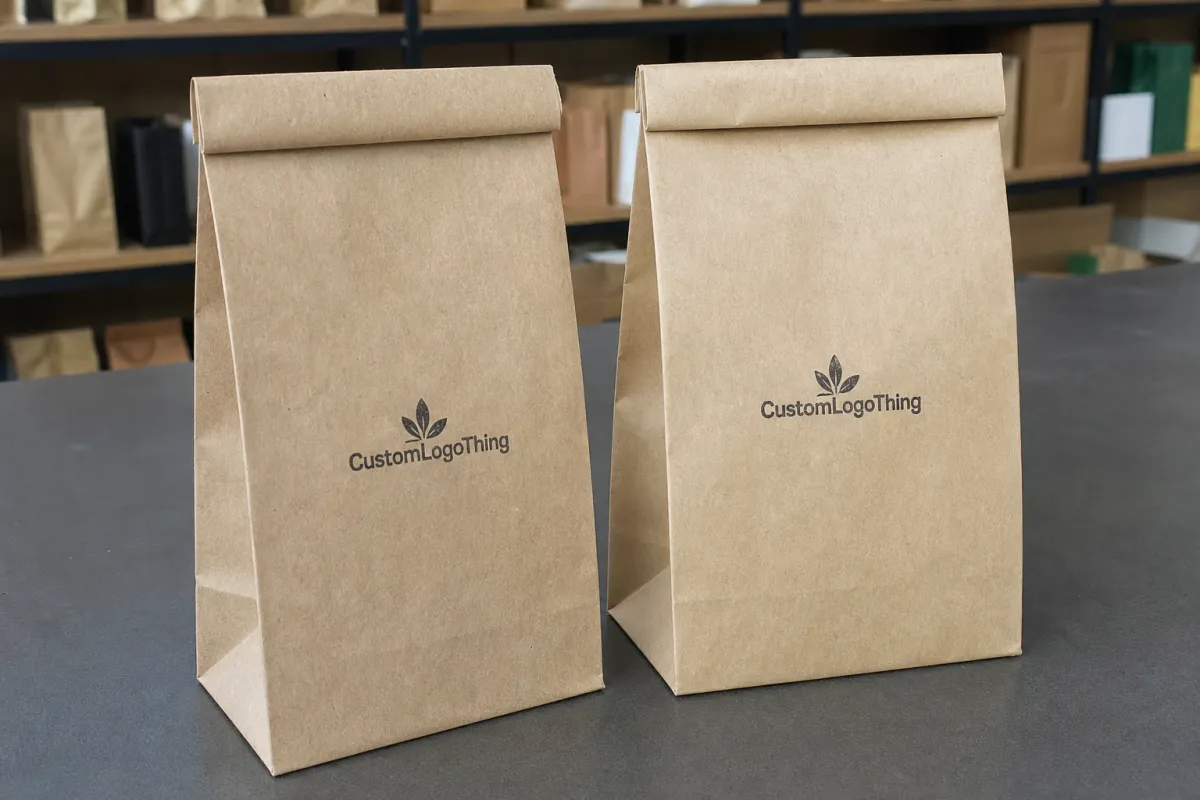
Trade show paper bags are judged in motion. They are filled at registration, carried across a crowded floor, set down, reopened, and often packed tighter than the buyer expected. That is why planning should start with structure, not decoration.
For buyers, the bag is a working container. It has to hold catalogs, samples, chargers, brochures, and sometimes a boxed kit without sagging or tearing halfway through the day. If the handle fails or the bottom collapses, the brand problem happens in public.
The fastest way to avoid that is to define load, size, paper weight, and handle construction before asking for a quote. Print gets attention, but construction decides whether the bag survives the show.
Why booth traffic makes handle strength the first buying decision
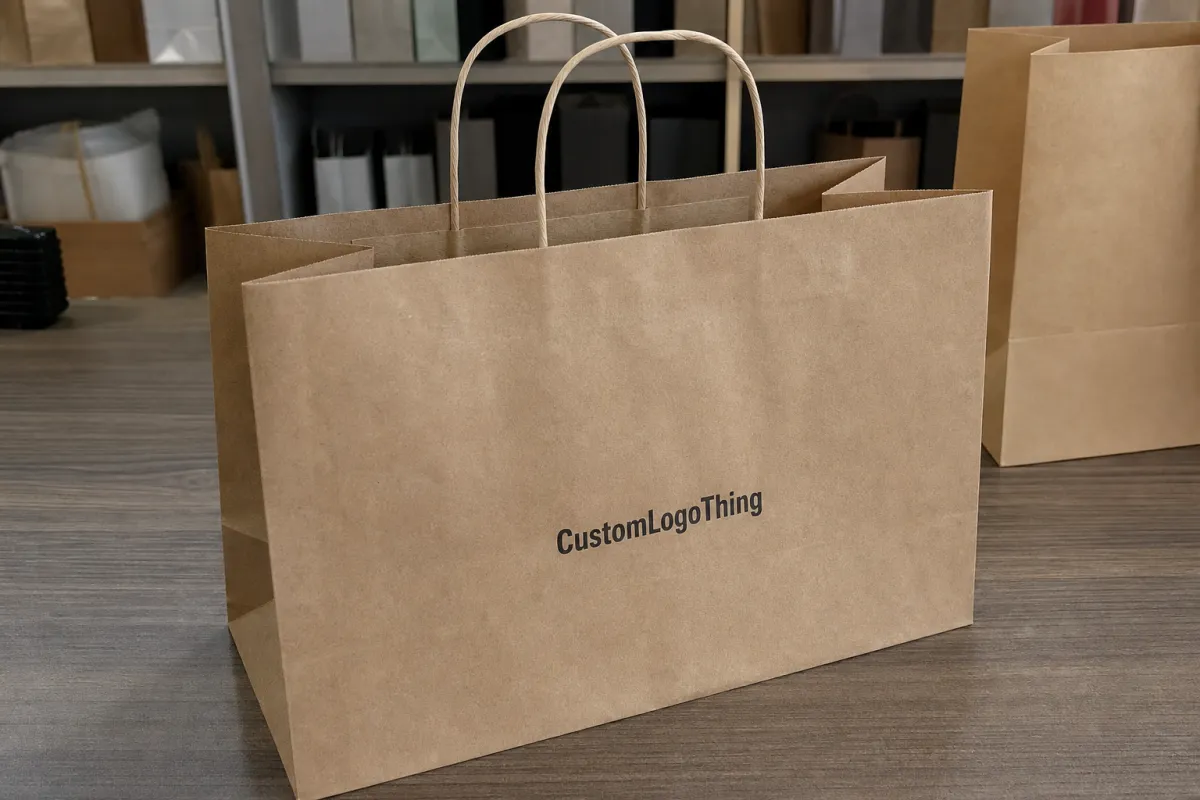
A trade show bag is used differently from retail packaging. It may be lifted at registration, carried for hours, set under a table, handed to another attendee, and packed again with more material. That means the bag has to handle repeated stress, not one careful trip.
Handle pull strength and bottom integrity matter more than artwork polish. Weak adhesive can separate near the fold. Thin paper can crease in transit. A twisted handle that is fine for brochures may fail once the bag holds a sample box, a thick catalog, and a water bottle.
A trade show bag is rarely carried once. It is lifted, set down, reopened, handed off, and often packed harder on the second hour than the first.
Load target should drive the spec. For roughly 1.5 to 2.5 lb of contents, a standard event build may work. For 4 to 6 lb, the bag usually needs heavier paper, stronger handle attachment, and often a reinforced bottom board. Skipping that step usually costs more later in damaged stock and repacking labor.
Appearance matters too. A bag that bows, wrinkles, or leans after a few minutes on the floor looks cheaper than it is. Attendees notice those details, and they use them to judge the booth.
Paper stock, print coverage, and finishing options that survive events
Heavier paper usually wins because it resists crush marks during shipping and stacking. For many event programs, kraft or coated art paper in the 157gsm to 210gsm range is a practical starting point. Go lighter only if the bag will hold flat literature and very little else.
Finish affects both appearance and wear. Matte surfaces read as calm and premium, but they can show handling marks sooner than sealed gloss. Gloss sharpens color and can improve scuff resistance, which helps when bags are stacked at registration or moved between venues. Uncoated paper feels warmer, but it absorbs ink differently and usually needs tighter color control.
The best finish depends on use after the booth. If the bag will appear in attendee photos or social posts, a richer surface may be worth the added cost. If the goal is to hand out thousands of units quickly, simple construction often performs better than a fragile premium finish.
Small structural choices often matter more than cosmetic upgrades:
- Reinforced tops help reduce tearing where the handle anchors meet the bag body.
- Side gussets improve fit for catalogs and sample cartons.
- Bottom boards help the bag sit flat and carry weight without sagging.
- Cleaner fold lines improve how the bag looks on the table and in the aisle.
For sustainability claims, ask whether the paper is FSC-certified and whether the finish affects recyclability in your market. The FSC certification framework helps document sourcing, but it does not replace sound construction. Recycled stock can also be a smart choice, though it may bring more variation in texture and print brightness.
Do not specify finish first and load second. A nice-looking bag that fails under use is more expensive than a simpler bag that works.
Size, handle style, and structural specs to confirm before quoting
Bag dimensions should match the merchandise. The key measurements are width, gusset, height, handle drop, and expected usable load capacity. If those numbers are vague, every quote after that will be less reliable.
Twisted handles are common because they are usually faster to produce than rope or ribbon handles and sit in a cost range that works for bulk event orders. Rope handles feel more premium but add cost and often extend lead time. Ribbon handles are more decorative and usually fit boutique presentations better than high-volume booth distribution.
Handle drop matters more than many buyers expect. Too short, and the bag feels awkward in hand or on the shoulder. Too long, and it swings, drags, or looks sloppy. Good handle sizing is a small detail that strongly affects perceived quality.
| Option | Typical feel | Cost impact | Best fit |
|---|---|---|---|
| Twisted handle | Practical, sturdy, event-friendly | Lowest to moderate | Large booth handouts, catalogs, sponsor kits |
| Rope handle | More premium and softer in hand | Moderate to higher | VIP packs, executive meetings, upscale activations |
| Ribbon handle | Decorative and gift-like | Higher | Limited editions, high-touch presentations |
Before requesting a quote, lock these items in writing:
- Final bag size in inches or millimeters
- Handle color and handle drop
- Print method and number of ink colors
- Logo placement, bleed, and safe area
- Bottom board requirement, if any
- Quantity by event or by shipment
If the bag is too short, it looks underfilled. If it is too tall, the contents shift and the presentation loses shape. The spec is not just technical; it determines whether the bag looks intentional on the floor.
Also state whether the bag will hold single-item handouts, mixed literature, or a packed kit. That one detail changes the recommended paper weight, bottom reinforcement, and the amount of testing a supplier should do before production.
Pricing, MOQ, and quote drivers
Price comes from paper weight, handle type, print colors, finish, size, packing method, and shipping destination. A quote that looks cheapest on paper can become expensive if it excludes proofing, freight, or palletizing. Buyers comparing only unit price often miss the real landed cost.
For a common event-size twisted handle bag, a simple one-color run at 5,000 pieces might land around $0.42 to $0.78 per unit, depending on size and stock. Add full-coverage graphics, heavier paper, or specialty finishing, and the same bag can move closer to $0.68 to $1.20 per unit. Those figures are not universal, but they are useful for planning.
MOQ changes the math. Setup costs are spread across the run, so 1,000 units usually carry a higher per-bag price than 5,000 or 10,000. Buyers should ask whether the supplier is pricing for production efficiency or just quoting a headline rate. A larger order can be smarter if the event calendar supports it and storage is available.
Common quote drivers include:
| Quote element | Why it matters | What to verify |
|---|---|---|
| Proofing | Reduces artwork risk | Included or billed separately |
| Freight | Affects landed cost and timing | Mode, destination, and accessorial fees |
| Palletization | Protects bags in transit | Stack count and wrap quality |
| Plate or setup charges | Impacts short runs heavily | One-time or recurring |
| Rework allowance | Shows how much risk is built into the job | Who pays if art changes after proof approval |
Rush ordering raises labor cost, freight cost, and the chance of a proof miss. Planned ordering almost always beats emergency buying. For repeat programs, many buyers keep the spec under a standing Wholesale Programs arrangement so pricing and reordering stay predictable.
For budget planning, compare landed cost per usable bag at the venue, not just the factory price. Freight, packaging, and rework risk often matter more than a small unit-price difference.
Storage also affects value. Bulk ordering only helps if the bags can be kept flat, dry, and protected from compression before the next event. Poor storage can wipe out the savings quickly.
Process and lead time from artwork approval to delivery
The cleanest production flow is straightforward: spec confirmation, art file review, digital proof, sample approval if needed, printing, finishing, packing, and shipping. Most delays happen before the press starts. Common causes are low-resolution artwork, changed dimensions, and delivery dates that assume freight will behave perfectly.
For event orders, timing should be measured against booth setup, not show opening. Bags need to arrive early enough for inspection, reboxing, and any replacement if cartons are damaged. A safe production window is often 12 to 18 business days after proof approval for straightforward bulk runs, though larger or more complex orders can take longer. Shipping adds its own clock.
Freight choice changes both cost and risk. Air can rescue a tight deadline, but it gets expensive fast. Ground works when the event is regional and the receiving schedule is flexible. Palletized freight is often the best middle ground for larger volumes because it protects cartons better than loose parcel handling.
The critical path usually looks like this: file prep, proof turnaround, approval, production queue, packing, transit, and receiving. A one-day delay early in the process can turn into a week if it misses the next production slot. Proof review should be treated as a real decision point, not a casual checkpoint.
When testing matters, separate internal packaging checks from transit standards. If the bag will carry heavy inserts or be reused several times, ask what the supplier does for drop and compression review. ISTA protocols and ASTM-style distribution thinking are useful reference points, even if the order does not need formal certification. For more on transport testing language, see the ISTA standards resources.
Send the supplier one final file package instead of piecemeal edits. Include artwork, dimensions, quantity, shipping address, contact name, and the date the bags must be on site. Clear input reduces back-and-forth and lowers the odds that a small correction turns into a production delay.
Trade show twisted handle paper bags Bulk Order Planning works best when the schedule includes time for one revision, not several. That forces the buyer to settle the artwork, confirm the size, and keep the order moving while the event calendar still has room.
Supplier controls that keep repeat event orders consistent
Repeat orders should look like repeat orders. Color drift, handle variation, and dimensional changes are common when a program is spread across multiple shows or quarters. A reliable supplier should be able to explain how it controls paper sourcing, adhesive application, color consistency, and carton inspection.
From the buyer side, the strongest safeguard is a clean record of what was approved. Keep the approved proof, the exact size spec, the paper weight, and any special request tied to handle placement or logo registration. If a reorder comes in six months later, that file set is what keeps the next shipment from becoming a guess.
Consistency matters most when the bag supports sponsor kits, franchise events, or multi-city roadshows. In those programs, the same item often appears in photos, press kits, and attendee handoffs across several venues. One bad run breaks visual continuity as well as inventory.
Useful controls to ask about include:
- Incoming paper inspection and lot traceability
- Color matching method and tolerance range
- Adhesive and handle attachment checks
- Carton count verification before shipment
- Sample retention for reorder comparison
Direct communication on tolerances helps more than long email threads. If the acceptable variance is plus or minus a small amount on height or handle drop, say so early. If there is no tolerance, say that too. Clear limits reduce rework and keep the order tied to real production conditions.
A good supplier will also say when the lead time is tight, when a finish choice adds risk, or when a size change requires a new setup. That honesty saves money because it prevents false promises and missed deadlines.
For repeat programs, keep one master spec sheet and version it carefully. Details that seem minor on paper - handle color, paper shade, finish gloss level, and carton pack count - are the same details that cause disputes later if nobody saved the approved version.
Next steps to lock specs, approve proof, and release production
The fastest way to move from inquiry to production is to gather the order inputs in one pass: final dimensions, quantity by event, artwork files, delivery address, and the date the bags must be on site. If color accuracy, handle feel, or logo placement matters, request a sample or digital proof before release.
It also helps to map the event calendar against production and transit time instead of treating the order like a single purchase. If the show is on a Friday and booth build starts on Wednesday, the bags need to land before that. Not after. That timing mistake is expensive because it turns a printing job into a logistics rescue.
The order should reflect how the bag will be used after pickup. A sponsor kit bag that travels through airports needs stronger construction than a bag used only on the show floor. A bag that will be photographed in press coverage needs cleaner color and better print registration than a plain handout bag. The use case should drive the spec.
For buyers comparing options, the simplest path is to use a spec sheet, compare landed cost, and keep the order size aligned with actual foot traffic. The most reliable orders are not the most elaborate ones; they are the ones where structure, artwork, and timing were all decided with the same level of care.
Trade show twisted handle paper bags Bulk Order Planning is a schedule-and-spec decision. Get the load right, confirm the print and finish, allow enough lead time, and the bag does its job quietly: it carries the kit, protects the brand, and keeps the booth organized from the first handoff to the last.
How many trade show twisted handle paper bags should I order for a booth program?
Base the quantity on expected traffic, giveaway density, and whether the bag will hold samples or only literature. Add a buffer for staff use, VIP packs, damaged units, and any post-show shipping needs. For many exhibitors, 10% to 15% reserve is enough.
What paper weight is best for event bulk orders?
Choose a heavier stock when bags will carry catalogs, boxed samples, or multiple inserts. A range around 157gsm to 210gsm is common for event use, while lighter paper makes sense only when the bag is a simple handout carrier and the total load stays low.
Can I print full-bleed graphics on twisted handle paper bags?
Yes, but confirm bleed, safe area, and color expectations before production starts. Full coverage usually increases setup complexity and can affect unit cost and lead time, especially when the artwork has heavy solids or tight registration requirements.
What is the usual MOQ for bulk paper bag orders?
MOQ varies by size, stock, print method, and handle type. Higher MOQ usually reduces unit cost because setup is spread across more pieces, but the right order size should still match event demand and storage capacity.
How far ahead should I place an order?
Place the order early enough to cover proofing, production, freight, and any revision time. If the bags must arrive before booth setup, build in extra buffer for shipping delays and receiving.
What should I ask a supplier before approving the final proof?
Ask about paper weight, handle attachment method, print tolerance, carton pack count, and whether the quoted price includes proofing and freight. If the supplier cannot clearly explain those items, the order is still under-specified.