Wine Club woven label beanies Bulk Order Planning Guide
If you are handling wine club Woven Label Beanies bulk order planning, start with the person who will wear the hat, not the spreadsheet that tracks it. Wine club members are forgiving about a lot of things in a tasting room. They are less forgiving about a beanie that fits strangely, feels scratchy, or looks like the branding was added at the last minute.
Why wine club woven label beanies bulk order planning beats basic merch
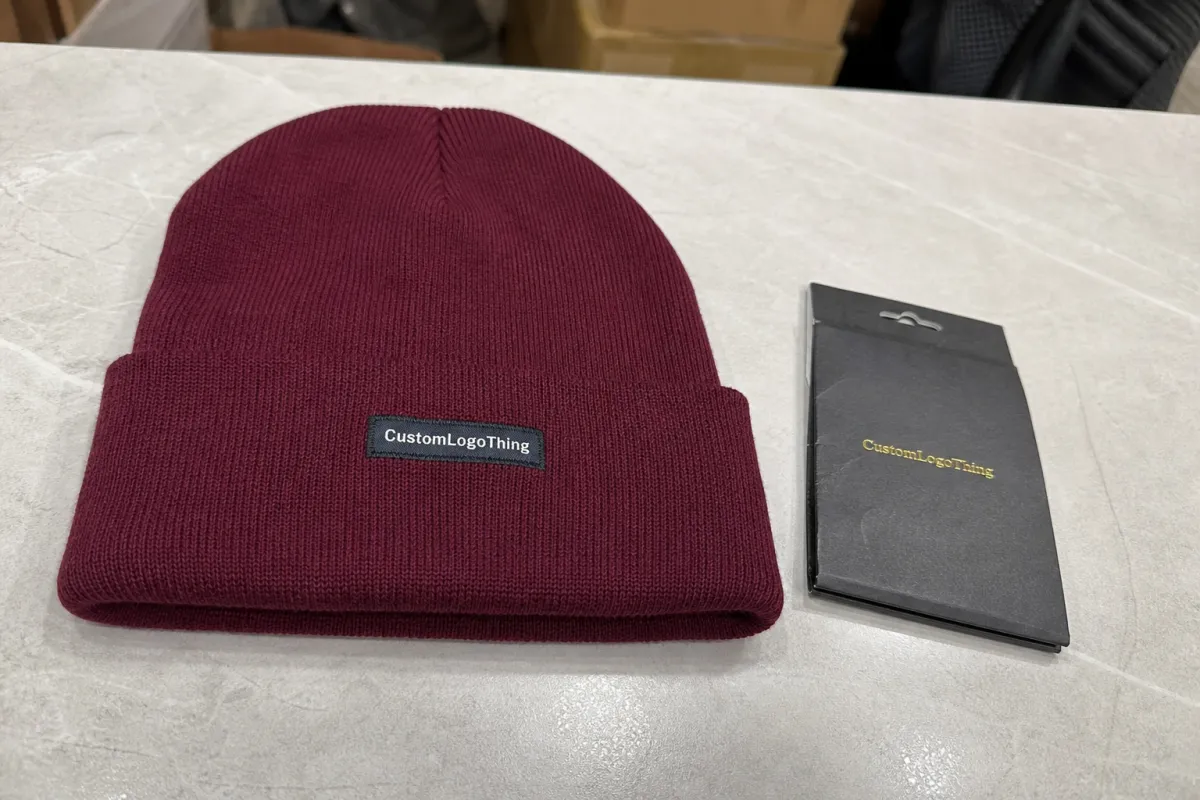
Beanies are not difficult to buy. Good beanies are harder. The difference usually shows up in the first 30 seconds: the knit holds its shape, the label sits straight, the hand feel is soft enough for daily wear, and the piece looks intentional instead of promotional.
That matters for clubs because the same item has to do more than one job. It may sit in a welcome kit, live on a retail shelf, and still feel worth wearing long after the release weekend. A woven label helps here because it gives the brand a crisp, controlled presence without turning the front of the hat into a billboard. The look is cleaner than oversized embroidery, and it usually photographs better in flat-lay shots and member mailers.
There is also a practical side that gets overlooked. Small construction choices can change perceived value as much as a price increase of several dollars. Label weave, label width, label placement, and knit density all affect whether the beanie reads premium or bargain-bin. A centered woven label on a stable cuff can feel considered. A label that is too shiny, too wide, or placed too high can make the whole piece feel off.
A beanie should look finished on a shelf and still look balanced after someone has worn it, folded it, and tossed it into a bag. If it only works in a mockup, it is not ready.
That is why planning matters. The most useful club merch holds up under handling, shipping, and everyday use. If it loses shape or looks sloppy after one wear, the item stops being merch and becomes inventory that never earns back its shelf space.
Beanie styles, yarn choices, and label placement that actually work
The safest silhouette for club merchandise is still the cuffed rib knit. It gives you a stable branding zone, predictable fit, and enough structure for a woven label to sit straight. Slouch styles can work, but they are less forgiving. If the knit is too loose, the label twists. If the cuff is too shallow, the logo gets swallowed by the fold. Midweight beanies are often the best middle ground because they hold their shape without feeling stiff or overbuilt.
Yarn choice affects both the price and the wear experience. Acrylic is common because it keeps color consistent, offers dependable stretch, and keeps unit cost within reach. Acrylic-blend yarns can feel softer and a bit more premium, which is useful for retail programs where members compare the piece with other merchandise on the same shelf. Heavier knits make sense for colder regions or winter releases, but they can feel bulky if the cuff, crown, and label are all pushed too far.
Label placement should follow visual hierarchy, not habit. Most clubs end up choosing one of four approaches:
- Center cuff for the clearest brand read.
- Side cuff for a quieter, more understated look.
- Seam-tab placement for minimal branding with a tidy finish.
- Applied woven patch when the logo needs more presence on a premium retail piece.
The placement choice changes how the hat wears. A label that looks balanced in a flat mockup may sit too high once the cuff stretches on a real head. The same is true for label size. A smaller mark can disappear on a dark knit; a larger one can look heavy on a fine-gauge beanie. The fix is simple, though not always convenient: sample with the actual yarn, cuff depth, and label size rather than with a generic blank in rendering software.
Finishing details matter more than many first-time buyers expect. Pom-poms can help for seasonal sales, but they also push the piece toward a more gift-shop feel. Fold height affects how much of the label is visible when the hat is packed. Stitch density affects drape and warmth. These decisions influence both look and cost, so they should be made before quote comparisons begin.
Specs to lock before you request a quote
Vague specs produce vague pricing. That is not the supplier being difficult; it is the only rational response when the order details are still moving. Before asking for numbers, lock in the body length, cuff depth, knit weight, stretch range, and whether the piece is meant for retail display or member distribution.
The artwork needs the same level of clarity. Send the logo file, woven label dimensions, target colors if matching matters, and a clear answer on whether the art is woven into the label or applied as a stitched badge. If the design includes thin lines or small text, call that out early. Woven construction has limits, and tiny lettering that looks sharp in a PDF can blur in production.
You also need to decide whether the run is truly one size fits most or whether you need multiple colors, multiple label positions, or different club tiers. Each variation adds setup, proofing, and room for inconsistency. That is a planning issue, not a production mystery.
If the beanies will go into a welcome kit, retail bag, or holiday mailer, that should be part of the brief too. Package dimensions, folding method, and insert space can change the finish of the product. If the beanie is paired with hangtags, care cards, or branded seals, our Custom Labels & Tags page is a fast way to compare trim options and build the right kit around the hat.
Proofing should happen in the final context, not only on a flat table. A beanie can look perfect laid out and still read wrong once worn or packed. That is exactly where a lot of avoidable rework starts.
Pricing, MOQ, and unit cost by volume
Beanie pricing is driven by a small set of variables: yarn quality, stitch complexity, label construction, color count, and packaging. Add custom folding, individual polybags, or retail hangtags, and the number climbs. Keep the build simple with one woven label on a stock-color beanie, and the economics improve quickly. That pattern shows up across apparel trim work, but it is especially clear in seasonal club merchandise where timing matters as much as margin.
MOQ usually follows setup and sourcing, not a random production preference. If a custom yarn color, label weave, or special finish requires dedicated preparation, the minimum rises. If the order uses a standard body color and a single label spec, the entry point can be lower. Ask for MOQ by style and by decoration method, because the hat body, the label, and the packaging may not share the same floor.
| Order size | Typical unit price | Best fit |
|---|---|---|
| 100-299 pcs | $6.50-$10.50 | Small member drops, internal launches, design testing |
| 300-999 pcs | $4.20-$7.25 | Seasonal club gifts, limited retail runs |
| 1,000-2,499 pcs | $3.30-$5.80 | Core club programs, multi-location distribution |
| 2,500+ pcs | $2.70-$4.60 | Broader retail, larger membership pushes, bundled promotions |
Those ranges assume a standard cuffed acrylic beanie with one woven label and no premium packing extras. A pom-pom, special fold, heavier yarn, or extra labeling will move the price. The reverse is also true: once setup is spread across a larger run, the unit cost falls faster than many buyers expect.
For budgeting, it helps to separate the job by use case rather than by emotion:
- Gift packs: keep landed cost tight and use simple packaging.
- Retail sales: allow room for better yarn, cleaner folding, and stronger trim.
- Promo use: prioritize consistency and quantity over premium extras.
If you want a clearer comparison across volume tiers, our Wholesale Programs page is useful for seeing how setup and quantity shape the final number. A quote that does not break out unit cost, sample cost, packaging, and freight is not giving you real pricing. It is giving you a starting point with the important parts hidden.
Production steps, lead time, and delivery windows
The workflow is straightforward on paper: artwork review, sample approval, bulk knitting, label attachment, finishing, inspection, packing, and freight. The delay usually comes from waiting, not making. Waiting for the art file. Waiting for a sample. Waiting for yarn shade confirmation. Waiting for sign-off from someone who has three other launches in front of them.
Simple stock-color runs move faster than custom-color jobs. Orders that need split shipments, retail packing, or multiple fulfillment destinations take longer still. A straightforward beanie run can often move in roughly 12 to 18 business days after approval if materials are already available. More customized builds can stretch to 3 to 5 weeks, and peak-season production can push beyond that if the queue is crowded.
Plan to the date that still works if freight slips, not the optimistic date on the first quote. Wine clubs rarely have flexible windows. Member ship dates, release parties, harvest events, and holiday campaigns land when they land. Miss them and the merch loses some of its value before it reaches the customer.
If the kits are shipping by mail, ask whether the packed carton should be checked against ISTA guidance from the ISTA association. That matters more than it seems when the beanie ships with bottles or heavier inserts. For paper components, it is also worth asking whether hangtags or inserts need FSC-certified stock. That is a small decision, but it avoids sustainability questions later and keeps the kit more coherent.
One change can reset the schedule. If the label art, label size, or packaging spec changes after approval, the sample stage may need to be repeated. That is why early sign-off saves both time and money. A “small revision” can be enough to shift a production slot, especially during busy retail seasons.
What a packaging-first supplier checks before bulk production starts
A packaging-first supplier is not only checking whether the hat can be made. They are checking whether it can ship cleanly, land on time, and look consistent across the full run. That includes artwork accuracy, color matching, label placement, folding method, bag size, and whether the packed item actually fits the mailer or carton you plan to use.
This matters for wine clubs because the beanie rarely travels alone. It may ship with a bottle, a tasting sheet, a note card, a corkscrew, or a holiday insert. If those components are not coordinated, the kit starts to look improvised. Members may not call it out, but they notice the difference between organized and assembled on the fly.
The best suppliers work from documented approvals instead of memory. They should confirm the spec sheet, keep the proof trail, and flag anything that looks off before bulk production begins. A woven label that is too wide for the cuff, a yarn color that clashes with the bottle box, or a fold that ruins shelf display should be caught before inventory is committed.
That is where process discipline matters more than sales language. Ask for the proof. Ask for the trim callout. Ask for the packaging dimensions. If a supplier gets irritated by those questions, that is useful information. Better to find that out before 1,200 beanies are made than after they are stacked in a storeroom and no longer match the launch plan.
For buyers mapping a broader merch program, the right partner should be able to discuss trims, packaging, and bulk production without padding the conversation. A clean quote and a clean spec sheet are more useful than a polished pitch deck. In this category, the details are the product.
Next steps to place a clean bulk order without rework
Start with the essentials: quantity by color, logo files, label placement, delivery date, and where the beanies are going. A retail shelf, club gift, member welcome kit, and event handout are not the same job, and they should not be priced as if they are.
Then ask for a quote that separates the moving parts. You want unit cost, setup, sample, packaging, and freight shown clearly. That makes comparison possible without guessing where the margin disappeared. If two quotes look similar but one hides packing or shipping, they are not similar at all.
- Lock the spec before requesting final numbers.
- Approve a sample or digital proof before bulk production starts.
- Build in a buffer for revisions, freight delays, and peak-season traffic.
- Keep the design simple unless the retail price supports the added cost.
If the program needs repeat runs, document the first order carefully. Reorders are easier when the first spec is complete and the approved sample is saved in a way the next buyer can actually find. Our FAQ covers common proofing and reorder questions if you need a quick reference while building the order file.
That is the practical side of wine club woven label beanies Bulk Order Planning: define the spec, confirm the placement, price the packaging, and leave enough lead time for production to do its job. Set those pieces early and the order stays easier to manage, the launch stays on schedule, and the finished beanie feels like part of the wine club rather than an afterthought with a logo.
How many wine club woven label beanies should I order for a first run?
A practical first run is usually your active member count plus a small buffer for replacements and retail sales. If you are testing the design, start at the lowest MOQ that still gives you a usable unit cost. Do not buy deep before you confirm fit, color, and label placement on a sample.
What affects woven label beanie pricing the most?
Yarn choice, stitch complexity, label size, color count, and finishing affect unit price most. Packaging extras like hangtags or individual polybags also move the number quickly. Higher quantities usually reduce unit cost because setup is spread across more pieces.
What is a normal MOQ for custom beanies with woven labels?
MOQ varies by style and production method. It is usually driven by material sourcing and setup, so simple stock-color orders can start lower than fully custom color-matched runs. Ask for MOQ by style, not a blanket answer, because beanies and labels are priced differently.
How long does bulk production usually take after approval?
Lead time depends on artwork approval, sample approval, yarn availability, and factory workload. Straightforward orders move faster than custom color or packaging-heavy jobs. If your event date matters, build in extra time for freight and any final changes.
Can I mix colors or packaging options in one order?
Yes, but every added variation can affect MOQ, setup, and timeline. Mixing colors is usually easier than mixing multiple label constructions or packaging formats. Keep the core spec consistent if you want cleaner pricing and fewer production headaches, which is exactly why the order works best when the first decisions are locked early.


