Trucker Caps Low MOQ Custom Order: Buy Small Batches
A trucker caps Low MOQ Custom Order gives a brand control over cash flow, design risk, and timing. Instead of committing to a large run before demand is proven, you can test a small batch, review the fit and decoration, and scale only if the cap earns a repeat order.
That matters because headwear is judged quickly. People notice crown shape, mesh texture, logo placement, and fit as soon as they put the cap on. If one detail is off, it affects the whole piece. Small-batch buying makes it easier to catch those issues before they turn into excess inventory.
Low MOQ also works well for launches, team gear, events, and pilot retail drops. Trucker caps already have strong visual presence, so even a modest run can look polished if the spec is tight. The key is to focus on build, cost, lead time, and inspection rather than on volume for its own sake.
Why Small-Batch Trucker Caps Beat Overstock
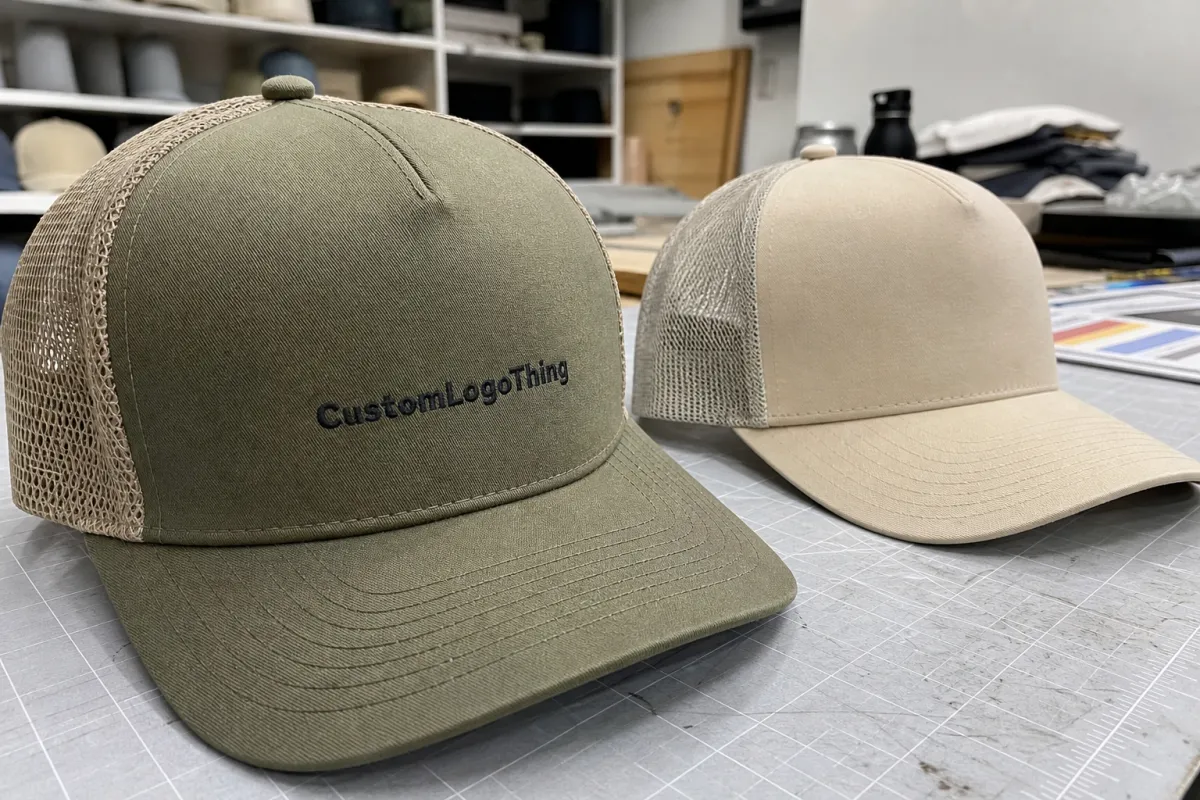
Large headwear orders can look efficient on paper, but overbuying creates slow-moving inventory fast. If the logo changes, the color misses, or the campaign underperforms, the extra cartons become a cost problem instead of an asset. Trucker caps are especially sensitive to this because buyers react to fit and structure immediately.
A small-batch order reduces that exposure. It gives you enough units to assess customer response, check how the decoration holds up, and confirm whether the cap belongs in your longer-term line. If the first batch works, reordering is straightforward. If it does not, the loss is limited.
- Lower risk if the design or fit needs revision.
- Faster feedback on logo size, crown shape, and color choice.
- Cleaner reorders once the best version is confirmed.
Trucker caps also have an advantage over many promo items because the product itself carries visual value. Mesh backing, a structured front panel, and a classic silhouette can make the cap feel more premium than the order size suggests. For brands that need usable merch without overcommitting, that balance is hard to beat.
Trucker Caps Low MOQ Custom Order: Specify the Build
On a trucker caps low MOQ custom order, the spec sheet matters more than the pitch. The front panel, mesh color, closure type, crown height, and bill shape all affect how the cap fits and how the logo looks in production. Clear specs usually lead to faster quotes and fewer changes later.
Fit and closure choices
Snapback closures are the most common choice because they fit a wide range of head sizes and feel familiar to buyers. Strapback styles can read more lifestyle-driven and slightly softer in appearance. Hook-and-loop closures are practical for staff or event use, but they usually feel less retail-oriented if the cap is meant for resale.
Front-panel construction changes the look as much as the closure. Foam fronts create a bold, classic silhouette that suits large logos and vintage styling. Cotton twill fronts feel softer and more premium. Polyester blends hold shape well and often give the most consistent results when color control matters. Mid-profile shapes tend to work for broader audiences, while high-profile styles give the logo more space.
Decoration choices that reproduce cleanly
Embroidery is still the default, but it is not always the best fit. Simple text and clean marks stitch well. Fine lines, gradients, and detailed artwork often lose clarity unless the design is simplified. In those cases, woven patches, printed patches, or a smaller logo placement can produce a cleaner result.
For low-MOQ orders, the safest approach is to lock the logo file, color references, and placement before production starts. If the artwork needs Pantone matching, thread color notes, or label requirements, include those details with the request. Interior tags, woven labels, and hang tags should also be specified early if they are part of the finished look.
Specification checklist: front panel style, mesh color, closure type, logo file format, decoration method, base cap color, and any branding details that must appear on the finished cap.
Cost, Pricing, and MOQ: Where the Real Savings Happen
The economics are easiest to understand when you separate blank cost, setup, and decoration. MOQ is not just a factory number; it affects how digitizing, patch creation, labor, and packing are spread across the order. That is why a 24-piece run can look expensive per unit while a 250-piece run can bring the price down sharply.
Most quotes will include blank cap cost, decoration setup, sample fees, packing, freight, and any rush charge. If you need retail packaging, inserts, or special labeling, those items should be priced from the start. Even small pack-out changes can shift freight weight and handling cost.
| Order size | Typical unit cost | Best for | Notes |
|---|---|---|---|
| 24-36 pieces | $9.00-$16.00 | Sampling, founder drops, very small teams | Setup costs weigh more heavily; best with simple decoration |
| 100 pieces | $7.00-$11.00 | Events, staff programs, pilot retail runs | Often the first tier where the price begins to balance out |
| 250 pieces | $5.25-$8.25 | Regional rollouts, reorder testing, wholesale trials | Better value if the design is likely to repeat |
Those numbers only make sense if the spec stays stable. Additional thread colors, premium blanks, custom labels, and late revisions can raise the price. Mixed cap colors can also increase cost if the factory has to split production across different blank SKUs. When comparing tiers, the real question is where the order becomes efficient enough to repeat.
Setup fees deserve a separate line. Embroidery digitizing, patch development, and sample work may add one-time charges, often in the tens to low hundreds of dollars depending on complexity. That is normal. The better question is whether those setup steps prevent errors and wasted stock later.
In practice, the cheapest order is not always the best value. If the caps sit unsold for months, the savings disappear. Buyers usually get a clearer read by comparing unit cost against sell-through risk, storage cost, and how likely the design is to repeat.
Process and Timeline: Proofs, Samples, and Production Steps
A good supplier keeps the process visible. A small-batch cap order should move through quote, artwork review, digital proof, sample approval if needed, production, packing, and shipment. If any step is vague, the order usually takes longer and costs more than it should.
- Send the logo file, quantity target, cap color, and decoration method.
- Review the mockup for logo placement, size, and color accuracy.
- Approve the proof only after fit, closure, and branding details are confirmed.
- Move into production once the final spec is locked.
- Confirm packing and shipping timing before the job starts.
The proof stage is where most mistakes can be stopped early. Confirm logo placement, logo size, thread or patch color, and any label requirement before approval. If the feedback is vague, the factory has to guess. If the specs change after approval, the schedule slips.
"If the cap needs a long explanation, the spec sheet was too loose."
Lead time depends on blank availability and decoration complexity. In-stock caps with straightforward embroidery may be ready in about 12 to 18 business days after proof approval. More complex patch work or special materials can stretch to three to five weeks. If blanks need to be sourced first, add time before production starts.
Shipping is separate from production. Ask how cartons will be packed, whether inserts or sleeves are included, and if the pack-out has been tested for handling. That matters more than many buyers expect, especially when a small order includes multiple branded items or retail-style presentation.
Quality Control: What to Check Before You Approve
Low MOQ does not mean low standards. A smaller run should get closer scrutiny because there is less volume to absorb mistakes. A pre-production sample or detailed proof is the right place to catch issues before they become expensive.
On a trucker cap, start with structure. The crown should sit evenly, the bill should curve consistently, and the front panel should hold its shape without waviness. Mesh panels should align cleanly so the cap does not twist visually from the side.
- Stitch tension should be even, with no loose threads or puckering around the logo.
- Color consistency should match the approved swatch or Pantone reference.
- Closure placement should sit centered and feel secure, not crooked or weak.
- Sweatband comfort matters if the cap will be worn all day.
- Decoration scale should fit the panel size without overpowering the cap.
It also helps to test the sample in real use. A cap can look fine on a table and still feel too shallow, too stiff, or too warm when worn. Fit and finish should be judged together, not separately.
One useful question is whether the factory will reproduce the sample exactly or treat it as a reference. Those are not the same thing. If the sample includes hand-finished work, production may need a simplified version to stay consistent across the run. Clarifying that before approval avoids unpleasant surprises later.
Decoration and Materials That Work Best on Trucker Caps
Material choice changes the final look more than many buyers expect. Foam fronts create a strong vintage profile and support bold decoration, but they are not ideal for intricate detail. Cotton twill feels softer and often looks more retail-ready. Polyester blends hold shape cleanly and tend to deliver the most consistent results across repeat runs.
For decoration, the artwork should drive the method. Clean text and simple marks usually work well with embroidery. Detailed logos, gradients, or fine lines often look sharper on woven or printed patches. Small marks can also move to the side panel or back strap if the front panel needs to stay minimal.
On a low-MOQ order, patches often make sense because they preserve detail without demanding a large production commitment. They can also create a more premium feel than a flat print on some cap styles. If the brand wants a cleaner retail result, that texture can be more effective than extra decoration.
Color matching deserves attention too. A custom fabric shade is not always worth the cost unless the order is large enough to justify it. In many cases, the nearest stocked color keeps the quote tighter and the timeline shorter. That is especially true for event merch, staff gear, and pilot retail runs.
Presentation can still feel finished without a custom box. A hang tag, belly band, or simple sticker seal can improve the opening experience without adding much cost. For smaller orders, that is often the best balance between branding and budget.
Why a Flexible Supplier Reduces Reorder Risk
A rigid supplier pushes volume. A flexible supplier protects the spec file. That difference matters because a small-batch cap run is often the first test for a broader program. If the first order is documented well, the next one is easier to repeat and compare.
Clear communication matters more than polished promises. A good partner will say when the artwork is too fine, when the color match may drift, or when the timeline is too tight for the construction you want. That kind of honesty helps the buyer avoid paying for a result that could have been improved with one direct answer.
Low-MOQ capability also supports testing. It works for staff programs, regional events, seasonal launches, and pilot retail drops without tying up cash in excess inventory. The main benefit is practical: the first run stays small while the reorder path stays open.
Documentation matters too. If the supplier saves specs, organizes proofs, and keeps the artwork file clean, repeat orders become much simpler. That helps whether the next step is a larger cap run or a broader merchandise line. The same discipline applies to branded packaging and other product packaging programs.
"We want the same cap next time, not a surprise version of it."
Next Steps to Place Your Custom Small-Batch Order
If the order is moving forward, gather the essentials before asking for pricing. The more complete the request, the more useful the quote will be.
- Send the logo file in a clean vector format if possible.
- Choose the cap color and note any acceptable alternates.
- State the quantity tiers you want compared, not just one number.
- Pick the decoration method that fits the artwork best.
- Share the deadline, shipping location, and whether retail packaging is required.
- Ask for proof timing and sample options before approving the run.
Tiered pricing is especially useful. A quote for 24, 100, and 250 pieces shows where the cost starts to work better, and that is often more valuable than a single unit price. If the run may grow later, ask the supplier to keep the spec file stable so the reorder matches the first batch.
One practical point matters most: if the order is tied to a launch, approve the proof quickly. Delayed feedback is one of the most common reasons a small run slips. The factory cannot keep moving if the logo placement, color choice, or closure style is still being debated.
Frequently Asked Questions
What MOQ should I expect for a custom trucker cap order?
MOQ varies by decoration method, blank availability, and factory policy, but small-batch programs often start lower than traditional wholesale runs. A trucker caps low MOQ custom order can begin at 24, 36, 50, or 100 pieces depending on the build. Embroidery, patches, and mixed colors can each change the minimum.
Can I place a low-MOQ trucker cap order with mixed colors?
Yes, but mixed colors can affect pricing if the factory has to split production across multiple blank SKUs. That can raise unit cost even when the total quantity stays the same. Ask for a quote that shows whether color changes are included, limited, or treated as separate variants.
Which decoration method is best for a small custom trucker cap run?
Patches are often the safest choice for detail, consistency, and lower setup complexity in small quantities. Embroidery works well for clean logos and short text, but very fine detail may reproduce better on a woven or printed patch. For simple marks, direct embroidery can still be the most efficient option.
How long does a custom trucker cap order usually take?
Lead time depends on proof approval, decoration complexity, and whether the blanks are already in stock. A clean approval process often shortens the schedule more than any production shortcut. If materials need to be sourced, allow extra time before production starts.
What should I send to get an accurate quote for custom trucker caps?
Send your logo file, preferred quantity tiers, cap color, decoration method, deadline, and shipping location. If you have a target price, include it. That helps the supplier recommend the most efficient build for your budget and keeps the quote aligned with your actual need.
Can a small order still feel retail-ready?
Yes. Even a modest run can look polished with the right cap material, a well-sized logo, and simple package details such as a hang tag or insert. You do not need a huge order to create a strong presentation, but you do need a spec that stays consistent from the first sample to the final carton.

