Buyer Fit Snapshot
| Best fit | unboxing experience practices stronger brands for packaging buyers comparing material specs, print proof, MOQ, unit cost, freight, and repeat-order risk where brand print, material, artwork control, and repeat-order consistency matter. |
|---|---|
| Quote inputs | Share finished size, material target, print colors, finish, packing count, annual reorder estimate, and delivery region. |
| Proofing check | Approve dieline scale, logo placement, barcode or warning zones, color tolerance, and any recyclable or compostable wording before bulk production. |
| Main risk | Vague material claims, crowded artwork, or missing packing details can create delays even when the unit price looks attractive. |
Fast answer: Unboxing Experience Practices Stronger Brands: Dieline, Finish, Proof, and Buyer Review should be specified like a repeatable production item. The safest quote includes material, print method, finish, artwork proof, carton packing, and reorder notes in one written spec.
What to confirm before approving the packaging proof
Check the product dimensions against the actual filled item, not only the sales mockup. Ask for tolerance on folds, seals, hang holes, label areas, and retail display edges. If the package carries a logo, QR code, warning copy, or legal claim, reserve that space before decorative graphics fill the panel.
How to compare quotes without losing quality
Compare board or film grade, print process, finish, sampling route, tooling charges, carton quantity, and freight assumptions side by side. A lower quote is only useful if the supplier can repeat the same color, closure quality, and packing count on the next order.
I have watched unboxing experience best practices fall apart for reasons that looked tiny on paper: a thumb tab catching on a fold, a magnetic lid popping loose after a 48-inch drop test, or a reveal that added six extra seconds on a pack line where every motion had a cost. I remember one corrugated plant outside Columbus, Ohio, where a premium mailer looked flawless in the mockup stage, then slowed the line because the inner flap snagged on a 1.5 mm score and the crew had to ease off speed to keep the board from cracking. The box had been specified from the outside in, all aesthetics and no route testing, instead of a 350gsm C1S insert paired with a 32 ECT outer shipper that could actually survive the journey. Nobody likes hearing that the prettier version is also the fussier one. I certainly do not.
unboxing experience best practices are not just about delight. They have to protect the product, keep the packout moving, support the brand, and deliver a first reveal that feels deliberate rather than fussy. The same unboxing experience best practices also shape customer experience and brand perception before the product is even touched. If the package lifts brand recognition but fails in transit 2% of the time, the customer does not experience luxury. They experience inconvenience. On a 10,000-order run, that is 200 broken promises, and the repair bill usually costs more than the nicer print finish ever saved. The spreadsheet, annoyingly, tends to win that argument.
What follows comes from factory floors, client meetings, and supplier calls that dragged on longer than a cold glue line in January. I have seen rigid boxes made from 2 mm greyboard with soft-touch lamination feel genuinely expensive. I have also seen a plain E-flute mailer with a tight insert beat a prettier package because it packed faster, arrived cleaner, and held brand consistency across 10,000 orders. In Dongguan, Guangdong, a converter quoted the plain version at $0.15 per unit for 5,000 pieces, while the embellished version climbed to $0.46 per unit once foil and a paperboard cradle were added. That is the practical side of unboxing experience best practices, and most brands need that side first. The romance can wait a little.
What Are Unboxing Experience Best Practices?
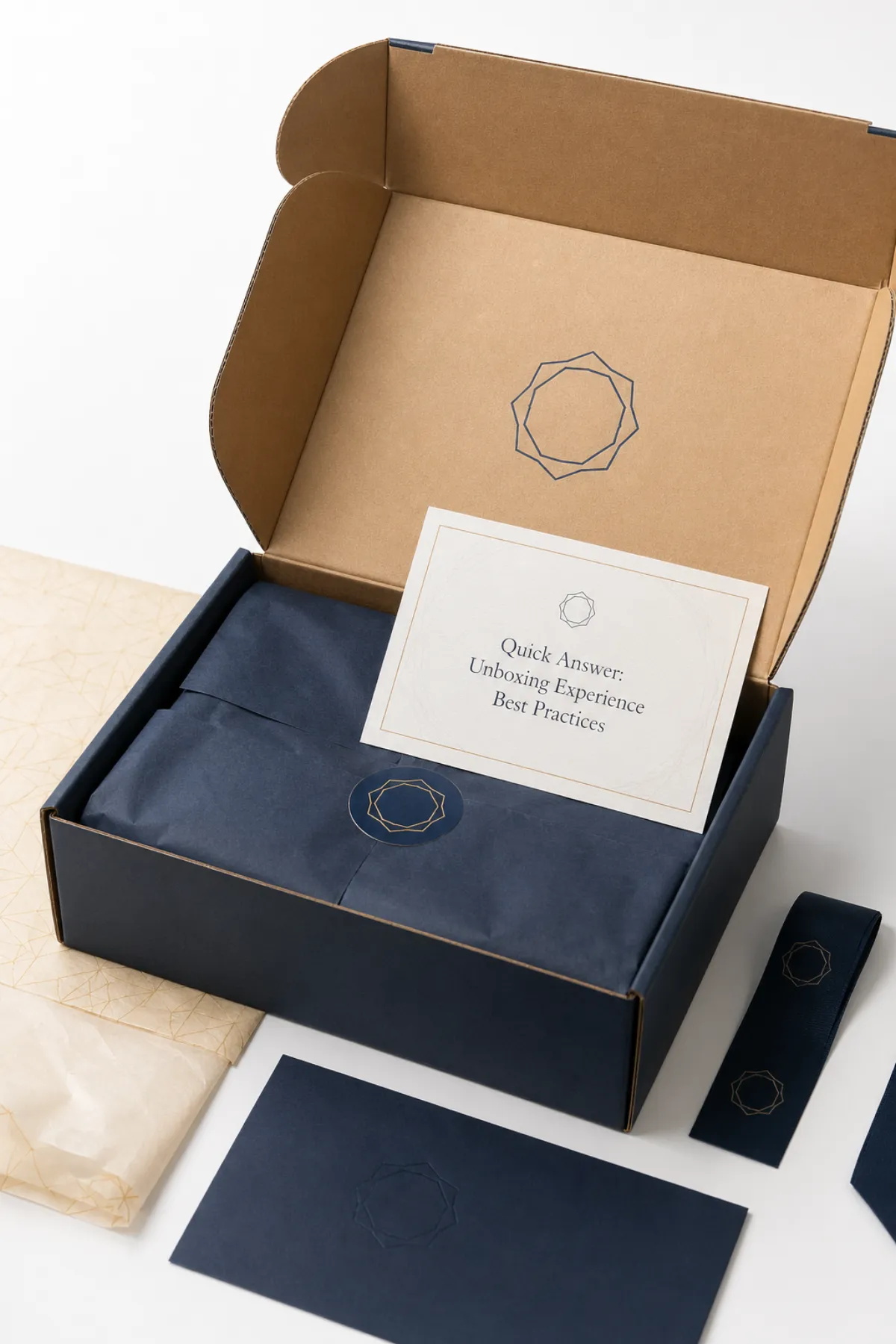
The quickest way to define unboxing experience best practices is this: choose a structure that protects the product, opens in a clear sequence, and makes the first reveal feel intentional in under 10 seconds. On a busy fulfillment line, that usually means a custom mailer box for everyday ecommerce, a rigid gift box for premium goods, or a corrugated shipper with a branded inner wrap when you want more perceived value without piling on extra packing steps. In a Chicago-area warehouse running 1,200 orders a day, that can be the difference between a line that hums and one that backs up by 2 p.m. Clean is good when the warehouse is moving like a train station at 5:12 p.m.
Three numbers matter most when I judge unboxing experience best practices: damage rate, pack time, and reorder intent. Add 14 seconds per unit and labor climbs fast. Cut breakage from 3% to 0.5% and the savings can justify a higher box price almost immediately, especially on a 50,000-unit annual program shipped out of Dallas, Texas. That is why I ask for actual shipping data instead of renderings and mood boards. A mood board cannot tell you whether a carton is going to split on a damp Tuesday in November.
Good design has to be measurable. One cosmetics client in Shenzhen cut packing errors by 18% because the insert made orientation obvious, and customer service calls about crushed corners dropped within two weeks. Another apparel brand did not choose the prettiest sample. They chose the one that gave customers a crisp fold, a clean tissue reveal, and a return rate that stayed flat after the outer box got an upgrade. The inner wrap was 17gsm tissue, the insert was 350gsm C1S paperboard, and the final packout still fit inside a 14-second station cycle. I would take boring stability over dramatic disappointment every single time.
A solid benchmark for unboxing experience best practices is fourfold: fewer transit damages, stronger sharing behavior, better repeat purchase intent, and a packout process the warehouse can sustain during a 1,500-order day. That does not mean theatrical overpacking. It means a controlled opening sequence, one or two memorable branded touches, and a structure that still feels good when a picker is moving at line speed with a cart full of mixed SKUs. On a 7:00 a.m. shift in Phoenix, Arizona, the trick is restraint, not an explosion of extras pretending to be luxury.
"The sample looked beautiful on the design table, but the real test was the warehouse," a fulfillment manager told me after we changed a rigid lid closure to a side-open magnetic style. "Once the lid stopped fighting the packers, the whole program got easier."
The short version is plain: keep the product safe, keep the opening easy to follow, and make the first reveal feel like it belongs to the brand identity. That is the core of unboxing experience best practices, and everything else - foil, embossing, tissue, inserts, even a thank-you card - should support that core instead of crowding it. On a launch out of Nashville, Tennessee, I have seen too many boxes try to do jazz hands when they really needed a steady handshake.
Top Options Compared for Unboxing Experience Best Practices
When I compare unboxing experience best practices across packaging formats, the product and the order profile come first. A premium skincare jar needs different support than a flat apparel set. A subscription box that ships monthly needs a different workflow than a one-time gift kit built for 5,000 holiday orders in Q4. The structure should fit the use case, or the nicest artwork in the world will not rescue it. I know that sounds blunt, but packaging is one of those areas where the box either earns its keep or reveals itself as expensive wallpaper.
- Custom mailer boxes: Best for ecommerce apparel, small accessories, and midweight cosmetics where a 0.8-1.5 mm corrugated wall protects the product while preserving a clean outer surface for visual branding.
- Rigid gift boxes: Best for luxury sets, PR kits, and high-margin launches where a 2 mm board, magnetic closure, or ribbon pull creates a premium opening sequence.
- Sleeves over inner cartons: Best for brands that want stronger recognition without redesigning the full packout system, especially when the inner carton already does the protective work.
- Subscription-style shipper boxes: Best for recurring programs that need speed, repeatable fold logic, and brand consistency over dozens of monthly shipments.
- Eco-first kraft systems: Best for brands that want recycled content, lower ink coverage, and a more natural look while still keeping the reveal tidy and intentional.
For premium cosmetics, rigid boxes often win because the closure sounds expensive and the reveal feels deliberate, especially with a 2 mm greyboard wrapped in 157gsm art paper and finished with soft-touch lamination. For apparel, a printed mailer with a die-cut insert usually delivers better customer perception because the opening is fast, the fold stays crisp, and the customer sees the garment in one clean motion instead of digging through loose filler. For supplements, I usually steer brands toward a shipper that is easy to pack, because extra handwork on a fragile-looking display box can wipe out the margin on a $24 order. In Monterrey, Mexico, I watched that math turn ugly very quickly when an extra ribbon added nine seconds to each kit.
The tradeoff in unboxing experience best practices is always visual drama versus operational discipline. A magnetic rigid box can feel fantastic, but if it adds 45 seconds of assembly time, the warehouse team will resent it by the third pallet. A printed corrugated mailer may look more restrained, yet if the insert is tight, the tissue is neat, and the opening path is obvious, the customer may remember it more warmly than a box stuffed with decorative extras that arrive tangled or flattened. Packaging should not require an emotional apology from the packer, especially not in a 70-degree room in Atlanta where the table crew is already behind by lunch.
Small upgrades often matter more than a total redesign. A 28 lb kraft paper wrap, a 1-color belly band, a 24 pt thank-you card, or a custom-cut paper pulp insert can improve unboxing experience best practices without forcing the operations team to learn a new pack sequence. A fancy finish on the outside does little if the interior still rattles like a loose sample bin. I once opened a box that sounded like it had spare change inside, and the culprit was a 6 mm gap around a glass bottle that should have been blocked with a paper pulp insert. Not exactly the mood a beauty brand wants.
One supplier meeting at a rigid-box converter in Guangdong made the math obvious. The pricing looked close between a foil-stamped lid and a cleaner printed lid, but the assembly labor was not close at all. The foil version needed one more handling step and a longer cure time, so the landed cost rose by $0.31 per unit across 8,000 pieces, and the lead time stretched from 14 business days to 19 business days after proof approval. That is why I keep repeating that the format decision is not just visual branding; it is a production decision too. The prettier box can be the wrong business choice, and the wrong choice can be very pretty, which is the worst kind of tempting.
Detailed Reviews of the Strongest Unboxing Formats
I review packaging the way I would review a machine on a factory floor: looks matter, but they are only the first question. For unboxing experience best practices, I want to know how the closure behaves after 20 openings, whether the edge scuffs during transit, how the product sits inside a 1.5 mm cavity, and whether the whole thing still feels controlled after a rough ride in mixed freight. A pretty sample that fails the second test is just an expensive prototype, and I have a low tolerance for expensive prototypes that act like divas.
Rigid gift boxes shine when the brand wants theater and the product has enough margin to support it. The snap of a magnetic closure, the firmness of a lined tray, and the way a 300gsm insert keeps a serum bottle from shifting all shape customer perception. I still remember a client in Chicago who opened a sample, ran his thumb along the edge for 10 seconds, then said, "This feels like the thing I would keep on my dresser." That is a real signal in unboxing experience best practices. People do not usually keep packaging because it was fine; they keep it because it felt like it earned a place in the room.
Custom Mailer Boxes are the workhorse for brands that need fast packing and solid protection. A reverse-tuck or roll-end front-lock style can run cleanly on a table line, and with the right print coverage, a 200 lb test corrugated board still looks polished enough for premium DTC orders. This is where many brands get better results than expected: one clean box, one inserted message card, one tissue wrap, and no loose paper confetti to sweep off the floor. I say that as someone who has had to step over the confetti in a Brooklyn photo shoot and again in a facility outside Cleveland. Twice was enough.
Sleeves over inner cartons are underrated because they let a brand add personality without touching the core structure. If the inner carton already protects a candle, supplement jar, or electronics accessory, a sleeve can carry the visual branding while keeping packout time predictable. That matters on a line that has to move 600 units before lunch in Louisville, Kentucky, because the team can keep the same inner pack method and change the outer story without rebuilding the operation around it. It is a smart compromise, which is a nicer way of saying the warehouse will not mutiny.
Eco-first kraft systems work well when the brand wants a more restrained feel and a lower material footprint. I have seen FSC-certified kraft board with soy-based ink and a blind emboss do more for brand recognition than glossy packaging with too many finishes layered on top. The key is restraint: clean folds, clear messaging, and a fit that does not force the customer to fight through excess filler. A 32 ECT kraft mailer with a 350gsm C1S paperboard insert can feel crisp without looking overbuilt. The packaging should feel deliberate, not preachy. Nobody wants a sermon from a mailer box.
A failure mode I keep seeing in unboxing experience best practices is too many opening steps. If the customer has to pull a ribbon, peel a sticker, open a magnet, lift tissue, remove a card, and untie a twist tie before seeing the product, the moment gets tired. I watched a luxury accessory kit in Austin lose energy because the reveal stretched across five layers, and customers on the test panel said it felt more like unpacking a wedding favor basket than a product they had bought for themselves. That comment still makes me laugh a little, because it was brutally accurate, especially for a $68 accessory kit with a $12 shipping box.
"The box was beautiful, but the product had to fight for attention," the operations lead told me after a pilot run. "Once we removed the loose filler and swapped in a die-cut cradle, the opening felt cleaner and the team packed it 22 percent faster."
For a real shipping test, I prefer ISTA-style drop and vibration checks over a tabletop review. If the packaging survives a 30-inch drop, a side compression test, and a week in a hot truck bay, then the opening experience has a chance to survive in the customer's hands too. For teams who want to dig deeper into testing language, ISTA is a useful reference and pairs well with factory validation. That kind of discipline is what separates polished unboxing experience best practices from pretty mockups. Pretty mockups are charming; broken corners are not.
Unboxing Experience Best Practices: Cost and Pricing Breakdown
Cost is where unboxing experience best practices become concrete, because every extra layer has a price in board, ink, labor, freight, and warehouse space. I like to break it into five buckets: structure and tooling, print and finish, inserts and accessories, assembly labor, and freight or dimensional weight. Once those are separated, the budget story becomes much clearer, and a CFO can see where the dollars are going instead of getting one mysterious unit price. Mystery pricing is a special kind of nuisance, especially on a 25,000-unit rollout from Shenzhen.
Here is a working comparison I have used in client meetings, based on 5,000-unit programs with standard production assumptions and no unusual freight surcharges. The numbers shift with board grade, decoration, and location, but they give a sane starting point for unboxing experience best practices:
| Option | Typical Material | Approx. Unit Cost at 5,000 | Pack Time | Best For |
|---|---|---|---|---|
| Printed corrugated mailer | E-flute, 1-color print, no lamination | $0.18-$0.32 | 18-28 seconds | Apparel, accessories, mid-ticket ecommerce |
| Mailer with insert and tissue | E-flute, 2-color print, paper insert, tissue wrap | $0.34-$0.58 | 28-42 seconds | Beauty, gifts, subscription kits |
| Rigid gift box | 2 mm greyboard, wrapped paper, magnetic closure | $1.10-$2.40 | 45-75 seconds | Luxury, PR, premium retail sets |
| Sleeve over inner carton | Kraft or SBS sleeve, standard inner box | $0.27-$0.66 | 20-35 seconds | Rebrands, limited editions, seasonal promos |
Short runs almost always cost more per unit because setup gets spread across fewer pieces. A 1,000-piece rigid program can land at roughly twice the unit cost of a 10,000-piece program, and that gap gets wider if you add foil, embossing, or custom inserts. For example, a 2 mm greyboard box with a 4-color printed wrap might come in at $1.92 per unit at 1,000 pieces, then drop closer to $1.21 at 10,000 pieces from a plant in Suzhou, Jiangsu. That is why unboxing experience best practices have to be planned with volume in mind; otherwise, the concept looks affordable on paper and expensive in procurement. Procurement will, predictably, notice the part where the budget starts behaving like a trick coin.
The hidden costs are usually the ones that surprise teams. Hand packing time can add $0.08 to $0.22 per order; oversized rigid packaging can increase freight by 12% to 18% because of dimensional weight; and a redesign after art approval can cost a week of production time plus new tooling if the dieline changes. I once sat in a negotiation where a buyer wanted a deeper tray and a thicker wrap at the same price as a plain box, and the converter calmly explained that the request meant a new gluing pattern and an extra 96 pallet spots. That is the kind of operational detail unboxing experience best practices should surface early. If you do not ask about the boring parts, the boring parts will eventually ask you, loudly.
My rule is straightforward: protect the product first, make the reveal clear second, and add one or two memorable branded touches last. Spend the first dollar on a better-fit insert and the second on a cleaner closure, and you often get more customer delight than spending both dollars on a metallic finish that only photographs well under studio lights. If your brand wants lower material impact, the FSC framework is worth understanding before the art is locked, especially when board grade and sourcing story matter to your audience in California, Oregon, and the Pacific Northwest.
Cheap and efficient are not the same thing. I have seen a $0.41 mailer outperform a $2.10 rigid box because the mailer shipped flatter, packed faster, and arrived with less corner damage. That does not mean rigid is wrong. It means unboxing experience best practices are about fit-for-purpose spending, not automatic prestige upgrades. A premium box that makes the warehouse miserable is not premium; it is just more expensive, particularly if the pack station in Newark, New Jersey adds 11 extra seconds per unit.
Process and Timeline for Building the Experience
The strongest unboxing experience best practices usually come together in stages, not in one rushed approval call. My preferred path starts with product review, then structural concepting, then dieline approval, sample build, print proofing, production, and finally pack-line validation. Skip one step and the risk turns up later as a fit issue, an assembly problem, or a customer complaint that could have been avoided with a 15-minute bench test. I have seen the missing 15 minutes cost a launch week in Toronto, and that is a bad trade.
- Brief and product review: Lock item dimensions, weight, finish sensitivity, and any fragile edges before art begins.
- Structure concept: Compare 2-3 box styles, such as mailer, rigid, and sleeve, with actual closure logic and insert depth.
- Dieline and sample: Review a physical prototype with the real product, not a foam dummy that weighs 30% less.
- Proofing and finish: Approve ink, foil, lamination, and coating samples under warehouse lighting, not just in a design studio.
- Pilot production: Run 100-300 units, measure pack time, and check the reveal on a live line before scaling.
Timing depends on complexity. A basic printed mailer with standard artwork can move from brief to production in about 12-15 business days after proof approval, while a rigid box with custom inserts may need 20-30 business days because of sample iteration and tray fit checks. Add specialty foil, embossing, or a multi-piece insert and you should expect another 3-5 business days for approvals and possible reruns. In a plant outside Ho Chi Minh City, I have seen a simple sleeve turn around in 11 business days when the art was locked on day one. That extra time is not waste. It is insurance against a failed launch, and insurance is one of those things nobody applauds until the day they need it.
The delays I see most often come from unfinished product dimensions and late art changes. A bottle still changing by 2 mm in diameter can throw off an insert, and a last-minute font swap can force a new print proof even when the structure is already approved. In one client meeting with a subscription snack brand in Denver, Colorado, the box was ready, then the product dimensions changed after procurement moved to a new pouch supplier. The result was a one-week delay and a tighter cavity that should have been avoided with a simple measurement lock. Nothing like a "small supplier tweak" to turn into a calendar problem.
Industry standards help keep everyone honest. ISTA protocols can clarify testing expectations, and ASTM references can help teams use the same language about board strength, compression, and material performance. If the board spec says 32 ECT for a mailer or 2 mm greyboard for a rigid setup, that number should appear in the proof review and the pilot checklist. unboxing experience best practices are much easier to defend when the paperwork, the sample, and the production run all say the same thing, especially for programs being sourced from Shanghai, Dongguan, or Guangzhou.
I always recommend a pilot run before full launch. Even 150 units can reveal that a tissue sheet is too wide, a seal label is too sticky, or a magnet is too weak for side-load during fulfillment. One pilot can save a launch from embarrassment, and it gives the warehouse team a chance to tune the process instead of reacting after the first customer complaints arrive. I would rather hear a picker grumble for an afternoon than a customer complain on social media for a week, particularly when a campaign is tied to a specific Monday launch and a 3,000-order forecast.
How Do Unboxing Experience Best Practices Help You Choose the Right Format?
Choosing the Right unboxing experience best practices starts with the product, not the trend. Fragile items need stronger internal support; premium gifts need more structure and theater; high-volume subscription programs need repeatable folding and low pack time; and add-on retail products need packaging that can hold its own on a shelf or in a shipping carton. If the package is built for the wrong job, the customer notices the mismatch within seconds. People are generous, but not blind, and they can spot a flimsy lid on a $78 serum jar from across the room.
I use a simple filter in most meetings. First, ask what emotional goal matters most: delight, trust, exclusivity, sustainability, or shareability. Second, check whether the material and finish support that goal in real shipping conditions. Third, compare the concept against labor and freight. A box that looks exclusive but creates a 20-second slowdown is often the wrong answer for a fulfillment center that ships 800 orders a day in Charlotte, North Carolina. Honestly, I think a lot of brands underestimate how quickly labor can eat the margins they thought the packaging would protect.
For common use cases, the rules stay fairly consistent. Premium gifts need sturdy board, a controlled opening sequence, and one elegant focal point such as an embossed logo or a satin ribbon pull. Subscription products need predictable packout, strong repeatability, and brand consistency across every refill or monthly drop. Everyday ecommerce products usually benefit from a cleaner structure, a branded insert, and one memorable detail that reinforces customer perception without creating clutter. More is not automatically better; sometimes more is just more for someone else to clean up in a 9,000-square-foot warehouse in Riverside, California.
The best materials are the ones that fit the route. A product traveling 1,500 miles in humid summer freight needs different support than a local delivery inside a metro area. Corrugated with a tight insert may be enough for a short route, while a rigid box with a protective shipper may be smarter for a luxury kit that must survive multiple handoffs. That is why unboxing experience best practices should always be judged against the actual journey, not a single desk-side photo. I have watched a package win the beauty contest and lose the shipping test. The shipping test does not care about your feelings, especially if the carton is bouncing across a line haul from Atlanta to Miami.
Here is the question I ask clients when the options blur together: will the package protect the item, fit the budget, and move fast enough to scale? If the answer to any one of those is no, the design still needs work. I have seen brands fall in love with a high-end box only to discover that their 9-person warehouse team could not keep pace during holiday demand, and the expensive reveal became a bottleneck by week two. Nothing brings reality into focus faster than a holiday backlog in November and a stack of 1,800 unbuilt cartons.
For teams focused on brand identity, the right packaging should feel like it belongs with the product line, the website, and the service team. A clean mailer with the right paper stock can strengthen brand recognition just as well as a complex gift box if the artwork, insert, and opening sequence are aligned. That is the practical side of unboxing experience best practices: the package does not need to shout, but it does need to sound like the same brand the customer already trusts. I like when packaging feels confident without trying too hard, the way a well-cut coat looks in a rainy Portland, Oregon street.
Sustainability and premium feel are not opposites. A well-designed kraft mailer with an FSC-certified board, smart die-cuts, and no wasteful filler can feel more thoughtful than a box overloaded with plastic wrap and decorative crinkle. The point is not to strip everything away. The point is to make every piece earn its place. I have a soft spot for that kind of discipline because it usually means somebody actually asked the right questions, and probably wrote the answer down in a sampling memo from Vancouver, British Columbia.
Our Recommendation: Next Steps for a Better Launch
If you want the safest path, pick one concept, test it in a small batch, and measure damage rate, packout time, and customer feedback before you scale. That is the most reliable way I know to apply unboxing experience best practices without betting the launch on a single mockup. A 200-unit pilot usually tells you more than a week of render revisions, especially when the warehouse team and the design team both get to touch the actual sample. Renderings are useful, but they do not survive conveyor belts in Indianapolis, Indiana.
I also recommend comparing one value-engineered version with one premium version. The difference is often revealing. A brand may assume that foil, heavier board, or a magnetic closure will transform customer perception, but the real bump in response may come from a cleaner insert, better tissue folding, or a tighter product cradle. Two versions side by side make the tradeoff visible, and they help you decide whether the upgrade is changing the story or just raising the invoice. I have seen that lesson save more money than any strategy session ever did, especially when the premium sample came in 23% higher from a factory in Zhejiang.
Bring operations into the room early. I cannot stress that enough. A beautiful package that adds four motion steps at the packing table becomes friction within a month, while a modest package that keeps the workflow tight can support growth for years. The strongest unboxing experience best practices are the ones the factory, the warehouse, and customer service can all stand behind without rolling their eyes at the next rollout memo. If customer service is already sighing during the sample review in Minneapolis, Minnesota, that is a clue.
My honest advice, after enough supplier walks to wear out a few pairs of safety shoes, is to start with one intentional reveal, one clean protection layer, and one clear message that reflects the brand. That combination usually delivers the best balance of cost, speed, and delight. If you get that right, the package helps the product feel more valuable, and it does so without creating a mess on the packing bench or a headache for the ops team. That is a rare and lovely outcome, whether the job is being produced in Guangzhou, Puebla, or a small regional converter in Ohio.
That is why I keep coming back to unboxing experience best practices: they are not a decoration exercise, they are a brand and operations decision rolled into one. If the structure protects the product, the pricing makes sense, and the timeline fits the launch plan, you have a packaging system that can earn repeat business instead of just one nice photo. The photo is a bonus. The repeat order is the point, and the strongest programs usually prove it with a measurable lift in repeat purchase intent rather than a prettier hero shot.
One practical takeaway: lock your product dimensions, build one pilot run, and judge the sample by three numbers - damage rate, pack time, and customer reaction - before you approve any finish that adds time or cost. If the structure passes those tests, then the fancy stuff is just garnish. If it does not, the garnish will not save it.
What are the most important unboxing experience best practices for ecommerce brands?
Start with product protection and a clean opening sequence before you add decorative extras. A 0.8-1.5 mm corrugated mailer, a well-fitted insert, and one branded touch such as tissue or a note card usually do more for customer perception than a pile of loose filler, especially when the order has to survive parcel sorters and a rough 1,000-mile route from Chicago to Atlanta. I know filler can look festive, but festive is not the same as useful.
How do unboxing experience best practices affect cost per order?
Costs rise with heavier materials, extra assembly steps, specialty finishes, and custom inserts, but the right choices can reduce replacements and returns. A $0.14 increase in packaging may be worth it if it cuts damage by 2% on a 10,000-order program, because the replacement product, labor, and service time often cost far more than the upgrade. On a program moving through a fulfillment center in Louisville, Kentucky, that can mean the difference between a predictable margin and a month of apology emails. That is the part people miss when they only compare box prices.
What is the best timeline for rolling out a new unboxing experience?
Plan for concepting, sampling, proofing, and a pilot run before full production. For simple mailers, 12-15 business days after proof approval can be realistic; for rigid boxes with custom tooling, 20-30 business days is more common, and a second approval round can add another few days if the insert or finish changes. If someone tells you it will all happen by Friday because the mockup looks "basically done," I would keep one eyebrow raised, especially if the factory is in Shenzhen and your launch is scheduled for the following Monday.
How can I improve the unboxing experience without making it expensive?
Focus on one strong reveal moment, such as neat tissue, a fitted insert, or a clean belly band, and remove anything that feels fussy or repetitive. In a lot of cases, a simple kraft box with a sharp print layout and a precise fit looks more premium than a crowded package with three layers of filler and no clear sequence. A 350gsm C1S paperboard card or a single 1-color belly band can do more for perception than a pile of decorative extras. I am a big believer in editing out the stuff that only exists because someone once thought it would be charming.
Which materials work best for a premium unboxing experience?
Rigid board, high-quality corrugated, and well-fitted inserts usually create the strongest first impression, but the best material still depends on weight, shipping distance, and price point. A premium feel comes from fit, finish, and sequence as much as from the board itself, which is why I keep returning to unboxing experience best practices instead of chasing a flashy finish that cannot survive the truck ride from Dallas to Denver. The truck ride is rude; your packaging should be ready for it.