Vitamin Brand Magnetic Boxes proofing is the stage where a polished concept runs into the real mechanics of board thickness, magnet pull, insert fit, and everyday handling. A box that looks sharp on a screen can still miss the mark once the lid closes against a rigid tray, the bottle moves a few millimeters in transit, or a soft-touch finish starts showing scuffs sooner than anyone planned. For supplement brands that care about brand identity, visual consistency, and a premium unboxing experience, this step protects the quote, the schedule, and the customer's first impression all at once.
From a packaging buyer's point of view, vitamin Brand Magnetic Boxes proofing is the stage where the packaging is checked in physical or near-physical form before a full production run. The structure, print, closure behavior, inserts, and branded details are verified against the actual product instead of being trusted to a digital mockup alone. That matters most for rigid retail-ready cartons, because vitamin bottles, capsule jars, gummies, and droppers all behave a little differently once they are tucked inside a premium box. If the fit is off by even a few millimeters, the result can feel loose, cramped, or just plain awkward in the hand.
Custom Logo Things works with buyers who want more than decoration. In this category, brand consistency matters because the box has to protect glass or plastic containers, support regulatory copy, and still look premium enough to build recognition on a crowded shelf. That is why vitamin Brand Magnetic Boxes proofing should be treated as a risk-reduction tool. One missed measurement or finish choice can affect usability, shelf appeal, and the final quote in the same move.
Vitamin Brand Magnetic Boxes Proofing: Why Small Errors Cost More Than You Think
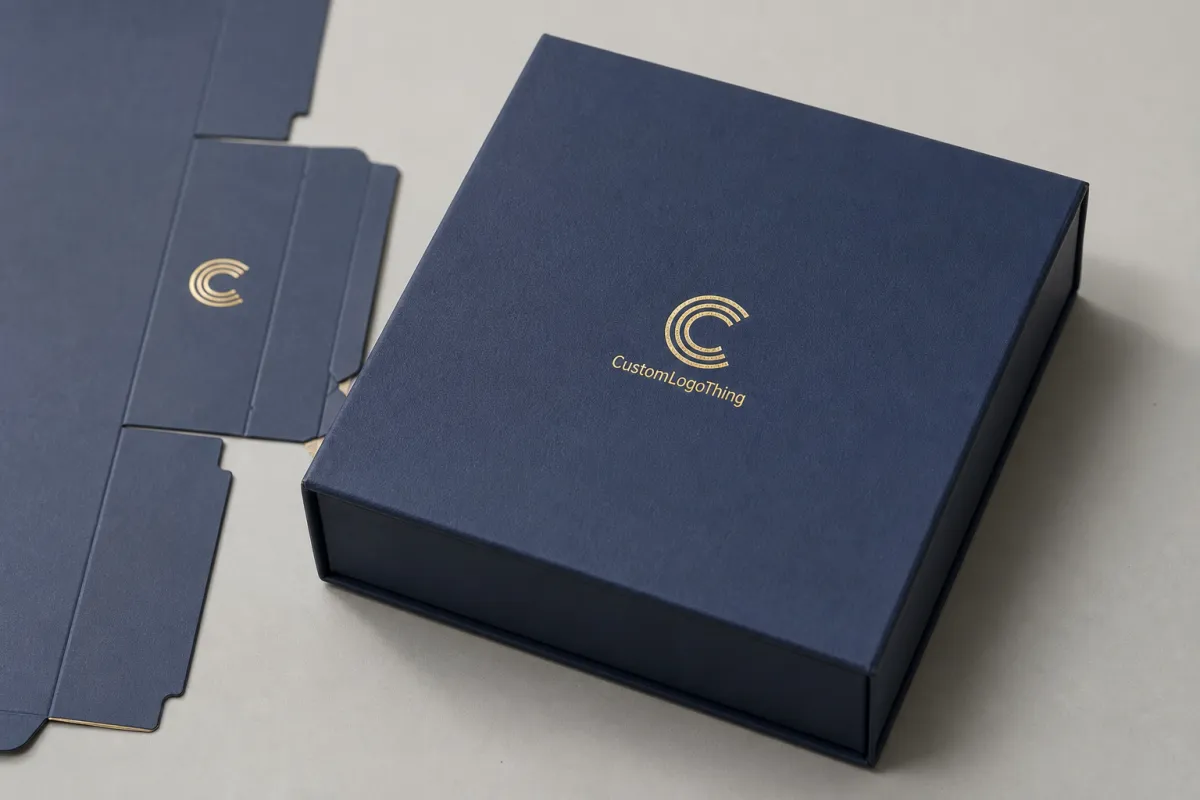
Vitamin brand magnetic boxes proofing catches the kinds of problems that rarely show up in a flat artwork file. A lid may feel too loose because the board caliper was underestimated. A magnet may snap shut harder than expected and make the box feel brittle instead of refined. A tray may allow a bottle to rattle, which changes customer perception immediately even if the print looks beautiful. A finish that looked elegant in a file can show fingerprints, rub marks, or light scuffing once the box is handled under store lighting. Those are not small issues when the box is doing double duty as protection and brand presentation.
In plain terms, proofing is the step where the design is checked in physical or near-physical form before the line runs in volume. The team compares the dieline, artwork placement, dimensions, insert design, closure behavior, and decoration choices against the real product. That might begin with a digital proof for copy and layout, then move into a flat sample or structural mockup, and finally a physical sample that shows how the box opens, closes, and feels once the magnet is seated. For vitamin brand magnetic boxes proofing, each stage answers a different question, and skipping one usually means paying for the mistake later.
Why do supplement brands rely on this so heavily? The category is unusually sensitive to both protection and presentation. A jar of capsules may be light, but the box still needs a premium feel. A glass bottle may be small, but the shipping stress is real. Gummies, powders, tinctures, and multi-pack sets each demand slightly different insert behavior, and that makes vitamin brand magnetic boxes proofing more valuable than it might seem from a simple shelf carton. Buyers are not just approving print; they are approving the way the packaging supports the product and the brand story together.
"A good proof does not just show the artwork. It proves that the box will open cleanly, close squarely, and still feel right after the product is inside."
That is the practical reason this step matters. A proof can reveal whether the magnet pocket sits too close to a score line, whether the lid depth swallows too much of the panel, or whether the insert lifts the bottle high enough to press against the lid. I have seen a sample look flawless in photos and then fail the first open-close test because the magnet placement was just a touch too aggressive. When those details are caught early, the final production run stays closer to the intended design, the unboxing experience feels deliberate, and the buyer has a clearer basis for comparing quotes across suppliers.
For brands that want to compare packaging options more broadly, it can help to review Custom Packaging Products alongside a few past projects in our Case Studies. Seeing how similar rigid box builds were handled in real projects often makes the proofing conversation much easier.
In practice, vitamin brand magnetic boxes proofing is not about being fussy. It is about protecting margin, reducing rework, and keeping the final customer experience aligned with the brand promise. A small structural error can snowball into a new insert, a revised magnet placement, a different board thickness, or a reprint. That is why smart buyers treat proofing as part of the quote, not as an optional add-on after the fact.
How Vitamin Brand Magnetic Boxes Proofing Works in Practice
The workflow usually starts with the dieline, artwork files, product dimensions, and a short structural brief. In vitamin brand magnetic boxes proofing, that first packet of information matters more than most buyers expect, because the supplier needs to know the exact bottle diameter, height, cap style, label overhang, and whether the product is going into a single cavity, a pair of cavities, or a multi-piece set. If the bottle has a shoulder shape, a pump, a dropper top, or a wide neck, the internal clearance changes immediately. Even a small difference in product geometry can affect the insert die-cut and the placement of the magnet.
The first proof is often digital. It checks layout, copy placement, barcode space, regulatory text, and whether the artwork sits correctly on the panels. A second proof may be a flat or structural mockup, which lets the buyer judge size, fold accuracy, lid depth, and panel proportions before decoration is applied. The most useful stage for many projects is the physical sample, because vitamin brand magnetic boxes proofing at that point shows the actual closure feel, the interior tray fit, the finish under real light, and how the box behaves once it is assembled and handled.
During the first review, a buyer should inspect more than the logo. Look at barcode legibility, ingredient copy space, claims placement, edge alignment, and whether the front panel has enough visual breathing room for the brand identity to read clearly. If foil stamping is involved, check whether the foil lands cleanly and does not crowd fine text. If embossing or debossing is part of the design, confirm that the depth is visible without weakening nearby board folds. Vitamin brand magnetic boxes proofing works best when the team reviews the package as a complete object, not just as a graphic surface.
One practical detail that often gets missed is the relationship between the closure and the insert. A magnetic lid that feels perfect on its own may behave differently once the product is loaded. A rigid insert can raise the fill high enough to interfere with the closure, or a tray wall can press against the lid fold and stop the box from landing squarely. That is why the conversation during vitamin brand magnetic boxes proofing should always connect the structural choice to the product inside. A sample that looks good but resists closure is not a passing sample.
Proofing is also a conversation. The best revision notes are specific: move the magnet pocket inward by 2 mm, reduce the tray depth by 1.5 mm, widen the cavity to allow for the label seam, or increase the flap overlap to improve closure strength. Vague feedback slows everything down. The more precise the note, the faster the supplier can revise the sample and give a reliable answer on whether the change affects cost, lead time, or tooling.
For buyers who need a broader sense of packaging behavior, it helps to think about the final retail environment. Will the box sit on a shelf, ship direct to consumer, or travel through wholesale distribution? If the box will take repeated handling, ask whether an ISTA-style transit check is appropriate; the International Safe Transit Association publishes widely used testing frameworks at ISTA. If the board sourcing matters to the brand story, ask about FSC certification for the paperboard or wrap stock. Those details strengthen trust and help buyers compare suppliers on more than appearance alone.
In the end, vitamin brand magnetic boxes proofing is a structured way to answer three questions: does the box fit the product, does the box support the brand, and does the box hold up in normal handling. If all three are yes, the project is usually on the right track.
Key Factors That Shape Vitamin Brand Magnetic Boxes Proofing Results
Structure comes first. A rigid magnetic box is usually built from greyboard or chipboard in the 2.0 to 2.5 mm range, then wrapped with printed art paper or specialty stock. If the board is too thin, the lid can feel soft and the corners may deform under pressure. If it is too thick for the magnet layout or the folding method, the closure can feel forced. In vitamin brand magnetic boxes proofing, the board thickness, wall build, lid depth, and magnet placement all work together. Change one, and the others often need a small adjustment to keep the box feeling balanced.
Product fit is the next major variable. Vitamin bottles, droppers, gummy jars, capsule containers, blister packs, and combination kits all behave differently inside a rigid box. A round bottle can roll unless the insert is snug. A tall narrow jar may need a neck support or a shoulder cutout. A two-bottle kit may look neat in a mockup but shift during shipping if the cavities are too open. That is why vitamin brand magnetic boxes proofing should always be done with the actual product, or at least a sample that matches the final dimensions and cap style as closely as possible.
Finishes change the entire feel of the sample. Matte lamination gives a calm, clean look, while gloss can make colors pop more aggressively. Soft-touch feels premium and velvety, but it can show wear in high-contact areas and sometimes darken the printed appearance slightly. Foil stamping, spot UV, embossing, and debossing all add character, but each one introduces a tolerance question. A proof should be reviewed under bright neutral light and, if possible, under the type of lighting the box will see on shelf. Vitamin brand magnetic boxes proofing is much easier when the team judges finish against real conditions instead of an idealized screen image.
Print quality matters just as much. Dense color blocks can reveal streaking or banding if the file is not handled carefully. Small regulatory text needs enough contrast to remain readable after lamination. White ink on dark stock behaves differently than full-color printing on white board, and it often needs more attention during proofing. A barcode must still scan, and the quiet zone around it should remain clean. If the packaging includes claims or dosage information, those details should not be buried behind decorative graphics. Strong visual branding should support the label hierarchy, not compete with it.
Logistics are part of the proof too. How will the boxes be packed? Will they ship flat, semi-assembled, or fully assembled? How many fit in a master carton, and will the cartons stack without crushing the lid edge? These questions affect freight protection and storage before filling. A proof can reveal whether the box arrives in good shape from the supplier, but it should also hint at how the finished stock will behave in a warehouse. For vitamin brand magnetic boxes proofing, shipping survivability is not an afterthought; it is part of the product experience.
One more factor deserves attention: brand consistency. If the supplement line includes bottles, pouches, cartons, and displays, the magnetic box should feel like part of the same family. Color match, type weight, finish choice, and logo treatment all need to relate well across the line. A proof is the best chance to see whether the new premium rigid carton strengthens brand recognition or feels disconnected from the rest of the range.
Good buyers ask different questions here. They do not stop at "Does it look nice?" They ask, "Does it look like us, and will it still look like us after the box is opened twenty times?" That is the kind of question vitamin brand magnetic boxes proofing is meant to answer.
Vitamin Brand Magnetic Boxes Proofing Process and Timeline
A clean proofing timeline starts with complete information. The buyer sends dimensions, artwork, finish choices, product samples or product specs, target quantity, and any special requirements such as inserts or tamper-evident details. From there, vitamin brand magnetic boxes proofing usually moves through a predictable sequence: initial review, revisions if needed, sample approval, and release to production. If the brief is clear, the process is orderly. If the artwork is incomplete or the fill dimensions are still moving, the schedule stretches fast, kinda like a launch date quietly slipping out of reach before anyone says it out loud.
A digital proof can often turn around quickly because it only checks the file. A structural mockup or physical sample takes longer because materials must be sourced, the board must be cut or die-cut, print may need to be arranged, the box must be assembled, and then the sample has to move through shipping. For a straightforward project, a digital proof might be reviewed within a couple of business days, while a physical sample often needs about a week or more depending on complexity and shipping distance. Complex boxes with foils, unusual inserts, or multiple components can take longer. Vitamin brand magnetic boxes proofing should never be scheduled like a simple PDF approval.
The most common bottlenecks are easy to spot once you have done a few of these. Missing artwork slows down prepress. Late copy changes force a new proof. Unclear approval criteria create round after round of revisions because nobody has said what "good" actually means. Incomplete product samples cause fit questions that cannot be answered by dimension alone. The fastest way to slow vitamin brand magnetic boxes proofing is to start before the product specification is locked.
Lock the fill first, then lock the structure, then lock the decoration. If the bottle size, cap height, label seam, and insert style are still changing, the proof becomes a moving target. That costs time and money. The more final the product brief, the more useful the proof, and the easier it is to compare quotes with confidence. A supplier who sees a stable brief can give a tighter estimate for tooling, sampling, and production.
Another point that buyers often miss is that proofing time and production time are separate. A supplier may quote a fast sample turn but still need a longer manufacturing window afterward because rigid boxes involve more hand assembly, more careful wrapping, and more inspection points than folding cartons. When someone says they can do it quickly, ask what part they mean. Is it the proof, the revision cycle, the full run, or the freight timeline? Vitamin brand magnetic boxes proofing only makes planning easier if each stage is measured on its own.
For projects that are heading toward a launch date, it helps to build a simple internal schedule:
- Day 1-2: confirm dimensions, artwork, finish, and insert brief.
- Day 3-5: review the initial proof and return clear notes.
- Day 6-10: revise and approve the sample or prototype.
- After approval: release production and add freight time separately.
That outline is not universal, but it keeps expectations realistic. In packaging, a few missing millimeters can change the whole schedule. Vitamin brand magnetic boxes proofing is easier when the team respects the full calendar, not just the date on the production order.
For brands that want more context on how rigid packaging choices support launches, our Case Studies page can be useful. It shows how packaging decisions play out across different formats, which is often more helpful than looking at a quote sheet in isolation.
Cost, Pricing, MOQ, and Quote Details for Proofing Runs
Proofing usually has its own cost structure, separate from the full production run. That is normal. A supplier may need to build tooling, print a small batch, hand assemble a prototype, or source specialty board just to create the sample. In vitamin brand magnetic boxes proofing, the sample charge is part of the risk the supplier takes to show the buyer what the final box will look and feel like. The good news is that a well-run proof often saves more money than it costs, because it prevents mistakes that would be much more expensive at scale.
When comparing quotes, do not stare at the bottom line first. Break the price into its parts: board grade, magnet count, insert complexity, print coverage, special finishes, sample charges, setup fees, and shipping for the proof itself. One supplier may look cheaper until you notice that foil, emboss, or a custom tray is not included. Another may be slightly higher but include a more complete proofing path. That is why vitamin brand magnetic boxes proofing should be compared apples to apples, not by headline price alone.
| Proof Option | What It Checks | Typical Cost Range | Best Use |
|---|---|---|---|
| Digital proof | Artwork layout, copy, barcode placement, color expectation | $0-$50 | Early file review and fast edits |
| Flat or structural mockup | Size, fold accuracy, panel proportions, insert fit in outline form | $75-$180 | Checking dimensions before decoration |
| Physical sample | Closure feel, finish, magnet alignment, insert behavior, visual impact | $150-$450 | Most supplement brand approvals |
| Pre-production sample | Near-final structure, print, finish, and assembly method | $250-$600 | High-risk launches or premium programs |
Those numbers are realistic starting points, but the final cost depends on size, materials, and how much handwork the sample needs. A small straight-sided box with a simple insert can stay near the low end. A large rigid set with foil, soft-touch lamination, and custom foam or paperboard supports can move much higher. Vitamin brand magnetic boxes proofing is one of those areas where the sample cost often tracks the complexity of the final box more closely than the production quantity.
MOQ matters too. A lower proof quantity may carry a higher unit cost, because setup time is spread across fewer boxes. A larger production order usually brings the per-box price down, even if the proof stage itself remains the same. That is why buyers should ask whether the proof cost is credited back at production, whether revisions are included, and what triggers a new sample charge. If the proof leads to a structure change, a new insert, or a different finish, the quote can change. It is better to know that before approval.
For a fair comparison, ask each supplier to quote the same box size, the same substrate, the same insert style, and the same finish level. If one vendor is quoting a 2.0 mm board with matte lamination and another is quoting a 2.5 mm board with soft-touch and foil, the numbers are not directly comparable. Vitamin brand magnetic boxes proofing only helps the buyer if the quote language is equally specific on both sides. Precision in quoting usually reflects precision in production.
Here is the honest version: a slightly higher quote sometimes buys better proofing discipline, fewer revisions, and a cleaner approval cycle. That matters in supplements, where packaging often carries a premium positioning and a stronger requirement for brand consistency. Paying a little more for a sample that tells the truth is usually cheaper than discovering a fit problem after the full order is already in motion.
Common Mistakes Buyers Make During Magnetic Box Proofing
The most expensive mistake is approving a sample before the real product is measured in its final packaging state. A bottle can look fine on a desk and still change size once the label, tamper band, cap, or seal is installed. In vitamin brand magnetic boxes proofing, the box has to fit the finished product, not the draft version sitting in the buyer's office. If the dimensions are even slightly off, the elegant box becomes difficult to fill or awkward to close.
Another common problem is focusing only on graphics while ignoring structure. Supplement packaging is not just a printed surface. The box has to open smoothly, close squarely, protect the contents, and stack without warping. A beautiful lid graphic does not make up for a weak hinge line or a tray that lets the product move. Brand identity is stronger when the physical object supports the visual message. That is especially true for premium wellness products, where customer perception is shaped by feel as much as by color.
Buyers also forget to test the box under normal handling. Open it a few times. Close it with the product inside. Hold it at the edges. Put it in a carton and shake it lightly. Stack a few units and see whether the corners mark or the magnet shifts. Those simple checks reveal weak spots that a one-time photo cannot show. If the closure pulls too hard, the box may wear down early. If the magnet is too light, the lid may drift open. Vitamin brand magnetic boxes proofing is the time to find that out.
Vague feedback slows everything. Comments like "make it better" or "make it more premium" do not help a production team correct a specific issue. Instead, say what changed: the lid sits high, the insert compresses the label, the foil is too bright, or the barcode needs more white space. Specific notes reduce back-and-forth and give the supplier a clear target for revision.
Approval by photo alone causes another kind of trouble. A proof can look clean in a tight shot and still fail in real use. Ask for a wider view, ask for the open-and-close sequence, and ask for measurements on any area that looks close to the limit. If the sample includes a magnet, check both closure strength and opening force. A box that is hard to open feels less premium, even if the construction is sound. If it opens too easily, the lid loses presence in hand. Vitamin brand magnetic boxes proofing should balance both.
One mistake shows up often in supplement launches: treating the box as a separate project from the product. The packaging schedule has to follow the product schedule. If the label art changes, the dosage changes, or the jar supplier changes, the insert may need a new cut. A rigid box is more sensitive to those shifts than a standard folding carton. Buyers who hold the packaging brief stable save themselves a long string of revisions later.
It also helps to keep one person responsible for final approval. When several team members send notes at different times, the proof can go in circles. A single point of contact can collect comments, remove contradictions, and send one clean revision request. That simple habit keeps vitamin brand magnetic boxes proofing efficient and reduces the chance of approving the wrong version.
Expert Tips and Next Steps Before You Order
Start with the final filled dimensions, not the empty container. Measure the product exactly as it will ship and sell, including label seam, cap height, tamper band, pump, or dropper. The closer the sample matches the finished product, the less likely the insert will need a revision later. Vitamin brand magnetic boxes proofing works best when the supplier is solving the real object, not an early draft of it.
Ask for a sample that shows the closure repeatedly, not just once. Magnet behavior can change after several openings, especially if the lid has a strong pull or the board is thick. A quick open-and-close test tells you whether the box lands squarely and whether the lid rebounds in a way that feels polished. That small habit often reveals the difference between a box that photographs well and a box that holds up in daily use.
Request that the proof be checked under the lighting conditions that matter to the brand. Retail lighting, studio light, and office light all show finish differently. A matte wrap can read warm in one room and gray in another. Foil can look clean in a white room and noisy under harsh LEDs. Vitamin brand magnetic boxes proofing should take real light seriously, because shelf behavior starts with how the box catches the eye.
Be direct about what matters most. If the box is going to sit at retail, prioritize shelf presence and scannability. If it is a direct-to-consumer premium launch, prioritize the opening experience and insert presentation. If it will travel through a distributor network, prioritize shipping durability and carton packing efficiency. A clear priority list gives the proof a purpose and keeps the conversation practical.
Keep revision notes short, specific, and tied to a measurement where possible. A note like "reduce cavity width by 1.5 mm" moves faster than "tighten the fit." A note like "shift logo up 3 mm to clear the lid fold" is easier to act on than "recenter the front." Vitamin brand magnetic boxes proofing rewards precision because small changes carry real effects in rigid packaging.
If you are reviewing several suppliers, use the same criteria for each one. Compare board thickness, magnet count, insert method, finish, sample charge, and whether the supplier can produce a pre-production sample if the launch is high risk. A quote that looks attractive on the first read may leave out the very steps that prevent costly changes later. The strongest offer is not always the lowest one.
Once the sample looks right, approve it in writing and keep a reference set on hand. Save the measurements, the finish callout, the insert drawing, and a photo of the approved sample. That record helps if a second run is needed months later or if the line expands into a related format. Packaging work gets easier when the approved standard is easy to find.
FAQ
What does vitamin brand magnetic boxes proofing check first?
Fit and closure usually come first. The proof should confirm that the product sits correctly in the insert, the lid closes squarely, and the magnet pull feels right for the board thickness and box size.
Can I approve the box from a digital proof alone?
Digital proofs are useful for artwork, copy, and barcode placement, but they do not show closure feel, insert behavior, or finish under light. For supplement packaging, a physical sample is the safer approval point.
What product details should I send before proofing starts?
Send the final product dimensions, cap or pump style, label thickness, insert preference, finish choice, artwork files, and any compliance copy that has to appear on the box. The more complete the brief, the cleaner the proof cycle.
How long does the proof stage usually take?
Simple digital proofs can move quickly, while structural mockups and physical samples take longer because they involve material sourcing, assembly, and shipping. Complex rigid boxes with specialty finishes or inserts usually need extra time.
Why is the magnetic closure such a big deal?
Magnetic closure affects how premium the box feels in hand. If it closes too hard, the box can feel stiff or fragile. If it closes too lightly, the lid loses presence and may open during handling.
What is the biggest reason samples need revision?
Product dimensions that were not final at the start. A label change, cap change, or insert change can force the box to be reworked, even when the artwork itself is already approved.
Should I ask for a pre-production sample?
Yes, if the launch is high stakes, the packaging carries premium positioning, or the product has tight tolerances. A pre-production sample gives a closer view of the near-final structure, print, and finish.
How do I compare suppliers fairly?
Use the same box size, board thickness, finish level, insert style, and proof type for each quote. If one supplier is quoting a different material or a different sample method, the prices do not mean the same thing.
What should I keep after approval?
Keep the approved sample, the final dieline, the finish notes, and the written approval record. Those documents make repeat orders and future line extensions much easier to manage.
Vitamin brand magnetic boxes proofing gives supplement brands a practical way to protect both the product and the packaging investment. A careful sample stage catches fit problems, finish issues, and closure behavior before they become expensive mistakes. The clearest takeaway is simple: measure the real product, review the real sample, and approve only after the box feels right in the hand, closes squarely, and still reads cleanly under the lighting it will actually see. Do that, and the packaging starts working for the brand instead of against it.


