The fastest way to avoid a disappointing bulk order is to treat the supplement cuffed knit Beanies Material Sample guide as a working document, not a formality. A knit sample is the first real chance to feel stretch recovery, inspect cuff structure, judge logo placement, and decide whether the hat reads as premium in hand rather than only on a product page.
That matters more than many buyers expect. A cuffed beanie can pass a color check and still fail in wear if the stitch density is too loose, the crown sits oddly, the embroidery puckers, or the cuff loses shape after a few uses. The sample is where material choices, decoration choices, and packaging decisions all collide.
For brands, merch programs, and private-label buyers, this step is also a cost-control measure. A sample that exposes a problem early can save a season's worth of rework, freight, and missed launch timing. A sample that is approved casually can do the opposite.
What the supplement cuffed knit beanies material sample guide covers
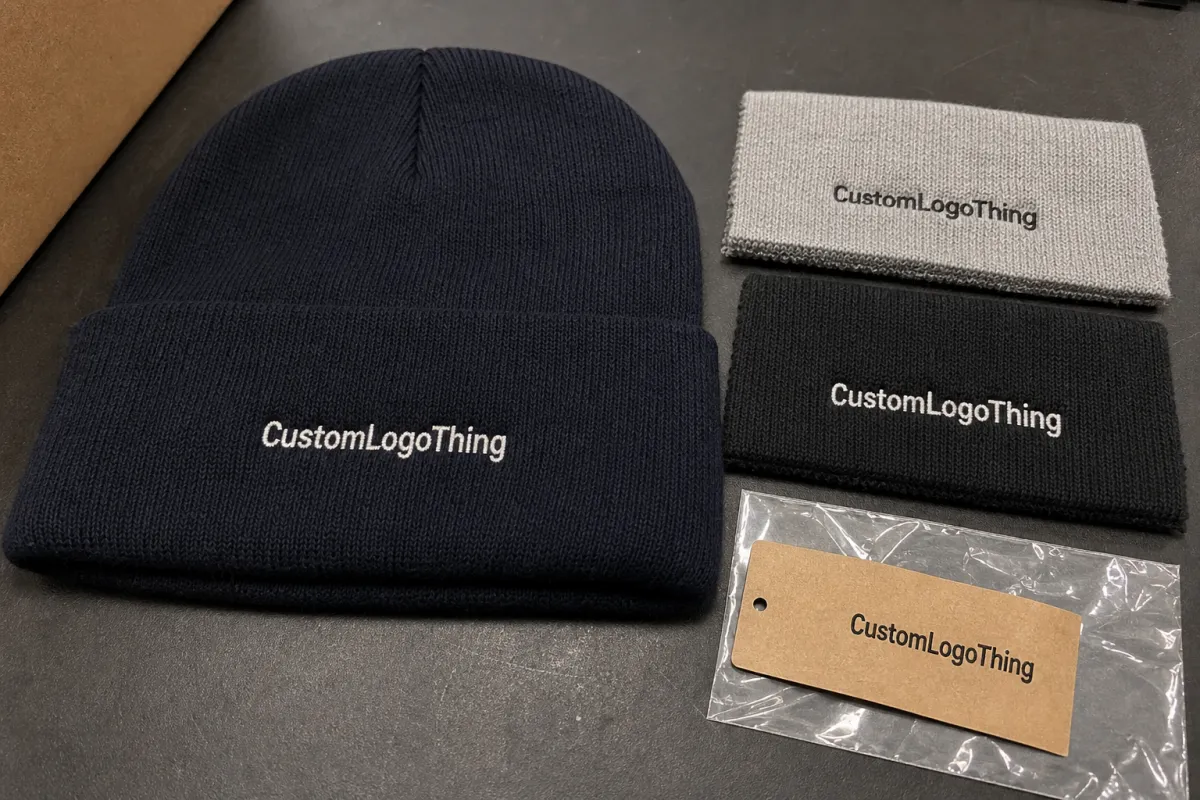
The supplement Cuffed Knit Beanies Material Sample guide starts with the basics, but the basics are not simple. A proper sample is more than yarn color confirmation; it should show the actual hand feel of the knit, the way the cuff folds, how much the fabric rebounds after stretching, and whether the logo lands cleanly on the front panel or cuff.
The goal is to compare the build before the order is locked. That usually means reviewing:
- Yarn type such as acrylic, polyester blend, wool blend, or recycled yarn.
- Gauge and stitch density, which affect warmth, drape, surface clarity, and how crisp the knit reads.
- Cuff height and cuff tension, especially if the brand wants a snug retail fit or a roomier promotional profile.
- Decoration method including embroidery, woven labels, patches, or direct knit artwork.
- Finish details such as seaming, steaming, washing, label placement, and the quality of inside seams.
That level of review prevents the kinds of problems that only show up after knitting and finishing are already committed. A yarn that feels fine in a swatch can change once it is formed into a full beanie. A cuff that looks balanced on a flat table can sit too tight on the forehead. A logo that is readable on a screen can distort once it is stitched onto a curved knit surface.
Material samples also help buyers decide which direction fits the price point. Acrylic usually gives the cleanest cost control and steady color matching. Polyester blends can improve abrasion resistance and reduce fuzzing. Wool blends add warmth and a more natural hand, but they push the order toward a higher cost and more careful handling. Recycled yarns can work well too, although the hand feel and color consistency should be checked with more care than a standard stock fiber.
If packaging matters, the sample should arrive protected in corrugated cardboard with kraft paper or tissue inside, not loose in an oversized mailer. For eco-focused programs, FSC-certified cartons, recycled materials, and, where appropriate, biodegradable packaging keep the presentation aligned with the product story. Packaging is not an afterthought for apparel buyers; it affects damage risk, perceived quality, and unpacking experience.
A sample should answer one question clearly: if this exact beanie went into bulk production, would the customer be happy to wear it, buy it again, and show it off?
How knitted beanie samples translate into production
A useful sample mirrors the intended production build as closely as possible. That means the factory should follow the same yarn feed, stitch pattern, cuff fold, crown shaping, and trim plan that will be used in the full order. If the sample is built on a different structure, it can look convincing while hiding real production risk.
There is a major difference between a visual prototype and a production-representative sample. A visual prototype may only prove the color direction or show artwork placement. A production sample should prove that the knit behaves correctly under normal manufacturing conditions. Even a small shift in yarn batch, stitch count, or washing can change the hand feel enough to matter.
That is especially true with cuffed beanies. The cuff adds structure, but it also introduces another variable: fold memory. If the knit is too soft, the cuff can collapse. If it is too tight, the front panel can pucker or sit oddly on the head. A sample should show whether the fold stays neat after handling, whether the cuff edge stays straight, and whether the depth looks proportional once worn.
Decoration deserves the same discipline. Embroidery density can pull the cuff if it is too heavy. A woven label can look flat on the sample and still create a pressure point if the backing is too stiff. A patch may be attractive but sit too proud on the knit, which changes drape and comfort. A direct-knit logo can look elegant, but only if the artwork is simplified enough for the gauge being used.
That is why the supplement cuffed knit Beanies Material Sample guide should be read as a production reference, not as a display piece. Small variations in blocking, steaming, or washing can alter the final fit. If the sample feels slightly looser than expected, that can become a real issue on bulk units when dozens or hundreds of hats need to land the same way.
For buyers who care about verification, this is the stage to ask whether transit packaging and handling are being considered as well. If the sample is traveling across a longer route, ISTA packaging test methods are a useful benchmark for thinking about compression, vibration, and box movement without shape loss.
It is also worth checking whether fiber and carton sourcing match the product story. Many brands now prefer FSC-certified materials for paper-based packaging because it keeps the outer presentation consistent with the sustainability message inside.
Yarn, fit, and decoration factors that change the result
Yarn choice drives a surprising amount of the final impression. Acrylic is common because it is consistent, economical, and easy to color-match. Polyester blends can improve wear resistance and reduce fuzzing. Wool blends usually feel warmer and more refined, but they demand a buyer who is comfortable with a higher cost and a little more care sensitivity. Recycled yarns can work well too, although supply consistency varies enough that they deserve closer sampling.
For a cuffed knit beanie, the knit structure matters just as much as the fiber. A tighter gauge usually gives a cleaner retail look and better embroidery support, while a looser knit can feel softer but may lose shape faster. Many buyers ask for a sample swatch and assume it is enough. It rarely is. A beanie is a shaped product, and shape changes how the fiber behaves.
Stretch recovery is one of the first things worth checking by hand: pull the cuff, release it, and see how quickly it returns. If it grows too much, the hat may feel tired after only a few wears. If it snaps back too aggressively, the fit can feel restrictive and less forgiving across different head sizes.
Fit is not one-size-fits-all in the real world. Some programs want a snug beanie that sits close to the head with a crisp cuff. Others want a looser promotional fit that feels easy across more head sizes. Crown depth, cuff width, and overall stretch all affect whether the piece feels premium or slightly off. A half-inch change in cuff height can be the difference between balanced and awkward.
Decoration changes the review as well. A dense embroidery logo can shift the drape of the front panel. A patch can add structure, which some retail buyers like and some do not. A woven label may be the most comfortable option for all-day wear, but only if the brand is willing to accept a subtler look. The right answer depends on how the beanie will be used, not just how it photographs.
Common material and build combinations tend to behave differently in sampling:
- Acrylic - cost-controlled, color-stable, common for large promotional runs.
- Polyester blend - stronger abrasion performance, useful for frequent wear and higher handling.
- Wool blend - warmer and more natural in hand, often chosen for premium retail.
- Recycled yarn - stronger sustainability story, but verify consistency across dye lots and hand feel.
There are also practical constraints that are easy to overlook. Very fine logos can disappear on a coarse gauge. Thick yarn can hide a small stitch defect, but it can also make the hat bulkier than expected. Dark colors often reduce visible surface variation, while light colors reveal everything, including uneven steaming and imperfect seams. A sample should expose those issues before production does.
If the brand promise includes sustainability, the story should stay consistent from sample to shipper. A beanie made from recycled materials can still be packed in a minimal way with corrugated cardboard and kraft paper, which keeps the unboxing tidy without adding unnecessary waste. That is where the supplement Cuffed Knit Beanies Material Sample guide becomes broader than the knit itself; it touches the whole customer experience.
Cost, pricing, and MOQ for sample runs
Sample pricing varies because the factory is not just charging for one hat. It is charging for yarn reservation, machine time, setup, finishing, decoration, and often a small amount of hand labor to make the sample presentable. The more custom the build, the more that one piece behaves like a mini production run.
Here is a practical way to think about sample options:
| Sample type | Typical price range | Typical lead time | What it proves |
|---|---|---|---|
| Blank visual sample | $18-$35 | 5-7 business days | Basic shape, cuff, and color direction |
| Decorated production sample | $35-$85 | 7-14 business days | Logo placement, stitch behavior, and finish quality |
| Fully custom material sample | $75-$150+ | 10-20 business days | Custom yarn, labels, patches, and final hand feel |
MOQ affects the quote too. A small sample quantity still requires the factory to reserve yarn, stop and start machines, and often handle finishing outside the usual production flow. If the yarn is stock, the process is easier. If the yarn needs to be dyed to match a Pantone reference or custom-mixed for a retail line, the cost rises because the sample is tying up more material and more attention.
Sample charges can be credited back once production starts, but that is not guaranteed. Some suppliers keep sample fees separate because they are covering real setup labor. Before approval, ask exactly what is included: yarn, decoration, revisions, shipping, and whether a second round is discounted if the first sample is close but not final.
The cleanest comparison is not always the lowest sample price. One factory may look cheaper until you realize the quote excludes label application, embroidery setup, or custom packaging. Another may include better documentation, more precise fit control, and cleaner finishing. The low number is not always the better deal.
There is also a timing cost. A sample that arrives a week late can miss catalog deadlines, photography windows, or seasonal sign-off dates. That delay can be more expensive than the sample fee itself. For winter accessories, the calendar matters as much as the material.
Process and turnaround for approving beanie materials
The approval process usually starts with a tech pack, a reference photo, or both. From there, the factory confirms yarn options, checks decoration feasibility, and begins knitting the first sample. If the sample is meant to be production-representative, the best suppliers also confirm cuff size, crown shape, and label placement before starting.
- Share the spec - include size, fit target, logo art, and any must-have material notes.
- Select the yarn - confirm acrylic, polyester blend, wool blend, or recycled direction.
- Build the sample - knit, seam, fold, decorate, and finish.
- Review in hand - check stretch, cuff recovery, comfort, and visual balance.
- Revise if needed - tighten the spec before bulk approval.
Turnaround depends on what the factory already has in stock. If matching yarns and labels are ready, a sample can move quickly. If the team has to source a special blend, a new dye lot, or a specific patch backing, the timeline stretches. A first round often takes longer than the revision round because shape, gauge, and placement issues are being solved for the first time.
Clean information speeds everything up. Pantone references, vector logo files, target hand feel, target head size, and the intended audience all help. A retail beanie for a winter apparel line needs a different finish than a promotional beanie for an event giveaway. If the factory has to guess, the sample will drift.
Quality control should be specific, not vague. Check whether the cuff width matches the approved dimension, whether the seam lays flat, whether the decoration sits centered, and whether the knit surface has skipped stitches, visible runs, or uneven tension. For embroidered styles, look at the underside too. Backing material that feels bulky in the sample will usually feel worse in bulk if nothing is changed.
It also helps to test the sample in the way the customer will actually use it. Fold it, stretch it, wear it for a while, then inspect it again. A good cuffed beanie should still look neat after handling. If it grows, twists, or starts to lean to one side, that is a production signal, not a cosmetic quirk.
Packaging for the sample should be simple and protective. Fold the beanie with tissue or kraft paper, then pack it in a corrugated cardboard carton sized so the cuff is not crushed. If the buyer is shipping multiple sample variations, recycled materials and post-consumer waste content in the shipper can reduce the footprint without hurting presentation. For lightweight domestic shipments, biodegradable packaging may be reasonable, but only if it still protects the knit from snagging or moisture.
Common mistakes and what to do next
The biggest mistake is approving a beanie by appearance alone. A sample can look sharp on a desk and still fail on a head if the crown sits too shallow, the cuff bites too hard, or the knit does not recover well after stretching. Comfort matters because people wear beanies close to the skin, often for long stretches.
Another common miss is ignoring decoration durability. Embroidery that puckers in the sample usually gets worse in bulk if the yarn tension or stitch density is left untouched. A patch that lifts at the edges after handling is a warning sign, not a minor flaw. The sample should survive a basic wear test, a few folds, and a quick check for rubbing at the forehead.
Some buyers also forget to test the sample on real heads. That sounds obvious, but it happens all the time. A beanie that looks balanced in a flat lay can feel too short for one wearer and too loose for another. A quick fit check across a few people often reveals whether the piece is truly retail-ready or only visually acceptable.
Another easy mistake is letting revisions stay unrecorded. Small changes can vanish in email threads once production starts, especially if several departments are involved. The safest approach is to document exactly what changed, what was approved, and what must not move in bulk. That includes the yarn family, the cuff structure, the logo placement, and any packaging expectations tied to the order.
There is also a difference between a sample that is acceptable and one that is truly ready for volume. Acceptable means it looks close. Ready means the factory can reproduce it at scale without introducing shape drift, shade variation, or trimming issues. That standard is stricter, but it is the one that protects the order.
If you need a simple checklist before approval, use the sample to answer four questions:
- Does the yarn feel right for the intended customer and price point?
- Does the cuff hold its shape after stretching and folding?
- Does the decoration stay clean without puckering or pressure marks?
- Does the overall beanie match the buying goal for retail, promo, or a middle-ground program?
Then move in a straight line: gather artwork, choose the yarn direction, confirm sample cost and lead time, request the sample, and compare the final piece against the buying goal before you sign off. That is the practical value of the supplement Cuffed Knit Beanies Material sample guide; it gives you a real object to evaluate before you commit money, time, and shelf space to bulk production.
FAQ
What should a supplement cuffed knit beanies material sample actually prove?
It should prove that the yarn feel, stretch recovery, cuff stability, and decoration placement all work together in a real finished beanie. It should also confirm that the sample matches the intended buying goal, whether that is retail quality, promotional volume, or a blended middle ground.
How long does a cuffed knit beanie material sample usually take?
Timeline depends on yarn availability, decoration complexity, and whether the factory has to source special trims or dye lots first. A clean spec sheet and prompt feedback usually shorten revision cycles more than anything else.
Why does the cost of a sample vary so much?
Price changes with yarn type, knit complexity, number of colors, labeling method, and whether the sample requires extra hand finishing. MOQ and setup effort can also affect the quote, even when only one or two samples are requested.
Can I approve the sample if the logo looks right but the fit feels off?
No, because fit is part of the product and can affect wearability, perceived quality, and return risk. Ask for a revision if the cuff depth, crown shape, or stretch recovery does not match the intended use.
What is the best way to compare two beanie material samples?
Compare them side by side using the same checklist for feel, fit, decoration clarity, and finish quality. Document which sample better matches the intended customer, price point, and expected use case before making the final choice.
Which details cause the most production trouble?
Uneven cuff sizing, decoration that is too dense for the knit, vague color references, and untested yarn substitutions cause many of the repeat problems. Those issues are easier to fix at sample stage than after bulk knitting begins.

