Vitamin Frosted Zipper Bags Bulk Order planning gets easier once the buyer treats the pouch as a controlled spec, not a styling choice. One missed detail in size, zipper behavior, or fill volume can turn a routine reorder into a rejected lot. That is where the real cost sits: not in the first quote, but in the corrections that follow.
Frosted bags are popular for a reason. The matte effect cuts glare under retail lights, softens the visual noise of uneven fill levels, and gives vitamins, gummies, capsules, and tablets a more finished shelf read. A clear pouch can look clinical. A frosted one usually looks more deliberate. That difference is small on paper and obvious on a shelf.
For procurement teams, this is mostly a control problem. Better planning reduces proof cycles, limits remake risk, and keeps receiving from getting stuck on packaging disputes. If the size, thickness, closure type, and decoration method are locked before quoting, the supplier can price the job without guesswork and the buyer can compare offers on equal terms.
Why vitamin frosted zipper bags bulk order planning cuts rework
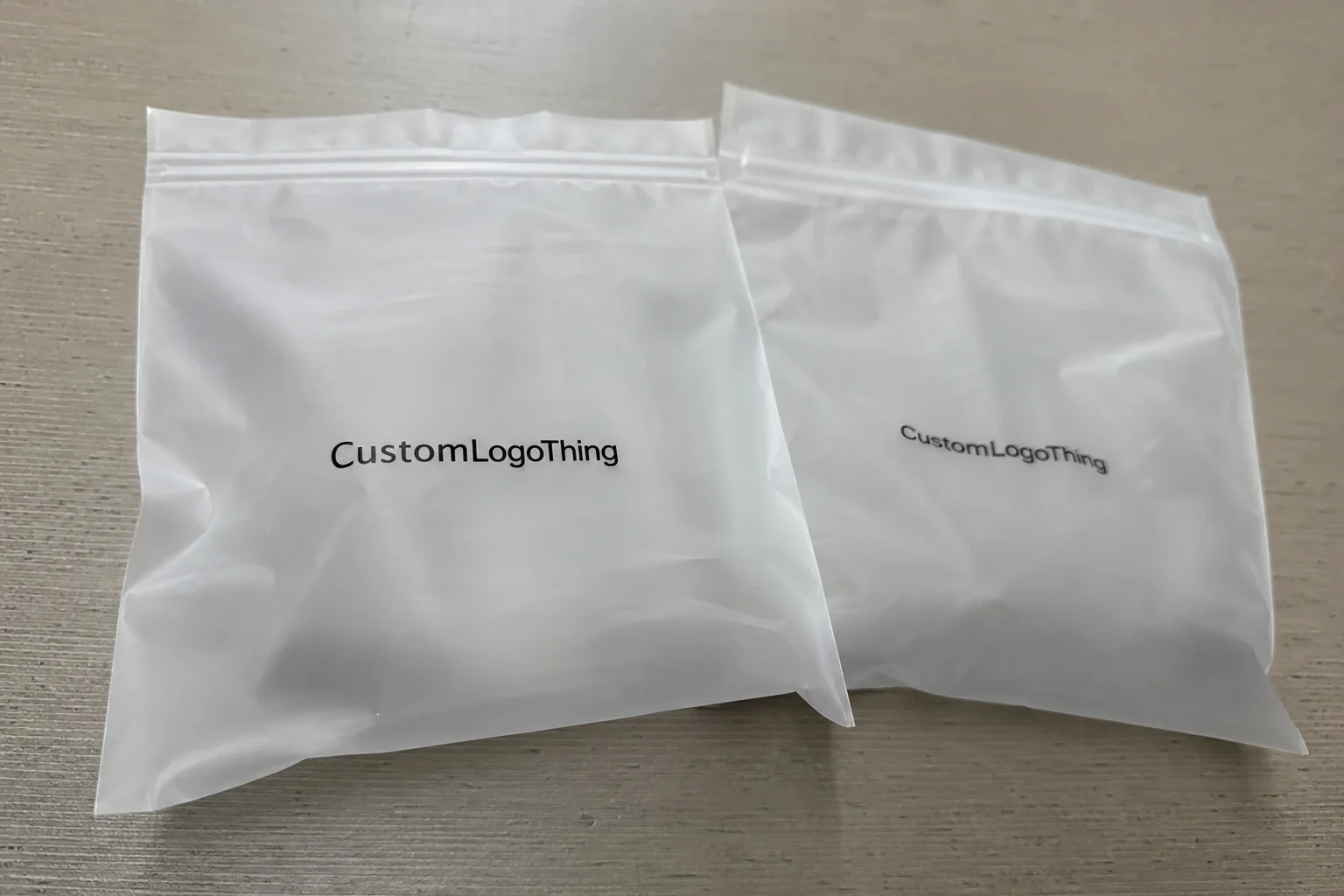
Most packaging mistakes are not dramatic. They are small, repetitive, and expensive. A bag that is 5 mm too narrow may still look acceptable in a mockup. A zipper that closes cleanly by hand may slow a packing line. A pouch that looks fine in the sample room can still fail once cartons are stacked, dropped, or compressed in transit.
That is why planning bulk orders properly matters. It forces the buyer to settle the questions that affect production before anyone starts cutting film. Product weight, fill style, closure preference, and shelf presentation standard should be clear before the quote is accepted. If they are not, the same order can bounce between sales, artwork, and operations for days.
Frosted film is not only a visual choice. It changes how the package reads in motion, under overhead lights, and in warehouse staging. The surface diffuses reflections, which can make small shifts in headspace or powder settling less noticeable. That is useful for supplement lines where visual consistency matters almost as much as physical protection. A bag that looks calm on the shelf often feels more controlled than one that flashes every crease.
Still, the finish is only part of the story. Seal geometry, zipper track quality, and film gauge decide whether the pouch survives handling and can be resealed by the consumer without frustration. If the product is moisture-sensitive, or if cartons are packed tightly, structure matters more than appearance. Presentation gets the order approved. Construction keeps it from becoming a complaint.
A clean reorder usually comes down to three locked items: the finished size, the zipper spec, and a signed spec sheet.
For repeat bulk work, experienced buyers tend to decide the same four things first: finished size, thickness, closure type, and decoration method. Once those are fixed, the quote becomes a pricing exercise instead of a design debate. That is the difference between a predictable supply chain and a purchase that keeps reopening itself.
Bag structure, frosted finish, and closure details to verify
Any credible spec should start with the structure. For vitamin Frosted Zipper Bags, the main variables are film type, frosted surface treatment, zipper track, tear notch, hang hole, and bottom seal style. Each one affects handling, appearance, and line performance. Ignore one variable and the rest can be perfectly correct while the package still fails the job.
Film thickness is a good example. Thicker material improves puncture resistance and usually feels more premium in hand, but it also costs more and can reduce flexibility during filling. A thin film may run faster, yet it can distort under a heavier fill or during case packing. Most buyers are not choosing “best” in a vacuum. They are choosing the least problematic balance for the product weight, shipping distance, and shelf requirements.
The zipper deserves separate attention. Not every closure feels the same or runs the same. Some tracks give a crisp snap that consumers trust immediately. Others are easier for operators to seal quickly in high-volume packing. If the closure is too loose, reseal performance drops. If it is too stiff, line speed drops. Those are different failures, but they end in the same place: wasted time and avoidable complaints.
Different vitamin formats create different demands. Powders can settle and compact, which makes headspace more sensitive. Gummies introduce bulk and shape variation, so the bag needs tolerance for uneven load distribution. Capsules and tablets are more uniform, but they still need consistent protection against moisture and crushing. Blended formulas can be the hardest to package because the density and fill behavior change together.
Frosted film also has limits. It improves presentation, but it does not substitute for barrier performance or shipping validation. If a pouch must survive long transit or fluctuating storage conditions, the supplier should be able to explain what the structure is designed to handle. Many buyers reference ISTA methods for transit testing because it gives a practical frame for drop, vibration, and compression expectations. If cartons or inserts are part of the package, documentary claims such as FSC should be backed by the right paperwork rather than assumed from appearance.
| Bag option | Typical use | Indicative MOQ | Typical unit cost | Notes |
|---|---|---|---|---|
| Blank stock frosted zipper bag | Internal packing, samples, simple supplement reorders | 1,000-3,000 pcs | $0.10-$0.18 | Fastest approval path, lowest setup burden |
| Custom frosted bag with 1-2 color print | Retail vitamins, club packs, promo bundles | 3,000-5,000 pcs | $0.18-$0.32 | Common middle ground for brand control and cost |
| Custom frosted bag with full coverage print | Premium shelf packs, private label lines | 5,000-10,000 pcs | $0.24-$0.42 | More press time, more proof control, higher decoration cost |
Those numbers are directional, not fixed. Material grade, film gauge, print setup, and freight all move the final landed cost. A low quoted unit price can still lose once labor, rework, and incoming inspection are counted.
Specifications that determine fit, printability, and shelf performance
A useful spec is specific enough that a second buyer could reorder the same pouch a year later without reconstructing it from email threads. Finished width, finished height, gusset depth if present, film thickness, zipper style, and usable fill area all belong on the same page. If any of those are vague, the chance of a wrong proof rises quickly.
Dimensions affect more than paperwork. A pouch that is nominally correct but tight in width can slow filling because product settles differently. One that is too generous may look oversized on shelf and adds freight for no functional gain. In packaging, a few millimeters can change machine behavior, carton count, and the impression the product makes in the first second.
Print details need equal discipline. Specify ink coverage, panel placement, barcode position, and any text that must remain legible after sealing. If the artwork includes dosage instructions, lot coding space, or a nutrition-style panel, mark the safe zone before the proof is approved. A design can look polished and still fail a compliance review if the variable data area was never planned.
Buyers often skip performance requirements because they are less visible than graphics. That is a mistake. Ask for seal strength targets, moisture guidance, and confirmation of how the frosted finish behaves across production batches. Some matte surfaces are visually consistent in a sample and then vary slightly once a larger run is produced. That may be acceptable for a low-risk internal pack and unacceptable for a retail vitamin line with stricter appearance standards.
For teams managing multiple SKUs, standardization saves money. Keep the zipper style the same where possible. Keep carton counts predictable. Keep fill windows aligned if the product family allows it. Those choices reduce the number of variables in purchasing, warehouse receiving, and reorder approval. In practice, the bag that is easiest to reorder is often the one that has been deliberately made boring.
One habit separates strong purchasing teams from the ones that spend too much time resolving disputes: they require nominal dimensions and tolerance ranges in writing. That small detail prevents most of the “close enough” arguments that surface after production. A polished mockup cannot replace a spec sheet that names the acceptable range.
Cost, pricing, MOQ, and quote factors that move unit cost
Pricing usually comes down to five inputs: material grade, bag size, print count, zipper style, and total quantity. Add carton configuration and shipping destination, and the quote begins to reflect reality. Leave out any one of those, and the first number you receive is only a starting point.
MOQ follows standard packaging economics. Fixed costs do not shrink just because the run is smaller. A 3,000-piece order can easily carry a higher unit price than a 10,000-piece order, even if the pouch looks identical. Setup, proofing, and material handling remain the same, so they are spread over fewer units.
There are practical ways to control cost without weakening the package. Standardize dimensions if the product range permits it. Reduce print colors if the design still reads clearly. Keep carton counts consistent so warehouse handling remains simple. Those changes often save more than aggressive price negotiation, because they attack the structure of the cost rather than the last decimal point.
For a quote request, send the dimensions, artwork files, target quantity, destination, and any compliance or packaging rules that apply. Add product type as well. A supplement powder and a gummy blend do not always need the same pouch construction, and the supplier should not have to infer the difference. The fastest pricing usually comes from the cleanest brief.
| Quote factor | Why it changes price | Buyer action |
|---|---|---|
| Material thickness | Heavier film uses more resin and may run slower | Specify extra thickness only where product weight or transit stress justifies it |
| Print coverage | More colors and larger coverage increase setup and ink usage | Use the fewest colors that still support the shelf role |
| Zipper style | Special closures can add cost and require different sealing settings | Choose the closure that matches packing speed and consumer use |
| Quantity tier | Fixed setup costs are spread over more units at higher volumes | Ask for pricing at 3,000, 5,000, and 10,000 pieces to find the break point |
Blank stock bags can look cheaper at first glance, but a printed pouch may reduce label application time and improve brand consistency enough to offset the higher unit price. In some facilities, the real saving is not on the bag itself but on the labor removed from the packing line. The lowest quote is not always the lowest landed cost.
Production process and timeline from approval to shipment
A predictable production flow usually runs in the same order: spec confirmation, artwork review, proof approval, material procurement, manufacturing, inspection, packing, and dispatch. The process only feels unpredictable when one of those steps is skipped or repeated. Most delays are procedural, not technical.
Lead time moves with complexity. A blank stock run is faster than a custom printed order. Specialty films can add sourcing time. Larger quantities extend manufacturing and inspection windows. Seasonal demand also affects scheduling even after artwork is approved. None of that is unusual, which is why lead time should be treated as an estimate until the spec is fully locked.
The biggest delays are often administrative. Unclear artwork triggers another proof. Missing dimensions trigger another round of questions. Late sign-off pushes the job out of the production slot. Changes after production starts are the worst case because they can create waste, rework, or a full restart. Packaging is forgiving only until it is not.
If the goal is a repeatable delivery window, lock the variables before approval and keep the change list short. A simple rule works: if a detail affects fit, print, or closure, it belongs in the approved spec before the order is released. That one discipline reduces almost every avoidable delay.
Teams that buy packaging frequently should also use a shared approval template. The form can stay simple, but the fields should be consistent every time: size, thickness, zipper type, print status, quantity, ship-to, and target delivery window. That saves internal review time and makes reorders less dependent on memory.
Buyers who treat packaging as a process rather than a one-off purchase usually get better outcomes. They also build a more usable reorder history. The factory is not reconstructing the spec from scratch, and the buyer is not re-decoding a six-month-old email chain. That matters more than it sounds, especially when multiple SKUs move on staggered schedules.
What to compare before choosing a supplier for repeat orders
Price matters, but consistency matters more. A supplier that can repeat the same frosted look, zipper feel, and print alignment on every reorder is usually worth more than a cheaper quote that only performs on the first run. One good batch is not a system.
Compare suppliers on proof quality, documentation, and reorder control. A strong partner keeps the approved spec sheet easy to retrieve, records the final artwork version, and knows which measurements were signed off. That sounds basic until a reorder appears and no one can find the version that was actually approved.
Process control is the next filter. Ask how samples are approved. Ask what inspection points are checked before dispatch. Ask what happens if a bag fails incoming inspection. Clear answers matter more than polished sales language. If the supplier cannot explain where the checks happen, the buyer is carrying too much of the risk.
Support also matters. Some suppliers only quote the pouch. Better ones help lock the spec, flag avoidable cost drivers, and explain where a change would affect machine performance or carton handling. That kind of input is not decorative. It prevents hidden costs across repeat orders.
Repeatability includes more than the plastic itself. Packing format, master carton count, and labeling consistency all affect how the warehouse sees the product. If the outer pack changes every time, the receiving team sees a different item even if the bag itself is unchanged. That creates friction during put-away, inventory checks, and reordering.
Buyers often ask for sustainability documentation here, and the request is fair. Keep the claims precise. If cartons or inserts are FSC-certified, state that clearly. If the film contains recycled content, verify the claim before it is used in a sell sheet. For broader industry terminology and sourcing context, organizations such as the Institute of Packaging Professionals are useful references, but they do not replace a supplier’s own documentation.
Final order checklist for a clean bulk approval
Before release, confirm the finished size, thickness, zipper style, print requirement, and carton quantity. Those five items prevent most of the mistakes that later show up as delays, chargebacks, or warehouse confusion.
Then run a final pre-production recap. It should include artwork approval status, shipping destination, target delivery window, and any special handling notes. If the supplement has sensitive labeling, check that the proof shows exactly where variable data will sit. If the pouch needs a specific shelf orientation, say so now, not after the shipment lands.
Keep one signed spec sheet for reorders. That single page usually saves more time than any email thread because it gives the buyer, the supplier, and production the same reference point. When the next purchase comes around, nobody should be guessing which version was approved. Guessing is expensive in packaging.
The real win in vitamin pouch procurement is not a lower quote by itself. It is fewer corrections, fewer proof rounds, and fewer surprises at receiving. That is how vitamin packaging stays controlled across multiple orders without turning every purchase into a new project.
Use the locked spec sheet, the approved proof, and a clear reorder history to keep your vitamin Frosted Zipper Bags bulk order planning aligned from quote to shipment.
What should I confirm before placing a vitamin frosted zipper bags bulk order?
Confirm the finished size, film thickness, zipper style, and whether the bags need printing or labels. Share the product weight and fill type so the supplier can match the pouch structure to the application. Ask for a written spec sheet before production begins so reorder errors do not start with a vague approval.
How does frosted film affect pricing on bulk zipper bag orders?
Frosted film can raise cost if it uses a specialty surface or a higher-grade material than standard clear film. Unit price is also shaped by order size, print complexity, and zipper type. Standard dimensions and fewer print colors usually keep the cost structure more efficient.
What MOQ is normal for custom frosted zipper bags?
MOQ depends on whether the bags are stock-size, custom-printed, or built to a unique dimension. Lower quantities are possible, but the unit price rises because setup costs are spread across fewer bags. Ask for pricing at multiple tiers so you can see the break point between MOQ and better unit cost.
What is the typical lead time after artwork approval?
Lead time depends on material sourcing, print method, order size, and current factory load. Simple stock-based orders usually move faster than fully custom printed runs. The most reliable path is to approve one final spec sheet and keep artwork changes out of production.
What information should I include in a quote request to avoid delays?
Include dimensions, thickness, zipper type, quantity, print files, and destination details. Add product type, target use, and any compliance or labeling notes that affect the bag build. The clearer the request, the fewer revisions needed before pricing is finalized.


