Retail Frosted Zipper Bags Unit Cost Review for Buyers
Retail frosted zipper Bags Unit Cost Review sounds narrow until the quote arrives and the details start moving the number. A bag that looks straightforward on paper can change quickly once the film thickness, zipper style, finish, print coverage, and packing format are fixed. Buyers usually discover the real cost only after they separate the unit price from the landed price and ask what the bag has to do on the shelf, in transit, and in the customer’s hands.
The mistake is treating Frosted Zipper Bags as if they were a pure commodity. They are not. A low ex-works quote can become a poor buy if the zipper feels flimsy, the haze is uneven, the packing is too loose for retail receipt, or the order size is too small to absorb setup costs. The bag may still function, but it will not support margin or presentation in the way a retail pack should.
A bag can pass the spec sheet and still fail the retail test if the closure feels weak, the frosted finish looks patchy under store lighting, or the landed cost leaves no room for margin.
Why Retail Buyers Should Read Unit Cost Before Size
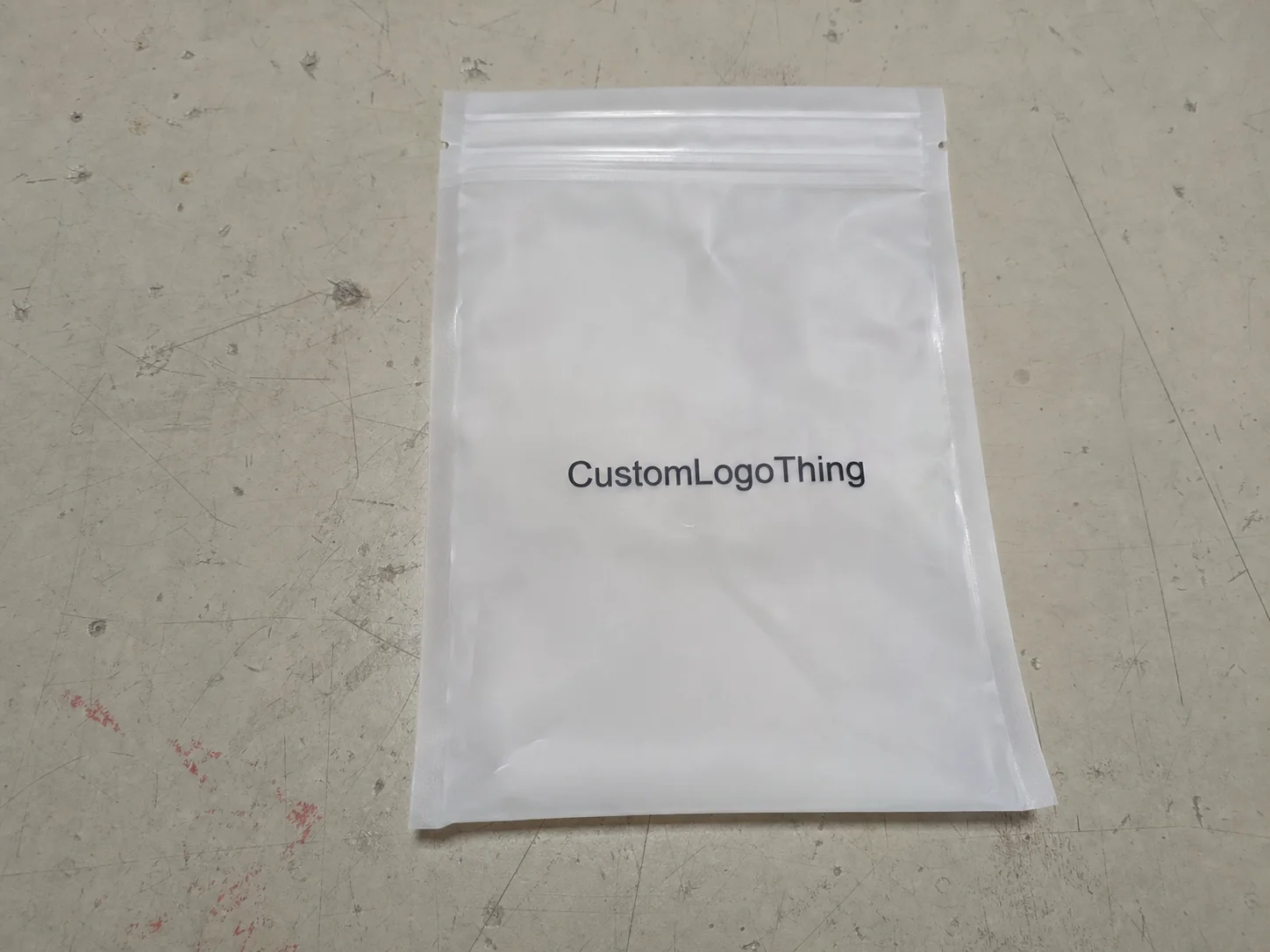
Size is the easiest number to compare, so buyers start there. That is sensible, but incomplete. A 6 x 8 inch frosted zipper bag in a light film with a standard press-to-close zipper is a different product from the same footprint in heavier gauge film, with a hang hole, custom print, and inner packing designed for shelf-ready display. The dimensions may match. The production path does not.
That is why a retail frosted zipper Bags Unit Cost Review should begin with use case, not just size. Is the bag being pegged on a display wall, packed inside a gift set, or used as a reusable retail pouch customers will open many times? Each role changes the cost logic. A bag meant to protect transit packing can tolerate a simpler build. A bag that sits on a shelf and sells the product has to look finished, close properly, and survive handling.
Several cost traps show up repeatedly. The first is hidden setup: print plates, color matching, art alignment, and production adjustments. The second is packing complexity. Inner packs, custom counts, retail cartons, and barcoded labels all add labor. The third is freight. A unit price can look competitive until duty, ocean or air freight, and destination handling are added. By then the quote comparison is misleading.
Useful buyer questions are simple, and they cut through most confusion:
- Is the bag meant to display well, or only protect the product?
- Will the customer reseal it multiple times?
- Does the program need a short test run or a repeatable SKU?
- Is the quote ex-works only, or does it include packing and freight?
Those answers define the price target more accurately than the dimensions alone. In retail packaging, the cheapest piece is not always the cheapest program.
Retail Bag Structures That Improve Shelf Appeal
Frosted film changes the visual signal immediately. Clear polyethylene shows everything. Frosted film softens the view, and that matters when the product inside is small, busy-looking, or less attractive in raw form. The semi-opaque finish can make a retail pouch feel calmer and more deliberate without hiding the contents entirely. For accessories, stationery, sample kits, and light apparel, that can be the difference between looking improvised and looking intentional.
The zipper style carries as much weight as the film. Standard press-to-close closures are common because they are practical and inexpensive, but buyers should inspect how the zipper opens, how much force it takes to close, and whether the seal stays aligned after repeated use. A closure that feels stiff or uneven creates customer friction. On shelf, that can be enough to weaken the product story.
Retail-friendly structures usually include a few specific features: a hang hole for peg display, a gusset for shape and fill, a reinforced seal at stress points, and clean print placement that does not interfere with the viewing window. Each of those choices adds a small amount of cost. Some add more than others. The hang hole is cheap if it is standard. The gusset can add material and process complexity. Print can swing pricing sharply if the artwork covers a wide area or demands multiple colors.
- Hang hole for peg and rack display
- Gusset for better fill and shelf posture
- Resealable zipper for repeated consumer handling
- Semi-opaque frosted finish for a more polished presentation
- Clean logo placement that does not fight the product window
There is a practical line between clear and frosted. Clear bags work when the product itself is the selling point and the buyer wants full visibility. Frosted bags are a better fit when the package needs to feel more refined, or when the contents are visually noisy and benefit from a softer frame. That is a brand decision, but it also changes the unit economics. Visual polish tends to cost something, even when the difference looks small on the shelf.
Specifications That Move the Quote Fast
Clear specs make pricing faster and more reliable. If the buyer sends only a rough size, the supplier has to guess at film weight, zipper style, print layout, and packing. Guessing leads to revisions. Revisions slow everything down and often push the quote upward because the supplier is pricing uncertainty instead of a defined build.
The basic spec set should include finished width, finished height, thickness, zipper type, whether a gusset is needed, and whether the bag needs a hang hole or reinforcement. Print details matter too. A one-color logo is much easier to price than a full-front artwork with multiple colors and tight registration. If the logo sits near the zipper or close to the seal area, the supplier may need to adjust the print zone, which can affect yield.
Material choice is not a cosmetic detail. A lighter frosted film reduces raw material cost, but it may collapse too easily or feel thin in hand. A heavier gauge improves stiffness, helps the bag stand better in display, and often feels more premium. That said, heavier film raises cost quickly. For retail use, the right thickness is usually the point where the bag still looks clean without being overbuilt for the product it holds.
Before requesting a quote, send a brief spec sheet with these items:
- Exact finished dimensions, including gusset depth if used
- Target film thickness in mils or microns
- Zipper style and closure performance expectations
- Print method, color count, and art placement
- Packing format, such as bulk-packed or retail-carton packed
- Ship-to location and desired delivery window
That level of detail reduces quote drift. It also makes supplier comparisons cleaner because everyone is pricing the same build rather than their own interpretation of it. In packaging procurement, that difference matters more than most teams admit.
Retail Frosted Zipper Bags Unit Cost Review: Pricing, MOQ, and Volume Breaks
A retail Frosted Zipper Bags unit cost review should always split quoted unit price from landed cost. Those are not the same number. The quoted unit price is what appears on the supplier sheet. The landed cost is what the business actually pays once freight, duty, packing, and handling are included. Margin is determined by the second figure, not the first.
Cost drivers are consistent across most programs. Film weight is one. Zipper hardware is another. Bag size matters, as does print method and the amount of ink coverage. Packing format can change the price more than many buyers expect. If the bags need to be counted into small retail-ready inner packs, a lot of manual handling enters the picture. Labor shows up in the unit cost whether it is described clearly or not.
MOQ is where price logic gets real. Small runs carry a heavier share of setup cost per piece. Larger runs spread that setup over more units and usually unlock better pricing. But bigger orders are only better if the sell-through, shelf life, and warehouse capacity support them. A low per-piece cost means little if the buyer is stuck holding excess inventory for six months.
| Program type | Typical MOQ | Cost per piece | Setup or tooling fees | Best fit |
|---|---|---|---|---|
| Stock-size frosted zipper bag, no print | 3,000 to 5,000 | $0.12 to $0.20 | Low setup charges, often minimal | Launch tests, simple retail packing |
| Custom size with one-color logo | 5,000 to 10,000 | $0.18 to $0.32 | $75 to $200 in setup charges | Private-label retail, repeat SKUs |
| Heavier film, hang hole, two-color print | 10,000+ | $0.24 to $0.42 | $150 to $400, sometimes more if special setup is needed | Premium shelf display, higher handling demand |
| Retail carton packed with special inner counts | Usually tied to the print run | $0.28 to $0.50 | Extra packing labor charges may apply | Programs needing cleaner receiving and display control |
These ranges are not a rate card. Geography, resin prices, freight lanes, and factory workload all move the number. Still, they provide a workable frame for buyers comparing offers. If one quote is dramatically below the others, the first question should be what was removed from the build, not why the supplier is unusually generous.
Bulk pricing can lower unit cost, but the trade-off is inventory exposure. A 20,000-piece order may beat a 5,000-piece order on paper, yet it can freeze cash and occupy storage for too long if the product cycle is short. That is why experienced buyers ask for price breaks at several quantity levels. The goal is not simply to find the cheapest tier. It is to find the point where cost, risk, and replenishment timing all fit the sales plan.
Tooling deserves a careful question as well. Some printed bag jobs rely mainly on setup fees. Others need custom dies, special zipper placements, or revised seal geometry, which can bring additional engineering or tooling charges. If that detail is not written out, it is easy for a program to start with one assumption and settle on another when the invoice arrives.
Process, Lead Time, and Approval Steps
The cleanest buying process follows a predictable sequence: quote request, spec review, artwork check, proof or sample, production, inspection, and shipping. That order is not glamorous, but it prevents most avoidable errors. If the artwork is still changing, or if the dimensions are still under discussion, the quote is only a placeholder. It should not be used as if it were final pricing.
Approval discipline matters because every later step depends on it. Once the film weight or zipper style is locked and production starts, changes can force a schedule reset and a price revision. In packaging, small changes are often treated as small by the buyer and large by the factory. The factory is usually right, because even a minor adjustment can affect yield and pack consistency.
Lead time depends on quantity, print complexity, and raw material availability. Unprinted stock-size bags usually move faster. Custom retail runs need more time for proofing, sampling, and inspection. A practical planning window is often 12 to 20 business days after approval, although that can expand if the order is large, the artwork is complex, or the shipping route is congested. Air freight shortens transit time but can erase the cost advantage of a good unit price.
Transit behavior deserves attention too. A bag that looks fine in the carton can still scuff, crease, or flatten in distribution. If the bags are going through warehouse handling before they reach a store, it helps to think in terms of distribution hazards, not just production quality. Industry references such as the ISTA framework and packaging.org are useful for framing those questions, especially when a program has to survive more than one touchpoint before sale.
The schedule logic is straightforward:
- Lock dimensions and zipper style before requesting final pricing.
- Approve artwork with exact placement, color count, and copy.
- Confirm packing format and carton labels before production begins.
- Reserve time for inspection, transit, and retail receiving requirements.
That sequence sounds basic because it is. Basic is useful here. Packaging programs fail most often through avoidable slippage, not through exotic technical problems.
Quality Checks That Protect Retail Presentation
Quality control for frosted zipper bags should focus on what the shopper will notice first. Zipper alignment, seal integrity, print registration, and consistency of the frosted finish all belong on the check list. A bag can match the size spec and still disappoint if the closure feels off-center or the haze varies from carton to carton. Those are not abstract defects. They affect how the pack looks on a peg and how confident the customer feels opening it.
Handling matters more than many buyers expect. Retail packaging passes through receiving, pallet movement, shelving, customer touch, and often repeated opening and closing. If the film scuffs too easily or the zipper loosens after a few uses, the packaging stops supporting the product and starts dragging down the perceived value of the item inside.
Consistency is easier to maintain when the order is packed and labeled carefully. Counted packs, clear lot coding, and carton labels that match the purchase order reduce receiving mistakes and make reorders less painful. Repeat orders should be checked with the same discipline as the first order. A good sample run does not protect the next shipment if the factory drifts on thickness, closure pressure, or print position.
Before shipment, the most useful checks are practical rather than decorative:
- Open and close the zipper on multiple bags, not just one sample
- Inspect for print shift, scuffs, and haze inconsistency
- Check seals and edges for weak points or uneven cuts
- Verify carton counts and label accuracy against the order
- Confirm that inner pack counts match the retail plan
Buyers who ask for those checks usually avoid the complaints that come later from stores or distribution teams. The objective is not perfection in the abstract. It is a bag that arrives clean, stocks cleanly, and stays presentable through normal handling.
Next Steps for a Precise Retail Quote
If the goal is a quote that reflects retail reality, send the exact dimensions, thickness target, zipper preference, print file, quantity, and ship-to location. If the pack needs a hang hole, gusset, custom inner count, or retailer-specific carton format, include that as well. The more complete the brief, the faster the supplier can return a number that is actually usable.
Request at least three quantity breaks. That gives a clearer view of where unit cost improves and where the inventory risk starts to rise faster than the savings. A slightly higher unit price can still be the better business decision if it keeps the order small enough to match expected sell-through.
Check what is included in the quote. Samples, freight, duty, and special packing can change the final landed cost enough to alter the decision. An incomplete quote is not useless, but it is not decision-ready either. Buyers who treat it as final pricing usually end up revisiting the budget later.
A retail frosted zipper bags unit cost review works best when it is built on exact specs, comparison at multiple volume levels, and a clear view of what happens after the bag leaves the factory. That is the most reliable way to compare suppliers, protect margin, and buy a pouch that fits the retail plan instead of fighting it.
How is retail frosted zipper bags unit cost calculated?
It usually starts with size, film weight, zipper style, print coverage, and total order quantity. Freight, packing method, and any special finishing steps can also change the final landed cost, so the quoted unit price should never be treated as the full answer.
What MOQ should I expect for frosted zipper retail bags?
MOQ depends on whether the bag is stock-sized or fully custom, and whether printing is required. Higher quantities usually lower the unit cost because setup and material losses are spread across more bags, but the right MOQ still depends on how quickly you expect to sell through the order.
Which bag specs raise the quote the most?
Custom dimensions, heavier film, full-coverage printing, and premium zipper hardware usually move pricing first. Add-ons like hang holes, gussets, and special packing can also lift the quote, especially if they create more handling or a different production setup.
How long does production usually take after approval?
Lead time depends on artwork approval, material availability, order size, and print complexity. Simple orders move faster, while custom retail programs often need extra time for proofing, inspection, and shipping, particularly if the packing format is specific.
What should I send to get an accurate quote fast?
Send the bag dimensions, thickness target, zipper preference, print file, quantity, and ship-to location. If you have a deadline or retail launch date, include it so the supplier can quote the right production schedule and avoid guessing on timing.


