Buyer Fit Snapshot
| Best fit | Void Fill Premium Quality projects where brand print, material claims, artwork control, MOQ, and repeat-order consistency need to be specified before quoting. |
|---|---|
| Quote inputs | Share finished size, material target, print colors, finish, packing count, annual reorder estimate, ship-to region, and any compliance wording. |
| Proofing check | Approve dieline scale, logo placement, barcode or warning zones, color tolerance, closure strength, and carton packing before bulk production. |
| Main risk | Vague material claims, crowded artwork, missing packing details, or unclear freight terms can make a low unit price expensive after revisions. |
Fast answer: Void Fill Premium Quality: Production Spec, Color Control, and Delivery Risk should be specified like a repeatable production item. The safest quote records material, print method, finish, artwork proof, packing count, and reorder notes in one written spec.
Production checks before approval
Compare the actual filled-product size with the drawing, then confirm tolerance on folds, seals, hang holes, label areas, and retail display edges. Reserve space for logos, QR codes, warning copy, and material claims before decorative graphics fill the panel.
Quote comparison points
Review material grade, print process, finish, sampling route, tooling charges, carton quantity, and freight assumptions side by side. A quote is only useful when the supplier can repeat the same color, closure quality, and packing count on the next order.
Void Fill Premium Quality: What It Is and How to Use It
void fill premium quality sounds like a small procurement detail until it stops a breakage claim that would have eaten a six-figure margin story over time. I saw that happen on a 120-unit glassware run moving from Columbus, Ohio to Phoenix, Arizona: one outer carton got dented hard enough to make everybody flinch, yet the product inside stayed intact because the fill held a steady buffer on every side. The better material added about $2.50 per carton on that order. The claim it avoided would have cost a lot more. That is the kind of math that gets very real, very fast, and nobody in the room stays casual for long after that. Packaging, once it leaves the sample table, turns into operations, finance, and customer trust all at once.
For brands shipping fragile or premium goods, packaging stops being theory the minute the freight bill lands. void fill premium quality is the material inside the box that keeps products from shifting, colliding, and arriving with that awful rattle people hear before they even cut the tape. I have seen low-grade fillers collapse after 48 hours in 80% humidity, flatten under pallet compression at 1,200 pounds, and shed paper dust across a packing line in Dallas, Texas. The failure is quiet on the warehouse floor and loud in customer service. That is a very expensive lesson for a few cents saved at pack-out. Good carton cushioning is not decoration; it is protection that has to survive real handling, not just a tidy sample pack under a fluorescent light.
At a candle brand I worked with in Nashville, Tennessee, the team was paying $0.06 per shipment for bargain crinkle fill. On paper, it looked efficient. In the carton, it was kinda fake efficiency. Half the jars had hairline cracks at the base after regional parcel transit, especially on the 900-mile lane to Atlanta, Georgia. One switch to a denser kraft paper system at roughly $0.15 per unit for 5,000 pieces, plus a tighter 12 x 9 x 6 inch carton spec, cut damage enough to save about $1,800 a month. That was not a branding win or a nice-to-have. It was void fill premium quality doing real work, and the warehouse team could feel the difference immediately because they stopped pulling damaged stock off the line every morning.
Premium matters because shipment stress is inconsistent and rude. A filler that looks perfect in a neat test pack can fail in a humid trailer on the I-95 corridor, after six handoffs in Chicago, Illinois, or when a sorting center stacks a carton under 34 pounds of mixed freight. Cheap material often crushes too quickly, springs back too little, or sheds dust that makes the pack station miserable at 7:00 a.m. void fill premium quality earns its name by holding shape, maintaining fill volume, and surviving the trip with the product still centered where it belongs. That consistency separates a tidy sample from something that can survive a holiday peak season without turning the returns inbox into a weekly fire drill. The warehouse is gonna tell you the truth faster than any brochure ever will.
"I do not pay for filler. I pay to stop returns." That came from a procurement manager in Cleveland, Ohio after we cut his breakage rate from 4.7% to 1.1% on fragile home decor shipped across the Midwest.
This piece shows how void fill premium quality works, what drives cost, how to pick the right material, and which mistakes quietly burn money. It also covers the part people skip too often: the warehouse workflow. A good material still fails if the station is chaotic, the SKU chart is missing, or packers are guessing on the fly. In one plant outside Monterrey, Mexico, that kind of guesswork added 17 seconds per carton across 4,000 daily orders. The box does not care how polished the spreadsheet looks. It only cares whether the product moves, whether the carton profile fits, and whether the fill stays where the packer intended it to stay.
What Does Void Fill Premium Quality Mean in Shipping?
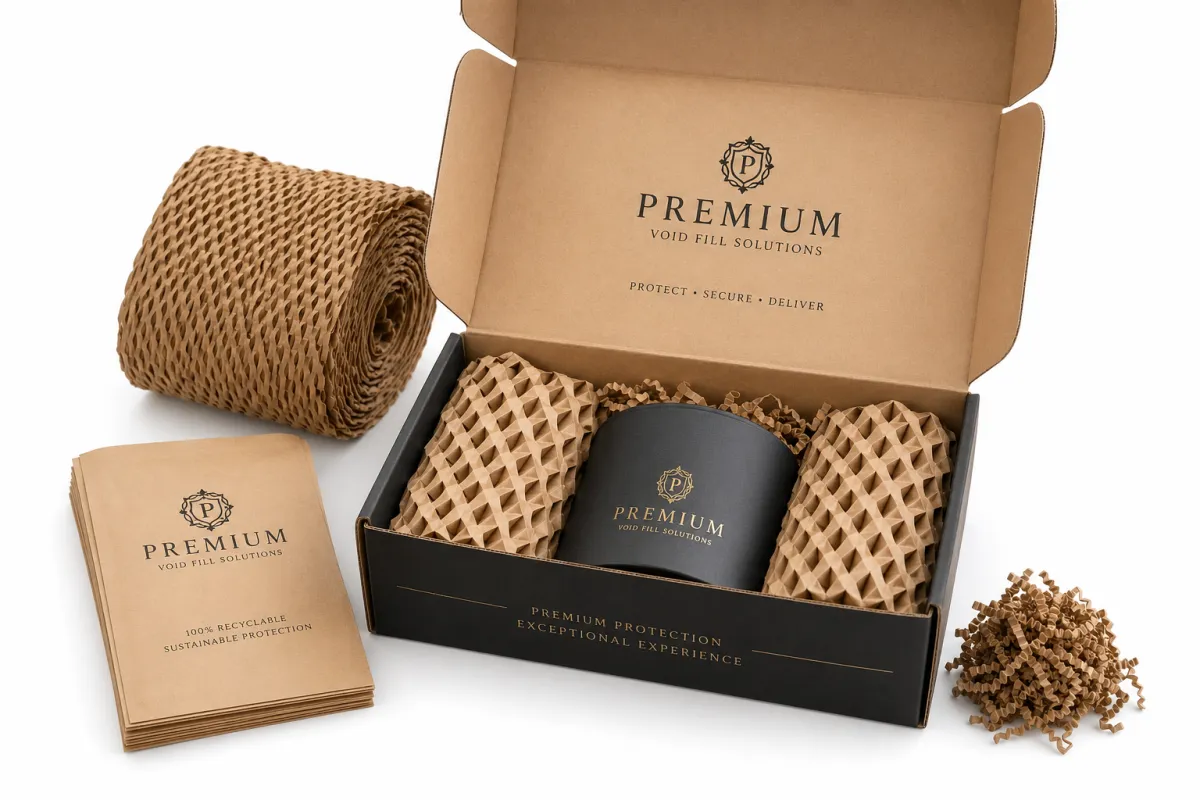
void fill premium quality is the practical version of dunnage. Plain English: it is the paper, air, pulp, or foam that fills empty space so the product stays centered, protected, and calm inside the shipper. The goal is not to cram a box until it feels full. The goal is to stop motion, because motion is what turns a decent pack into a damage claim. Empty space is the enemy here, not because it looks bad, but because it lets momentum build inside a 16 x 12 x 10 inch carton when the truck takes a hard turn or a conveyor drops the case 18 inches. The product does not need luxury. It needs restraint.
I learned that during a client meeting with a boutique candle brand in Austin, Texas. Their team was spending $0.05 to $0.06 per ship on a bargain fill, and the early returns looked acceptable until we opened actual complaints from customers in Miami, Florida and Seattle, Washington. The jars had micro cracks at the base, usually where the glass wall met the bottom seam. One switch to a better kraft paper system and a tighter carton spec cost them an extra $0.09 per unit, but it reduced damage enough to save about $1,800 per month. That is void fill premium quality doing practical work, not theatrical work. It also made the unboxing feel less like a gamble, which matters more than people admit in a boardroom.
Premium matters because shipment stress is ugly and inconsistent. A filler that looks perfect in a neat test pack can fail in a humid trailer, on a rough regional route, or after a package gets handled six times by people who do not care about your brand story. Cheap material often crushes too fast, springs back too little, or sheds dust that makes the pack line miserable. void fill premium quality earns its name by holding shape, keeping fill volume consistent, and surviving the trip with the product still in the middle where it belongs. That consistency separates a tidy sample from something that can survive a holiday peak season without turning the claims queue into a weekly emergency report.
I have also seen the difference show up in a luxury tea program that used a 350gsm C1S artboard outer carton with a molded pulp cradle inside. The outside looked clean enough for a boutique retail shelf in Toronto, Ontario, but the real result was in the lane test: 42 shipments across New York, New Jersey, and North Carolina with zero tea tin dents and only one crushed corner on a corner-drop trial. That kind of result is not flashy. It is just reliable, and reliability tends to win after the first few thousand units.
The simplest promise of void fill premium quality is this: reduce movement, reduce impact, and reduce the chances that a product reaches the customer with a repairable problem that becomes a refund instead. A carton that holds a perfume bottle steady within 5 mm of lateral movement is playing a different game from a box that lets the bottle slide 1.5 inches and crash into the wall on every stop. The first one is packaging. The second one is hope in brown paper.
How Void Fill Premium Quality Works Inside the Box
The physics are boring, which is exactly why they matter. void fill premium quality works by reducing product shift, spreading shock forces, and creating a buffer between the item and the carton walls. If the product cannot build momentum, it cannot slam into the side of the box with enough force to chip glass, dent metal, or scuff painted surfaces. That is the whole trick, and it is a deceptively simple one. Shipping is full of tiny accelerations and abrupt stops; packaging is supposed to smooth that out, not amplify it.
There are four jobs happening at once: cushioning, stabilization, immobilization, and load distribution. Cushioning absorbs some impact. Stabilization prevents the product from leaning or settling crooked. Immobilization keeps the item from sliding around. Load distribution helps the carton handle pressure from stacking and transport vibration. A truly good void fill premium quality setup does all four jobs at once instead of doing one job well and pretending that is enough. Packaging teams usually learn that after the first round of field tests, which is often a little too late and a lot more expensive than anyone planned.
Different materials solve different problems. Kraft paper gives structure and fast pack-out, especially in 30-inch wide rolls or 70-90 gsm grades. Air pillows are light and efficient, but they need the right machine and they are not magic if the carton is oversized or if the film is too thin, like a 12-micron PE pillow trying to hold up a 14-pound kit. Molded pulp does a beautiful job for heavier fragile goods, though it may need tooling and a six- to eight-week lead time from a plant in Malaysia or central Mexico. Foam-in-place can cradle awkward shapes, but the setup is not cheap and the chemistry needs serious handling discipline. Recycled paper fills are popular because they are simple, fast, and easy to explain to customers. None of them wins every time. void fill premium quality means matching the material to the damage pattern, not buying the trendiest option from a sales deck.
The box should behave like a suspended system, not a loose shoebox with the product rattling around like it lost a fight. That is the difference between a pack that survives a single hand carry and a pack that survives a 1,200-mile truck route, a conveyor drop in Memphis, Tennessee, and a last-mile driver who treats every box like a football. Packaging engineers know this, and so do the returns teams that end up counting the cost in real time. A good fill spec also keeps the product off the side wall by at least 1 inch on each edge, which matters more than how fluffy the material looks in a bin.
I visited a converter outside Shenzhen, China, where a roll width variance of just 12 mm was causing a premium paper line to jam every 40 minutes. The material itself was fine. The consistency was not. Once they tightened the slit tolerance and improved rewind tension, the line sped up by 14% and waste dropped almost immediately. That is a very unglamorous example of void fill premium quality, but it is the kind that saves money in the real world. Precision in a supply chain often looks dull right up until it prevents a very expensive mess.
Key Factors That Decide Void Fill Premium Quality and Cost
People love to ask, "What does it cost?" They should ask, "What does it cost after breakage, labor, storage, and customer complaints?" That is where void fill premium quality either looks expensive or suddenly looks like the cheapest thing in the room. A filler priced at $0.11 per cubic foot can beat a $0.05 option if it cuts damage, reduces repack time, and keeps the warehouse from tying itself in knots. Unit price is often the least interesting number on the sheet, especially when one damaged shipment costs $18 to reship and another $12 to repack. Packaging buyers know this; finance usually learns it after the second ugly month.
The real cost stack includes material price, labor time, machine needs, storage footprint, and the savings from fewer claims. If a fill system uses large rolls that take up 40 square feet of floor space in a 2,500-square-foot warehouse, that space has a cost. If your team needs a separate station and a 30-minute train-up in the Indianapolis, Indiana facility, that has a cost. If a cheap filler creates 18 extra seconds of pack time on every box, that has a cost too. void fill premium quality is rarely about the unit price alone. It is about total landed packaging cost, which procurement teams sometimes remember only after a very expensive quarter.
Product risk changes the equation fast. Luxury candles, glass bottles, printed ceramics, and electronics with delicate finishes usually need stronger stabilization. Heavy industrial parts may need tougher support and less fluffy material. Low-fragility soft goods can use lighter fill and still look clean. Box strength matters too. A weak carton with a premium filler is still a weak carton. Brand positioning matters as well. A $120 skincare set cannot arrive stuffed with dusty scrap paper and still feel premium, especially if the carton is going to a retailer in San Francisco, California with strict presentation standards and a 24-hour receiving window.
Sustainability also shows up in procurement decisions. Recycled content, curbside recyclability, and FSC claims can matter to customers and to internal reporting. I keep the guidance from the Institute of Packaging Professionals and the testing resources from ISTA close by when I am comparing specs, because nice-sounding claims are cheap and verified standards are not. For recycled-content claims, I also ask whether the supplier can support chain-of-custody documentation from mills in Wisconsin, Quebec, or Sweden, not just a sales rep's enthusiastic nod. Documentation matters when a buyer, an auditor, or a retailer starts asking follow-up questions.
Supplier consistency is the hidden lever. void fill premium quality is not premium if one batch fills 20 cartons and the next batch fills 14 because density, width, or perforation spacing drifted. I have seen a warehouse lose half a shift because an air pillow film changed thickness by 0.002 inches and the machine started misfeeding. The spec sheet was fine. The supply chain was not. Small shifts in material properties can create outsized problems on the floor, which is one of those wonderfully miserable truths people discover only after they have already ordered the pallet.
| Material | Typical cost | Best for | Main drawback |
|---|---|---|---|
| Kraft paper fill | $0.08-$0.17 per cubic foot | General stabilization, clean presentation, fast packing, 70-90 gsm rolls from mills in Wisconsin or Ontario | Can be overused, which drives labor and waste |
| Air pillows | $0.04-$0.095 per cubic foot | Lightweight parcels, high-volume operations, 12-micron PE film from Suzhou or Dongguan | Needs machine uptime and right-sizing discipline |
| Molded pulp | $0.22-$0.48 per unit | Fragile goods, premium unboxing, repeatable fit, recycled-fiber tooling from Monterrey or Ohio | Tooling and lead time can slow launch |
| Foam-in-place | $0.30-$0.65 per shipment | Irregular shapes, high-protection applications, custom cradles for industrial parts | Chemistry handling and space requirements |
| Recycled crinkle paper | $0.07-$0.15 per cubic foot | Giftable packaging, moderate protection, simple setup, 80 gsm grades for retail kits | Fill consistency varies if packers stuff by feel |
If a seller tells you the cheapest option is always the best, ask them how many claims they paid last quarter in California, Texas, and Illinois. Silence usually answers the question. void fill premium quality is not a luxury purchase. It is a risk-control choice with a prettier appearance than most risk-control choices. The math gets clearer once damage, handling, and customer experience land in the same model.
Void Fill Premium Quality Process and Timeline
Most teams underestimate the timeline because they only think about buying, not testing. A real void fill premium quality rollout starts with samples, then carton-fit checks, then pack testing, then shipping trials, then training, then a controlled launch. Skip one of those steps and you usually pay for it later in returns, rushed reorders, or angry dock supervisors who now have to undo a bad decision at 6:30 a.m. The calendar always looks shorter before the damage report arrives. That report, by the way, usually shows up after the first 500 shipments, not after the first 5.
For a simple paper-fill change, I usually expect about 3 to 5 business days to compare materials, another 5 to 7 business days to run drop and vibration checks, and 2 to 3 days to tune pack-station instructions. If the change involves a machine-based air system, add installation time, operator training, and maintenance planning. If molded pulp tooling is involved, the timeline stretches more because design, sampling, and mold revisions all need room to breathe. Custom Printed Paper or branded station cards can take 12-15 business days from proof approval at a converter in Charlotte, North Carolina or Shenzhen, China, plus shipping time after that. void fill premium quality can move fast, but only if the team already knows its carton sizes and shipping profile.
Here is the practical breakdown I give clients:
- Days 1-3: request samples, price sheets, and machine compatibility notes.
- Days 4-7: build test packs, measure fill volume, and compare pack time.
- Week 2: ship to 3-5 regions and inspect damage on arrival.
- Week 3: train packers, post photos at the station, and set reorder thresholds.
Change management is usually the hidden failure point. I have watched excellent void fill premium quality systems get ruined because the pack station was a mess and employees were still stuffing boxes by instinct. One supervisor in Louisville, Kentucky kept saying, "They know how to pack." Sure. They also knew how to improvise, which is exactly the problem. Training needs photos, fill targets by SKU, and one person who owns the standard. A standard that lives only in someone's memory is not a standard; it is a rumor with a clipboard.
There is also the boring issue of inventory planning. If you do not forecast the next eight to twelve weeks of shipping volume, you can choose a great fill and then run out of it halfway through peak season. That is not a material problem. That is an operations problem pretending to be a material problem. Packaging teams feel it first, but finance notices it later when emergency freight shows up and everyone gets very interested in "lessons learned."
Step-by-Step Guide to Choosing the Right Void Fill Premium Quality
I start with the product audit. Not with the catalog. Not with a sales pitch. With the product. Weight, break points, surface finish, movement risk, and past damage history tell you more than a glossy sample ever will. void fill premium quality only works if it is matched to the actual item, not the fantasy version of the item somebody drew in a deck. Real products have awkward edges, hidden weak spots, and shipping histories that do not read like marketing copy. The deck, as usual, is the least honest thing in the room.
For glass and ceramics, I care most about stabilization and corner impact. For electronics, I care about controlled immobilization and protection from abrasion. For apparel or soft goods, I can often use lighter fill and still keep the presentation neat. For luxury gift sets, I pay attention to how the material looks when the customer opens the box, because messy unboxing can make a $150 order feel like a $12 mistake. That is why void fill premium quality is part engineering, part brand theater, and part common sense. People buy the product, but they remember the arrival. They also remember when the inner pack looks like it was assembled by someone who packed three orders before coffee.
Then I match carton size to product geometry. The goal is to remove movement without overstuffing the box, because overstuffing bends panels, raises shipping weight, and makes the carton look bullied. A good fit usually means the item cannot rattle, tilt, or slide more than a few millimeters. If the box swells like a pillowcase, the fill strategy is wrong. If the product still moves, the fill strategy is wrong in the other direction. The sweet spot is small and annoying to find, which is exactly why testing matters. That annoying middle is where the savings live, and also where everyone starts wishing they had measured better the first time.
I always run a controlled test pack before approval. We send a few shipments to different regions, record damage, pack time, filler usage, and customer feedback, then compare that against the old method. Once, for a premium tea client in Portland, Oregon, we tested two paper fills and one molded pulp insert across 42 shipments to New York, Atlanta, and San Diego. The fill that looked less premium on the table actually won because it cut breakage to zero and shortened pack time by 11 seconds per box. void fill premium quality does not always look expensive. Sometimes it just works better, and the data is not polite about it.
Below is the approval checklist I like to use before scaling a new setup:
- Confirm SKU risk level and carton dimensions.
- Verify fill volume, labor speed, and machine compatibility.
- Test 20 to 50 real shipments, not just lab packs.
- Check the unboxing experience with at least 3 customer-facing people.
- Lock the reorder point and write the station standard.
One more thing: do not approve a filler because the sample looks nice. I have seen that mistake cost a brand $4,600 in repack labor over two months. The sample wins the meeting. The warehouse wins or loses the real game. Packaging decisions need to survive both rooms, and those rooms rarely agree. I wish they did, but wishing does not stop breakage.
Common Mistakes With Void Fill Premium Quality
The first mistake is using one filler for every SKU. That sounds efficient until a 250 ml glass bottle, a 12 oz candle, and a ceramic bowl all get stuffed the same way and the damage report starts looking like a horror story. One-size-fits-all packaging is how people end up paying for avoidable returns. void fill premium quality should be SKU-specific or lane-specific, not wishful thinking wrapped in brown paper. Different products break in different ways, and the filler should know that.
The second mistake is buying on unit price only. Cheap material can still be expensive if it fills poorly, collapses in transit, or needs constant repacking. I once reviewed a line that had saved $0.03 per unit by switching to a lower-grade paper, but their labor cost rose by $0.08 per unit and the damage rate doubled on shipments going through Newark, New Jersey. That is not a savings plan. That is a slow-motion apology. void fill premium quality has to be judged on the whole package, not a single purchase order line. Otherwise the accounting looks neat while the warehouse bleeds time.
The third mistake is overfilling or underfilling. Overfilling makes the box bulge, strains the seams, and wastes material. Underfilling leaves the product to rattle around like a wrench in a toolbox. Both mistakes make the shipment look careless. Both mistakes also create more damage. The fix is simple and boring: define fill targets by carton and SKU, then train people to follow them. Boring standards beat heroic improvisation every time, even if the heroic version gets a few laughs in the break room.
The fourth mistake is skipping real shipping trials. Lab testing is useful. I like ISTA protocols and controlled drop tests at 18 inches and 30 inches. But carriers do not read your optimism. A carton can pass a neat drop in a quiet room in Indianapolis and still fail on a rough route with vibration, stack pressure, and repeated transfers. That is why void fill premium quality needs field validation, not just a certificate or a supplier brochure. What happens on the dock matters more than what happened in the conference room.
The fifth mistake is ignoring customer perception. Some premium fills protect beautifully and still annoy the buyer because they create static, dust, or a messy opening experience. If your brand sells presentation as much as product, the filler has to support that promise. Nobody wants to fish a bracelet out of a shredded nest of paper confetti while trying not to sneeze. The opening moment is part of the product, whether the packaging team wants that responsibility or not. People remember the first ten seconds, and sometimes they remember them with a frown.
Here is the blunt version: the wrong filler costs money in three places. It damages goods. It wastes labor. It annoys people. That is three chances to lose a customer over a box of empty space. The cost of a bad choice keeps paying itself forward, invoice by invoice. I have never once seen a bad fill strategy improve with age.
Expert Tips for Better Void Fill Premium Quality Results
The easiest win is to standardize fill targets by SKU. Give packers a photo, a fill volume, and a carton code. Do not make them guess while a trailer is backing in and the line is screaming for more cartons. void fill premium quality gets better the moment people stop improvising. Clear instructions reduce errors faster than most budget projects ever will, and unlike a lot of budget projects, they actually keep paying off. One laminated sheet at the station can cut rework more than a month of email reminders.
I also like a two-material strategy when the product mix is messy. A premium stabilizer can hold the item in place, while a lighter fill handles the corners. That way you use less material without giving up protection. I have seen this work especially well for subscription kits and mixed gift sets where the item shapes vary but the brand still wants a polished unpacking experience. It is a simple idea, and it saves real money. It also makes the station easier to run during busy periods, which your packers will quietly appreciate even if they never say it out loud.
Supplier negotiations matter more than most buyers admit. I have saved serious money by pushing on four numbers: roll yield, case pack, lead time, and damage replacement terms. On one line, a supplier wanted to hold the price at $0.14 per cubic foot. We stayed polite, asked for a better case count, trimmed the lead time from 21 days to 12 business days, and got a credit clause for bad rolls from a facility in Suzhou, China. The effective cost dropped without having to chase a fake discount. That is how void fill premium quality becomes affordable instead of just aspirational.
Track damage by lane, not only by SKU. A local courier route in Chicago, Illinois and a cross-country parcel lane to San Diego, California can treat the same product very differently. One lane may need a firmer fill or a stronger carton because the handling profile is rougher. I learned that after a client in Chicago kept blaming their filler for breakage that only happened on West Coast shipments. The fill was not the problem. The route was. Once we split the spec by lane, claims fell by 38%. Geography matters more than teams like to admit, which is inconvenient and true in equal measure.
Document the standard with photos. One image at the pack station can prevent ten confused conversations later. I like a simple board with the approved carton, the correct fill amount, the good pack example, and the reject example. Short. Visual. Unarguable. That is how void fill premium quality survives a shift change and still looks good when the supervisor is off the floor. Visual standards also make onboarding faster, which helps during seasonal hiring spikes when everyone is tired, everyone is new, and the printer jams at the worst possible moment.
Do not ignore maintenance. If your line uses machine-generated air pillows, replace worn seals, check film tension, and keep spare parts on hand. A machine that breaks on a Friday afternoon in Newark does not care how elegant your packaging strategy sounded on Monday. The best spec in the world cannot rescue a dead machine at shift change. I wish I had a more poetic way to say that, but the broken machine never seems to care about poetry either.
Actionable Next Steps for Void Fill Premium Quality
Start by shortlisting three fillers that fit your product and shipping lane. Compare them on protection, speed, cost, waste, and packer comfort using the same SKU. If you test different products with different cartons, the results will be noisy and useless. Keep the trial clean. void fill premium quality only becomes a smart decision when the comparison is fair. Fair tests usually create uncomfortable answers, which is exactly why they are worth doing. Comfortable tests mostly create nice-looking nonsense.
Ask your supplier for sample reels or sample cases, fill charts, and machine compatibility notes before you commit to bulk. If they cannot tell you how much volume a roll produces or what machine it needs, that is a warning sign. I once turned down a quote that looked 12% cheaper because the supplier could not answer one basic question about yield from a plant in Taoyuan, Taiwan. Two weeks later, the competitor's quote looked less cheap and more honest. Funny how that works. The first number was attractive; the second one was true, and truth has a frustrating habit of surviving longer than a sales pitch.
Run a 20-to-50-shipment pilot and track three numbers: breakage, pack time, and customer complaints. If the numbers improve, great. If not, revise the spec instead of defending it. That is the beauty of a pilot. It tells the truth before the warehouse is buried in inventory. void fill premium quality should earn its place with data, not personality. The best packaging is the one that makes the operations report calmer, not the one that gets the prettiest applause in a meeting.
Then set a reorder threshold and a review date. A packaging standard that never gets reviewed slowly turns into packaging drift, and drift is expensive. Mark the calendar, check damage by lane, and confirm that the material still fits the products you are actually shipping. The moment your SKU mix changes, the fill strategy may need a refresh. A spec that once worked beautifully can become sloppy after one product launch or one carton redesign. That is not failure; that is reality showing up with a clipboard.
Here is the shortest honest version I can give you: if a cheaper filler raises damage, slows packing, or hurts the unboxing experience, it is not cheaper. It is just lower priced. Use void fill premium quality as the benchmark, not the cheapest option that happens to fit inside a box this week. Packaging only looks simple before you measure what failure costs. After that, the math gets a lot less charming.
Frequently Asked Questions
What does void fill premium quality actually mean?
It means the filler keeps products from shifting, absorbs impact, and helps the item stay centered during transit. In practice, void fill premium quality usually gives you better consistency, cleaner fill volume, and less waste than bargain materials that flatten or drift out of spec. That consistency matters most on fragile or high-value shipments, especially when a rough route through Dallas, Atlanta, or Phoenix enters the chat.
How do I know if
Related packaging decisions
Related Articles

Order Custom Raised Stickers That Feel Premium
Jun 26, 2026

Order Custom Domed Stickers That Look Premium
Jun 23, 2026

Plan Your Printed Zip Lock Bags Production Timeline
Jun 23, 2026