Washed cotton caps wholesale pricing can look higher than a basic promo cap, but the comparison only makes sense if the buyer also compares fit, finish, decoration, packing, and the risk of damage or returns. A washed cap usually has a softer hand, a more relaxed profile, and a worn-in look that needs less explanation at retail.
For bulk orders, the useful question is not whether the blank is the cheapest option. It is whether the total landed cost supports the sales channel. A cap that costs a little more up front may still be the better buy if it sells faster, needs less repacking, and produces fewer quality complaints. That is why buyers searching for washed cotton caps wholesale pricing for bulk orders should compare complete quotes, not just the base unit rate.
Washed cotton also gives buyers a wider use case. It works for merch drops, retail programs, team uniforms, and event giveaways without looking too stiff or too promotional. That flexibility is one reason it keeps appearing in repeat orders.
Why washed cotton caps are the smarter bulk buy
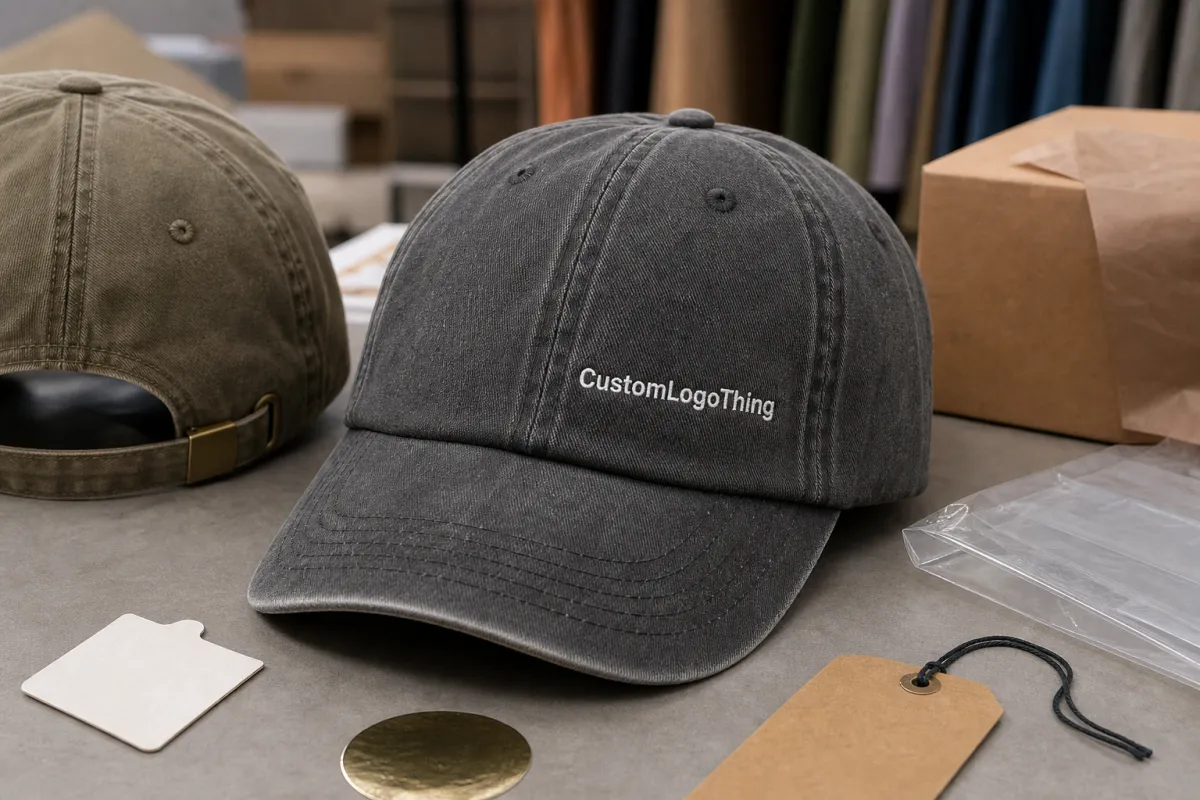
A washed cap sits in a practical middle ground. It is casual enough for streetwear, clean enough for branded uniforms, and approachable enough for events where the item still has to feel worth keeping.
The wash finish also helps hide small handling marks. Light creases, minor scuffs, and some shipping pressure show less on a softened surface than on a crisp promo cap. That matters when product moves through warehouses or gets packed tightly in cartons.
Retail buyers often prefer the broken-in look because it feels less like a giveaway and more like a product. That can improve sell-through without requiring a louder logo or a more expensive decoration package.
Bottom line: washed cotton caps are often the better bulk buy when the order needs to balance comfort, appearance, and handling tolerance.
Fit, fabric, and wash effects buyers should compare
Start with the base fabric. Cotton twill is the most common choice because it holds shape well and takes embroidery cleanly. Canvas is a little heavier and reads more utility-driven. Brushed cotton can feel softer, but the crown still needs enough body to keep the intended profile.
The wash process changes more than color tone. It can soften seams, mute panel contrast, and slightly affect shrink behavior. If the buyer wants a faded look with stable sizing, the factory should explain whether the fabric was pre-shrunk or pre-washed before cutting. That detail directly affects washed cotton caps wholesale pricing for bulk orders, because extra finishing steps increase labor and reject risk.
Profile matters too. Low-profile caps sit closer to the head and usually feel more fashion-led. Mid-profile caps are easier to sell across broader audiences. Unstructured caps feel relaxed, but they expose pattern issues faster, so panel balance has to be right.
Closures affect both cost and perceived value. Strapback and buckle closures usually feel more finished. Snap closures can lower the price, but they suit a more promotional look. Velcro is functional, though it is rarely the best choice for retail.
If the caps are mainly for resale, pay closer attention to crown shape, wash consistency, and closure feel. If they are for giveaways, the spec can be simpler. Matching the build to the use case usually saves more money than trying to shave the blank by a few cents.
Specification checklist for decoration, panels, and closures
Before asking for pricing, lock the spec. Missing details create extra quote rounds and make supplier comparisons unreliable. The main points are panel count, crown depth, brim shape, eyelet count, sweatband material, stitch density, closure type, and decoration method.
Decoration changes cost more than many buyers expect. Embroidery is durable and fits washed cotton well. Patches add texture and can raise perceived value. Woven labels and printed marks are useful when the brand wants a sharper finish, but they usually add setup and handling. Side hits, back hits, and under-bill prints should be priced separately.
The inside of the cap matters more for retail than for giveaways. Custom taping, branded sweatbands, and sewn labels make the product feel more deliberate, but they also add lead time and cost. For event programs, those details may not be worth the premium.
Send a short spec sheet with:
- Cap style, panel count, and profile
- Fabric type and wash finish
- Decoration method, size, and placement
- Closure type and any custom labels
- Quantity split by color or size, if relevant
- Packing needs, carton marks, and destination
A clear spec reduces back-and-forth and makes the first quote more useful. It also helps buyers compare suppliers on the same product instead of on different assumptions.
Washed cotton caps wholesale pricing, MOQ, and unit cost
Washed cotton caps wholesale pricing usually breaks into three parts: the cap itself, decoration, and packing or freight. Buyers get into trouble when they compare only the blank unit and ignore the rest. A low blank price can disappear once embroidery, labels, cartons, and shipping are added.
A basic washed cotton blank may land around $2.80-$5.50 per unit, depending on fabric weight, wash process, and construction. Standard embroidery can move that closer to $4.20-$8.00. Add patches, custom inner labels, or upgraded packaging and the landed price rises again.
MOQ depends on how far the order moves away from a stock template. Simple washed caps with light branding can sometimes start at 50-100 pieces. Fully custom builds, especially those with special wash effects, custom closures, or branded internal details, often sit in the 100-300+ piece range.
| Order level | Typical setup | Estimated unit range | What usually drives cost |
|---|---|---|---|
| 100 pieces | Basic washed cap with embroidery | $4.80-$8.90 | Setup fees, low volume, simple packing |
| 300 pieces | Washed cap with embroidery or patch | $4.10-$7.40 | Better spread on decoration and prep |
| 500 pieces | Mixed color run, standard branding | $3.70-$6.60 | Lower unit labor, better carton efficiency |
| 1,000 pieces | Retail-ready order with custom labels | $3.20-$6.10 | Volume savings, more efficient packing and freight |
Those ranges are directional. Fabric weight, stitch count, wash intensity, and packing rules can move them quickly. Still, the pattern is stable: unit cost falls as volume rises, then flattens once the spec becomes more complex.
"The quote that looks cheapest is often the one that left out packing, labels, or the decoration you actually asked for."
To compare suppliers fairly, request the same volume at several breakpoints, such as 100, 300, 500, and 1,000 pieces. That shows where the price really drops and where the supplier is padding the lower tiers. For some programs, the 300-piece run is the best balance of cost and inventory risk. For others, the 500-piece tier is the sweet spot.
For orders moving into retail distribution, transit handling matters almost as much as the cap itself. General packaging groups and standards bodies such as ISTA provide useful guidance on shipment testing, especially when goods will pass through multiple warehouses or be repacked for stores.
2026 pricing trends and new order options
In 2026, washed cotton caps wholesale pricing for bulk orders is being shaped by three changes buyers should watch: tighter labor costs, more demand for low-MOQ retail-ready packaging, and a shift toward simpler but more premium-looking trims. In supplier discussions I’ve had this year, the strongest interest has been in caps that look retail-ready without adding too many production steps.
That means buyers are asking for less expensive upgrades that still improve shelf appeal. Common requests include tonal embroidery, stitched-on woven patches instead of heavy 3D builds, and matte metal buckle closures. These choices often keep the quote manageable while making the cap feel more finished than a standard promo piece.
Another trend is color sorting within the same run. Buyers are ordering one base style in multiple washed shades instead of creating separate product codes for each color. That approach can lower sampling time and reduce MOQ pressure, especially for lifestyle brands and campus merch programs.
Freight planning is also more deliberate in 2026. More buyers now request carton dimensions, case counts, and packed weights before approving production because small packaging changes can affect storage fees and landed cost. For larger bulk orders, that data helps teams compare warehouse receiving costs in addition to supplier quotes.
If the order needs a retail presentation, custom hangtags and recyclable inserts are becoming more common. They add a modest amount to the total, but they can improve first impression without forcing the cap itself into a more expensive construction tier. For many buyers, that is the most practical way to protect washed cotton caps wholesale pricing for bulk orders while still raising perceived value.
Production steps and lead time from artwork to carton pack
A clean production run follows a simple sequence: spec confirmation, artwork review, sampling, bulk production, quality inspection, and packing. If a supplier cannot describe that chain clearly, the order is more likely to drift.
Lead times are usually straightforward to estimate. Mockups and artwork changes often take 1-3 days if files are complete. Sampling usually needs 5-10 days, depending on whether the cap uses a custom wash or a special trim. Bulk production often runs 20-35 days after sample approval.
Most delays are ordinary. Missing vector files slow approval. Late sample feedback stops the schedule. Changing the color tone after production starts can force a restart. Clean orders stay on track because the buyer removes avoidable uncertainty early.
Factories that handle decoration and packing in-house usually move faster because there are fewer handoffs. That does not guarantee a better result, but it often makes the schedule more predictable. If the delivery window is tight, ask who owns each stage and where the order physically moves between steps.
If the caps will ship with inserts or retail tags, FSC-certified paperboard can be a practical packaging choice. It does not change the cap quality, but it can help with retail presentation and sourcing requirements.
Quality control and packing details that protect margin
Quality control on washed caps should focus on stitching alignment, logo placement, closure strength, wash consistency, and color match against the approved sample. If the design is meant to look faded, the fade still needs to be even across the batch.
Packing has a bigger impact on margin than many buyers expect. Crushed crowns, loose threads, and mixed carton counts create extra work when the shipment lands. That labor adds cost immediately and can also slow receiving and distribution.
Ask for carton count details, polybag options, barcode labels, and master carton photos before the order ships. If the supplier can show final carton photos and a clear inspection checklist, that usually signals a controlled operation.
Transit testing is worth requesting when the route is long or the order changes hands several times. A few ISTA-aligned checks can reveal weak cartons before the shipment leaves the supplier, which reduces the chance of damage claims later.
For a low-priced item, protecting the shipment can matter more than saving a cent on the blank cap. Repacking and claims quickly erase small savings.
How to judge supplier capability without chasing the lowest quote
Price matters, but it is only one variable. A low quote with weak communication is not a bargain if it creates a correction order later. Compare suppliers on response speed, sample accuracy, production consistency, and how clearly they can explain the spec line by line.
Ask for current lead times, photos of actual production, and examples of the same cap style. Catalog images prove very little. They may show a shape, but they do not show whether the supplier can repeat it at scale with consistent wash and decoration.
Vague quotes are a warning sign. If the offer does not spell out decoration method, packing detail, or freight assumptions, the final number can move later. Sometimes the increase is small; sometimes it wipes out the savings. A supplier who can walk the order from sample to shipment with specifics is usually the safer option.
For buyers, predictability is the real value. A clear process that produces the same cap twice is worth more than a slightly lower first quote. That is what makes washed cotton caps wholesale pricing for bulk orders easier to judge: the comparison is based on the same product, not three different versions of it.
Next steps to order washed cotton caps without delays
Before requesting pricing, prepare a short quote sheet with the target quantity, color, decoration method, logo files, destination, and delivery window. Clear inputs produce cleaner quotes, and cleaner quotes are easier to compare.
Then request a landed quote, not just a cap price. The cap, decoration, packing, and freight should all be visible. If they are not, the order is exposed to surprise costs after approval.
If the order includes custom wash effects, patches, or a difficult color match, approve a pre-production sample before bulk production starts. One checked sample can save an entire run.
To keep the timeline under control, confirm the spec, approve the artwork, lock the MOQ, review packing, and get the schedule in writing. For buyers comparing washed cotton caps wholesale pricing for bulk orders across several vendors, discipline in the setup stage usually matters more than a small difference in the first quote.
FAQs
What affects washed cotton caps wholesale pricing the most?
Fabric weight, wash treatment, decoration method, and order quantity usually drive the biggest shifts. Custom labels, patches, and upgraded packaging also add cost, so ask for a line-by-line quote rather than one blended number.
What MOQ should I expect for washed cotton cap wholesale orders?
Stock-style caps may start around 50 to 100 pieces, while fully custom builds often need 100 to 300+ pieces. The more custom the wash, label, and closure, the higher the minimum tends to be.
How long does production usually take after sample approval?
A typical sample-approval-to-bulk timeline is about 20 to 35 days, depending on order size and decoration complexity. Rush orders are possible when fabric and trims are already available, but they usually cost more.
Can I get a sample before placing a bulk order?
Yes, and you should if the cap uses a custom wash, patch, or color match. Use the sample to verify fit, crown shape, logo placement, and the washed finish before committing to the run.
How do I compare washed cotton cap suppliers fairly?
Compare the exact spec, not just the price. Fabric, decoration, packing, and freight terms need to match. Then check response speed, sample accuracy, and whether the supplier can keep quality stable at scale.