Buyer Fit Snapshot
| Best fit | Water Based Ink Labels with Logo projects where brand print, material claims, artwork control, MOQ, and repeat-order consistency need to be specified before quoting. |
|---|---|
| Quote inputs | Share finished size, material target, print colors, finish, packing count, annual reorder estimate, ship-to region, and any compliance wording. |
| Proofing check | Approve dieline scale, logo placement, barcode or warning zones, color tolerance, closure strength, and carton packing before bulk production. |
| Main risk | Vague material claims, crowded artwork, missing packing details, or unclear freight terms can make a low unit price expensive after revisions. |
Fast answer: Water Based Ink Labels with Logo: Material, Adhesive, Artwork, and MOQ should be specified like a repeatable production item. The safest quote records material, print method, finish, artwork proof, packing count, and reorder notes in one written spec.
Production checks before approval
Compare the actual filled-product size with the drawing, then confirm tolerance on folds, seals, hang holes, label areas, and retail display edges. Reserve space for logos, QR codes, warning copy, and material claims before decorative graphics fill the panel.
Quote comparison points
Review material grade, print process, finish, sampling route, tooling charges, carton quantity, and freight assumptions side by side. A quote is only useful when the supplier can repeat the same color, closure quality, and packing count on the next order.
Water Based Ink Labels With Logo: Practical Packaging Tips
Cold bottles, kraft pouches, and premium cartons all face the same pressure once they leave the art file. They need to look finished, communicate clearly, and keep their shape through shipping, stocking, and everyday handling. That is where Water Based Ink labels with logo earn their place, because they give a brand a cleaner print story without giving up shelf presence or the sharp mark that makes the package feel complete.
The real result never comes from the ink alone. Water based ink labels with logo depend on the whole label build, including the stock, adhesive, finish, drying profile, and the way the label behaves after it hits a refrigerator, a warehouse pallet, or a customer's hand. Match those parts well and the label feels deliberate. Miss the match and even a strong logo can start to look tired before the pack has done much work.
That is the question most packaging buyers are actually trying to answer. They want water based ink labels with logo that support sustainability goals, survive handling, and still read as polished in a retail setting that is already crowded with visual noise. The sections that follow break down what these labels are, how they are made, what drives pricing, and how to spec them without guessing.
A label is never just ink on paper. In practice, it is a small packaging system, and water based ink labels with logo only perform well when every part of that system is chosen with the package environment in mind.
Why water based ink labels with logo stand out on shelf
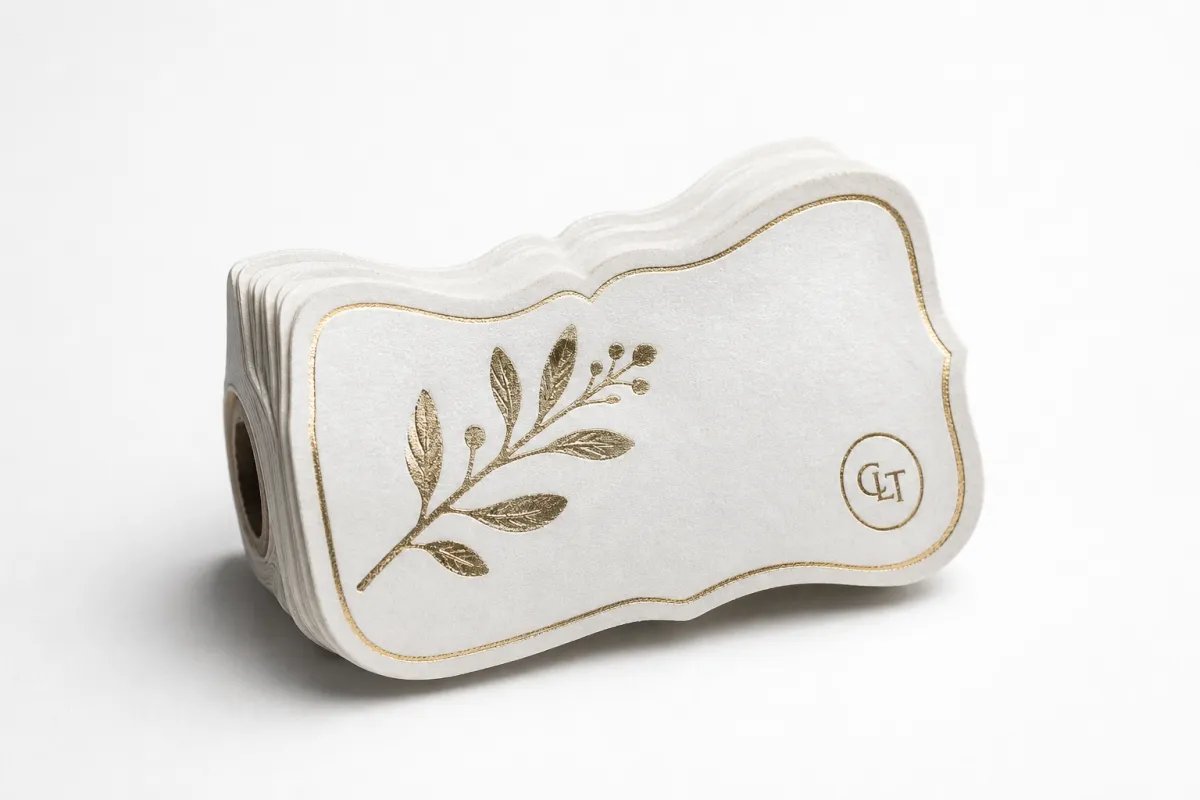
On a crowded shelf, a label has a very short window to do its job. It needs to read from a distance, hold its color under bright lights, and still look neat when the customer lifts the pack and turns it in their hands. Water based ink labels with logo can do that well when they are built on the right stock and printed with enough control to keep the edges clean and the typography readable.
The appeal comes from balance. Many brands want packaging that feels lighter from an environmental standpoint, but they still need a strong logo block, reliable contrast, and a finish that does not look flat or underpowered. Water based ink labels with logo support that middle ground, giving brands a lower-VOC print direction without pushing the design into the washed-out look people often associate with "eco" packaging.
Customer perception matters here too. Buyers notice when a label was chosen carefully. They also notice when a green claim seems to be carrying the whole design. The best water based ink labels with logo feel considered from the start: the mark sits cleanly in the layout, the substrate suits the pack, and the finish supports the brand voice instead of diluting it.
For packaging teams, the real win is consistency across formats. If you can use water based ink labels with logo on bottles, pouches, cartons, and secondary packs while keeping the visual system stable, the brand becomes easier to recognize, the production team deals with fewer surprises, and the line moves with fewer reworks.
Shelf impact still depends on the details. A bright logo on a poor stock can print blotchy, and a clean ink system on a weak adhesive can still fail in refrigeration. The better way to think about water based ink labels with logo is as a package choice that can look excellent and feel responsible, provided the substrate, finish, and application conditions are matched from the start.
Brands building a wider format mix usually benefit from comparing label constructions early with the printer or converter. Our Custom Labels & Tags page is a useful place to work through the construction choices before the artwork is locked down.
What water based ink labels with logo actually are
Water-based inks carry the colorants and binders in water rather than a heavy solvent system. That does not make them simple, and it does not mean the chemistry disappears; it only means the system is built to reduce the amount of volatile organic compounds, or VOCs, associated with some solvent-heavy methods. For a broader environmental reference point, the EPA's VOC guidance is a useful starting place: EPA information on volatile organic compounds.
In packaging terms, water based ink labels with logo are usually pressure-sensitive labels, roll labels, or branded label constructions printed with a water-based ink system on paper or film stock. They show up on food jars, beverage bottles, personal care tubes, household containers, mailers, and a lot of e-commerce packaging where the label has to carry both branding and information without getting in the way of use.
The distinction that matters most is that the ink is only one layer of the decision. A label printed with water-based ink on an absorbent uncoated stock behaves very differently from one printed on a coated paper or a synthetic film. The same logo can look rich and solid on one substrate and slightly softer on another. That is why water based ink labels with logo need to be specified as a full build, not treated as an ink-only decision.
The print method plays a large part as well. Flexographic printing is common for roll labels and works well at medium to high volume. Digital printing can be the better fit for shorter runs, quick artwork changes, or variable data. Offset still matters for certain label constructions. The practical question is not which method sounds best in theory. It is which one fits the quantity, the artwork, and the finish you need for water based ink labels with logo.
Logo quality also depends on substrate absorbency. A bold vector mark may print crisply on a coated sheet, while a fine-line logo can spread or soften on an uncoated stock if the press conditions are not carefully set. That is why buyers should ask for samples or press proofs when the mark carries real brand weight. Water based ink labels with logo are only as strong as the weakest choice in the build.
For brands that care about certified paper sources, FSC options are worth reviewing when the stock qualifies. The FSC site at fsc.org is a helpful reference when you want a clearer view of how paper sourcing fits into the wider sustainability story.
How the printing process works for water-based inks
The production path for water based ink labels with logo usually starts long before the press is running. Artwork cleanup comes first, then dieline confirmation, then a review of the package surface the label will sit on. After that, the printer sets up files or plates, selects the ink system, and plans the drying path so the printed image leaves the press with enough integrity to hold its shape.
Drying sits at the center of the process. Water-based inks need the water portion to leave cleanly and at the right rate, or the result can be soft edges, scuffing, or a logo that looks technically printed but not fully finished. Press speed, room temperature, humidity, substrate coating, and even the amount of ink coverage all affect how well water based ink labels with logo dry and cure.
On a live run, the press operator is watching more than color. Image density, trapping, register, and edge sharpness all matter, especially when the logo is the main brand cue on the pack. If the press is moving too fast for the environment, the ink may not set properly. If it is too slow, the job may become inefficient and drive up unit cost. Good water based ink labels with logo come from finding the point where quality and throughput both hold steady.
Finishing carries equal weight. A label that will face condensation, hand rubbing, or colder storage often benefits from an overprint varnish, a laminate, or a protective coating. These are not decorative extras. They are performance tools. A light varnish can improve rub resistance. A laminate can help with splash resistance and a cleaner finish. For chilled or high-touch applications, that extra protection is often what lets water based ink labels with logo survive real use.
There is a large difference between a label that looks fine in a file proof and one that behaves properly on a container. A flat proof cannot fully simulate wraparound tension, panel curvature, condensation, or edge wear. That is why production teams often want a physical sample before committing to a full run of water based ink labels with logo.
Depending on the category, standards-based testing can help guide the conversation. For shipping and distribution, ISTA test profiles are useful for simulating transit abuse. For rub resistance, ASTM methods such as ASTM D5264 are commonly referenced in print and packaging discussions. No standard replaces a real package trial, yet those references help teams talk about durability with more precision when evaluating water based ink labels with logo.
I would always rather see a label spec that accounts for drying, finish, and handling from the start than one that assumes the ink will simply behave. Packaging does not reward assumptions. It rewards details.
Cost, pricing, and MOQ factors for water based ink labels with logo
Pricing for labels rarely comes from one line item. It is the sum of the stock, print method, color count, shape, finish, adhesive, and order size. That is why two quotes for water based ink labels with logo can look close on paper and still be far apart once the full spec is compared.
MOQ, or minimum order quantity, is where many buyers feel the pressure first. Setup time has to be paid for somewhere. If a press, plate, or digital workflow is prepared for only a small number of labels, that setup cost gets spread across fewer pieces, so the unit price rises. With larger orders of water based ink labels with logo, the per-label cost usually drops because the setup is diluted across more units.
There are a few cost levers a brand can pull. Simpler shapes reduce waste. Fewer spot colors reduce complexity. Paper stock can cost less than specialty film, though that depends on the performance needs. A straightforward finish can be less expensive than a multi-step protective build. The goal is not to strip the label until it feels cheap. The goal is to make water based ink labels with logo cost-efficient without weakening the package story.
Below is a practical comparison that buyers often find useful. The numbers are broad ranges because final pricing depends on artwork coverage, exact stock, and the printer's equipment mix, but they give a realistic sense of how the choices move.
| Label build | Best use | Typical MOQ | Typical unit price at 5,000 pcs | What to expect |
|---|---|---|---|---|
| Uncoated paper with water-based ink | Dry cartons, kraft pouches, short-run branding | 1,000-2,500 | $0.08-$0.16 | Soft, natural look; best for low-moisture applications |
| Coated paper with varnish | Bottles, jars, premium retail packs | 2,500-5,000 | $0.10-$0.20 | Better color density and cleaner logo edges |
| Synthetic film with protective coating | Chilled products, handling-heavy packs | 5,000+ | $0.14-$0.30 | Higher durability, stronger moisture resistance |
| Clear film with white underprint | Premium cosmetics, sleek transparent looks | 5,000+ | $0.18-$0.35 | More visual impact, more setup complexity |
Hidden costs deserve attention. Proof revisions, color matching, custom dielines, freight, storage, and rush handling can all add up quickly. A quote that looks low for water based ink labels with logo can become much less attractive once the timeline compresses and the project needs a second proof round or a corrected die.
The cleanest buying habit is simple: compare like with like. If one quote uses a heavier stock, tighter tolerance, better adhesive, or protective finish, that is not the same product as the lower quote. For water based ink labels with logo, apples-to-apples comparison is the only comparison that actually tells you something useful.
If you want a faster way to frame the budget, ask for two or three spec-matched quotes rather than several loosely similar ones. That usually tells you more about the market than a long list of unrelated prices ever will.
Process and timeline from artwork to finished labels
A strong schedule begins with the brief, not the print file. Before a converter can quote or plan water based ink labels with logo, they need the package type, the size, the application surface, the target quantity, the storage environment, and the expected ship date. If those details are fuzzy, the timeline becomes guesswork from the start.
- Brief and file review. The team confirms logo files, dieline, copy, quantity, and the container the label will be applied to.
- Material selection. Paper or film, adhesive type, finish, and durability needs are matched to the pack and the environment.
- Proofing. Color, text, and layout are checked before production begins.
- Print and dry. The label is printed, dried or cured, and inspected for edge quality and scuff resistance.
- Finishing. Die-cutting, slitting, varnish, laminate, or other protective steps are completed.
- Final check and shipment. The roll or sheet labels are packed and sent out for application.
Simple water based ink labels with logo can move quickly, especially if the artwork is ready and the construction is straightforward. Add custom shapes, moisture resistance, color matching, or multiple proof cycles, and the lead time stretches. A realistic planning window is often 10-15 business days from proof approval for simpler jobs, with longer timelines for more specialized builds. That is not a delay so much as the pace of the work.
Sample approval matters because the label has to perform on a real object. A logo may look perfectly balanced on a screen and still land too close to a curve, a seam, or a container edge once applied. Chilled products add condensation, and hot-fill or warehouse conditions can change adhesive behavior. Good water based ink labels with logo are validated against the actual package, not just the art file.
Teams save time when they send a complete brief early. The most helpful items are the dieline, vector logo files, color references, quantity, target delivery date, substrate surface, and storage conditions. If the package will face oil, moisture, abrasion, or refrigeration, say so up front. That detail helps the printer recommend the right construction for water based ink labels with logo instead of treating every job like a dry, room-temperature carton.
For teams still mapping broader packaging changes, it helps to review label and tag formats alongside the rest of the pack line. Our custom labels and tags options can be a practical reference when you are deciding which construction fits the application.
Building in slack for approval and testing is the safest habit. Rushing proof sign-off is one of the fastest ways to turn a straightforward label order into a fire drill. That is especially true with water based ink labels with logo, where drying, finish, and application details all need to line up cleanly.
Common mistakes when ordering water based ink labels with logo
The first mistake is choosing the ink before the application. That seems harmless until it pushes the buyer into the wrong conversation. Freezer storage, condensation, repeated handling, UV exposure, and carton scuffing should shape the label spec. If the pack will live in a wet cooler, water based ink labels with logo need a substrate and adhesive that can survive that environment, not just a printing method that sounds greener.
The second mistake is comparing pricing without matching the build. One vendor may quote paper, another may quote film, and a third may include a varnish or laminate that the others left out. That is how "cheaper" quotes get selected for water based ink labels with logo even though they are not really the same product at all.
The third mistake is underestimating logo complexity. Thin type, tiny knockouts, low-contrast colors, and busy backgrounds can all make a brand mark feel less premium once it hits the press. Water-based inks can produce very sharp graphics, but the artwork still has to respect minimum line weights and safe spacing. If the logo was drawn to be clever rather than printable, water based ink labels with logo will expose that quickly.
The fourth mistake is approving from a flat proof alone. A proof is useful, but it does not show how the label wraps around a bottle shoulder, how it behaves under condensation, or how the edge stands up after being rubbed a dozen times. Real testing is worth the time. For sensitive or cold-chain products, I would rather see a short run and a simple handling trial than a large order of water based ink labels with logo that were never checked on the actual container.
The fifth mistake is overbuying too early. Plenty of brands lock in a long run because the quote looks good, only to discover that the package is still being adjusted on the production line. That can leave boxes of labels that are technically correct but operationally awkward. With water based ink labels with logo, a smaller validation run can be the smarter choice than a large speculative order.
Here are the most common spec errors I see buyers make:
- Ordering a label stock that looks good in dry conditions but fails under condensation.
- Using a finish that improves shine but reduces rub resistance.
- Approving artwork without checking bleed, safe area, and minimum type size.
- Accepting a price that ignores reproofing, freight, or rush fees.
- Skipping container testing because the proof looked fine on paper.
Most of those problems are avoidable with a little more detail at the start. That is the real lesson behind water based ink labels with logo: the ink matters, but the packaging environment decides whether the label actually succeeds.
A label that looks beautiful on a desk is not automatically a good label on a damp bottle or a scuffed carton. The package decides the truth.
Expert tips and next steps for a better label launch
If I had to boil the whole process down to one practical rule, it would be this: choose the stock and finish first, then build the artwork around that decision. That order matters because the substrate and finish control how water based ink labels with logo will actually read in production. A soft-touch stock, a coated paper, and a clear film all create different visual effects, even before the ink touches the surface.
For chilled, wet, or high-touch packs, ask for a test sample or short run before full production. A small validation lot can reveal whether the adhesive is holding, whether the logo is rubbing, and whether the finish is giving enough protection. It is far cheaper to correct that lesson early than after you have committed to thousands of water based ink labels with logo.
Review the proof the way a press operator would. Check the smallest type, the thinnest line, the color contrast, the bleed, and the safe margins around the die line. If the logo is the star, give it room to breathe. A crowded layout can make even well-printed water based ink labels with logo feel less premium than they should.
It also helps to think about the end of the supply chain, not just the first minute on shelf. If the product will go through distribution testing, ask whether the label choice aligns with common transit expectations. A broad package test plan may include drop, compression, vibration, and rub checks, and guidance from organizations like ISTA can help teams frame those discussions with more structure. The point is not to over-engineer every pack. The point is to keep water based ink labels with logo honest about what the product will actually face.
Here is a simple next-step sequence that works well for most buyers:
- Write a packaging brief with container type, size, storage, and handling conditions.
- Send vector artwork, dielines, and any brand color references.
- Request two or three spec-matched quotes so the comparisons are meaningful.
- Ask for a sample, short run, or drawdown if the package will see moisture or abrasion.
- Confirm lead time before you approve the final proof.
That process keeps the project grounded. It reduces expensive surprises. It also gives you a better chance of landing on water based ink labels with logo that look intentional, feel credible, and perform the way the package needs them to.
For brands that want a label solution with a cleaner print story, a strong visual finish, and practical day-to-day durability, water based ink labels with logo can be an excellent fit. They are not the right answer for every pack, and I would never pretend otherwise, but when the substrate, adhesive, finish, and application conditions are specified carefully, they offer a strong balance of brand impact, sustainability, and production reliability.
Are water based ink labels with logo durable on refrigerated packaging?
Yes, if the label stock, adhesive, and finish are chosen for cold and damp conditions. For refrigerated products, I would ask for condensation, rub, and chill testing on the actual container before approving the run. A protective varnish or laminate can improve resistance without changing the ink choice, which is why water based ink labels with logo can work well on cold-chain packaging when the full system is matched properly.
Do water based ink labels with logo cost more than standard labels?
They can, but the real cost driver is usually the full label spec, not the ink alone. Short runs often have a higher unit cost because setup time is spread across fewer labels, while larger runs usually bring the price down. Compare quotes only when stock, finish, adhesive, size, and quantity are identical, especially if you are evaluating water based ink labels with logo against a different label build.
What artwork should I prepare for water based ink labels with logo?
Send a vector logo, dieline, copy deck, and any brand color references you want matched. Keep small text, thin lines, and tight spacing conservative so the logo stays clean after printing and die-cutting. Confirm bleed, safe area, and file format expectations before proofing begins, because that is where most avoidable problems show up on water based ink labels with logo.
How long does production usually take for water based ink labels with logo?
Plan time for artwork review, proof approval, printing, drying, finishing, and shipment. Simple roll labels can move quickly, while custom shapes, coatings, or extra proof rounds add time. Build in extra time if you need samples for moisture, abrasion, or refrigeration testing, since those checks are often what keep water based ink labels with logo from turning into a late-stage headache.
Are water based ink labels with logo suitable for food or personal care packaging?
Often yes, but the full system must match the application, including adhesive, substrate, and any compliance needs. If the label may touch sensitive packaging areas, ask about migration, surface compatibility, and finish choices. Testing on the final container is the safest way to confirm appearance and performance, and it is usually the best way to decide whether water based ink labels with logo are the right fit for your pack.
If you are planning a launch, start with the environment first: container material, storage temperature, moisture exposure, handling, and target quantity. Once those five pieces are clear, the rest of the label spec becomes a lot easier to lock down, and that is usually the point where water based ink labels with logo stop being a guess and start being a dependable part of the package.


