Waterproof apparel mailers Print Method Comparison sounds like a narrow sourcing question. It is not. The choice decides whether a mailer still looks controlled after friction, humidity, folding, and a few thousand feet of conveyor travel. A sample can look polished on a desk and still fail once it starts living a warehouse life.
That gap between mockup and reality is where many packaging programs get expensive. Waterproof apparel mailers are typically poly shipping bags built to repel moisture and grime, so the decoration has to survive on a non-absorbent surface. Ink behavior, film treatment, cure method, and bag construction all affect how long the print stays intact.
Most buyers narrow the decision to flexographic printing, gravure, or digital printing. All three can produce sharp branding, but they do not behave the same way on film. Flexo rewards stable repeat orders. Gravure can deliver dense, even coverage at scale. Digital removes plate and cylinder tooling, which changes the economics for smaller runs and fast artwork turnarounds. The right method depends less on a supplier’s sales pitch than on the bag spec, artwork load, and the amount of handling the mailer will actually see.
There is also a practical issue that gets missed in early quotes: a mailer is usually judged in motion, not in still life. It gets packed, stacked, dragged, dropped, and sometimes exposed to moisture before the customer ever sees it. That is why print durability deserves the same attention as color accuracy. A pretty logo is useful only if it survives transit.
Waterproof Apparel Mailers Print Method Comparison: What Really Matters
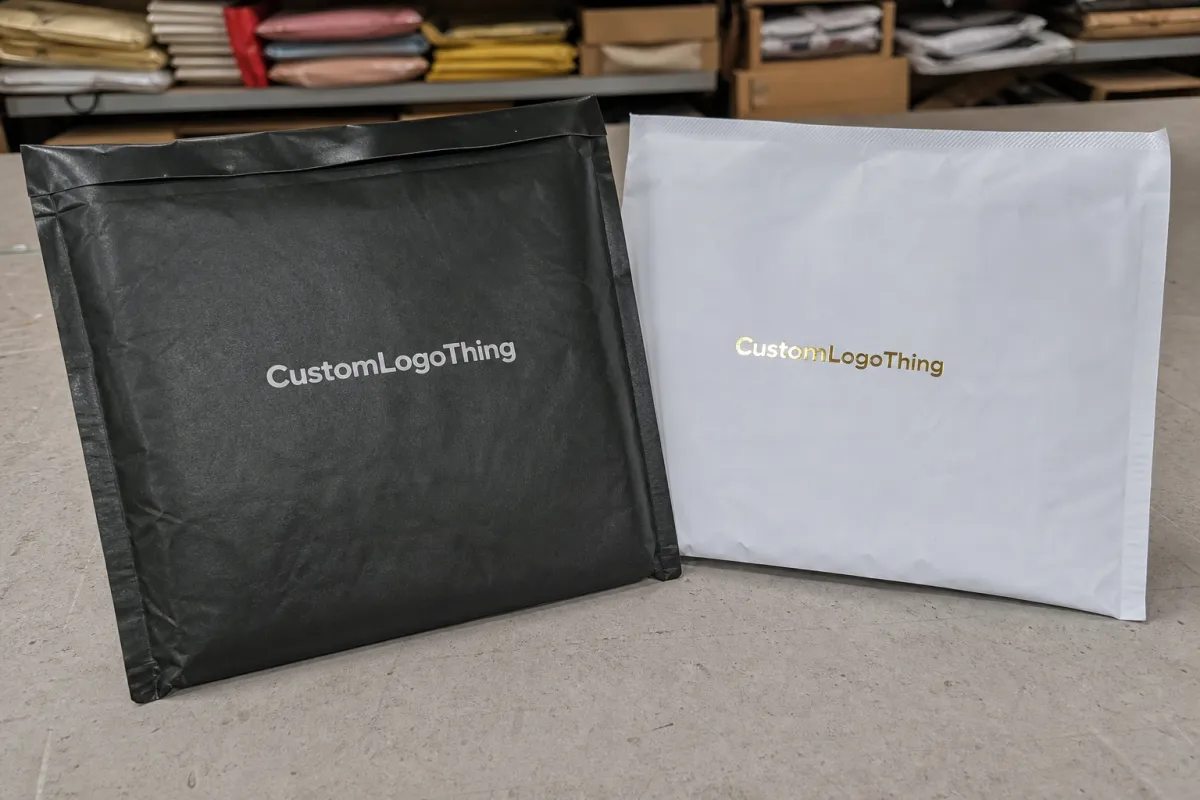
If you come from carton or label buying, film can feel deceptively simple. It is not. Paper absorbs ink; plastic holds it at the surface. That changes everything. Surface energy, film orientation, and treatment level matter far more than many first-time mailer buyers expect, especially on glossy bags where scuffing shows quickly.
The real test is supply-chain abuse. A waterproof apparel mailer has to hold up through packing benches, label application, truck transit, backroom handling, and occasional wet conditions. If the artwork starts to haze or chip in those stages, the brand loses more than decoration. It loses the appearance of care.
A solid comparison should look at five variables together:
- Durability under rub, fold, and moisture exposure
- Color quality, including solids, gradients, and white ink performance
- Cost, both tooling and per-piece pricing
- MOQ, since order volume can change the best method entirely
- Lead time, especially if the launch date is fixed
“The sample that wins the desk test is not always the one that survives the route through sorting, stacking, and transit.”
That is why matched comparisons matter. A glossy LDPE mailer printed on the inside is not the same product as a matte HDPE bag printed on the outside, even if the artwork is identical. Film type, thickness, finish, treatment, and print side all alter the final result. Compare like with like, or the pricing and quality discussion becomes noise.
A useful buying rule: if the supplier will not quote the same size, same gauge, same finish, and same print build across methods, the comparison is incomplete. The difference may be hiding in the substrate rather than the press.
How Flexographic, Gravure, and Digital Printing Work on Film
Flexographic printing uses relief plates, usually photopolymer, mounted on cylinders to transfer ink quickly and consistently across film. It suits repeat programs, cleaner spot-color branding, and medium-to-high volumes where setup cost can be spread over enough bags to matter. Once calibrated, flexo can produce dependable work, but plate making and color setup still require lead time.
Gravure is the engraved-cylinder method. It is built for density and consistency, which makes it attractive for long runs with heavy solids, deep blacks, and broad background coverage. The image quality can be excellent, but the tooling is expensive. That means gravure only starts to make financial sense when the order volume is large enough to absorb the cylinder cost.
Digital printing avoids plates and cylinders entirely. That gives it a different kind of value: faster artwork changes, lower setup cost, easier versioning, and less inventory pressure for seasonal or test programs. The tradeoff is that digital can carry a higher unit price, and adhesion still depends on the film’s treatment and the ink system used.
One detail buyers often miss is the print architecture itself. Many waterproof apparel mailers are reverse printed, with the artwork on the inside of the film so the plastic protects it from abrasion. That improves durability, but it also changes how color reads, how white ink blocks out on dark or translucent film, and how much ink coverage is needed to keep type from looking thin.
Film treatment matters just as much. A well-treated surface will hold ink far better than an untreated one. Many converters look for dyne levels in the high 30s to low 40s after treatment, then verify that the surface still meets spec before running production. If the film sits too long before printing, treatment can decay and adhesion can drift. That is a production detail, not an abstract technical note.
For buyers comparing more than one packaging format, the same logic applies across the portfolio. Our Custom Packaging Products and Custom Poly Mailers pages are useful reference points if you are matching mailers to another printed substrate in the same launch cycle.
Key Specs That Change Color, Durability, and Shelf Appeal
The first spec to check is the film itself. LDPE, HDPE, and blended films all accept ink differently, and thickness matters more than many buyers expect. A 2.5 mil bag behaves differently from a 3 mil or 3.5 mil bag: stiffness changes, fold memory changes, and the way scuffs appear changes. A thicker film may cost more, but it often buys handling tolerance.
Finish is the next fork in the road. Gloss creates stronger visual contrast and can make colors look richer, but it also reveals scratches sooner. Matte tends to mute minor abrasion and can make handling wear less visible. Neither is universally better. The right finish depends on whether the mailer is meant to look premium on arrival or stay visually forgiving during transit.
Ink coverage deserves a hard look. Heavy solids, full-bleed backgrounds, and white underprint all demand better control than a simple one-color logo. Dark backgrounds can look flat if the ink layer is too thin. Fine text and tight linework need strong registration and a stable substrate. If the art is complex, the process choice should follow the art, not the other way around.
Practical testing matters more than a glossy press sample. Ask for rub testing, fold testing, and, if the order is important enough, a transit-style simulation that approximates the shipment path. ISTA-based thinking is useful here because it pushes the conversation toward handling, not just appearance. A bag that survives abrasion and crease lines is more valuable than a prettier one that fails after a few contacts.
Here is the short version of what usually moves the result:
- Film finish: gloss increases pop; matte reduces the visibility of scuffs
- Film gauge: heavier gauges resist folding damage better and feel sturdier in hand
- White ink: essential on dark or translucent film, but it must bond cleanly
- Artwork structure: gradients, fine type, and full backgrounds stress the process in different ways
- Brand use case: subscription apparel, one-time campaigns, and core replenishment each tolerate different tradeoffs
If your team expects offset-like image smoothness, say so before the proof cycle starts. That does not mean film cannot look good. It means the supplier needs to choose screening, ink density, and color targets with the right assumptions. Plastic film is a moving surface. It flexes, it stretches, and it responds to treatment and pressure in ways paper never does.
One more operational note: reverse printing can reduce scuff risk, but it does not erase the need for controlled handling. If the bag is folded sharply in packing or shipped in tight bundles, even protected print can show stress marks along the fold. That is one reason experienced buyers ask for both open-bag and packed-bag samples.
Cost, Pricing, and MOQ Tradeoffs by Print Method
Quote comparison gets distorted fast if buyers look only at unit price. Flexo usually needs plates, gravure needs cylinders, and digital keeps tooling light or near zero. On a small order, tooling can dominate the total spend. On a large order, that same tooling cost becomes almost invisible. The process that looks expensive on paper may be cheaper once the full order is counted.
As a rough planning range, small-to-mid volume digital runs can land around $0.18 to $0.45 per bag depending on size, coverage, and film. Flexo can become more attractive as volume rises because plate costs are spread over more units. Gravure can beat both on large, stable repeats, but the cylinder investment is substantial and usually only makes sense when the order is big enough to justify it. Those numbers are directional, not universal. Film gauge, bag dimensions, ink coverage, and white ink all push pricing up or down.
The MOQ matters just as much as the method. If a supplier requires 25,000 units, then a plate-based process may be easy to justify. If the brand needs 3,000 to 7,500 bags for a launch test, a digital route may protect cash flow and reduce leftover inventory. A lower MOQ can also preserve flexibility when artwork is still moving or when the launch schedule might shift.
| Method | Typical Strength | Tooling | Best Fit | Common Watchout |
|---|---|---|---|---|
| Flexographic printing | Reliable repeatability, efficient long runs | Moderate plate cost | Medium to high volume branding | Color changes and plate fees can add up |
| Gravure | Dense solids, strong consistency | High cylinder cost | Large, stable repeat programs | Hard to justify at low MOQ |
| Digital printing | Fast artwork changes, low setup | Low to none | Short runs, test orders, versioning | Per-piece cost can be higher |
Hidden costs show up more often than people expect. White ink coverage, extra proof rounds, special finishing, film gauge changes, freight from the converter, and artwork revisions can all move the final number. A quote that leaves tooling, samples, or freight outside the first estimate is not wrong; it is incomplete. Ask for landed cost before the decision is made. That is the cleanest way to compare methods without fooling yourself.
There is also a timing cost tied to volume. A cheaper per-unit method can still be the wrong choice if it forces a long setup or holds up an urgent launch. That is especially true for apparel brands with compressed seasonal windows, where the mailer is only one piece of a larger shipment schedule.
Process, Timeline, and Lead Time From Proof to Shipment
The production path is simple on paper and less simple in practice. Artwork comes first, then the supplier confirms film, ink, and treatment. After that comes the proof, followed by approval, tooling if needed, the press run, cure or dry time, inspection, conversion, packing, and freight booking. Every step depends on the one before it.
Digital is usually the fastest route if the film is in stock and the file is locked. In many cases, it reaches ship-ready status faster than flexo or gravure because there are no plates or cylinders to produce. That said, a fast digital run can still slow down if the film needs treatment, if white ink needs extra testing, or if the artwork was not prepared at the right resolution.
A typical workflow looks like this:
- Artwork check and bag spec confirmation
- Substrate and ink-system review
- Proof generation and color approval
- Tooling or direct print setup
- Print run, cure or dry time, and inspection
- Slitting, conversion, packing, and freight booking
The biggest delays are usually not on the press. They tend to come from slow approvals, late artwork revisions, imported material delays, or a white-ink sample that needs another round before production release. A reasonable planning range for a plate-based job is often 12 to 20 business days from final approval to shipment. A digital job can sometimes move in 5 to 10 business days if the spec is tight and the material is ready. Those are planning ranges, not promises. Seasonality and carrier load can change them quickly.
For brands coordinating mailers alongside cartons, inserts, or other printed components, schedule alignment matters. One late artwork change can affect three packaging streams at once. If those pieces are moving through different suppliers, the risk multiplies. The most efficient programs keep artwork approval, substrate approval, and freight planning tied together from the start.
There is also a quality-control rhythm worth protecting. A production sign-off should not happen until the team has seen adhesion, color, and fold performance on the actual film, not a substitute. If the bag will be stored in humid conditions or shipped long distances, a quick transit simulation is cheap insurance.
For teams working on sustainability claims, the bag should be evaluated as part of the larger packaging system. The EPA offers broad guidance on waste and material handling at epa.gov, which is more useful than a vague “eco-friendly” label when the order needs to fit into a real recovery or disposal pathway.
Common Mistakes Buyers Make When Comparing Mailer Prints
The most common mistake is comparing samples that were not built the same way. A bag printed on smoother or better-treated film will usually look sharper than the same artwork on a cheaper substrate. If the thickness, finish, or treatment changed, the comparison is already distorted. That can still be useful, but only if the buyer understands the reason for the difference.
Another mistake is judging by sight alone. Waterproof apparel mailers do not live in display conditions. Rub testing matters. Fold testing matters. Moisture exposure matters. A sample that looks slightly less dramatic but survives handling is worth more than a glossy hero sample that scratches on the first conveyor ride. The packaging world is full of attractive failures.
Quote structure causes trouble too. A low unit price can hide plate fees, cylinder charges, sample fees, color change costs, or freight that appears later. That happens often enough that buyers should ask for a total landed view before approving anything. If the supplier cannot show tooling, freight, and overage terms clearly, the number is not ready for decision-making.
Launch timing is another failure point. A mailer can be cheap and still ruin a campaign if it arrives after the apparel has shipped. That is not a cosmetic issue; it is an operational one. Seasonal drops, subscription programs, and retail replenishment schedules all punish late packaging. The order has to fit the calendar as well as the press.
Many teams also overestimate what a beautiful proof can tell them. A proof is useful, but it is not a transit test. The better sequence is proof first, handling test second, production approval last. Reversing that order leads to bad surprises after the bags are already in motion.
Expert Tips and Next Steps for a Smarter Order
Start with a one-page spec sheet before asking for quotes. List the bag size, film type, thickness, finish, artwork coverage, target MOQ, ship date, and whether white ink or reverse printing is required. That single page cuts down the back-and-forth and forces the quote to reflect the real order instead of a rough idea of it.
Then request matched samples whenever possible. If one supplier shows digital on a thinner film and another shows flexo on a matte heavy-gauge bag, the comparison is not clean. Same size, same substrate, same print coverage, same test conditions. Anything else is a partial view.
The order of priorities usually looks like this:
- Choose the main business goal: cost, speed, color fidelity, or durability
- Lock the bag spec before making art changes
- Request two or three print methods on matched substrates only
- Review adhesion, rub resistance, and fold performance, not appearance alone
- Confirm lead time, freight, and tooling before production approval
From a buying standpoint, there is no universal winner. A subscription apparel line with steady monthly volume often fits flexo well. A premium repeat program with very high volumes can justify gravure. A lower-MOQ launch or seasonal test usually points to digital. That is why the comparison should end with the order shape, not the prettiest sample on the table.
A practical buying process also keeps the language tight. Ask for film gauge, treatment level, print side, cure method, and acceptable rub-test thresholds. Those details tell you more than broad claims about quality. If a supplier can answer those questions clearly, the order is usually in better hands.
Once the spec is pinned down, the proof cycle tends to shorten, pricing becomes easier to interpret, and the final bag has a better chance of looking right on the packing bench and holding up on the route out the door.
Frequently Asked Questions
Which print method is best for waterproof apparel mailers?
Flexographic and gravure usually make the most sense for larger runs because setup cost is spread over more units and the print stays consistent across long production cycles. Digital is often better for shorter runs, launch tests, or artwork that changes often. The right choice depends on film type, artwork coverage, and whether speed or durability matters more for the order.
Does digital printing hold up on waterproof apparel mailers?
Yes, if the film is treated correctly and the ink system matches the substrate. Ask for adhesion and rub-test results, not only a polished sample image. Some films need corona treatment, primer, or overprint protection to keep the print stable under folding and transit abrasion.
How does MOQ affect the print method for waterproof mailers?
Higher MOQ helps flexo and gravure because tooling costs are spread over more bags, which lowers the per-unit price. Lower MOQ usually favors digital because there are no plates or cylinders to absorb. Very small orders often carry higher unit cost no matter which process is used.
What affects lead time for custom waterproof apparel mailers?
Artwork approvals, proof cycles, and tooling creation are the biggest timeline drivers. Imported film, white-ink testing, and freight scheduling can add extra days or weeks. Digital often moves faster than plate-based methods, but only if the specs are locked early and the substrate is ready.
How do I compare prices across waterproof apparel mailer suppliers?
Make sure every quote uses the same size, film thickness, color count, finish, and artwork coverage. Ask whether plate fees, cylinders, samples, and freight are included or billed separately. Compare total landed cost, not only unit price, so the result is truly apples to apples.
What quality checks should I request before approving production?
Ask for a press proof, a rub test, a fold test, and a check on adhesion after treatment. If the bags will be shipped in humid conditions or packed tightly, ask for a packed-bag sample as well. That gives a better view of how the print will hold up once the mailer is in motion.
The smartest waterproof apparel mailers Print Method Comparison is the one that matches the film, the artwork, the MOQ, and the launch calendar without pretending those factors are minor. If the mailer needs to look sharp in the hand and still survive the trip out the door, the process choice has to account for the whole journey, not just the sample that happened to photograph well.


