Waterproof Apparel Mailers Sample Approval Checklist: What It Really Verifies
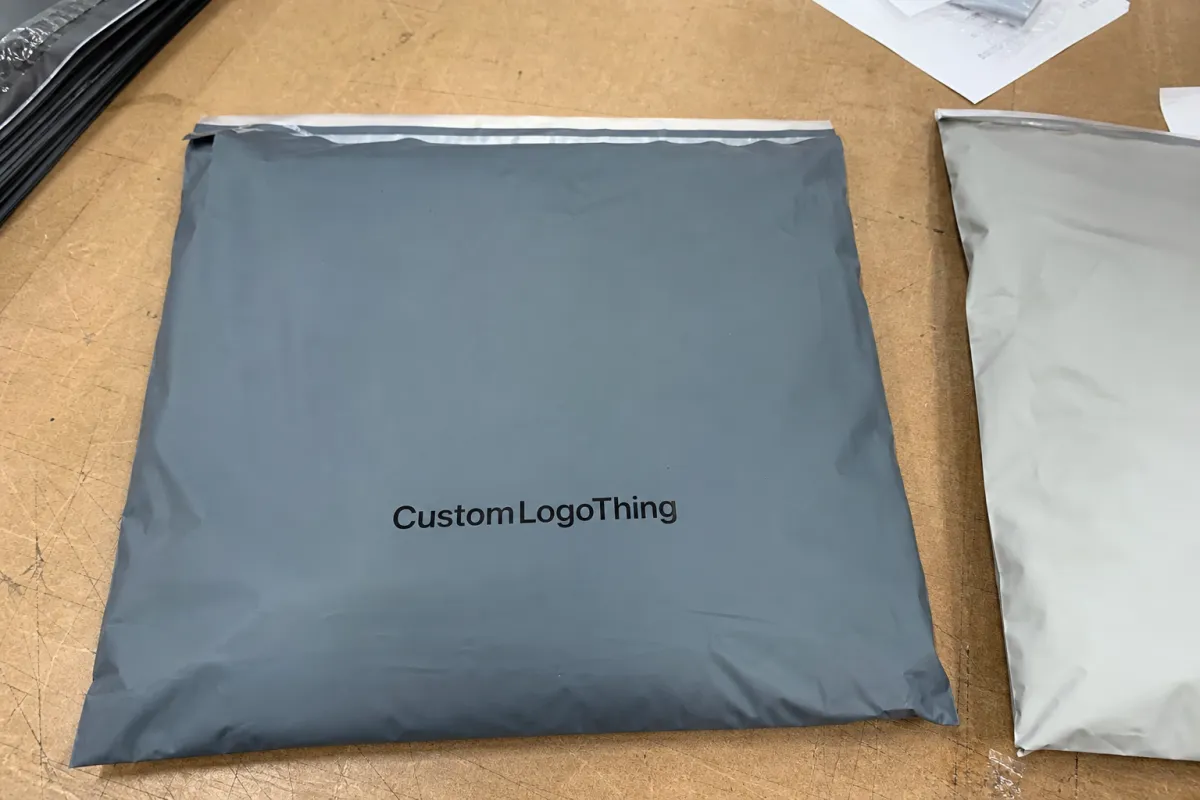
A clothing mailer can look perfect on a desk and still fail on a wet porch. A Waterproof Apparel Mailers sample approval checklist is not a polite pre-production ritual. It is the buyer's last chance to test protection, branding, handling, and fulfillment fit before mass production starts.
The failure is rarely dramatic. A weak side seal. A closure strip that tunnels after the bag is overfilled. A pinhole where a folded zipper presses against the film. Rain does not need a large opening. One small path is enough.
Think of the sample as evidence. Every measurement, rub test, seal pull, scan, and packing trial tells you whether the supplier understood the job. Not the mood board. Not the digital proof. The actual shipping job.
Waterproof also needs a practical definition. For apparel poly mailers, it usually means resistance to rain, splashes, damp warehouse floors, and normal parcel-network exposure. It does not mean the package can be submerged for 30 minutes unless that exact performance has been engineered, tested, and quoted. Big difference.
A useful checklist covers material, dimensions, closure, side seals, print, water resistance, barcode readability, packing performance, compliance claims, and approval documentation. Miss one, and the bulk run can still disappoint.
Packaging reality check: most mailer failures start as small clues in the sample. A wrinkled flap, barely readable barcode, or tight fit is not cosmetic. It is an early warning.
How Waterproof Apparel Mailer Samples Are Built and Tested
Most apparel mailers are made from LDPE, HDPE, co-extruded polyethylene, recycled-content blends, or specialty films. Each one behaves differently. LDPE tends to feel softer. HDPE can feel crisper. Co-extruded PE may combine layers for opacity, tear resistance, and print performance. Recycled-content films can work well, but they deserve tighter review for color consistency, stiffness, odor, and puncture behavior.
Apparel is deceptively hard to ship. A T-shirt is soft, yes. A stack of shirts creates pressure against the flap. A hoodie adds bulk. Denim corners can act like blunt tools. Hangtags, zippers, drawcord tips, pins, and folded inner polybags all push against the film during sorting, compression, and drops.
The water-resistance system has three working parts. Film thickness blocks moisture through the surface. Side seals stop seepage along the edges. The adhesive closure keeps the opening from lifting during transit. If one part is weak, the word “waterproof” gets shaky fast.
Buyer-side tests do not need a lab coat. Insert dry tissue or copy paper, pack the garment, seal the bag, splash the outside for 30 to 60 seconds, place it on a damp towel, flex the seams, then inspect the tissue and corners. Repeat after the bag has been rubbed against cardboard or dropped lightly from table height. That sequence reveals more than a flat, empty sample ever will.
Lab reports still have value. Standards from groups such as ISTA help define transit-testing discipline, and ASTM methods can support material comparisons. But a lab result for film is not the same as a packed-mailer trial. Your actual bag size, seal width, adhesive placement, and print coverage have to work together.
Printed samples matter too. Heavy ink coverage, matte coatings, varnishes, or recycled film can change scuff resistance and barcode contrast. A credible sample should match the proposed production method as closely as possible. A hand-cut mockup may validate logo scale, but it cannot prove seal strength. Pretty, but not proof.
Key Approval Factors: Film, Seals, Size, Closure, and Print
Start with film gauge. Confirm thickness in mils or microns because a small change affects puncture resistance, opacity, hand feel, and unit cost. Common apparel mailers often sit around 2.0 to 3.0 mil. Heavier garments or premium shipments may justify 3.0 to 4.0 mil, depending on bag size, garment weight, fulfillment speed, and shipping route.
Side seals should be straight, evenly fused, and resistant to splitting when the packed bag is flexed or lightly pulled. Look for narrow seal bands, waviness, burnt edges, and areas where the seal looks incomplete. A 6 mm seal and a 10 mm seal may both look acceptable in a photo. Under stress, they can behave very differently.
Sizing needs a real product, not a guessed footprint. Test the actual folded garment, tissue, insert card, invoice, return label, inner polybag, and any bundle configuration. If the mailer must be forced shut, production will pay for it through seal failures, wrinkled branding, slower packing, and more rejected bags.
Closure checks deserve their own line on the form. Confirm adhesive strip width, release liner strength, flap depth, tamper evidence, return-strip placement, and whether packers can close the bag quickly with gloves or dry hands. Resealable return strips are useful for apparel, but they add cost and need space. Place a return strip too close to the primary seal and packers will use the wrong one. Of course they will.
Print inspection is not just color approval. Confirm logo position, color tolerance, ink adhesion, edge registration, QR code scans, barcode readability, and whether a white ink underlay is needed for opaque branding. A black barcode printed over a dark green mailer may scan in the office and fail under warehouse lighting.
Opacity matters. Premium apparel, intimate categories, high-return products, and high-theft categories often need enough opacity to hide color and contents. Ask for a sample with the darkest and lightest garments you ship. Privacy is not a luxury feature if returns, theft risk, or customer trust are part of the equation.
Sustainability claims need evidence, not vibes. Recycled content, recyclable marks, compostability language, and disposal instructions must match the actual material and local rules. The EPA's recycling resources are a useful starting point, but packaging claims still depend on structure, additives, labels, inks, and local access to recycling.
| Approval Factor | What to Check | Typical Buyer Risk |
|---|---|---|
| Film gauge | 2.0-4.0 mil range, quoted thickness, opacity, puncture feel | Production film is thinner than the approved sample |
| Side seals | Seal width, straightness, split resistance after packing | Water entry through edge seams |
| Closure | Adhesive width, liner release, flap depth, return strip | Flap lift, tunneling, slow fulfillment |
| Color, ink rub, barcode scans, logo position | Brand defects and unreadable codes |
Sample Approval Process and Timeline Before Bulk Production
A disciplined approval process starts before the physical sample exists. Confirm product dimensions, choose film gauge, review artwork, approve the digital proof, receive the physical sample, run packing tests, document changes, then approve or request another sample. Simple. Not always quick.
Timelines vary by print method, material availability, color matching, custom sizing, and whether the sample is handmade, digitally printed, or produced on intended equipment. A visual mockup might take a few business days. A production-representative sample can take 7 to 15 business days. Custom extrusion, plate making, specialty film, heavy ink coverage, or recycled-content validation can stretch that timeline.
There is a sharp difference between a mockup and a true sample. A visual mockup can validate branding, logo scale, and general appearance. It may not prove adhesive performance, seal strength, or water resistance. A production-representative sample should match the quoted film, gauge, closure, print method, and seal construction.
Skipped steps move risk downstream. If the buyer approves artwork but not packed performance, the warehouse becomes the test lab. That is expensive testing. It happens after inventory arrives, customer orders are waiting, and the packaging budget is already spent.
Use a decision log. Each requested change should include the reason, owner, date, version number, and confirmation method. Scattered email comments create disputes. A one-page log attached to the checklist keeps artwork, purchasing, and production aligned.
A second sample is justified if the film gauge changes, bag size shifts, adhesive is replaced, recycled content is adjusted, print coverage increases, or any leak, tear, scuffing, or barcode problem appears. Written promises help. Changed packaging function deserves physical verification.
Fast approval is useful only if the sample reflects the bag that will actually ship. For custom printed options, compare your approved sample against the specification used for ordering Custom Poly Mailers, including material, size, color, closure, and print notes.
Cost, Pricing, MOQ, and Unit Cost Checks During Sample Review
Pricing is a forensic exercise. The lowest quote can hide thinner film, smaller seals, lighter ink coverage, looser color control, or a higher defect allowance. Two mailers may both be described as custom waterproof poly mailers and still perform differently under the same hoodie, rain exposure, and packing pace.
The main cost drivers are film type, gauge, bag size, print colors, ink coverage, adhesive type, resealable return strip, recycled content, order quantity, tooling, and shipping terms. A basic one-color 2.5 mil mailer might sit around $0.18-$0.28 per unit at 5,000 pieces, depending on size and coverage. Premium finishes, heavier gauge, return strips, specialty inks, or lower quantities can push costs higher.
MOQ exists for practical reasons. Custom printed apparel mailers often need minimums because film extrusion, plate setup, ink mixing, press setup, machine time, and startup waste are not economical at tiny quantities. A short run may still be possible, but the per-unit price can jump because setup costs have fewer units to absorb them.
Compare unit cost against usable performance, not just price per bag. A mailer that saves $0.03 but tears 2% more often can create reshipments, refunds, labor, replacement stock, and brand damage. Ten thousand units multiplied by a small defect rate becomes visible quickly. Accounting may call it savings. Customer service will have another name for it.
Do a landed-cost check before approval. Freight, duties, storage space, sample charges, plate fees, rush fees, overage policies, and underrun policies can change the real number. Ask whether sample fees are credited toward bulk orders and whether repeat orders require new setup charges.
One practical move: ask for three specification tiers. Standard, stronger, and premium finish. The tradeoffs become visible instead of buried inside a quote.
| Spec Tier | Typical Features | Estimated Unit Range | Best Fit |
|---|---|---|---|
| Standard | 2.0-2.5 mil PE, one-color print, permanent seal | $0.18-$0.28 at 5,000 pcs | T-shirts, light apparel, simple branding |
| Stronger | 2.5-3.5 mil film, wider seals, better opacity | $0.24-$0.38 at 5,000 pcs | Hoodies, denim, bundled orders |
| Premium | Heavier film, matte finish, return strip, higher ink coverage | $0.35-$0.60+ at 5,000 pcs | Fashion drops, returns programs, elevated unboxing |
Any sample approval should reference the quoted specification. Approving a thicker sample while purchasing a thinner production bag creates a mismatch that is hard to defend later. The Waterproof Apparel Mailers sample approval checklist should include quote number, gauge, film type, print method, MOQ, and any agreed tolerances.
Step-by-Step Checklist for Testing the Physical Mailer Sample
Photograph the sample first. Flat, packed, sealed, and after testing. Those images become objective references if revisions are needed. A photo of a lifted flap or damp tissue is more useful than a vague note saying “seal issue.”
- Measure the bag. Record outside dimensions, usable inside dimensions, flap depth, seal width, closure placement, and tolerance against the approved specification sheet.
- Pack the real order. Use the actual garment, folded as fulfillment will fold it, including tissue, inner polybag, hangtags, invoice, inserts, return label, or bundle wrap.
- Check the fit. The bag should close without excessive stretching, flap strain, or contents pressing hard against the adhesive strip.
- Run a closure test. Seal the bag, wait 10 to 20 minutes, flex it, press the contents toward the flap, then check for lifting, tunneling, wrinkles, or adhesive transfer.
- Run a water-resistance test. Insert dry tissue, expose the packed sample to controlled splashing and damp surface contact, then inspect seams, flap, corners, and tissue.
- Perform a handling test. Use light drops from table height, rubbing against cardboard, squeezing, and sliding across a table to reveal scuffs, pinholes, ink transfer, or weak seals.
- Scan every code. Test barcodes and QR codes before packing, after packing, and after abrasion. Soft apparel creates wrinkles that can distort codes.
- Check opacity. Pack dark, light, bulky, and printed garments to see whether contents show through the film under normal lighting.
- Record the result. Mark each item pass, fail, or revise, then attach photos, measurements, and approval language.
For apparel brands ordering several packaging formats, it helps to keep one shared review method across mailers, boxes, and inserts. Custom Logo Things buyers can compare related formats through Custom Packaging Products while keeping the same approval discipline: measure, pack, stress, document.
The checklist should not be treated as paperwork after the decision. It is the decision. If the sample fails the packed water test or the barcode fails after abrasion, approval should wait.
Common Mistakes That Turn an Approved Sample Into a Bad Shipment
The biggest mistake is approving the sample visually without packing the actual product. Empty mailers hide volume, folds, and closure tension. A flat mailer can look generous; a packed one can strain at the flap.
Another mistake is treating water resistance as a yes-or-no claim. Ask what risk you are solving. Rain during delivery? Wet porch contact? Warehouse moisture? Long transit humidity? Each risk points to a different test. Submersion is a different engineering problem.
Generic samples also cause trouble. If the sample uses one film, gauge, ink system, adhesive, or recycled-content percentage, but production uses another, your approval evidence gets weaker. That is especially true for recycled blends, where stiffness, opacity, and color tone can vary by formulation.
Artwork can fail quietly. Logos placed too close to side seals may distort. Important copy inside fold zones can disappear. Low-contrast barcodes may scan under office LEDs but fail under fulfillment lighting. Colors approved on a phone screen are not color standards.
Measurement errors are common. Buyers confuse flat width with usable width, ignore flap depth, or forget bulky garments such as hoodies, denim, and outerwear. A 10 x 13 inch mailer does not always provide 10 x 13 inches of usable packing space once seals, flap, and product thickness enter the picture.
Communication gaps turn small issues into disputes. Verbal approvals, unclear tolerances, missing revision numbers, and no signed-off sample reference leave room for interpretation when bulk cartons arrive. A waterproof apparel mailers Sample Approval Checklist reduces that ambiguity because it ties approval to physical evidence.
Over-optimization for price is another trap. Shaving gauge from 3.0 mil to 2.5 mil or narrowing adhesive width may look harmless on a spreadsheet. Later, it appears as split seams, flap lift, wet garments, customer complaints, and returns.
There is also the classic “approved sample, different production run” problem. The sample arrives in one shade, one stiffness, one seal quality. The bulk order arrives with a slightly different hand feel and weaker adhesive. Sometimes the difference is within a supplier's loose tolerance. Sometimes it is a material substitution. Either way, the buyer needs written specs and incoming checks, not just a nice sample sitting in a drawer.
Honestly, most packaging failures are not surprises. They are small warning signs that were visible in the sample, then ignored because the logo looked good.
After Approval: Lock Specs, Archive Evidence, and Order With Fewer Surprises
Approve only after the sample passes size fit, water resistance, seal strength, print quality, scan reliability, opacity, and fulfillment handling tests. None of those checks is decorative. Each connects to a real cost: returns, reships, labor delays, chargebacks, or damaged customer trust.
Create a production approval packet. Include the signed checklist, final artwork, dimensions, material gauge, film type, color references, closure details, quote number, MOQ, delivery expectations, and photos of the approved sample. Ask the supplier to confirm production tolerances in writing: size tolerance, color tolerance, gauge tolerance, overage or underrun allowance, and acceptable defect limits.
Keep one approved sample in the office and one with the warehouse or quality team. Incoming cartons should be compared against the same physical benchmark. For larger orders, request a first-article or early-production check before the entire run ships, especially after changing suppliers, materials, artwork, or bag size.
Receiving inspection can be simple. Pull a few bags from different cartons, measure them, pack them, seal them, splash-test one, and compare print against the approved sample. Five minutes per carton group can catch the kind of mismatch that becomes expensive after thousands of orders have shipped.
A good approval process does not make packaging risk disappear. It makes risk visible while there is still time to fix it. That is the point. Use the checklist every time the film, size, artwork, closure, supplier, or order quantity changes.
FAQ
What should be included in a waterproof apparel mailer sample checklist?
Include material type, film gauge, bag dimensions, usable packing space, seal width, closure performance, print accuracy, opacity, water-resistance test results, barcode scans, and signed approval notes. Use the actual garment and packing method during testing because empty mailers can hide fit and closure problems. Attach photos and measurements so the approved sample can be compared against bulk production.
How do I test whether custom apparel mailers are really waterproof?
Place dry tissue or paper inside a packed and sealed sample, then expose the mailer to controlled splashing, damp surface contact, and seam flexing. Inspect the tissue, side seals, flap, corners, and adhesive area for moisture after the test. Waterproof claims should match realistic parcel conditions, not submersion unless that performance has been specifically engineered and quoted.
When should I request a second sample before approving apparel mailers?
Request another sample if the film gauge, bag size, adhesive, print coverage, recycled content, or seal construction changes after the first review. A second sample is also smart if the first version barely fits the product or shows any moisture, tearing, scuffing, flap lift, or barcode issues. Do not rely on written promises when the physical packaging function has changed.
How does MOQ affect waterproof apparel mailer pricing?
MOQ affects unit cost because custom film, printing plates, ink setup, machine time, and waste are spread across the order quantity. A higher MOQ usually lowers unit cost, but buyers should also consider storage, cash flow, artwork changes, and demand uncertainty. Ask for tiered quotes so you can compare the real cost difference between smaller and larger production runs.
Can a printed apparel mailer sample look approved but still fail in production?
Yes. This happens when the sample is a visual mockup rather than a production-representative sample made with the quoted material, ink, adhesive, and sealing method. Failures often appear in side seals, closure strips, ink rub resistance, sizing, opacity, or scan readability. Tie approval to a written specification sheet and keep an approved physical sample for incoming quality checks.

