A Waterproof Apparel Mailers Supplier Quote for chocolate brands usually starts with a problem that has little to do with chocolate itself. The shipment may contain staff apparel, promotional kits, club merchandise, or gift-with-purchase items, yet the failure point is often the same: moisture. Cold-chain handoffs, wet docks, humid storage rooms, and a rainy last mile can leave soft goods looking tired before they reach the customer or retail partner.
That is why chocolate brands tend to look past basic poly mailers and ask for packaging that protects contents without making fulfillment more complicated. The right mailer has to hold up in transit, print cleanly, and make economic sense in repeat orders. If it does those three things well, it reduces claims, keeps rework down, and helps the brand arrive with the right first impression.
There is also a subtle branding issue that buyers underestimate. A package that survives moisture but looks cheap can still weaken the customer’s perception of the entire shipment. For seasonal campaigns and retail-facing merchandise, presentation is part of performance.
Why chocolate brands need waterproof mailers before a shipment gets damaged
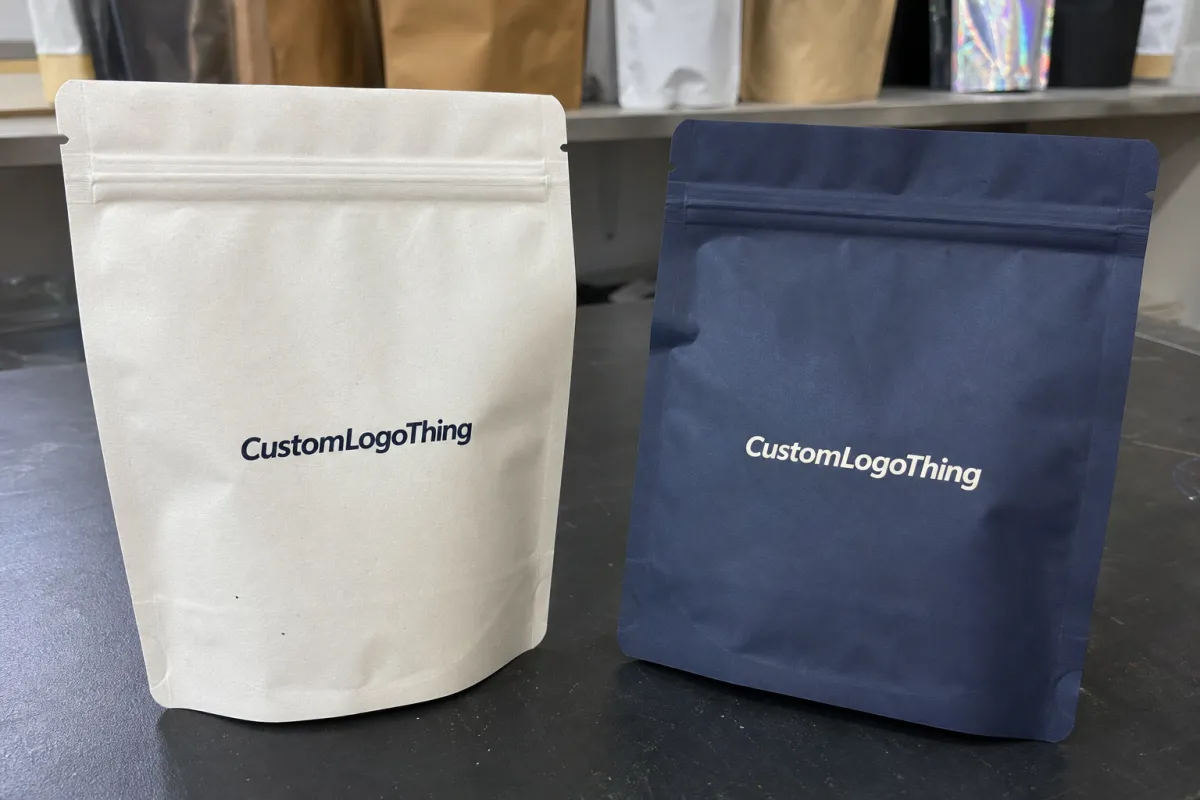
Chocolate is sensitive to heat and humidity, and the items shipped alongside it are rarely forgiving either. A folded tee, apron, tote bag, or campaign insert can absorb moisture long before the outer carton shows trouble. The result is usually not dramatic damage; it is the quieter kind that causes friction later: softened adhesive, wrinkled graphics, bagging that looks dull, or a package that no longer feels retail-ready.
For direct-to-consumer orders, the package often is the brand. For retail partner kits, the package may be the only thing a buyer sees before it gets sorted into the back room. In both cases, a waterproof mailer is doing two jobs at once: shielding the contents and preserving the appearance of the shipment. That makes it more than a simple bag choice.
Chocolate brands also tend to move through many fulfillment modes. One week it is an influencer box, the next week a trade show kit, then a seasonal merch drop tied to a holiday campaign. Those orders are often small enough to feel routine, but varied enough that packaging mistakes become expensive. A damaged mailer can trigger a reship, customer service time, and a second round of packaging costs. That adds up faster than many procurement teams expect.
“If the outer package cannot survive warehouse moisture or a rainy delivery window, the brand pays twice: once in damaged goods and again in reduced trust.”
From a buyer’s perspective, the value is easy to measure. Better moisture resistance means fewer replacements. Better sealing means fewer returns that start with a compromised bag. Better print consistency means the mailing piece still looks intentional when it reaches the destination. Those are operational gains, not marketing buzzwords.
Brands that already source apparel packaging understand the logic. Extending those standards to chocolate-adjacent merchandise is usually a straightforward improvement, not a major structural change. The challenge is specifying the package correctly so the supplier is quoting the right thing.
Waterproof apparel mailer construction that supports branded fulfillment
Most Waterproof Apparel Mailers are built from polyethylene films because PE offers a practical mix of flexibility, water resistance, and toughness. Common structures include LDPE, co-extruded PE, and laminated film combinations. The point is not to make the bag hard. The point is to keep folded apparel and soft inserts dry while still letting the mailer bend, stack, and seal cleanly.
Film thickness is one of the first things buyers should understand. A lighter film may be perfectly adequate for a tee or tote bag, but heavier or oddly shaped contents usually need more puncture resistance. In packaging terms, the wrong thickness does not always fail in an obvious way. Sometimes it just stretches too much at the seal, creases badly during packing, or feels flimsy in the hand. Those details matter when a shipment carries brand value.
The closure is just as important as the film. Most buyers choose a peel-and-seal adhesive strip because it is efficient on the packing line and leaves a neat, tamper-evident finish. In warmer or more humid environments, a wider adhesive strip or double-seal design can be worth the extra cost. That is especially true when packages sit in staging areas before dispatch, where heat and moisture can soften weaker seals.
Print specification also needs attention. Flexographic printing is common for standard brand graphics and repeat orders, while gravure is often chosen when the artwork needs rich coverage or finer detail and the quantity justifies the setup. If the design includes a strong color block, a barcode, or a QR code for campaign tracking, ink adhesion and registration should be reviewed carefully. A design can look perfect on screen and still fail on the press if the film surface was not prepared for it.
Size selection deserves more discipline than it usually gets. Buyers often start with the flat garment size, but packed thickness is the number that matters. A mailer that is too tight can stress the seal and make the contents look compressed. One that is too large creates excess movement and a less polished finish. For folded shirts, aprons, and lightweight tote bags, the useful dimension is the actual packed size, not the product’s unfolded footprint.
Brands already using Custom Poly Mailers often find that the next improvement is not a different format but a better film structure, a stronger seal profile, or a more controlled print finish. That is where a focused quote becomes useful: it turns vague preferences into comparable specifications.
Specifications buyers should confirm before requesting a quote
A supplier can only price accurately if the brief is specific. The fastest way to get a useful Waterproof Apparel Mailers Supplier Quote for chocolate brands is to define the things that actually move production cost. Size alone is not enough. A quote without thickness, closure style, and print detail is usually just a guess with numbers attached.
Start with the material. Confirm the film type, the thickness in microns or mils, and the level of water resistance you actually need. “Waterproof” can mean different things in practice. For some brands, it means light moisture protection during handoffs and delivery. For others, it means a higher barrier against wet loading areas or condensation-prone storage. Those are not the same spec.
Then define the closure. A standard peel-and-seal strip may be enough for lightweight apparel. A wider adhesive band or double-seal design can make sense when the contents are bulkier or the transit conditions are harsher. If the package will be opened and resealed internally during a packing check, that should be discussed too, because some closures tolerate that better than others.
Print details are another place where buyers lose time if they stay too vague. How many colors are required? Is a PMS match needed, or is a close visual match acceptable? Does the design use white ink on tinted film? Do you need matte or gloss? These choices affect setup, proofing, and press speed. Even barcode placement matters if the mailer will be scanned in a warehouse with inconsistent lighting.
Internal usable dimensions should be listed, not just outside dimensions. If the mailer needs a gusset, say so early. If labels will be applied by machine, mention that as well, because some surfaces perform better than others. And if sustainability language matters to your brand, ask for the exact material statement rather than assuming all PE films are interchangeable. They are not.
- Film thickness and construction type
- Internal usable dimensions and gusset requirements
- Closure type: peel-and-seal, double seal, or tamper-evident strip
- Print specs: color count, PMS targets, finish, and white ink use
- Handling needs: label adhesion, barcode scanning, and pack-out method
For teams that care about material claims, it helps to separate language from proof. Resources such as EPA recycling guidance and FSC are useful reference points when a supplier says a structure is recyclable or sourced responsibly. Those claims should be traceable, not decorative. If you want to compare the mailer with other packaging formats, Custom Packaging Products gives a broader view of available structures.
Cost, pricing, MOQ, and what changes your unit cost
Pricing for a Waterproof Apparel Mailers Supplier Quote for chocolate brands usually depends on a small group of variables: material grade, thickness, size, print coverage, number of colors, adhesive system, and shipping destination. Most buyers know the quantity they want. Fewer can predict how much a wider adhesive strip or heavier film changes the number.
MOQ follows the same logic. Smaller orders almost always cost more per unit because plate making, proofing, setup, and scheduling overhead are spread across fewer pieces. Larger orders lower the per-unit cost, but they also tie up cash and storage space. That tradeoff matters if the mailers are tied to seasonal drops or campaign-based merchandise.
Custom features add cost in obvious ways. More print coverage means more ink and more press control. Special colors mean more setup time. Tinted film, heavier gauges, custom sizing, and stronger adhesive systems all change the production math. None of these choices are a problem, but they should be priced honestly rather than assumed to be minor upgrades.
| Option | Typical MOQ | Approx. Unit Cost Range | Best For |
|---|---|---|---|
| Plain stock waterproof mailer | 1,000-2,000 pcs | $0.12-$0.22 | Fast replenishment, simple apparel shipments |
| Printed standard mailer | 3,000-5,000 pcs | $0.18-$0.32 | Logo use, retail promos, recurring fulfillment |
| Custom size, full print, stronger seal | 5,000-10,000 pcs | $0.24-$0.45 | Higher presentation value, more demanding transit conditions |
Those numbers are directional, not universal. Freight, destination, print coverage, and film grade can move them quickly. A heavier gauge or a more complex artwork file can change the price enough that two quotes for “the same bag” end up nowhere near each other. That is why a supplier should be able to explain the delta clearly. If the number changes, the reason should be visible.
There is also a procurement habit worth correcting: if you only send a target price, the supplier has to guess the structure. A better brief includes annual volume, expected reorder frequency, size distribution, and whether the first run is for testing or for a locked recurring program. With that context, the quote is usually sharper and the risk of hidden cost later is lower.
Production steps, lead time, and approval milestones
A proper quote should lead into a production plan. For packaging, the approval path matters as much as the price. The standard sequence is straightforward: artwork review, size confirmation, prepress check, proof approval, production scheduling, inspection, and dispatch. If any of those steps are unclear, delays tend to show up later in the form of rework or missed launch dates.
Many of the slowdowns are preventable. Files arrive without bleed. Pantone references are missing. A final size changes after proof approval. Three teams want to sign off, but none of them wants to be the last one. These are common issues, not rare ones, and they are expensive because packaging timelines are usually tighter than the teams requesting them think.
Plain stock mailers move faster than custom printed runs. Once printing enters the job, the supplier has to confirm artwork, prepare plates or cylinders depending on the print method, and check the first production samples before the full run continues. That extra work is normal, but it means buyers should not assume a quick turnaround simply because the product is a soft mailer rather than a rigid carton.
Practical lead time planning matters most around campaigns. Seasonal promotions, trade shows, subscription drops, and retail activations all compress timelines. If the mailers support one of those events, the packaging order should be locked early enough that proofs, inspection, and shipping do not become the bottleneck. Once a launch date is fixed, there is very little room for indecision.
- Artwork review and size confirmation
- Proof approval before production starts
- Inspection for print and seal quality
- Dispatch timed to the fulfillment schedule
Quality testing does not need to be theatrical, but it should be real. Many packaging teams borrow the mindset behind ISTA testing, which is useful even if the final product is a mailer rather than a corrugated shipper. If you want a broader testing reference, ISTA outlines methods that help buyers think clearly about transit risk, handling abuse, and package durability.
How a packaging supplier supports chocolate brand operations at scale
The right supplier does more than send a price. For a chocolate brand shipping apparel and promotional kits, the packaging partner should understand repeat replenishment, color consistency, and the way fulfillment teams actually work. A mailer that is technically good but inconsistent across reorders creates more problems than it solves.
Quality control is the clearest sign that a supplier understands the job. Seal integrity should be checked, because a weak closure becomes a customer complaint later. Print registration should be verified so logos and artwork sit where they should. Film consistency matters because thin or uneven material can fail in transit even when the sample looked fine. Carton packing matters too; damage in transit to the mailers themselves creates receiving issues before the bags even reach the packing table.
There is also a judgment piece that experienced buyers look for. Sometimes a customer asks for a heavier structure because they are worried about damage, but the better answer is a slightly lighter film with a stronger seal or a more suitable closure width. A useful supplier says that plainly instead of pushing the most expensive option. That kind of feedback often saves money without sacrificing performance.
At scale, the best supplier relationship is operational rather than dramatic. The goal is dependable packaging that protects the contents, looks on-brand, and keeps fulfillment moving without locking up excess inventory. A good quote should reflect that balance, not just the cost of plastic and ink.
For teams benchmarking service or comparing packaging approaches, Case Studies can help set expectations for how a rollout usually unfolds. What matters is not spectacle. It is whether the supplier can keep specifications, proofs, and repeat orders under control.
Next steps to request a precise quote for your apparel mailers
If you want a clean quotation, send the details that change production. That means exact size, quantity, print colors, film thickness, closure preference, delivery location, and whether the mailers are plain or branded. If the packaging will hold apparel kits, promo items, or bundled inserts, say that clearly. The use case affects the recommended spec.
Artwork helps too. A reference image or production file lets the supplier judge print complexity, layout limits, and whether the design will hold up on the chosen film. If the package includes a logo, seasonal graphic, or campaign message, include the file format and brand color references. That reduces back-and-forth and usually shortens the approval cycle.
It is also smart to ask for two quote paths: the spec you want most and a cost-optimized alternate. Side-by-side pricing helps your team see where protection level, finish quality, and unit cost actually trade off. In many cases, the alternate is close enough to be worth testing on the first run, especially if the order is tied to a new campaign or unproven volume.
Before placing the first order, review sample dimensions, approval timing, and the likely reorder forecast. Those three items prevent the packaging from becoming a bottleneck when the next shipment cycle begins. For chocolate brands shipping apparel, merch, and promo kits alongside the product experience, the packaging choice should be practical first. A well-constructed mailer protects the contents, supports the brand, and reduces avoidable rework.
That is the real purpose of a waterproof apparel mailers supplier quote for chocolate brands: to turn a packaging need into a spec that can actually be manufactured, priced, and repeated without surprises.
FAQs
What should I include in a waterproof apparel mailers supplier quote for chocolate brands?
Include the exact size, quantity, print colors, material thickness, closure type, delivery ZIP or port, and whether the mailers are plain or branded. If you need printed branding, add artwork files or a layout reference, because that affects setup and lead time.
Are waterproof apparel mailers suitable for chocolate brand merchandise shipments?
Yes. They work well for apparel, tote bags, aprons, and promotional kits that need moisture protection during transit. They are especially useful when shipments may encounter rain, condensation, or humid warehouse conditions.
What affects MOQ and unit cost for custom waterproof mailers?
MOQ and unit cost depend on size, print complexity, film grade, and whether the mailer is stock or fully custom. Larger quantities usually lower the unit price because setup and production costs are spread across more bags.
How long does production usually take after approval?
Timing depends on the material, print method, and order size, but the process usually includes proof approval, production, inspection, and shipping. Plain stock options move faster than fully printed custom runs.
Can I get a sample before placing a full order?
Yes. Request a sample or pre-production proof to confirm size, seal performance, print placement, and overall fit. Sampling is the safest way to check that the mailer protects the apparel without adding unnecessary material cost.


