Most failures in Waterproof Courier Bags do not begin in the center of the film. They begin at a seam, a corner weld, or a flap that was sealed a few millimeters off line. That is why a waterproof courier bags material guide has to look beyond thickness alone. For bulk buyers, one weak edge can turn into a soaked parcel, a return, and a complaint that spreads through customer service faster than any packaging spec sheet ever will.
A courier bag deserves the word waterproof only when three parts work together: a moisture-blocking film, a clean sealed structure, and a closure that keeps water out during ordinary delivery abuse. Ordinary matters here. Most parcels are not submerged; they are sorted, stacked, dragged across damp surfaces, and exposed to rain for short stretches. A bag can look strong in a sample photo and still fail once it is folded, compressed, and tossed into a wet handoff chain.
Buyers usually do best when they focus on the shipment, not the material catalog. The bag has to protect the item, match the print requirement, and stay within a landed-cost target that does not collapse under freight, carton count, or low MOQ penalties. That tradeoff is where the real work sits.
There is also a practical rule that holds up across categories: spend first on the seal, then on the print. A glossy mailer that opens at the flap is not premium. It is expensive in the wrong way.
What Makes a Courier Bag Truly Waterproof?
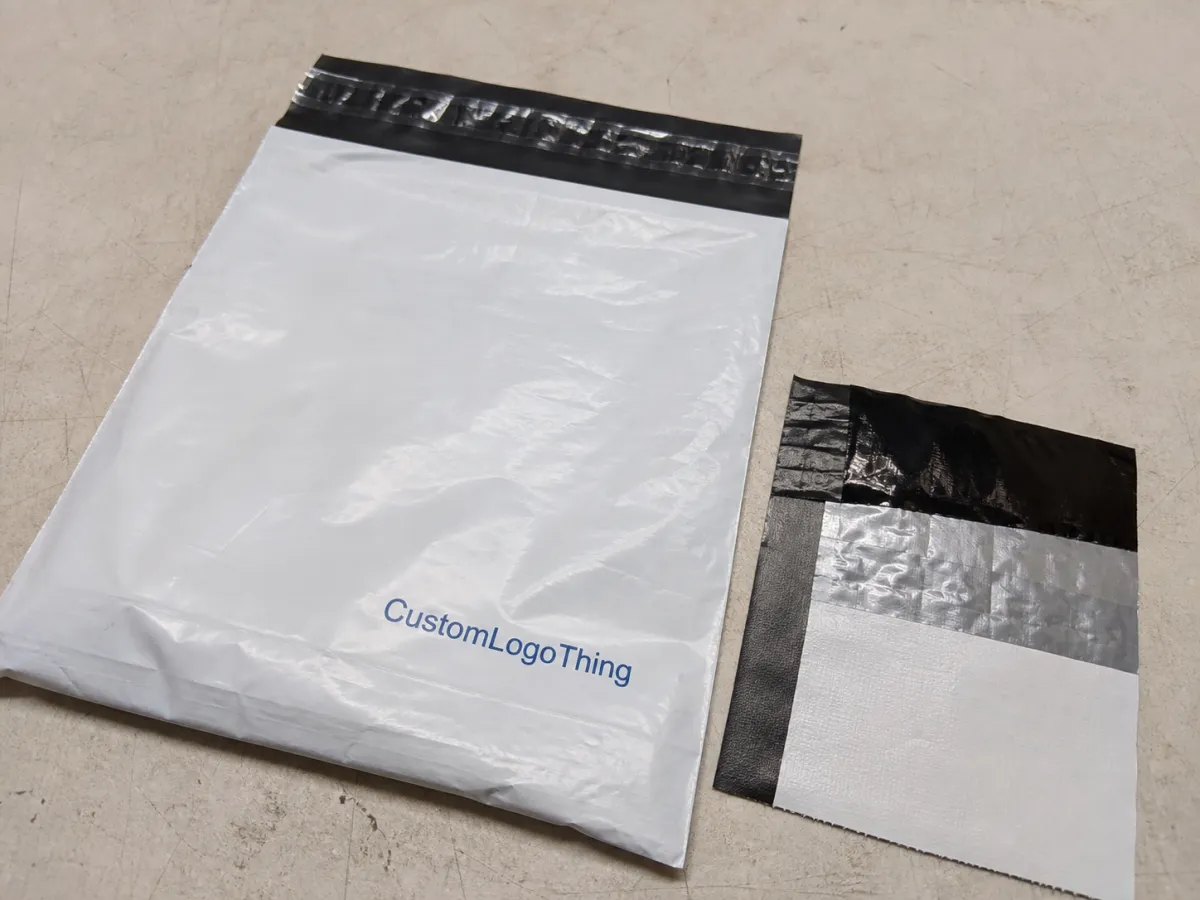
The quickest way to separate a true waterproof courier bag from a merely water-resistant one is to inspect the edges. Water usually enters where two layers meet, not through the middle of an intact film. If the weld is narrow, uneven, or contaminated by dust during sealing, moisture can creep in under pressure even when the base material itself is sound.
A dependable build normally combines a barrier film, wide heat-sealed or adhesive-sealed seams, and a closure that leaves no obvious entry point. The peel-and-seal flap is simple in theory, but it needs accurate alignment and enough adhesive coverage to survive handling. If the strip is too short, too narrow, or placed too close to the opening, the flap can lift when the bag is packed tightly or exposed to cold-weather transit.
Waterproof is not the same as splash resistant. Splash resistance covers brief rain, condensation, or a damp dock. Waterproof performance aims to keep contents dry through normal courier handling, short exposure to wet surfaces, and the pressure of stacking. That distinction matters for apparel, documents, cosmetics, and returns. Folded garments can still arrive damp if the bag opens at the seam. Paperwork fails quickly. Cosmetics are even less forgiving because a little moisture can become visible product damage once the parcel is opened.
Buyers sometimes compare courier bags with kraft paper envelopes or corrugated shippers and assume the outer format tells the whole story. It does not. Paper-based mailers may look more premium, and FSC certified paper can support a sourcing story, but paper alone will not keep water out. A polymer barrier layer is what gives the bag actual moisture resistance.
In practice, the best sign of a strong waterproof bag is not a marketing claim. It is consistency: clean seals, stable film, and a closure that still holds after the package has been filled to capacity and handled roughly. If one corner leaks in testing, the whole design needs a second look.
Waterproof Courier Bags Material Guide: How Barrier Films and Sealed Closures Work
The structure is usually more layered than a procurement sheet suggests. Most waterproof courier bags use an outer printable layer, an inner seal layer, and a closure system at the opening. Some are co-extruded so the bag can print well, resist tearing, and still fold without cracking. That balance is more useful than chasing the highest gauge number on a spec table.
Co-extrusion lets manufacturers assign different jobs to different layers. One layer may improve tear resistance, another may anchor ink, and another may stabilize heat sealing. That flexibility matters because a bag that is too stiff can split at the fold line, while one that is too soft can stretch out of shape under load. Maximum thickness is not the goal. Usable strength is.
Seal width deserves more attention than first-time buyers usually give it. A wider seal gives water less chance to track through edge defects. Flap overlap matters too. If the closure sits too close to the bag opening, the adhesive strip is more exposed to splash and handling. If it sits too far away, the user may fumble the alignment and apply uneven pressure, which leads to partial closure and weak spots at the corners.
Simple verification tests catch a lot before mass production begins. Suppliers often use spray checks, drop simulation, and compression tests. A useful sample test includes the actual product, not an empty bag. Fill it, seal it, spray it, then stack it under realistic pressure. A mailer that survives in the hand but fails under carton load is not ready for shipment. For film properties, many buyers ask about ASTM D882 for tensile behavior or ASTM D1709 for impact resistance. For transit simulation, ISTA protocols remain a common reference point, and the testing language at ISTA is a practical place to start.
That is the quiet truth behind most waterproof courier bags material guide decisions: the film matters, but the seal and closure usually decide whether the bag earns trust in the field. A strong seal with average film often performs better than an excellent film with a weak flap.
Material Options: PE Films, Recycled Content, and Additives
Most waterproof courier bags are built from polyethylene, usually LDPE, HDPE, or a co-extruded blend. LDPE is softer and more flexible, so it bends well around folded apparel and irregular contents. HDPE feels crisper and can provide stiffness at a lighter gauge, but it is less forgiving around sharp corners. That difference matters more than many buyers expect once items start moving through a courier network.
Co-extruded polyethylene is often the most balanced option for buyers who want tear resistance, decent print quality, and dependable moisture protection. It can be tuned for different uses without turning the mailer into something board-like. For light fashion items, that flexibility helps the bag conform to the contents. For shoes, boxed accessories, and returns, a stronger blend can reduce puncture risk at the corners.
Additives change behavior in ways that are easy to overlook on a quote sheet. Slip agents improve handling on packing lines. Opacity modifiers hide the contents and sharpen the print field. UV stabilizers help if inventory sits near windows or on loading docks. Recycled-content blends reduce virgin resin demand, though they can also shift color tone or reduce print clarity slightly. None of these features is free, but each has a job to do.
Here is a practical Comparison for Bulk buying.
| Material option | Main advantage | Main tradeoff | Best use case | Typical relative cost |
|---|---|---|---|---|
| LDPE film | Flexible, easy to fold, strong moisture barrier | Can feel softer and less crisp | Apparel, soft goods, general e-commerce | Low to moderate |
| HDPE film | Lightweight with a firmer hand feel | Less forgiving on sharp edges | Light parcels, cost-sensitive runs | Low |
| Co-extruded PE | Balanced strength, printability, and seal performance | Slightly more complex sourcing | Most custom courier bag programs | Moderate |
| Recycled-content PE blend | Uses recycled material and can lower virgin resin demand | Color variation and print limits may increase | Brands with recycled-content targets | Moderate to higher |
That table leaves out an important detail: performance and sustainability are not opposites. A mono-material PE mailer with post-consumer waste content may be easier to explain than a mixed-material structure, especially if the buyer wants a recyclability claim that can survive scrutiny. If recycled content is part of the brief, ask whether the percentage is post-consumer waste, post-industrial scrap, or a blend. Those are not interchangeable.
Biodegradable packaging requests need caution. For shipping mailers, the claim can clash with shelf life, puncture resistance, and the way local collection systems actually work. In many cases, a well-made recycled-content PE bag is a more honest answer than a fragile compostable concept that does not suit the route it will travel.
Some brands pair a waterproof courier bag with a corrugated cardboard outer box or a kraft paper wrap. That can make sense. The paper layer supports brand presentation, while the inner mailer protects against moisture. It is often a better compromise than asking one material to do every job.
Production Process and Lead Time for Custom Orders
Custom orders slow down in predictable places. The process usually starts with size, thickness, closure type, print coverage, and quantity. From there, the supplier confirms the film structure and artwork format, then produces a proof or sample. Only after approval does mass production begin. That sequence sounds basic, yet many delays start because buyers treat sampling as a formality instead of a real checkpoint.
Color matching is a common bottleneck. Print plate approval is another. Film sourcing can add time if the chosen gauge or recycled-content blend is not already available. Bag forming itself is rarely the slowest step. The time usually disappears around it: artwork revisions, material confirmation, and waiting for sign-off.
For a standard custom order, a realistic production window is often 12-15 business days from proof approval. If the bag needs special film sourcing, multi-color printing, or repeated sample revisions, 18-25 business days is a safer planning range. Then freight gets added. Air shipment moves faster but costs more. Ocean freight is better for larger runs, though it can add several weeks to the landed timeline.
Buyers can protect the schedule by locking three things early: final size, final artwork, and final closure type. Every change after that touches several steps in the line. A small revision to the flap graphic can require new plate work. A resized bag can affect cutting, sealing, and carton packing. A spec change that seems minor on email can cost a full production week once it reaches the floor.
For technical context, industry sources can help keep the brief grounded. The material selection notes at packaging.org are useful for comparing structures, while the EPA recycling resources at epa.gov/recycle can help a team sort out disposal language and claim boundaries. Those references are valuable because they are not trying to sell a bag.
Cost Drivers, MOQ, and Unit Pricing
Unit price is a bundle of small decisions. Resin cost, bag size, film gauge, print colors, seal type, and finishing all move the number up or down. A larger bag uses more material, but a dense print layout can also add cost because it increases ink coverage and inspection time. The closure matters too: a basic peel-and-seal flap is usually cheaper than a dual-strip or return-friendly system.
MOQ has an oversized effect. A run of 5,000 pieces spreads setup and waste across fewer bags than a run of 20,000, so the per-unit price drops as volume increases. For many custom polyethylene courier bags, a small-batch order might land around $0.12-$0.28 per unit depending on size and print complexity, while larger orders can move lower if the spec stays standard. Those figures are directional, not universal, but they are more useful than a vague promise of competitive pricing.
Freight and packing format can quietly reshape the budget. A factory quote that looks strong on paper may lose its edge once cartons, palletization, and shipping are included. If the bags are packed in lower-count cartons, you may pay more in handling even if the resin cost is modest. Landed cost is the number that matters, not the ex-factory quote alone.
Ask for tiered quotes. A standard spec, an upgraded spec, and a high-volume option will show where the real breakpoints sit. That comparison often reveals that a slightly better seal or a more stable film adds only a small premium, while a heavily customized print layout adds far more than expected.
- Standard spec: useful for comparing suppliers on identical film, closure, and print assumptions.
- Upgraded spec: useful for testing whether a stronger seal or thicker gauge reduces claims enough to justify the premium.
- High-volume spec: useful for forecasting price once the run size grows and setup costs spread out.
If a supplier cannot separate material cost, process cost, and freight clearly, keep asking. Clean pricing usually reflects clean production thinking. Vague pricing often hides missing details.
Expert Tips for Balancing Strength, Print, and Sustainability
Start with the contents, not the artwork. A beautiful mailer that tears on a zipper pull or a sharp carton edge creates a bigger problem than a plain one ever will. In real shipping environments, the bag must survive folding, stacking, sorting belts, and the occasional rough handoff. The product should define the structure first.
Strength testing should include flexibility and puncture resistance together. A film can feel thick in the hand and still fail at the fold line if it is too brittle. That risk rises with sharp-edged items and return shipments, where the same mailer may be opened, reclosed, and reused. A bag that performs well on a flat desk can still fail after compression inside a carton.
Print coverage has practical consequences too. Heavy ink can hide scuffs, but it may also change surface feel and extend drying time. Matte finishes tend to look quieter and can reduce visible scratching. Gloss gives more brightness, though it can show handling marks faster. The right choice depends on how the parcel is handled and how much visual wear the brand can tolerate.
Sustainability needs the same level of honesty. Mono-material PE can be easier to sort in some recycling systems. Mixed structures may perform better, but they complicate disposal claims. If recycled materials are part of the spec, the percentage should be stated clearly. If the outer packaging uses FSC certified cardboard or kraft paper, that supports the broader packaging story, but it does not change the film performance of the mailer itself.
A workable rule is simple: use recycled-content or recyclable structures where they do not compromise the shipment, and avoid overstating biodegradable packaging if the route and recovery system do not support it. Buyers are better served by a claim they can defend than a glossy promise that unravels under scrutiny.
There is another practical angle that gets missed: consistency across lots. A slightly greener film that varies too much in thickness or seal behavior can create more waste than it saves. Stable performance across batches is part of sustainability too, because reject rate and rework have a footprint.
Common Mistakes That Cause Leaks, Tears, and Delays
The most common mistake is over-specifying thickness while ignoring the seal. A heavy film with a weak weld still leaks. In pressure testing, the seam usually gives first, then the corner, then the flap. That order shows up again and again in failed samples.
Another mistake is sizing the bag for the marketing brief instead of the product. If the item is folded too tightly, stress builds at the corners. If the bag is too large, the contents slide during transit and strike the edges from inside. Either way, the shipment moves more than it should.
Buyers also skip real-world testing. A sample that looks polished on a desk can behave very differently after humidity, abrasion, or stacking inside a carton. Put the actual product into the actual bag, seal it, drop it lightly, and inspect the closure. Then repeat the test after the sample has sat overnight. That second check catches problems the first one misses.
Artwork changes after sampling create their own delays. A revised logo position can alter print alignment. A changed flap graphic can force a new plate. A reordered color sequence can push the schedule back. If the launch date matters, final approval should happen before production starts, not after.
The last mistake is forgetting the secondary packaging. If the mailers ship inside another carton, the packing count, carton size, and corrugated strength all affect the line. A weak outer carton can damage a strong inner bag before the customer sees it. Packaging behaves like a chain. The weak link is often the one that gets blamed last.
Next Steps Before You Request Quotes
Before asking for pricing, build a one-page spec sheet. Keep it plain and specific: bag size, target thickness, closure style, print colors, pack count, monthly volume, and whether the bag needs recycled content. That single page helps more than a long email full of adjectives.
- Request samples: test them with the real product, not an empty bag.
- Run a transit check: include spray, stack, and light drop tests before the full order.
- Compare suppliers on the same spec: price differences only make sense when the inputs match.
- Confirm the timeline: lock proof date, sample window, and shipping buffer before launch inventory is promised.
It also helps to ask each supplier to quote the same landed scenario. That means the same bag size, same gauge, same closure, same print count, and same pack format. If one quote is much lower, the reason will usually be inside the spec: a thinner film, a simpler closure, a smaller print area, or a different packing assumption.
For bulk buyers, the payoff is clarity. The right waterproof courier bags material guide turns a vague request into a usable spec, a realistic budget, and a safer shipment. If the bag has to protect clothing, documents, or cosmetics across a messy delivery chain, the details are not decorative. They are the product.
What material is best for waterproof courier bags carrying apparel?
Co-extruded polyethylene is usually the best balance of flexibility, seal strength, and print quality for folded garments. If the apparel includes zippers, snaps, or cardboard inserts, a slightly heavier gauge helps reduce puncture risk. A strong peel-and-seal flap is also worth specifying if the mailer will be reused for returns.
How thick should waterproof courier bags be for heavier parcels?
Thickness should follow the packed item shape, not just the weight. A heavier parcel with sharp corners often needs a thicker film and a wider seal than a soft parcel of the same weight. Ask for a sample with your actual contents, then test it under the same handling conditions the shipment will face.
Are waterproof courier bags recyclable?
Mono-material PE bags are generally the easiest option where film collection exists. Mixed laminates and heavy coatings can improve performance, but they may complicate disposal claims. If recycling matters to your brand, confirm the structure, the print inks, and the local recycling rules before approving final artwork.
What affects waterproof courier bags pricing the most?
Bag size, film gauge, print colors, and closure type drive most of the cost. MOQ has a major effect because setup and waste are spread across fewer pieces on smaller runs. Freight, carton format, and special finishing can also change the landed cost more than the factory quote alone suggests.
How do I test waterproof courier bags before placing a large order?
Use your actual product, not an empty bag, then check the sample after handling, stacking, and a basic drop test. Add a spray or splash test and inspect the seams, corners, and closure for seepage. The most useful test is the one that mirrors your real shipping route as closely as possible.


