Subscription Waterproof Courier Bags Quote for Bulk Orders
A subscription Waterproof Courier Bags quote should tell you more than the unit price. It should signal whether the bag will survive the unglamorous parts of fulfillment: a wet loading dock, a parcel transfer in rain, a courier bike route with spray from the road, or a day spent moving between vans and sorting belts. The difference between “water-resistant” and genuinely waterproof usually shows up in those conditions, not in the sample room.
For subscription brands, the bag is not a minor line item. It is part of the delivery system. If the outer mailer fails, the brand pays for the damage in several places at once: product replacement, shipping, repack labor, and the quieter cost of customer frustration. A reliable courier bag protects the contents, but it also protects the cadence of a recurring program, which is often harder to rebuild than one lost parcel.
That is why buyers should treat the quote as a specification exercise. The right number only matters if it is attached to the right structure, the right seal, and the right level of moisture resistance for the route.
Why recurring shipments fail when the bag is not truly waterproof
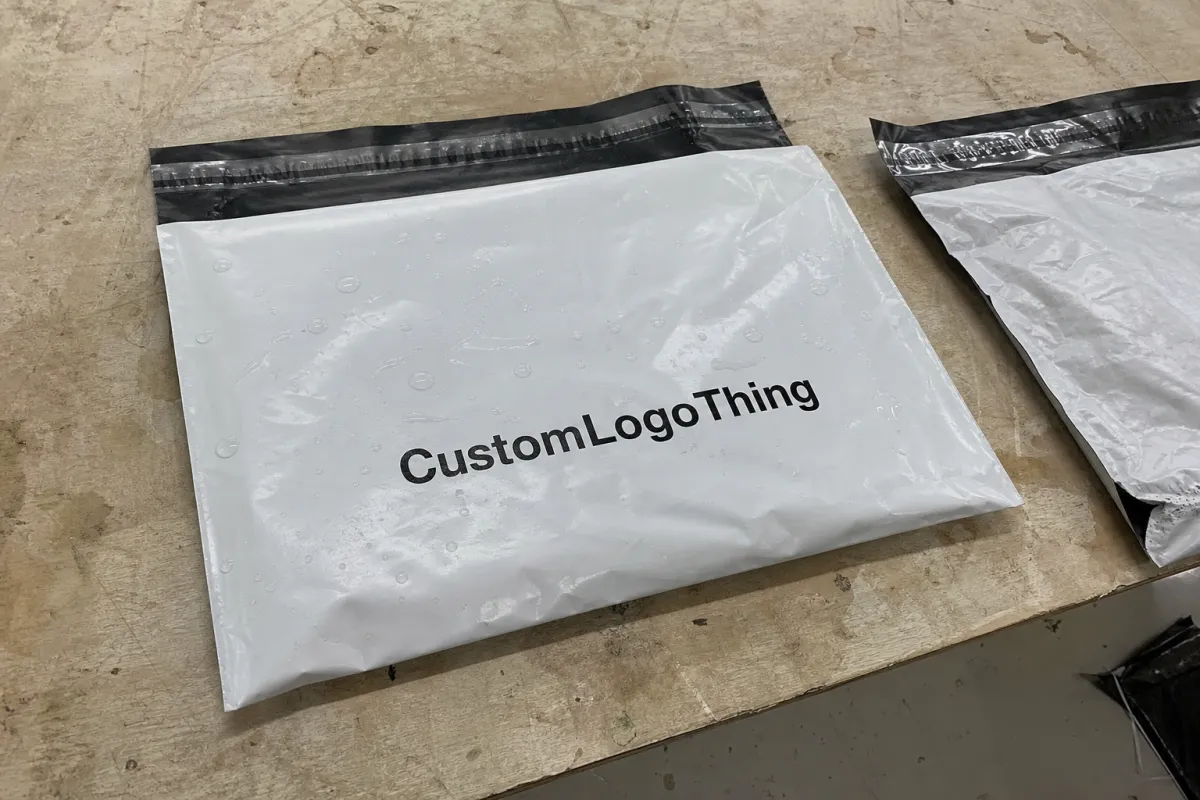
Recurring shipments tend to fail in ordinary ways. A carton sits on a damp dock. A bag gets set down on a wet floor. A courier load is exposed to rain during handoff. None of that looks dramatic, but repeated moisture exposure quickly finds weak film, narrow seals, and closures designed for speed rather than transit abuse.
The term water-resistant usually means the packaging can handle light splash or short contact. Waterproof should mean the bag is built to keep moisture out far more reliably, through stronger film construction and better sealing. That still does not automatically mean submersion. Unless a supplier has documented testing for that condition, it is safer not to assume it. For most subscription programs, the real requirement is simpler: the contents should stay dry through rain, condensation, and the rough handling that happens between warehouse and doorstep.
“If the bag cannot survive a wet loading dock, it is not finished packaging yet.”
The practical consequence is easy to underestimate. A failed mailer does not just cause one replacement order. It creates a chain reaction in the warehouse and in customer support. Teams may need to reprint labels, replace inserts, and rebuild the parcel line while the next dispatch window keeps moving. In a recurring business, consistency is worth as much as the bag itself.
There is also a brand angle that buyers sometimes miss. Subscription packaging is seen every month, which means small failures are repeated until they become the customer’s expectation. When the bag arrives dry, uncrushed, and properly closed, the customer rarely comments. That silence is usually a sign the packaging is doing its job.
Material, seal, and print options for subscription mail-outs
The most common material choices are LDPE and co-extruded film structures. LDPE is flexible, familiar, and easy to seal. It works well for many soft goods and lower-risk mail-outs. Co-ex structures usually add a tougher outer layer or a more controlled sealing layer, which can improve puncture resistance and moisture protection. In practice, the material choice matters, but thickness and seal quality often matter just as much.
For light subscription kits, a film around 60-80 microns can be enough if the contents are soft and the route is straightforward. Once the pack gets heavier, includes multiple components, or carries items with corners and edges, 90-120 microns becomes more common. A thicker film is not automatically better, though. Overspecifying can add cost, make folding harder, and slow the packing line if the bag becomes too stiff to handle comfortably.
Closure style changes how the bag behaves in the warehouse. A self-seal adhesive strip is fast for fulfillment teams and suits most recurring mail-outs. A tamper-evident lip provides a clearer opening signal and is useful when the contents are more valuable or more sensitive. Zipper-style reseal options work better for repeat-use programs or returns, while heat-sealed formats are better when security and moisture protection matter more than convenience. The closure should always be quoted with the bag structure, not treated like an accessory added later.
Print is another place where small choices have outsized effects. One-color logos are often the cleanest and most cost-efficient solution for large recurring runs. Full-surface print can look excellent, especially on opaque film, but it adds setup complexity and can increase lead time. On some films, heavy ink coverage also changes the feel of the bag and may affect how well the adhesive or seal area performs. Buyers who want a polished result without overcomplicating production often do better with a restrained logo, a clear courier panel, and a strong material finish.
Useful options are worth discussing early because they change both usability and cost:
- Tear notches that make opening easier without damaging the contents.
- Courier document pockets for return slips, paperwork, or label separation.
- Opacity levels that hide contents and reduce visual clutter in transit.
- Recycled-content options where the film still meets performance targets.
- Barcode or address panels that stay readable during sorting and delivery.
There is a practical tradeoff with recycled content: it can improve sustainability goals, but it sometimes narrows the processing window or changes haze, seal behavior, or print consistency. That does not make it a poor choice; it simply means the sample should be tested in the same way as the production pack.
For buyers checking terminology and packaging standards, the Institute of Packaging Professionals is a useful industry reference point.
Sizes, thickness, and performance specs buyers should confirm
Before anyone asks for a subscription Waterproof Courier Bags quote, the dimensions need to be pinned down. The three measurements that matter most are internal width, gusset depth, and usable length. Those numbers should reflect the actual packed set, not just the product catalog size. A bag that looks generous on paper can become tight once tissue, inserts, instruction cards, or a boxed item is added.
Buyers should also confirm how the bag will be filled. If the fulfillment team packs quickly, the bag may need a little more tolerance than the product alone suggests. Stress on the seal line is one of the most common failure points, especially when the contents are bulky or the team has to force the closure to make it work. The few extra millimeters you approve at the beginning may save a lot of spoilage later.
Thickness should be matched to the product and the route. A lightweight beauty kit on a short urban delivery route does not need the same film gauge as a mixed apparel bundle moving through multiple sorting hubs. The key question is not only whether the film resists puncture, but whether it also resists stretch in transit. Some bags fail because they tear. Others fail because they elongate, which weakens the seal and lets moisture creep in.
Four checks are worth requesting before final approval:
- Seal integrity under normal filling and closure pressure.
- Drop resistance for parcel handling, conveyor transfer, and stacking.
- Moisture exposure tolerance for rain, damp floors, and condensation.
- Opacity and print visibility so branding still reads clearly in transit.
If the bags will move through standard parcel networks, some teams also ask for testing references tied to ISTA profiles or ASTM D4169. That does not replace real-world use, but it gives the buyer and supplier a shared language for shock, vibration, and compression. It also helps separate marketing claims from actual transit performance.
Sample packs are worth the time. A sample reveals things a spec sheet will not: a zipper that catches, a seal that feels too stiff, a bag that shifts too much on the packing line, or artwork that disappears once the bag is filled. It is better to see those problems in a test pack than in a customer inbox.
For repeat subscription SKUs, a written spec with tolerance ranges is better than a nominal size alone. Even a small variance can matter if the contents are tightly packed. The more repeatable the spec, the easier it is to reorder without revisiting every decision from scratch.
Quote, cost, and MOQ drivers that change unit price
Pricing changes for reasons that are usually easy to trace. The main drivers are bag size, film thickness, print colors, closure type, and order volume. Tooling or plate costs, where applicable, can affect the first order too. A useful subscription waterproof courier bags quote should break those pieces out clearly so the buyer can see what is moving the number.
MOQ shifts with customization. Stock bags normally sit at the lowest entry point. Lightly customized bags, such as a logo on a standard structure, usually need a moderate MOQ. Fully printed custom bags often require the largest run because setup, conversion, and print preparation need to be spread across more units.
| Option | Typical structure | Common MOQ | Indicative unit price | Best fit |
|---|---|---|---|---|
| Stock waterproof courier bag | Opaque LDPE, self-seal, no custom print | 1,000-2,000 | $0.12-$0.22 | Pilot runs and simple replenishment |
| Lightly customized bag | 70-90 micron film, one-color logo, adhesive strip | 3,000-5,000 | $0.18-$0.32 | Established subscription programs |
| Fully printed custom bag | 80-120 micron co-ex film, full-surface artwork | 5,000-10,000 | $0.28-$0.58 | Premium recurring mail-outs |
These figures are directional, not fixed. A wider bag can change film yield. A second print color can move setup cost enough to alter the quote. Freight matters too, as do proofing charges, packaging inserts, and whether the pricing is ex-factory or delivered to your warehouse. A quote that looks lower at first glance can become more expensive once those items are added back in.
For clean comparisons, ask suppliers to show the same data points in the same format:
- Material grade and film construction.
- Exact dimensions and thickness.
- Print coverage and number of colors.
- MOQ and price breaks at higher volumes.
- Freight, proofing, and setup charges shown separately.
That is the fastest way to see landed cost rather than just headline price. It also makes later reorder conversations easier because the cost drivers are already documented.
One more practical point: ask whether the quote assumes normal tolerance on film gauge and seal width. If those tolerances are too loose, two production runs can look similar on paper and behave differently on the line. That kind of drift is hard to spot until a reorder lands.
Production steps, proofing, and lead time for repeat runs
Once the spec is agreed, the process is usually straightforward: review the requirements, confirm artwork, select the material, produce, inspect, and ship. Most delays happen in the same few places. Missing dimensions. Late artwork files. A color correction after proof approval. A change to the closure after the layout has already been locked.
The first order should behave like a controlled trial. It needs to confirm fit, closure feel, print position, and packing speed. If the bag is too slippery, too tight, or too stiff for the team on the line, that should be found before the larger replenishment order goes out. A nice sample that slows down packing is not a win.
Lead time depends on order type. Stock bags move fastest. Lightly customized runs take longer because print setup and approval add steps. Fully printed custom work takes the longest, especially if physical samples or digital proofs are required first. In practice, first orders often land in the 12-20 business day range after proof approval. Repeat replenishment orders may be closer to 7-12 business days if the spec is locked and materials are already available.
That difference matters for subscription programs because replenishment timing is tied to customer cadence. A supplier that can repeat the same construction without re-litigating the spec saves time and reduces risk. The goal is not speed at any cost. The goal is speed with continuity.
Before a larger release, it is sensible to build in time for one of these checks:
- Physical samples for fit and closure testing.
- Digital proofing for artwork layout and copy checks.
- Line trial packs if the fulfillment team has not used that bag style before.
Those checks are cheap compared with a rerun. They also reveal whether the bag behaves well under real packing conditions, not just in a presentation folder.
How to choose a supplier for steady subscription replenishment
The best supplier is not automatically the cheapest one. For recurring programs, the better choice is the one that can hold the spec, communicate clearly, and repeat the result without drifting on dimensions or print placement. In subscription replenishment, consistency matters more than a dramatic promise.
Ask whether the supplier can maintain the approved construction over multiple runs. Ask how they manage material availability. Ask what tolerances they work to for film gauge, seal width, and artwork alignment. Good suppliers are usually comfortable answering those questions because they know those details decide whether the reorder matches the first order.
Support matters as much as price. Subscription volumes rise and fall with seasonality, promotions, and retention campaigns. A supplier that responds quickly when demand changes helps the buyer avoid stockouts and emergency orders. That becomes even more valuable when the brand needs a small artwork edit or a minor sizing adjustment without restarting the entire process.
Quality documents are worth requesting too. A spec sheet, a proof record, and a reorder reference reduce confusion later. If the supplier can trace the approved version clearly, future orders are easier to manage and less likely to drift. That is especially useful when several people touch the file over time.
For programs that include paper inserts, cartons, or branded collateral alongside the courier bag, FSC references can help clarify sourcing on the paper side of the pack. The Forest Stewardship Council remains a useful reference when the subscription bundle extends beyond the mailer itself.
There is also a quiet risk that shows up in repeat procurement: approved samples are forgotten and the reorder is based on a memory rather than a measured spec. A good supplier helps prevent that by keeping version control tight. That one habit can save more money than a lower first-order price.
Durability, clear branding, and controlled cost are the three things that keep a subscription bag program healthy. Every brand wants the attractive version. Fewer need the most complicated one. All of them need a bag that performs the same way in month twelve as it did in month one.
Next steps to request a precise subscription bag quote
If you want a quote that is actually useful, prepare the spec before requesting price. The cleaner the inputs, the faster the supplier can return a number that reflects production reality instead of a rough guess. At minimum, send:
- Target dimensions and any gusset requirement.
- Product weight and whether inserts or boxes are included.
- Closure preference such as self-seal, tamper-evident, or heat seal.
- Print artwork and the number of colors.
- Quantity and the expected reorder pattern.
- Delivery location so freight can be quoted properly.
A sample or spec review before final pricing is also worth requesting. That step confirms the bag is being priced against the right construction rather than a similar-looking product with different film, print, or closure assumptions. Two quotes can sit close together and still hide very different realities.
When comparing offers, check four things first: material, MOQ, lead time, and whether setup or freight is included. Those are usually the items that change the real landed cost. A low unit price can disappear fast if the shipment is small, the proof fee is high, or the bag needs a second approval cycle.
The real purpose of the quote is to match film, seal, print, and lead time to a recurring shipment that has to arrive dry and presentable every month. Price matters. So does the cost of getting it wrong.
Frequently asked questions
What details do I need for a subscription waterproof courier bags quote?
Provide bag size, thickness, closure type, print requirements, quantity, and destination so the quote reflects the real production spec. If the bag needs to hold inserts, boxed items, or mixed subscription contents, include those dimensions too.
How does MOQ affect waterproof courier bag pricing for subscriptions?
Lower quantities usually raise unit cost because setup and conversion costs are spread across fewer bags. Higher repeat volumes generally improve pricing, especially when the structure and artwork are already approved.
Are waterproof courier bags suitable for wet weather and last-mile delivery?
Yes, when the film, seal, and closure are chosen for the shipment conditions rather than only for appearance. They help protect labels, inserts, and soft goods from rain, damp surfaces, and handling during transit.
How long does production usually take after the quote is approved?
Lead time depends on whether the bag is stock, lightly customized, or fully printed, plus how quickly artwork and samples are approved. Repeat orders often move faster because the spec is already confirmed and proofing is reduced.
Can I reorder the same subscription courier bag spec later?
Yes, a good supplier should retain the approved construction, print layout, and dimensions for repeat production. Keeping the same spec makes reorders more consistent and helps avoid changes in fit or unit cost.

