The Wedding Embroidered Beanies material sample guide matters because a beanie can look clean in a flat mockup and still fail once embroidery tension starts working against the knit. That mismatch is common enough to be predictable. For wedding favors, the stakes are higher than a normal branded order: guests feel the fabric, photos reveal texture problems, and one scratchy or warped item can make the whole set look less considered.
The real job is not to find a soft beanie and call it done. It is to find a fabric that holds stitching without puckering, keeps its shape after being worn, and still looks polished enough to sit on a reception table or in a welcome box. A single sample rarely tells the whole story. The safer approach is to compare materials against the same logo, the same thread colors, and the same event use case so the fabric is what changes, not the artwork.
Wedding embroidered beanies material sample guide: what it proves
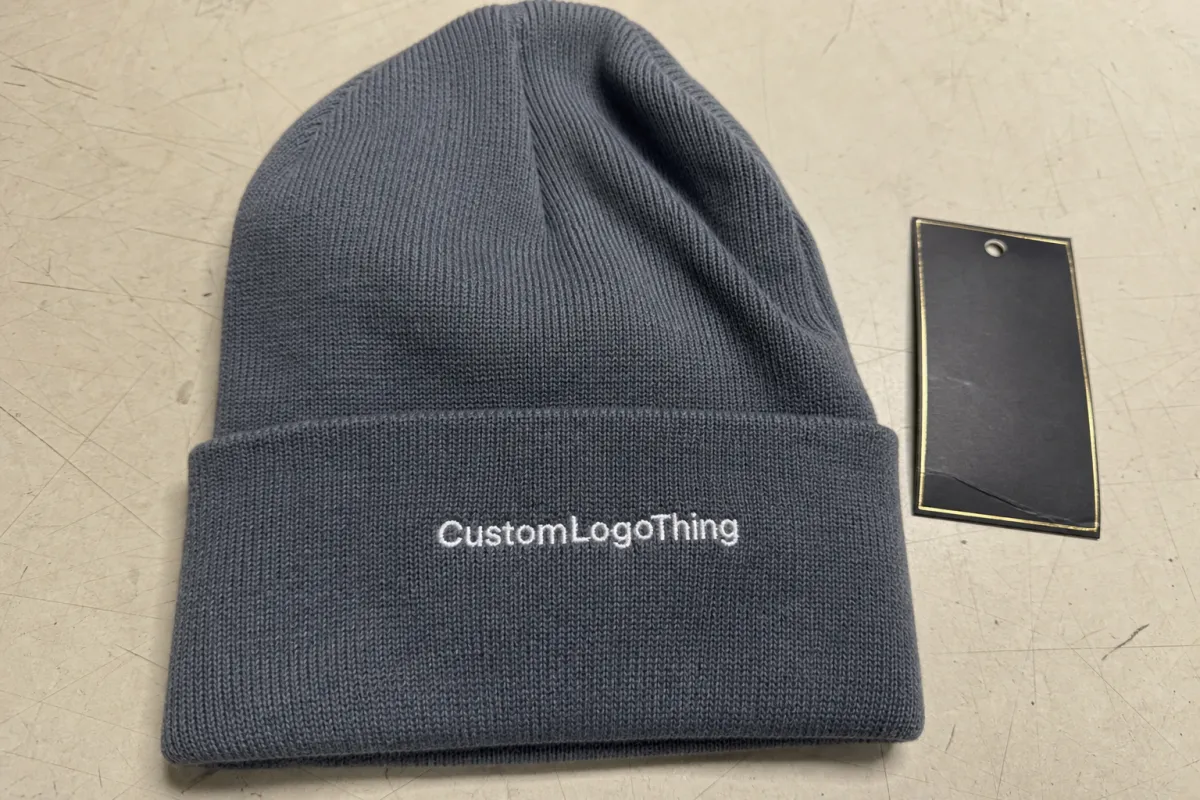
A physical sample answers questions a rendering cannot. You can feel whether the knit is soft or dry, see whether the logo sits flat, and judge whether the color looks refined under actual light rather than screen light. A useful sample reveals handfeel, stretch recovery, stitch clarity, color accuracy, and the way the beanie looks after a few minutes of wear. That last point matters more than most buyers expect, because the product is usually judged while it is on somebody's head, not lying perfectly still on a desk.
Wedding orders are unforgiving in a specific way. People do not compare your beanie to a promotional giveaway from a trade show. They compare it to linen, florals, stationery, candles, and everything else that signals taste. If the cuff twists, the knit looks thin, or the embroidery puckers, the eye goes straight to the defect. That is why the first decision should be about fit and finish, not unit price.
From a buyer's side, the material has to perform two jobs at once. It needs to support embroidery cleanly, and it needs to feel gift-worthy the moment someone picks it up. A sample that only does one of those things is a half-solution, not a product fit.
A strong sample is not the prettiest one in the batch. It is the one that still looks right after stretching, wearing, and a bad-light inspection.
How material sampling works for embroidered beanies
The basic sampling flow is straightforward. A supplier sends a knit swatch or a finished blank beanie, then applies your artwork to the chosen material before bulk production begins. The difference between those two sample types is bigger than it sounds. A swatch tells you about texture, stretch, and recovery. A stitched sample tells you how the logo behaves on the actual knit structure, which is the part that decides whether the final order looks crisp or sloppy.
Good buyers ask for more than one version. A flat fabric card can help with color and handfeel, but it tells you almost nothing about seam placement, crown shape, or how the cuff handles embroidery. A finished prototype is far more useful because it shows the logo from multiple angles, including slightly folded views and off-center views. Wedding photos rarely line up like a product photo, so the sample should survive imperfect angles.
Inspect the sample in the order real life will expose it. First, look for thread sink and puckering around dense sections of the logo. Then check the seams, the crown, and the cuff edge. After that, stretch the beanie lightly and see whether the embroidery distorts. Finally, wear it for a few minutes. If the inside feels itchy or the shape shifts awkwardly, the final run will not magically improve.
Some suppliers offer a material card, a blank finished sample, and a near-production prototype. Ask which one actually matches the final spec. A sample that sits too far from the bulk order is just expensive guessing dressed up as progress.
Key fabric factors that affect stitch quality and comfort
Fabric composition comes first. Acrylic is usually the easier budget choice because it is consistent, color-stable, and widely available across knit types. Wool reads as warmer and more premium, but it can feel scratchier and may be less forgiving if the knit is loose. Blends try to sit between those two ends. None is automatically best. The right answer depends on the season, the setting, and how much the beanie has to carry the visual identity of the event.
Knit gauge and density are the real stitch-quality drivers. A tighter knit usually holds embroidery better because the needle has less room to sink and drag the material out of shape. Loose or open knits can leave gaps around small letters, fine lines, and tight curves. If the artwork is detailed, the fabric has to be stable enough to support it. Otherwise the logo starts losing definition before production even begins.
Stretch recovery is the test that exposes weak material fast. If the beanie does not bounce back after a gentle pull, the embroidery can warp after one wear cycle. That is the kind of flaw that barely registers in a sample room and becomes obvious in a wedding album. A good material should recover after being stretched around the head, removed, folded, and packed back into a bag.
Comfort matters more than many buyers admit. Guests may wear the beanie for hours, especially at an outdoor ceremony, during winter photos, or after sunset when the temperature drops. Rough seams, itchy yarn, and heavy linings can turn a thoughtful favor into something people leave behind. Cuff width, lining, and yarn finish all affect how the logo sits too. A wider cuff gives more room for embroidery and often reads as more substantial, while a thinner cuff can feel lighter but look less structured.
If sustainability is part of the brief, ask about recycled yarn options, FSC-certified hang tags or insert cards, and packaging made from kraft paper or corrugated cardboard. Some buyers also request biodegradable packaging or sleeves with a high share of post-consumer waste. None of that changes the beanie's stitch behavior, but it does shape how the sample is received and whether the presentation matches the event standard.
For transit checks on sample kits or bulk packs, suppliers often use testing references similar to those used in the packaging industry. If you want a public benchmark, review the guidance at ISTA. For wood-fiber packaging and certification language, FSC is the cleaner reference point.
Step-by-step sample review before you approve production
Start with the event brief. A beanie for an outdoor winter ceremony should be judged differently from one for a mild-weather destination reception or a premium welcome gift. Cold-weather events can justify a thicker knit, more loft, and a warmer hand feel. A warmer climate usually calls for a lighter beanie that still looks refined in photos.
Then request two to four candidate materials with the same embroidery file. Comparing different fabrics with different artwork is how approvals go sideways. The logo has to stay constant. Otherwise, you are comparing design changes instead of material behavior.
Review each sample in the same conditions. Use daylight first, then indoor light, then a quick stretch test. If a sample looks clean in bright daylight but shiny, fuzzy, or uneven under event lighting, that matters. The final product will live in real lighting, not a product render.
A small scorecard keeps the discussion from drifting into vague opinions. Rate each sample on comfort, stitch clarity, color match, shape retention, and perceived value. Give each one a score from 1 to 5, then compare totals. It is plain, but it is better than three people saying “this one feels nicer” without explaining what changed.
Finish with a wear test. Put the beanie on, pull it off, and inspect the logo after the knit has stretched. If the embroidery stays sharp and the material recovers cleanly, the sample has earned a second look. If it warps, sags, or creates an awkward fold near the cuff, move on.
| Sample option | Typical sample cost | What it shows | Best use case |
|---|---|---|---|
| Fabric swatch only | $5-$15 | Handfeel, stretch, yarn texture, color base | Early material screening |
| Blank finished beanie | $12-$28 | Shape, cuff width, comfort, recovery | General fit and look review |
| Embroidered prototype | $25-$60 | Stitch clarity, puckering, logo balance | Final approval before bulk order |
Cost, MOQ, and quote factors that change sample pricing
Sample pricing changes for reasons that are easy to miss at first glance. Fiber type matters. Knit density matters. Stitch count matters. The number of thread colors matters too. If the sample includes lining, a special cuff construction, or an oversized logo, the price rises. A prototype costs more than a simple swatch because it requires setup, embroidery labor, and inspection time.
Ask for the quote in separate pieces. You want to see the sample fee, digitizing or setup fee, shipping, and any revision charges on their own lines. Some suppliers credit the sample fee back on the bulk order. Others do not. That difference can make one quote look cheaper up front and more expensive once production starts.
MOQ is another place where buyers get tripped up. A lower MOQ feels flexible, but it often comes with a higher unit cost. Higher minimums usually unlock better pricing per beanie, especially if the knit and embroidery setup stay the same across the run. For wedding favors, that tradeoff is common. A smaller guest count may justify the higher unit price if it prevents overordering and gives you a better material match.
Ask how material changes affect the quote. A softer knit may cost more, but if it reduces complaints, replacements, or awkward last-minute gift swaps, the higher price can be easier to justify. The cheapest sample is not a win if it leads to a bad approval and a wasted order.
One practical rule helps here: compare total landed cost, not just the sample price. If the sample ships in a plain box, fine. If the supplier includes presentation packaging, note whether it is simple kraft paper, printed inserts, recycled mailers, or corrugated cardboard protection. Sometimes a straightforward sample kit tells you more about consistency than a polished sales deck ever will.
Sampling process and timeline for wedding beanies
A typical sampling timeline starts with the brief, then material selection, sample build, internal review, revisions if needed, and final sign-off before mass production. Simple swatches can move fast, sometimes within a few business days if the material is already on hand. Stitched prototypes take longer because they need embroidery setup, thread matching, and actual hands-on inspection.
Lead times are where buyers get burned. If the logo is complicated, the yarn shade is unusual, or the order needs a specific lining, expect more back-and-forth. Artwork revisions slow things down too. So do teams that need five approvals for one cuff color. That is not a manufacturing issue. It is a process issue.
For wedding season, buffer time matters. Rush approvals often create careless mistakes, especially when the couple wants a precise tone or the planner is managing several vendors at once. A hard cutoff helps. Once the final sample is approved, the bulk order should not drift because someone wants a softer cuff or a different backer card.
A realistic planning range for many orders looks like this:
- 3-5 business days for simple blank swatches
- 7-12 business days for stitched prototypes, depending on setup
- 12-20 business days for bulk production after final approval
Those numbers are not universal. They shift with workload, stock, and the number of changes after the first sample. Still, they are a practical frame, and practical is better than optimistic. Optimistic tends to create problems right before a wedding.
Common mistakes to avoid when reviewing samples
Do not choose by color alone. A beanie can match the palette and still feel cheap, itchy, or unbalanced once embroidery is added. The wedding photos will not overlook that, and neither will the guests who actually wear it.
Do not approve from one photo. Screens flatten texture. Lighting shifts color. Phones compress detail. Ask for close-ups, side views, and a worn-sample photo before saying yes. If a supplier cannot show the sample from more than one angle, treat that as a warning sign.
Do not ignore stitch pull and edge distortion. If the logo looks sharp on a flat surface but warps when stretched, the final run will behave the same way. That is not a minor flaw. It is the core performance issue.
Do not forget the end user. An outdoor ceremony may need warmth first. A mild destination wedding may need lighter insulation so the favor feels comfortable rather than heavy. The material has to fit the event, not just the product shot.
Do not skip the repeat-order question. If the mill or yarn lot cannot be reproduced later, the next batch may drift slightly in color, feel, or stretch. That matters if the couple wants extras for family, vendors, or late additions. Reorder consistency belongs in the approval, not after it.
The most expensive sample is the one approved for the wrong reason.
Expert tips and next steps before bulk approval
Keep the embroidery file identical across every sample. That one move removes a lot of noise from the comparison. If the fabric changes and the artwork changes too, you cannot tell which variable caused the difference. Buyers do this more than they realize, then spend time arguing over a result that was never a clean test.
Ask for three views: daylight, indoor event lighting, and a post-stretch look. That trio tells you more than a polished pitch ever will. It also exposes weak spots in the knit structure, which is exactly what you want before signing off on a production run.
Use a short decision matrix. Five filters are enough: comfort, stitch quality, color match, perceived value, and reorder reliability. If a sample misses two of those, drop it. Trying to rescue a weak sample usually ends in a mediocre order and a long email chain nobody needs.
Before sign-off, request a final spec sheet that locks yarn type, knit gauge, thread color, logo size, and cuff placement. If the supplier can confirm packaging details too, that helps. Simple presentation built around recycled materials, FSC-certified inserts, or tidy biodegradable packaging can make the sample feel more intentional without adding much cost. For wedding gifts, presentation is part of the product.
The most practical approach is also the least dramatic: compare finalists side by side, choose the best-performing fabric, and carry the wedding embroidered Beanies Material Sample guide into the bulk order so the production team knows exactly what to match. That is how you avoid the common failure where the sample looked right and the final shipment drifted into “close enough.”
Bottom line: a careful sample process saves money, cuts surprises, and gives you a better beanie for the actual event. If the material cannot support clean embroidery, recover after wear, and still feel comfortable in hand, it is the wrong choice for wedding favors.
What should a wedding beanie material sample include?
It should include at least a fabric swatch or a finished beanie sample, plus the same embroidery file you plan to use in production. Ask for fiber content, knit gauge, color codes, and care notes so you can compare options on the same terms.
How many samples should I request for wedding embroidered beanies?
Three is a strong starting point: one budget option, one premium option, and one close match to your final target spec. If the event is high-visibility or the design is detailed, compare 4 to 5 options so you are not forced into a weak compromise.
Which beanie material works best for embroidered wedding favors?
Tighter knits usually give cleaner embroidery, while softer blends often feel better for all-day wear. Acrylic is usually the budget-friendly choice, wool feels warmer and more premium, and blends sit in the middle.
How much do material samples and quotes usually cost?
Expect separate line items for sampling, digitizing or setup, shipping, and possible revision fees if you change the artwork or fabric. Ask whether any sample cost is credited back on the bulk order, because that can shift the real price a lot.
How long does the wedding beanie sampling process usually take?
Simple material swatches can move quickly, but stitched samples usually take longer because they need embroidery setup and approval. Build extra time for revisions, thread matching, and shipping so you are not approving the final run the week before the wedding.