Buying a beer Cuffed Knit Beanies Material Sample guide sounds simple until the yarn arrives, the cuff folds differently than expected, and a “soft” knit starts reading flimsy in hand. Fiber content only tells part of the story. Once the yarn is formed into a cuffed beanie, details like gauge, tension, steaming, and finishing change how the product actually performs.
For buyers, the sample is less about approval theater and more about risk control. It shows whether the hat stays warm without feeling bulky, whether the cuff holds its shape, whether the logo still reads clearly when the knit stretches, and whether the size works across more than one head shape. Those are the points that matter after the sample stops sitting on a desk and starts moving through stores, giveaways, or customer hands.
“A sample is not a promise of perfection. It is a controlled preview of how the beanie will behave once it leaves the machine.”
Beer Cuffed Knit Beanies Material Sample Basics
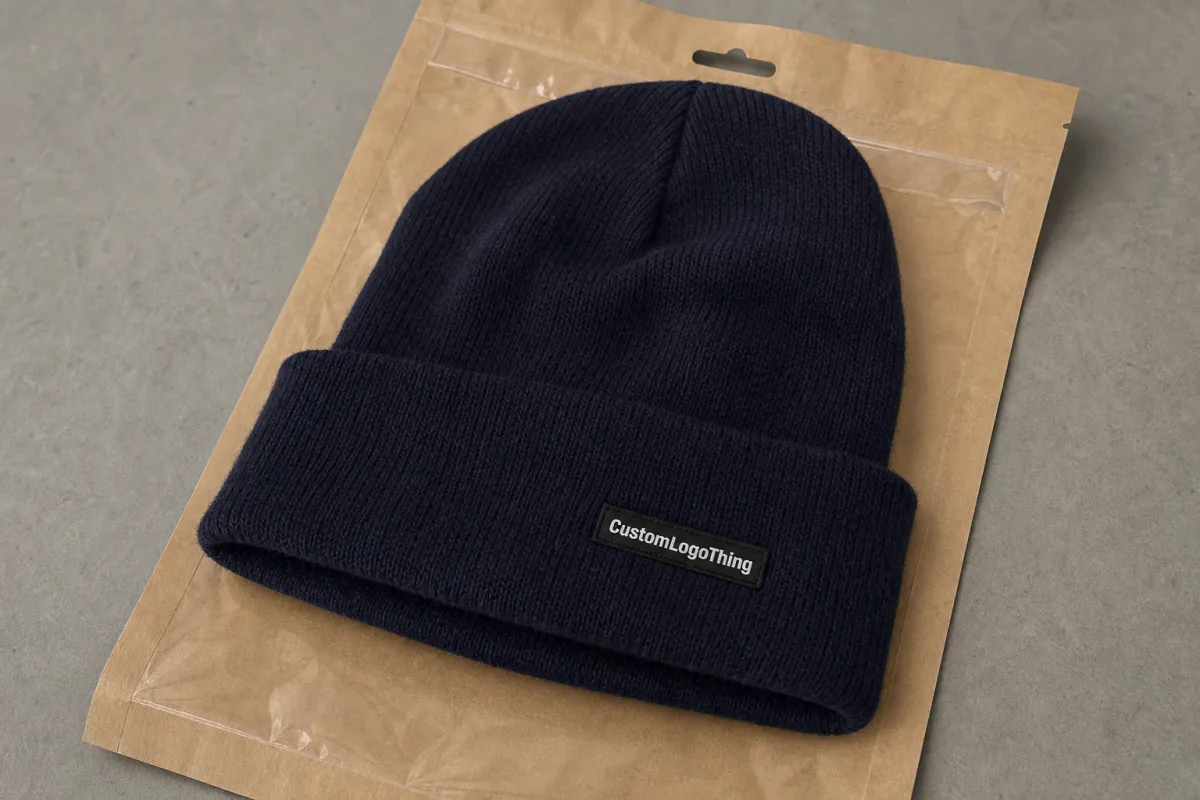
The first mistake buyers make is thinking a sample only proves the yarn. It does not. A proper beer Cuffed Knit Beanies Material Sample guide covers the whole build: fiber blend, stitch structure, cuff height, crown shape, seam finish, stretch recovery, and how the color behaves after steaming or handling. On a cuffed beanie, each of those choices changes the impression fast.
A 100% acrylic yarn can feel springy in one construction and stiff in another. A wool blend may feel premium, but if the knit is too open, the beanie can lose shape faster than a buyer expects. Recycled polyester can be a useful option for a lighter hand and a cleaner sourcing story, yet it sometimes needs tighter quality control on color matching. The sample shows real behavior, not just what the spec sheet claims.
That matters because buyers usually judge beanies on three practical questions: will people wear them, will the branding survive normal use, and will the fit work across a broad audience. Comfort affects wear rate. Branding affects readability. Fit affects return risk, giveaway acceptance, and whether the product feels considered or generic. If a sample misses one of those areas, the bulk order usually inherits the mistake.
It also helps to think of the sample as a version of the production process, not a separate object. If the yarn lot is temporary, the dye is still being matched, or the label style is still under review, the sample may be close rather than exact. That is normal in knit production. The goal is to lock the structure and catch problems early, not to pretend a one-off prototype can stand in for every future unit.
For cuffed beanies, two measurements deserve more attention than they usually get: cuff depth and overall stretch recovery. A cuff that is too shallow can feel unstable and make the logo area look cramped. A cuff that is too deep can overwhelm the face shape or push the hat toward a novelty look. Stretch recovery matters just as much. A beanie can feel comfortable in hand and still bag out after an hour on a head if the knit is under-tensioned.
How the Sampling Process Works for Cuffed Knit Beanies
The sampling process is straightforward in outline and occasionally messy in practice. It begins with a brief: target customer, preferred fit, yarn direction, cuff height, branding method, color target, and budget ceiling. The supplier then chooses a yarn option, sets the gauge, knits a proto sample or strike sample, and sends it for review. That is the basic structure behind a useful beer Cuffed Knit Beanies material sample guide.
Behind that simple sequence, the factory is balancing machine compatibility, stitch count, crown shaping, washing behavior, and trim placement. A thicker cuff can add warmth and structure, but it can also make the hat look heavy on smaller heads. A looser knit can feel softer at first touch, yet it may recover less well after stretching. There is no free lunch here; every choice gives something up.
The gap between sample and bulk is another place where buyers lose trust for no good reason. Different machines, dye lots, steaming pressure, and finishing methods can shift the final handfeel even when the yarn specification stays the same. A sample might be slightly firmer, while bulk production might settle into a softer result after washing and packing. That is manufacturing, not a sign that the factory ignored the brief.
Before approving anything, check the details that tend to create problems later:
- Measurement consistency across crown height, cuff depth, and width
- Seam quality at the join and inside edge
- Elastic recovery after repeated stretching and release
- Logo clarity when the knit surface is under tension
- Color behavior in daylight, indoor light, and after steaming
If the beanie ships with packaging, review that too. A sample folded in kraft paper tissue and packed in corrugated cardboard can arrive looking different from one sent in a plain polybag. Buyers who care about sustainability should ask about recycled materials, FSC certified board, or even biodegradable packaging where the supply chain allows it. Packaging does not change the knit, but it changes first impression and transit damage risk. For transit testing methods, ISTA is a useful reference.
Cost, Pricing, and MOQ Tradeoffs for Sample Runs
Samples are rarely a single line item. Buyers usually pay for the sample itself, yarn sourcing, setup labor, shipping, and sometimes one or more revision rounds. A cheap sample is only cheap if it teaches something useful the first time. A bad sample is expensive because it invites a larger mistake at bulk scale.
Typical sample pricing depends on how far the order sits from standard stock material. A simple swatch or color strike-off may be free or nearly free. A full prototype sample often lands in the $25-$80 range for a basic knit beanie, and it can climb if you need custom yarn, special dye work, sewn patches, or branded trim. Rush fees can add another $15-$40 if the line has to be moved out of queue. Those are not universal numbers, but they are realistic enough to keep expectations grounded.
MOQ changes the math more than many first-time buyers expect. If the factory wants a higher minimum order, the sample becomes part of a bigger decision about inventory risk and unit pricing. A smaller MOQ protects cash flow and makes sense for a seasonal test or a new design. A larger commitment can lower the unit cost later, especially if the yarn is already available and the line can stay on one setup. The sample is where that tradeoff becomes visible instead of theoretical.
| Sample Type | Typical Cost Range | Best For | Risk Level |
|---|---|---|---|
| Yarn swatch / hand sample | $0-$15 | Early color and handfeel checks | Low, but limited insight |
| Prototype beanie sample | $25-$80 | Fit, cuff, and logo evaluation | Moderate |
| Custom-dyed sample | $60-$150+ | Shade matching and brand consistency | Higher, but more accurate |
| Rush sample with revisions | $80-$200+ | Tight launch timelines | Higher cost, lower patience |
Paying for one more sample is usually cheaper than approving the wrong cuff thickness and living with a production run that feels off. That kind of error rarely looks dramatic in procurement. It usually shows up later as slow-moving inventory, more complaints than expected, or a product that does not match the intended price point. A good sample guide helps stop that before it reaches the warehouse.
If sustainability matters, ask what the packaging and shipping materials are made from as well. Some suppliers can ship samples in FSC certified cartons with post-consumer waste content and reduced filler. It will not change the beanie itself, but it can support a cleaner sourcing story for retail or corporate buyers who track recycled inputs. For broader waste and material guidance, the EPA provides a practical baseline.
Timeline, Lead Time, and Production Steps
A realistic timeline keeps the launch from slipping into the last minute. The usual flow is request, sample knit, review, revision if needed, approval, then bulk knitting, finishing, packing, and shipment. A disciplined beer cuffed knit Beanies Material Sample guide gives each step a deadline instead of letting the project drift while everyone waits for “one more small tweak.”
Lead time depends on how standard the material is. If the yarn is in stock and the structure is simple, the first sample may take only a few days to about a week. Add custom yarn, shade matching, embroidery placement changes, or a new patch shape, and the timeline can stretch into multiple weeks. Revisions extend the clock again, especially if the buyer requests changes after the first review instead of responding with a focused list.
The production steps behind the sample usually include:
- Material sourcing and yarn verification
- Test knit or proto knit
- Wash or steam check
- Measurement and stretch review
- Revision if the fit or finish is off
- Final sign-off and spec locking
Most delays are not dramatic. They are small, cumulative, and easy to underestimate. A missing spec. A last-minute color change. Unclear feedback on cuff depth. Freight delays on the sample shipment. None of those sounds serious on its own, but together they can push a launch off schedule. Buyers who leave buffer time usually end up with cleaner approvals than buyers who assume the first sample will be perfect.
This is also the point to document the approved version in a way that production can actually use. Save photos, measure key points, and keep the final spec sheet together with any notes about packaging inserts, hangtags, or fold style. A sample that is not documented well tends to become a story people remember differently, which is a bad foundation for a repeat order.
Step-by-Step: Request, Review, and Approve the Right Sample
Step 1: Send a tight brief. Include target audience, fit preference, yarn direction, cuff height, logo method, budget range, and any packaging requirements. The more specific the brief, the less the factory has to guess.
Step 2: Ask for two or three sample options if the direction is still open. One softer version and one firmer version makes the tradeoff visible. That is more useful than staring at one “pretty good” sample and hoping it answers every question. A proper beer cuffed knit Beanies Material Sample guide is built around comparison, not blind approval.
Step 3: Review the sample against a checklist, not a feeling. Check stretch recovery, comfort, cuff stability, color match, seam finish, and whether the beanie holds shape after wear testing. Try it on a few head sizes if possible. What feels fine on one person may sit too tight on another or slide down in a way that makes the cuff look wrong.
Step 4: Approve in writing only after the factory records the locked spec sheet. If the yarn blend, gauge, and cuff height are not written down, the approval is still soft. That is how “close enough” turns into a production disagreement later.
A practical review checklist looks like this:
- Does the knit feel warm without feeling dense or heavy?
- Does the cuff keep its fold after stretching?
- Does the logo stay readable on the knit surface?
- Does the shape recover after 30 minutes of wear?
- Do the measurements stay within the agreed tolerance?
For retail or corporate projects, ask for one final pre-production photo if color or trim placement is critical. A shifted patch, an incorrect fold, or a yarn substitution is easier to catch before bulk than after hundreds of units are already in motion. That is not being fussy. It is basic production control.
Use tolerances that match the product. For example, a cuff depth variation of a few millimeters may be harmless, while a major change in stretch or crown height can alter fit enough to matter. The same logic applies to weight. A beanie that is supposed to sit in a light casual category should not quietly creep into a heavier winter-weight profile unless that change was intentional. Small differences on paper can create a different retail story on the shelf.
Common Mistakes When Judging Beanie Yarn and Trim Samples
The biggest mistake is judging by photos or video alone. Knit texture does not translate well on screen. Neither does cuff density. A beanie can look plush online and feel thin in hand, or look plain in a quick image and turn out comfortably substantial. If you are using a beer cuffed knit beanies material sample guide properly, the physical sample belongs on the table.
Another common miss is approving before wash testing. Shrinkage, pilling, and shape loss often show up after the first cleaning, not during the first five minutes of wear. If the beanie is meant for repeated use, ask how it behaves after wash or steam exposure. A good first impression does not always survive practical use.
Vague feedback creates avoidable loops. “Make it better” does not help a factory adjust the product. Say softer handfeel, tighter cuff, less slouch, higher crown, better logo visibility, or more spring in the knit. Specific feedback produces specific corrections. Anything else risks another sample that still misses the real issue.
Do not skip fit tests across multiple head sizes. A beanie that looks great on one model may sit awkwardly on a larger head or slide too far down on a smaller one. In practice, a cuffed knit beanie should feel secure without leaving a hard ring across the forehead. If it does not, the sample is giving useful information and should not be ignored.
Packaging condition can also distort judgment. A hat compressed too hard in transit may arrive with a temporary shape issue that is not actually a knit problem. Good sample shipping should protect the item with sensible void fill, not crush it into submission. Functional packaging can be simple: corrugated cardboard, restrained filler, and materials that can be recycled after opening. Fancy is optional. Clean and protective is not.
One more practical note: trim can change the read of the entire beanie. A woven label that looks elegant on a flat spec sheet may sit awkwardly on a thick cuff. Embroidery can pucker if the knit surface is too loose. A rubber patch may look modern but feel out of place on a classic winter style. Those details are easy to miss until the sample is in hand.
Expert Tips for Turning One Approved Sample Into a Clean Order
Once the sample is approved, lock everything. Not mostly. Not “basically.” Lock the exact yarn blend, gauge, cuff height, washing spec, label placement, and packing method in one master sheet. If production has to guess what you meant, it will usually guess toward speed or convenience, and that is rarely the direction the buyer wanted.
Ask for a final reference point before bulk starts if the product is sensitive to color, texture, or trim placement. A pre-production photo can catch a shifted patch, an incorrect fold, or a yarn substitution before hundreds or thousands of hats are made. For a beer cuffed knit beanies material sample guide, this is the step that turns approval into control.
Build in a backup option for yarn or dye if the first choice is likely to slow the order. A second approved close match gives the supplier room to move without forcing a redesign. That small concession can protect the schedule without changing the product direction in any meaningful way.
If sustainability matters to your customer, document it now rather than trying to explain it later. Note whether packaging uses FSC certified board, post-consumer waste content, or other recycled materials. If unnecessary plastic can be avoided and the shipping pack stays simple, the sourcing story reads better. Nobody buys a beanie because of the carton, but many buyers notice when the pack feels thoughtful instead of careless.
Before releasing the order, send the signed spec, sample photos, and correction notes together. One clean packet beats three scattered emails and a half-remembered call. Then use the approved sample as the reference for the next round so the second order behaves like a repeat, not a fresh experiment. That is where sample discipline pays for itself: fewer surprises, cleaner approvals, and less money tied up in the wrong version of a good idea.
There is also a quiet benefit to being strict at this stage. Suppliers tend to respond better to clear constraints than to vague enthusiasm. A project that says exactly what passed and what failed moves faster in production than a project that keeps re-opening settled decisions. That is true for yarn, but it is just as true for trim, packaging, and the final fold method.
FAQ
What should I check in a beer cuffed knit beanies material sample?
Check handfeel, stretch recovery, cuff stability, seam quality, and whether the beanie keeps its shape after wear. Compare it against the actual use case, not just a nice photo. If the beanie will be washed and reused, test for pilling, shrinkage, and color change too.
How many beer cuffed knit beanies samples do I need before ordering bulk?
One sample can work if the spec is already locked and the supplier is familiar. Two to three samples are smarter when you are deciding between yarn blends, cuff heights, or fit profiles. If branding matters, ask for at least one physical sample plus a backup color or trim option.
How much do beer cuffed knit beanies material samples usually cost?
Basic swatches may be free or low cost, while full prototype samples usually carry a setup and labor fee. Shipping and rush production can add more than the sample itself, so ask for the full landed cost upfront. Some suppliers credit the sample fee back on bulk orders, but only if that is written down.
How long does the sample and approval process usually take?
Simple samples with in-stock yarn can move in a few days to about a week. Custom yarn, special dye matching, or revision rounds can stretch the process into multiple weeks. The fastest way to lose time is vague feedback, so send specific changes in one clear reply.
Can the final production beanie match the sample exactly?
Usually close, not perfect, because bulk knit and finishing conditions are never identical to a one-off sample. You get the closest match when the yarn, gauge, cuff spec, and wash process are all frozen before production. Ask for written tolerances on size, color, and texture so everyone agrees on what match actually means.
If you are buying with a proper beer cuffed knit beanies material sample guide mindset, the sample stops being a decorative extra and becomes a filter. That filter keeps weak fit, unstable trim, and avoidable production drift out of the order before they affect margin, timing, or the product customers actually receive.


