Buying a candle Recycled Poly Mailers Material Sample guide is really about risk control. The sample shows whether the mailer can protect a candle box, survive handling, and still look clean enough to match the brand. For fragrance sellers, that matters because the mailer is part of the product experience, not just a shipping shell. A sample tells you whether the size, closure, recycled film, and print all work together before you commit to a full order.
If you are also comparing Custom Packaging Products or narrower-format Custom Poly Mailers, the sample stage is where you catch problems early. A wrong spec on paper is cheap to fix. A wrong spec in production is where budget and inventory start to hurt.
What a candle recycled poly mailers material sample tells you fast
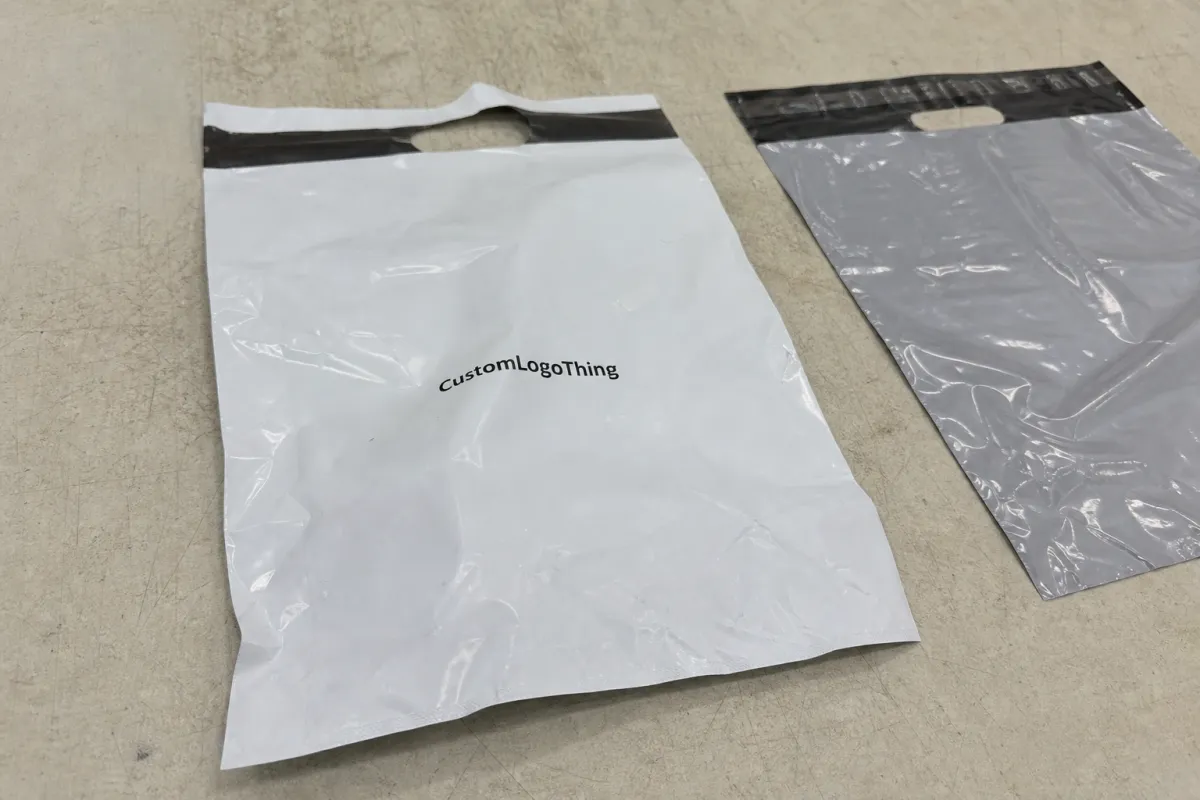
A good sample gives you a quick reality check. Photos and mockups can hide weak seams, thin film, soft opacity, or print that looks sharper online than in hand. Candle shipments are also more demanding than a flat apparel order because the mailer may need to hold a rigid box, tissue, inserts, or a glass jar without looking overstretched.
The sample should show more than color and logo placement. It should tell you how the film feels, whether the recycled blend still has enough stretch, and whether the closure seals with confidence. If the material feels brittle, flimsy, or overly slick, you will notice it right away. If the print scuffs against a cardboard edge, that matters just as much.
Judge the sample with the actual packed item inside, not with guesses. A mailer that looks fine empty can fail once a candle box presses against the seam or pushes against the closure. The point of the sample is to prove fit under real conditions.
If the sample cannot survive your own handling test, the full order will not magically improve just because the quantity got bigger.
That is the practical value here. The sample tells you whether the packaging supports the brand image you are paying for. Premium candle brands usually need a calm, polished presentation, not a mailer that looks thin, noisy, or overworked.
How recycled poly mailer samples are built and reviewed
Recycled Poly Mailers usually start with a film structure that blends recycled material into the base layer or layers. Buyers often focus on the recycled content claim, which is fair, but the real question is how the film behaves. Does it seal cleanly? Does it tear too easily? Does the print sit well on the surface? A recycled-content mailer can work very well, but the blend and processing need to be controlled.
The factory flow is usually simple: confirm size, choose film, set artwork, build the sample, inspect the surface, then ship it. What matters is whether the sample is production-like. A mockup can look right while using a different thickness, a different adhesive strip, or a looser print registration than the final run.
When the sample arrives, focus on the details that affect use:
- Gusset shape and how it opens around the candle box
- Edge welds and whether the seams feel consistent end to end
- Closure strip performance if it is resealable
- Printed surface after folding, rubbing, and stacking
- Opacity if the product shape should stay hidden
Recycled mailers can vary more than virgin film, so consistency matters. One sample that looks great and a final run that drifts on thickness or print registration is not a win. It is just an expensive surprise. If a supplier cannot explain the recycled content claim clearly, ask for the spec sheet. For broader packaging comparisons, it also helps to look at kraft paper mailers, FSC certified cartons, or biodegradable packaging when the use case actually fits.
For sourcing context, standards groups like ISTA help define transit testing expectations, while the FSC framework is useful when you are pairing recycled mailers with certified paperboard inserts or outer cartons. The point is not to collect acronyms. It is to buy packaging that holds up in the real world.
Cost, MOQ, and quote drivers buyers should compare
Quotes for custom mailers can look simple until you break them down. The main price drivers are size, film thickness, recycled content target, print coverage, finish, and closure style. A plain sample is cheap compared with a fully printed run. A mailer with dense artwork, multiple colors, or a tighter recycled-content target will usually cost more because the supplier has more to control.
MOQ changes the math. Smaller runs are easier to approve after sampling, but the unit price is higher. Larger orders lower the per-piece cost, but they also increase inventory risk if the size or branding is off. A sample should be tied to the actual order plan, not treated as a standalone exercise.
Watch for line items that quietly push the quote up:
- Plate or setup charges for printed artwork
- Sampling fees for one-off sample builds
- Freight for cross-border shipping
- Color matching if your brand needs a specific shade
- Special closures like resealable strips or extra adhesives
Compare the quote as a landed number, not just a unit price. If the sample ships slowly, if artwork revisions take extra rounds, or if international freight is messy, the cheapest quote stops being cheap. Ask for everything in writing.
| Option | Typical use | What the sample shows | Typical cost signal |
|---|---|---|---|
| Plain recycled poly mailer | Basic shipping protection | Film feel, seal strength, size fit | Lowest sample and production cost |
| Printed recycled poly mailer | Brand-forward candle shipping | Ink clarity, registration, scuff resistance | Moderate setup cost, higher run value |
| Higher recycled-content spec | Brands prioritizing recycled materials | Consistency, seal quality, film stability | Often higher due to sourcing control |
| Mailer plus inner paperboard | Fragile candle sets or gift packs | Load behavior, fit, crush resistance | Higher landed cost, better protection |
Production process and lead time from sample to shipment
The production path is usually straightforward, but the brief has to be specific. It starts with size and artwork, then the factory chooses a film structure, prepares the sample, waits for feedback, revises if needed, and only then moves into the final run. After approval, the line moves to production, quality checks, packing, and shipment.
For timing, use ranges. A basic sample may take a few business days. A custom printed sample often takes one to two weeks depending on artwork and film availability. Full production may take roughly 12 to 20 business days after approval, but that can shift with order size, print coverage, and seasonality. Freight adds another variable.
The delays I see most often are usually avoidable:
- Artwork was never fully finalized.
- Size specs left too much room for interpretation.
- Recycled content claims changed after the sample was built.
- Someone tested the candle in the mailer only after approval was already close.
If the supplier cannot give you the current lead time in writing, do not treat a phone estimate like a promise. Treat it as a working estimate. For brands sourcing across multiple formats, this is also the point to align the mailer with the rest of the pack-out: kraft paper inserts, outer boxes, tissue, labels, and any shipper trays. A candle mailer is part of a system.
Step-by-step sample review that protects the final order
Start with the actual use case. How heavy is the candle? What is the outer box size? Is the mailer protecting the product, branding the shipment, or both? If you do not define the job, you can easily judge the sample on the wrong criteria and waste a round.
I like a simple scorecard. It keeps the review focused:
- Print quality
- Seal integrity
- Tactile feel
- Opacity
- Size fit
- Transit durability
- Cost fit
Then test it like a buyer, not like a designer. Pack the real candle. Drop it. Stack it. Rub the print against another surface. Close it twice. Check the seams after the load settles. If the mailer is supposed to handle warehouse friction, it needs to survive ordinary handling without looking tired.
Compare at least two options if you can. One sample tells you little about whether there is a better spec available. Two or three samples make weak points obvious. This is where the candle Recycled Poly Mailers Material Sample guide earns its keep because it turns approval from guesswork into evidence.
The best sample is not the prettiest one. It is the one that fits the product, survives handling, and still makes financial sense when the full order lands.
Approve only after the sample, quote, and lead time all align. If one of those three is off, you do not have a finished spec. You have a draft with a shipping label on it. For buyers who want a cleaner sourcing picture, make sure the recycled claim, print spec, and final pack-out are all speaking the same language before you release the order.
Common mistakes that waste sample runs and reorder budget
The biggest mistake is judging by appearance only. A glossy sample can hide weak seams, poor recycled-content consistency, or a film that feels thinner than it should. The second mistake is skipping real-product testing. That is how buyers discover the mailer is too small after the artwork is approved and the quote is locked.
Another problem is treating photos as proof. They are not. Photos are marketing. The physical sample in your hand under normal packing conditions is the only test that matters. If the printed surface scratches against a box edge, or if the seal opens under a little stress, the sample failed even if the mockup looked perfect.
Print tolerances matter too. Candle brands usually depend on a clean, polished look. If color drifts, type softens, or the logo lands off-center, the package stops feeling premium. That is especially true when the mailer carries most of the visual load and the outer shipper stays plain.
The final mistake is rushing approval. Once you sign off, changing size, film, or print often means paying twice: once for the bad spec and once for the corrected one. If the sample is not right, reject it early and ask for a revised build.
One more thing: recycled does not automatically mean better, and it does not mean biodegradable packaging. If sustainability is part of the pitch, define the claim carefully. Recycled content, post-consumer waste, and end-of-life behavior are not interchangeable, and buyers get into trouble when they use those terms as if they were the same.
Expert tips and next steps for locking the right spec
Ask for the material spec sheet before you green-light anything. You want the recycled content claim, thickness range, seal method, and print method in writing. If the supplier hesitates, that is useful information.
Only order two or three sample variants if the differences are real. Different thicknesses, different recycled-content targets, different closures. Not three nearly identical versions just because the project needs activity. The goal is to learn something, not generate extra paperwork.
Document what passed and what failed. Keep notes on fit, seal, scuff resistance, print clarity, and cost. A good sampling process makes the quote stage easier because you are comparing evidence, not guessing. That is a calmer way to buy packaging.
Match approval to the calendar. If the next reorder window is close, confirm how much inventory you need before the current stock dips. That simple step prevents the classic gap where everyone approves late and then acts surprised when the warehouse is empty.
For candle brands that also buy corrugated cardboard shippers, kraft paper inserts, or FSC certified carton components, the mailer spec should sit inside the full packaging system. The outer shipper, the insert, and the mailer should all support the same product weight and unboxing experience. Otherwise you get three decent parts that fail as a set.
My practical advice: test the sample, compare the quote, confirm lead time, then move to the full order using the candle Recycled Poly Mailers Material Sample guide as the standard. That is how you avoid vague approvals and buy packaging that actually does the job.
Frequently Asked Questions
How do I compare candle recycled poly mailer material samples side by side?
Use the same packed candle, the same handling test, and the same scoring sheet for every sample. Compare seal strength, print clarity, opacity, and how each sample feels after folding and rubbing. Track which option gives the best mix of protection, branding, and landed cost.
What should a candle recycled poly mailers material sample include?
It should match the proposed size, thickness, closure style, and print layout as closely as possible. Ask for the stated recycled content, film structure, and any special finish in writing. If the sample is only a mockup, confirm what will change in production.
How much should a recycled poly mailer sample cost?
Sample pricing often depends on size, print complexity, and whether the supplier is charging setup or freight separately. Expect the sample to cost more than the final per-unit rate would suggest, because one-off work is never the bargain people imagine. Compare the sample cost against the value of avoiding a bad production run.
What is a normal lead time for candle recycled poly mailer samples?
Simple samples can move in a few days, while custom printed versions usually take longer. Shipping method and artwork approval can add time even after the sample is built. Get the current lead time in writing before you commit to a launch schedule.
What are the most common reasons a sample gets rejected?
Weak seams, poor print quality, wrong size, or a film that feels too thin are the usual suspects. Some samples also fail because they do not hold up under real packing, stacking, or transit tests. If the sample cannot protect the candle and support the brand look, reject it early.

