wedding Ribbed Winter Beanies material sample guide is the fastest way to turn a nice-looking concept into a product that actually holds up in hand. A ribbed beanie can look soft, elegant, and camera-ready in a mockup, then feel too loose, too dense, or too scratchy once it is stretched, folded, and worn for a few hours. For wedding favors, bridal party gifts, and winter event merch, the sample has to prove more than color. It needs to prove the yarn, knit density, cuff recovery, and decoration all work together.
That matters because a beanie for a winter wedding is judged in layers. Guests see it in a gift box, pull it over their ears for outdoor photos, and then stuff it back into a bag or coat pocket. If the cuff rolls awkwardly or the logo puckers after handling, the item loses polish quickly. A sample is the first real test of whether the product can survive that sequence without looking cheap.
For buyers, the practical questions are usually blunt: does it feel premium, will it hold shape in transit, and does the shade still look refined under indoor lighting and gray winter daylight? Those are the questions that separate a decent concept from a repeatable order.
Use the guide below to compare fiber content, knit gauge, handfeel, trim, decoration, packaging, pricing, and lead time before you lock production.
What a Wedding Ribbed Winter Beanies Material Sample Guide Reveals
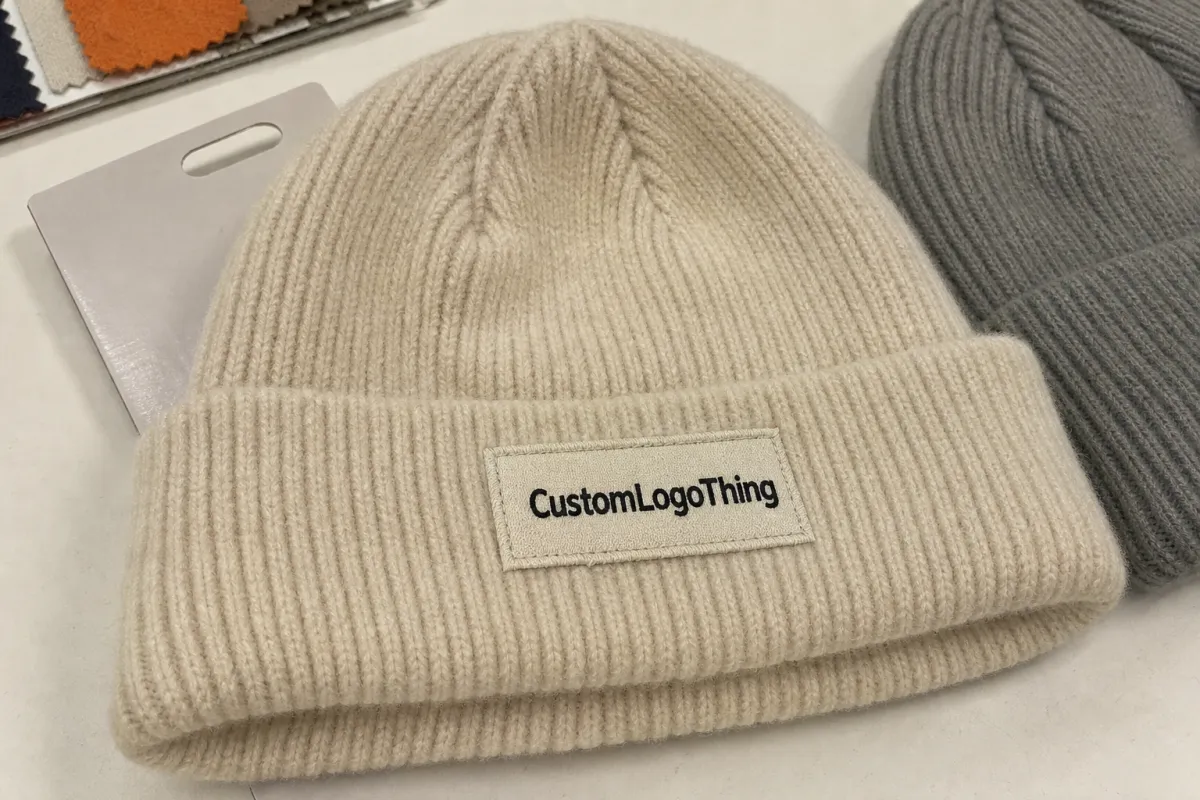
The first surprise is usually tactile. A ribbed knit that looks plush on screen may feel firmer in person because the yarn is spun tightly or the rib depth is shallow. Another sample may feel soft immediately, but relax too much after a short wear test and lose the crisp profile buyers want for a formal event favor.
A proper sample shows the whole system, not just the color. You are evaluating fiber content, stitch structure, cuff recovery, and the way decoration sits on top of the knit. That combination matters in winter settings because the beanie is often worn outside, removed indoors, then folded into packaging again. If the cuff droops or the logo warps, the item stops feeling intentional.
A useful sample review should answer specific questions:
- How much stretch does the rib allow before it starts to distort?
- Does the beanie rebound after a wear test, or does it stay baggy?
- Is the handfeel warm and comfortable, or dry and utilitarian?
- Do the label, seam, and trim make the piece feel giftable?
- Does the sample still look balanced after folding and refolding?
For wedding and event buyers, those details affect photography, presentation, and shipping performance. A beanie that looks fine on a table can look very different once it is packed with tissue, inserted into a rigid sleeve, or stacked in a corrugated shipper. The sample should be reviewed inside the final packaging concept, not only as a loose knit.
If the sample only looks good when untouched, it is not ready for approval. Real approval means the beanie still looks deliberate after stretching, folding, and a quick wear test.
Yarn, Rib Structure, and Finish: What to Compare
Fiber choice sets the baseline. Acrylic is common for budget-conscious winter beanies because it is light, easy to knit, and usually soft enough for broad comfort. Polyester can improve durability and shape retention, especially when the buyer wants a smoother, more technical feel. Wool blends offer better warmth and a richer handfeel, but they usually require tighter sourcing control and a higher budget. Cotton-rich blends can feel familiar and breathable, though they often need a denser knit to deliver real winter performance.
There is no universal best yarn. The right choice depends on how the beanies will be used. A wedding favor worn for a few outdoor photos has different requirements than a branded giveaway for a December market or a retail-ready seasonal bundle. If the event will be photographed heavily, matte yarn usually reads cleaner than shiny yarn. If the order will ship in bulk, a tighter-spun construction often resists snagging better.
Rib structure matters just as much. A deeper rib with moderate gauge usually creates better vertical definition and stronger recovery. A looser knit can feel softer at first, but it may look less tailored and lose shape faster. Buyers often focus on the front view and forget the inside seam and crown finish. That is a common mistake, because rough joining, uneven seaming, or a sloppy cuff edge can undermine an otherwise polished product.
Finish changes perceived value quickly. Brushed yarns feel warmer and more seasonal, but they can fuzz more easily. Heathered and marled yarns hide small tension shifts and can look richer in photos. Solid colors feel cleaner when the branding needs a sharp background. For wedding sets, the finish should match the event tone instead of competing with it.
Sample review should happen under more than one light source. Check daylight, indoor warm light, and the sort of lighting the venue actually uses. Then pull the cuff gently several times and watch how the knit returns. If the sample twists, pills quickly, or loses definition after a few stretches, that is useful information. It means the construction needs another pass before mass production.
Sample Process and Lead Time From Request to Approval
A clean sampling process usually follows a predictable path. First, the buyer shares the use case, artwork, target quantity, and preferred feel. Then the supplier confirms the base knit, available yarn options, and whether the decoration method needs special setup. After that comes the physical sample, which should be judged against the actual order, not a vague mood board in someone's head.
There are three sample types worth separating. A stock sample shows a ready-made or near-ready base so you can judge knit structure and handfeel. A yarn match or lab dip helps lock color when the shade has to sit near a wedding palette or event theme. A pre-production sample is the most important one, because it reflects the real construction, label, and decoration method that will run in bulk.
Lead time depends on revision count, yarn availability, and decoration complexity. If the base knit is already in stock, a simple sample may move within about a week. If the project needs custom knitting, label changes, or embroidery digitizing and test runs, 10-15 business days is more realistic before approval. Shipping can add more time, and international transit often matters as much as production when the event date is fixed.
That is why the schedule should be part of the sample brief from the start. Ask for a dated sample timeline, a revision policy, and a clear approval checkpoint. If those three items are not written down, decisions drift and the order can lose a week without anyone noticing until it is too late.
It also helps to separate what must be approved from what can stay flexible.
- Must approve: fiber blend, rib structure, color target, logo placement, cuff behavior.
- Can stay flexible: tag stock, carton print, insert wording, outer shipper configuration.
That division keeps the team focused on the parts that actually change the finished beanie. It also makes the approval record stronger if there is ever a question about what was promised.
Wedding Beanie Cost, Pricing, MOQ, and Quote Variables
Price starts with the yarn, but it never ends there. Knit complexity, color matching, decoration method, label type, packaging, and freight all affect the final number. A simple ribbed acrylic beanie with a woven label will usually land in a very different range than a wool-blend version with embroidery, Custom Hang Tags, and a presentation box.
MOQ matters because setup costs get spread across fewer pieces on smaller orders. That is why low-volume wedding orders often look expensive per unit even when the product itself is straightforward. Sampling, color setup, knitting time, digitizing, and finishing labor do not disappear just because the run is small.
Ask for a quote that separates the components instead of hiding them inside one number. A clear quote should show sample charges, unit price, setup fees, decoration costs, packaging costs, freight, and any rush or revision costs. That structure makes supplier comparison much cleaner, because one quote may include only the beanie while another includes the beanie, label, tag, and package.
| Option | Typical MOQ | Typical Unit Range | Best For | Watchouts |
|---|---|---|---|---|
| Stock acrylic ribbed beanie | 100-300 pieces | $2.20-$3.80 | Budget-friendly wedding favors and fast-turn gifting | Limited color control and a less premium handfeel |
| Acrylic or polyester blend with woven label | 300-500 pieces | $3.20-$5.50 | Branded winter events and polished bridal party gifts | Label placement and cuff stretch need careful review |
| Wool blend with embroidery | 300-500 pieces | $5.80-$9.50 | Premium seasonal gifting and formal presentation sets | Higher cost, more texture variation, and tighter sampling control |
| Custom knit with packaging set | 500+ pieces | $7.50-$12.00+ | Retail-style launches and branded wedding bundles | Longer lead time and more approval points |
Small order details can move the quote more than people expect. Paired sizing, special color coordination with bridesmaid dresses or event decor, and premium packaging all add labor. If the presentation matters, ask what the box or sleeve is made from. A sturdy insert, recycled material content, and FSC certified paper stock usually cost a little more than plain packaging, but they also make the item feel planned instead of improvised.
For shipping protection, I think in terms of presentation and transit performance together. A beanie can pack neatly with tissue inside a corrugated carton, but if the stack height is wrong or the carton is too soft, the cuffs flatten and the shape changes. If the order is going direct to guests or retail, ask whether the supplier can use recycled content or biodegradable outer packaging, then confirm the exact material spec rather than accepting a vague sustainability claim.
For packaging test logic, the International Safe Transit Association is a useful reference point: ISTA packaging test standards.
Step-by-Step Material Sample Checklist Before You Order
A solid wedding Ribbed Winter Beanies Material Sample guide becomes more useful when it turns into a working checklist. This is the order I would use.
- Define the use case. Say whether the beanies will be worn only for photos, used outdoors for part of the event, or given as winter gifts. That changes the needed warmth, stretch, and softness.
- Request two or three options. Side-by-side comparison reveals handfeel and structure faster than reviewing samples one at a time. Buyers usually spot the weakest option almost immediately.
- Test stretch and return. Pull the cuff several times, wear it briefly, and watch whether the rib snaps back cleanly. If the crown collapses or the cuff waves, the knit is too loose for a polished finish.
- Check decoration compatibility. Embroidery, woven labels, patches, and print all behave differently on ribbed knit. A design that looks centered on a flat sample can shift once the fabric stretches on the head.
- Document the approved version. Record color, dimensions, logo position, label size, packaging style, and care expectations. That becomes the production reference.
The packaging layer deserves its own review. If the beanies will be given in sets, ask for the carton layout and the inner wrap method. Kraft paper creates a calm, natural presentation. A cleaner branded sleeve can work better for a more formal look. If the supplier offers FSC certified paper, confirm the exact certification details; if they mention recycled materials or post-consumer waste content, ask for the percentage instead of treating it as a slogan.
In practice, the strongest samples answer boring questions clearly. How wide is the cuff? How many centimeters does it stretch before it starts to distort? Does the label sit flat after folding? Those details are not glamorous, but they keep the final order close to the approved sample.
Common Sampling Mistakes That Distort the Final Beanie
The most common mistake is approving from a photo alone. Knit texture does not translate cleanly on screen, and yarn sheen can make one sample look richer than it really is. A beanie that seems plush in a mockup may arrive thinner, tighter, or less refined than expected.
Another frequent problem is skipping the wear test. A flat sample can hide issues that show up only on the head. If the beanie feels itchy at the cuff, rides too high, or loses shape after a few minutes, that problem will get worse in bulk. Wedding guests will not think about gauge or fiber content; they will just remember discomfort.
Dye lot variation can also cause trouble. Even a good supplier may see small shifts between sample and production, especially with heathered colors, dark shades, or blends that absorb dye unevenly. The simplest fix is to approve with a physical swatch under more than one light source and keep a written color reference on file.
Decoration is another area where buyers get surprised. Embroidery can look crisp on a loose beanie, then pucker once the cuff is stretched. Patches may sit beautifully on a flat sample but feel visually heavy once the knit relaxes. That is why the decoration method needs to be judged on the exact knit that will be used in production, not on a stand-in.
Packaging can distort expectations too. A beanie that feels modest on its own can look premium in a neat presentation box, while the same item can feel underwhelming if it is dropped into a thin polybag. If the event is formal, packaging is part of the product. It should be approved with the same care as the beanie itself.
Good sample review is not about finding perfection. It is about finding a version that can be repeated in bulk without changing fit, feel, or presentation.
Next Steps After Sample Approval and Final Spec Lock
Once the sample is approved, turn the notes into a final spec sheet. Include yarn blend, rib count, dimensions, cuff height, label position, decoration method, and the approved color reference. The more exact the spec, the less room there is for substitutions later.
If the order is tied to a fixed wedding date or a seasonal launch, ask for a backup material choice. Supply chains change. A small delay in yarn or label stock can force an awkward decision if there is no second option already aligned with the approved look. A backup does not need to become the main plan; it just makes the schedule less fragile.
Before release, compare the final quote with the approved sample line by line. Make sure the production run matches the same construction, finishing, and packaging details. If the sample used one label style and the quote now assumes another, stop and resolve it. That kind of mismatch is how orders drift.
Set three dates in writing: sign-off, production start, and delivery target. With those fixed, everyone knows what happens next and who is waiting on whom. That simple process control often protects a cold-weather order from turning into a rush job.
Keep the sample guide nearby for the final pre-release check against the spec sheet, the quote, and the package plan. That one habit catches most avoidable errors before they show up in production.
What should I ask for in a wedding ribbed winter beanie material sample?
Ask for the exact fiber blend, knit gauge, cuff construction, and decoration method used for production. Request a physical sample so you can judge stretch, warmth, and fit in real life. Also confirm label placement, finishing, and packaging so the sample mirrors the order as closely as possible.
How many ribbed winter beanie samples do I need before approving an order?
Two or three material options are usually enough to compare handfeel, structure, and price without slowing the decision down. If the project has a formal wedding look, include at least one premium option and one budget-friendly option. Ask for a revised pre-production sample if the first round misses the fit or decoration target.
Will the sample color match production wedding beanies exactly?
Not always. Dye lots, yarn suppliers, and lighting conditions can shift how the final color appears. Approve color using a physical sample under natural and indoor light, then keep a written color reference or swatch code for production.
How do MOQ and setup fees affect ribbed winter beanie pricing?
MOQ affects unit cost because setup, sampling, and finishing overhead are spread across the full order. Setup fees feel more noticeable on low-volume wedding orders and gift sets. Ask for a line-item quote so you can see exactly where the price changes if quantity shifts.
What is the usual lead time for custom beanie samples and production?
Lead time depends on yarn availability, decoration complexity, revision count, and shipping distance. Simple samples may move in about a week, while custom knit or custom label projects usually need more time. Build in a buffer before the event date so small revisions do not force a rush fee.


