Vitamin Ribbed Winter Beanies Sample Guide for Bulk Buyers
vitamin Ribbed Winter Beanies Material Sample guide matters because a beanie can look right online and still fail in hand. The knit may stretch too far, recover too slowly, feel scratchy at the cuff, or photograph better than it wears. The sample is where comfort, shape, and finish become real.
For bulk buyers, the sample is not a courtesy. It is the version you are asking a factory to repeat hundreds or thousands of times. If the sample is vague, the production order will be vague too, and vague orders tend to show up later as rework, delays, or avoidable returns.
Vitamin ribbed winter beanies material sample guide: What a Material Sample Really Proves for Ribbed Winter Beanies
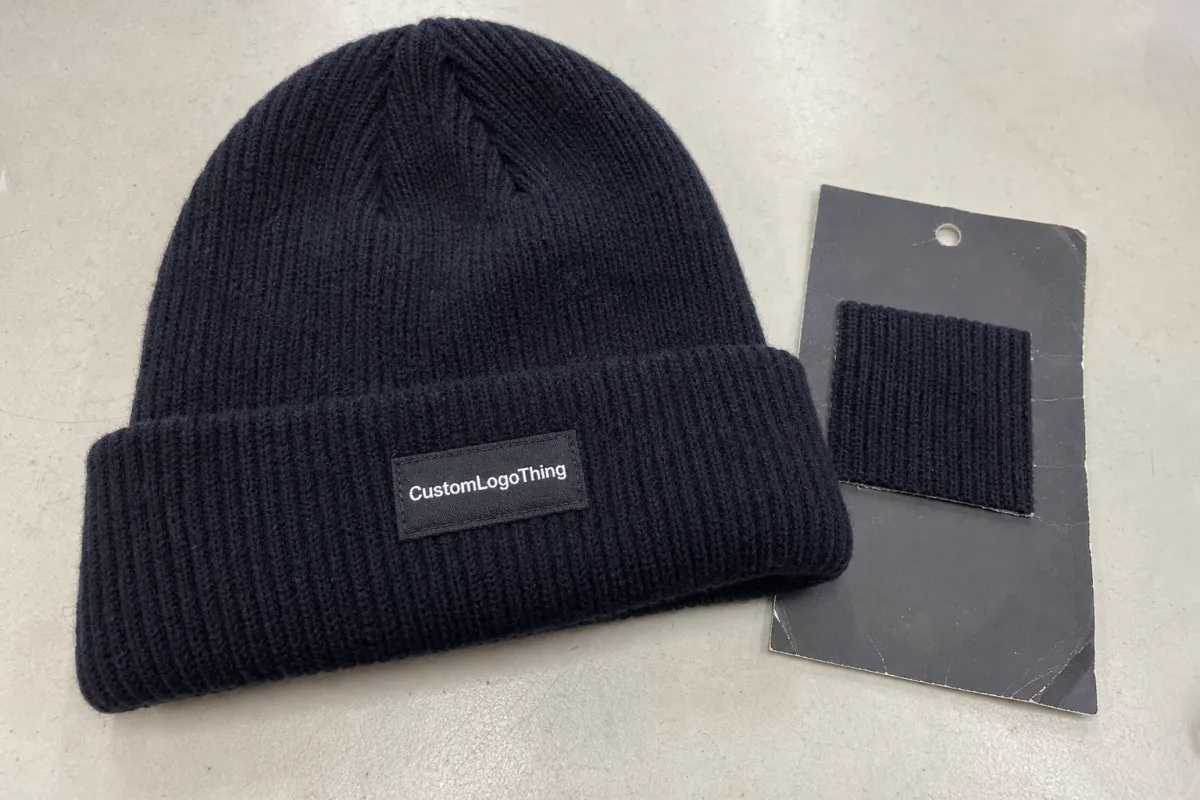
A material sample proves three practical things: how the knit behaves, how the hat feels, and how closely the supplier can repeat the spec. If the rib loses shape, the cuff twists, or the color looks different in daylight, the bulk run is likely to follow the same pattern.
Start by deciding what success means for the hat. Softness matters for retail. Structure matters for a fold-over cuff. Warmth matters for cold-weather promotions. Brand appearance matters for streetwear or licensed merchandise. You usually cannot maximize all four at once, so decide which two are non-negotiable.
Rib structures such as 1x1 and 2x2 can look clean in a flat photo and still fail on the head if the yarn is weak or the gauge is too loose. The sample should show whether the ribs spring back, whether the edge rolls, and whether the body sits close without feeling tight.
If the sample only works in a product photo, it is not approved. It is staged.
Use the sample to inspect the details that become costly later: stitch clarity, edge curl, logo alignment, seam bulk, and consistency from crown to cuff. Those are the problems that show up after delivery, not before payment.
How the Fabric Test Works: Stretch, Recovery, Warmth, and Drape
The first job of the sample is to show how the knit behaves when it is pulled, worn, and released. That is the real product, not the mockup.
Stretch tells you fit range. A ribbed beanie should open enough to fit different head sizes without looking stressed. Recovery tells you whether the knit snaps back or stays tired. A good sample should recover cleanly after repeated pulls by hand.
Warmth depends on more than thickness. Yarn loft, fiber blend, and knit density all change insulation. A dense acrylic rib can feel warmer than a looser wool blend if the wool sample is airy. Heavier is not automatically better.
Drape is the part many buyers miss until the hat looks wrong on the head. Some beanies sit close and clean. Others sag, lean, or bunch at the cuff. You want enough body to hold shape without stiffness that makes the beanie stand away from the head.
A simple test routine helps:
- Pull the cuff and body twice, then let it rest for a minute and check whether the ribs return evenly.
- Wear it for 5 to 10 minutes and note forehead pressure, seam comfort, and heat build-up.
- Fold the cuff, unfold it, and look for distortion at the edge and side seams.
If you want a more formal check, ask whether the supplier uses internal stretch and recovery data or a lab-style reference method. For pilling and wear, some buyers request an ASTM D3512-style evaluation. It does not need to be academic; it just needs to be repeatable.
Fiber, Gauge, and Finish Choices That Change the Final Look
Acrylic, wool blends, recycled yarns, and polyester blends all behave differently. The fiber blend affects softness, pilling, warmth, and how well the color holds after knitting.
Gauge changes the personality of the hat. A finer gauge usually looks tighter and cleaner, with sharper rib definition. A heavier gauge can feel richer and more substantial, but it may reduce stretch or make the crown sit stiffer. If you want a premium streetwear look, a tighter rib often reads cleaner. If you want an outdoor utility feel, a fuller knit can work better.
Finish matters too. Brushed yarns feel softer. Anti-pilling finishes can improve wear. Washed yarns can reduce the raw, scratchy feel that turns a promising sample into a reject. The tradeoff is cost and sometimes a slightly less crisp stitch appearance.
| Material option | Hand feel | Typical bulk unit price at 5,000 pcs | Main watch-out | Best use case |
|---|---|---|---|---|
| 100% acrylic, 1x1 or 2x2 rib | Soft, stable, familiar | $1.15-$1.75 | Can pill if yarn quality is low | Promo programs and mid-tier retail |
| Acrylic/wool blend | Warmer, slightly more premium | $1.80-$2.80 | Possible itch for sensitive wearers | Outdoor and fashion-forward programs |
| Recycled polyester blend | Smoother, consistent | $1.55-$2.40 | Can feel less natural in hand | Sustainability-led collections |
| Wool/nylon blend | Warm, resilient, structured | $2.20-$3.40 | Higher cost and tighter approval window | Premium retail and cold-weather use |
Trim details matter as much as the fiber. A clean rib can still be ruined by a bulky seam, a thick label, or embroidery backing that turns the inside scratchy. If the beanie has a fold-over cuff, check it folded and unfolded. The cuff hides a lot.
For sustainability claims, make sure the shipper matches the product story. FSC certified cartons, corrugated cardboard mailers, kraft paper wrap, and recycled materials make sense if they protect the knit. If your buyer cares about post-consumer waste or biodegradable packaging, the outer pack should support the claim.
Cost, MOQ, and Quote Drivers That Move Unit Price
Sample pricing is rarely just about the hat itself. Fiber choice, knit complexity, logo decoration, and packaging all move the number. A plain stock-yarn swatch may cost $35-$60 before freight. A custom knit with a woven label, embroidery, or special yarn can land closer to $80-$150 depending on revisions and factory setup.
MOQ matters because setup costs need somewhere to go. Spread them across 300 units and the unit price jumps. Spread them across 5,000 units and the math looks better. That is not the supplier being dramatic. It is factory economics.
A cheap sample only helps if the bulk quote still fits your margin. Saving $20 on sampling can backfire if the final quote adds dye fees, label fees, or a packaging upcharge you did not budget for. That is not a bargain.
Typical quote drivers include:
- Yarn source: stock yarn usually costs less than custom-dyed or specialty blends.
- Decoration: embroidery, woven labels, and patches add labor and backing material.
- Knit density: tighter gauge means more production time and yarn consumption.
- Packaging: individual polybags, kraft sleeves, or FSC certified cartons change landed cost.
- Freight: sample courier cost and bulk shipping both matter, especially for small runs.
If packaging is part of approval, ask how the sample will be shipped. A ribbed beanie stuffed into a soft envelope can arrive crushed and create a fake fit problem. A proper corrugated cardboard shipper with kraft paper or tissue keeps the sample closer to its real condition. If transit integrity matters, ask whether the pack-out follows ISTA drop and compression logic.
Process and Timeline: From Swatch Request to Approved Production
Start with a clear spec request. Yarn type, rib style, target fit, color, branding method, and target quantity should be on one page. Vague requests waste time because the factory has to guess what “nice and soft” means.
Typical lead time depends on yarn availability. If the supplier already has stock yarn that matches your direction, a simple sample can move in a few days plus transit. Custom knit samples usually take longer, especially if the color needs matching or the cuff structure is changing. A realistic window is often 7-14 business days for sampling, then a few days for courier transit and review.
Build in time for revision. Color correction, logo placement, and fit tweaks often need one extra round before approval. That extra round is cheaper than a bulk run that misses the mark.
Good sample workflow:
- Send a spec sheet with yarn, gauge, dimensions, and branding details.
- Request one baseline swatch plus one alternate if you are comparing fibers or rib structures.
- Review under daylight and indoor light before you comment on color.
- Wear-test the sample, then check recovery, seam comfort, and cuff shape.
- Confirm clearly which version the factory should reproduce.
For shipping, ask for corrugated cardboard with kraft paper or tissue, not an over-compressed pouch. If your packaging strategy includes recycled materials, post-consumer waste content, or biodegradable packaging, make sure the material still protects the knit from moisture and crushing.
Step-by-Step Sampling Checklist Before You Sign Off
Use the same review routine every time. Consistency is how you spot differences.
- Step 1: Define use case. Streetwear, promo, retail, and cold-weather utility all need different hand feel and structure.
- Step 2: Compare in two lights. Daylight and indoor light can make winter shades look different.
- Step 3: Check fit on a head form or real head. Note pressure, slippage, and whether the cuff sits flat.
- Step 4: Inspect the inside. Seams, label backing, and embroidery support should not create scratch points.
- Step 5: Test after handling. Fold, stretch, and restore the sample a few times to see whether it holds shape.
- Step 6: Wash or steam if needed. Shrinkage, twist, and pilling often show up only after a simple care test.
Keep one review sheet for every round. Record yarn, gauge, cuff height, color code, sample date, and comments. That sounds tedious because it is, but it is cheaper than trying to remember which version you liked after three rounds of mail.
If logo placement matters, approve it on the actual sample, not just on a flat mockup. A woven label that looks centered on paper can drift once the cuff folds. The same goes for embroidery on stretchy knit.
Common Mistakes That Turn a Good Sample Into a Bad Order
Do not approve based on looks alone. A ribbed winter beanie that photographs beautifully can still fail on stretch recovery, seam comfort, or pilling. Photos help, but they are not a hand test.
Do not skip the wash or steam test. Shrinkage is one of the easiest ways to wreck an otherwise decent program. A sample that looks right before care and wrong after care is warning you loudly.
Do not confuse sample quality with production consistency. If the spec sheet is loose, the bulk run can drift even if the first piece looks perfect. Factories cannot read your mind. They read the order form you gave them.
Do not ignore packaging if the beanie is being sold retail. A clean sample shipped in a flimsy envelope can arrive distorted, and then the buyer blames the knit. A proper pack-out with corrugated cardboard, kraft paper, or FSC certified cartons protects what you are actually approving.
Do not forget MOQ and setup fees. People focus on unit price, then get surprised when the quote includes label setup, color matching, or a small-run surcharge. The factory is charging for work.
A sample that feels right in hand but lacks a tight spec sheet is still a risk. Bulk production punishes vague approvals.
Expert Tips and Next Steps for a Cleaner Bulk Order
Ask for two close variants when the decision is not obvious. One should be your safe benchmark. The other can push softer yarn, tighter ribbing, a firmer cuff, or a recycled materials blend. Side-by-side comparison makes weak choices obvious fast.
Lock the acceptance standard before production starts. If you want a softer hand, say so. If you want less stretch and a firmer crown, say that too. “Make it premium” is not a brief.
Keep the review environment consistent. Same lighting. Same head form. Same notes template. Same person if possible. That reduces noise when you compare a small knit change that could become a large bulk problem.
Use this final handoff checklist:
- Approve the sample version you want reproduced, not the one you merely liked.
- Attach the measured spec so the factory has numbers, not guesses.
- Confirm packaging if retail appearance or transit protection matters.
- Save photos and notes from the approved sample for reference during production.
This vitamin Ribbed Winter Beanies Material Sample guide is the bridge between the first swatch and the bulk run. If the sample is tight, the order has a chance to be tight too. If the sample is vague, the order becomes an expensive experiment.
What should I check in a ribbed winter beanie material sample first?
Check stretch recovery first, because fit problems show up there before they show up anywhere else. Then test softness, seam comfort, and whether the cuff holds shape after a few minutes of wear. Color depth and pilling risk should be checked under close light, not just in product photos.
How many material samples should I request before approving a beanie order?
Request at least one baseline sample and one alternate if you are comparing fiber blends or rib structures. If branding matters, ask for a decorated pre-production sample so you can judge logo placement and backing thickness. More than three options usually slows decisions down without giving you much extra value.
What affects the price of vitamin ribbed winter beanie samples most?
Fiber choice, knit density, and decoration method are usually the biggest price drivers. Small orders pay more per unit because setup costs are spread across fewer pieces. Shipping and revision rounds can also raise the total if you do not ask for a full breakdown early.
How long does the sample and approval process usually take?
Simple stock-yarn swatches can move in a few days, while custom knit samples usually need more time. Add review time, transit time, and at least one revision round if you want a realistic schedule. A clean approval process is often faster than a rushed one because it avoids rework.
What are the biggest red flags in a winter beanie material sample?
Poor rebound after stretching, visible pilling, and uneven cuff structure are all bad signs. Color mismatch between the swatch and your reference is another warning, especially for darker shades. If the sample feels good but the spec sheet is vague, bulk production is still risky.